Self Drive Kenya | 4x4 Car Rental for Safari Trips

Yes, you can Self drive in Kenya, and for the right traveller, it is the most rewarding way to see Kenya. There is a moment on the Mara plains when the engine goes quiet, the dust drifts on, and a lioness lifts her head to consider you. Nobody is steering that moment but you. Car Rental 4×4 provides 4×4 vehicles for self-drive travel across Kenya, from Nairobi and Mombasa to the Masai Mara National Reserve, Amboseli National Park, Lake Nakuru National Park, Samburu National Game Reserve, Hell’s Gate National Park, Lake Naivasha, Tsavo West National Park, Tsavo East National Park, Nairobi National Park, Olpejeta Conservancy, Aberdares National Park, Mount Kenya, Meu National Park, chyulu Hills, Shimba Hills, Lake baringo, Lake Bogoria & Kagamega forest, built for travelers who want full control over their route and schedule.
ONe Way Car Rental RwandaSelf-drive car rental in Kenya means collecting a 4×4 and driving it yourself for the length of your trip, rather than booking a vehicle with a driver-guide.

It requires a valid driving licence, generally an international driving permit alongside it, and meeting the minimum age and experience set out in the rental agreement. Kenya drives on the left, and park roads are frequently unsealed, with black-cotton soil in the Mara and around Amboseli that becomes genuinely difficult after rain. Self-drive vehicles can reach the Maasai Mara National Reserve, Amboseli, Tsavo East and West, Lake Nakuru, Lake Naivasha, Samburu, Ol Pejeta, and beyond, and selected vehicles can be fitted with a rooftop tent, a pop-up roof, or a full camping equipment package. Self-drive rentals can be booked for one-way car rentals in Kenya, long-term car rentals in Kenya, or extended across the border into Tanzania, Uganda, or Rwanda, subject to advance approval, with standard insurance, roadside support, and a security deposit applying to each booking.

Self-Drive Kenya at a Glance

Question

Short answer

Can tourists self-drive in Kenya?

Yes, with a valid driving license. Traffic drives on the left.

What should I rent for a self-drive Kenya safari?

A 4×4 is recommended for the Maasai Mara, Amboseli, Tsavo, Samburu, Laikipia, and any wet-season travel. A lighter vehicle can suit paved routes and graded park roads in dry weather.

Our vehicles

Land Cruiser 78 Series and 76 Series (pop-up roof), Land Cruiser Prado, and Toyota Hilux Double Cab. Lighter options such as the RAV4 are confirmed on request.

Where can I go with my 4×4 self-drive Kenya Car?

You can visit every major Kenyan park and safari region, as well as Uganda and Tanzania, with prior arrangement.

Can I camp?

Yes. Camping gear and rooftop tents are available. Campsite fees vary by site and are paid directly.

Can I add a driver guide in my self-drive kenya rental car?

Yes. The daily rate is confirmed in your quotation. Park fees are separate.

What is the cost of renting a self-drive car in Kenya?

Daily, weekly, and monthly rates are quoted for your vehicle, dates, and extras. You pay for fuel and park fees.

What does the insurance cover?

The insurance covers head-on collisions and theft of the vehicle, with an excess of USD 1,500 to USD 2,000 depending on the vehicle. Punctures, underbody damage, water damage, and negligence are not covered.

What is the deposit?

USD 500, refundable at the end of the trip if the vehicle returns without offenses.

Can I cross borders?

By prior consent only. We process COMESA insurance at USD 50 for up to 20 days.

What if something goes wrong?

You call us immediately. In the event of a mechanical breakdown, we will provide a replacement vehicle within 24 hours in Kenya and within 72 hours across the border.

How do I book a 4×4 self-drive Kenya car rental?

Send an inquiry to Car Rental 4×4. We reply with a tailored quotation.

Can You Self-Drive in Kenya?

You can. Self-drive in Kenya is legal, practical, and well established, particularly for travellers who want to reach the Maasai Mara, Amboseli, Lake Nakuru National Park, Lake Naivasha, Samburu, Olpeje conservancy, Laikipia, Tsavo, and Mombasa on their own schedule. It is not a casual undertaking. It rewards preparation, an honest view of your driving experience, and the right vehicle.

Is Kenya Suitable for Self-Drive?

For most confident drivers, yes. The main highways to the big safari regions are largely paved, distances are manageable, English is widely spoken, and the parks have established road networks. The challenges are real: heavy trucks and matatus on the highways, dense Nairobi traffic, rough final stretches into the Mara and the north, dust in the dry season, and slick black cotton soil after rain. Kenya suits self-drive best for travellers with some experience of driving abroad or off tarmac and a willingness to plan every day around daylight.

Who Can Rent a Car and Drive in Kenya?

Anyone who meets the rental requirements: a valid driving license held for the period required by the agreement, the minimum age set by the rental agreement and insurer, a passport, and the security deposit. Additional drivers must be named in the agreement and approved in advance.

Can Tourists Self-Drive in Kenya?

Yes. Visitors can rent a vehicle and drive themselves with a valid driving license. Kenya drives on the left, which is most important for travellers from right-hand-drive countries; our handover includes time to settle into the vehicle before you leave the yard.

What Documents Do You Need to Self-Drive?

Your passport, your driving license, your booking confirmation, and the signed rental agreement. If you plan to cross a border, additional vehicle and insurance documents are prepared in advance. Park fee receipts and conservancy bookings are held separately, and you carry them with you.

Do You Need an International Driving Permit?

An International Driving Permit is recommended if your license is not in English, and it is a sensible addition even if your license is in English. Requirements can change, and a permit costs little compared with a misunderstanding at a checkpoint. We confirm the requirement for your nationality at booking.

What Are the Minimum Driving Requirements?

A valid license, the minimum age set in the rental agreement, and enough experience for the vehicle and route. For 4×4 safari rentals, we ask about your experience with gravel, mud, and manual gearboxes, because it shapes both the vehicle we recommend and the route we advise. The exact minimum age and license-holding period are confirmed at booking.

What Is Self-Drive Car Rental in Kenya?

Self-drive car rental in Kenya means you rent a prepared vehicle and drive it yourself, with no driver or guide in the car. At Car Rental 4×4 the vehicle is a safari-ready 4×4 with recovery equipment, an emergency contact, and a proper handover, so independence does not mean being on your own. You choose the route and the pace; we supply the machine, the briefing, and the backing.

Which 4×4 Should You Rent for Self-Drive in Kenya?

4×4 Car Rental Kenya

A 4×4 gives you low-range gearing, high ground clearance, and traction where the road ends. For the Mara beyond the main circuits, Samburu’s sandy riverbeds, remote Laikipia, and any trip in the March to May or October to December rains, it is the sensible choice.

Toyota Land Cruiser for Self-Drive

The Land Cruiser is the benchmark. Our 78 Series Troop Carrier offers space and strength for groups and camping loads. The 76 Series Station Wagon is more compact and easier to handle. The Prado is the comfortable choice for long road stretches. The 78 and 76 are available with pop-up roofs.

RAV4 Self-Drive Kenya

The Toyota RAV4 is a lighter, economical option for paved routes and graded park roads in dry weather, such as Nairobi to Naivasha, Lake Nakuru, and Amboseli on a dry-season trip. It is not the vehicle for the rougher Mara tracks, the north, or any wet-season safari. Availability is confirmed on request.

Hilux 4×4 Self-Drive

The Hilux Double Cab is strong, practical, and generous with load space, which suits gear-heavy trips, research teams, and long rentals. Secure anything you carry in the open bed.

Safari Vehicles for Self-Drive

For wildlife viewing, a pop-up roof lets you stand and watch from inside the vehicle. For camping, a rooftop tent turns the vehicle into your bed. Both are available and can be combined.

Toyota Rav4 With Camping Gear Tanzania

Rent a 4x4 Toyota Rav4 for camping adventures. It’s big enough hold all camping gear you need for self drive Tanzania safarai road trips.

Land Cruiser LX With Pop Up Roof Tanzania

Land cruiser with A roof hatch or pop-up roof is an essential feature in all Tanzania Self Drive safaris to improves the wildlife viewing experience

Land Cruiser with Rooftop Tent Tanzania

Land Cruiser Hardtop with rooftop tent. Perfect for Self drive Tanzania camping safaris, providing dependable 4x4 capabilities & cosy sleeping

Toyota Land Cruiser GX with Roof Top Tent

The Land Cruiser GX is equipped with a manual transmission, making it an excellent option for those in search of a stick-shift safari vehicle. It is equipped with a 4200cc diesel engine, making it more fuel-efficient compared to the Land Cruiser V8, which has a 4700cc petrol engine.

Land Cruiser Extended with Pop Up Roof

4×4 Land Cruiser Extended Safari Vehicle with Pop-Up Roof is the most popular safari car rentals with Pop up roof with a driver guide, available in Uganda, Rwanda, Burundi, Kenya, Tanzania. This vehicle is engineered to integrate comfort, reliability, and off-road performance

4x4 Toyota Land Cruiser Double Cab

The Toyota Land Cruiser Double Cab LX-E V6 4.0L Petrol 4WD is a sturdy, versatile, and highly reliable vehicle, designed for both off-road adventures and everyday driving in Tanzania. The toyota Land cruiser double cab is a well-regarded choice for safari excursions in Africa.

Compare Our Kenya Self-Drive Vehicles

VehicleTravellersLuggageSafariRough roadsCampingRooftop tent
Land Cruiser 78 Series4 to 6HighExcellent (pop-up roof)ExcellentExcellentYes.
Land Cruiser 76 Series4 to 5Medium to highExcellent (pop-up roof)ExcellentVery goodYes.
Toyota Hilux Double Cab4 to 5High (open bed)GoodExcellentVery goodYes.
Toyota RAV4 (on request)4 to 5MediumFairLight use onlyLimitedNo
Nissan Xtrail (on request)4 to 5MediumFairLight use onlyLimitedNo

Self-Drive Kenya vs. Driver-Guide

Who Should Choose Self-Drive?

Travellers who value independence, are comfortable driving on the left, have some experience of gravel roads, and are willing to navigate with offline maps. Photographers who want to wait for the light and repeat visitors who know what they want often prefer it.

Who Should Choose a Driver Guide?

First-time safari travellers, those short of time, anyone who dislikes long driving days, and anyone heading to the Mara in the Migration season or to remote northern roads. A driver-guide handles navigation, parking procedures, and wildlife spotting. The daily rate is confirmed in your quotation, and park fees are separate.

Which Kenya Rental Option Is Right for You?

Travelers need

Best option

Maximum independence

Self-Drive

Wildlife viewing

Pop-Up Roof

Camping

Rooftop Tent + Camping Gear

No desire to drive

Car + Driver

Safari expertise

Driver-Guide

Different return location

One-Way Car Rental In Kenya

Several months

Long-Term Kenya Car Rental

Regional East Africa trip

Cross-Border Kenya Rental

Driving in Kenya: What You Need to Know

Topic

What to know

Driving side

Left. Cross-border travelers to Uganda and Tanzania also drive on the left; Rwanda, reached through Uganda, drives on the right.

Speed rules

Our agreement advises 80 km/h on highways and 50 km/h in towns, slower in crowded places. Under the Traffic Act, we charge you speeding fines (USD 80 in our agreement). Follow posted signs, and expect enforcement on main highways.

Road signs

Road signs are largely international in style and in English. Speed-bump warnings are frequent and not always well marked.

Traffic

Heavy goods trucks, buses, and matatus (minibus taxis) dominate the main highways, and boda-bodas (motorcycle taxis) weave through towns. Matatus stop and turn without warning.

Overtaking

Common but risky. Overtake only with clear sight, and expect oncoming vehicles to overtake on your side of the road.

City driving

Nairobi is dense and slow, and the peaks are long. Avoid peak hours for pickup and departure where you can. The Nairobi Expressway is a tolled alternative on its route.

Rural roads

Shared with pedestrians, bicycles, livestock, and children. Slow down through villages and trading centers.

Mountain and escarpment roads

The Mau Escarpment, Aberdares, and Mount Kenya roads climb steeply, often in mist and with slow trucks. Use low gears on descents.

Night driving and driving hours

Our rental agreement sets driving hours from 6:00am to 7:00pm. Driving outside those hours without our consent makes you liable for all damage plus a USD 1,200 fine, and it is sensible anyway: unlit vehicles, people, and animals are hard to see.

Parking

Park at lodges, malls, official lots, and attended spaces. In Nairobi, never leave valuables visible.

Police checkpoints

Routine on highways. Slow down, greet politely, and have your license, passport copy, and vehicle documents ready.

Fuel stations

Plentiful in towns and on main roads, sparse near the parks and in the north. Our approved stations are Rubis and Shell; we do not cover fuel from other stations that damages the engine.

Driving etiquette

Flashing headlights can be a warning or a request to give way, not always a greeting. Being patient and waving politely can help.

Kenya Road Conditions for Self-Drive

Main Roads

Land cruiser with Pop up roof for car rental 4x4. Kenya Self-Drive and Wildlife SafariThe highways from Nairobi to Naivasha, Nakuru, Nanyuki, Narok, Mombasa, and Namanga are largely paved but busy, and sections are often under construction, with diversions and lane changes. Condition varies from year to year.

Rural Roads

Murram (red gravel) and earth roads link villages and conservancies to the highways. In dry weather they are corrugated and dusty; in wet weather they can be slick, rutted, and at times impassable to a vehicle without four-wheel drive.

Mountain and Escarpment Roads

The Rift Valley escarpment, the Mau, the Aberdares, and the slopes of Mount Kenya bring steep gradients, sharp bends, and mist. Drive slowly, use low gears, and yield way to heavy vehicles on narrow sections.

Roads Around National Parks

The final approach to the Masai Mara gates from Narok is rough in places, and park tracks vary with the season. Amboseli’s tracks are dusty and cut up by elephant traffic. Tsavo’s distances are long, with murram tracks between sights. Samburu and Laikipia have sandy riverbeds and rocky stretches. Road conditions change with the weather, so we advise checking current conditions before you set out.

Roads During the Rainy Season

Kenya has two rainy seasons, broadly the long rains from March to May and the short rains from October to December. Black cotton soil, common in the Mara and Laikipia, becomes slick and sticky, and rivers rise and low points flood. A 4×4 with excellent tires, patience, and a flexible schedule matters more than ever.

Driving at Night

Avoid it. Plan each day to arrive before dusk.

Which Roads Require a 4×4?

Route or area

Is a 4×4 needed?

Nairobi to Naivasha, Nakuru, Nanyuki, and Mombasa (paved)

No, in normal conditions

Lake Nakuru and Hell’s Gate park roads

Not essential in dry weather

Amboseli

4×4 Recommended; essential in the wet

Tsavo East and Tsavo West

4×4: Strongly advised

Maasai Mara (main circuits)

4×4: Strongly advised

Masai Mara (beyond main circuits, wet season)

Essential

Samburu, Buffalo Springs, and Shaba

Strongly advised

Laikipia conservancies

Essential in the wet; strongly advised otherwise

Aberdares and Mount Kenya forest tracks

Advised

Lake Turkana and the far north

Essential, with careful planning

Is Self Drive in Kenya Safe?

Yes, self-driving in Kenya is possible, yet no journey is risk-free, and we will not tell you otherwise. What we can do is tell you where the risks are and how experienced travellers manage them. Most problems on a Kenyan self-drive are ordinary ones: a puncture, a wrong turn, a slow day after rain, or a late arrival. The aim is to make them inconveniences, not emergencies.

Risk area

How to manage it

Road conditions

Drive to the road, not the schedule. Slow down for speed bumps, potholes, and village centers. Inspect tires before long days.

Navigation

Download offline maps in advance and carry a second source. Confirm routes with us before you leave.

Weather

Check forecasts, especially in the rainy seasons. Delay a leg rather than force it.

Wildlife areas

Keep at least 100 meters from dangerous animals such as elephants and lions, give animals 100% right of way, stay on tracks, and never leave the vehicle except where permitted.

Mountain roads

Low gears on descents, slower in mist, and yield to heavy vehicles on narrow bends.

Breakdowns

Notify us immediately. If a warning light comes on, stop driving and call. A replacement vehicle will be provided within 24 hours in Kenya and within 72 hours across the border.

Emergency contacts

Please keep our emergency number and Kenya’s emergency number (999 or 112) accessible offline.

Vehicle recovery

Learn the recovery kit at handover. In remote areas, help takes time.

Night driving

Our driving hours are 6:00am to 7:00pm. Plan every day to arrive before dusk.

Security in towns

Do not leave valuables visible in a parked vehicle, keep doors locked in traffic, and park in attended lots.

Border crossings

Arrive early, keep documents together, and use only crossings agreed in advance.

Communication

Mobile coverage is good on highways and weak in many parks and conservancies. Tell us your route and check in when you can.

Roadside assistance

We will arrange repairs within a reasonable time depending on your location; please refrain from arranging repairs yourself without our authorization.

Where Can You Go in Kenya With a Self-Drive Rental?

Almost anywhere a capable 4×4 and prepared driver can reach. We support self-drive to Kenya’s major safari regions and, by prior arrangement, onward to Uganda, Tanzania, and Rwanda. Distances are approximate road distances from Nairobi.

Cities and Towns

Place

Role for the self-drive traveller

Approx. distance from Nairobi

Nairobi

The pickup point, supplies, and route all start at Nairobi National Park, which is located on the edge of the city.

Start

Naivasha

Lake Naivasha, Hell’s Gate, and the first night on the Rift Valley route

About 90 km

Nakuru

Gateway to Lake Nakuru National Park

About 160 km

Narok

Last major town and fuel stop before the Masai Mara National Reserve

About 140 km

Nanyuki

Gateway to Mount Kenya, Laikipia, and Ol Pejeta Conservancy

About 200 km

Isiolo

Gateway to Samburu and Buffalo Springs

About 280 km

Emali and Loitokitok

Route to Amboseli from the Mombasa highway

About 160 km to Emali

Mtito Andei and Voi

Tsavo West and Tsavo East gateways on the Mombasa highway

About 230 km and 330 km

Mombasa and Diani

Coastal beach finish after safari

About 480 km to Mombasa

Kisumu

Lake Victoria and western Kenya; route to Uganda

About 350 km

Can You Self-Drive to Each National Park?

Destination

Self-drive?

Vehicle and key note

Maasai Mara National Reserve

Yes.

4×4 strongly advised. Big cats and the Great Migration (typically July to October). Rough final approach; wet-season mud.

Amboseli National Park

Yes.

4×4 is recommended. Elephant herds and views of Kilimanjaro. Dusty tracks.

Tsavo East National Park

Yes.

4×4 strongly advised. The park is vast, with long distances and red-dust elephants.

Tsavo West National Park

Yes.

4×4 strongly advised. Mzima Springs, lava flows, and the Chyulu Hills edge are all part of the Nairobi National Park.

Nairobi National Park

Yes.

Any capable vehicle. Wildlife with a city skyline.

Lake Nakuru National Park

Yes.

Suits lighter vehicles on park roads in dry weather. Rhinos and birdlife.

Lake Naivasha and Hell’s Gate National Park

Yes.

Easy. Walking and cycling safaris inside the gorge.

Samburu, Buffalo Springs, and Shaba

Yes.

4×4 strongly advised. Northern species and sandy riverbeds.

Laikipia conservancies and Ol Pejeta

Yes.

4×4 is essential in the wet. Private reserves with their own rules and bookings.

Aberdares National Park

Yes.

4×4 advised. Highland forest, waterfalls; cool and wet.

Mount Kenya National Park

Yes, to the gates.

4×4 advised. Hiking and climbing are on foot with guides.

Meru National Park

Yes.

4×4 strongly advised. Quiet, remote savannah.

Lake Baringo and Lake Bogoria

Yes.

4×4 advised. Birdlife, hot springs, and flamingos.

Kakamega Forest

Yes.

4×4 advised in the wet. Rainforest birdlife in the west.

Lake Turkana

Yes, with planning

4×4 essential. Very remote; seek advice on route, fuel, and security first.

Entry fees, conservancy fees, and park rules are set by the Kenya Wildlife Service, county authorities, or each conservancy, change over time, and are paid separately from your rental. Many parks now use cashless payment systems, so check the current method before you travel. The county authority manages the Masai Mara, and its fees and rules differ from those of the national parks.

Self Drive Safari in Kenya

Question

Answer

Is self-drive allowed in Kenya?

Yes, in most of Kenya’s national parks and reserves, including the Mara Triangle, Amboseli National Park, Lake Nakuru National Park, Samburu National Game Reserve, Hell’s Gate National Park, Lake Naivasha, Tsavo West National Park, Tsavo East National Park, Nairobi National Park, Olpejeta Conservancy, Aberdares National Park, Mount Kenya, Meru National Park, chyulu Hills, Shimba Hills, Lake baringo, Lake Bogoria & Kagamega forest. Private conservancies have their own rules, and some do not allow self-drive.

Which parks are suitable?

Nairobi, Nakuru, Naivasha, and Amboseli are the easiest. The Mara, Tsavo, and Samburu reward a stronger 4×4 and more experience.

What vehicle is needed for self-drive in Kenya?

A 4×4 with durable tires is advised, ideally with a pop-up roof for viewing.

Can you drive independently inside the Kenya National Parks?

Yes, on the designated tracks. Rangers can often be hired to ride with you, which improves sightings.

What park rules apply?

Speed limit 40 km/h, stay on the track, give animals 100% right of way, keep at least 100 meters from dangerous animals such as elephants and lions, and no game drives after 7:00pm. Parks commonly close their gates earlier, around 6:00pm, so check each one. Fines apply;

Where can you stay?

Lodges, tented camps, and campsites in and around the parks and conservancies. Campsite fees vary by site and are paid directly.

Can you camp with a 4×4 self drive rental car in Kenya?

Yes, at designated public and special campsites. Book ahead in peak months, especially in the Mara during the Migration.

How do you navigate?

Offline maps, park maps from the gate, and signposts at junctions. Mobile coverage is patchy.

What should you carry?

Water, food, binoculars, a camera with spare batteries, a first-aid kit, a paper map, and your documents.

Park Rules and Charges in Our Rental Agreement

Rule

Charge or requirement

Speed limit in national parks

40 km/h. Overspeeding carries a USD 50 penalty.

Going off track during a game drive

USD 150 per person in the vehicle.

Sitting on top of the vehicle

USD 100 per violation. Stand inside the raised pop-up roof; never sit on the roof.

Game drives after 7:00pm

Prohibited, with an extra payment under Kenya Wildlife Service tariffs.

Distance from dangerous animals

At least 100 meters from elephants, lions, and similar animals. Animals have 100% right of way, and any resulting vehicle damage is the renter’s liability.

Animal accident causing death

A fine payable to the Kenya Wildlife Service (amount confirmed at booking).

Self Drive Kenya for the Great Wildebeest Migration

Every year, well over a million wildebeest, with zebra and gazelle in their wake, pour north from the Serengeti into the Masai Mara in search of fresh grazing. Kenya’s share of the spectacle, usually from around July to October, includes the famous Mara River crossings, where herds gather on the bank, hesitate, and then plunge into water that holds crocodiles. The herds follow the rain, so no one can promise a crossing on a given day. That uncertainty is precisely why self-drive suits it: you stay flexible and are where the action is, instead of locked into a fixed schedule.

When and Where to Be in the Mara

Period

What is happening?

Self-drive notes

June to early July

Herds gathering in the northern Serengeti and beginning to arrive in the Mara

Quieter, with lower rates. The first herds often appear on the Sand River and in the south.

July to October

Main arrival, with Mara River and Talek River crossings

Peak season. Book camps and lodges months ahead and expect many vehicles at crossing points.

October to November

Herds drift back south, with the short rains approaching.

Fewer vehicles are on the road, but the wet conditions mean more mud. Check conditions before you set out.

December to May

Resident big cats, elephants, and plains game; herds back in Tanzania

The Mara remains excellent for cats, with greener scenery and fewer crowds.

Treat these windows as a guide, not a guarantee. Ask camp managers and rangers where the herds are before you commit to a long drive across the reserve.

Mara Self-Drive Rules and Etiquette at River Crossings

Topic

Rule or etiquette

Speed

Keep to the posted limit, commonly about 40 km/h in Kenyan reserves, and slow right down near herds and crossing points. Our agreement penalizes overspeeding in parks.

Tracks

Stay on designated tracks. Driving off track to approach a crossing or a herd is prohibited, and the reserve will impose a fine and a penalty under our agreement.

Wildlife

Give animals the right of way and keep at least 100 meters away from dangerous animals. Never drive through or split a herd, and never come between a predator and its prey.

River crossings

Join an existing line of vehicles at the viewpoint, keep engines off, do not block the herds’ approach or other vehicles, and follow rangers’ directions. A crossing can take hours or not happen at all.

Roof

Stand inside the raised pop-up roof; never sit on top of the vehicle, which attracts a USD 100 penalty under our agreement.

Gates

Park hours are commonly 6:00am to 6:00pm, though our driving hours run to 7:00pm. Be through the gate on time and at your camp before dusk.

Payment

Mara fees are set by the Narok County authority for the main reserve and by the Mara Conservancy for the Mara Triangle and are paid through electronic systems. Private conservancies set their fees. Do not rely on cash.

Main Reserve, Mara Triangle, or Conservancy?

Area

Self-drive position

Notes

Main Maasai Mara National Reserve

No self-drive is accepted, unless with a driver guide.

Gates include Sekenani, Talek, Musiara, and Sand River. Busiest during the Migration.

Mara Triangle (west of the Mara River)

Yes, with separate fees.

It is managed separately, with its entry through the Oloololo gate and a reputation for tight management of crossings.

Private conservancies around the reserve

Often restricted

Many allow only registered camp guests with their guides and limit vehicles. Confirm self-drive access before booking.

Where to Stay During the Migration

The Great Wildebeest MigrationStay near the gate that serves the area you plan to visit: Sekani for the south and central reserve, Talek for the central plains and Mara River, Oloololo for the Triangle, and Sand River for the southwest. Lodges, tented camps, and public and special campsites are available in each area. Everything near the crossings sells out well ahead from July to October.

Vehicle Choice for the Migration

A Land Cruiser 78 or 76 Series with a pop-up roof is the natural choice. The plains are corrugated, black cotton soil is treacherous after rain, and rivers rise quickly. Good tires and recovery gear are essential. A lighter vehicle is not suitable.

What Time Should You Arrive for the Migration?

Be at the gate when it opens, since early light is the best time for the herds and the predators. For the crossings, arrive at your camp the evening before and be at a viewpoint soon after dawn. The drive from Nairobi to the Mara is a full day, so do not plan to arrive and cross on the same day.

Parking and Local Transport During the Migration

At river viewpoints, park only in the designated areas and leave room for other vehicles. At camps, park in the allotted area, keep food secure, and keep valuables out of sight. Fuel is not available inside the reserve, so fill at Narok and arrive with range to spare.

Driving Requirements for Self-Drive Kenya

A valid driving license is required for every self-drive booking, generally alongside an international driving permit where your home license is not otherwise recognized locally. You will need to meet the minimum age and driving experience set out in the rental agreement, and a security deposit is required at the start of your rental, which will be refunded at the end of the agreement, subject to the vehicle’s condition. Where more than one person in your group wants to drive, a second driver can be added at no additional charge, since the vehicle itself has already been paid for in full as part of your rental; both drivers should meet the same requirements and be recorded on the rental agreement.

What It’s Like to Drive in Kenya

Kenya drives on the left, which is straightforward for travelers arriving from the UK, Tanzania, or Uganda and worth a deliberate adjustment period for anyone used to right-hand traffic. Nairobi’s traffic is dense and fast-moving, mixing matatus that stop without warning, motorbike taxis, and pedestrians, and it is a reasonable place to get comfortable with the vehicle, ideally outside rush hour, before heading out on longer drives. The main highways connecting Nairobi to the Rift Valley lakes, the Mara approaches, and the coast are generally tarmac and in reasonable condition, though potholes and speed bumps through towns and heavy lorry traffic on the Mombasa road demand steady attention. Once off the highway, park roads are a different proposition entirely: black-cotton soil sections in the Masai Mara and around Amboseli that turn to deep mud within an hour of rain, long, dry, corrugated stretches toward Samburu that test both vehicle and driver, and river crossings in Tsavo that call for caution rather than bravado. Fuel stations are reliable in and around the main towns but thin out considerably on rural and northern stretches, so topping up before a longer leg is standard practice rather than an optional precaution

Self Drive Destinations and Routes

A self-drive vehicle can reach every major Kenyan destination: the Maasai Mara for the big cats and, in season, the wildebeest migration, Amboseli for elephant herds against Kilimanjaro, Tsavo East and West for vast red-earth wilderness, Lake Nakuru and Lake Naivasha as easy Rift Valley stops, Samburu and Ol Pejeta for the drier, more rugged north, and Nairobi National Park for a game drive within sight of the city skyline. A classic first-time self-drive circuit links Nairobi, Lake Naivasha, the Maasai Mara and back to Nairobi over five to seven days, a longer southern circuit adds Amboseli and Tsavo, and a coastal extension via Emali and Voi connects any of these to Mombasa or Watamu. Each leg is entirely yours to pace as you choose, which is the core appeal of self-driving this route rather than following a fixed group schedule.

Masai Mara National Reserve

Amboseli National Park

Lake Nakuru National Park

Tsavo West national Park

Olpejeta Conservancy

Self Drive Kenya for Every National Park and Reserve

The same six questions apply in every Kenyan park and reserve: speed, tracks, wildlife, roof, gates, and payment. Rules are set by the managing authority, whether the Kenya Wildlife Service (KWS), a county authority, or a private conservancy, and are posted at each gate. The general position is to obey the posted speed limit (commonly about 40 km/h), stay on designated tracks, give wildlife the right of way and keep at least 100 meters from dangerous animals, stand inside the pop-up roof and never sit on top, be through the gate before it closes and out before dusk, and pay through the electronic systems. Each section below shows the details that differ, along with where to stay, which vehicle to choose, what time to arrive, and where to park.

Maasai Mara National Reserve Self-Drive

The Mara is Kenya’s most famous reserve, with big cats, elephants, and the Migration. It is reached from Nairobi via Narok, and the final stretch to the gates is rough in places.

Topic

Rule or advice

Self-drive access

Yes, on designated tracks in the Triangle, no self-drive is allowed within the Masai Mara national Reserve (you must hire a guide by the gate). Many conservancies restrict self-drive.

Speed

The posted limit is commonly about 40 km/h. Slow near herds, calves, and crossings.

Tracks

Stay on track. The reserve fines off-track driving, as does our agreement. Tracks multiply on the plains, so navigate with care.

Wildlife

Animals have the right of way. Keep 100 meters from dangerous animals. Do not crowd cats on a kill or a den.

Roof

Stand inside the raised pop-up roof; never sit on top.

Gates

Commonly open from 6:00am to 6:00pm. Be out before closing.

Payment

Electronic payment through the county or conservancy system; confirm the current method.

Where to stay

Lodges, tented camps, and campsites near Sekenani, Talek, Oloololo, Musiara, and Sand River gates.

Vehicle choice

A Land Cruiser with a pop-up roof, or Hilux. 4×4 is strongly advised and essential in the wet.

What time to arrive?

Allow a full day from Nairobi (about 5 to 6 hours of driving) and arrive before dusk. Enter at opening time on game-drive days.

Parking and local transport

Park at gates, camps, and designated viewpoints. Fuel is available at Narok, but not in the reserve. Rangers can ride with you for a fee.

Amboseli National Park Self Drive

Amboseli is famous for large elephant herds against Kilimanjaro. The park is small, dusty, and flat, with swamps drawing wildlife in the dry season.

Topic

Rule or advice

Self-drive access

Yes. Gates include Meshanani (from the Emali road) and Kimana, and people use the tracks a lot.

Speed

Posted KWS limit, commonly about 40 km/h. Dust hides animals and other vehicles.

Tracks

Stay on track. Elephants and swamps make off-track driving especially risky.

Wildlife

Give elephants room and never come between a mother and calf. Keep 100 meters from dangerous animals.

Roof

Stand inside the raised roof; never sit on top.

Gates

Commonly 6:00am to 6:00pm. Be out before closing.

Payment

KWS electronic payment, in advance or at the gate.

Where to stay

Lodges and campsites are available inside and around the park, as well as in Kimana and Loitokitok.

Vehicle choice

A Prado or Land Cruiser. A 4×4 is recommended and essential in the wet.

What time to arrive?

Arrive at dawn for the clearest views of Kilimanjaro, which often cloud over by midday.

Parking and local transport

Park at the viewpoints and Observation Hill. Fuel at Emali or Loitokitok, not inside the park.

Tsavo East National Park Self Drive

Tsavo East National Park is vast, flat, and wild, famous for its red-dust elephants, the Galana River, and Lugard Falls.

Topic

Rule or advice

Self-drive access

Yes. Gates include Voi and Manyani. Distances inside are large.

Speed

Posted KWS limit, commonly about 40 km/h.

Tracks

Stay on track. Tracks are long and sandy in places.

Wildlife

Give elephants and buffalo right of way. Keep 100 meters from dangerous animals.

Roof

Stand inside the raised roof; never sit on top.

Gates

Commonly 6:00am to 6:00pm. Allow time to reach the gate and exit.

Payment

KWS electronic payment.

Where to stay

Lodges and campsites inside the park and in Voi.

Vehicle choice

A Land Cruiser, Hilux, Nissan X-Trail, or Rav 4 is recommended. 4×4 strongly advised.

What time to arrive?

Voi is about 330 km from Nairobi. Arrive the day before, and enter at dawn.

Parking and local transport

Park at gates, lodges, and viewpoints. Fill fuel at Voi, and carry a spare range.

Tsavo West National Park Self Drive

Tsavo West National Park offers lava landscapes, Mzima Springs, the Ngulia rhino sanctuary, and views of the Chyulu Hills.

Topic

Rule or advice

Self-drive access

Yes. Gates include Mt. Mtito Andei, Tsavo, and Chyulu.

Speed

Posted KWS limit, commonly about 40 km/h.

Tracks

Stay on tracks; lava rock can damage tires, so drive slowly.

Wildlife

Give animals the right of way. At Mzima Springs, walk only where permitted, with a ranger.

Roof

Stand inside the raised roof; never sit on top.

Gates

Commonly 6:00am to 6:00pm.

Payment

KWS electronic payment.

Where to stay

Lodges and campsites in the park and near Mtito Andei.

Vehicle choice

A Land Cruiser or Hilux. 4×4 strongly advised, with decent tires.

What time to arrive?

It is about 230 km from Nairobi. Arrive by early afternoon.

Parking and local transport

Park at Mzima Springs and the designated viewpoints. Fuel at Mtito Andei.

Lake Nakuru National Park Self Drive

Lake Nakuru National Park is a fenced park known for its rhinos, Rothschild’s giraffes, and, depending on water levels, birdlife and flamingos.

Topic

Rule or advice

Self-drive access

Yes. The main gate is in Nakuru town, with other gates around the park.

Speed

Posted KWS limit, commonly about 40 km/h.

Tracks

Stay on track. The road loops the lake, with viewpoints such as Baboon Cliff.

Wildlife

Give rhinos, buffalo, and lions the right of way, and keep 100 meters from dangerous animals.

Roof

Stand inside the raised roof; never sit on top.

Gates

Commonly 6:00am to 6:00pm.

Payment

KWS electronic payment.

Where to stay

Lodges and campsites inside and around the park and in Nakuru town.

Vehicle choice

A Prado or Land Cruiser; a lighter vehicle can manage in the dry season.

What time to arrive?

The distance is about 160 km from Nairobi. A morning arrival allows a full game drive.

Parking and local transport

Park at viewpoints and picnic sites. A ranger can accompany you for rhino spotting.

Samburu, Buffalo Springs, and Shaba Self-Drive

The northern reserves are hotter, drier, and quieter, with species such as Grevy’s zebra, reticulated giraffe, gerenuk, and beisa oryx around the Ewaso Nyiro River.

Topic

Rule or advice

Self-drive access

Yes. Gates include Archers Post and Isiolo. These county-managed reserves have their fees and rules.

Speed

The posted limit is commonly about 40 km/h.

Tracks

Stay on track. Sandy riverbeds can bog a vehicle quickly.

Wildlife

Give elephants and lions room. Keep 100 meters from dangerous animals.

Roof

Stand inside the raised roof; never sit on top.

Gates

Commonly 6:00am to 6:00pm.

Payment

Electronic payment to the relevant county authority.

Where to stay

Lodges, tented camps, and campsites along the river.

Vehicle choice

A Land Cruiser or Hilux. 4×4 strongly advised.

What time to arrive?

It’s about 340 km from Nairobi, so plan to break at Nanyuki or Isiolo and arrive in the afternoon.

Parking and local transport

Park at camps and viewpoints. Fill fuel at Isiolo.

Nairobi National Park Self Drive

The world’s only wildlife park bordering a capital, with lions, rhinos, giraffes, and a skyline backdrop. An effortless first or last self-drive.

Topic

Rule or advice

Self-drive access

Yes, from several gates, including Langata.

Speed

Posted KWS limit, commonly about 40 km/h.

Tracks

Stay on tracks; the park is fenced on the city side only, so animals roam freely to the south.

Wildlife

Keep 100 meters from lions and rhinos and give the right of way.

Roof

Stand inside the raised roof; never sit on top.

Gates

Commonly 6:00am to 6:00pm.

Payment

KWS electronic payment.

Where to stay

Nairobi hotels and nearby campsites.

Vehicle choice

Any capable vehicle.

What time to arrive?

Arrive early in the morning to avoid city traffic and see active animals.

Parking and local transport

Park at designated viewpoints and picnic sites. The city is close for supplies.

Lake Naivasha and Hell’s Gate National Park Self-Drive

Lake Naivasha is a freshwater lake with hippos and birdlife, and Hell’s Gate is a gorge park where you may walk or cycle among zebra and giraffe.

Topic

Rule or advice

Self-drive access

Yes. Drive to the Hell’s Gate gates and park, or around the lake.

Speed

Posted KWS limit, commonly about 40 km/h.

Tracks

Stay on track. Walking and cycling are permitted in Hell’s Gate.

Wildlife

Give animals the right of way. Buffalo and baboons can be unpredictable.

Roof

Stand inside the raised roof; never sit on top.

Gates

Commonly 6:00am to 6:00pm.

Payment

KWS accepts electronic payments, but boat trips and walks incur separate fees.

Where to stay

Lakeside lodges and campsites around Naivasha.

Vehicle choice

Any capable vehicle.

What time to arrive?

About 90 km from Nairobi. A morning arrival allows a gorge walk and a lake boat trip.

Parking and local transport

Park at the gates and designated points. Bicycles can be hired at the park.

Laikipia and Ol Pejeta Self Drive

Laikipia’s private conservancies protect rhinos, elephants, and rare species and offer a different kind of safari from the national parks.

Topic

Advice

Self-drive access

Ol Pejeta welcomes self-drive game drives. Many other conservancies allow only registered guests with their own guides. Confirm before booking.

Rules

Conservancy rules on speed, tracks, wildlife, and gates apply, set by each conservancy and often stricter than the parks.

Where to stay

You can stay at conservancy lodges, camps, and campsites, or in Nanyuki.

Vehicle choice

A Land Cruiser or Hilux is an essential 4×4 in the wet.

What time to arrive?

About 200 km from Nairobi. Allow most of a day, arriving before dusk.

Parking and local transport

Park at camps and lodges. Fuel at Nanyuki.

Aberdares National Park Self-Drive

The Aberdares are cool, misty highlands of moorland, forest, and waterfalls, with elephants, buffalo, and rare species.

Topic

Advice

Self-drive access

Yes, but only with a 4×4. Tracks can be steep and slippery.

Rules

KWS park rules apply: posted speed limit, tracks only, wildlife right of way, standing inside the roof, gate hours, and electronic payment.

Where to stay

Lodges and campsites on the slopes and at Mweiga and Nyeri.

Vehicle choice

A Land Cruiser or Prado with a 4×4. Carry warm clothing.

What time to arrive?

Arrive in the morning, to be out before dark and mist.

Parking and local transport

Park at the gate, viewpoints, and waterfall trailheads. Fuel at Nyeri.

Mount Kenya National Park Self Drive

Africa’s second-highest mountain is a hiking and climbing destination, with gates at Naro Moru, Sirimon, and Chogoria.

Topic

Advice

Self-drive access

Yes, you can drive to the gates and, if you have a 4×4, to the higher trailheads. Climbs and hikes are on foot with guides.

Rules

KWS park rules apply, including fees and guide requirements for climbing, which are paid electronically.

Where to stay

Lodges and campsites near the gates and in Nanyuki and Naro Moru.

Vehicle choice

A Land Cruiser or Prado; 4×4 for the upper tracks.

What time to arrive?

Arrive the day before your climb for briefings.

Parking and local transport

Park at the gate or hotel for the duration of the climb, as arranged with your operator.

Meru National Park Self Drive

Meru is a quiet, remote savannah park with rhinos, elephants, and rivers, associated with Born Free and Elsa the lioness.

Topic

Advice

Self-drive access

Yes, with a 4×4.

Rules

KWS park rules: posted speed limit, tracks only, wildlife right of way, standing inside the roof, gate hours, and electronic payment.

Where to stay

Lodges and campsites in and around the park.

Vehicle choice

A Land Cruiser or Hilux with durable tires.

What time to arrive?

About 350 km from Nairobi. Break the drive and arrive before dusk.

Parking and local transport

Park at camps and viewpoints. Fill fuel at Meru town.

Lake Baringo and Lake Bogoria Self-Drive

Two Rift Valley lakes with hippos, hot springs, flamingos, and some of Kenya’s finest birding.

Topic

Advice

Self-drive access

Yes. Baringo has community and county access; Bogoria is a national reserve.

Rules

Reserve rules on speed, tracks, and gate hours apply; boat and walking activities are with local guides.

Where to stay

Lakeside lodges and campsites.

Vehicle choice

A 4×4 is recommended for the final tracks.

What time to arrive?

Arrive in the morning for birding. The area is hot by midday.

Parking and local transport

Park at lodges and gates, and use local boats and guides for activities.

Kakamega Forest and Western Kenya Self-Drive

Kenya’s last remnant of Guineo-Congolian rainforest, with rare birds and primates.

Topic

Advice

Self-drive access

Yes, to the visitor areas. Walks are with guides.

Rules

KWS and forest rules apply, including guide requirements and fees.

Where to stay

Forest lodges, campsites, and Kakamega town.

Vehicle choice

A 4×4 is advised in the wet.

What time to arrive at Kakamega Forest?

Arrive early for birding. It is about 420 km from Nairobi, so plan an overnight stop.

Parking and local transport

Park at the visitor center while you walk.

Chyulu Hills and Shimba Hills Self Drive

Chyulu Hills offers green volcanic hills and caves near Tsavo West. Shimba Hills, near Mombasa, protects sable antelope and elephants.

Topic

Advice

Self-drive access at Chyulu hills

Yes, with a 4×4 for Chyulu. Shimba Hills is an easy day drive from the coast.

Rules

KWS rules apply: posted speed limit, tracks only, wildlife right of way, gate hours, and electronic payment.

Where to stay

Lodges and campsites near each area.

Vehicle choice

A Land Cruiser is recommended for Chyulu; any capable vehicle will do for Shimba Hills.

What time to arrive?

Arrive in the morning.

Parking and local transport

Park at gates and trailheads. Guides are advised for caves and walks.

Lake Turkana and the Far North

Kenya’s remote north is extraordinary, but it demands real expedition planning.

Topic

Advice

Self-drive access

Only with expert planning and experience. A driver-guide or convoy is strongly advised.

Rules

Review current security and road advisories. Rules in remote reserves and community areas vary.

Where to stay

Remote lodges and campsites should be arranged in advance.

Vehicle choice

A strong 4×4 with recovery equipment and spare range.

What time to arrive?

Plan for several days of driving, arriving before dusk each day.

Parking and local transport

Park at your camp. Fuel is scarce, so carry extra.

Best Kenya Self-Drive Routes

Each route shows approximate distance and time from Nairobi, road type, suggested vehicle, attractions, overnight options, fuel, and the points that matter most. Times are indicative and vary with traffic, roadworks, and weather.

Nairobi to the Maasai Mara

Detail

Information

Distance and time

About 270 km to the Sekenani gate. The drive takes roughly 5 to 6 hours, including a stop at Narok.

Road type

Paved to Narok; the last stretch to the gates is rough in places; park tracks.

Vehicle

Land Cruiser 78 or 76 Series with pop-up roof, or Hilux. 4×4 strongly advised.

Attractions

Attractions include big cats, the Great Migration (typically July to October), the Mara River, and Maasai culture.

Overnight

Lodges, tented camps, and campsites near the gates and conservancy edges.

Fuel

Fill up with fuel at Narok; there is no reliable fuel available beyond this point.

Considerations

Book early for the Migration; wet-season black cotton soil; respect crossing-point etiquette.

Nairobi to Amboseli

Detail

Information

Distance and time

About 240 km. It takes roughly 4 to 5 hours.

Road type

Paved via Namanga or Emali and Loitokitok; park tracks are dusty.

Vehicle

Use a Prado, Land Cruiser, or Hilux; a RAV4 is suitable only in dry weather.

Attractions

Elephants, Kilimanjaro views, and wetlands.

Overnight

Lodges and campsites in and around the park.

Fuel

Fill at Emali or Namanga.

Considerations

Dust; best views at dawn; check cloud cover for Kilimanjaro.

Nairobi to Tsavo and the Coast

Detail

Information

Distance and time

About 230 km to Tsavo West, 330 km to Voi, and 480 km to Mombasa. Plan two days for the full run.

Road type

The route includes a paved highway that is heavily trafficked with trucks and murram park tracks.

Vehicle

Land Cruiser or Hilux for the parks; any capable vehicle on the highway.

Attractions

Mzima Springs, red elephants, vast plains, then beaches at Mombasa and Diani.

Overnight

Lodges and campsites at Tsavo; coastal hotels.

Fuel

Plentiful on the highway, limited in the parks.

Considerations

Heavy truck traffic; one-way return to the coast is available by arrangement.

Nairobi to Naivasha and Nakuru

Detail

Information

Distance and time

Naivasha is about 90 km, and Nakuru is about 160 km. It takes roughly 1.5 to 3 hours, respectively.

Road type

Paved highway with escarpment descent; roadworks possible.

Vehicle

Any capable vehicle will do, but a 4×4 is recommended for added comfort on park tracks.

Attractions

Lake Naivasha, Hell’s Gate, Lake Nakuru rhinos, and birdlife.

Overnight

Lodges and campsites around the lakes.

Fuel

Plentiful.

Considerations

The easiest option is to self-drive first, as there are slow trucks on the escarpment.

Nairobi to Laikipia and Samburu

Detail

Information

Distance and time

Nanyuki is about 200 km, and Samburu is about 340 km. It takes roughly 6 to 7 hours to reach Samburu.

Road type

Paved to Isiolo; sandy and rocky tracks in the reserves.

Vehicle

Land Cruiser or Hilux. 4×4 strongly advised.

Attractions

Ol Pejeta rhinos, Mount Kenya views, and northern species at Samburu.

Overnight

Conservancy lodges and Isiolo and Samburu campsites.

Fuel

Fill fully at Nanyuki or Isiolo.

Considerations

Hot, dry, and remote; confirm conservancy self-drive rules.

Nairobi to the Aberdares and Mount Kenya

Detail

Information

Distance and time

Aberdares is about 170 km; Mount Kenya gates are about 200 km. It takes roughly 3 to 5 hours.

Road type

Paved highway; forest murram tracks.

Vehicle

Prado or Land Cruiser; 4×4 advised.

Attractions

Highland forest, waterfalls, trout streams, climbing, and hiking.

Overnight

Lodges and campsites on the slopes.

Fuel

Fill at Nyeri or Nanyuki.

Considerations

Cool, wet, and misty; warm layers and slow driving.

Kenya to Uganda and Tanzania (cross-border)

Detail

Information

Distance and time

Nairobi to Busia or Malaba is about 480 to 500 km; to Namanga, about 170 km.

Road type

Paved on both sides of the main crossings.

Vehicle

A Land Cruiser 76 Series or Prado is required, with prearranged cross-border permission.

Attractions

Uganda: gorillas, the Nile, Queen Elizabeth. Tanzania: Arusha, Kilimanjaro, Serengeti.

Overnight

Kisumu, Kampala, or Arusha along the way.

Fuel

Available in major towns on both sides.

Considerations

COMESA insurance and written authorization are required; arrange before departure.

Kenya Self-Drive Itineraries

Each itinerary shows where you drive, where you sleep, the vehicle, approximate driving, optional camping, and where to return the rental Car/Vehicle. All can be adjusted to your dates and pace.

3-Day Kenya Self-Drive: The Rift Valley Lakes

Vehicle: Prado, Land Cruiser, or RAV4 in dry weather. Camping: optional at Naivasha. Return: Nairobi.

Day

Drive

Sleep

Notes

Day 1

Nairobi to Naivasha (about 90 km, 1.5 to 2 hrs)

Lake Naivasha

In the afternoon, you can choose between a boat trip or visiting Hell’s Gate.

Day 2

Naivasha to Lake Nakuru National Park (about 60 km)

Nakuru

Game drive for rhinos and birdlife.

Day 3

Nakuru to Nairobi (about 160 km, 3 hrs)

Return vehicle at Nairobi

Leave early to avoid city traffic.

5-Day Kenya Self-Drive: Amboseli and Tsavo

Vehicle: Land Cruiser 76 Series or Prado. Camping: optional. Return: Nairobi.

Day

Drive

Sleep

Notes

Day 1

Nairobi to Amboseli (about 4 to 5 hrs)

Amboseli

Afternoon game drive.

Day 2

Amboseli game drives

Amboseli

Dawn for Kilimanjaro views.

Day 3

Amboseli to Tsavo West (about 3 to 4 hrs)

Tsavo West

Fuel up before the park.

Day 4

Tsavo West, Mzima Springs

Tsavo West

Long distances inside the park.

Day 5

Tsavo West to Nairobi (about 4 hrs)

Return vehicle at Nairobi

Leave by mid-morning.

7-Day Kenya Self-Drive: Rift Valley and Mara

Vehicle: Land Cruiser 78 or 76 Series. Camping: optional at several stops. Return: Nairobi.

Day

Drive

Sleep

Notes

Day 1

Nairobi to Naivasha

Naivasha

Easy first day.

Day 2

Naivasha to Lake Nakuru National Park

Nakuru

Game drive.

Day 3

Nakuru to the Maasai Mara (about 5 to 6 hrs)

Near Sekenani gate

Arrive before dusk.

Day 4

Mara game drives

Same camp or lodge

Dawn starts the cats and plains game.

Day 5

Mara game drives

Same camp or lodge

Migration river crossings are in season.

Day 6

Mara to Naivasha or Narok (about 4 to 5 hrs)

Narok or Naivasha

Fill fuel at Narok.

Day 7

Return to Nairobi

Return vehicle at Nairobi

Allow time for traffic.

10-Day Kenya Self Drive: The Grand Circuit

Vehicle: Land Cruiser 78 Series or 76 Series. Camping: optional throughout. Return: Nairobi, or one-way to Mombasa or Entebbe by arrangement.

Day

Drive

Sleep

Notes

Day 1

Nairobi to Laikipia (about 3 to 4 hrs)

Laikipia

Gentle start.

Day 2

Laikipia and Ol Pejeta

Laikipia

Rhinos: confirm self-drive rules.

Day 3

Laikipia to Samburu (about 2 to 3 hrs)

Samburu

Fill fuel at Isiolo.

Day 4

Samburu game drives

Samburu

Northern species.

Day 5

Samburu to the Aberdares (about 4 to 5 hrs)

Aberdares

Cool and misty.

Day 6

Aberdares to Lake Nakuru

Nakuru

Rhinos and birdlife.

Day 7

Nakuru to the Maasai Mara (about 5 hrs)

Near Sekenani gate

Arrive before dusk.

Day 8

Mara game drives

Same camp or lodge

Dawn starts.

Day 9

Mara game drives

Same camp or lodge

Migration crossings in season.

Day 10

Mara to Nairobi (about 5 to 6 hrs)

Return vehicle at Nairobi

Alternatively, you can arrange a one-way return to another location.

11 Days Uganda Wildlife Safari

Book a 4x4 Land cruiser LX for the 7-day self-drive Kenya safari to explore Masai Mara National Reserve, Lake Nakuru national Park & Amboseli National Park to observe wildlife in national parks, focusing on the Big Five.

10 Days Kenya Self Drive

10 Days Kenya Wildlife & Beach Self Drive Safari Tour takes you to Masai mara National Reserve, Lake Nakuru National Park, Lake Naivasha, Amboseli National Park, Tsavo East National Park and Diani Beach in Mombasa.

14 Days Self Drive kenya Safari

14 days Kenya Road trip Self Drive Safari leads to Samburu National Reserve, Aberdares National Park, Lake Nakuru National Park & Masai Mara National Reserve, Amboseli National Reserve & Tsavo National Park.

21 Days Self Drive Kenya Safari

21 Days self drive safari to Nothern Kenya includes Nairobi, Lake Turkana, and the arid Chalbi Desert, Marsabit , Samburu National Reserve, while exploring Sibiloi National Park, Maralal, Sweetwaters, Lake Naivasha, Lake Nakuru, and the Masai Mara

24 Days Self Drive Kenya Safari

24 Days Self-Drive Kenya itinerary to explores Nairobi, the capital city, Nairobi National Park, Masai Mara National Reserve, Lake Nakuru National Park, Lake Naivasha, Amboseli National Park, Tsavo West National Park and finally, Tsavo East National Park

25 Days Self Drive Kenya Safari

25 Days Self Drive Kenya safari leads to Karen Blixen, Olpejeta Conservancy, Samburu National Reserve, Lake Nakuru National Park, Lake Naivasha, Masai mara National Reserve, Amboseli National Park, Tsavo West national Park, Tsavo East National Park.

Self Drive Kenya With Camping Gear

Camping turns a rental into an expedition and frees you from lodge schedules. One distinction matters. A rooftop tent is for sleeping. Camping gear is the equipment you need to live at camp: shelter on the ground, cooking, furniture, and lighting. They can be used together or separately.

Car Rental With Camping Gear in Kenya

Camping equipment is added to your 4×4 rental, and the exact contents of each package are listed in your quotation. Campsite fees vary by site and are paid directly.

Rooftop Tent Self-Drive Kenya

A rooftop tent opens in minutes and lifts you off the ground, away from damp and most curious wildlife. It suits travellers who are on the move. Remember to fold it before driving, and be careful of low branches.

Ground Camping Equipment

Ground tents, sleeping mats, and bedding suit larger groups and longer stays at a single site.

Cooking Equipment

Stove, fuel, pots, utensils, and basic kitchen items are included. You buy food and water; we advise on supplies in each region.

Camping Furniture

Folding chairs and a table make camp comfortable after a long day. Details are listed in the package.

Safety and Recovery Equipment

Every vehicle carries a spare wheel, jack, and basic recovery gear suitable for safari use, and we brief you on its use at handover. We also advise carrying a first-aid kit and enough water for delays.

Feature

Rooftop tent

Camping gear

Pop-up roof

Purpose

Sleeping

Equipment needed to camp

Standing wildlife viewing

Where it works

On the vehicle

On the ground at camp

On the vehicle

Combine with

Camping gear or lodges

Rooftop tent

Any option

4x4 Land Cruiser V8 With Rooftent In Kenya

Rent a Land Cruiser V8 equipped with a single rooftop tent for two passengers, perfect for camping safaris across Tanzania, Uganda, Kenya, Burundi, and Rwanda. The Land Cruiser V8 is an ideal choice for road trips in East Africa, whether for one-way car hire or round trips, provided that the necessary COMESA documents are arranged by the company. It features an automatic petrol engine, air conditioning, and has the capacity to carry up to 5 passengers with a pop-up (open) roof.

4x4 Land Cruiser LX With Rooftent In Kenya

The Land Cruiser LX with a rooftop tent and camping gear is the perfect option for tackling the ultimate camping safari across Kenya, Uganda, Tanzania, Rwanda, and Burundi. Rent this manual Land Cruiser featuring a diesel engine, along with air conditioning, for your long-term car hire in Tanzania, one-way car hire in Tanzania, or even across its borders. It features an manual diesel engine, air conditioning, and has the capacity to carry up to 5 passengers

4x4 Toyota Double Cab With 2 Rooftents In Kenya

Acquire a Toyota Land cruiser Double Cab with 2 rooftop tents in Kenya rooftop tent and camping gear, perfect for navigating the East African terrain during your camping safari adventures. Rent this manual Land Cruiser featuring a diesel engine and air conditioning for your long-term car hire in Tanzania, one-way car hire in Tanzania, or for crossing into Uganda, Rwanda, and Burundi.

4x4 Land Cruiser LX 78 With Rooftent In Kenya

Consider the opportunity to hire this 78 series Land Cruiser equipped with a rooftop tent plus camping gear in Kenya, promising an exceptional camping experience. The Land Cruiser 78 series is an excellent choice for cross-border camping safaris, facilitating travel from Tanzania to Kenya, Rwanda, Burundi, and Uganda, whether for a round trip or a one-way car hire from Tanzania.

How Much Does a Self-Drive Kenya Car Rental Cost?

Self-drive Kenya car rental pricing depends on the vehicle, rental duration, season, and any camping equipment, rooftop tent, or pop-up roof added. We provide a written, itemized quote so that there are no surprises. The breakdown below shows each cost element.

Daily Vehicle Rental

The base rate for your chosen vehicle. Varies by vehicle and season. Peak demand typically runs from July to October, around the Migration, and December to January.

Weekly Rental

Weekly rentals are priced to reward longer hire, so the daily equivalent is generally lower than for a short rental.

Monthly Rental
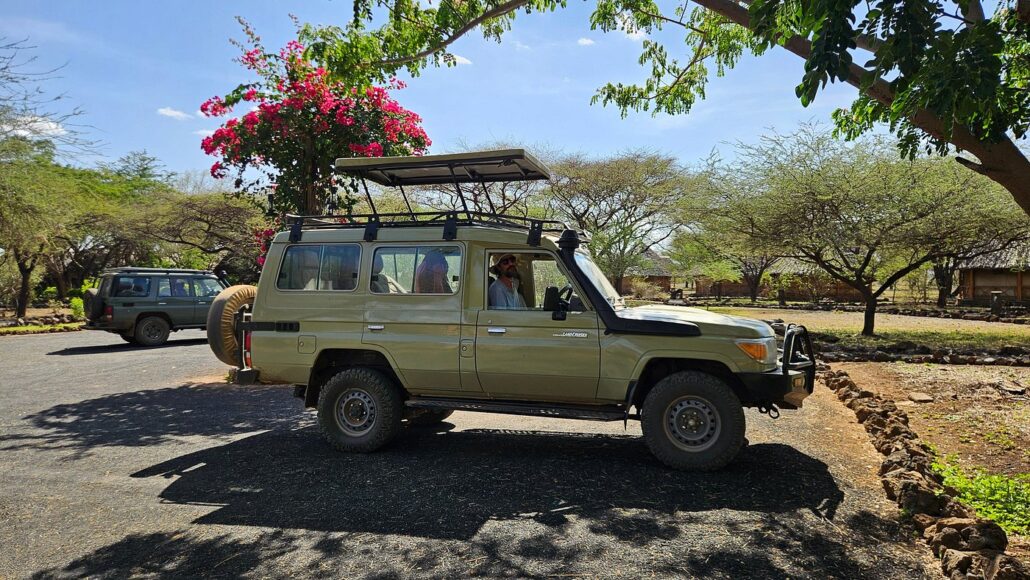
4x4 Car Rental with Pop-up Roof in Kenya—Land Cruiser HardtopStructured differently again, with servicing and replacement arrangements. See the long-term section.

Security Deposit

USD 500, refundable at the end of the trip if the vehicle returns without offenses. Loss of vehicle gadgets or equipment is deducted from it.

Insurance

Basic cover for head-on collision and theft is included. The excess is USD 1,500 to USD 2,000 depending on the vehicle. See the insurance section for what is excluded.

Fuel

Paid by you, including oil. Vehicles are supplied on a quarter-to-quarter basis, with no credit for unused fuel. Use our approved stations, Rubis and Shell.

Camping Equipment

Optional extra, priced as a package or per item.

Rooftop Tent

Optional extra, priced per rental.

Driver-Guide

Daily rate confirmed in your quotation.

Park Fees

Paid separately, for people and for the vehicle, to the Kenya Wildlife Service or park managers. Conservancy fees are separate again.

One-Way Fees

Where applicable, depending on route and availability. Confirmed in your quotation.

Cross-Border Charges

We process COMESA insurance at USD 50 for a maximum of 20 days, plus any border exit charges. A driver required abroad costs USD 50 per day.

Payment and Currency

Cash on arrival or bank transfer to our USD account. The visa is accepted with a 4% surcharge, paid 7 days before the rental starts. Payment can be made in USD, Kenyan shillings, or euros at the agreed exchange rate; US dollar notes must be 2009 print or newer.

Additional Charges After the Rental

Extra days, late return, damage, traffic fines, toll charges, and border exit confirmation fines are payable at the end of the rental.

What Do You Need to Rent a Car in Kenya? Documents to Carry

Throughout your self-drive rental in Kenya, keep your passport, driving license, international driving permit where applicable, and a copy of your signed rental agreement accessible in the vehicle rather than packed away, since these may be requested at park gates or, on a cross-border leg, at the border itself.

Requirement

Detail

Passport

Valid passport for identity verification at pickup.

Driving license

You must be legally entitled to drive a motor vehicle, and you must drive in compliance with the law in Kenya and the East African Community countries you enter.

International Driving Permit

An International Driving Permit is recommended if your license is not in English; this requirement will be confirmed at the time of booking.

Age

Minimum age set by the rental agreement and insurer. Confirmed at booking.

Deposit

USD 500, refundable at the end of the trip if the vehicle returns without offenses.

Payment

Cash on arrival or bank transfer to our USD account. Visa accepted with a 4% surcharge, paid 7 days before the rental starts. Payments can be made in USD, KES, or euros at the agreed exchange rate; only USD notes printed in 2009 or later are accepted.

Rental agreement

Signed at pickup. It covers the vehicle details, the rental period, pickup and drop-off locations, and every term on this page.

Additional driver

Only named drivers may drive. The primary and any additional driver are identified and sign in the agreement.

Insurance requirements

Our policy does not include personal life insurance. Bring your own life and travel insurance from home.

Shortening or extending

No refund for a rental period shortened from the period already paid, so choose dates carefully. Extensions are by mutual consent and on payment of the extension fee.

Vehicle condition

You keep the radiator water, battery, oil, and tire pressure at proper levels, lock the vehicle whenever it is not in use, and never interfere with the engine, transmission, brakes, or suspension. Don’t forget to turn off the fridge at night so as not to drain the Battery

Insurance for Self Drive Car Rental in Kenya

Our rental fleet is insured under motor vehicle policies from companies licensed under the applicable Kenyan insurance law, and the owner warrants valid third-party insurance as required by Kenyan law. The cover for the vehicle itself is deliberately specific: the policy covers head-on collision and theft only. Additional insurance coverage beyond the standard policy can be arranged on request for travelers who want a lower excess or broader protection, particularly on longer or cross-border trips.

We would rather you read that now than discover it on a track at dusk.

Topic

How it works under our agreement

What is covered

Head-on collision and theft of the vehicle, plus third-party insurance as required by Kenyan law.

Excess

Land Cruiser Prado TZ and TX: USD 1,500. Land Cruisers and luxury jeeps (LX 7.0 Series, V8, GX): USD 2,000. You pay any excess not covered by the policy. The excess for the Hilux is confirmed at booking.

Accident damage

Notify the police immediately if there is injury, make a statement for the police report (the basis of the insurance claim), and do not leave the scene or arrange repairs without our authority.

Theft

Covered. Keep the vehicle locked and secure whenever it is not in use.

Tyres

Punctures are not covered. A flat tire is handled at your cost as avoidable; if a tire is damaged beyond repair, a new one is arranged at a shared cost.

Windscreen

Not named as covered, because cover is limited to head-on collision and theft. Ask us to confirm in writing.

Underbody

Treated as the result of careless driving, so you are fully responsible.

Water damage

Passing through water is not covered. Engine damage from deep water attracts a fine of USD 1,500 on a Toyota Land Cruiser, and driving through extreme mud or deep water in heavy rain is your responsibility.

Unauthorized use

Only named drivers may drive. No racing, rally, or speed tests; no passenger hire without our knowledge; no replacing parts or accessories without our approval; and no exceeding the vehicle’s carrying capacity.

Off-road use

Driving off track or in restricted areas of a national park is your responsibility.

Cross-border use

All vehicles are insured for Kenya only. Crossing needs our prior consent and COMESA insurance (see the cross-border section).

Other exclusions

Negligence including driving under the influence, wheels and trims, cigarette burns (our vehicles are non-smoking), radio covers, badges, engine knocking, and fuel from non-approved stations.

Rooftop tents and camping gear

Damage is charged at the manufacturer’s replacement cost, or a minimum of USD 1,200.

Personal insurance

Our policy does not cover personal life insurance for occupants. Bring your own from home.

Where You Are Fully Responsible

Situation

Charge

Speeding

USD 80 fine under the Traffic Act. We advise 80 km/h on highways and 50 km/h in towns.

Single-vehicle accident or rollover

USD 1,000 plus any excess not covered by the policy.

Careless or reckless driving, or deep-water engine damage

USD 1,500 (Toyota Land Cruiser).

Driving outside 6:00am to 7:00pm without our consent

All damages will incur a USD 1,200 fine.

Concealing information or falsifying an accident report

USD 3,000 fine.

Driver required for the rest of the trip

USD $40 per day in Kenya, USD 50 per day abroad.

Security Deposit for Self Drive Kenya

Detail

Information

Amount

USD 500. The excess, which differs by vehicle, is a separate matter and is set out in the insurance section.

Payment method

Confirmed at booking. Rental payments are by cash on arrival, bank transfer to our USD account, or Visa with a 4% surcharge.

When held

For the duration of the rental.

When released

Refunded at the end of the trip if the vehicle returns without offenses.

What affects the refund?

Loss of vehicle gadgets or equipment is deducted from the deposit. Extra days, late return, damage, traffic fines, toll charges, and border exit confirmation fines are payable at the end of the rental.

Fuel and Mileage for Self Drive Car Rental In Kenya

Question

Answer

Is mileage unlimited?

Unlimited Mileage terms are stated in your quotation.

What fuel does each vehicle use?

Fuel type is confirmed for each vehicle at handover. Using the wrong fuel can seriously damage an engine.

How much fuel does it use?

Consumption depends on the vehicle, load, and terrain and is confirmed at handover. Plan generously for rough roads.

Where can I refuel?

In towns and along main highways. Our approved stations are Total, Rubis, and Shell. Damage caused by fuel from non-approved stations is not covered.

What is the fuel policy?

Fuel and oil are at your expense. Vehicles are supplied on a quarter-to-quarter basis, so no credit is given for unused fuel at the end of the rental.

Can the vehicle go to remote areas?

Yes, you can go to remote areas, but you need to plan your trip within the driving hours of 6:00am to 7:00pm. Please share your route so we can provide advice on fuel, tires, and road conditions.

What if I run out of fuel?

Fuel is the renter’s responsibility under the agreement. Call us immediately; we will help you get moving, and any resulting costs may be charged as additional charges.

Navigation and Communication for Self-Drive Kenya

Topic

Advice

Maps and GPS

Use a phone navigation app and carry a paper map as backup.

Offline maps

Download maps for the whole route before you leave coverage.

Mobile network

Coverage is generally adequate in towns and weak in forests, hills, and remote parks. Local SIM cards are inexpensive.

Charging

Carry a vehicle charger and a power bank.

Emergency communication

Save our emergency line and 999 or 112 offline, and write them down.

Route planning

Plan each day around daylight and add a margin. Share your route with us.

What Happens If Your Rental Car Breaks Down in Kenya?

Support means something specific here. This is the process set out in our rental agreement, in order.

Step

What happens

1. Call us

If the vehicle is involved in an accident, is damaged, breaks down, or needs repair, whatever the cause, you notify us immediately with full details. If a warning light comes on or you believe the vehicle needs mechanical attention, stop driving and seek our advice.

2. Stay put; do not self-repair.

Do not arrange repairs or leave the scene of an accident before police inspection or without our authority. After an accident, notify the police and provide a statement.

3. Repair

We arrange repairs within a reasonable time, depending on the location of the breakdown. If the breakdown results from a breach of the renter’s obligations, such as fluid levels or tire pressure, you pay for the repair.

4. Replacement vehicle

In the event of a mechanical breakdown, we provide a replacement car within 24 hours for rentals in Kenya and within 72 hours for rentals across the border.

5. Fuel

We fuel the replacement car. You fuel the broken-down car on its return to our place of business, preferably the pickup point.

6. Tyres

A flat tire is at your cost, as it is avoidable. If a tire is damaged beyond repair, a new one is arranged at a shared cost.

7. Continuing the trip

Your trip carries on in the replacement vehicle, under the same agreement.

In remote areas, response takes time, which is why we ask for your route, advise carrying water and food, and encourage you to keep a charged phone.

One-Way Self Drive Car Rental Kenya

A self-drive Kenya Car rental can be booked one-way, collected at one approved Kenyan location, and returned at another, such as Nairobi to Mombasa, Emali, Voi, Amboseli National Park, Watamu, or the Maasai Mara, Nanyuki, Laikipia, subject to vehicle availability and an additional one-way fee that currently typically ranges from $10 to $700 depending on pickup location, return location, vehicle, and route logistics. One-way self-drive Car Rental in Kenya can also be arranged toward Entebbe or Kampala in Uganda, Rwanda, and Tanzania on approved routes. See our One-Way Car Rental in Kenya page for the full detail.

Question

Answer

Can I collect in one location?

Yes. Nairobi, including airport delivery, is the usual pickup point.

Can I return it somewhere else?

Yes, by prior arrangement and subject to availability.

Which locations?

Within Kenya, such as Nairobi to Mombasa or Diani, Nairobi to Kisumu or Nairobi to Nakuru, and to Uganda (Entebbe, Kampala) and Tanzania (Arusha) by arrangement.

Is there an additional fee?

Yes, depending on route. Confirmed in your quotation.

Are camping vehicles available one-way?

Yes, subject to availability. Equipment is returned with the vehicle.

Can one-way be combined with cross-border?

Yes, with advance notice, because permission and insurance must be arranged before departure.

The classic one-way is the safari-to-sea route: the Mara, Amboseli, and Tsavo by Land Cruiser, then a drop in Mombasa or Diani, saving two days of retracing the highway and ending with salt water instead of dust.

Cross-Border Self Drive From Kenya

Self-drive Kenya travel can extend from Kenya into Tanzania, Uganda, or Rwanda, subject to advance approval, correct vehicle documentation, and confirmed insurance coverage specific to the country you are entering. Not every vehicle is approved for every crossing, so raise a cross-border requirement at the time of your enquiry so documentation can be arranged well ahead of travel.

Country

Status

Notes

Uganda

Available by arrangement

Crossings at Busia and Malaba. Drives on the left.

Tanzania

Available by arrangement

Crossings at Namanga, Isebania, and Taveta. Drives on the left.

Rwanda

Available by arrangement, via Uganda

Kenya does not share a border with Rwanda; the route passes through Uganda. Rwanda drives on the right.

Burundi

Not routinely offered

Enquire about case-by-case assessment.

Topic

What to know

Authorization

You must not take the vehicle across a border without our prior consent.

Insurance

Vehicles are insured for use in Kenya only. COMESA insurance is mandatory for crossing, and we process it for you at USD 50 for a maximum of 20 days.

Border documents

Your passport, any visa you need, and proof of authorisation to exit.

Vehicle documents

Proof of authorisation to exit, registration, and the COMESA insurance certificate.

Additional charges

USD 50 for COMESA cover, plus any border exit confirmation fines or border charges that arise.

If you cannot show authorisation

A USD 200 surcharge applies, and you must return the vehicle to the country of origin.

Breakdown abroad

A replacement vehicle will be provided within 24 hours within Kenya and 72 hours across the border, and a required driver will cost USD 50 per day abroad.

One-way restrictions

Some one-way cross-border returns may not be available; please confirm in advance.

Advance notice

Please provide notice at booking. Permission and COMESA cover are arranged before departure, not at the border.

Prohibited routes and uses

Crossings are not agreed in advance, and any unauthorized use. You must comply with the laws of Kenya and the other East African Community countries you enter (Uganda, Tanzania, and Rwanda).

Long-Term Self-Drive Car Rental in Kenya

For travelers staying in Kenya for several weeks, months, or years, a self-drive rental can be booked long-term, starting at 21 days and extending through monthly terms to as long as three years, priced so that the longer you commit, the lower your effective daily rate becomes, with scheduled servicing and maintenance carried out throughout the agreement and a free backup vehicle provided if your vehicle is damaged or develops a mechanical fault. See our Long-Term Car Rental in Kenya page for the full detail.

Topic

How it works

Monthly rental

Structured rates for one month or more, generally lower per day.

Several months

Available by agreement for research, filming, and project teams.

Mileage

Agreed in advance for the whole period.

Servicing and maintenance

Scheduled servicing is arranged during long rentals; you report warning signs promptly.

Insurance

Continues under the agreement with the same excess and exclusions.

Breakdown

Covered by the same emergency process, with a replacement vehicle where possible.

Extensions

Subject to availability and agreed in advance.

Early return

Terms are set out in the agreement.

Safety Tips for Self Driving in Kenya

Keep your pace measured on park roads regardless of how firm the track looks, since black-cotton soil can turn from firm to treacherous with little warning after rain.

  • Carry enough fuel for the stretch ahead rather than assuming a station will appear when you need one, and plan every day’s driving to end well before dark, since road hazards, pedestrians, and wildlife are far harder to spot once the light has gone.
  • Around wildlife, keep a safe distance and remain inside the vehicle at all times, following any ranger or signage guidance at each park.
  • Our support line is there for route questions as much as genuine emergencies, so use it if a road or a decision feels uncertain rather than pressing on regardless.

Self Drive Kenya With Pop-Up Roof

For a self-drive trip built around serious game viewing, a pop-up roof can be fitted to selected vehicles, giving an elevated, open viewing position for wildlife and photography during self-guided game drives across the Mara’s plains or Amboseli’s swamps. A pop-up roof is for daytime viewing and is not designed to be slept in, so travelers wanting both elevated game viewing and overnight camping should confirm the exact configuration they want when requesting a quote, since not every combination is available on every vehicle.

7 Seater Land Cruiser Pop Up Rooftop In Kenya

4x4 Land Cruiser LX Hardtop withIn Kenya

4x4 Land Cruiser V8 With Pop Up roof In Kenya

4x4 Safari Minivan with Pop Up Roof In Kenya

How Self Drive Kenya Car Rental Pickup and Handover Works

Stage

What happens

Pickup

In Nairobi (including airport delivery), at the agreed time.

ID and documents

We verify your passport, license, and booking.

Rental agreement

We review the agreement, including any excesses and exclusions, in plain language. Primary and additional drivers are named and signed.

Vehicle inspection

We inspect the vehicle together, inside and out.

Photographing existing damage

Existing marks are recorded and photographed, so you are not charged for them.

Vehicle controls

Lights, wipers, fuel type, gearbox, and dashboard warnings.

4×4 controls

Low range, differential, and traction controls are explained and shown.

Tyres and recovery equipment

Spare wheel, jack, and recovery gear are shown, and their use is explained.

Camping equipment

Tent, gear, and cooking equipment checked against the list. Damage to tents and camping gear is charged at replacement cost or a minimum of USD 1,200.

Emergency procedures

Emergency contacts, breakdown steps, and accident procedure.

Route questions

Your route, road conditions, fuel stops, and time estimates are all set.

Departure

You will leave with the vehicle and our contact number saved.

Vehicle Return

At return, we inspect the vehicle with you, assess fuel, equipment, and any new damage, and release your deposit according to the agreement. Extensions are subject to availability, and one-way returns are completed at the agreed location.

What to Pack for a Kenya Self Drive Trip

Category

Items

Documents

Passport, driving license, International Driving Permit, booking confirmation, permits, insurance papers, and copies stored offline.

Clothing

Light layers, a warm layer for the mountains, a rain jacket, sturdy shoes, a hat, and sunglasses. Neutral colors for wildlife viewing.

Navigation

Offline maps, a paper map, and a phone mount.

Electronics

Phone, camera, spare batteries, power bank, vehicle charger, and adapters.

Food and water

Drinking water, snacks, and, if camping, supplies for several meals.

Safari equipment

Binoculars, field guides, a camera with a long lens, and dust covers.

Camping equipment

Sleeping bags, a torch or headlamp, and anything not in your rental package.

Emergency items

First-aid kit, torch, water, our emergency number, and a basic tool kit.

Personal items

Medications, sunscreen, insect repellent, toiletries, and cash in small notes.

Who Is Self-Drive Kenya? Best For?

Couples

A Land Cruiser 76 Series or Prado gives comfort and capability, and a pop-up roof turns every track into a private game drive.

Families
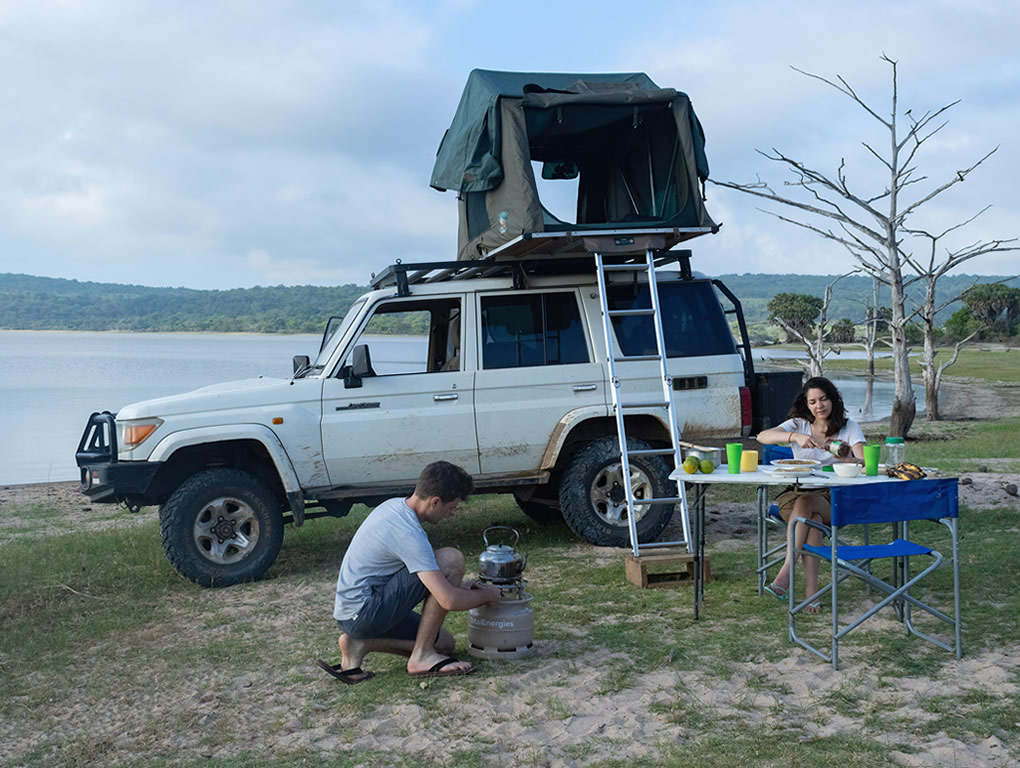
Car Rental in Uganda with rooftop tent in UgandaThe 78 Series offers space for children and luggage. Plan shorter driving days, build in the easy Rift Valley parks, and consider a driver guide for the longest legs.

Solo Travellers

Possible for confident drivers. Share your route with us, stay on well-travelled circuits at first, and consider a driver guide for the Mara and the north.

Friends and Small Groups

Costs are shared, and the 78 Series carries people and gear. Agree on who drives and who navigates.

Experienced Self-Drive Travellers

Enjoy the full freedom of the country, including Samburu, Laikipia, and the quieter corners of Tsavo.

Safari Travellers

Choose a pop-up roof, start at dawn, and take rangers on board in parks for better sightings.

Camping Travellers

Combine a rooftop tent with camping gear for flexibility, and book campsites early in peak months.

Who Should Choose a Driver Guide Instead?

Choose a driver-guide if you are new to safari, short of time, uneasy about driving on the left, heading to the Mara in the Migration season or to remote northern roads, or simply want to rest between sightings. The daily rate is confirmed in your quotation, and the vehicle stays ours throughout.

What to Check Before Booking

  • Your driving license is valid, and you have an International Driving Permit if needed.
  • Your passport is valid for the whole trip, with space for stamps.
  • You have chosen the right vehicle for your route and season.
  • You have read the insurance: head-on collision and theft only, with an excess of USD 1,500 to USD 2,000, and the exclusions list.
  • You understand the USD 500 deposit and when it is refunded.
  • You know the fuel policy (quarter-to-quarter, no credit), the approved stations (Rubis and Shell) and the 6:00am to 7:00pm driving hours.
  • You have arranged your own life and travel insurance.
  • You have chosen your dates carefully, since shortened rentals are not refunded.
  • You have booked conservancy stays or campsites for peak dates such as the Migration season.
  • You have told us about cross-border or one-way plans in advance and know that COMESA insurance costs USD 50 for up to 20 days.
  • You have offline maps, emergency numbers and a plan for each day’s daylight.

Frequently Asked Questions About Self Drive Kenya Car Rental

Can tourists self-drive in Kenya?

Yes. Visitors with a valid driving license can rent a vehicle and drive themselves. Kenya drives on the left.

Is Kenya suitable for a self-drive safari?

Yes. Nairobi, Nakuru, Naivasha, and Amboseli suit first-timers; the Maasai Mara, Tsavo, Samburu, and Laikipia reward a stronger 4×4 and more experience.

What vehicle should I rent?

For rough roads and rainy conditions, rent a 4×4 like a Land Cruiser or Hilux; for viewing, choose a pop-up roof; and for paved, dry-season routes, a lighter vehicle is sufficient.

Do I need a 4×4?

For the Mara, Tsavo, Samburu, Laikipia, the north, and any wet-season travel, yes. For paved routes and the Rift Valley lakes in dry weather, a 4×4 is not necessarily required.

What documents do I need?

Passport, driving license, booking confirmation and signed rental agreement. An International Driving Permit is recommended if your license is not in English.

How much does self-driving in Kenya cost?

Rates depend on vehicle, season, duration, and extras and are quoted in writing. Fuel and park fees are separate.

What is included in the rental?

The vehicle and the insurance in your agreement (head-on collision and theft). Fuel, oil, park fees, optional equipment, and a driver guide are itemized separately.

Is insurance included?

Yes. The policy covers head-on collisions and theft, with an excess of USD 1,500 for the Prado TZ and TX and USD 2,000 for Land Cruisers. Punctures, underbody damage, water damage, and negligence are not covered.

How much is the deposit?

USD 500, refunded at the end of the trip if the vehicle returns without offenses.

Is mileage unlimited?

Mileage terms are stated in your quotation.

What are Kenya’s roads like?

The main highways are largely paved and busy with trucks, while near the parks, the roads are murram and rough, and they become slippery in the rains.

Is it safe to drive in Kenya?

It is manageable with preparation. Avoid driving at night, plan your travel around daylight hours, keep offline maps and emergency numbers handy, and adjust your driving to the conditions.

Can I self-drive to the Maasai Mara?

Yes. A 4×4 is strongly advised; the last stretch to the gates is rough, and the Migration season needs early booking.

Can I self-drive the Great Wildebeest Migration in Kenya?

Yes. The herds are usually in the Maasai Mara from about July to October, with Mara River crossings drawing the crowds. Use a 4×4, book camps months ahead, and follow crossing etiquette: join a line, keep engines off, and never block the herds.

What are the rules for self-driving in Kenya’s parks?

Keep to the posted speed limit (commonly about 40 km/h), stay on designated tracks, give animals the right of way and keep 100 meters from dangerous ones, stand inside the pop-up roof and never sit on top, be through the gate before it closes, and pay through electronic systems.

Can I self-drive to Amboseli, Tsavo, Samburu, Lake Nakuru, and Hell’s Gate?

Yes, to each. See the destination table above for vehicle advice.

Can I use a rooftop tent?

Yes. Rooftop tents are available on selected vehicles and can be combined with camping gear.

Can I rent camping equipment?

Yes. Packages are listed in your quotation, and campsite fees vary by site.

Can I cross into Uganda or Tanzania?

Yes, by prior arrangement. COMESA insurance is mandatory and costs USD 50 for up to 20 days. Permission and paperwork are prepared before the rental starts.

Do I need COMESA insurance to cross a border?

Yes. Vehicles are insured for Kenya only, so COMESA insurance is mandatory for crossing.

Is it possible to return the vehicle to a different location?

Yes. One-way returns are arranged in advance, with a one-way fee confirmed in your quotation.

What happens if my vehicle breaks down?

Please call us immediately and do not arrange repairs yourself. We arrange repairs and, in the event of a mechanical breakdown, provide a replacement vehicle within 24 hours in Kenya and within 72 hours across the border.

Can I pay by card?

Yes. The visa is accepted with a 4% surcharge, paid 7 days before the rental starts. Cash on arrival and bank transfer to our USD account are also accepted.

What do I need to self-drive in Kenya?

A valid driving license, generally an international driving permit alongside it, and meeting the minimum age and experience set out in the rental agreement, along with a refundable security deposit.

Which side of the road does Kenya drive on?

Kenya drives on the left.

Can I self-drive in the Maasai Mara?

Yes, self-drive vehicles can reach the Mara, though black-cotton soil can become very difficult after rain, so the vehicle and timing are worth discussing before you book.

Which vehicles can I self-drive?

The Land Cruiser LX, Land cruiser GX, Land cruiser Hardtop, and Land cruiser V8; the double cab; the Land Rover Defender; and the Toyota RAV4 (NIssan Xtrail) are available for self-drive; safari vans and minivans are more commonly booked with a driver-guide).

Is self-drive difficult in Kenya?

Main highways are well connected, but park roads are frequently unsealed and can be demanding, particularly after rain; the right vehicle and route are matched to your experience before you book.

Can I add a rooftop tent or camping gear to a self-drive rental?

Yes, selected vehicles can be fitted with a rooftop tent or a full camping equipment package.

Can I self-drive one way?

Yes, subject to vehicle availability and an additional one-way fee typically ranging from $100 to $700 depending on the route.

Can I self-drive across the border into Tanzania, Uganda, or Rwanda?

Yes, subject to advance approval, correct documentation, and confirmed insurance for the specific border you are crossing.

Can I self-drive long-term in Kenya?

Yes, long-term self-drive rentals start at 21 days and extend to as long as three years.

What happens if the vehicle breaks down?

Contact our support line and share your location, and we will dispatch roadside assistance and provide a repair or replacement vehicle where needed.

Is insurance included?

Yes, standard comprehensive insurance is included, with an excess or deductible and specific exclusions set out in your rental agreement.

Can two people share the driving?

Yes, a second driver can be added at no additional charge, provided both drivers meet the standard requirements and are recorded on the rental agreement.

Get Your Kenya Self Drive Quote

You have been picturing it for some time: first light on the savannah, red earth beneath the wheels, the engine ticking as it cools while a herd moves unhurried across the road.

We would like to take care of everything between that picture and the real thing. The vehicle we have chosen for your route is not simply the one that happened to be free. The tires were checked yesterday, the tent opens in minutes, and the recovery kit you will almost certainly never touch. The route we have discussed with you, the fuel stops we trust, and the border paperwork are already done.

No detail is left to chance, because the details are what separate a good journey from the one you will describe for years. Whether you take the wheel alone or ask a driver-guide to share the road, you will arrive prepared and leave unhurried.

When you are ready, tell us when you travel, who is coming, and where you hope to wake. We will take it from there. Request your Kenya self-drive quote at Now.

Contact Us
First
Last
What Are Your Interests?
Which Countries Do You Want To Visit
Other addon Interests
With Whom Are You Travelling

Scroll to Top