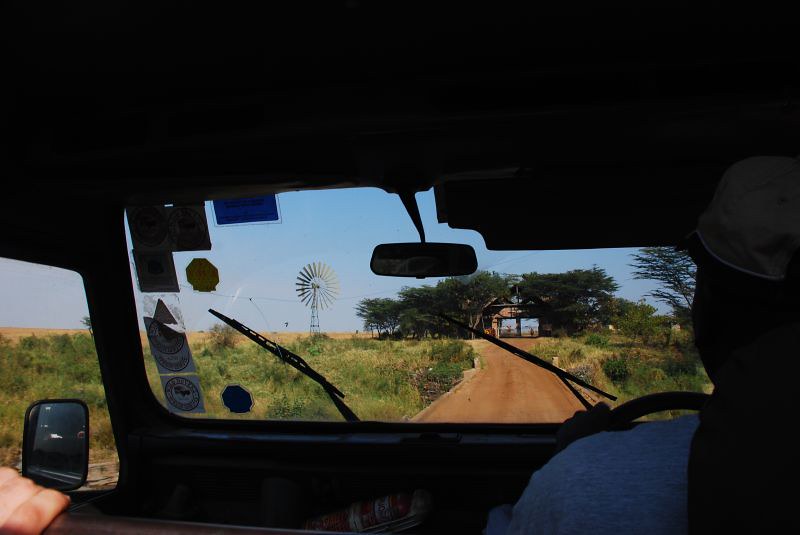
Car Rental 4×4 provides 4×4 vehicles for self-drive travel across Uganda, from Kampala and Entebbe to Murchison Falls, Queen Elizabeth National Park, Bwindi, Kibale, and Kidepo, built for travelers who want full control over their route and schedule. This experience is a particular satisfaction in driving yourself into Uganda’s landscape rather than being delivered to it: choosing to linger another twenty minutes watching the Kazinga Channel because nobody else’s schedule depends on moving on, deciding on the spot to spend an extra night at Lake Mburo, and feeling the descent toward Murchison Falls under your hands rather than someone else’s.
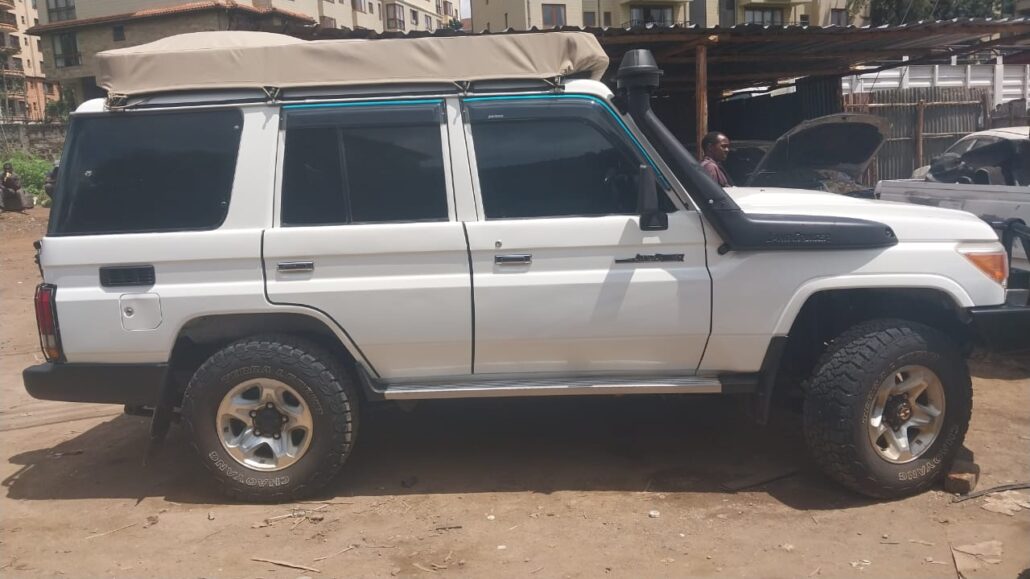
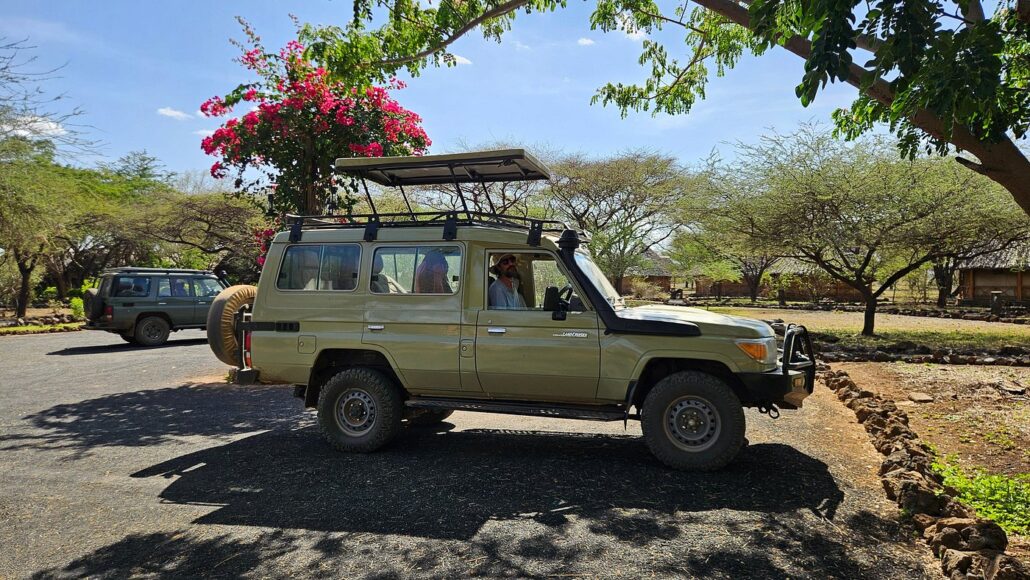 Self-drive car rental in Uganda lets you collect a 4×4 and drive it yourself for the length of your trip, rather than booking a vehicle with a driver-guide. It requires a valid driving license, generally an international driving permit alongside it, and meeting the minimum age and experience set out in the rental agreement. In Uganda, vehicles drive on the left, and park and rural roads are often unsealed, murram, firm in the dry season, and genuinely demanding after rain, especially on the approaches to Bwindi, the Rwenzori foothills, and the long stretch north to Kidepo Valley National Park. Self-drive Uganda Car rental vehicles can reach all of Uganda’s major national parks, and selected Land Cruisers can be fitted with a rooftop tent, while lighter vehicles and the extended Land Cruiser carry a ground tent instead. Self-drive Uganda Car rentals can be booked one-way, long-term, or extended across the border into Kenya, Tanzania, or Rwanda, subject to advance approval, with standard insurance, roadside support, and a security deposit applying to every booking.
Self-drive car rental means exactly what it sounds like: you collect the vehicle, you hold the keys for the length of your trip, and you make every decision about where to go, when to stop, and how long to stay at a sighting. It is the opposite end of the spectrum from a driver-guided safari, where someone else manages the route and the game drives on your behalf, and it suits travelers who value independence over having logistics handled for them.
What We Ask When You Enquire about 4×4 Self-Drive Uganda car rental
These are the fields it collects so that our reply is a real quotation and not a brochure.
Field | Why do we ask? |
Travel dates and flexibility | Fleet availability and seasonal pricing |
Number of travelers and luggage | Vehicle choice and seating |
Route or parks you hope to visit | Road conditions, 4×4 needs, and itinerary advice |
Self-drive or driver-guide | Pricing and briefing |
Camping, rooftop tents, or lodges | Equipment and package |
Pickup and return location | Airport delivery and one-way fee |
Cross-border plans | Permission, insurance, and paperwork lead time |
Driving experience (4×4, gravel, left-hand traffic) | Handover briefing and route advice |
Self-Drive Uganda at a Glance
Question | Short answer |
Can tourists self-drive in Uganda? | Yes, with a valid driving license. Traffic drives on the left. |
What should I rent? | A 4×4 is recommended for Bwindi, Kidepo, Ishasha, and any wet-season travel. A lighter vehicle can suit paved routes in dry weather. |
Our vehicles | Land Cruiser 78 Series and 76 Series (pop-up roof), Land Cruiser Prado, and Toyota Hilux Double Cab. Lighter options such as the RAV4 are confirmed on request. |
Where can I go with my self-drive rental? | You can drive to every major national park and safari region in Uganda, as well as in Rwanda, Kenya, and Tanzania, but you must make prior arrangements. |
Can I camp? | Yes. Camping gear and rooftop tents are available. Campsite fees typically run from $5 to $25 per night. |
Can I add a driver guide? | Yes, at $40 per day, covering the guide’s meals, allowance, and accommodation. Park fees are separate. |
What does it cost? | Daily, weekly and monthly rates are quoted for your vehicle, dates and extras. Fuel and park fees are paid by you. |
What if something goes wrong? | You call our emergency number. We diagnose, arrange roadside assistance or recovery, and keep you moving. |
How do I book? | Send an inquiry at carrental4x4.com. We reply with a tailored quotation. |
You can. Self-drive in Uganda is legal, practical, and increasingly popular, particularly for travelers who want to reach Bwindi, Murchison Falls, or Queen Elizabeth on their schedule. It is not, however, a casual undertaking. It rewards preparation, an honest assessment of your driving experience, and the right vehicle.
Is Uganda Suitable for Self-Drive?
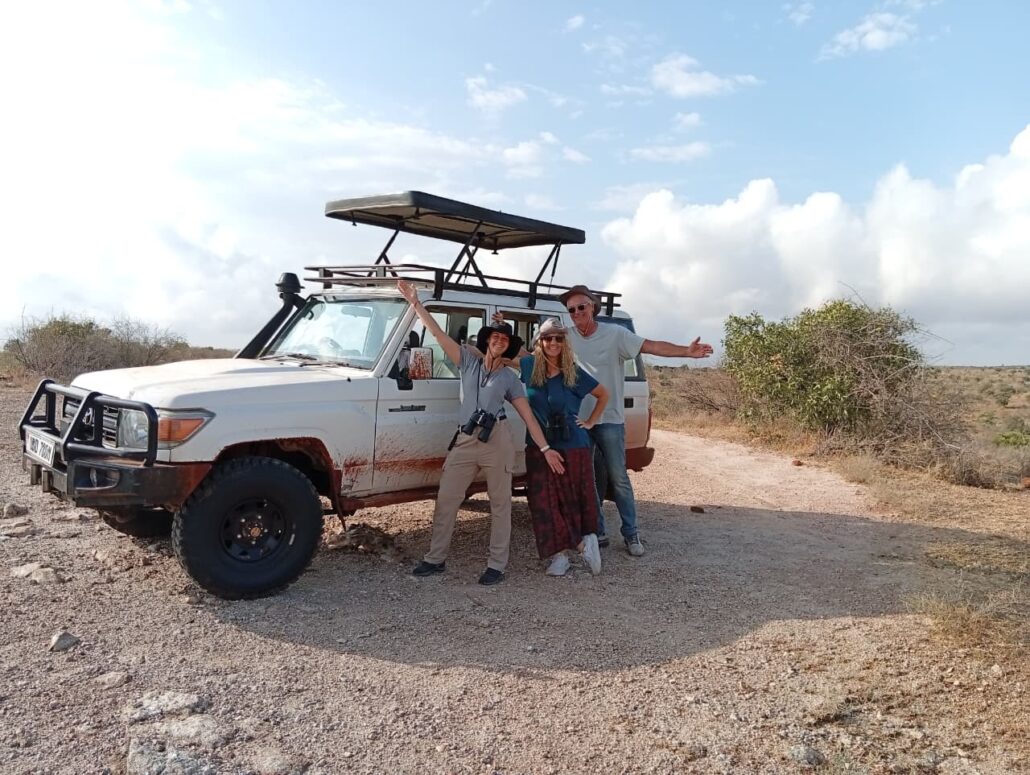 For most confident drivers, yes. The main highways to every safari region are largely paved. Distances are moderate, English is widely spoken, and the parks have established roads and tracks. The challenges are real but manageable: heavy truck traffic, speed bumps in every trading village, dense Kampala traffic, steep mountain roads near Kabale and Kisoro, and murram tracks that turn slick in the rains. Uganda suits self-drive best for travellers with some experience of driving abroad or off tarmac and a willingness to plan each day around daylight.
Who Can Rent a Self-Drive Car in Uganda and Drive
Anyone who meets the rental requirements: a valid driving license held for the period required by the agreement, the minimum age set by the rental agreement and insurer, a passport, and the security deposit. Additional drivers must be named in the agreement and approved in advance.
Can Tourists Self-Drive in Uganda?
Yes. Visitors can rent a vehicle and drive themselves using a valid driving license. Uganda drives on the left, which is most important for travellers from right-hand-drive countries; our handover includes time to settle into the vehicle before you leave the yard.
What Documents Do You Need to Self-Drive?
Your passport, your driving license, your booking confirmation, and the signed rental agreement. If you plan to cross a border, additional vehicle and insurance documents are prepared in advance. Park and permit documents, such as gorilla permits, are held separately, and you carry them with you.
Do You Need an International Driving Permit?
An International Driving Permit is recommended if your license is not in English, and it is a sensible addition even if it is not. Requirements can change, and a permit costs little compared with a misunderstanding at a checkpoint. We confirm the requirement for your nationality at booking.
What Are the Minimum Driving Requirements?
You must have a valid license, meet the minimum age set in the rental agreement, and have enough driving experience for the vehicle and route. For 4×4 safari rentals, we ask about your experience with gravel, mud, and manual gearboxes, because it shapes both the vehicle we recommend and the route we advise. The exact minimum age and license-holding period are confirmed at booking.
You can. Self-drive in Uganda is legal, practical, and increasingly popular, particularly for travelers who want to reach Bwindi, Murchison Falls, or Queen Elizabeth on their schedule. It is not, however, a casual undertaking. It rewards preparation, an honest assessment of your driving experience, and the right vehicle.
Is Uganda Suitable for Self-Drive?
For most confident drivers, yes. The main highways to every safari region are largely paved. Distances are moderate, English is widely spoken, and the parks have established roads and tracks. The challenges are real but manageable: heavy truck traffic, speed bumps in every trading village, dense Kampala traffic, steep mountain roads near Kabale and Kisoro, and murram tracks that turn slick in the rains. Uganda suits self-drive best for travellers with some experience of driving abroad or off tarmac and a willingness to plan each day around daylight.
Who Can Rent a Self-Drive Car in Uganda and Drive
Anyone who meets the rental requirements: a valid driving license held for the period required by the agreement, the minimum age set by the rental agreement and insurer, a passport, and the security deposit. Additional drivers must be named in the agreement and approved in advance.
Can Tourists Self-Drive in Uganda?
Yes. Visitors can rent a vehicle and drive themselves using a valid driving license. Uganda drives on the left, which is most important for travellers from right-hand-drive countries; our handover includes time to settle into the vehicle before you leave the yard.
What Documents Do You Need to Self-Drive?
Your passport, your driving license, your booking confirmation, and the signed rental agreement. If you plan to cross a border, additional vehicle and insurance documents are prepared in advance. Park and permit documents, such as gorilla permits, are held separately, and you carry them with you.
Do You Need an International Driving Permit?
An International Driving Permit is recommended if your license is not in English, and it is a sensible addition even if it is not. Requirements can change, and a permit costs little compared with a misunderstanding at a checkpoint. We confirm the requirement for your nationality at booking.
What Are the Minimum Driving Requirements?
You must have a valid license, meet the minimum age set in the rental agreement, and have enough driving experience for the vehicle and route. For 4×4 safari rentals, we ask about your experience with gravel, mud, and manual gearboxes, because it shapes both the vehicle we recommend and the route we advise. The exact minimum age and license-holding period are confirmed at booking.
4×4 Car Rental Uganda
A 4×4 gives you low-range gearing, high ground clearance, and traction where the road ends. For Bwindi’s steep sectors, Ishasha, Kidepo, and any trip in the March to May or September to November rains, it is the sensible choice.
Toyota Land Cruiser for Self-Drive
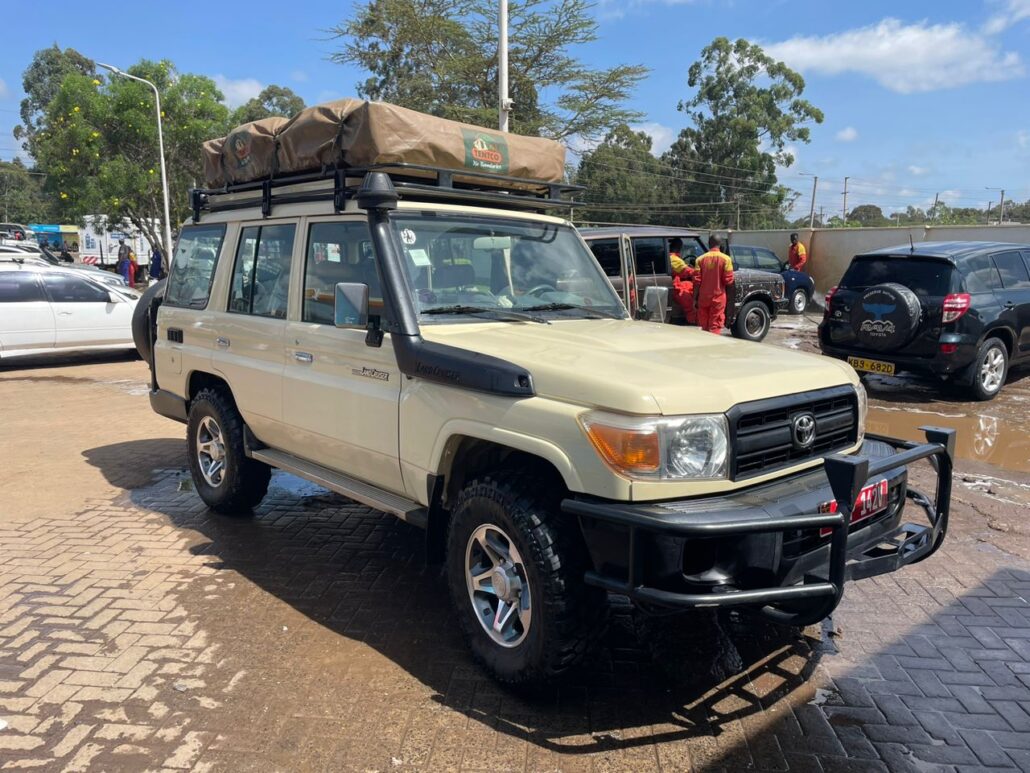 The Land Cruiser is the benchmark. Our 78 Series Troop Carrier offers space and strength for groups and camping loads. The 76 Series Station Wagon is more compact and easier to handle. The Prado is the comfortable choice for long road stretches. The 78 and 76 are available with pop-up roofs.
RAV4 Self-Drive Uganda
The Toyota RAV4 is a lighter, economical option for paved routes and well-maintained park roads in dry weather, such as Kampala to Lake Mburo or Fort Portal. It is not the vehicle for Bwindi’s rougher sectors or for Kidepo. Availability is confirmed on request.
Hilux 4×4 Self Drive
The Hilux Double Cab is strong, practical, and generous with load space, which suits gear-heavy trips, research teams, and long rentals. Secure anything you carry in the open bed.
Safari Vehicles for Self Drive
For wildlife viewing, a pop-up roof lets you stand and watch from inside the vehicle. For camping, a rooftop tent turns the vehicle into your bed. Both are available and can be combined.
Topic | What to know |
Driving side | Left. Rwanda, by contrast, drives on the right, so cross-border travelers must switch sides at the border. |
Speed rules | Speed limits are commonly around 50 km/h in built-up areas and up to 80 km/h on open roads, with higher limits on expressways. Follow posted signs, and expect lower speeds in practice. |
Road signs | Largely international in style, in English. Speed-bump warnings are frequent and not always well marked. |
Traffic | Heavy goods trucks and buses dominate the main highways. Boda-bodas (motorcycle taxis) and minibus taxis stop and turn without warning. |
Overtaking | Common but risky. Overtake only with clear sight, and expect oncoming vehicles to overtake on your side of the road. |
City driving | Kampala is dense and slow, and the peaks are long. Avoid peak hours for pickup and departure where you can. |
Rural roads | Shared with pedestrians, bicycles, livestock, and children. Slow down through villages. |
Mountain roads | Steep, winding, and often misty near Kabale and Kisoro. Use low gears on descents. |
Night driving | We advise against it. Unlit vehicles, people, and animals are hard to see, and park gates close at dusk. |
Parking | Park at lodges, official lots, and attended spaces. In Kampala, do not leave valuables visible. |
Police checkpoints | Routine. Slow down, greet politely, and have your license, passport copy, and vehicle documents ready. |
Fuel stations | Plentiful in towns and on main roads, sparse near the parks and in the far north. |
Driving etiquette | Flash headlights is often a warning or a request to give way, not always a greeting. Patience and a courteous wave go a long way. |
Uganda Road Conditions for Self-Drive
Main Roads
The highways from Kampala to Jinja, Masaka, Mbarara, Fort Portal, Gulu, and Masindi are largely paved, though patched in places and busy with trucks. Roadworks are frequent, and sections may be in a different condition from last year.
Roads Around National Parks
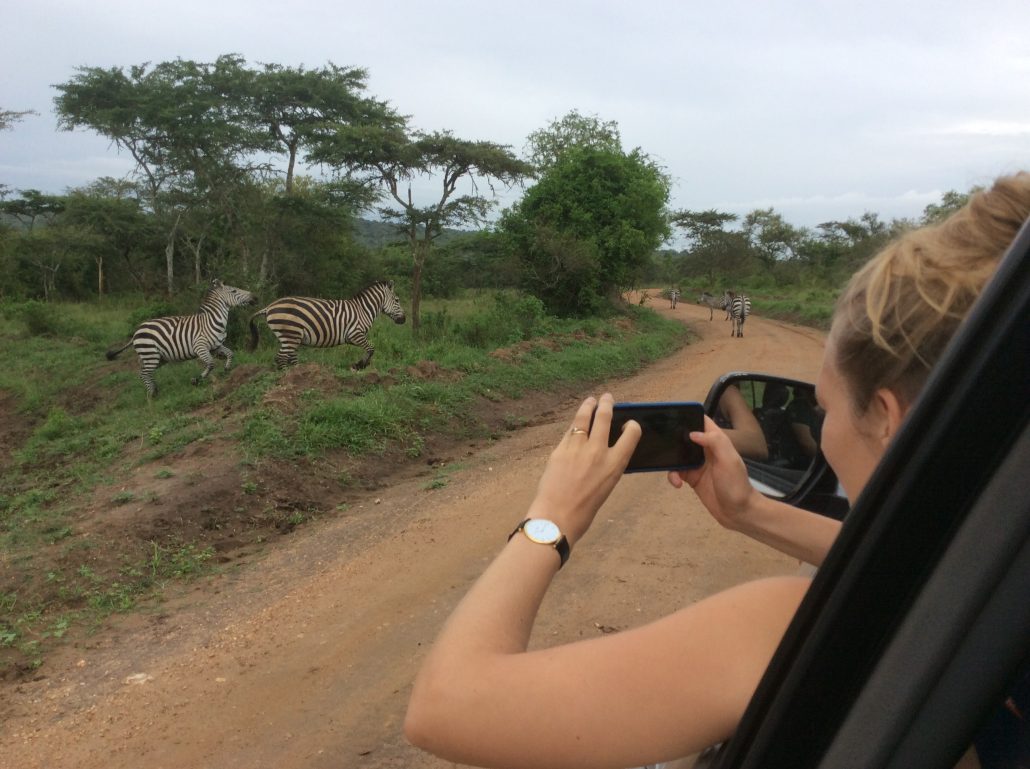
The approaches to Bwindi’s sectors, especially Ruhija and Nkuringo, are steep and winding, with murram surfaces. The Ishasha sector of Queen Elizabeth is known for ruts. Kidepo’s approach is long and remote. Murchison’s park tracks are generally in decent shape in the dry season. Park road conditions change with the weather, so we advise checking current conditions before you set out.
Rural Roads
Murram (red gravel) and earth roads link villages to the highways. In dry weather they are corrugated and dusty; in wet weather they can be slick, rutted, and sometimes impassable to a two-wheel-drive vehicle.
Mountain Roads
Around Kabale, Kisoro, Rwenzori, and Mount Elgon, roads climb steeply with sharp bends and drop-offs. Mist and rain reduce visibility. Drive slowly, use low gears, and yield way to heavy vehicles on narrow sections.
Roads During the Rainy Season
Uganda has two rainy seasons, broadly March to May and September to November. Murram roads can become slippery, low points can flood, and landslides occasionally affect hill roads. A 4×4 with good tires, patience, and a flexible schedule matters more than ever.
Driving at Night
Avoid it. Plan each day to arrive before dusk.
Which Roads Require a 4×4?
Route or area | Is a 4×4 needed? |
Kampala to Entebbe, Jinja, Masaka, and Mbarara (paved) | No, in normal conditions |
Lake Mburo park tracks | Recommended |
Queen Elizabeth (Mweya, Kasenyi) | Recommended; essential in the wet |
Ishasha sector | Strongly advised |
Bwindi sectors (Buhoma, Ruhija, Rushaga, Nkuringo) | Strongly advised |
Mgahinga and Kisoro region | Recommended |
Kibale and Fort Portal region | Recommended on forest and crater-lake roads |
Murchison Falls | Advised, especially in the wet |
Kidepo Valley | Essential |
Mount Elgon and Sipi | Advised |
Rwenzori and Semuliki access roads | Advised |
Gorilla and chimpanzee trekking in Uganda is always on foot, with Uganda Wildlife Authority rangers, and always with a permit booked in advance. Self-drive in Uganda simply carries you to the trailhead at a time and by a route of your choosing. The distinction matters, because the vehicle and the trek call for different preparation.
Self-Drive to Bwindi Impenetrable National Park
Bwindi Impenetrable National Park has four main trekking sectors: Buhoma in the north, Ruhija in the east, and Rushaga and Nkuringo in the south. The roads into each sector vary from winding to steep, and in the south and east, they become murram, tight, and slippery when it rains. A 4×4 with good tires is strongly advised. Fill the tank before the final approach, travel only in daylight, and confirm road conditions with the lodge or with us before the last stretch.
Where to Stay Before Gorilla Trekking
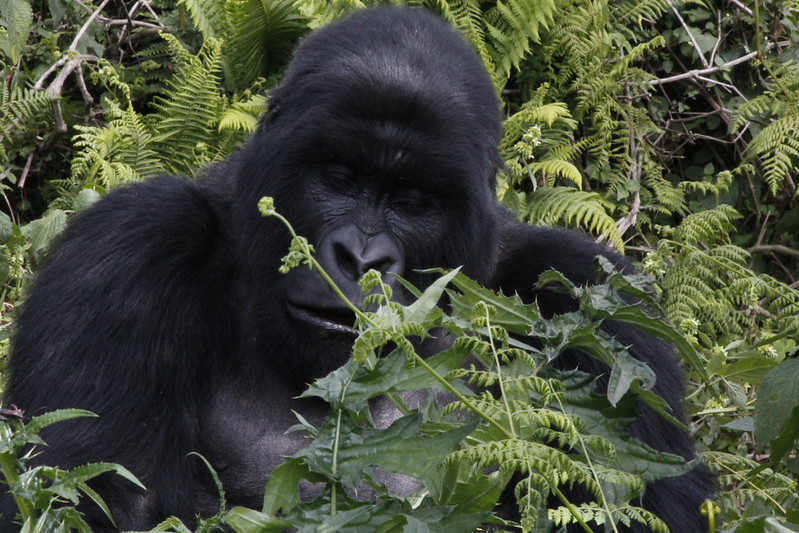 Stay close to your trailhead the night before so you can reach the morning briefing without a pre-dawn drive on unfamiliar roads. Options include lodges, tented camps, and campsites in each sector, and in Kisoro, Kabale, or Lake Bunyonyi for approaches from the south.
Vehicle Choice for the Volcanoes Region
For Mgahinga, Kisoro, and, by cross-border arrangement, Rwanda’s Volcanoes region, a 4×4 is recommended. The roads are mostly paved to Kisoro, but the park approaches and the Nkuringo area have steep, rough sections.
What Time Should You Arrive?
Briefings are usually early in the morning, so plan to arrive at your lodge the evening before and be at the park headquarters with time in hand. Check the exact report time on your permit and with your lodge.
Parking and Local Transport Considerations
The trek itself is on foot, and the vehicle waits at the headquarters, lodge, or trailhead. In steep sectors such as Nkuringo, your lodge may arrange a local driver for the final stretch if the track is too steep. Local porters can be hired at the trailhead and support the community. Do not leave valuables visible in the parked vehicle.
Self Drive Uganda for Gorilla Trekking in Mgahinga Gorilla National Park
Mgahinga is Uganda’s smallest national park and one of its most dramatic: three extinct volcanoes of the Virunga range rising above Kisoro, shared with Rwanda and the Democratic Republic of Congo. It offers gorilla trekking, golden monkey tracking and volcano hikes. The park is reached from Kisoro, close to the Cyanika border with Rwanda, which makes it a natural pair with Bwindi’s southern sectors and a gateway to Rwanda’s Volcanoes region. As everywhere, the trek itself is on foot with Uganda Wildlife Authority rangers and a permit booked in advance; the vehicle takes you to the park headquarters.
Self Drive to Mgahinga Gorilla National Park
From Kampala, drive via Masaka and Mbarara to Kabale, then on to Kisoro, roughly 510 km. The road is paved, but the stretch between Kabale and Kisoro climbs and winds through hills that are often misty, and heavy trucks slow progress. From Kisoro town, the park headquarters at Ntebeko is a short drive of about 15 km on a rougher road that can be slippery after rain. Plan the trip as a full day of driving, or split the journey with a night at Mbarara, Lake Mburo, or Lake Bunyonyi.
Where to Stay Before Gorilla Trekking in Mgahinga Gorilla National Park
Sleep close to the park the night before so that the morning briefing does not begin with a long, tired drive. Options include lodges and camps on the slopes below the volcanoes, guesthouses and hotels in Kisoro town, and lakeside lodges around nearby Lake Mutanda. Lake Bunyonyi, about two hours away, is a lovely first or last night but is too far for a same-morning trek. Book accommodation well ahead for the peak months, since the park’s trekking capacity is small.
Vehicle Choice for the Mgahinga Gorilla National Park
A 4×4 is recommended. The highway to Kisoro is paved, but the roads around the park are rough, murram, steep in places, and treacherous when wet. Couples and small groups will find that a Land Cruiser 76 Series or Prado is suitable, while larger parties with luggage are better served by the 78 Series; a lighter vehicle can be used in the dry season, but it offers little margin during the rains.
What Time Should You Arrive for Gorilla Trekking in Mgahinga Gorilla National Park?
Briefings usually take place early in the morning, commonly around 7:30am at the Ntebeko headquarters, though your permit and your lodge will confirm the exact time. Plan to be at the headquarters comfortably before the briefing, which means leaving your lodge shortly after first light. Never plan to make the drive on the same morning from Lake Bunyonyi or Kabale. Our agreement’s driving hours (6:00am to 7:00pm) fit this schedule, but arriving the evening before is the sensible way to do it.
Parking and Local Transport Considerations for Mgahinga
 The vehicle waits at the park headquarters while you trek, and trek duration varies widely with where the gorillas are, from a couple of hours to most of a day. Please park only in designated areas and keep your valuables out of sight. Porters are available at the headquarters and are well worth hiring, both for the load and for the community. If your lodge advises that a final stretch of track is too steep for your vehicle in wet conditions, ask whether it can arrange a local driver for that section. Golden monkey tracking and the volcano hikes start from the same area, so a second night lets you add one.
A note on gorilla availability: the group that can be visited at Mgahinga has moved between Uganda, Rwanda, and Congo over the years, so ask the Uganda Wildlife Authority about current availability when you book your permit.
Kibale National Park, near Fort Portal, is the best-known primate forest in East Africa, home to chimpanzees and a total of around a dozen primate species. Chimpanzee tracking and the full-day habituation experience begin from the Kanyanchu visitor area. The forest itself is on foot with rangers; the drive to it is one of Uganda’s easiest and most scenic.
Self-Drive to Kibale National Park
From Kampala, take the paved highway through Mubende to Fort Portal, roughly 300 km, or about five to six hours with stops. From Fort Portal, the road to Kanyanchu is around 35 km, partly paved and partly murram, and passes the Bigodi wetland, a community-run birdwatching area. In the rains, the murram can be slick. This is a good first self-drive route for travellers new to Uganda.
Where to Stay Before Chimpanzee Trekking in Kibale National Park
Choose between lodges and campsites in the forest edge near Kanyanchu, guesthouses and hotels in Fort Portal, and the crater-lake lodges around Fort Portal, which are scenic but add driving time. Staying near the forest reduces your morning drive. Fort Portal is a convenient base if you also want to visit Semuliki or the Rwenzoris.
Vehicle Choice for Kibale National Park
A Prado or Land Cruiser is comfortable on the highway and capable on the forest-edge roads. A 4×4 is recommended, especially in the rainy seasons, though the route is easier than the roads to Bwindi or Kidepo.
What Time Should You Arrive for Chimpanzee Trekking in Kibale National Park?
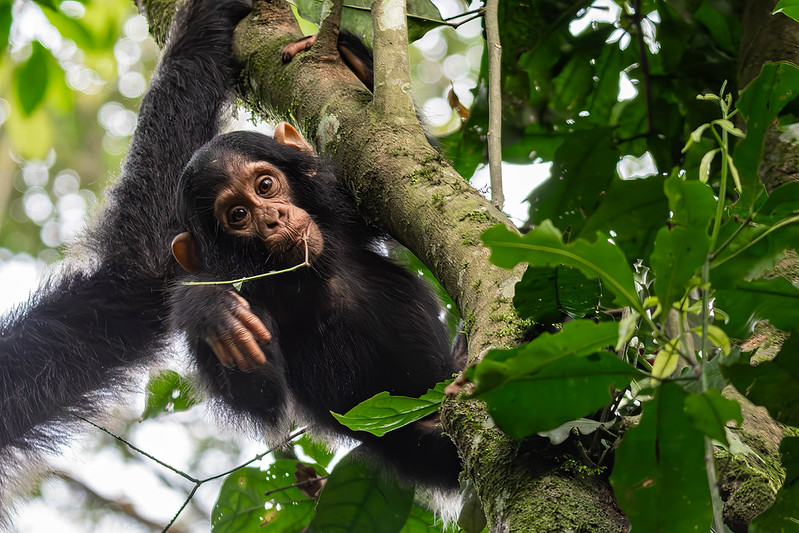 Tracking is normally offered in morning and afternoon sessions, with a briefing before each, and the habituation experience begins early and runs most of the day. Check your session time when you book your permit, and arrive at the visitor center with time to spare. Morning sessions generally give you the best chance of finding chimpanzees active.
Parking and Local Transport Considerations for Kibale
Park at the visitor center while you track. The forest is walked, with rangers, usually in small groups, and distances vary depending on where the chimpanzees are. Bring good boots, long sleeves, and rain protection. If you plan to bird at Bigodi, a local guide adds a great deal.
Minimum ages apply to chimpanzee tracking and gorilla trekking, and treks can be strenuous. Check current Uganda Wildlife Authority rules for your party before booking permits.
Camping turns a rental into an expedition and frees you from lodge schedules. One distinction matters. A rooftop tent is for sleeping. Camping gear is the equipment you need to live at camp: shelter on the ground, cooking, furniture, and lighting. They can be used together or separately.
Car Rental With Camping Gear in Uganda
Camping equipment is added to your 4×4 rental, and the exact contents of each package are listed in your quotation. Campsite fees typically run from $5 to $25 per night, depending on the site.
Rooftop Tent Self-Drive Uganda
A rooftop tent opens in minutes and lifts you off the ground, away from damp and most curious wildlife. It suits travellers who move often. Remember to fold it before driving, and be mindful of low branches.
Ground Camping Equipment
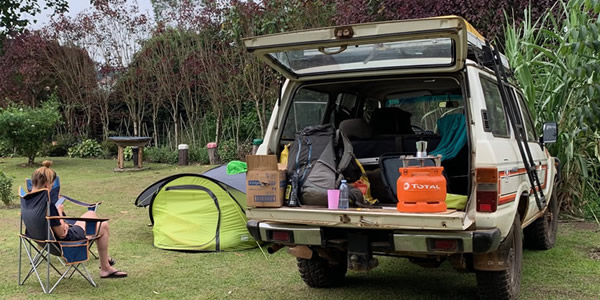 Ground tents, sleeping mats, and bedding suit larger groups and longer stays at a single site.
Cooking Equipment
Stove, fuel, pots, utensils, and basic kitchen items are included. You buy food and water; we advise on supplies in each region.
Camping Furniture
Folding chairs and a table make camp comfortable after a long day. Details are listed in the package.
Safety and Recovery Equipment
Every vehicle carries a spare wheel, jack, and basic recovery gear suitable for safari use, and we brief you on its use at handover. We also advise carrying a first-aid kit and enough water for delays.
Feature | Rooftop tent | Camping gear | Pop-up roof |
Purpose | Sleeping | Equipment needed to camp | Standing wildlife viewing |
Where it works | On the vehicle | On the ground at camp | On the vehicle |
Combine with | Camping gear or lodges | Rooftop tent | Any option |