Rent a 4×4 Car rental equipped with a rooftop tent in Tanzania for self-drive adventures, camping safaris, guided trips, and extended overland journeys.
There is a version of Tanzania that belongs only to travelers who sleep inside it rather than checking into it each evening, a campsite on the Serengeti’s edge as the plain goes quiet, the Ngorongoro crater rim cold and clear before dawn, and Lake Manyara’s forest settling into night sound around you. A rooftop tent turns a rental vehicle into the base for exactly that kind of trip. Car Rental 4×4 provides 4×4 vehicles fitted with rooftop tents across Tanzania for self-drive and driver-guided journeys through the Serengeti, Ngorongoro, Tarangire, Lake Manyara, Ruaha, and Nyerere, built for travelers who want their nights on safari to feel as considered as their days.
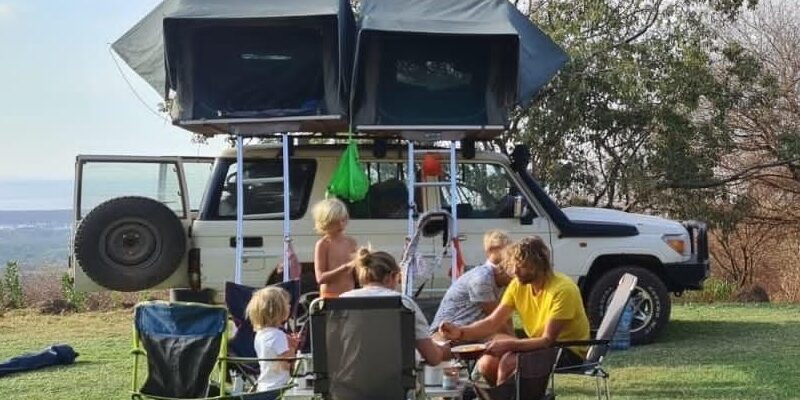 Tell us your travel dates, your group size, your intended route, your camping setup, your pick up locations, and whether you want to drive yourself or be driven, and we will confirm the vehicle and rooftop tent configuration that fits your Tanzania trip.
Car Rental 4×4 rents 4×4 vehicles fitted with a rooftop tent across Tanzania, giving travelers a raised, self-contained sleeping setup that opens above the vehicle each evening and packs away each morning. A standard rooftop tent sleeps two adults, and the configuration is suitable for camping at designated sites near all of Tanzania’s major national parks, including the Serengeti, Ngorongoro Conservation Area, Tarangire, Lake Manyara, Ruaha, and Nyerere, subject to park rules and campsite booking. Vehicles are available for self-drive, where the renter meets the standard license and rental requirements, or with a driver-guide for travelers who prefer local knowledge of Tanzania’s park roads and procedures. A rooftop tent can be combined with a fuller camping equipment package and, on selected vehicles, with a pop-up roof for elevated daytime game viewing. The rental can be arranged one-way, extended into a long-term hire of several weeks or months, or, subject to advance approval, taken across the border into Kenya, Uganda, or Rwanda. Pricing depends on the vehicle, duration, equipment package, and route, with fuel, park fees, and campsite fees arranged separately from the vehicle rental itself.
A rooftop tent safari vehicle is a 4×4 fitted with a folding canvas tent mounted to a roof rack or platform, giving you a genuine sleeping structure that travels with the vehicle itself rather than requiring separate camping accommodation booked ahead at each stop. It is the setup of choice for a Tanzania safari built around moving between several parks, since your overnight base moves with you instead of anchoring your route to a fixed circuit of lodges.
How the Rooftop Tent Works
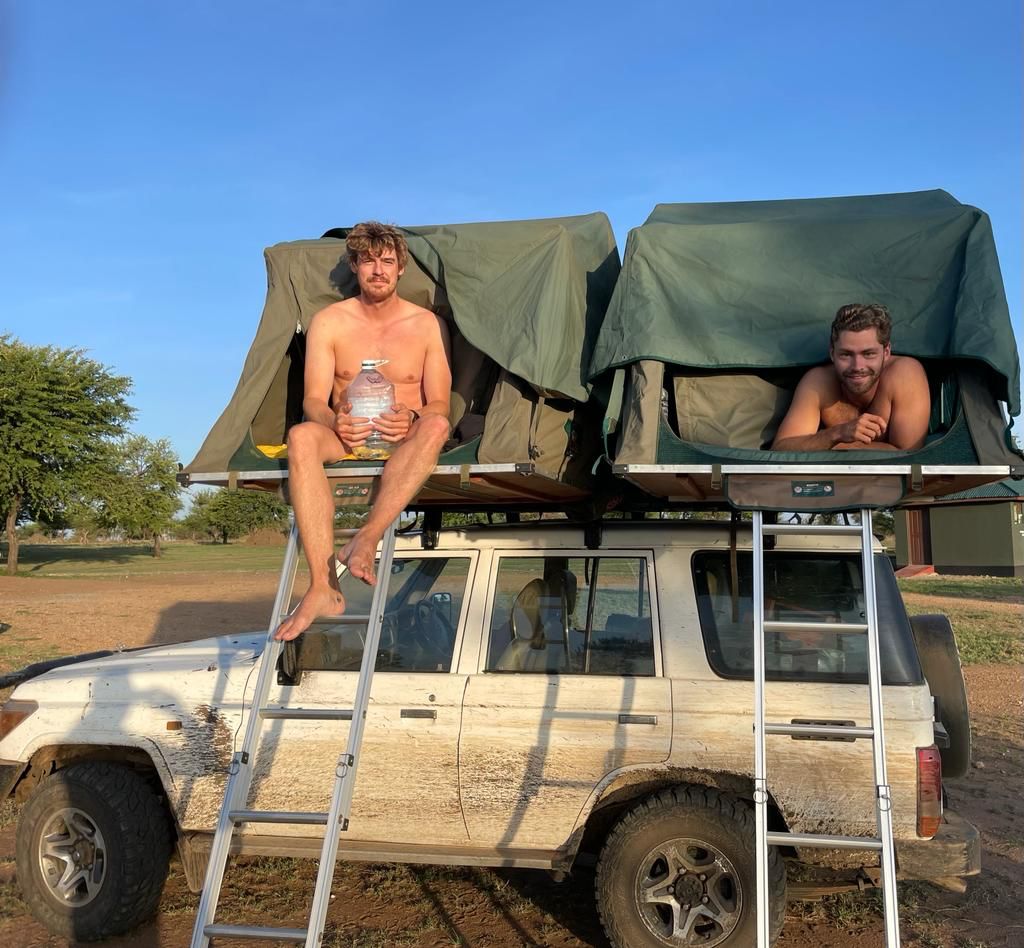
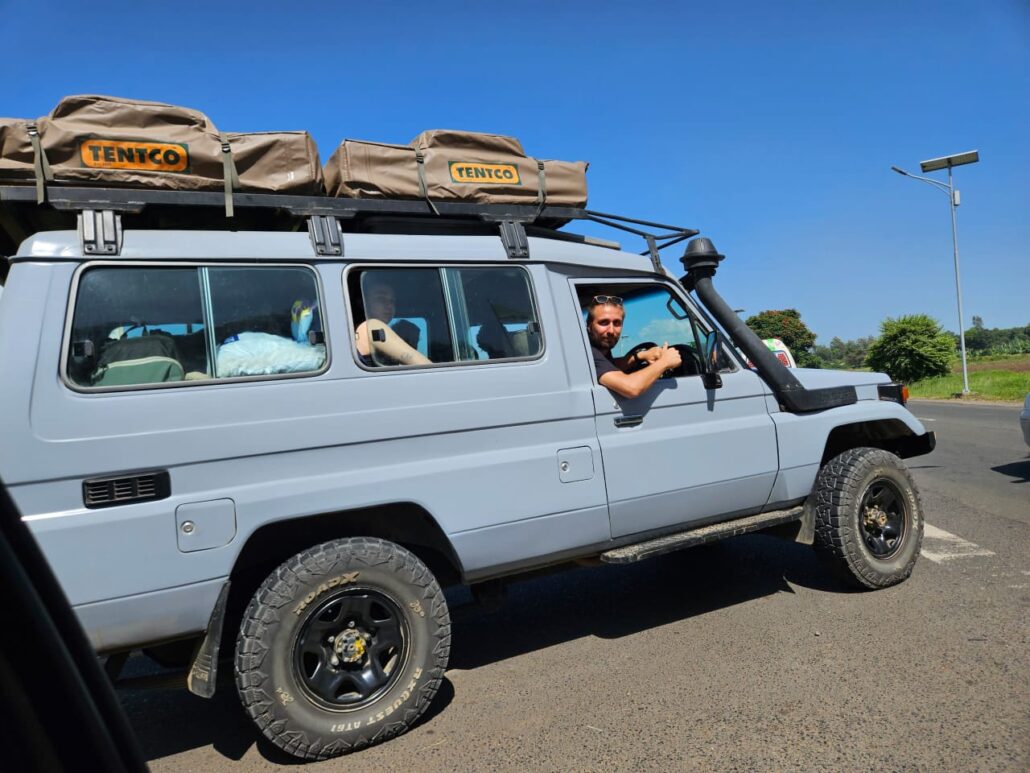 The tent unfolds upward and outward from its closed, roof-mounted position, typically supported by a built-in ladder for access, with a mattress already fitted inside the shell. Mesh windows provide ventilation on clear nights, and a rainfly closes over the canvas during the wetter months. Packing away in the morning simply reverses the process, and most travelers find the routine takes only a few minutes once they have done it a night or two.
How Many People Can Sleep in the Tent?
A standard rooftop tent sleeps two adults comfortably. For families or groups needing more capacity, a second rooftop tent or a ground tent can be added to the same vehicle, creating a combined setup that extends sleeping space well beyond what a single tent allows, without requiring a second vehicle.
Rooftop Tent vs. Pop-Up Roof
These two features are easy to confuse but serve entirely different purposes on a Tanzanian safari vehicle. A rooftop tent is a sleeping structure opened out above the vehicle each evening for overnight camping. A pop-up roof is a section of the vehicle’s own roof that lifts during the day to give standing headroom for wildlife viewing and photography during game drives and is not designed to be slept in. The two are not mutually exclusive: on selected vehicles, a pop-up roof section for daytime game viewing can be paired with a rooftop tent for overnight sleeping, giving you both the elevated safari experience and a proper night’s sleep from the same vehicle. If your main goal is overnight camping, a rooftop tent is what you need; if elevated daytime viewing across the Serengeti’s plains matters just as much, ask about the combined configuration specifically when requesting your quote. See our Car Rental With Pop-Up Roof in Tanzania page for the full detail on how that configuration works on its own.
Compare Our Tanzania Rooftop Tent Vehicles
| Vehicle | Best for | Rooftop tent | Ground tent option | Pop-up roof option | Self-drive |
| Toyota Land Cruiser (Hardtop) | Couples, small families | Yes. | Yes. | Yes. | Yes. |
| Toyota Land Cruiser (Lx) | Families, small groups | Yes. | Yes. | Yes. | Yes. |
| Toyota Land Cruiser GX | Couples | Yes. | Not typical | Optional | Yes. |
| Toyota Land cruiser Double Cab | Solo travelers, couples | Yes. | Yes. | Yes. | Yes. |
Exact vehicle and tent availability for your dates is confirmed as part of your quote, and see our Tanzania fleet page for current photographs and availability.
Which Rooftop Tent Vehicle Should I Choose?
For Couples
A standard or LX Land Cruiser with a single rooftop tent gives couples a quick daily setup and a comfortable double sleeping space, well suited to a circuit that moves between two or three parks over one to two weeks.
For Families
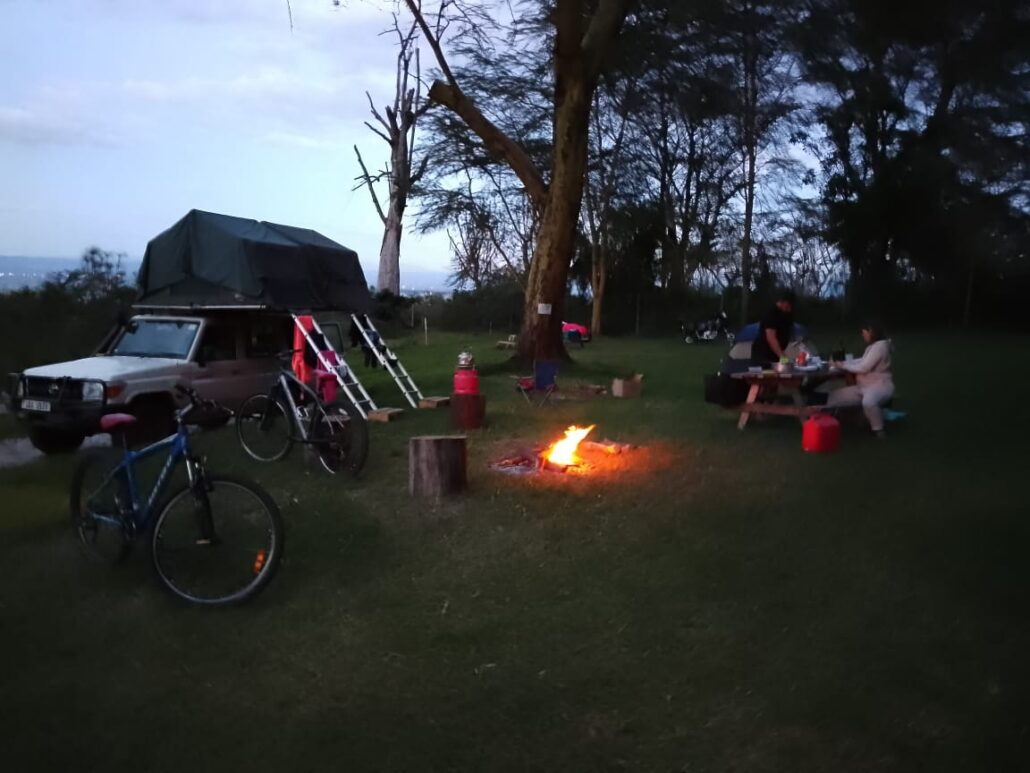 Families traveling with children generally benefit from a Hardtop Land Cruiser with a combined rooftop and ground tent setup, giving separate sleeping space for parents and children.
For Friends and Groups
Groups of four to six traveling together typically suit an extended Land Cruiser fitted with a combined tent configuration or two vehicles in convoy, which also gives a practical backup should either vehicle need attention on a remote stretch.
For Self-Drive Travelers
Self-drive travelers should choose a vehicle they feel genuinely confident handling on unsealed park roads, typically a standard Land Cruiser LX or Land cruiser V8, depending on group size, paired with a camping package that does not overload the vehicle’s practical range between fuel stops.
For Long Camping Trips
For multi-week circuits in a Land Cruiser double cab, choose vehicles with larger fuel tanks, additional water storage, and a fridge fitted as standard, so long-stay travelers need to resupply between towns less often.
Driving Requirements
Self-drive is available on rooftop tent vehicles in Tanzania for travelers who meet the standard rental requirements: a valid driving license, generally an international driving permit alongside it, and the minimum age and experience set out in the rental agreement.
Vehicle Handover
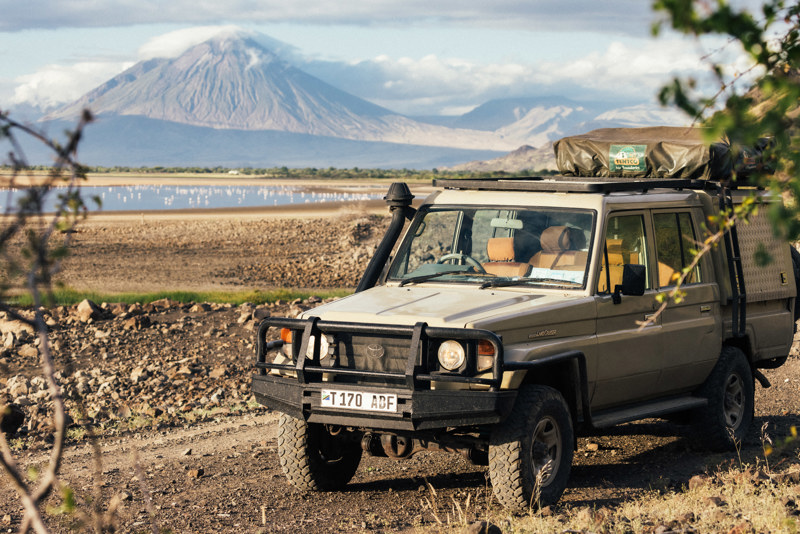 At handover, a member of our team walks you through the vehicle’s controls and four-wheel drive engagement, followed by a joint inspection of the vehicle’s condition and a full walkthrough of the rooftop tent and any other camping equipment before you set off.
Navigation and Remote Roads
Navigation on a self-drive camping trip is typically supported by GPS, offline maps, and route notes provided at handover, since mobile signal is unreliable across much of Tanzania’s park network, and road conditions are discussed honestly with you in advance so the vehicle and route genuinely match your driving experience.
Breakdown and Roadside Support
Roadside support is contactable throughout your rental, with assistance dispatched to your location in the event of a mechanical issue, wherever your camping route has taken you. See our Self Drive Tanzania page for the general requirements that apply to driving yourself across the country.
A driver-guide can be added to any rooftop tent rental for travelers who would rather be driven and guided through Tanzania while someone else manages navigation, park logistics, and campsite setup. This suits first-time visitors, families with young children, and travelers on longer, multi-park circuits where local knowledge of both roads and wildlife adds genuine value beyond simply driving. Your driver-guide also brings real interpretation to game drives, positioning the vehicle around sightings and reading the landscape in a way a self-guided drive cannot match.
Where Can You Go With a Rooftop Tent in Tanzania?
Serengeti National Park
The Serengeti’s designated public and special campsites put you close to the plains’ resident predators and, depending on the season, the wildebeest migration, with a rooftop tent well suited to the park’s long distances between sightings and camps.
Ngorongoro Conservation Area
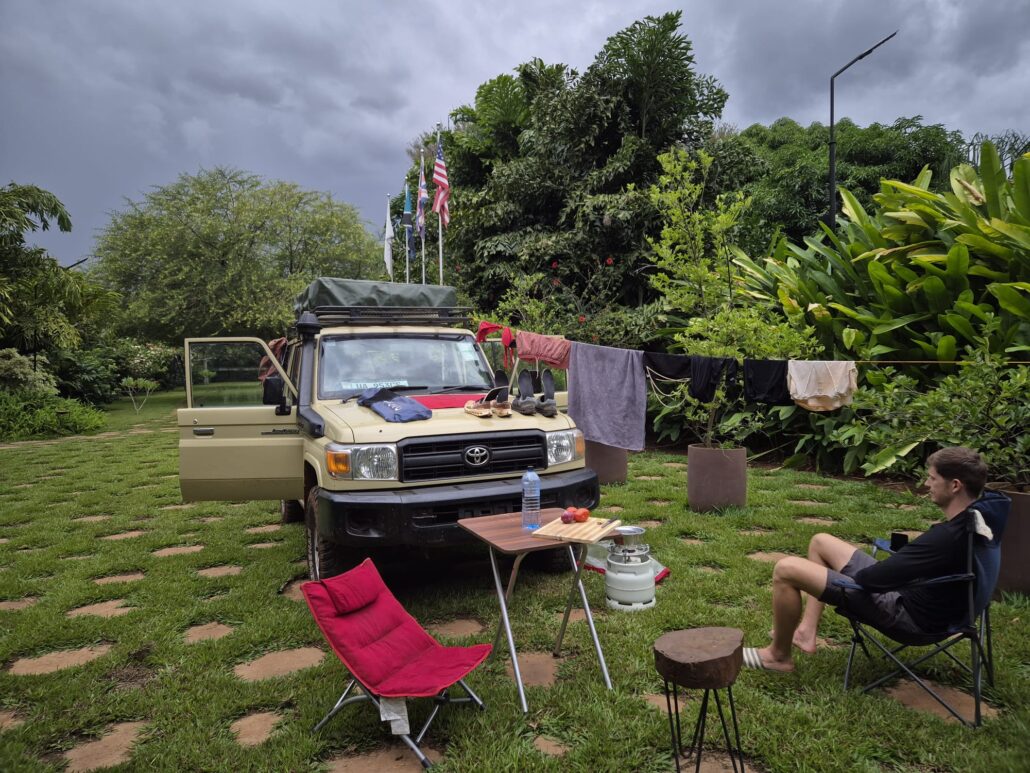 Camping is possible at designated sites on the Ngorongoro Conservation Area’s crater rim, giving a genuinely different perspective on the crater than a single-day visit, with cool, high-altitude nights that reward a well-equipped rooftop tent.
Tarangire National Park
Tarangire’s baobab- dotted landscape and large elephant herds make it a rewarding camping stop on a northern circuit, with designated campsites positioned to take advantage of the park’s dry-season concentration of wildlife around the Tarangire River.
Lake Manyara National Park
Lake Manyara’s compact size and varied habitat, from groundwater forest to open lake shore, make it an easy addition to a camping circuit, whether as a full stop or a shorter stay between Tarangire and Ngorongoro.
Ruaha National Park
Ruaha’s remote, rugged terrain and strong predator populations reward a rooftop tent vehicle for travelers seeking a quieter, less-visited alternative to the northern parks.
Nyerere National Park
Nyerere, Tanzania’s largest protected wildlife area, offers riverine and woodland camping along the Rufiji River, well suited to a self-contained camping setup given the park’s remoteness.
Tanzania National Parks, the authority that manages the country’s parks, operates two distinct categories of campsite, and understanding the difference shapes both your budget and the kind of night you can expect. Public campsites are shared, fixed-location sites open to any camper on a given night, generally fitted with toilets, showers, and a shared kitchen shelter, and priced lower than the alternative. Special campsites are exclusive-use sites, often more remote and further from a park’s main circuit, booked in advance for your group alone and priced at a premium for that privacy. Neither category typically supplies camping furniture, lighting, or cooking equipment, which is precisely why the chairs, table, stove, and lighting fitted to your rental vehicle matter as much as the tent itself.
Serengeti National Park Campsites
The Serengeti’s public campsites include Seronera, in the heart of the park’s central wildlife circuit and the most accessible of the group; Lobo in the quieter far north, useful for travelers timing their trip around the migration’s northern presence; and Ndabaka near the park’s western entrance for those approaching from Lake Victoria. Beyond these, the Serengeti holds a large number of special campsites spread across its central, eastern, western, and southern zones, each offering a more private, exclusive-use setting away from the public sites; special campsites are booked in advance through Tanzania National Parks rather than arranged on arrival.
Ngorongoro Conservation Area Campsites
Camping on the Ngorongoro crater rim centers on the Simba public campsites, positioned close to the Loduare gate side of the rim and offering toilets and basic ablution facilities at genuinely cold, high-altitude elevation; this is where the temperature drop mentioned earlier in this guide is felt most sharply, making a properly insulated rooftop tent and warm bedding worth prioritizing for a Ngorongoro night.
Tarangire National Park Campsites
Tarangire’s public campsite sits toward the park’s north-western section, within reach of the Tarangire River, giving a straightforward, well-used base for a night or two among the park’s baobabs and elephant herds.
Lake Manyara National Park Campsites
Lake Manyara’s camping options sit near the lake shore, a manageable distance from the main gate, making this one of the more relaxed camping stops on a northern circuit rather than a remote, self-sufficient night.
Ruaha National Park Campsites
Ruaha offers several public campsites along the Mdonya and Ruaha rivers, including sites known locally as Tembo, Kiboko, and Simba, alongside special campsites such as Mbagi and Ifuguru for travelers wanting a more exclusive, further-flung setting. Ruaha’s campsites are a genuine wilderness experience even by public-campsite standards, and it is worth taking seriously the same advice every ranger here gives: wildlife does pass directly through camp overnight, and food and rubbish should be stored accordingly.
Nyerere National Park Campsites
Nyerere’s campsites are concentrated along the Rufiji River corridor, generally arranged through the park authority or your driver-guide, given the park’s scale and relative remoteness compared with the northern circuit; this is a park where a driver-guide’s local knowledge of current campsite condition and availability is particularly useful if you are self-driving camping for the first time.
Booking and Paying for Campsites
Special campsites, and increasingly public sites during peak season, are best booked in advance through Tanzania National Parks rather than assumed to be available on arrival, and we can help arrange these reservations as part of planning your route. Most Tanzanian park gates now operate on a cashless basis for park and camping fees, settled by Visa or Mastercard rather than cash, so it is worth having a suitable card on hand rather than relying on cash reserves for gate payments. Exact campsite fees vary by category and season and are confirmed as part of route planning rather than fixed to a single published rate.
Tanzania Rooftop Tent Safari Routes
A classic first camping circuit links Arusha, Tarangire, Lake Manyara, Ngorongoro, and the Serengeti over seven to ten days, camping at designated sites within each park rather than returning to town between stops. Travelers with more time often extend south toward Ruaha or Nyerere for a quieter, less-visited camping circuit or continue north toward the Kenyan border to combine a Tanzania rooftop tent trip with Kenya’s Maasai Mara as part of a longer regional itinerary. Each of these routes can be built around a self-drive vehicle, a driver-guided vehicle, or a mix of the two depending on which legs of the journey you want to handle yourself.
Sleeping Equipment
The rooftop tent itself, fitted with a foam mattress sized to the tent, forms the core sleeping equipment, typically accommodating two adults, with a second tent or ground tent available for larger groups.
Cooking Equipment
Where a camping package is added alongside the rooftop tent, a portable gas stove, pots, pans, utensils, and basic crockery are provided for preparing simple meals at camp each evening.
Camp Furniture
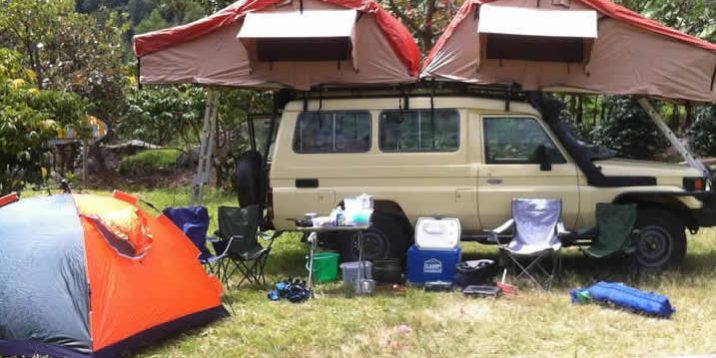 Folding camping chairs and a collapsible table, which are included in your package, give you a proper place to sit and eat at camp rather than relying on the vehicle’s tailgate. This matters more in Tanzania than travelers sometimes expect, since even well-equipped public campsites generally provide toilets, showers, and a shared kitchen shelter but stop short of furniture, so your chairs and table are what your evening at camp actually depends on.
Vehicle and Recovery Equipment
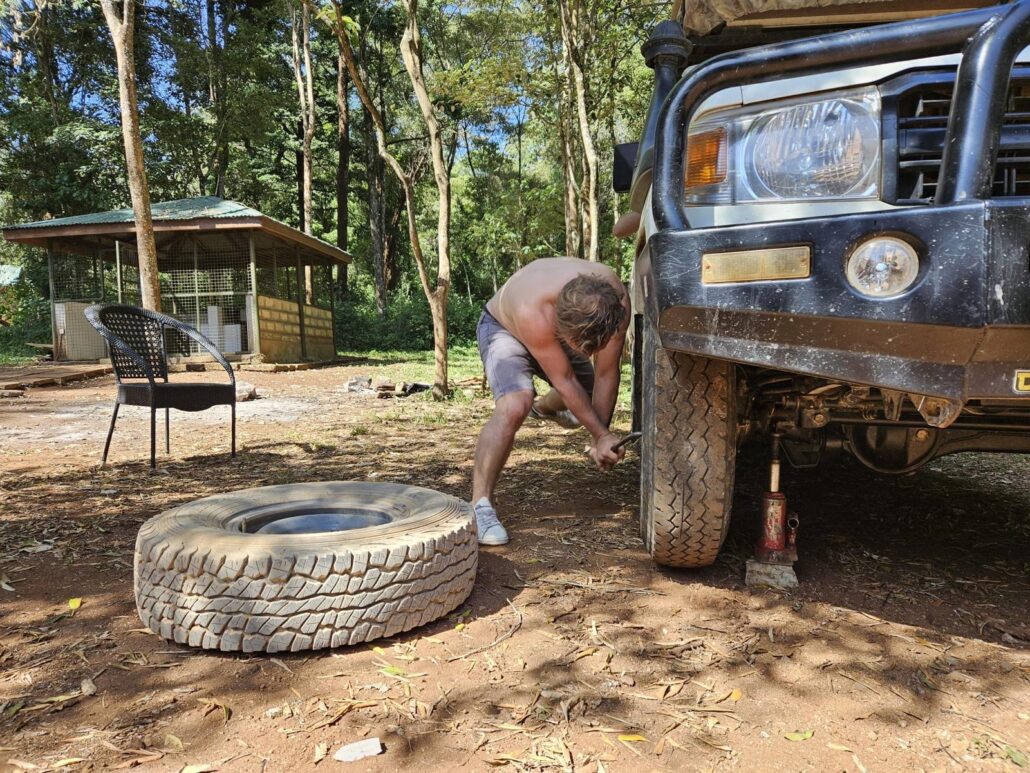
Every rooftop tent vehicle carries a spare wheel and jack, a first aid kit, a fire extinguisher, and typically a tow rope or recovery strap, inspected before handover so this equipment is present and functional for the length of your trip.
Not every rooftop tent rental automatically includes the full camping equipment list above; the tent itself is standard on a rooftop tent booking, while cooking equipment, furniture, and a fridge are confirmed as included or optional at the time of booking. For the fuller camping equipment breakdown, see our Car Rental With Camping Gear in Tanzania page.
Rooftop tent rental pricing in Tanzania depends on the vehicle chosen, the camping equipment package fitted to it, the length of the rental, the season you are traveling in, and whether you add a driver-guide. Car Rental 4×4 provides a tailored quote based on your travel dates, number of travelers, and preferred camping package, rather than quoting a single figure that wouldn’t reflect your specific route, group size, or camping setup.
What Determines the Rental Price?
Vehicle type and tent configuration sit at the center of the price, since a Toyota Land cruiser V8 with a simple rooftop tent and an LX Land Cruiser with a combined rooftop-and-ground-tent setup occupy very different points on the fleet. Rental duration shapes the effective daily rate, with longer rentals typically reducing the average cost per day. Self-drive versus driver-guided changes the cost structure, as does whether your route is one-way, extends across a border, or stays within Tanzania throughout.
What’s Included?
 The rental price includes the vehicle itself, standard insurance as set out in your rental agreement, the vehicle’s fitted safety and recovery equipment, and whichever camping equipment package you have specifically booked, checked item by item at handover.
What’s Not Included?
Fuel is not included and remains the renter’s responsibility throughout the trip. Park and conservancy entry fees, and campsite fees payable directly at each site, are separate from the vehicle rental. A driver-guide fee applies only where that option has been added, and cross-border charges, one-way fees, and any optional equipment beyond your chosen package sit outside the base rental price.
Insurance and Rental Protection
Standard insurance is included with every rooftop tent rental, covering the vehicle under the terms set out in your rental agreement, with an excess or deductible applying in the event of a claim and specific exclusions, such as damage arising from driving outside agreed routes, clearly set out in that agreement. Cross-border travel may require additional coverage confirmation specific to the country you are entering.
What Happens If the Vehicle Breaks Down?
If your vehicle breaks down, contact our support line immediately, share your location as precisely as possible, and roadside assistance is arranged and dispatched to reach you. The vehicle is assessed on site where possible, and a repair or replacement vehicle follows according to the procedure set out in your rental agreement, with this support extending to remote camping routes across the country.
A rooftop tent vehicle can be booked as a one-way rental, collected at one approved Tanzanian location and returned at another, subject to vehicle availability and an additional one-way fee that reflects the cost of repositioning the vehicle afterward. This suits an open-jaw circuit, such as a route beginning in Arusha and finishing on the coast or near the Kenyan border, without doubling back through your original pickup point. See our One-Way Car Rental in Tanzania page for more detail on how one-way pricing and logistics work generally.
Cross-Border Rooftop Tent Rental
 A camping route from Tanzania into Kenya, Uganda, or Rwanda can be arranged subject to advance approval, correct vehicle documentation, and confirmed insurance coverage specific to the country you are entering. Because driver-guides are generally licensed for specific countries and their park systems, a cross-border driver-guided trip is typically arranged with a driver-guide switch at the relevant border, so your safari continues with a driver holding the correct local knowledge and permits for the parks ahead. Not every vehicle is approved for every crossing, so raise a cross-border requirement at the time of your enquiry so route planning and documentation can be arranged well ahead of your travel dates.
Long Term Rooftop Tent Rental in Tanzania
For travelers planning to camp across Tanzania for several weeks or months, long-term rooftop tent rental in Tanzania offers a more cost-effective rate than a series of shorter bookings, along with scheduled servicing and equipment checks arranged at agreed intervals throughout the hire. This suits photographers on an extended assignment, overlanders building a longer regional itinerary, and returning visitors who prefer the freedom of their own camping vehicle over a fixed lodge-based schedule.
Best Time for a Tanzania Rooftop Tent Safari
Tanzania’s dry season, from roughly June to October, is the strongest general window for a rooftop tent safari, with thinner vegetation making wildlife easier to spot and firmer roads suiting both self-drive and driver-guided travel; this period also covers much of the wildebeest migration’s presence in the northern Serengeti and Ngorongoro area, depending on the specific month. The short dry season in January and February offers a second strong window, particularly in the southern Serengeti, with excellent visibility and calving season activity drawing predators into the open plains. The wetter months, particularly April and May, bring lush scenery and dramatically fewer other vehicles at sightings, but softer roads and a higher chance of rain at camp, which is worth planning around with the right rainfly and warm layers rather than a reason to avoid travel; a rooftop tent’s raised, dry sleeping platform is especially valuable during these months, when ground-level camping would mean pitching on damp earth.
Real Rooftop Tent Rental Experiences
Travelers who have taken a rooftop tent vehicle through Tanzania describe circuits such as a ten-day route from Arusha through Tarangire, Ngorongoro, and the Serengeti, camping most nights and finding the tent setup fast enough to feel routine by the third evening, with the Ngorongoro crater rim camp a highlight of the entire trip. A family who combined a rooftop tent with a ground tent on a Lake Manyara and Tarangire circuit highlighted how much easier the trip felt with separate sleeping space for parents and children. These are the outcomes Car Rental 4×4 aims to deliver with every rooftop tent rental, whether your Tanzania trip lasts one week or extends into a longer regional journey.
What Should I Pack for a Rooftop Tent Safari in Tanzania?
Binoculars and a camera with spare batteries or a power bank are worth prioritizing, particularly for early morning and late afternoon game drives when light and animal activity are both at their best. Sturdy, closed walking shoes suit uneven campsite ground, paired with layered clothing that can handle warm afternoons and genuinely cold nights, particularly at higher-altitude camps such as the Ngorongoro crater rim. A reliable head torch, a personal first aid kit, insect repellent, and sun protection round out the practical basics, alongside a reusable water bottle, and rain protection is worth carrying outside the driest months. Keep your travel documents and rental agreement accessible in the vehicle rather than packed away, since park gates may request them.
Who Should Rent a Rooftop Tent 4×4 in Tanzania?
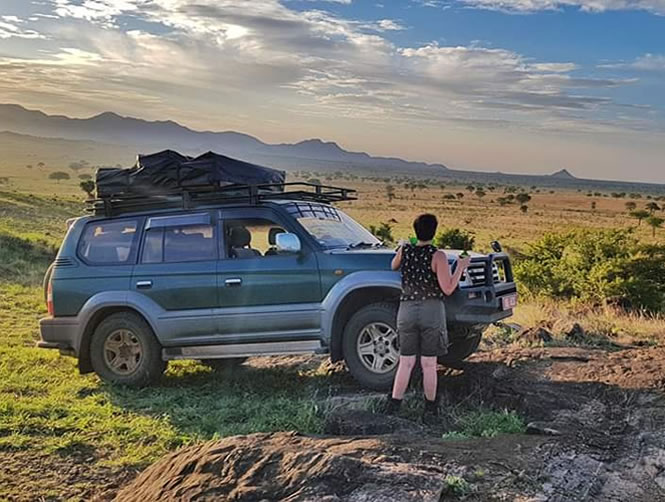 A rooftop tent 4×4 suits couples and solo travelers who want a quick, flexible daily setup close to nature, families who want children genuinely experiencing camp life rather than watching it from a lodge veranda, and small groups who value the cost efficiency and shared experience of one well-equipped vehicle. It equally suits photographers and wildlife enthusiasts who want to camp close to dawn game drives in the Serengeti or Ngorongoro, as well as long-stay travelers who want the freedom of their own vehicle over weeks or months rather than a fixed lodge circuit.
What to Check Before Booking?
Before confirming a rooftop tent booking, it is worth working through the vehicle type and tent configuration, the number of travelers and sleeping capacity you need, whether you want self-drive or a driver-guide, your rental period and rate, what the insurance and excess cover, mileage and fuel policy, whether cooking equipment and furniture are included or optional, cross-border permission if your route needs it, any one-way fee, what breakdown support looks like in practice, and the deposit and cancellation policy that apply to your booking.
Where can I rent a 4×4 with a rooftop tent in Tanzania?
Car Rental 4×4 provides 4×4 vehicles fitted with a rooftop tent across Tanzania, with pickup available in Arusha, Moshi, Dar es Salaam, and other approved locations at an additional Extra fee.
Which vehicles have rooftop tents?
The Toyota Land Cruiser in standard and extended configurations, the Land Cruiser GX, the Land cruiser Hardtop, the Land Cruiser double Cab, the Land cruiser LX, and, with a more limited setup, the Toyota RAV4 are available with a ground tent.
How many people can sleep in the tent?
A standard rooftop tent sleeps two adults, with a second tent or a ground tent available for larger families or groups.
Is it suitable for the Serengeti and Ngorongoro?
Yes, a rooftop tent vehicle is well suited to camping near the Serengeti and at designated sites on the crater rim of the Ngorongoro Conservation Area, subject to park rules and campsite booking.
What campsites are available in Tanzania’s national parks?
Named public campsites include Seronera, Lobo, and Ndabaka in the Serengeti; Simba on the Ngorongoro crater rim; a public site in Tarangire; lakeshore camping in Lake Manyara; and Tembo, Kiboko, and Simba in Ruaha, alongside special, exclusive-use campsites in each park that can be booked in advance.
Do I need cash for park and campsite fees?
Generally no; most Tanzanian park gates now operate on a cashless basis, with park and camping fees settled by Visa or Mastercard rather than cash.
Can I self-drive with my car rental with a rooftop tent in Tanzania?
Yes, self-drive is available on rooftop tent vehicles for travelers who meet the standard license and rental requirements.
Can I hire the car rental with the rooftop tent and a driver-guide in Tanzania?
Yes, a driver-guide can be added to any rooftop tent rental for travelers who prefer to be driven and guided throughout their trip.
What camping equipment is included with my rooftop tent rental?
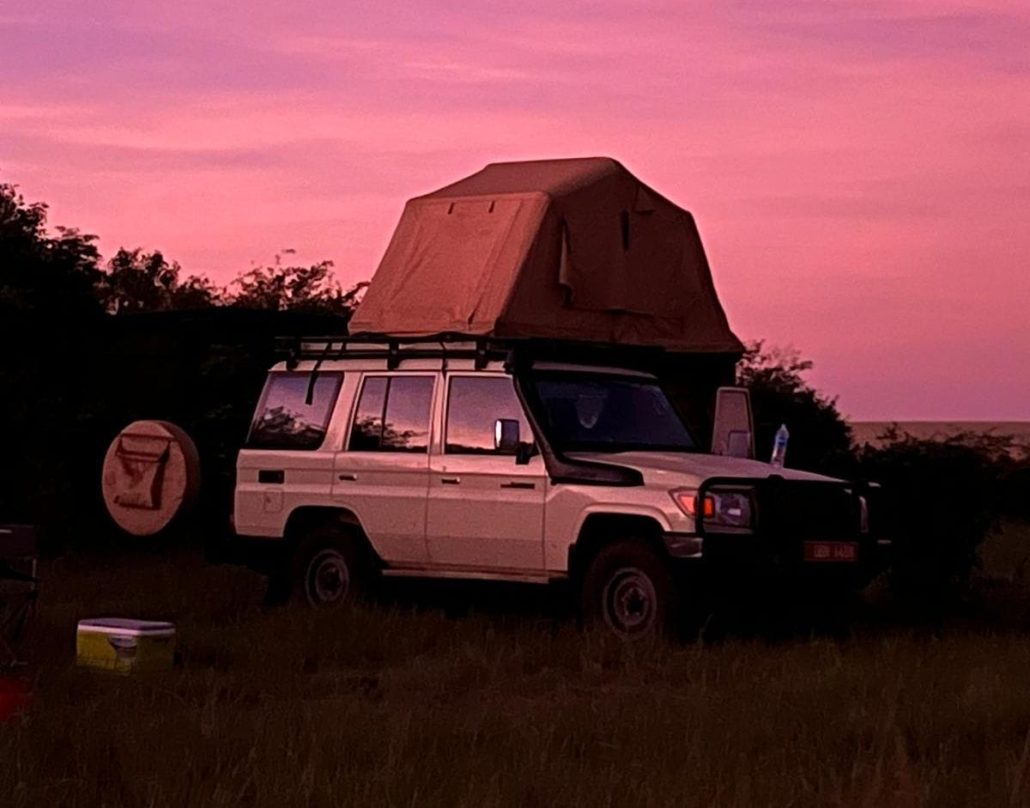 The tent itself is standard on a rooftop tent booking; cooking equipment, furniture, and a fridge are confirmed as included or optional depending on your specific package.
How much does it cost to hire a car with a rooftop tent in Tanzania?
Cost depends on the vehicle, camping package, rental duration and season; request a quote with your specific details for an accurate figure.
Can I combine a rooftop tent with camping gear?
Yes, a fuller camping equipment package, including cooking equipment, furniture and water storage, can be added alongside your rooftop tent.
Can I combine a pop-up roof with a rooftop tent car rental in Tanzania?
Yes, on selected vehicles a pop-up roof for daytime game viewing can be combined with a rooftop tent for overnight sleeping; confirm this configuration specifically when requesting your quote.
Can I cross from Tanzania into Kenya, Uganda or Rwanda with my rooftop tent rental?
Yes, subject to advance approval, correct documentation and confirmed insurance coverage for the specific border you are crossing.
What happens if the vehicle breaks down?
Contact our support line, share your location, and roadside assistance is dispatched, followed by a repair or replacement vehicle where needed.
Which vehicle should I choose for a Tanzania camping safari with a rooftop tent?
Couples and smaller groups generally suit a standard or GX Land Cruiser, while families and larger groups benefit from an extended Land Cruiser with a combined rooftop and ground tent setup.
Can I rent a car rental with a rooftop tent in Tanzania one way?
Yes, one-way rooftop tent rental is available on selected vehicles and routes, subject to an additional one-way fee.
Can I rent a car rental with a rooftop tent in Tanzania for a long-term trip?
Yes, long-term rooftop tent rental is available for extended trips of several weeks or months.
Is a fridge available?
A fridge or cooler is available on selected vehicles, either as a standard inclusion or an optional extra depending on the package chosen.
Is insurance included?
Yes, standard insurance is included, with an excess or deductible and specific exclusions set out in your rental agreement.
How far in advance should I book?
Book as far in advance as possible, particularly for cross-border routes or peak-season travel around the July to October migration period.