Lake Naivasha Travel Guide: What to Do, How to Get There, and Where to Stay

Lake Naivasha is a freshwater lake in the Great Rift Valley, about 90 km northwest of Nairobi, and one of the easiest escapes from the capital. The drive typically takes between one and a half and two and a half hours. It is known for boat trips among hippos and birdlife, the walk-among-giraffes experience on Crescent Island, the former home of Joy Adamson at Elsamere, and a lakeshore lined with lodges and campsites.

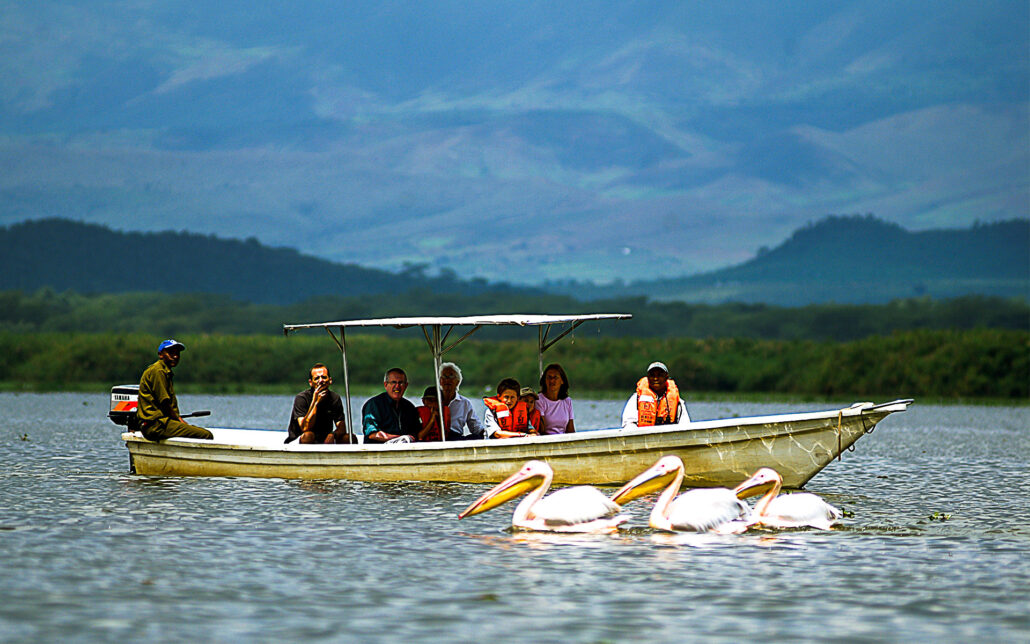
The first time you see Lake Naivasha, the surprise is how fresh it feels. Most of the lakes in this part of the Rift Valley are alkaline and shimmering with salt, but Naivasha is different: a wide, bright body of fresh water edged with papyrus, flat-topped acacia, and the occasional pair of fish eagles calling from the treetops. Hippos surface and snort in the shallows, pelicans drift in the distance, and on a still morning the whole lake seems to hold its breath.

Lake Naivasha travel guide

It suits families, couples, birdwatchers, cyclists, and first-time visitors who want hippos, boat rides, and walking safaris without a long journey. Plan one night for a relaxed weekend, or two nights if you want to add Hell’s Gate National Park and Mount Longonot. A day trip from Nairobi is possible if you start early. Most visitors spend one to two days here, often as the first stop on a route toward Lake Nakuru or the Masai Mara.

This guide covers the lake, what you can see and do there, where to stay, and how to plan your visit, from boat trips to birdwatching. For the wider area, including Hell’s Gate and Mount Longonot, see our Naivasha travel guide, and if you are planning a longer Rift Valley route, our Kenya safari routes page explains how the lake fits with Lake Nakuru National Park and the Maasai Mara. If your trip continues north, our Nakuru travel guide and our guide to Lake Nakuru National Park travel guide pick up where this one ends, and our Kenya safari routes page shows how the Rift Valley lakes fit into longer itineraries

Lake Naivasha at a Glance

Lake Naivasha lies on the floor of the Rift Valley at roughly 1,880 meters, a broad, shallow freshwater lake ringed by papyrus, acacia woodland, and flower farms. Unlike the soda lakes to its north, it is fresh enough to support fish, large hippo pods, and an abundance of waterbirds, and that makes it a favorite for boat rides and walks. It is also a lived-in landscape: farms, resorts, and fishing communities share the shore with wildlife, which provides the area a different feel from a classic national park.

Quick fact

What to know

Where it is

Nakuru County, Great Rift Valley, near Naivasha town

Distance from Nairobi

About 90 to 100 km by road

Typical drive time

Around 1.5 to 2.5 hours, depending on traffic and the route

Type of lake

Freshwater, with no surface outlet, so its level changes with rainfall and inflow.

Known for

Hippos, birdlife, boat rides, Crescent Island walking safaris, Hell’s Gate cycling, and Mount Longonot hiking

Also nearby

Elsamere Conservation Centre, Crater Lake Sanctuary, Lake Oloisien, and Lake Elmenteita

Best for

Weekend breaks, families, cyclists, birdwatchers, campers, and road-trippers

Time needed

One day for the highlights, one night for a relaxed visit, two nights with Hell’s Gate and Longonot

Is Lake Naivasha Worth Visiting?

Yes, particularly if you want a gentle, varied introduction to the Rift Valley within comfortable reach of Nairobi. A boat ride among hippos and fish eagles is one of Kenya’s most accessible wildlife experiences, and walking among zebras and giraffes on Crescent Island offers a rare chance to be on foot near wildlife without predators. Add the cliffs and gorges of Hell’s Gate, the crater rim of Mount Longonot, and a lakeside picnic, and you have a rich weekend without a long drive.

It is less suited to travelers who want classic big-game drives, since the lake is a place for water, birds, and walking more than lions and elephants. Water levels and the condition of shoreline roads can also vary, and weekends can be busy near the main jetties. Treat Naivasha as a base for several short outings and as a pairing with Nakuru or the Maasai Mara if you want large mammals.

Who Naivasha suits best

  • Families and weekend visitors who want wildlife and outdoor activity without long drives.
  • Birdwatchers, thanks to a bird list that runs past four hundred species.
  • Cyclists and hikers who want Hell’s Gate and Mount Longonot close together.
  • Campers and road-trippers who want lakeside campsites and flexible stops.
  • First-time visitors to Kenya who want a relaxed start before heading to bigger parks.

How Many Days Do You Need at Lake Naivasha?

One full day lets you take a boat ride and visit Crescent Island, or cycle through Hell’s Gate, but not both comfortably if you are coming from Nairobi. A night at the lake makes the weekend feel unhurried, and two nights allow you to add Hell’s Gate, Mount Longonot, and a quiet afternoon at Elsamere. Three or more nights make sense when Naivasha is one stop in a Rift Valley loop that continues to Elmenteita, Nakuru, and Lake Bogoria.

Time available

What fits

Best way to travel

One day from Nairobi

A morning boat ride and a short walk, or a Hell’s Gate cycle, with an early start

Self-drive 4×4 or a driver-guide who knows the lakeshore roads

One night

Boat ride, Crescent Island, and a sunset by the lake

Self-drive 4×4, with camping gear if you want to sleep by the water.

Two nights

Lake, Hell’s Gate, and either Longonot or Elsamere

Self-drive 4×4, adding a driver-guide for the gorge or hiking day

Three to four nights

Naivasha, Elmenteita, and Nakuru

Self-drive 4×4 with rooftop tent, or a one-way rental

Five days or more

Naivasha as the opening stop of a Rift Valley and Mara circuit

Long-term hire, or a one-way route that ends in a different city

Things to Do Around Lake Naivasha

Lake Naivasha’s attractions cluster in four groups: the water, the walking areas, the hills and gorges, and the cultural and relaxing stops. Choose one or two from each group for a balanced trip.

  • Boat rides among hippos, fish, eagles, pelicans, and cormorants.
  • Crescent Island for a guided walking safari among zebras, giraffes, and antelope.
  • Hell’s Gate National Park for cycling, gorge walking, rock towers, and camping.
  • Mount Longonot for a half-day hike to a volcanic crater rim.
  • Elsamere Conservation Centre, the former home of Joy and George Adamson, for tea and history.
  • Crater Lake sanctuary for walks around a green volcanic crater lake.
  • Lake Oloiden and Lake Elmenteita for quieter boat or bird outings.
  • Olkaria Geothermal Spa for a warm soak after a day of cycling.
  • Naivasha town and the flower farms are great for local color and picnic supplies.

Boat Rides and Hippos on Lake Naivasha

A boat ride is the signature Naivasha experience. Boats leave from resorts and public jetties around the lake, usually for about an hour, and glide past hippo pods, perched fish eagles, pelicans, kingfishers, and herons. Because the lake is large and the water calm, it is a comfortable outing for children and for anyone who is nervous about wildlife. Shared boats are cheaper, while private boats let you set the pace and stay longer for photography.

  • Choose your time: morning and late afternoon give softer light and more active birds and hippos.
  • Agree the route and price first, and confirm life jackets are provided.
  • Keep a respectful distance. Hippos are among Africa’s most dangerous animals, and boat operators should keep well clear of them.
  • Bring a hat, sun protection, and binoculars, since the lake reflects strong sunlight.
  • Many operators offer a boat and walking package that combines a visit to Crescent Island with a walking safari.

Crescent Island and Walking Safaris

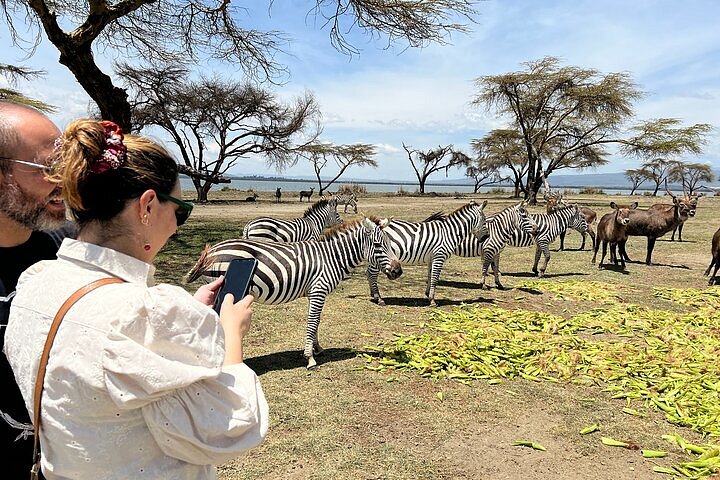
Crescent Island is a crescent-shaped private sanctuary on the lake, reached only by boat. It has no large predators, which means visitors can walk among giraffes, zebras, wildebeest, waterbuck, and impala, with guides leading the way. The flat, open terrain suits most ages and fitness levels, and the island’s picnic spots and lake views make it a natural half-day outing. Entry fees and boat transfers are usually charged separately from the boat ride, so confirm what is included before you pay.
Lake NaivashaTravel guide

Other private sanctuaries around the lake, including the Crater Lake area, also offer walking safaris, and they are a good alternative when the main jetties are crowded.

Hell’s Gate National Park

Hell’s Gate National Park lies south of the lake, a short drive from the main shoreline road. It is a compact park of dramatic cliffs, a gorge, volcanic towers, and open plains, and it allows walking and cycling among zebras, giraffes, buffaloes, and antelope since it has few large predators. The park is a favorite for cyclists, who can hire bikes near the main gate, and for those who like a mixture of scenery and activity.

Gates and access

Gate

Where it is

Best for

Elsa (Elsamere) Gate

Off Moi South Lake Road on the eastern side, the main entrance

Cycling, Fischer’s Tower, and most visitors

Olkaria Gate

On the western side near the geothermal station

The Olkaria spa and the western roads

Narasha Gate

On the northern side, a lesser-used entrance

Specific routes. Please confirm the opening and access first.

What to do

  • Cycle the park roads past zebras, giraffes, and cliffs, ideally in the cool morning.
  • Walk the gorge with a guide when conditions allow. The gorge can close during rains because of flash-flood risk, so check at the gate.
  • Climb or admire Fischer’s Tower and the other volcanic formations.
  • Visit the geothermal features and the Olkaria Geothermal Spa nearby.
  • Camp at one of the campsites inside the park, bringing your own equipment and supplies.

Park fees, bike hire rates, and gorge guide arrangements change from time to time. Confirm the current rules and payment method with the Kenya Wildlife Service before you travel, and arrive early, since last entries and exits follow park hours.

Local notes from our team

The lakeshore road: Moi South Lake Road is mostly tarmac, with rough patches in places, and it serves most lodges, jetties, and the gate to Hell’s Gate.

Timing: early mornings are best for cycling and for the boat ride, and the road becomes busier on weekends.

Where drivers tend to struggle: soft verges on the lakeshore, narrow gate approaches, and parking at busy jetties. Park well off the road and avoid soft ground near the water.

Supplies: buy fuel, water, and groceries in Naivasha town before leaving the main road, because stocks along the lakeshore are limited.

Mount Longonot

Mount Longonot is a dormant volcano whose crater rim can be hiked in a half day. The trail climbs steeply to the rim, then circles the crater with views over the Rift Valley and, on clear days, Lake Naivasha. Allow around four to five hours for the climb and the full circuit, carry plenty of water, and start early to avoid the midday heat. It sits roughly twenty minutes’ drive from the lake, so it combines well with a morning hike and an afternoon boat ride.

Elsamere, Crater Lake, and Other Stops

Elsamere Conservation Centre

Elsamere, on the southern shore, was the home of Joy and George Adamson, the couple behind the story of Elsa the lioness. Today it is a conservation and education center with a small exhibition, birdlife in the garden, and a popular afternoon tea on the lawn. It makes a quiet pause between a boat ride and a hike.

Crater Lake Game Sanctuary

A short drive south, a green crater lake sits inside a small sanctuary where you can walk among giraffes, zebras, and other wildlife and enjoy panoramic views. It is a good option if you want a walk away from the main jetties.

Lake Oloiden and Lake Elmenteita

Lake Oloiden, a small lake next to Naivasha, is quieter and offers boat safaris and birdlife. Lake Elmenteita, a short drive towards Nakuru, is a soda lake known for pelicans and flamingos in good years. Both can be added if you have an extra day.

Naivasha Town and the Lakeshore Roads

Naivasha town sits beside the main highway and is the practical heart of the area. It has fuel stations, supermarkets, banks, ATMs, pharmacies, and a wide selection choice of restaurants and cafés, and it is the best place to stock up before heading along the lakeshore. Moi South Lake Road leads to the main lodges, jetties, Elsamere, and the gate to Hell’s Gate, while Moi North Lake Road serves the northern shore and its farms.

  • Fuel: fill up in Naivasha town, because stations along the lakeshore roads are few.
  • Groceries and camping supplies: buy food, water, charcoal, and ice in town before you head out.
  • Cash: ATMs are available in town, and mobile money is widely used in small shops and at jetties.
  • Food: the town has everything from quick local meals to sit-down restaurants, and many lodges serve lunch to day visitors.
  • Flower farms: Naivasha is one of Kenya’s main cut-flower regions, so you will see greenhouses and farms along the roads and shoreline, and some businesses sell flowers directly.

Best Time to Visit Lake Naivasha

Naivasha can be visited all year, and the dry windows, roughly January to March and June to October, are the most reliable for boat rides, clear light and easy driving. The long rains from about March to May bring greener scenery, muddier tracks and quieter lodges, and Hell’s Gate’s gorge may close. The short rains in November and December are lighter and bring migratory birds. Early morning and late afternoon are the best times of day for hippos, birds and cycling.

  • For boat rides and birds: dry months, in the early morning or late afternoon.
  • For cycling and hiking: cooler mornings in the dry season.
  • For fewer visitors: weekdays, avoiding public holidays and school breaks.
  • For green scenery: after the rains, with extra care on tracks.
  • For hippos grazing on land: evenings, which is also when extra caution is needed around lodges and campsites.

How Far Is Lake Naivasha From Nairobi?

Lake Naivasha is about 90 to 100 kilometres from Nairobi. Most drivers take the A104 highway, either through Limuru or by the route through Mai Mahiu, and descend the escarpment into the Rift Valley, where viewpoints offer wide views and a place to stop. The road is tarmac and generally in good condition, but it carries heavy trucks and can slow to a crawl on the climbs, so allow between one and a half and two and a half hours. At Naivasha, the lake road turns off the highway a short distance south of the town.

From

Approximate distance

Typical time

Nairobi

About 90 to 100 km

1.5 to 2.5 hours

Hell’s Gate (Elsa Gate)

About 25 km from the lake road junction

About 30 to 40 minutes

Mount Longonot

About 20 km from the lake

About 20 minutes

Lake Elmenteita

About 30 to 40 km

About 40 minutes

Lake Nakuru National Park

About 60 to 90 km

About 1 to 1.5 hours

Maasai Mara (via Narok)

Roughly 200 km or more

Typically 4 to 5 hours

Figures are approximate, and actual journey times vary with traffic, weather and roadworks.

  • Leave early, ideally before 7 am, to beat the trucks and the weekend crowds.
  • Use the viewpoints for photographs, but keep valuables out of sight when parked.
  • Avoid driving after dark, since lakeshore roads have limited lighting and animals and people may be on the road.
  • Check road works and conditions before you set out.

Where Lake Naivasha Fits on Kenya’s Routes

Naivasha is a natural first stop on several journeys, and each can be extended.

The Rift Valley Lakes Loop

From Naivasha, the loop continues through Hell’s Gate and Lake Elmenteita to Lake Nakuru, with optional extensions to Lake Bogoria and Lake Baringo. It is a three- to five-day route with short drives. See our Nakuru travel guide for the next leg.

On to Nakuru and Lake Nakuru National Park

Lake Nakuru National Park is about an hour or so further, and it adds rhinos, Rothschild’s giraffes, and birds to a Naivasha trip. Our Lake Nakuru National Park travel guide explains the gates, wildlife, and game-drive circuits.

The road to the Maasai Mara

Naivasha is a sensible stopover on the way to the Mara, because it breaks the journey and puts you on the right side of the Rift Valley. The final stretch is rougher than the highway, so consider a safari vehicle with a pop-up roof or a driver-guide for the reserve itself.

The road to western Kenya and Uganda

From Naivasha the highway runs on through Nakuru to Eldoret, Kisumu, and the crossings into Uganda. Road-trippers heading that way can take a rental across the border with prior permission, and our guide to cross-border car rental from Kenya explains the paperwork.

to Volcanoes national Park Nyungwe forest national park and Kigali City Tour

Getting to and Around Lake Naivasha

Public transport reaches Naivasha town, but the best parts of the area, including the jetties, Hell’s Gate, and Elsamere, are spread along the lakeshore road, so a vehicle gives you the freedom to move between them. Your wheels also let you start before the crowds, carry cycling gear and camping equipment, and decide on the spot when to stop. If you want to compare options, see car rental Naivasha for pick-up, insurance, and what to ask before you book.

If you like…

Choose

Why

Freedom to move between jetties, gates, and viewpoints

A self-drive 4×4

Handles rough patches on the lakeshore road and tracks near Hell’s Gate

Photography and shared viewing on wildlife stops

A safari vehicle with a pop-up roof

Useful if you add Lake Nakuru or the Mara, where game drives matter more.

Local knowledge, good guidance, and no navigation

A driver-guide

The guide handles gates, boats, and the Hell’s Gate gorge and drives the long legs

A night by the lake or in Hell’s Gate

Camping gear and rooftop tent rental

Lakeside and park campsites need your own sleeping setup.

A one-way trip across the Rift Valley

One-way car rental from Nairobi

You can collect the vehicle in Nairobi and return it in Nakuru, the Mara, or another city.

Whichever vehicle you choose, ask about mileage limits, the insurance excess, who pays park fees, and what to do if you break down. Decide in advance whether Naivasha is a short weekend or the first stop on a longer route, because that affects the vehicle and the paperwork.

Where to Stay Around Lake Naivasha

Accommodation is spread along the lakeshore roads and in Naivasha town, and the right choice depends on your budget and how much driving you want to do.

  • Lakeshore lodges and resorts: Several hotels and lodges sit along Moi South Lake Road, many with gardens, boat access, and hippo views. Examples reported in the area include Lake Naivasha Sopa Resort, Elsamere Lodge, and Crater Lake Tented Camp. Check current availability and rates.
  • Camps and budget stays: Fisherman’s Camp and Camp Carnelley’s are long-established lakeside options with bandas and camping spots. Confirm facilities before you go.
  • Campsites inside Hell’s Gate: the park has public and special campsites, so bring your equipment and supplies.
  • Naivasha town hotels: convenient for shops, restaurants, and quick access to the highway.
  • Elmenteita and Nakuru lodges: a suitable alternative if you want to combine Naivasha with the soda lakes.

Hippos leave the lake at night to graze, and they sometimes wander through lodge gardens and campsites. Follow your host’s advice, stay on lit paths, and never approach a hippo, particularly in the dark.

Sample One-Day and Two-Day Plans

One day from Nairobi

  • 6:30 to 7:00 am: leave Nairobi and stop at a Rift Valley viewpoint.
  • 9:00 am: boat ride on the lake, with hippos and birds.
  • 11:00 am: Crescent Island walk, or a coffee and rest at Elsamere.
  • 1:00 pm: lunch at a lakeside restaurant.
  • 2:30 pm: optional short visit to Crater Lake or a lakeshore stroll.
  • 4:00 pm: begin the drive back, aiming to reach Nairobi before the evening traffic.

Two days: lake, gorge, and crater

  • Day 1: leave Nairobi early, boat ride and Crescent Island, lunch by the lake, afternoon at Elsamere, overnight at the lake.
  • Day 2 morning: cycle Hell’s Gate or climb Mount Longonot, depending on your energy.
  • Day 2 afternoon: soak at Olkaria Geothermal Spa or explore Lake Oloiden, then return to Nairobi or continue to Nakuru.

Three to four days: Rift Valley lakes

  • Day 1: Nairobi to Naivasha, boat ride, and Crescent Island.
  • Day 2: Hell’s Gate cycling or Longonot hike, then on to Elmenteita.
  • Day 3: Lake Nakuru National Park game drives.
  • Day 4: a morning at the crater and the prehistoric site in Nakuru, then onward to Bogoria, the Mara, or back to Nairobi.

Safety Tips for Lake Naivasha

  • Respect the hippos. They are territorial and dangerous, especially on land at night. Keep a long distance, and never stand between a hippo and the water.
  • Use licensed boat operators with life jackets, and avoid overcrowded boats.
  • Cycle carefully in Hell’s Gate. Wildlife roams freely, so slow down, keep distance from animals, and carry water.
  • Check the gorge status before you walk, since rain can make it unsafe.
  • Protect valuables at viewpoints and jetties, and keep vehicles locked.
  • Drive defensively on the A104 and lakeshore roads, where trucks, motorbikes, and pedestrians share the road.
  • Carry water, sun protection, and a charged phone, because mobile signal can be weaker in gorges and remote areas.

Before You Travel

  • Travel authorization: an eTA is required for most overseas visitors before they fly.
  • Mandatory health insurance: a Kenyan inbound health-insurance requirement now applies to most foreign visitors who use the eTA system, and it is arranged through the eTA application or eCitizen. The rules and premiums have changed since launch, so check the official portal on the day you apply.
  • Your cover: keep a comprehensive travel policy with medical evacuation.
  • Driving documents: bring your license and an International Driving Permit.
  • Park fees: check current tariffs and payment methods with the Kenya Wildlife Service, and confirm entry fees for Crescent Island and other private sanctuaries directly.
  • Health notices: screening linked to the regional Ebola outbreak operates at some airports and borders. Tourist areas are described as unaffected, but check the latest Ministry of Health and embassy advice before you go.
  • What to pack: layers, sun protection, binoculars, a hat, comfortable walking shoes, a rain jacket, and a swimsuit for the spa.

Lake Naivasha Frequently Asked Questions

What is there to do at Lake Naivasha?

Take a boat ride among hippos and birds, walk on Crescent Island, cycle or walk in Hell’s Gate National Park, hike Mount Longonot, visit Elsamere and the Crater Lake sanctuary, and relax at lakeside lodges.

Is Lake Naivasha worth visiting?

Yes, especially for families, birdwatchers, cyclists, and anyone who wants a short, varied escape from Nairobi. It is less suited to those who want big-game drives.

How far is Lake Naivasha from Nairobi?

The distance from Nairobi to Lake Naivasha is about 90 to 100 km by road, and the drive typically takes 1.5 to 2.5 hours, depending on traffic and the route.

How many days do you need at Lake Naivasha?

One day covers the highlights, one night is more relaxed, and two nights let you add Hell’s Gate and Mount Longonot.

Can I do Lake Naivasha and Hell’s Gate in one day?

Yes, if you leave Nairobi early. A morning boat ride followed by an afternoon at Hell’s Gate works, though it is a full day. An overnight stay is more comfortable.

What is the best time to visit Lake Naivasha?

The dry windows, roughly January to March and June to October, are the most reliable for boat rides, birdwatching, and driving.

Are there hippos in Lake Naivasha?

Yes. The lake has a large hippo population, and boat rides usually pass several pods.

Is Lake Naivasha safe?

The area is widely visited. Follow normal precautions, respect hippos, use licensed boats, avoid driving at night, and keep valuables out of sight.

What is Crescent Island?

A private sanctuary in the lake, reached by boat, where you can walk among giraffes, zebras, and other animals with a guide.

Can I cycle in Hell’s Gate National Park?

Yes. Cycling is one of the park’s best-known activities, with bikes available near the main gate. Check current rules and fees.

Do I need a 4×4 at Lake Naivasha?

The main roads are tarmac, but a 4×4 gives you more margin on the rough patches of the lakeshore road and on park tracks, especially after rain.

Can I camp at Lake Naivasha?

Yes. Lakeside camps and campsites inside Hell’s Gate are available. Bring your own equipment, and check current facilities.

Which is better, Lake Naivasha or Lake Nakuru?

They offer different experiences. Naivasha is best for boat rides, hippos, and walking, while Lake Nakuru National Park is best for rhinos, giraffes, and game drives. Many travelers visit both.

Can I rent a car at Lake Naivasha?

Yes. You can collect a vehicle in Nairobi and drive to Naivasha, or arrange for pick-up in the area. Ask about mileage, insurance, and one-way options.

Get a Quote for Your Lake Naivasha Trip

Tell us when you are travelling, how many people are in your group, and whether you are planning a day trip, a weekend by the water, or a longer Rift Valley loop. We will suggest the vehicle that suits it, whether that is a self-drive 4×4, a pop-up roof safari vehicle, a driver-guide, or a rental with camping equipment, and send itemized costs, insurance, and paperwork details before you commit.

Scroll to Top