Is Amboseli National Park Worth Visiting?
Yes. Amboseli offers one of the most photographed wildlife scenes in Africa: elephants wading through swamp grass with a snow-capped mountain rising behind them. The park’s elephants are accustomed to vehicles and often pass close by, which makes for intimate viewing and strong photography. The plains are open, so wildlife is easy to see, and the park is small enough to explore thoroughly in two days. It also offers something rare, the chance to meet Maasai communities who live around the park and to see how they coexist with wildlife.
It is less suited to travelers who want a wide variety of predators or large migrating herds, which are better found in the Maasai Mara. Dust can be heavy in the dry months, Kilimanjaro is not always visible, and some tracks are rough. Treat the mountain as a bonus rather than a guarantee, and plan the trip around elephants and the open landscape.
Who Amboseli suits best
- First-time safari visitors who want elephants and iconic scenery.
- Photographers, especially those who like big skies and dawn light.
- Families, thanks to open terrain and short game drives.
- Road-trippers linking Nairobi with Tsavo, the coast, or Tanzania.
- Campers and self-drivers who want a straightforward park and flexible stays.
Seeing Kilimanjaro From Amboseli
Kilimanjaro dominates the southern horizon, but it often hides behind clouds, especially in the middle of the day. The clearest views usually come at dawn and again late in the afternoon, and they are best in the dry months, from roughly June to October and January to February.
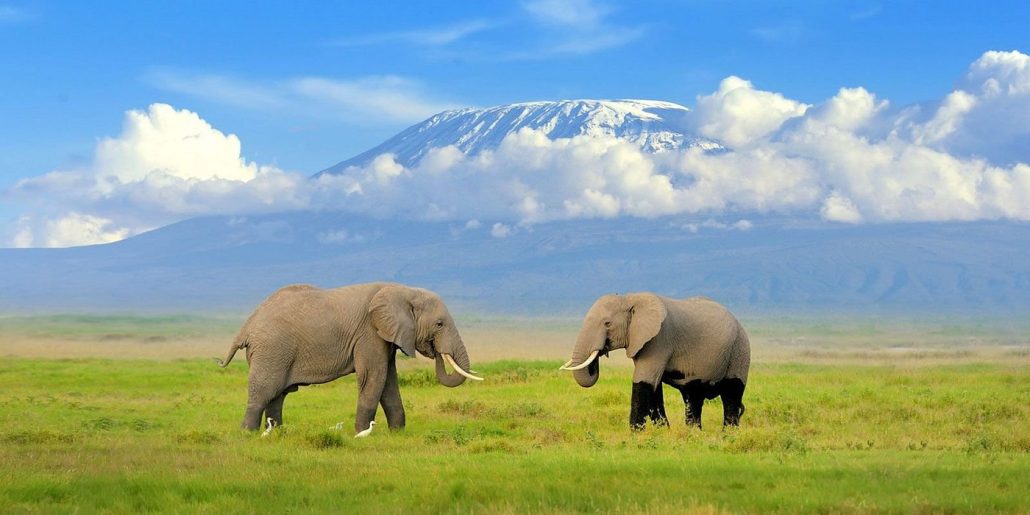
Haze and dust can blur the mountain, and clouds can gather as the day warms, so plan to be in position early. A sunrise stop at Observation Hill is a popular way to see the mountain and to understand the park’s layout.
- Be out early: aim to be on a viewpoint or plain by sunrise.
- Give yourself two mornings so one cloudy start does not end your chances.
- Do not expect the summit every day, and enjoy the foreground wildlife whichever way the weather goes.
- Watch for post-rain clearings, because clear air after a storm can produce spectacular views.
Wildlife in Amboseli National Park
Elephants
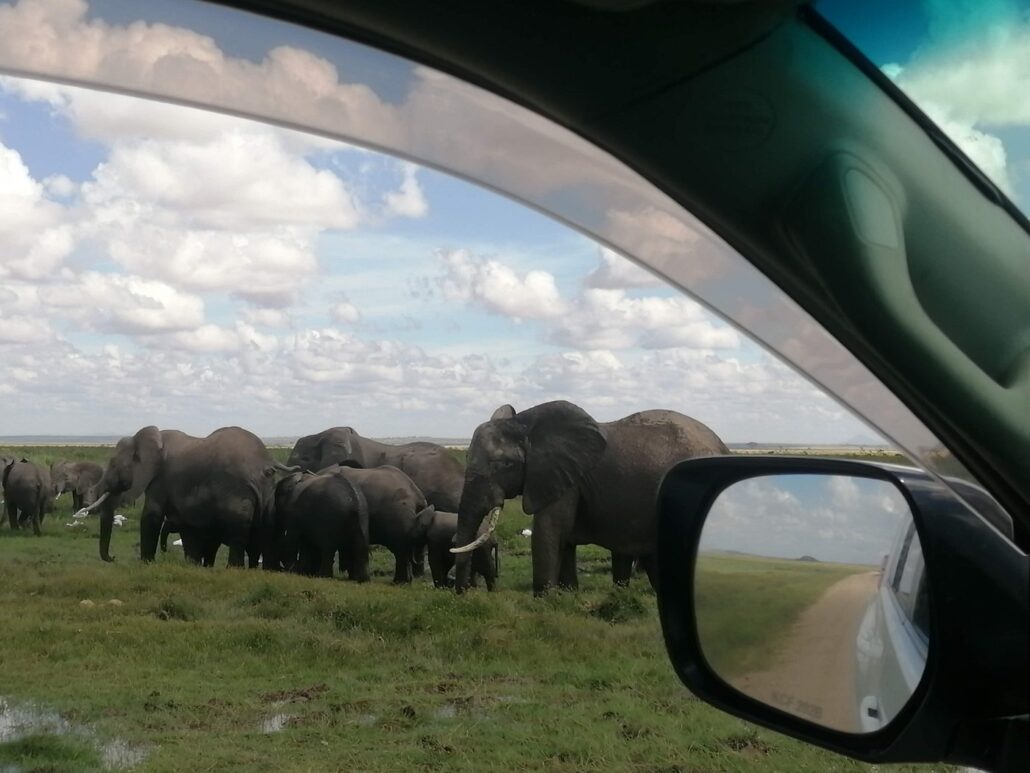
Elephants are the park’s signature. Amboseli’s herds are among the most closely studied in the world, and the park is known for large-tusked bulls and for family groups that move between the swamps and the plains. You will often see them feeding in the green swamp margins, crossing open ground in single file, or dusting themselves in the dry season. Keep your distance, stay in your vehicle, and never block their path.
Big cats and other predators
Lions live in the park and most often roam the open plains, especially early in the morning. Cheetahs hunt on the grasslands and are easier to see here than in thicker bush, and leopards are present but elusive. Spotted hyenas and jackals are common. Predators are never guaranteed, and a patient drive with a guide improves your chances.
Plains game, hippos, and birds
Zebras, wildebeest, giraffes, buffalo, gazelles, and impala fill the plains, and hippos wallow in the permanent swamps. The wetlands attract well over four hundred bird species, including pelicans, flamingos in some seasons, crowned cranes, kingfishers, and many raptors, and migrant birds are especially numerous in the wetter months.
The Best Places Inside the Park
Place | What you get | Best time |
Observation Hill (Ol Doinyo Orok) | A small volcanic cone with 360-degree views over the swamps, the plains, and, on clear days, Kilimanjaro. It is the one place inside the park where visitors are allowed to leave their vehicles, and it has a picnic site. | Sunrise, or late afternoon |
Enkongo Narok Swamp | Permanent wetland where elephants feed, with hippos and waterbirds | Morning and midday |
Longinye and Ol Okenya swamps | Quieter wetlands with birdlife and buffalo | Morning |
The dry lake bed and open plains | Wide horizons, dust-devils in the dry season, and zebra and wildebeest herds | Early morning, when light is soft |
Lemomo Hill | A viewpoint and walking area with birds and small animals | Late afternoon |
Kimana Sanctuary and surrounding community lands | Buffalo, plains game, and Maasai cultural experiences | Morning or afternoon |
Game Drive Circuits: How to Plan Your Day
Amboseli is compact, and tracks can change with water levels, so ask at the gate or at your lodge which areas are passable. These circuits show how most visitors split the day.
Dawn drive: mountains and elephants
Leave your lodge before sunrise and head for an open plain or observation hill with a view of Kilimanjaro. As the light grows, move towards Enkongo Narok Swamp, where elephants emerge to feed. This is the most photogenic circuit.
Midday: the swamps and picnic
As the heat builds, work around the swamps for hippos, buffalo, and birds, and take a break at a designated picnic site. Midday is also a sensible time to return to your lodge for a rest.
Late afternoon: plains and big skies
In the golden hour, drive the open plains for lions, cheetahs, and herds, and finish with a sunset at a viewpoint. Leave enough time to reach your lodge or gate before the park closes.
Gates, Opening Hours, and Entry
Gate | Where it is | Best for |
Iremito Gate | Northern side, reached from the Emali–Loitokitok road via the Nairobi–Mombasa highway | Most visitors are from Nairobi and lodges on the northern side. |
Kimana Gate | Eastern side, reached through Kimana town | Visitors coming from Tsavo West or the Loitokitok road, and lodges in the east |
Meshanani Gate | Western side, reached from the Namanga road | Visitors coming from Namanga or Tanzania, though the final stretch can be rough and dusty |
Other and service gates | Smaller gates are reported on park maps. | Not for general use unless confirmed with the Kenya Wildlife Service |
- Hours: gates typically open at about 6 am and close about 6 pm or slightly later, and overnight accommodation does not allow unrestricted after-hours driving. Confirm current times before you travel.
- Tickets: the Kenya Wildlife Service generally uses a cashless online system, so pay through the official channel and carry identification.
- Fees: Amboseli sits in the park system’s premium tier, and fees vary by visitor category and change over time, with a separate vehicle charge. Please confirm the current tariff rather than relying on older guides.
- Guides: a guide can usually be arranged at or near the gate, which helps on a first visit.
Leave on time: it can take a while to buy tickets and clear the gate, so do not arrive close to closing time.
Self-Drive, Pop-Up Roof, or Driver-Guide: Choosing Your Vehicle
The Mara is the most regulated park in Kenya for vehicles. Self-drive is not allowed in the reserve but can be accessed with a driver guide, and properly equipped four-wheel-drive vehicles are permitted. However, Narok County has reportedly directed that two-wheel-drive vehicles may not be used for game drives, and rangers at some gates have turned away ordinary SUVs.
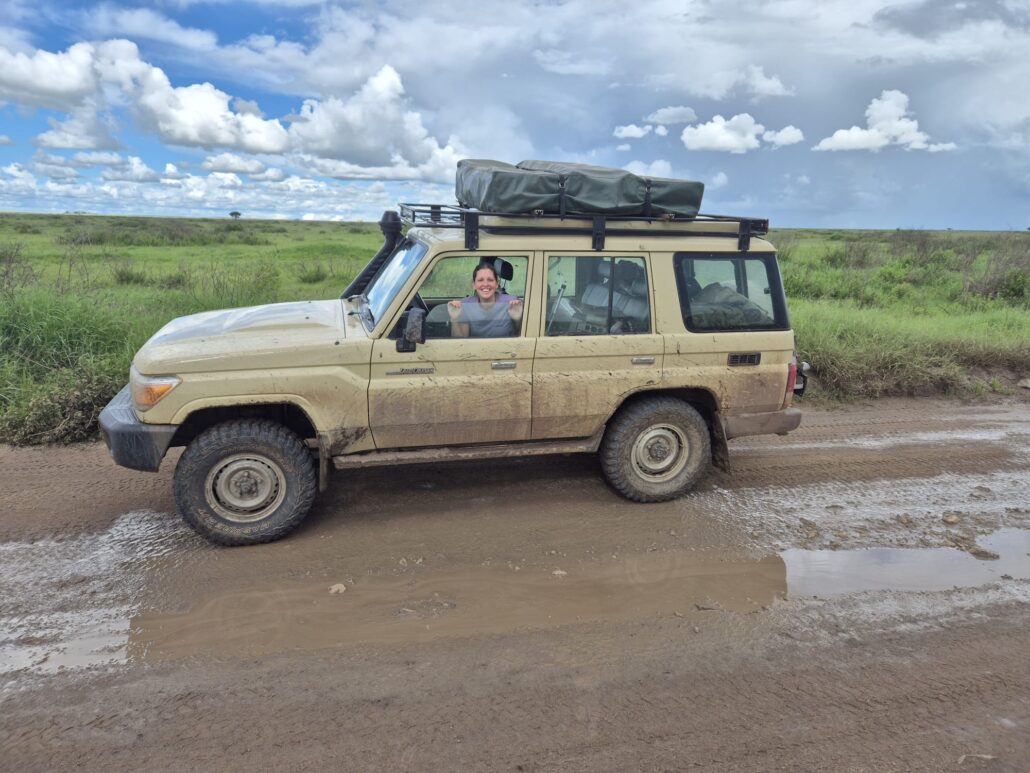
Conservancies do not allow self-driving. Rules and enforcement change, so confirm the current position before you book. For practical advice, read Self-Drive Maasai Mara National Reserve, and to compare options, see Car Rental Nairobi.
If you like… | Choose | Why |
The best migration and big-cat viewing | Guides know where crossings and cats are and handle gate procedures and rules. | |
Photography and shared viewing | A safari-standard vehicle with a lifting roof suits gate rules and gives everyone an open view. | |
Independence on a budget | A self-drive 4×4 | Suitable in the reserve and the Mara Triangle if you stay on marked tracks |
To camp in the Mara or at its edges | Public and private campsites need your own equipment. | |
A route that continues to another city or country | One-way car rental from Nairobi or cross-border car rental from Kenya | Collect in Nairobi and finish elsewhere, with paperwork arranged. |
Rules to follow in the reserve
- Stay on tracks, with no off-road driving in the main reserve or the Mara Triangle.
- Please ensure you exit the main reserve before the gates close, as night driving is not permitted.
- Limits on the number of vehicles at a sighting apply in the Triangle and in conservancies.
- Remain in the vehicle except at marked picnic and toilet stops.
- Do not approach, feed, or disturb wildlife, and keep a respectful distance at river crossings.
- Hiring a ranger at the gate is possible and can be beneficial for first-time self-drivers.
Local notes from our teamGate choice: use the gate nearest your camp, and Sekenani for most travelers coming from Nairobi. Timing: the first and last hours of the day are the most productive, and you need to be out before the gate closes. Where drivers tend to struggle: the last stretch to some camps and gates, which can be rough, dusty, or muddy, and black cotton soil in the rains. Keep to established tracks. Kit list: drinking water, food, a spare tire, offline maps, a charged phone, and a card for fees. |
Things to Do in the Maasai Mara
- Game drives: the core activity, ideally at dawn and in the late afternoon.
- Mara River crossing viewing: from August to October, at designated viewpoints.
- Hot-air balloon safaris: early-morning flights over the plains, with a bush breakfast. Book in advance.
- Walking safaris and night drives: available in conservancies with licensed guides.
- Maasai cultural visits: community-run village visits, dances, and craft markets. Agree on prices in advance and ask before taking photographs.
- Photography: The Mara’s open plains and dramatic skies are ideal, especially around the escarpment.
- Picnics and bush meals: at designated picnic sites.
Self-Drive, Pop-Up Roof, or Driver-Guide: Choosing Your Vehicle
Amboseli is one of Kenya’s more straightforward parks for a self-drive, thanks to open plains and clear views. The challenge is getting there: park approaches are graded murram, they turn muddy in the rains, and dust and corrugations are constant in the dry season.
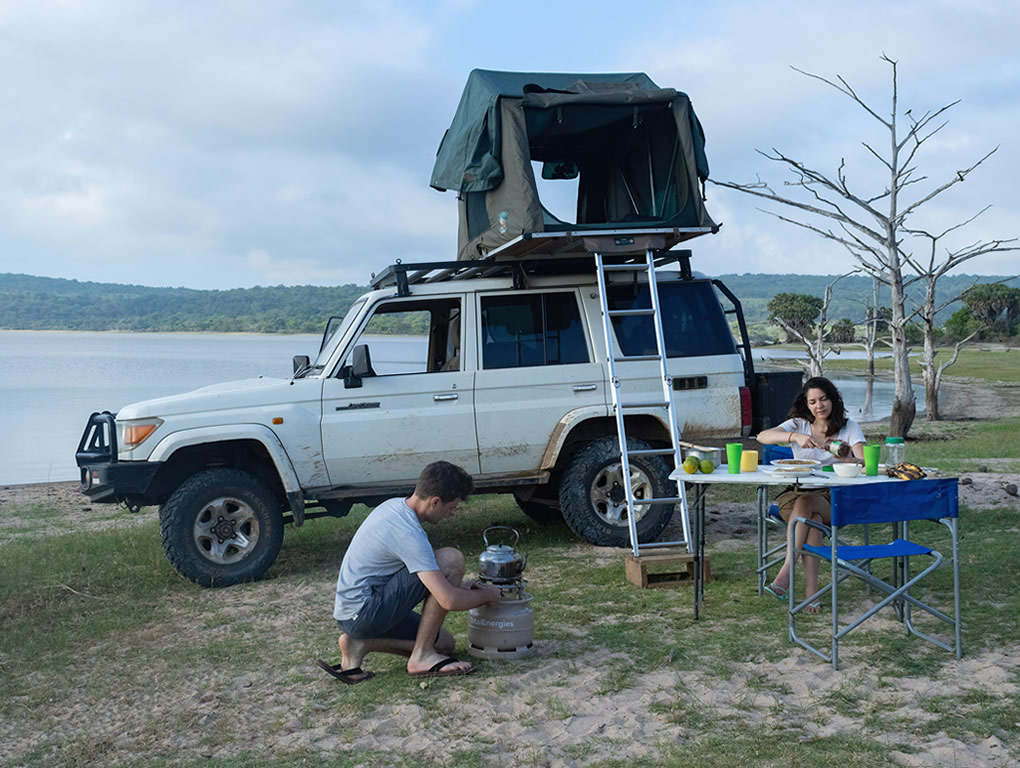
A high-clearance 4×4 is the sensible choice, and it becomes essential in wet weather. If you want practical advice, read self-drive Amboseli National Park, and to compare options, see car rental Nairobi.
If you like… | Choose | Why |
To go at your own pace and camp | A self-drive 4×4 | It handles murram approaches and rough tracks, allowing for flexible timing. |
The best photography | Elephants are at eye level, and everyone can stand without leaving the vehicle. | |
Expert help finding cats and elephants | A guide knows swamp routes, recent sightings, and gate procedures. | |
To sleep in the park or at a campsite | Campsite pitches need your equipment. | |
To continue to the coast or Tanzania | Collect in the capital and drop in Mombasa or another city, with no backtracking |
Park rules to follow, whichever vehicle you choose
- Stay on marked tracks, and never drive off-road to approach animals.
- Keep to the posted speed limit, which is typically low in Kenyan parks.
- Stay inside your vehicle, except at Observation Hill and designated picnic sites and toilets.
- Provide elephants plenty of space, never place yourself between a mother and calf, and switch off the engine if they approach.
- Do not feed or tease animals, and keep food out of sight.
- Be back at your lodge or out of the park before the gates close.
Local notes from our teamGate choice: Iremito is the easiest option from Nairobi via Emali, and Kimana suits visitors arriving from Tsavo. Timing: be on the plains before sunrise, because the first hour offers the best light and often the clearest mountain. Where drivers tend to struggle: deep dust and washboard on the Murram approaches and soft ground near the swamps after rain. Keep to established tracks. Kit list: water, snacks, a spare tire in sound condition, dust covers, offline maps, and a charged phone. |
Camping and Accommodation Inside and Near the Park
Because there are no shops or fuel stations inside the park, most visitors choose a lodge or camp that provides meals and a secure base. Options sit inside the park, along its boundary and on neighbouring Maasai land.
Lodges and camps
The Amboseli National Park list of lodges and camps near each gate includes Amboseli Serena Lodge and Ol Tukai Lodge near Iremito, Kibo Safari Camp, AA Lodge, Sentrim Amboseli and Tulia Camp near Kimana, and Tortilis Camp and Angama Amboseli near Meshanani.
Budget Lodges and Camps
Budget options are usually simple tented camps, guesthouses, and small lodges outside the park, with basic facilities and sometimes shared bathrooms. They suit travelers who prioritize cost over comfort and do not mind a short drive to the gate.
Property | Where | Good to know |
Amboseli Eco Camp | Outside the park | Commonly listed as a budget camp; confirm facilities, bathroom arrangements, and distance to the gate. |
Kimana Amboseli Camp | Near Kimana Gate | A tented camp is listed in the budget and lower-midrange ranges, depending on the source. |
Maasai Simba Camp | Around Amboseli | Commonly listed as a budget camp; confirm location and standard. |
Sentrim Amboseli | Outside the park, east of Kimana Gate | Commonly listed as budget or lower-midrange; confirm current name and standard |
Amanya Camp | Near the park, with Kilimanjaro views | Offers tented rooms as well as camping; confirm access and facilities |
WE4Kenya guest house | Around Amboseli | A guest house option; confirm location and facilities. |
Midrange Lodges and Camps
Midrange properties typically offer tented camps or lodge rooms with private bathrooms, meals, a pool in some cases, and a decent view of Kilimanjaro, usually just outside Kimana Gate.
Property | Where | Good to know |
Kibo Safari Camp | About 2 kilometers east of the park, near Kimana Gate | Large safari tents, a pool, a bar and restaurant, and views of Kilimanjaro; some sources list it as midrange and others as luxury. |
Amboseli Sopa Lodge | East of the park | One of the longest-standing lodges in the area, with spread-out rooms, a pool, and views of Kilimanjaro; listed as midrange or upper-midrange depending on the source |
AA Lodge Amboseli | Near the park | Commonly listed as midrange and sometimes as budget; confirm current standard |
Kilima Safari Camp | Near Kimana Gate | A tented camp with views of Kilimanjaro; confirm exact location and facilities |
Ambokili Lodge | Around Amboseli | Listed as midrange by some sources; confirm current status and facilities. |
Luxury Lodges and Camps
Luxury properties sit inside the park or on private conservancies and group ranches, offering large rooms or tents, fine dining, pools, and guided activities. Some include walking safaris, community visits, and conservation programs.
Property | Where | Good to know |
Ol Tukai Lodge | Inside the park, in a central position | Rooms with Kilimanjaro views, lawns, and a pool, with wildlife often passing; starting game drives from inside the park is convenient. |
Amboseli Serena Safari Lodge | Inside the park, in a central position | A classic, large-room lodge with a pool and local cultural entertainment; the lodge itself has been described as lacking Kilimanjaro views, though wildlife is close. |
Elewana Tortilis Camp Amboseli | Inside the park, in a private corner | Large tents with views of Kilimanjaro; described as the only camp inside the park |
Tawi Lodge | Outside Kimana Gate, on a private conservancy | Thatched bungalows, a spa and pool, wildlife areas around the lodge, and strong ties with local Maasai communities |
Elerai Camp | East of the park, on higher ground | Safari tents and lodge rooms, an infinity pool, and long views over the Amboseli basin |
Porini Amboseli Camp | Selenkay Conservancy, north of the park | A small tented camp with a strong sense of isolation and fewer vehicles; park visits are possible with an early start |
ol Donyo Lodge | Mbirikani Group Ranch, in the wider Amboseli–Chyulu Hills region | A high-end lodge offering walking and horse-riding safaris and a waterhole hide; not at the park itself, so allow transfer time. |
Campi, ya, Kanzi. | Chyulu Hills foothills, in the wider Amboseli–Chyulu Hills region | Run by an Italian and Maasai team, with a focus on conservation and community; not at the park itself, so allow transfer time. |
Choosing Where to Stay
If you want to be among the animals from first light, choose a property inside the park. If you prefer quieter surroundings and different activities, look at conservancies. If cost matters most, camp or choose a simple camp outside Kimana Gate. Whichever you choose, book early for the dry months, confirm what is included, such as meals, park fees, and activities, and ask about arrangements for self-drive guests, including parking, tracks, and whether your vehicle is suitable.
Campsites
Public and special campsites exist in and around the park, and budget camps operate on community land. Facilities vary, and booking rules change, so check current details and bring what you need. A rooftop tent and equipment make camping straightforward, and you can arrange them through camping gear and rooftop tent rental.
Camping suits self-drive travelers, rooftop-tent users, and anyone on a tight budget. Public and special campsites run by the Kenya Wildlife Service are described as having standard amenities such as water, toilets or bathrooms, and a kitchen area, and public campsites have been described as not requiring prior booking, though conditions and arrangements change. Reviews of campsites near the park mention variable water supply, so bring your own supplies, and the shade, views and noise levels differ from place to place.
Campsite | Where | Good to know |
KWS public campsite | Near the park headquarters at Kimana Gate | Basic, self-catering facilities; bring supplies and water; confirm current booking arrangements and fees with Kenya Wildlife Service |
KWS special campsites | Within the park, as listed by Kenya Wildlife Service | Private, bookable sites at a different rate; confirm locations, availability and rules directly |
Kimana community campsite | Just outside Kimana Gate | Community-run, with campsites and simple bandas; travelers mention shade and Kilimanjaro views; check current status and facilities |
Kimana Amboseli Camp | Near Kimana Gate | A tented camp that also offers camping; reviews vary, so confirm current condition and facilities |
Amanya Camp | Near the park, with Kilimanjaro views | Offers campsite pitches and tented rooms; confirm location, access and services |
WE4Kenya guest house and campsite | Around Amboseli | Listed as a budget guest house and campsite; confirm location and facilities |
Mwanga Campsite | Near Loitokitok, farther from the park gates | A longer drive to the park; useful if you are approaching via Loitokitok |
Kenya Wildlife Service also operates self-catering bandas and guesthouses, which are reserved through the park warden or the service’s reservations desk. If you plan to camp with a rooftop tent or your own equipment, check what each site permits.
Maasai cultural visits
Maasai communities live around the park, and cultural visits can include village visits, dances, and craft markets. Choose experiences organized by the community, agree on prices in advance, and respect photography rules.