4x4 Arusha National Park Car rental Tanzania
Car rentals in Arusha National Park: Car Rental 4x 4 Africa offers 4×4 Tanzania Car rentals to Arusha National Park from Arusha or Moshi (Kilimanjaro International Airport) , or Dar-es-salaam. Our range of car rentals for Arusha National Park includes: Land Cruiser LX, Land Cruiser V8, safari Land Cruiser Extended, Land cruiser Hard Top, and Toyota Land cruiser Double Cab, Safari Vans with pop up roof, Toyota Land Rover Defender.
Besides, Car Rental 4×4 Africa also offers car rentals for Tanzania Safaris encompassing Ngorongongo Conservation Area, Serengeti National Park, and Tarangire National Park.
Complete Guide To Arusha National Park
Arusha National Park is located in the northern part of Tanzania, standing at an elevation of around 4,566 meters above sea level within the Arusha Region. This national park was founded in 1960 with the principal aim of protecting and preserving its rich biodiversity. The park spans an impressive area of more than 137 square kilometers and is overseen by the Tanzania National Park Authority, a governmental organization dedicated to the preservation of national parks. Arusha National Park, despite its modest size, draws around 66,808 visitors each year, thanks to its abundant biodiversity, breathtaking landscapes, and a variety of wildlife species. These elements are considered top-tier attractions, enticing individuals from diverse corners of the globe to experience the park’s offerings.
Tourist Attractions In Arusha National Park
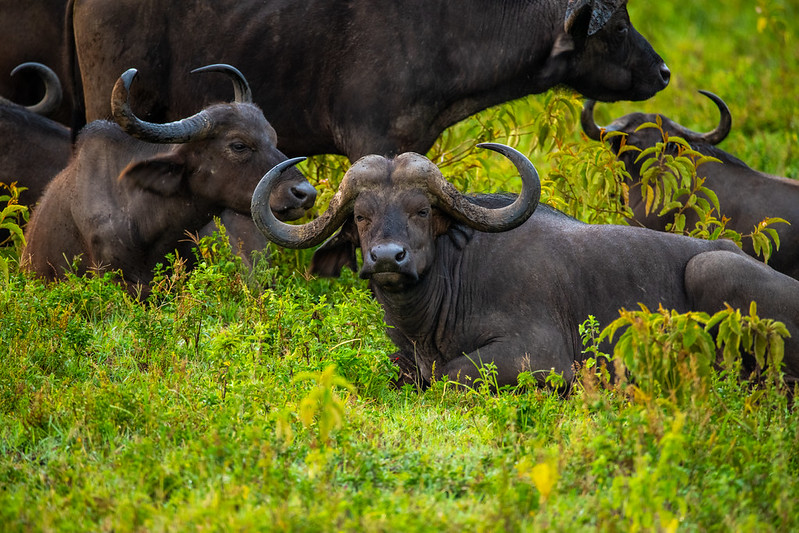
The Park is home to a rich variety of mammals and birds, featuring species such as giraffes, Cape buffalo, waterbucks, warthogs, leopards, elephants, zebras, dik-diks, hippopotamuses, klipspringers, baboons, blue monkeys, elands, spotted hyenas, and black-and-white colobus monkeys. This noteworthy species can be found in diverse locations throughout the park, such as the Ngurdoto crater area, the shores of Lake Momella, and the Ujambo Wa Mbogo regions, among others. In Arusha National Park, the presence of elephants is quite uncommon, and lions are entirely absent. Leopards and spotted hyenas are generally seen during the hours of early morning to late afternoon.
Bird Watching in Arusha National Park
The park is home to an impressive array of over 400 bird species, featuring notable representatives such as the Yellow-throated Sandgrouse, European Nightjar, Slender-tailed Nightjar, Mottled Spinetailed Swift, White-browed Coucal, Yellowbill, African Rail, and Allen’s Gallinule. The list includes the White-bellied Go-away-bird, Red-chested Flufftail, Grey Crowned Crane, Common Ostrich, White-faced Whistling Duck, Egyptian Goose, Northern Shoveler, Red-billed Teal, White-backed Duck, Helmeted Guineafowl, Crested Guineafowl, Common Buttonquail, Double-banded Courser, African Skimmer, Gray-hooded Gull, Secretary-bird, and Osprey, among others.
Ngordoto Crater
Ngordoto Crater, often referred to as the “Mini Ngorongoro,” represents a fascinating geological structure located within the confines of Arusha National Park. The crater, formed millions of years ago through volcanic activity, spans approximately 3.5 kilometers in diameter and reaches a depth of 400 meters, culminating in a breathtaking amphitheater-like terrain. The crater is encircled by towering walls and showcases a multifaceted ecosystem that supports a diverse array of fauna, including buffalo, warthogs, giraffes, zebras, elephants, cheetahs, and various antelope species such as dik-dik and Grant’s gazelle. The diverse vegetation within the crater attracts numerous avian species, making it a preferred site for enthusiasts of birdwatching.
Visitors to Ngordoto Crater can appreciate the scenic trekking opportunities along its edge, where they can enjoy sweeping vistas of the crater floor and the encompassing landscape of Arusha National Park. The journey through the acacia and beech forest offers a chance to witness extraordinary plant and animal life, featuring unique species and lively bird populations. The landscape encircling the crater reveals a captivating allure during the dawn and dusk hours, as the remarkable light casts an ethereal atmosphere over the lush surroundings. Noteworthy pursuits to partake in at Arusha National Park
Wildlife Viewing
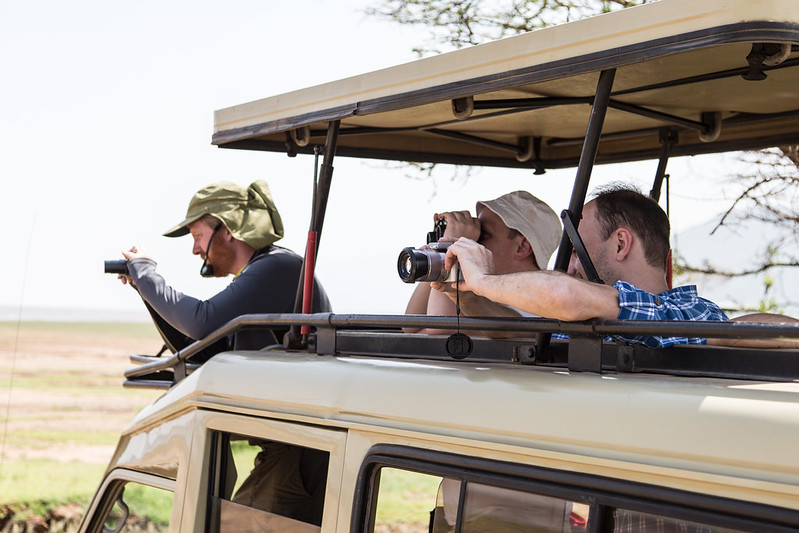
Arusha National Park serves as a prominent locale for wildlife observation, offering an exhilarating chance to witness Africa’s fauna in their natural environment. Game viewing in the park takes place in 4×4 vehicles, predominantly within the Ngurdoto Crater and its surrounding forest, due to the area’s abundant wildlife, which features notable populations of elephants, hippos, and buffalo, alongside a variety of other species in Arusha National Park. Game drives in the park are routinely conducted during the early morning and late afternoon, times when animal activity reaches its zenith.
Canoeing at Mamella Lakes
Canoeing on Mamella Lakes represents a uniquely significant endeavor during a safari in Arusha National Park. The picturesque lakes, set against the backdrop of Mount Meru, teem with a diverse array of bird species, making them an exemplary sanctuary for those dedicated to the study of avifauna. Kayaking through the tranquil waterways allows participants to appreciate breathtaking views while immersing themselves in the calming sounds of the natural world. The lakes are home to a rich variety of bird species, such as flamingos, pelicans, and African fish eagles, often seen gliding gracefully above the shallow waters. Throughout your guided canoeing excursions in the park, you will have the chance to uncover the area’s hidden gems while observing a variety of creatures in their natural habitat. This extraordinary experience in Arusha National Park typically lasts for 2-3 hours and presents a superb alternative to traditional safari activities.
Observing avian species
Arusha National Park is recognized as a sanctuary for ornithologists, boasting an impressive diversity of over 400 bird species. During your birdwatching expedition, you have the chance to observe a plethora of vibrant avian species, including the Flamingo, Great Crested Grebe, African Olive Pigeon, Mourning Collared Dove, African Green Pigeon, Yellow-throated Sandgrouse, Red-chested Flufftail, Grey Crowned Crane, Common Ostrich, White-faced Whistling Duck, Yellow-billed Stork, Woolly-necked Stork, Great White Pelican, Hamerkop, White-backed Night Heron, Black-headed Heron, Great Egret, and African Spoonbill, among others.
The ascent of Mount Meru
Mount Meru, situated within the confines of Arusha National Park, ranks as the second highest peak in Tanzania and the fifth tallest in Africa, reaching an elevation of 4,562 meters. This dormant volcano presents an exemplary venue for those gearing up to tackle the more challenging and nearby Mount Kilimanjaro. Embarking on the journey of hiking or climbing Mount Meru offers a significant challenge, yet it bestows upon intrepid explorers the opportunity to witness stunning panoramas of Mount Kilimanjaro, situated approximately 70 kilometers distant, as well as enchanting views of national parks, lakes, and the chance to observe esteemed African wildlife. The hiking trails are well-defined; however, individual ascents are not permitted. Ascending to the pinnacle demands a commitment of four days, requiring both physical conditioning and the ability to acclimatize to elevated altitudes. The mountain presents formidable sections and precipitous crater rims.
Nature Walking Expeditions
Nature hikes in the park serve as a profound means to explore and value the hidden gems of genuine African conservation areas. Nature walks in the park involve navigating on foot through a multitude of pathways, whereas this extraordinary safari represents a guided expedition where participants are led through the diverse woodland and savannah flora of the park, observing the wildlife within Arusha National Park. On your nature walk excursion, you will have the chance to observe a diverse array of forest inhabitants, including the lively colobus monkeys, buffaloes, zebras, warthogs, giraffes, and a multitude of vibrant bird species, among others. Exploring the trails within the park grants one the opportunity to engage with breathtaking viewpoints, enabling a profound appreciation of the expansive landscapes, including the majestic Mount Meru and the Ngurdoto Crater, among others.
The Best time to explore Arusha National Park
The ideal timing for visits to Arusha National Park is fundamentally contingent upon your individual preferences and interests, alongside the specific nature of the experience you wish to pursue. The arid season, extending from June to October, is considered the most favorable time for observing wildlife and engaging in outdoor activities. In this season, the climate exhibits cooler and drier conditions, which enhances the opportunity to observe various species gathering around water sources. The forest exhibits a reduced density, thereby improving visibility for both wildlife excursions and trekking activities. Moreover, this timeframe is particularly advantageous for the observation of birds, owing to the influx of migratory species.
Accommodations in Arusha National Park
Individuals planning to undertake a safari in Arusha National Park need not worry about their lodging arrangements, as the park presents a wide range of accommodation options tailored to meet the financial considerations of every traveler. The accommodations encompass a diverse spectrum, ranging from budget-friendly to mid-range and luxury establishments. Notable options include Ilboru Safari Lodge, Moyoni Lodge, Zawadi House, Palace Hotel Arusha, Lush Garden Hotel, Shu’mate Camp, Maasi Giraffe Eco Lodge, Kiota Nest, Itikoni Seasonal Camp, Momella Wildlife Lodge, Arusha Coffee Lodge, Ngurdoto Mountain Lodge, The African Tulip Hotel, Lake Duluti Serena Hotel, Hatari Lodge, Mvuli Hotel Arusha, L’Oasis Lodge and Restaurant Arusha, Rivertrees Country Inn, African View Lodge – Arusha, Twiga Lodge, Kilimanjaro Eco Lodge – Arusha, Charming Eco-Homestay, Meru View Lodge, Mzunguu Safari Lodge, and Moivaro Coffee Plantation, among others.