Self Drive Nairobi | 4x4 Hire, Rules & Day Trips

“How to drive yourself in Kenya’s capital and beyond: 4×4 hire from Nairobi, a calm first drive, the roads, tolls, and rules explained, and day trips and safaris from the city’s edge”
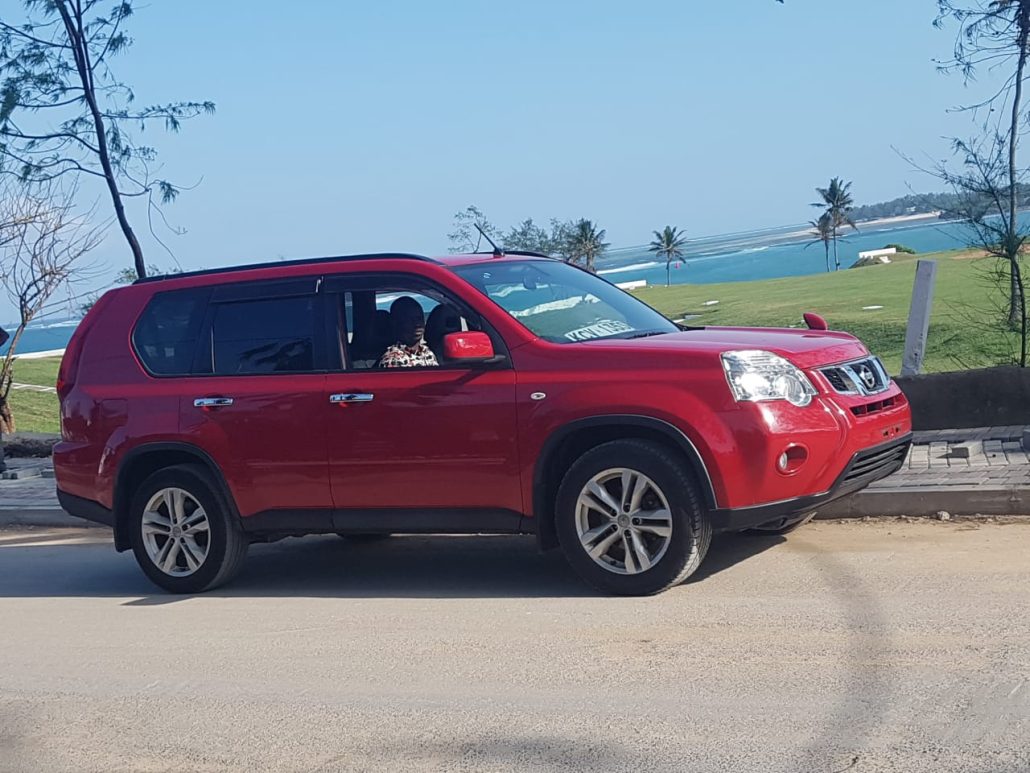
Self drive Nairobi, car renta NairobiThere is a moment, a few kilometres past the last roundabout, when the city finally lets go of you. The traffic thins, the road lifts toward the escarpment, and the Rift Valley opens below in a long, hazy gold. That is the moment self-drive is for: the engine settles into a steady note, the day is yours, and the only schedule is the light.

Nairobi is the easiest place in East Africa to begin a self-drive Kenya road trip and one of the more demanding places to drive in. This page explains how self-drive works from Nairobi: whether it suits you, how to handle the first hour, what the roads, tolls, and rules are, which vehicle to choose, which day trips and safaris to drive, and what it all costs.

Self Drive Nairobi at a Glance

Can you self-drive in Nairobi? Yes. Tourists can hire a car and drive on the left. Carry your home license, an International Driving Permit (strongly recommended), and your passport.

How hard is it? The center is busy and unpredictable, especially at rush hour (roughly 7:00 to 9:00 am and 4:00 to 8:00 pm). Off-peak, on the bypasses, and on the roads out of town, it is much easier. Many first-time visitors hire a driver for their first day.

Best vehicle: a 4×4 with high clearance, such as a Land Cruiser or Hilux, for parks and rough roads; a RAV4 or Nissan X-trail or Vanguard for the city and paved routes. A pop-up roof is excellent for game viewing.

Pick-up and drop-off: Nairobi (JKIA, Wilson Airport, and hotel delivery), Emali, Voi, Mombasa International Airport, Diani Beach, and Watamu. Airport and hotel delivery on request.

Toll road: one. The Nairobi Expressway between Mlolongo near JKIA and Westlands is tolled; everything else is toll-free.

Daylight only: our vehicles are on the road between 6:00 am and 7:00 pm.

Published add-ons (USD): rooftop tent $20/day · ground tent $5/day · fridge $10/day · driver-guide from $40/day, Kenyan health insurance at $44 per person (may reach $50 including charges)

Deposit and excess: $500 security deposit where requested; excess $500 (RAV4), $1,500 (Prado TX/TZ), and $2,000 (LX, V8, GX).

Mileage and support: unlimited mileage and 24/7 roadside assistance. Request a quote or write to rent@carrental4x4.com.

Can You Self-Drive in Nairobi?

You can. The question is not whether you are allowed, but whether you are ready.

Kenya welcomes visitors who drive themselves. Car rental 4×4 hires 4×4 self-drive car rentals from Nairobi for tourists daily; the main roads are paved, and the national parks accept private and rental vehicles at the gates. Nairobi is the usual starting point, with the international airport on the city’s edge and the road network radiating from it to the Rift Valley, the Maasai Mara National Reserve, Amboseli National Park, Tsavo West National Park, Tsavo East National Park, and the coast.

The honest picture is that Nairobi is a large, fast-growing city with congested roads, mixed traffic, and unwritten habits that take a day to learn. Most visitors manage well when they plan their first drive carefully. A few prefer to hand the city to a driver and take the wheel once they leave it. Either way is sensible.

Driving situation

Difficulty for a visitor

Comment

Nairobi center at rush hour

High

Heavy congestion, matatus, motorbikes, and pedestrians

Nairobi off-peak and suburbs (Karen, Westlands)

Moderate

Busy but manageable; watch roundabouts and speed bumps.

Bypasses and the Expressway

Low to moderate

Faster, with fewer surprises; the Expressway is tolled.

Highways out of town

Moderate

Paved, with trucks, speed bumps, and checkpoints

Park tracks

Moderate to high

Unpaved, dusty, or muddy; a 4×4 helps

Is It Safe to Self-Drive in Nairobi?

Yes. Most self-drivers have trouble-free trips, and the risks are manageable with common sense. They fall into three groups.

Risk

What to do

Traffic and driving habits

Leave generous gaps, expect sudden stops, and never assume a matatu or motorbike will signal. Stay calm and patient.

Opportunistic theft in slow traffic

Keep doors locked and windows up, and keep phones, bags, and cameras out of sight. Do not leave valuables in a parked vehicle.

Night driving

Avoid it. Unlit vehicles, pedestrians, and animals are difficult to see. Plan every day to arrive before dusk.

Demonstrations and gatherings

Avoid them, check local news, and ask your hotel before heading into the center.

Breakdowns and punctures

Call our 24/7 line at once and stay with the vehicle where it is safe

Self-Drive Readiness Check: Are You Ready?

Ten honest questions. Answer yes to most of them, and Nairobi self-drive will suit you.

Question

If the answer is no…

Are you comfortable driving on the left in busy traffic?

Consider a driver for the first day, or ask for an automatic car

Do you have a valid license and an International Driving Permit?

Arrange an IDP before you travel.

Have you driven on gravel, mud, or corrugated roads?

Add a driver for park days, or start with paved routes.

Can you change a wheel and use a jack?

Practise before you travel; we supply the tools.

Will you avoid driving after dark?

Rearrange your schedule; night driving is unsafe and outside our driving hours.

Do you have travel insurance with medical and evacuation cover as well as the Kenya Mandatory Halth insuirance?

Buy it before you go.

Can you handle navigation with offline maps?

Download maps and carry a paper map.

Are you comfortable being responsible for a vehicle and its excess?

Read the insurance and deposit section below

Do you have a plan B for rain and mud?

Leave slack in your itinerary.

Do you know who to call if something goes wrong?

Save our 24/7 number before you set off.

We also ask about your experience with gravel, mud, and manual gearboxes at booking, because it shapes the vehicle and route we recommend. It is not a test; it is how we help you avoid a bad day.

License, International Driving Permit, and Documents

Document

What to know

Home driving license

Carry the original. Photocopies are not enough.

International Driving Permit (IDP)

Strongly recommended and often requested by rental companies. Required if your license is not in English. It is not valid on its own; carry it with your licence

Passport

Carry it or a copy, as police checks are common. Keep the original safe.

Rental agreement and vehicle papers

Keep them in the vehicle, in a safe, discreet place.

Booking confirmation

Useful at the airport and at park gates

How long can you drive on a foreign license? Several sources say a valid foreign license in English can be used by visitors for up to 90 days, after which it must be converted or replaced through Kenya’s National Transport and Safety Authority (NTSA). Other guidance says there is no single rule for every license. For short trips, carry both your license and an IDP. For longer stays, please verify NTSA’s current requirements.

Our rental agreement sets the minimum age and license-held period.

Your First 24 Hours: From the Airport to Your First Night

A calm first drive sets the tone for the whole trip.

  • Arrive in daylight if you can. If you land late, sleep near the airport or take a hotel transfer, and collect the vehicle in the morning. [CONFIRM whether we can deliver to JKIA or your hotel.]
  • Take your time at handover. Walk around the vehicle with us, check the tires, lights, spare, and jack, and sit in the driver’s seat until the controls feel familiar. Ask any question.
  • Set your navigation first. Enter your destination while parked, and download offline maps.
  • Practice on a quiet road. The first few minutes on the left are the hardest. Keep your speed down.
  • Avoid rush hour. Leave the airport after about 9:00 am or between 10:00 am and 3:00 pm if you can.
  • Choose your route. The Nairobi Expressway and the Eastern and Southern Bypasses avoid the center but are tolled or less familiar. Decide with us before you set out.
  • Park securely at your hotel, and keep valuables out of the vehicle.

Prefer an easy first day?

Ask us for a driver for the first day. He meets you at the airport, drives you across the city, and gives you the keys when you’re ready. Ask about a first-day driver

Nairobi Driving Rules and Etiquette

The rules that matter

  • Drive on the left; overtake on the right.
  • Roundabouts: give way to traffic already on the roundabout, which comes from your right.
  • Speed: our rental agreement sets 80 km/h on highways, 50 km/h in towns, and 40 km/h in national parks. Follow posted limits; speed cameras and police checks are common.
  • Seat belts for everyone. Phones stay in the holder, not in your hand.
  • Alcohol: never drink and drive. Enforcement is active.
  • Police checkpoints: slow down, be polite, and carry your license, passport, and vehicle papers. If you are unsure about a request for money, please ask for an official receipt and feel free to call us.

The unwritten rules
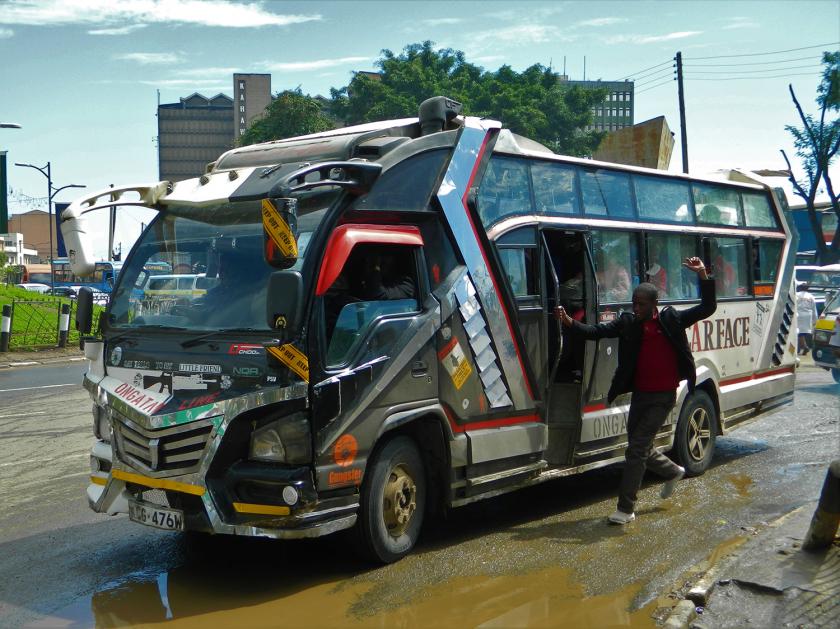
  • Matatus (minibuses) stop suddenly, cut across lanes, and pull out without warning. Allow them space.
  • Motorbike taxis (boda-bodas) weave between lanes and on both sides. Check mirrors and blind spots before you turn.
  • Pedestrians cross everywhere. Slow down near markets and bus stops.
  • Speed bumps appear on highways and in towns, often unmarked. Watch for them.
  • Headlight flashing can mean “I am coming through” or “go ahead.” Read the situation.
  • Patience beats pace. Take a breath and let the gap close.

Tolls, Fuel, Parking, Navigation, and Payments

The Nairobi Expressway

The 27-km Nairobi Expressway links Mlolongo near JKIA to Westlands and is Kenya’s only toll road. Tolls are distance-based and depend on where you enter and exit: published rate schedules put a standard car at roughly KES 120 for a short hop up to KES 330 to 500 end-to-end, and larger vehicles may pay more. Motorbikes and three-wheelers are not allowed. It is a fast way across the city, particularly from the airport.

Fuel

Fuel is plentiful in Nairobi and along the main highways. Fill up before leaving large towns. Use stations on our approved list.

Parking

  • Use hotel, mall, and office parking where possible; it is safer and simpler.
  • On-street parking in the center is limited, and you often pay by mobile money or to attendants; clamping and towing for illegal parking are common.
  • Never leave valuables in a parked vehicle.

Navigation and connectivity

  • Navigation apps work well in Nairobi, but traffic estimates can swing. Download offline maps for the road out.
  • A local SIM card is inexpensive and easy to buy at the airport. Keep your phone charged with a car charger.

Payments

  • Cards are widely accepted in hotels and malls. Carry some Kenyan shillings for fuel stops, tolls, parking, and park gates, and learn how mobile money works if you plan to use it.

Nairobi Road Conditions for Self-Drive

Main Roads from the City

to Volcanoes national Park Nyungwe forest national park and Kigali City TourThe routes out of Nairobi, to the Rift Valley, the Mara approach, Amboseli, and the coast, are largely paved and in generally satisfactory condition, with potholes, speed bumps, and occasional road works. Heavy lorries use the Mombasa Road.

Approach Roads to Parks and Gates

The final stretches into many parks are gravel or earth, often corrugated and dusty. Expect rough surfaces and slow speeds.

Tracks Inside the Parks

Dusty murram and fine volcanic soil. In dry weather the dust is thick and clings to everything; keep windows closed and carry a cloth for your camera. Near swamps and rivers, tracks can be soft and boggy.

The Rains

The long rains fall roughly from March to May, and the short rains in November and December. Roads in and around Nairobi can flood quickly, and park tracks become slippery. Delay or shorten your day rather than push on.

Driving at Night

It is prohibited under our contract and unsafe in any case. It is dark by around 6:45 pm all year, and unlit vehicles, pedestrians, animals, and livestock share the roads.

Which Roads Require a 4×4?

Road or area

4×4 needed?

Nairobi city and Karen

No; a RAV4 is adequate.

Mombasa Road, Namanga Road, and other tarmac highways

No; a RAV4 is adequate.

Approach roads to park gates

Recommended

Tracks inside the parks

Yes.

Mara, Amboseli, Tsavo, and remote areas

Yes.

Any track after heavy rain

Yes; sometimes impassable.

If You Get Stuck or Break Down on a Self-Drive

Step

What to do

1. Stop safely.

Pull off the road if you can, switch on hazard lights, and put out the reflective triangles. In a park, stay in the vehicle.

2. Do not spin the wheels.

It digs you deeper. Switch off and assess.

3. Use the right gear.

On soft ground, engage four-wheel drive and low range, and try gentle reversing in your tracks.

4. Clear and support

If it is safe, clear soil from the wheels and place traction boards under the driven wheels.

5. Call us.

Call or WhatsApp our 24/7 line with your location. Please do not arrange repairs yourself.

6. Stay with the vehicle

Keep doors closed and wait. Never walk for help across a park with wildlife.

Which Vehicle Should You Rent in Nairobi?

4×4 Car Rental Kenya

Ground clearance and traction are the argument. Beyond Nairobi’s tarmac, park tracks are rutted, dusty, and sometimes boggy, and the final approach roads to many gates are rough. A 4×4 gives you clearance, grip, and strength for a long, bumpy day. See Car Rental Kenya and 4×4 Fleets.

Land Cruiser for Self-Drive

22 Days Tanzania self drive and Guided Safari in Norther Safari Circuit. Self drive Tanzania, self drive Kenya, Self Drive Uganda, Self Drive Rwanda, Self Drive Burundi, Car Rental 4x4 Africa, Car rental with pop up roof, Serengeti national Park Ngorongoro Crater, Arusha National Park, Lake ManyaraThe LX, V8, Prado, and Hardtop versions are the safari standard: strong, comfortable, and easy to service, with room for luggage and camping kit. The best all-round choice for a trip out of Nairobi.

Hilux Double Cab

Rugged and practical, with an open load bed for gear. A popular choice for confident drivers who want capability and simplicity.

RAV4 or X-Trail

A RAV4 is ideal for Nairobi itself and for paved routes such as the Mombasa highway. It has the lowest excess in our 4×4 class ($700), but it is not recommended for wet conditions or rough park tracks, and it cannot carry a rooftop tent.

Pop-Up Roof Safari Vehicles From Nairobi

Car Rental With a pop-up roof From Nairobi allows you to stand & to photograph wildlife and see over tall grass. This feature is available on the Extended Land Cruiser, whether you choose self-drive or guided. See Car with Pop-Up Roof in Kenya. Stand inside the roof, never on top.

Camping-Equipped Vehicles From Nairobi

Land Cruisers with rooftop tents and camping kits for travelers who want to sleep at designated campsites. See Car Rental with Camping Gear in Kenya.

4x4 Toyota Land Cruiser LX

The Land Cruiser LX is occasionally known as the Hardtop due to its durable construction and sturdy roof. This vehicle is recognized as one of the top-rated options for traversing African roads and embarking on safaris. It is akin to a durable SUV designed for challenging African terrains.

4×4 Toyota Land Cruiser Hardtop

This type of vehicle is outstanding for off-road driving and is especially well-suited for safaris, commonly used throughout East Africa. The vehicle is equipped with a pop-up roof, which is perfect for game drives, allowing for an unobstructed view of diverse wildlife.

4x4 Toyota Land Cruiser Prado

The Toyota Land Cruiser Prado, a full-size, full-time 4-wheel drive vehicle, also known as the Land Cruiser 95 series, is available for rental at Arusha Car Rental, providing both self-drive and driver-inclusive options at competitive rates.

Toyota Land Cruiser V8 With Rooftop Tent

The Toyota Land cruiser V8 car rental is the ideal vehicle for a safari or road trip through Uganda, Kenya, Tanzania, Rwanda & Burundi’s stunning landscapes. These are carefully maintained and serviced to ensure a smooth ride both on and off-road.

4x4 Toyota Rav4 (Car Rental 4x4 Africa)

The Toyota RAV4 is a compact SUV produced by the Japanese automotive manufacturer Toyota. The vehicle is equipped with a 2.0-litre engine and is offered for self-drive at a competitive price, delivering an impressive 120 horsepower.

Safari Van With Driver Guide

Car Rental 4×4 offers safari vans for group trips, family, business, co-orporate holidays & organization safaris in Africa. We offers safari vans with Pop up Roof for up to 9 individuals with driver guide, while providing ample space for luggage.

Toyota Land Cruiser GX with Roof Top Tent

The Land Cruiser GX is equipped with a manual transmission, making it an excellent option for those in search of a stick-shift safari vehicle. It is equipped with a 4200cc diesel engine, making it more fuel-efficient compared to the Land Cruiser V8, which has a 4700cc petrol engine.

Land Cruiser Extended with Pop Up Roof

4×4 Land Cruiser Extended Safari Vehicle with Pop-Up Roof is the most popular safari car rentals with Pop up roof with a driver guide, available in Uganda, Rwanda, Burundi, Kenya, Tanzania. This vehicle is engineered to integrate comfort, reliability, and off-road performance

4x4 Toyota Land Cruiser Double Cab

The Toyota Land Cruiser Double Cab LX-E V6 4.0L Petrol 4WD is a sturdy, versatile, and highly reliable vehicle, designed for both off-road adventures and everyday driving in Tanzania. The toyota Land cruiser double cab is a well-regarded choice for safari excursions in Africa.

Compare Our Nairobi Vehicles

Vehicle

Travellers

Luggage

Game viewing

Rough tracks

Camping

Rooftop tent

Land Cruiser LX

Up to 5

Generous

Excellent

Excellent

Yes.

Yes (single or double)

Land Cruiser V8

Up to 5

Generous

Excellent

Excellent

Yes.

Yes.

Land Cruiser Prado Hardtop

Up to 5

Good

Very good

Very good

Yes.

On

request

Land Cruiser GX

4 to 5

Generous

Excellent

Excellent

Yes.

Yes.

Extended Land Cruiser (pop-up)

Up to 8, incl. driver

Good

Outstanding

Very good

Limited

No

Hilux Double Cab

4 to 5

Open load bed

Good

Very good

Yes.

Yes.

RAV4 and Nissan X-trail

4 to 5

Moderate

Fair

Moderate (dry only)

Light

No

Request a vehicle suited to your route

Send us your route and dates, and we will recommend a vehicle and say honestly whether we advise self-driving or a driver for each leg. Request a vehicle

Self-Drive vs Driver-Guided from Nairobi

Who Should Choose Self-Drive?

  • Travellers who enjoy driving and are comfortable on busy roads and on dusty, rutted tracks.
  • Photographers who want to stay with a sighting as the light changes.
  • Families and groups who value privacy and a flexible schedule.
  • Campers who want a self-sufficient trip.
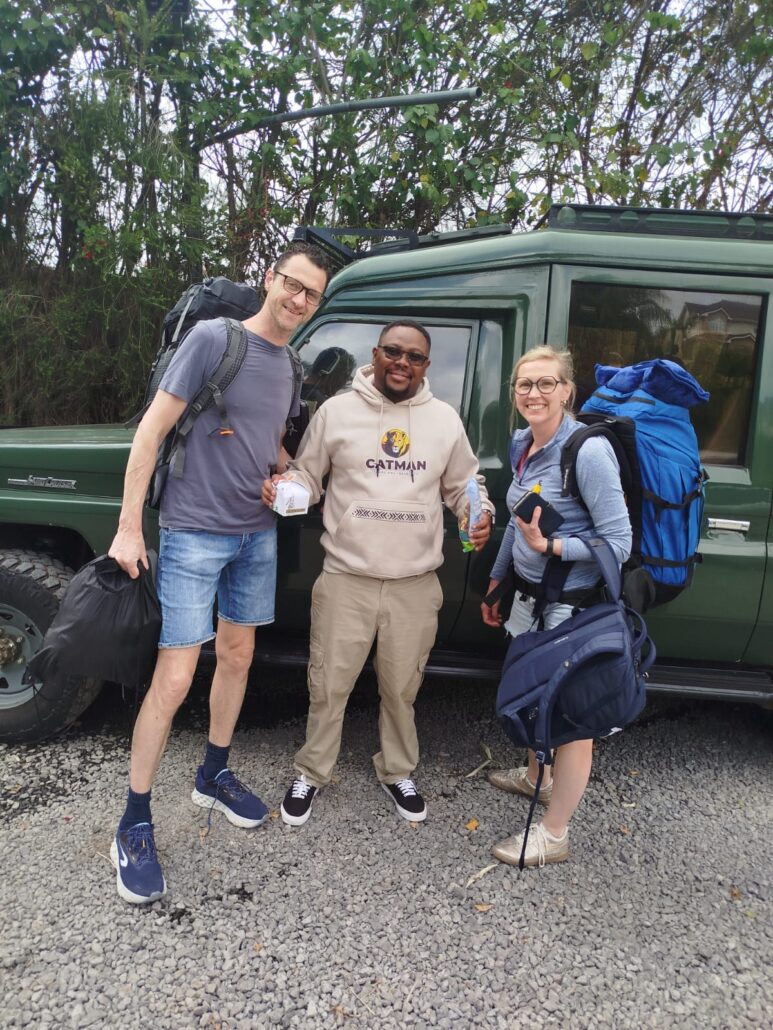
Carrental with driver guide in Uganda, Rwanda, Kenya, Burundi, East AfricaWho Should Choose a Driver Guide?

  • First-time visitors who want expert knowledge and no city traffic.
  • Anyone who would rather not navigate Nairobi or the park tracks.
  • Travellers with limited time who want the best sightings without searching.

A driver-guide costs from $40 per day, covering allowances, meals, and lodging. Many guests take a driver for the first day across the city, then drive themselves out of town, or add a guide for the park days. See Car with Driver in Kenya. For safari self-drive rules, see self-drive Maasai Mara and self-drive Amboseli.

Pick-Up and Drop-Off Points

You can collect and return your vehicle at any of the points below, by arrangement. On request, we can arrange delivery to your hotel, the airport arrivals hall, or a location closer to your destination.

Point

Why travelers choose it

Approximate distance from Nairobi

Nairobi

The most common starting point, with the airport, hotels, and safari roads close together

Base

Emali

Mombasa Road junction; the nearest pick-up to Amboseli

Roughly 140 to 160 km; about 2.5 to 3 hours

Voi

Between Tsavo East and Emali; handy for combining Tsavo with Amboseli

Roughly 330 km; about 5 to 6 hours

Mombasa International Airport

Arrive at the coast and drive inland, or finish a road trip and fly home.

About 480 km; 6 to 8 hours

Diani Beach

Beach holiday first, then safari, or finish on the sand.

About 520 km; 8 to 9 hours

Watamu

North coast start or finish

About 580 km; 9 to 10 hours

Please confirm which points are standard and whether JKIA, Wilson Airport, and hotel delivery in Nairobi are included. Distances and times are approximate.

Popular One-Way Combinations

Collect

Return

Typical use

Nairobi

Mombasa Airport

Mara, Amboseli, and Tsavo, then the coast, and a flight home

Nairobi

Emali

A short Amboseli trip, returning at the junction

Nairobi

Diani Beach

Safari first, then a beach holiday

Emali

Nairobi

Amboseli, then on to the Mara or the airport

Voi

Nairobi

Tsavo East, Tsavo West, then Amboseli, and the capital

Self-Drive Day Trips from Nairobi

You do not need a week to enjoy a self-drive. Nairobi has some of Africa’s best day trips on its doorstep.

Day trip

Distance and time (approx.)

Road and vehicle

Notes

Nairobi National Park

On the city edge: 30 to 60 minutes

Paved to the gates; 4×4 helps in the rains.

A KWS park with a lion, giraffe, rhino, and buffalo against the skyline. Self-drive is permitted; follow park rules.

Lake Naivasha and Hell‘s Gate

Roughly 90 km; 1.5 to 2 hours

Paved; SUV or 4×4

Cycling and walking at Hell’s Gate; boat trips on the lake

Lake Nakuru National Park

Roughly 160 km; 2.5 to 3 hours

Paved; SUV or 4×4

Rhino, buffalo, and birdlife. See Lake Nakuru National Park.

Limuru tea country and the Rift escarpment

Roughly 40 km; 1 hour

Paved; any vehicle

A scenic viewpoint over the Rift Valley

Self-Drive Day Trips from Nairobi

You do not need a week to enjoy a self-drive. Nairobi has some of Africa’s best day trips on its doorstep.

Day trip

Distance and time (approx.)

Road and vehicle

Notes

Nairobi National Park

On the city edge: 30 to 60 minutes

Paved to the gates; a 4×4 helps in the rains.

A KWS park with a lion, giraffe, rhino, and buffalo against the skyline. Self-drive is permitted; follow park rules.

Lake Naivasha and Hell‘s Gate

Roughly 90 km; 1.5 to 2 hours

Paved; SUV or 4×4

Cycling and walking at Hell’s Gate; boat trips on the lake

Lake Nakuru National Park

Roughly 160 km; 2.5 to 3 hours

Paved; SUV or 4×4

Rhino, buffalo, and birdlife. See Lake Nakuru National Park.

Limuru tea country and the Rift escarpment

Roughly 40 km; 1 hour

Paved; any vehicle

A scenic viewpoint over the Rift Valley

Longer self-drive safaris from Nairobi

Destination

Distance and time (approx.)

Self-drive status and next page

Maasai Mara

About 270 km; 5 to 6 hours with a stop

Independent in the Mara Triangle; ranger or guide in the main reserve. Self-drive Maasai Mara

Amboseli

About 240 km; 4 to 5 hours

Self-drive permitted (KWS). Self-drive Amboseli

Tsavo East and West

Roughly 230 to 330 km; 4 to 6 hours

Self-drive permitted (KWS). Self-drive to Tsavo

Mombasa and the coast

About 480 km; 6 to 8 hours

Paved highway. Car rental Mombasa

Self-Drive Itineraries from Nairobi

Trip

How it works

3 days: Nairobi and Naivasha

Day 1: Nairobi National Park; Day 2: Naivasha and Hell’s Gate; Day 3: return via the escarpment. Easy driving, mostly paved

4 to 5 days: Nairobi, Naivasha, and Nakuru

Add Lake Nakuru National Park and an overnight stay in the Rift Valley.

3 days: Masai Mara

See our 3-day Masai Mara route. Best with a driver guide or a Mara Triangle self-drive.

6 days: Mara and Amboseli

Our 6-day Masai Mara and Amboseli safari

8 days: Mara, Nakuru, and Naivasha

Masai Mara, Lake Nakuru, and Lake Naivasha

One-way: Nairobi to the coast

Collect in Nairobi, finish in Mombasa. See one-way car rental in Kenya

When to Self-Drive in and Around Nairobi

Months

Conditions

What to expect

January to February

Dry, warm, clear

Good conditions across Kenya; fewer crowds in the parks

March to May

Long rains

Green landscapes and few visitors, but flooding in town, mud on tracks, and bogged vehicles. Not ideal for self-drive

June to October

Dry season

The classic time. Clear skies, dust, and peak safari season. Busiest and most expensive

November to December

Short rains

Quieter and green; variable roads

Note

Field note: Nairobi‘s climate. Nairobi sits at about 1,800 meters, so days are mild and evenings cool, even in the dry season. Bring layers for dawn drives, and expect afternoon showers in the rainy months.

How to Plan a Self-Drive Day from Nairobi

Time

What to do

5:30 to 6:30 am

Rise, inspect the vehicle, and leave before the traffic builds. Fill the tank the evening before.

6:30 to 9:30 am

Clear the city and enjoy the cool morning light on the open road.

9:30 am to 1:00 pm

Arrive at the park or destination, and drive in the best of the day.

1:00 to 3:00 pm

Picnic or lunch, rest, and let the heat pass.

3:00 to 5:30 pm

A second drive, then start back so you arrive before dusk.

By 6:30 pm

Be settled. Our vehicles are on the road only until 7:00 pm.

Tips From the Road

  • Fill your tank and your water bottles before you leave town.
  • Download offline maps and tell us your route each evening.
  • Switch off your engine at wildlife sightings; it steadies your camera and disturbs animals less.
  • Never leave the vehicle except at designated points.

Be patient. Most good days come from slowing down.

Self-Drive Nairobi With Camping Gear and Rooftop Tent

Rooftop tent = sleeping. Camping gear = everything else you need for camping. You can hire either or both.

Car Rental With Camping Gear

Camping-equipped vehicles arrive with the kit packed and demonstrated. See Car Rental with Camping Gear in Kenya. Stock up on food, water, and gas in Nairobi before you leave town.

Rooftop Tent from Nairobi
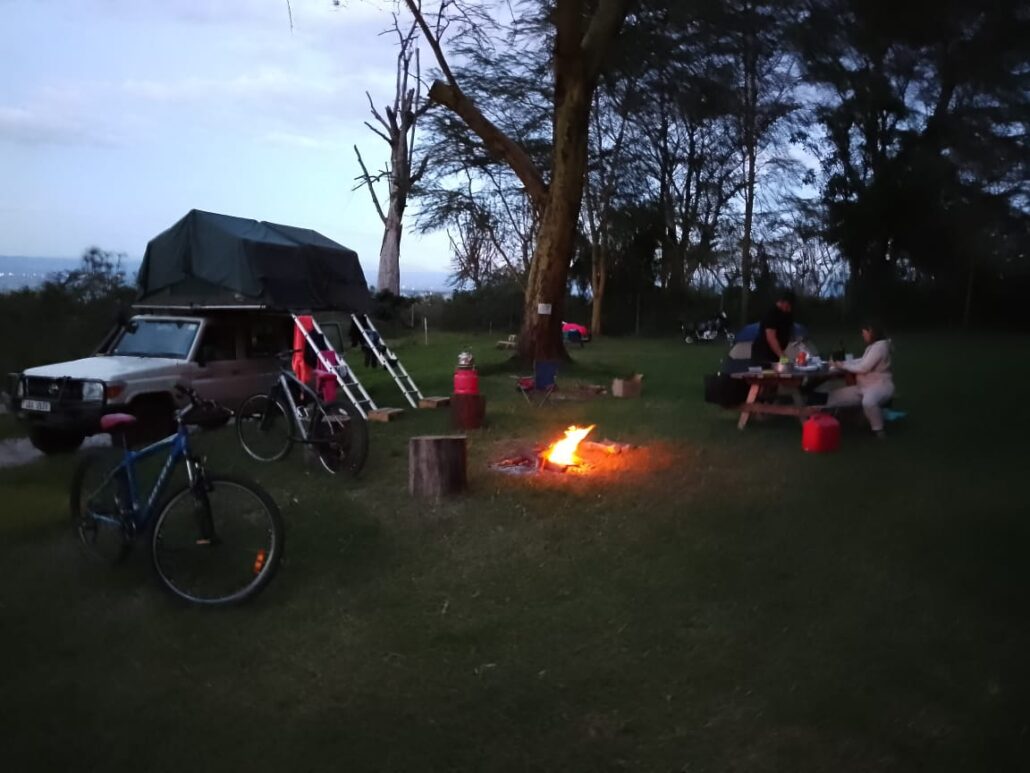
Car rental in Kenya with a rooftop tent from Nairobi sleeps two; dual tents sleep three to four. Price: $20 per day for two. Rooftop tents are fitted to Land Cruisers and are not covered by vehicle insurance. See a Car with a rooftop tent in Kenya.

Ground Camping Equipment

A ground tent costs $5 per day for two, with two foam mattresses. Sleeping bags are included; bed linen, towels, and clothing are not.

Cooking Equipment

Gas burner and bottle, pots, pans, utensils, crockery, and cutlery. A fridge is available at $10 per day.

Camping Furniture

Camp table and chairs, battery lamps, water container, and wash-up kit.

Safety and Recovery Equipment

Every vehicle carries a spare tire, jack, fire extinguisher, reflective triangles, and first-aid kit. Ask us to add traction boards, a tow strap, and a shovel.

Where you may camp

Camp only at designated campsites in or near the parks or at lodge and camp grounds. Bush camping is not permitted. Campsites charge a per-person, per-night fee on top of park entry. Many sites are unfenced. Never keep food in your tent, and expect baboons and, in some parks, elephants to visit. A rooftop tent keeps you off the ground, but camp discipline still matters.

One-Way Car Rental from Nairobi

Question

Answer

Can I collect in Nairobi?

Yes. Also Emali, Voi, Mombasa International Airport, Diani Beach, or Watamu

Can I return elsewhere?

Yes, at any other point on the list, by arrangement

Is there a fee?

Yes, there is a route-specific fee, disclosed in full at booking, of up to $600.

Are camping vehicles available?

Yes, with rooftop tents and camping gear

Can this be combined with cross-border travel?

Yes, for example, you can travel from Nairobi to Arusha via Namanga or from Nairobi to Kampala via Busia/Malaba. Ask us.

The one-way fee reflects fuel, border costs, COMESA insurance, and, where a driver delivers the vehicle, his allowance and accommodation. See one-way car rental in Kenya.

From Nairobi to Tanzania and Uganda

Nairobi is the starting point for many regional trips. You can drive our vehicles across the border, provided you make prior arrangements.

  • Crossings: Namanga is the usual post for Arusha and Moshi. For Uganda, Busia and Malaba are the main posts.
  • Authorization: prior written consent from us, with advance notice.
  • Insurance: COMESA cross-border cover, arranged by us, at $50
  • Proof of exit: required on return. Without it, a $400 surcharge applies.
  • Border and vehicle documents: prepared by us and checked at handover.
  • Park fees: paid separately to each park authority.

Related: Cross-Border Tanzania Car Rental, Car Rental Tanzania.

Long-Term Car Rental in Nairobi

Long-term hire runs from 21 days to 36 months, with unlimited mileage, comprehensive insurance, 24/7 roadside assistance, and regular servicing. It suits relocating professionals, NGO and research teams, business travelers, and extended holidaymakers. Monthly rates are discounted and quoted on request. See Long Term Car Rental Kenya.

How Much Does Self Drive in Nairobi Cost?

A trip from Nairobi has three kinds of cost: the vehicle, your add-ons, and the parks’ own charges. Vehicle rates are quoted per model, season, and length of hire in your written quotation.

Park Entry Fees for Common Nairobi-Based Trips

Destination

Non-resident adult, per day

Notes

Amboseli

About USD 90 (child about USD 45)

Schedule effective 1 October 2025; a Tsavo West and Amboseli package is about USD 150 per adult.

Maasai Mara

About USD 100 (January to June) or USD 200 (July to December)

Per 12-hour ticket; indicative.

Nairobi National Park, Lake Nakuru, Tsavo

About USD 90 (child about USD 45)

Rates vary by park and visitor category.

Car Rental 4×4 Published Add-Ons

Item

Published price (USD)

Rooftop tent

$20 per day (two people)

Ground tent

$5 per day (two people)

Fridge

$10 per day

Driver-guide

From $40 per day

Security deposit

$500, refundable

Cross-border COMESA cover

$50

One-way fee

Route-specific, quoted at booking, up to $600

Card payment

4% surcharge

Worked Examples

Two adults, a five-day trip with a rooftop tent and fridge: add-ons 5 × $20 + 5 × $10 = $150, on top of the vehicle rate, fuel, park fees, and campsite charges.

Two adults, a four-day Nairobi and Rift Valley trip with a driver on day one: driver 1 × $40 = $40, plus vehicle rate, fuel, park fees, expressway tolls, and accommodation.

Two adults, two days in Amboseli: park entry 2 × $90 × 2 = $360, plus vehicle fees, accommodation, and fuel.

What Else to Budget For

  • Fuel, paid by the hirer.
  • Expressway tolls and parking.
  • Accommodation or campsite fees.
  • Food and water for your days on the road.
  • One-way fee if you drop at a different point.
  • Personal travel and medical insurance.

What Do You Need to Rent a Car in Nairobi?

Requirement

Details

Passport

Required at pick-up

Driving license

Valid license from your home country

International driving permit

Accepted and strongly recommended; required if your license is not in English or Latin script

Age

Stated in your written quotation. Please provide your age and years of license when you inquire.

Deposit

$500 where requested

Payment

Cash on arrival or bank transfer (USD, EUR, or GBP). USD notes dated 2009 or newer. Card payments carry a 4% surcharge.

Rental agreement

A binding contract, signed before departure

Additional driver

Only drivers named in the contract may drive. Please include any additional drivers in the inquiry.

Insurance requirements

Vehicle insurance is included; arrange your own personal and medical cover

Insurance for Car Rental in Nairobi

Our fleet is insured against collision and theft of the vehicles. We do not provide life or personal cover for occupants. The following reflects our published East Africa contract; your Kenya quotation confirms the figures that apply.

Topic

Position

What is covered

Vehicle collision and theft, subject to excess

Excess

RAV4 or Nissan X-trail $500 · Prado TX/TZ $1,500 · LX, V8, GX, and TXL $2,000. Other models quoted in writing.

Accident damage

Please report the incident to the police and to us immediately. Do not leave the scene or arrange repairs before police inspection.

Damage inside national parks

Not covered, including collisions with wildlife

Off-track driving

Excluded. Stay on designated tracks

Tyres

Punctures and tire damage are the hirer’s responsibility.

Underbody

Treated as careless driving and the hirer’s responsibility

Water damage

Deep-water crossings and engine knock are excluded; a $1,000 fine applies for the RAV4 and $1,500 for the Land Cruiser

Night driving

Excluded; $1,200 plus damage costs

Unauthorized use

No subletting, no hire-or-reward, no racing, no unnamed drivers

Fines and tickets

Traffic fines and parking tickets during the hire are the hirer’s responsibility.

Windscreen

Not specified in our published contract. Ask us to confirm in your quotation.

Rooftop tent and camping gear

Not insured. Tent replacement is stated in our contract at $1,500

Security Deposit for Nairobi Car Rental

Question

Answer

Amount

$500, as requested by the operator

Payment method

Confirmed in your written quotation

When it is held

From handover until the vehicle has been returned and inspected

When it is released

At the end of the trip, if the vehicle returns without offenses

What affects the refund?

Lost accessories, damage, traffic or park fines, and any breach of the contract

Does it vary by vehicle?

The deposit is generally the same; the excess varies by vehicle.

Fuel and Mileage

Question

Answer

Is mileage unlimited?

Yes. All hire vehicles come with unlimited kilometers.

What fuel does each vehicle use?

Land Cruisers and Hilux are typically diesel; RAV4s are typically petrol. Please check the fuel cap label and confirm this at handover.

How much fuel does it use?

Planning figures: about 8 to 10 L/100 km (RAV4); 12 to 15 L/100 km (Land Cruiser), more on rough tracks and in traffic. Estimates only

Where can I refuel?

Fuel stations are plentiful in Nairobi and along the main highways. Do not rely on fuel inside or immediately beside a park. Use stations on our approved list.

What is the fuel policy?

You pay for fuel and oil. No credit is given for unused fuel at return

Can I go to remote areas?

Yes, on designated routes, with a full tank and recovery kit

What if I run out of fuel?

Call us; we will advise. Fuel and recovery costs caused by running dry are the hirer’s.

What Happens If Your Rental Car Breaks Down?

Step

What happens

1. Call

Please call or WhatsApp us right away. If you have no signal, ask a ranger or passing vehicle for help.

2. Diagnosis

We establish what has happened and where you are. Do not arrange or undertake repairs yourself.

3. Roadside assistance

Our rental includes 24/7 roadside assistance. We arrange for a mechanic to arrive within 12 hours.

4. Recovery

If the vehicle cannot be repaired on the spot, we arrange recovery.

5. Repair or replacement

If repair is not possible within a day, we provide a replacement vehicle (within 24 hours from base; within 48 hours across a border) or compensate for the lost day.

6. Continuing

We cover the replacement car’s fuel and driver allowance; you pay for fuel for returning the broken-down car

What support actually means. A person answers the phone, takes responsibility, and works to get you moving. It does not mean instant arrival on a remote road, and it does not cover damage from breach of the contract. Stay with your vehicle, stay calm, and keep clear of traffic and animals while you wait.

How Pickup and Handover Work

Stage

What happens

Pickup

At Nairobi, Emali, Voi, Mombasa International Airport, Diani Beach, or Watamu, or at your hotel or the airport by arrangement.

ID and document verification

Passport and license checked

Rental agreement

Contract read and signed; routes and the daylight rule confirmed

Vehicle inspection

Walk around the vehicle together.

Photographing existing damage

Photograph every panel, wheel, and windscreen before you leave.

Vehicle controls

Lights, wipers, fuel type, warning lights, and fuel cap

4×4 controls

How and when to use four-wheel drive, low range, and differential lock

Tire and recovery equipment

Spare tires, jacks, tools, tow straps, and traction boards are shown and tested

Camping equipment

The tent, kitchen, fridge, and furniture were demonstrated and checked off.

Emergency procedures

Whom to call and what to do after an accident or breakdown

Route questions

We discuss your route, the traffic, and current conditions. We also ask about your experience with gravel, mud, and manual gearboxes.

Departure

Sign, collect keys, and go.

Return

Please return the vehicle at the agreed point and time with all accessories. We inspect it together. Late returns are charged for extra days. The deposit is refunded when the vehicle comes back without offenses. Please request any extension before the return date.

What to Pack for a Trip from Nairobi

Category

Bring

Documents

Passport, license, international permit, booking confirmation, insurance papers, and park receipts

Clothing

Layers for cool mornings, a hat, sunglasses, a scarf for dust, and closed shoes

Navigation

Offline maps, a paper map, and our contact numbers

Electronics

Phone, vehicle charger, power bank, camera with spare batteries, and a dust cover

Food and water

Plenty of drinking water, snacks, and a cool box

Safari equipment

Binoculars, field guide, camera with long lens, beanbag for window support

Camping equipment

Head torch, sleeping liner, warm layers, towel

Emergency items

First-aid kit, torch, tow strap, traction boards, and shovel (ask us to add)

Personal items

Medication, malaria prophylaxis, insect repellent, sun cream, and cash in small USD notes dated 2009 or newer

Who Is Self Drive in Nairobi Best For?

Couples

Privacy and flexibility, with a sunrise over the Rift Valley or the plains.

Families

Room for luggage and car seats, short first drives, and a pop-up roof for children to see out.

Solo Travellers

Long Term Car Rental in Kenya, Tanzania Rwanda, BurundiRewarding confident drivers: consider hiring a driver for your first day and for park days.

Friends and Small Groups

Share the cost of a Land Cruiser and the driving. Name every driver on the contract.

Photographers

A pop-up roof vehicle allows you to wait for the light.

Business and Long-Stay Travellers

A reliable vehicle for repeated trips, with long-term rates and servicing.

Camping Travellers

Rooftop tent plus camping gear at designated sites.

Which Nairobi Rental Option Is Right for You?

Travelers need

Best option

Maximum independence

Self-Drive

Game-viewing photography

Pop-Up Roof

Camping

Rooftop Tent + Camping Gear

No desire to drive in Nairobi

Car + Driver

Local knowledge

Driver-Guide

Different return location

One-Way Rental

Several months

Long-Term Rental

Kenya and Tanzania together

Cross-Border Rental

Real Nairobi Self-Drive Examples

These are illustrative plans built from our routes and published prices. Vehicle rates, fuel, park fees, and accommodation are additional.

Traveller

Plan

Vehicle and add-ons

Published add-ons

Couple, 2 days

Nairobi to Naivasha and back

RAV4 or Land Cruiser

None required

Friends, 5 days

Nairobi, Amboseli, Tsavo West, Mombasa

Land Cruiser with rooftop tent and fridge

5 × ($20 + $10) = $150 plus one-way fee

Family of four, 3 days

Nairobi, Nakuru, Naivasha

Extended Land Cruiser with pop-up roof

None required

First-time visitor, 4 days

Airport to hotel, then the Mara

Land Cruiser with driver guide

4 × $40 = $160

Regional traveller

Nairobi, Amboseli, Arusha

Land Cruiser with COMESA cover

$100 plus one-way fee

What to Check Before Booking

  • Your licence is valid for the whole trip, you carry an international permit, and your passport has enough pages.
  • Your pick-up and drop-off points are confirmed, including any one-way fee.
  • Your dates suit the road: avoid the heavy rains for self-drive if you can.
  • You have chosen the right vehicle and a rooftop tent for camping.
  • You know the Nairobi rush hours and plan your first drive outside them.
  • You know the current park fees, gate hours, and rules.
  • You understand the excess, deposit, exclusions, and cancellation terms.
  • You have personal travel and medical insurance, including evacuation.
  • You have read the full terms.

Frequently Asked Questions About Self-Drive Nairobi

Can tourists self-drive in Nairobi?

Yes. Carry your valid home license, an International Driving Permit (strongly recommended), and your passport. Kenya drives on the left.

Is it difficult to drive in Nairobi?

The center is busy and unpredictable, especially at rush hour. Off-peak, in the suburbs, and on the roads out of town, it is much easier. A driver for the first day is a sensible option.

Do I need an International Driving Permit?

We strongly recommend one. Rental companies often request it, and they require it if your license is not in English or the Latin alphabet. Carry it with your home license.

How long can I drive on a foreign license in Kenya?

Some sources cite up to 90 days for visitors, but rules vary. Check with us and with the National Transport and Safety Authority for longer stays.

Is it safe to drive at night?

We advise against it. Our rental agreement limits driving from 6:00 am to 7:00 pm.

Is there a toll road in Nairobi?

Yes. The Nairobi Expressway between Mlolongo near JKIA and Westlands has distance-based tolls. Everything else is toll-free.

Can I collect the car at the airport?

JKIA, Wilson Airport, and hotel delivery. Yes, we can deliver to the airport or your hotel. Tell us your flight details.

Can I self-drive in Nairobi National Park?

Yes, Nairobi National Park allows private and rental vehicles on payment of the park fees, subject to park rules.

Can I self-drive in the Maasai Mara?

Independently in the Mara Triangle. In the main reserve you need a ranger or guide from the gate. See our self-drive Maasai Mara guide.

Can I self-drive to Amboseli, Lake Nakuru, and Tsavo?

Yes. All three parks allow private and rental vehicles, provided you pay the park fees. See our guides for Amboseli, Lake Nakuru, and Tsavo.

What vehicle should I choose?

A lighter SUV for paved routes and a Land Cruiser or other 4×4 for parks, rough roads, and camping.

Where can I pick up and drop off the vehicle?

Nairobi, Emali, Voi, Mombasa International Airport, Diani Beach, and Watamu, by arrangement.

What is the security deposit?

$500, where requested, is refunded at the end of the trip, less any deductions.

Is insurance included?

Yes, covering collision and theft of the vehicle, subject to excess. It does not cover damage inside national parks, wildlife collisions, or tents or gear.

Is mileage unlimited?

Yes, on all hired vehicles.

What happens if I have an accident or breakdown?

Stop safely, call our 24/7 line, and, in an accident, call the police. We arrange repairs and, if needed, a replacement vehicle or compensation.

Can I add a driver for part of the trip?

Yes. A driver guide is from about $40 a day, and many travelers take one for the first day or for the parks.

Can I use a rooftop tent?

Yes, at $20 per day for two people. Camp only at designated sites.

Can I take the vehicle to Tanzania or Uganda?

Yes, with our prior consent, COMESA cover ($50 days or fewer) and proof of exit. Border time can add hours.

Can I return the vehicle somewhere different?

Yes, by one-way arrangement. The fee is route-specific and disclosed at booking, up to $600.

Can I pay by card?

Yes, with a 4% surcharge. Cash on arrival and bank transfer (USD, EUR, or GBP) are also accepted.

What is the best time to self-drive from Nairobi?

June to October and January to February for the driest conditions. The long rains from March to May are the hardest months for self-drive.

Begin Your Self-Drive from Nairobi

Somewhere ahead, past the last speed bump and the last roundabout, the city thins into acacia, and the Rift Valley opens below the escarpment. All that remains is for you to be there.

You have probably imagined this morning for longer than you will admit. The engine is settling into a steady note. A long road west or south. The first animal of the day was standing in the track as though it had been waiting for you. We have tried to make everything between that picture and the real thing as quiet and uneventful as possible.

Every detail is handled. Your vehicle is waiting where you choose, in Nairobi, at Emali, at Voi, or on the coast. It is prepared, serviced, and equipped. The route is chosen with you, including the days that are better with a driver at your side. Excess, deposit, rules, and breakdown steps are explained in plain figures before you sign. If a warning light appears on a quiet road, someone answers.

No decision is left to chance. That is not a promise that Africa will be predictable. It is a promise that you will not be the one left wondering.

When you are ready, let us know your travel dates and where you want to start and end. We will take it from there, gently and without obligation.

Begin planning your self-drive from Nairobi: write to rent@carrental4x4.com or message us on WhatsApp. We would be glad to hear from you. Compare prices and hire options on our car rental Nairobi page.

Scroll to Top