Tsavo East National Park Travel Guide: Red Elephants, Lugard Falls, Lodges, Campsites and Kenya Travel Essentials
Tsavo East National Park is one of Kenya’s oldest and largest parks, a vast, flat, semi-arid wilderness of about 13,700 sq km between Nairobi and Mombasa, famous for red-dust elephants, the Galana River, Lugard Falls, Mudanda Rock, big prides of lions, and the legend of the Tsavo man-eaters. It is easy to reach from Mombasa (about 2.5 to 3 hours to the Voi Gate) and from Nairobi (about 5 to 6 hours); it offers a wide range of lodges and campsites, and it combines naturally with Tsavo West, the Taita Hills, and a beach stay on the coast. Plan two to four nights, bring a 4×4 with plenty of water and fuel, protect yourself from heat, dust, and tsetse flies, and confirm fees, gates, road conditions, and lodge status before you go.
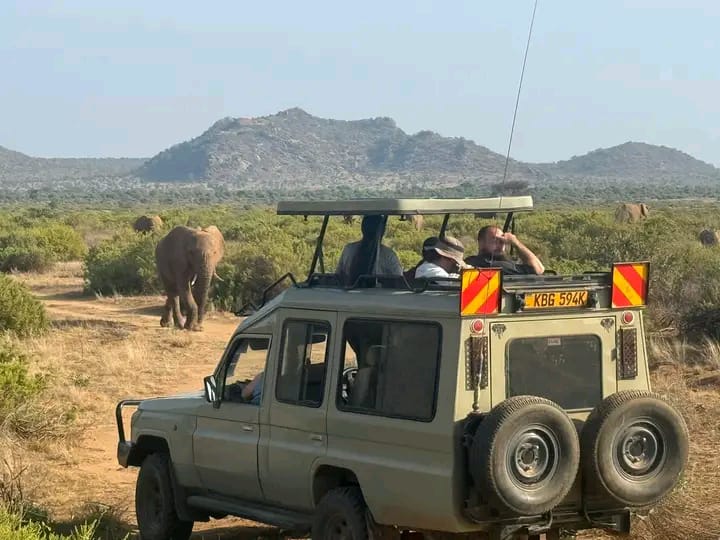
This guide explains what Tsavo East National Park offers, how the park is laid out, what wildlife and sights to expect, where to stay at every budget, how to get there and around, and how to fit it into a wider Kenyan trip. Because many readers will be planning a longer journey, it also includes a Kenya travel essentials section covering entry rules, money, health, driving, connectivity, and packing. For the coast, read our Mombasa travel guide; for the capital, our Nairobi travel guide, and for other parks our Laikipia travel guide, Aberdare National Park travel guide and Kisumu travel guide.
Tsavo East National Park at a Glance
Quick fact | What to know |
Location of Tsavo East | South-eastern Kenya, in Taita-Taveta, Kilifi, and Tana River counties, north-east of the Nairobi to Mombasa highway and railway |
What is Tsavo East National Park? | A national park of roughly 13,700 sq km, established in 1948, managed by the Kenya Wildlife Service, and forming the Tsavo Conservation Area with Tsavo West across the highway |
Famous for | Red-dust elephants, the Galana River, Lugard Falls, Mudanda Rock, Aruba Dam, the Yatta Plateau lava flow, lions, wide plains, and the story of the Tsavo man-eaters |
Languages | English and Swahili, with the Taita, Kamba, Giriama, and Orma communities in the region |
Climate | Hot and dry, usually about 22 to 35°C by day, with warm nights, red dust, and two rainy seasons |
Altitude | Roughly 200 to 800 m above sea level, so much hotter than Nairobi |
Currency | Kenyan shilling (KES). Lodges usually accept cards, and cash is useful in Voi and Mtito Andei. |
Time needed | Two to four nights, or longer, with Tsavo West, the Taita Hills, or the coast |
Main areas | Voi and the southern plains, the Galana River and Lugard Falls, Mudanda Rock, Aruba Dam, and the northern and eastern sections |
Best for | Elephants, big landscapes, lions, photography, self-drive safaris, and safari-and-beach trips with Mombasa |
Is Tsavo East Worth Visiting?
Yes, especially if you want a big, wild safari that feels less crowded than the Mara. Tsavo East National Park has a famous population of elephants that dust themselves with red soil, so they glow the colour of the earth, and the park is also home to lions, leopards, buffalo, giraffes, antelopes and many birds. The scenery is wide and dramatic, with open plains, red cliffs, rocky outcrops, the green ribbon of the Galana River and the long dark line of the Yatta Plateau. Because it lies between Nairobi and Mombasa, it is easy to combine with a beach holiday, a train journey or a longer road trip.
It is also hot, dusty and remote. Animals are spread over a huge area, the thick bush can make sightings harder than on the open plains of the Mara, tsetse flies can be a nuisance in some areas, and roads can be rough or impassable in the rains. Long distances mean you should plan carefully and stay at least two nights. With a good guide, a reliable vehicle and realistic expectations, it is one of Kenya’s most rewarding safari parks.
Who Tsavo East National Park suits Best
- Elephant and photography lovers who want red elephants and big skies.
- Safari travellers adding a classic park to a Mombasa or Diani beach trip.
- Self-drivers and road-trippers who enjoy long, adventurous park drives.
- Repeat Kenya visitors who want something quieter than the Mara.
- Campers who enjoy hot, dry, wild places.
- History and train fans interested in the Uganda Railway and the Tsavo man-eaters story.
Wildlife and Sights in Tsavo East: What You Can See
Wildlife
| Feature | What makes it special? | Tips |
| Red elephants | Large herds coated in red dust, often seen at waterholes and the Galana River | Best in the dry season, when elephants gather near water |
| Lions | Prides are often seen on the plains and rocks, including some maneless males. | Look for them resting under bushes in the heat. |
| Leopards and cheetahs | Present but less often seen | Be patient and scan trees and open plains. |
| Buffalo | Large herds, often near water | Keep a safe distance and never block their path. |
| Giraffes and zebras | Reticulated giraffe and plains zebra on the open plains | Good for photography early and late in the day |
| Dry-country antelopes | Gerenuk, lesser kudu, fringe-eared oryx, Grant’s gazelle, hartebeest, and dik-dik | Look in thorn scrub and dry bush. |
| Hippos and crocodiles | Found along the Galana River, especially near Lugard Falls and Crocodile Point | Stay behind barriers and keep away from the water’s edge. |
| Black rhinos | A small population is present but rarely seen. | Treat any sighting as a rare bonus |
| Birds | Over 500 species, including raptors, hornbills, weavers, and many migrants | Early morning is best, and migrants are present from November to April. |
Famous sights of Tsavo East National Park
| Sight | What makes it special? | Tips |
| Lugard Falls | Rapids and rock channels on the Galana River, with crocodiles and hippos | Walk only on marked paths and stay clear of the water. |
| Mudanda Rock | A long rocky outcrop that catches rainwater and attracts elephants and other animals | Best viewed in the late afternoon from the rock platform |
| Aruba Dam | A large dam on the Voi River, a magnet for wildlife and birds | Good for sundowner game viewing |
| Yatta Plateau | One of the world’s longest lava flows, running along the park’s north-western edge | A striking backdrop on drives |
| Crocodile Point | A viewpoint on the Galana River with crocodiles and hippos | Keep well back from the bank. |
| Voi Safari Lodge viewpoint | A hilltop lodge overlooking a waterhole and plains | Good for sundowners and watching wildlife at the waterhole |
| The Tsavo man-eaters story | The history of the two lions that attacked railway workers in 1898 | Learn more with a guide and visit local museums. |
Sightings vary by season, and wildlife is spread over a very large area, so ask your lodge or guide where animals have been seen recently.
Top Things to Do in Tsavo East
- Game drives: the main activity, usually in the early morning and late afternoon, with your own 4×4 or a lodge vehicle.
- Visit Lugard Falls and Crocodile Point: short walks to viewpoints along the Galana River, always with care.
- Climb Mudanda Rock: a short, easy walk to a platform with wide views and elephants below.
- Sundowner at Aruba Dam: a classic stop for wildlife and a drink.
- Waterhole watching: relax at lodge waterholes, such as at Voi Safari Lodge, for elephants and buffalo.
- Birdwatching: from the plains to the river, especially in the early morning.
- Photography: red elephants, rock outcrops, and dramatic light on the plains.
- Guided bush walks: offered by some lodges and sanctuaries, with armed rangers.
- Night drives: offered by some private sanctuaries and lodges outside the main park rules. Confirm with your lodge.
- Camping: at public and special campsites for those who want to sleep under the stars.
- Cultural and historical visits to Voi, the railway, and local communities, arranged through lodges or guides.
Nearby experiences
- Tsavo West National Park: Mzima Springs, the Shetani lava flows and rhino sanctuary areas, across the highway.
- Taita Hills Wildlife Sanctuary and Salt Lick: a private sanctuary with a famous lodge on stilts, between the two Tsavo parks.
- Voi town: supplies, fuel, and a gateway to the park, with the railway station and local markets.
- Mombasa and the coast: beaches, Fort Jesus, and Old Town. See our Mombasa travel guide.
- Shimba Hills and Diani: an easy add-on from the coast.
- Watamu, Malindi, and Gedi Ruins: a longer extension along the north coast.
How Tsavo East Works: Fees, Gates, and Rules
Tsavo East National Park is managed by the Kenya Wildlife Service. Entry is normally paid per person per day, with an extra charge for your vehicle, and rates differ for non-residents, East African residents, and citizens, with lower rates for children. Camping is usually charged per person per night in addition to entry. Payment is increasingly cashless, through cards, mobile money, or online systems, so confirm how to pay before you arrive. The park has several gates, including the Voi Gate, Manyani Gate, Buchuma Gate, and Sala Gate, with others on the northern and eastern sides, and the best choice depends on your lodge and route. Gates usually open in the early morning and close in the evening, and you must be at your lodge, campsite, or an exit gate by closing time. Rules include staying on marked tracks, keeping to speed limits, not driving off-road, never leaving the vehicle except at designated points, keeping your distance from wildlife, and never feeding animals. Fees, gates, and payment methods change, so confirm them directly with the Kenya Wildlife Service or your lodge before you go.
Nearby Parks and Places to Combine with Tsavo East
| Place | Approx. distance | Famous for | Tips |
| Voi town | At the Voi Gate | Fuel, supplies and the train station | Refuel and buy water here. |
| Tsavo West National Park | About 1 to 2 hours from Voi | Mzima Springs, lava flows, and rhinos | A natural pairing for a two-park trip |
| Taita Hills Wildlife Sanctuary | About 1.5 hours from Voi | A private sanctuary and a famous waterhole lodge | Often combined with Tsavo |
| Mombasa | About 150 km, 2.5 to 3 hours | Beaches, Fort Jesus, and Old Town | See our Mombasa travel guide. |
| Shimba Hills National Reserve | About 3 to 3.5 hours | Sable antelope, elephants, and forest | An easy add-on from the coast |
| Watamu and Malindi | About 3.5 to 4 hours | Marine parks, turtles, and Gedi Ruins | A longer coastal extension |
| Nairobi | About 330 km, 5 to 6 hours | The capital, with museums and the National Park | See our Nairobi travel guide. |
| Amboseli National Park | About 4 to 5 hours from Mtito Andei or Tsavo West | Elephants and views of Mount Kilimanjaro | Often combined on a longer circuit |
| Maasai Mara National Reserve | A long road drive or a short flight | The Great Migration and big cats | Fly if short on time. |
Tip: Kenya Wildlife Service (KWS) manages national parks and many reserves, while private sanctuaries, conservancies, and communities manage other areas. Fees, permits, and payment systems vary and change, so confirm directly before you go.
Best Time to Visit Tsavo East
Tsavo East is hot and semi-arid for much of the year, and rainfall affects both wildlife viewing and road conditions.
- For the best wildlife viewing and dry roads: June to October and January to February, when animals gather near water and the bush is thinner.
- For the hottest weather: January to March, with strong sun and dust.
- For the long rains: about March to May, when roads can be muddy or impassable and some lodges close.
- For the short rains: November to December, usually lighter, with fresh green growth.
- For fewer crowds and lower prices: the rainy months, though access can be difficult.
- For birdwatching: November to April brings migratory species.
- For photography: early morning and late afternoon give the best light and cooler air.
- For holiday crowds: late December to early January and July to August, when lodges fill and advance booking is wise.
Bring a hat, sunglasses, strong sun protection, plenty of water, and neutral-colored clothing.
How to Get to Tsavo East
- By road from Mombasa: about 150 km to the Voi Gate along the Mombasa to Nairobi highway, usually 2.5 to 3 hours depending on traffic. The road is paved and busy with trucks.
- By road from Nairobi: about 330 km to the Voi Gate, usually 5 to 6 hours or more depending on traffic. Many visitors leave early and avoid night driving.
- By train: the Madaraka Express, a standard-gauge railway link between Nairobi and Mombasa, with a stop at Voi. Plan onward transport to the gate or your lodge, since the station is some distance from the park.
- By air: Scheduled and charter flights serve airstrips in and near Tsavo East from Nairobi, Mombasa, and Diani, with transfers to lodges. Baggage limits are strict on small planes.
- From Malindi and the north coast: the Sala Gate offers an eastern entry, usually a few hours by road, with some stretches unpaved.
- From the Taita Hills and Tsavo West: a short drive via Voi or Maungu.
- By bus and matatu: services run along the Nairobi to Mombasa highway and stop at Voi, but not inside the park, so you would need a transfer or a hired vehicle.
- Cross-border: road links from Tanzania via Taveta mean long drives, and cross-border car hire needs special permission. See our guide to cross-border car rental from Kenya.
Getting Around Tsavo East
- Car hire: the best way to reach the park and explore at your own pace, with a high-clearance 4×4 strongly recommended.
- Driver-guide: helpful for finding wildlife, navigating long distances, and handling rough tracks.
- Lodge game drives: most lodges offer morning and afternoon drives in open vehicles with trained guides.
- Flying in: possible via the park’s airstrips, though costly.
- Walking: only at designated points or on guided walks with rangers, and never alone.
- Fuel and supplies: refuel in Voi or Mtito Andei, and carry extra fuel, water, and food, since the park is huge and services are limited.
Where to Stay at Tsavo East: Budget, Mid-range, Luxury, and Campsites
Tsavo East has a wide range of stays, from public campsites and simple lodges to mid-range lodges, tented camps, and luxury bush camps. Many places close or reduce services in the long rains. Prices change with the season and are not listed here, so compare current rates and confirm what is included, such as meals, drives, and park fees. The names below are well-known options reported by published guides, but availability and standards change, so check each property directly.
Tier | Best for | What to expect |
Budget | Self-drivers, backpackers, and families | KWS campsites, simple guesthouses in Voi and Mtito Andei, and basic bandas outside the park |
Mid-range | Couples, families, and first-time visitors | Comfortable lodges and tented camps inside and near the park, with meals and game drives |
Luxury | Honeymoons and special occasions | Exclusive tented camps and lodges with private drives, bush meals, and spa-style comfort |
Campsites | Adventurous and self-sufficient travellers | Public and special campsites inside the park, with basic facilities and a wild setting |
Budget stays
- KWS public campsites: basic sites near gates and key spots, usually with limited facilities and a low nightly fee plus park entry.
- Voi guesthouses and hotels: inexpensive rooms in town, close to the Voi Gate, with restaurants and shops.
- Mtito Andei and Maungu guesthouses: simple rooms along the highway, useful for early starts.
- Basic camps and bandas outside the park: low-cost options near the gates, where available.
Option | Best for | Tips |
KWS public campsite | Self-drive, tent, and budget trips | Bring food, water, fuel, bedding, and a stove where allowed. |
Voi Guesthouse | Flexible, low-cost trips | Leave early to reach the gate when it opens. |
Basic bandas | Short stays and groups | Ask about meals, water, and safety before booking. |
Mid-range stays
- Voi Safari Lodge: a hilltop lodge near the Voi Gate, with views over a waterhole and plains, a pool, and game drives.
- Ashnil Aruba Lodge: a lodge near Aruba Dam, with a pool, a restaurant, and wildlife viewing at the dam.
- Sentrim Tsavo Camp and similar tented camps: comfortable camps inside or near the park, with meals and drives.
- Taita Hills Wildlife Sanctuary lodges: a famous waterhole lodge and tented stays between the two Tsavo parks.
Option | Best for | Tips |
Voi Safari Lodge | First-time visitors and waterhole views | Check what is included and whether drives are offered. |
Ashnil Aruba Lodge | Families and sundowners at the dam | Ask about game drives and park fees. |
Tented camps | Couples and groups | Book early in high season. |
Luxury stays
- Satao Camp and other private tented camps: exclusive camps with private game viewing, bush meals, and personal service, where available.
- Galdessa Camp and similar riverside camps: upmarket camps overlooking the Galana River, with private drives and walks, where available.
- Epiya Chapeyu and similar luxury camps: small, intimate stays with private guides and activities, where available.
- Private sanctuary lodges near Tsavo: exclusive stays on neighboring private land, often with night drives and walks.
- Beach luxury at the coast: upmarket resorts at Diani, Watamu, and the north coast, for those combining a safari and beach trip. See our Mombasa travel guide.
Option | Best for | Tips |
Private tented camps | Honeymoons and photography | Confirm which activities and fees are included. |
Riverside luxury camps | Privacy and river views | Book months ahead for peak season. |
Coastal luxury resorts | A safari and beach combination | See our Mombasa travel guide. |
Campsites
Option | What you get | Tips |
KWS public campsites | Low-cost sites with basic facilities in the park | Expect heat, dust, and wildlife nearby. Bring a good tent, water, food, and shade. |
KWS special campsites | More private, remote sites for small groups, often booked ahead | Ask KWS about availability, rules, fees, and ranger escorts. |
Campsites near the gates | Simple sites just outside the park, some with showers and a restaurant | Useful for early starts and late arrivals |
Rooftop tents | A convenient option for self-drivers who want to sleep off the ground | See our camping gear and rooftop tent rental. |
Camping rules and safety
- Camp only in designated areas, and never leave food outside your tent or vehicle.
- Expect elephants, hyenas, buffalo, and other animals near camp at night, so stay inside after dark unless guided.
- Do not cook near your tent, and keep all food and rubbish locked in your vehicle.
- Bring plenty of water, a mosquito net, repellent, shade, a first-aid kit, and a charged phone, and tell rangers your plans.
- Follow gate and campsite rules, including quiet hours and fire guidelines.
- Check whether showers, firewood, and cooking equipment are provided, and what you need to bring.
Budget tips: camp or stay in Voi and visit by day, travel in the shoulder months outside July to August and December, and compare lodge packages that include meals. If you plan to camp on a longer trip, you can arrange equipment through camping gear and rooftop tent rental.
Self-Drive, Driver-Guide or Flying: Choosing Your Transport
Self-drive is permitted in Kenya, and the Nairobi to Mombasa highway is paved but busy with trucks. Inside Tsavo East, tracks are long, dusty, and sometimes rough, and they can become muddy or impassable in the rains, so a high-clearance 4×4 with a spare tire, plenty of fuel, and water is essential. If you want to compare vehicles, see car rental Mombasa, and for the drive from the capital, read Nairobi to Tsavo East self-drive.
If you want… | Choose | Why |
To reach Voi and the gates | A compact SUV or saloon | Paved highway all the way to Voi |
Game drives and park tracks | A high-clearance 4×4 | Better on dust, stones, and rain-damaged sections |
Stress-free wildlife viewing | Local knowledge, spotting and navigation over long distances | |
Group or family wildlife trips | Standing views and photographs for everyone | |
A one-way trip between Nairobi and Mombasa | Collect in one city and drop in another, with a Tsavo stop in between. | |
Camping on a longer route | Useful for park campsites and Tsavo West | |
Short on time | Scheduled or charter flights | Fast, but costly and with baggage limits |
Road rules and safety, whichever vehicle you choose

- Drive on the left, keep to the speed limit, and expect police checkpoints.
- Avoid night driving on the highway, where trucks, livestock, and unlit vehicles are common.
- Keep to marked tracks inside the park, follow gate rules, and observe speed limits.
- Never drive off-road, and never get out of the vehicle near wildlife except at designated points.
- Carry plenty of water, extra fuel, a spare tire, a charged phone, and offline maps, since signal can be patchy.
- Refuel in Voi or Mtito Andei, and plan your route and gate times carefully.
Local notes from our team Timing: leave Nairobi or Mombasa early to reach the gate by late morning and have time for an afternoon game drive. Roads: allow extra time after rain, since black cotton soil can trap vehicles, and ask your lodge about current track conditions. Heat and dust: carry extra water, wear neutral colors, and keep windows closed on dusty stretches. Tsetse flies: avoid dark blue and black clothing, and use repellent. Kit list: hat, sunglasses, sunscreen, light long sleeves, insect repellent, binoculars, plenty of water, extra fuel, and offline maps.
Sample Tsavo East Plans
Two nights: a short Tsavo East safari from Mombasa
- Day 1: drive to the Voi Gate, lunch at the lodge, and an afternoon game drive.
- Day 2: sunrise drive, Mudanda Rock, a lodge lunch, and a sundowner at Aruba Dam.
- Day 3: a morning game drive, then return to Mombasa.
Three to four days: Tsavo East and Tsavo West
- Day 1: Nairobi or Mombasa to Tsavo East, afternoon game drive.
- Day 2: Lugard Falls, Crocodile Point, and Mudanda Rock.
- Day 3: drive to Tsavo West for Mzima Springs and the lava flows.
- Day 4: a morning game drive, then return.
Five to seven days: safari and beach
- Days 1 to 3: Tsavo East and the Voi area.
- Day 4: the Taita Hills or Shimba Hills.
- Days 5 to 7: Beach time at Diani, Watamu, or Nyali, with a visit to Fort Jesus and Old Town. See our Mombasa travel guide.
Seven to ten days: Nairobi, Tsavo, and the coast
- Days 1 to 2: Nairobi and its National Park. See our Nairobi travel guide.
- Days 3 to 5: Tsavo West and Tsavo East.
- Days 6 to 10: Mombasa and the coast, with optional trips to Shimba Hills, Kisite-Mpunguti, or Watamu.
Using Tsavo East as a Starting or Ending Point
Tsavo East works well as the middle stop on a Nairobi to Mombasa journey. A common pattern is to leave Nairobi early, spend two or three nights in Tsavo West and Tsavo East, then continue to the coast for a beach finish. Another is to start at the coast, drive or take the train to Voi, and finish with a flight back to Nairobi or the Mara. Our Kenya safari routes guide shows how the circuits fit together, our Mombasa travel guide covers the coast, our Nairobi travel guide covers the capital, our Laikipia, Aberdare National Park, and Kisumu travel guides cover other regions, and the guide to cross-border car rental from Kenya explains routes into Tanzania and Uganda.
Kenya Travel Essentials
This section pulls together the practical information most visitors need for any trip in Kenya. Rules, costs, and conditions change, so check official sources before you travel.
Topic | What to know |
Entry | Most overseas visitors need a Kenya eTA before they fly, and some nationalities have different rules. Check the official portal, and carry a passport valid for at least six months. |
Insurance | Kenya asks most foreign visitors entering on an eTA to hold a Kenyan inbound health insurance policy. Rules have changed since launch, so confirm the details when you apply. Also keep your own travel policy with medical evacuation. |
Money | Kenyan shilling (KES). Cards work in hotels, lodges, and malls; M-Pesa mobile money is everywhere; and cash is needed in small towns, markets, and for tips. Use ATMs in banks and malls. |
Tipping | Tips are appreciated in lodges and for guides and drivers. Ask your operator for current guidance, and keep small notes. |
Language | English and Swahili are widely spoken. A few Swahili words, such as “jambo” and “asante,” are always welcome. |
Time and power | Kenya is on East Africa Time (UTC+3). Electricity is 240 V with UK-style three-pin plugs, so bring an adapter and a power bank. |
Connectivity | Mobile coverage is good in towns and patchy in remote areas. Local SIM cards and eSIMs are easy to arrange, and offline maps are essential |
Driving | Drive on the left. Bring your license and an International Driving Permit. Expect police checkpoints, speed cameras, and heavy trucks on main roads. |
Health | Ask a travel clinic about routine vaccinations, malaria prophylaxis, and other advice. A yellow fever certificate may be required if you arrive from an affected country. Drink bottled or treated water. |
Safety | Use normal precautions: keep valuables out of sight, avoid isolated areas at night, use registered taxis, and avoid demonstrations. Check government advice for specific regions. |
Wildlife etiquette | Keep your distance, stay in your vehicle in parks, never feed animals, keep noise low, and follow ranger and guide instructions. |
Culture | Dress modestly in towns and religious sites, ask before photographing people, and greet people politely. |
Seasons | Kenya has two main rainy seasons, roughly March to May and October to November, with drier months in between. Regions differ, so check each destination. |
Parks and fees | Kenya Wildlife Service manages most national parks and reserves, and conservancies and counties manage others. Fees vary by park, season, and visitor category, so confirm in advance. |
Emergency | Dial 999 or 112 for emergencies, and keep the number of your lodge, operator, and embassy handy. |
Packing checklist
- Passport, eTA confirmation, insurance papers, driving license, and International Driving Permit.
- Light, neutral-colored clothes (avoid dark blue and black near tsetse flies), a warm layer, a waterproof jacket, and sturdy shoes.
- Hat, sunglasses, sunscreen, insect repellent, and any prescription medicines.
- Binoculars, a camera with a dust cover, a power bank, and a universal adapter.
- Reusable water bottle, plenty of drinking water, a small first-aid kit, and hand sanitizer.
- Cash in small notes, a card, and copies of important documents.
Before You Travel to Tsavo East
- Travel authorization: most overseas visitors need a Kenya eTA before they fly. Check the official portal for the latest rules.
- Required health insurance: confirm the inbound health insurance requirement on the day you apply, as rules have changed since launch.
- Your own cover: keep a comprehensive travel policy with medical evacuation, which matters for remote parks.
- Malaria: Tsavo is a hot, lowland area where malaria risk is higher, so speak to a travel clinic about prophylaxis, use repellent, and sleep under a net where provided.
- Tsetse flies: these can bite painfully in some areas, so wear neutral clothing, use repellent, and keep windows closed in thick bush.
- Heat, sun, and dust: use strong sun protection, wear a hat, drink plenty of water, and protect cameras from dust.
- Driving documents: bring your license and an International Driving Permit.
- Money: carry cash for tips, fuel, and supplies in Voi, and confirm which payment methods the park and lodges accept.
- Park rules: follow ranger and guide instructions, keep your distance from wildlife, and stay on marked tracks.
- Personal safety: keep valuables out of sight, avoid night driving, and use reputable operators.
- Travel advisories: check current government advice and local news before and during your trip.
FAQs About Tsavo East National Park
Where is Tsavo East National Park?
In southeastern Kenya, north of the Nairobi to Mombasa highway, about 150 km from Mombasa and 330 km from Nairobi to the Voi Gate.
Is Tsavo East worth visiting?
Yes. It offers red elephants, lions, big landscapes, Lugard Falls, Mudanda Rock, and a quieter safari than the Mara.
How many days do you need in Tsavo East?
Two nights is a good minimum, and three to four nights lets you include Lugard Falls, Aruba Dam, Mudanda Rock, and perhaps Tsavo West.
What is the best time to visit Tsavo East?
June to October and January to February are generally the driest months, when animals gather near water. March to May has the long rains.
Why are the elephants red?
They dust themselves with the park’s red soil, which coats their skin and gives them a reddish color.
Can I see the Big Five in Tsavo East?
You can see lions, elephants, and buffalo fairly often, and leopards and black rhinos rarely. The park is better known for elephants and landscapes.
What is the story of the Tsavo man-eaters?
In 1898, two lions attacked railway workers near the Tsavo River during the building of the Uganda Railway, and the story became famous worldwide.
Can I camp in Tsavo East?
Yes. There are public and special campsites with basic facilities. Book ahead, follow ranger rules, and keep food secured.
What are the cheapest places to stay?
KWS campsites, guesthouses in Voi, and simple bandas near the gates are the most affordable options.
Can I do a day trip from Mombasa?
It is possible but long, since the drive is about 2.5 to 3 hours each way. Two or more nights is much better.
Can I self-drive in Tsavo East?
Yes. A high-clearance 4×4 with plenty of fuel and water is best, and you must follow park rules. Tracks can be impassable in the rains.
Is Tsavo East safe for tourists?
Most visits are trouble-free with reputable lodges and guides. Check current advisories, follow ranger instructions, and avoid night driving.
Do I need malaria tablets?
Yes, ask a travel clinic about prophylaxis, since Tsavo is a hot, lowland area with a higher malaria risk.
Do I need a visa or eTA?
Most overseas visitors need a Kenya eTA. Check the official portal for the latest rules and insurance requirements.
How much does it cost to enter the park?
Fees vary by season, visitor category, and vehicle. Confirm the current tariff, gate times, and payment method with the Kenya Wildlife Service or your lodge.
Get a Quote for Your Tsavo East Trip
Let us know your dates, party size, pick-up point, and whether you want a short safari from Mombasa, a Tsavo East and Tsavo West circuit, a camping stay, a safari and beach combination, or a one-way journey between Nairobi and Mombasa. We will suggest the vehicle that fits, from a self-drive 4×4 to a pop-up roof safari vehicle, a driver guide, or a rental with camping equipment, and send itemized costs, insurance, and paperwork details before you commit.
Request a quote from Car Rental 4×4:
Let us know your dates, party size, pick-up point, and whether you want a Samburu and Buffalo Springs stay, a Laikipia combination, a flight and drive option, or a one-way journey from Nairobi. We will suggest the vehicle that fits, from a self-drive 4×4 to a pop-up roof safari vehicle, a driver guide, or a rental with camping equipment, and send itemized costs, insurance, and paperwork details before you commit.