“Kenya’s rainforest in the west: birds, monkeys, forest walks, and a self-drive route from Nairobi”
Kakamega Forest is Kenya’s only remnant of the great Guineo-Congolian rainforest that once stretched across central Africa. It lies in western Kenya, not far from the Ugandan border, and feels nothing like the savannah parks. Under a dense canopy you will find hundreds of bird species, troops of monkeys, butterflies, giant trees, and the sound of insects and birdsong from dawn to dusk. It is a place for walking, watching, and listening rather than for game drives.
| What you want to know | The answer |
| Where it is | Western Kenya, in Kakamega and Nandi counties, about 15 km from Kakamega town and close to the Uganda border |
| Size | The wider forest covers roughly 240 square kilometers, split between a KWS-managed national reserve in the north and a Kenya Forest Service forest reserve in the south. |
| Distance from Nairobi | Roughly 350 to 420 km depending on the route and gate, about 7 to 8 hours by road |
| Famous for | Great blue turaco, black-and-white casqued hornbill, around 360 to 370 recorded bird species, several monkey species, butterflies, and guided night walks |
| The two gates | Buyangu in the north (KWS) and Isecheno in the south (Kenya Forest Service) |
| Best time | The drier months, roughly December to February and June to August. Rain can fall at any time in a rainforest. |
| Wildlife style | Walking and birdwatching, not game drives. Expect to see monkeys and birds, rather than big game. |
| Vehicle | Tarmac for most of the drive, then rougher roads near the forest. A 4×4 is helpful, especially in the rains. |
| Stay | Forest-edge bandas and campsites, a guesthouse inside the forest reserve and hotels in Kakamega town |
Why visit Kakamega Forest?
Most Kenya itineraries move between open plains, mountains, and the coast. Kakamega is different in almost every way. The air is humid, the light is green and dappled, and the soundtrack is birds, insects, and the occasional crash of a monkey in the canopy. It is the closest most visitors will come to Central African rainforest without leaving Kenya.
A rainforest with a rich ecosystem
Kakamega is recorded as home to about 367 bird species, several of them found nowhere else in Kenya, along with hundreds of species of butterflies and plants.
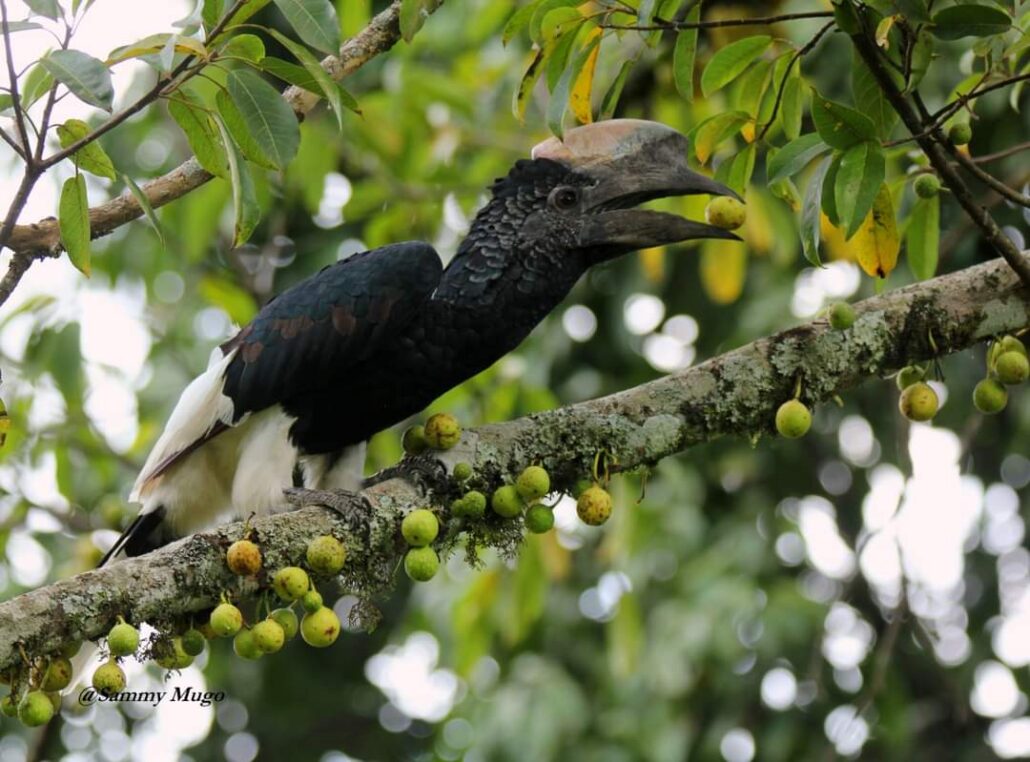
It is an Important Bird Area and a favorite with birdwatchers, though you do not need to be a birder to appreciate a great blue turaco crashing through the treetops or a troop of red-tailed monkeys feeding above the path.
Two forests in one
The forest is managed in two parts, and it helps to understand them before you go.
| Sector | Managed by | Entry point | What it is like |
| National Reserve (north) | Kenya Wildlife Service (KWS), covering the Buyangu and Kisere forests | Buyangu Gate, with the KWS office a short distance from the main road | Well-kept trails, good birdlife, and a viewpoint at Buyangu Hill |
| Forest Reserve (south) | Kenya Forest Service (KFS) | Isecheno Gate and Forest Station | The more popular area with visitors, with bandas, a campsite, a guesthouse, and a network of trails |
How to get to Kakamega Forest
Kakamega is a long drive from Nairobi, and the journey is part of the trip. The road passes the Rift Valley, Nakuru, and the highlands of the west, with tea country around Kericho on one common route. Plan for most of a day on the road.
| Route | How it works | Notes |
| Nairobi to Kakamega via Nakuru and the Kisumu road | Drive from Nairobi through Nakuru and on towards Kericho and Kisumu, then north to Kakamega town and on to the forest. | A well-travelled route with services. Expect trucks and slow sections. |
| Nairobi to Kakamega via Nakuru, Timboroa and Kapsabet | Follow the A104 through Nakuru towards Timboroa, then turn onto the C36 road to Kapsabet and continue to Kakamega. | One of the shorter options. Confirm the current road condition. |
| To Isecheno (southern gate) | From Kakamega town, drive towards Shinyalu and follow the road to the forest station at Isecheno. | Road quality varies, so ask locally about conditions, particularly after rain. |
| To Buyangu (northern gate) | The KWS entry point is in the north at Buyangu, a short distance off the main road. | Good for the national reserve and its trails. |
| By air and road | Fly from Nairobi to Kisumu (about 55 minutes), then drive roughly 1 to 1.5 hours to the forest. Our team can have a vehicle waiting. | The quickest option if you do not want to drive the full distance. |
Distances quoted for the forest vary from about 350 km to about 420 km depending on the route and the gate. Allow around 7 to 8 hours of driving from Nairobi, plus stops. Do not plan to arrive after dark on unfamiliar rural roads.
If you are collecting your vehicle on arrival, read our Airport Car Rental in Nairobi for the meet-and-greet handover at JKIA and Wilson Airport. On hires of more than 7 days, airport delivery and pickup are free.
Self-drive to Kakamega: choosing your vehicle
Most of the journey to Kakamega is on tarmac, so you have more choice of vehicle than for the remote parks. The last stretch near the forest can be bumpy or muddy, and the forest region receives a lot of rain, so a capable vehicle is a sensible choice.
| Vehicle | Fit for Kakamega | Why |
| Land Cruiser LX | Excellent | Comfortable over the long drive and capable on muddy or uneven forest roads. |
| Land Cruiser V8 | Excellent | Power and space for longer trips that combine Kakamega with other regions. |
| Land Cruiser Hardtop | Excellent | A rugged, reliable choice if you plan to camp or travel on rougher roads. |
| Land Cruiser (extended) with driver guide | Excellent | A driver who knows the roads, so you can rest and enjoy the scenery. |
| Nissan X-Trail | Good in dry weather | Suitable for the tarmac and most access roads in dry conditions. Be cautious on muddy tracks after rain. |
| Toyota Voxy, Toyota Noah, and shuttles | On request | Chauffeur-driven options for families and groups. Ask us what we can arrange for this route. |
Preparing for the drive
- Start early. Leave Nairobi at first light so you reach Kakamega in daylight.
- Fill up in larger towns. Fuel up at Nakuru, Kericho, or Kisumu before the final leg.
- Pack for rain. Bring waterproofs, a change of clothes, and plastic bags for wet gear. Rain can arrive on any day in a rainforest.
- Check the spare and recovery kit. Roads near the forest can be muddy and uneven.
- Carry cash and mobile money. Cards and signal can be unreliable in rural areas, though KWS gates use electronic payment.
- Download offline maps. Signal can drop in the forest and on rural roads.
- Respect gate hours. Gates are generally open from morning until 6:00 pm unless you are staying overnight. Check opening times in advance.
Wildlife in Kakamega Forest
Birds
Kakamega is the main reason serious birdwatchers visit western Kenya. The great blue turaco, a large, colorful bird that flops between trees, is the star. Other notable birds include the black-and-white casqued hornbill, the blue-headed bee-eater, the black-billed turaco, the bar-tailed trogon, and the grey parrot, along with a long list of barbets, woodpeckers, sunbirds, and warblers. A local guide will help you find many more birds than you would spot alone.
Primates
| Primate | Where and when |
| Blue monkey | Common in the forest and often seen along the trails. |
| Red-tailed monkey | A frequent visitor to forest edges and gardens, including around the guesthouses. |
| Black-and-white colobus | Seen in the canopy, often in small troops. |
| De Brazza’s monkey | Associated with the Kisere forest in the north. Ask a guide whether a visit is possible. |
| Potto | A nocturnal primate. Seen only on guided night walks, with luck. |
| Olive baboon | Occasionally seen near forest edges. |
Other wildlife
Small mammals include bush pigs, duikers, bushbuck, porcupines, mongooses, squirrels (including flying squirrels at night), bats, tree pangolins, and the clawless otter along the streams. The forest is also home to hundreds of species of butterflies, along with large beetles, chameleons, and snakes. Walk with a guide and stay on the paths, because some of the snakes are venomous.
Setting expectations: Kakamega is not a place for big games. You will not see lions or elephants. What you get is intimacy: sounds, shapes in the leaves, and the thrill of a first monkey or turkey in the canopy.
Things to do in Kakamega Forest
| Activity | What to expect | Good to know |
| Guided forest walks | Walk beneath tall trees with a community guide, looking for birds, monkeys, butterflies, and giant fig trees. | Local guides are available through the KWS office in the north and at the southern entrance near Isecheno. A guide greatly improves your chances of seeing wildlife. |
| Birdwatching | Early morning is best for turacos, hornbills, and barbets. | Bring binoculars and book a guide with bird knowledge. |
| Night walks | Guided walks after dark to look for bushbabies, pottos, flying squirrels, and owls. KWS runs night excursions. | Book in advance and bring a torch. |
| Sunrise and sunset walks | Hill viewpoints with sweeping views over the canopy. | Buyangu Hill and Lirhanda Hill are the best-known options. |
| Waterfalls and rivers | Waterfalls such as Isiukhu Fall in the north and river walks such as the Yala River route from the southern side. | Ask your guide about the current condition of trails. |
| Butterfly and insect watching | Hundreds of butterfly species flutter in clearings and along sunny paths. | Best on bright, dry days. |
| Cultural experiences | Local Luhya traditions, storytelling, and the lively isukuti dance are arranged through local guides and lodges. | Book through the lodge or a local guide group. |
| Day trip to the Crying Stone of Ilesi | A tall rock formation resembling a human figure, steeped in local folklore, beside the Kakamega to Kisumu road. | Often combined with a visit to the Kisere forest. |
Trails and viewpoints
| Place | What it is | Notes |
| Buyangu Hill | A viewpoint in the national reserve, about 1,633 m above sea level, with panoramic views over the canopy. | A moderate walk, good early morning or late afternoon. |
| Lirhanda Hill | A hill viewpoint reached by a longer hike, often described as a five-hour return walk depending on where you stay. | Sunrise or sunset is highly recommended. |
| Isiukhu Fall | A waterfall where the Isiukhu river enters the northern forest. | Ask about access and conditions. |
| Canopy watch tower | A tower for looking down into the treetops, in the southern part of the forest. | Check availability and any fee. |
| Yala River walk | A long hike of about 10 km from the Rondo Retreat area to the Yala River. | Go with a guide and allow a full day. |
Best Time To Visit Kakamega Forest
| Period | Conditions | Our advice |
| December to February | Drier weather. The best conditions for hiking and birdwatching. | A popular period, so book guides and accommodation ahead. |
| March to May | Rains build and April and May are usually the wettest months. Trails are muddy and roads can be slippery. | Best avoided unless you are comfortable with rain and mud. |
| June to August | A second drier window with good hiking. | Another good time, with fewer crowds in some areas. |
| September to November | Variable weather, with showers possible. Low-season rates may apply in some periods. | Pack waterproofs and keep plans flexible. |
Kakamega is a rainforest, so rain can fall at almost any time. The dry months simply make walking and viewing easier. Always carry rain gear.
Park fees and rules
Entry fees apply per person and depend on your visitor category and the sector you visit. Published figures vary between sources and years. The KWS park page lists East African citizens at KES 500 for adults and KES 250 for children, and Kenya residents at KES 675 for adults and KES 350 for children. An older guide quoted a non-resident rate of about USD 20 for adults, plus a vehicle charge. Always confirm the current rates with KWS before you travel.
| Visitor category | Adult | Child or student |
| East African citizen | KES 500 (check current KWS page) | KES 250 |
| Kenya resident | KES 675 (check current KWS page) | KES 350 |
- Pay electronically. KWS accepts payment through eCitizen and mobile money. Pre-pay where you can and keep the ticket for the gate.
- Carry identification. Bring your original passport or national ID.
- Hire a guide. Local community guides are available at both entry points and are strongly recommended.
- Follow KWS rules. Do not hoot, do not drive after drinking alcohol, keep to the paths and take your rubbish with you.
Where to stay near Kakamega Forest
| Option | Where and what | Good for |
| Isecheno bandas and campsite | Self-catering bandas and a campsite near the southern gate, with a forest rest house nearby. | Budget travellers and campers who want to be on the forest edge |
| Rondo Retreat Centre | A colonial-style guesthouse in the forest reserve, with gardens and meals. It is run as a Christian centre, so alcohol is not allowed on the premises and picnicking or camping there is not permitted. | Birdwatchers and travellers who want a comfortable base in the forest |
| Hotels in Kakamega town | A range of hotels and guesthouses, including options such as Golf Hotel and Kakamega Sheywe Hotel. | Travellers who want services and restaurants, with a drive to the forest each day |
| Eco-lodges and guesthouses around the forest | Smaller properties on the forest fringe. | Travellers wanting a quieter stay with local hosts |
The only meals in the forest area are normally served at places that double as restaurants, so check what your accommodation provides and bring snacks and water for long walks.
Sample itineraries
| Trip | Outline | Best vehicle |
| 3-day Kakamega escape | Day 1: Nairobi to Kakamega, overnight near the forest. Day 2: guided forest walk, birdwatching and a night walk. Day 3: sunrise walk, then drive back or on to Kisumu. | Land Cruiser LX or X-Trail in dry weather |
| 4-day western Kenya road trip | Nairobi, Nakuru, Kericho tea country, Kisumu on Lake Victoria, Kakamega Forest, then return by the same or a different route. | Land Cruiser LX or V8 |
| Birdwatcher’s long weekend | Two nights at the forest, with early-morning guided walks and a night walk, and a visit to Kisere forest or the Crying Stone. | Land Cruiser LX, with a driver-guide if preferred |
| Fly and drive | Fly from Nairobi to Kisumu, collect a vehicle there, spend two nights at Kakamega and drive back to Kisumu for the return flight. | Land Cruiser LX or X-Trail. Ask us about airport collection at Kisumu. |
| 6-day Nairobi, Lake Naivasha, Kericho and Kakamega loop | Combine the Rift Valley lakes, tea country and the rainforest in one drive. | Land Cruiser V8 |
Safety and responsible travel
- Walk with a guide. The forest is dense and trails can be confusing. A guide keeps you safe and helps you find wildlife.
- Watch your step. Roots, mud and slippery ground are common. Wear sturdy shoes with good grip.
- Respect snakes and insects. Several snakes live in the forest, and some are venomous. Stay on the paths and do not touch animals or plants.
- Protect yourself against mosquitoes. Western Kenya is a malaria-risk area. Speak to your doctor about precautions before you travel.
- Keep distance from monkeys. Do not feed them, and keep food out of sight.
- Leave no trace. Take all litter away and keep to the paths.
- Respect local communities. Greet people politely and ask before taking photographs.
- Know the terms of your rental. Your Kenya rental agreement sets out insurance, excess and breakdown procedures. Read them before you go.
Frequently asked questions
Where is Kakamega Forest?
In western Kenya, in Kakamega and Nandi counties, close to Kakamega town and the Uganda border.
How far is Kakamega Forest from Nairobi?
Roughly 350 to 420 km depending on the route and gate, which is about 7 to 8 hours by road.
Is Kakamega the only rainforest in Kenya?
It is described as Kenya’s only remnant of the Guineo-Congolian rainforest that once stretched across central Africa.
What animals live in Kakamega Forest?
Monkeys including blue, red-tailed and black-and-white colobus, small mammals such as bush pigs and duikers, many butterflies and about 367 recorded bird species.
Can I see big game at Kakamega?
No. Kakamega is a forest for walking, birdwatching and primates, not for lions or elephants.
Do I need a guide?
A guide is strongly recommended. Community guides are available at both entry points.
What is the best time to visit Kakamega Forest?
The drier months, roughly December to February and June to August, though rain can fall at any time.
Can I do a night walk?
Yes. Guided night walks are available, and KWS runs night excursions. Book ahead.
How much does it cost to enter?
Fees depend on visitor category and sector. Check the current KWS and Kenya Forest Service rates before you travel.
Can I self-drive to Kakamega Forest?
Yes. Most of the route is tarmac. A Land Cruiser is a comfortable, capable choice, and an X-Trail can manage in dry weather.
Can I fly instead of driving?
Yes. You can fly from Nairobi to Kisumu in under an hour and drive about an hour or so to the forest.
Where should I stay?
Options include bandas and a campsite at Isecheno, the Rondo Retreat Centre, and hotels in Kakamega town.
Can I combine Kakamega with Lake Victoria and Kericho?
Yes. A western Kenya loop through Nakuru, Kericho, Kisumu and Kakamega works well over four or more days.
Can you deliver the vehicle to the airport?
Yes. We offer airport meet and greet at JKIA and Wilson Airport, and delivery and pickup are free on hires of more than 7 days.
A different side of Kenya
Step off the path into the Kakamega Forest and the world turns green. Light falls in broken shafts through enormous trees. A monkey shakes a branch overhead. Somewhere in the canopy a great blue turaco calls, and a butterfly drifts through a patch of sun as if it has all the time in the world.
It is a long drive from Nairobi, but the road is part of the reward: the Rift Valley, the tea hills of Kericho and the fields of the west, then the forest itself. With the right vehicle and a good plan, it is an easy journey and an unforgettable one.
Tell us your dates, your group and the route you have in mind. We will recommend the best vehicle, arrange the handover at the airport and help you plan the drive. Book your Kakamega Forest self-drive vehicle with Car Rental 4×4 today