Car Rental 4×4 rents 4×4 vehicles in Rwanda fitted with rooftop or ground tents and a full camping kit: mattresses, sleeping bags, cooking gas, cutlery, cookware, a water tank, and an optional coolbox or fridge. Vehicles are collected in Kigali, self-driving or with a driver guide. Rwanda’s only real self-drive camping destination is Akagera National Park, which has four proper campsites; Volcanoes and Nyungwe are guided-trekking parks where camping is limited or unavailable inside the park boundary.
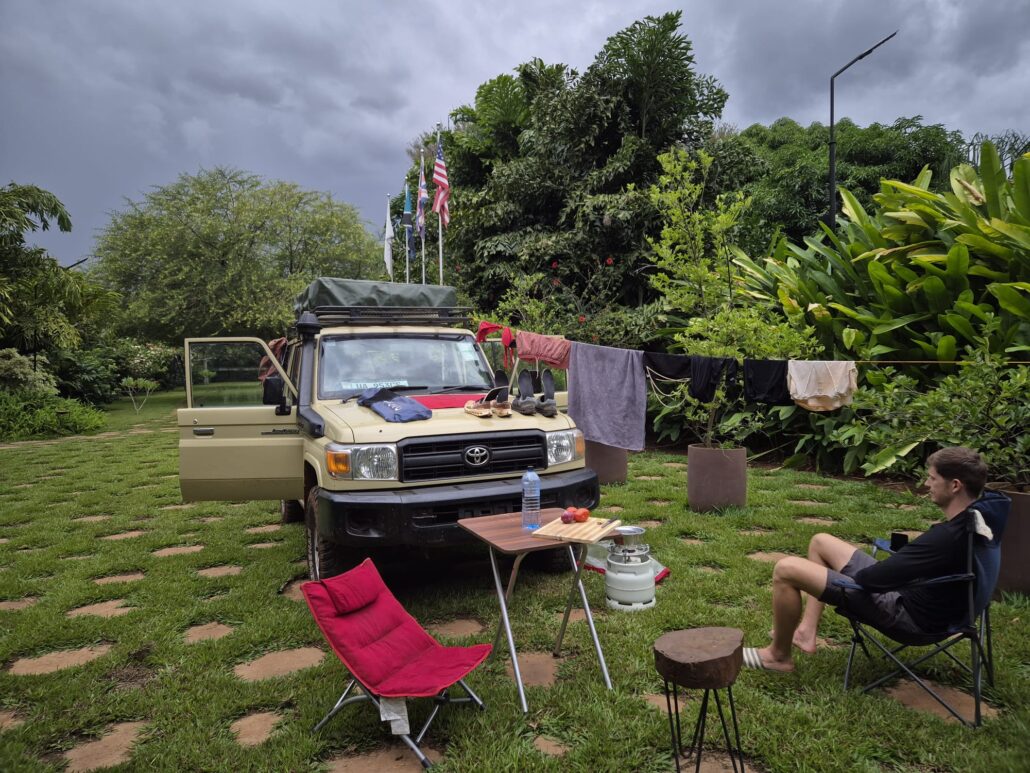 There is a version of this country that never reaches the guidebooks written for the hotel circuit: the sound of Lake Kivu after dark, the cold, clear air of a campsite near the Virunga foothills before a trek, and the particular quiet of Akagera’s savanna once the day vehicles have gone home. That version of Rwanda belongs to travelers who sleep close to it, not above it in a lodge on a hill. Car Rental 4×4 provides vehicles already equipped with camping gear, so your Rwanda trip can be built around campsites and open roads rather than a fixed circuit of hotel check-ins.
Yes. Car Rental 4×4 provides vehicles fitted out with camping equipment for travelers who are keen to explore Rwanda as a camping safari rather than moving between hotels and lodges each night. Depending on the vehicle and camping package you select, the rental can include everything from a rooftop tent and mattress through to a full cooking and campsite setup, so the vehicle itself becomes your base for the trip. You can take the vehicle self-drive, controlling your own route and pace, or arrange a driver-guided camping safari with an experienced local guide handling the roads and logistics, subject to the specific rental terms and availability for your dates.
This is not simply a car with a tent strapped to the roof. It is a complete camping-safari setup, prepared before you arrive, so the only decision left to you is where you want to wake up next.
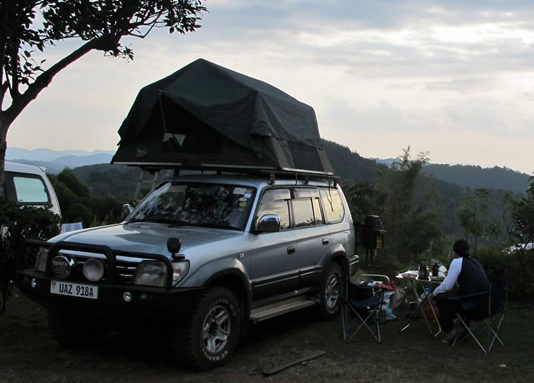 Rwanda is not Tanzania or Kenya, and a camping page that pretends otherwise will mislead you. Rwanda is small, so you can drive from Kigali to almost anywhere in the country in under six hours, its roads are the best-paved in the region, and its national parks are structured completely differently from the sprawling multi-day-drive savannahs to the east. There is one park built for a self-drive camping safari in the classic sense: Akagera, a fenced Big Five savanna reserve in the east with real campsites, hippos in earshot at night, and roads you drive yourself. Volcanoes and Nyungwe are the country’s other two headline parks, and both are guided-trekking destinations: gorillas and golden monkeys in Volcanoes, chimpanzees and the canopy walk in Nyungwe, where the experience is built around a permit and a ranger, not a vehicle and a campfire.
That distinction matters more here than almost anywhere else on our network, because it changes what “camping gear” is actually for in Rwanda. It is not primarily a way to string together weeks of wilderness nights the way it is in the Serengeti. It is a way to camp properly at Akagera for two or three nights, to camp cheaply and pleasantly at Lake Kivu or around Kigali while you’re based there for gorilla or chimp permits, and to keep your accommodation costs down on a trip where lodges near Volcanoes in particular can be expensive.
This page covers what’s in the kit, which vehicles carry it, how to choose between rooftop and ground tents for Rwanda, where you can and cannot legally camp, how the rental runs from handover to return, what happens if something goes wrong on the road, what it costs, and who is liable for any damage to the gear.
“Camping gear” is the whole kit described above. “Rooftop tent” describes one component, the sleeping arrangement mounted on the vehicle’s roof rack rather than pitched on the ground. You cannot rent a rooftop tent on its own; it comes as part of a camping package on a specific vehicle.
Rooftop tent or ground tent, and why Rwanda tilts differently from Tanzania
In Tanzania, camping trips often require travelers to move to a new campsite every one or two nights across a giant park, so we lean towards rooftop tents for their speed in pitching and striking camp.
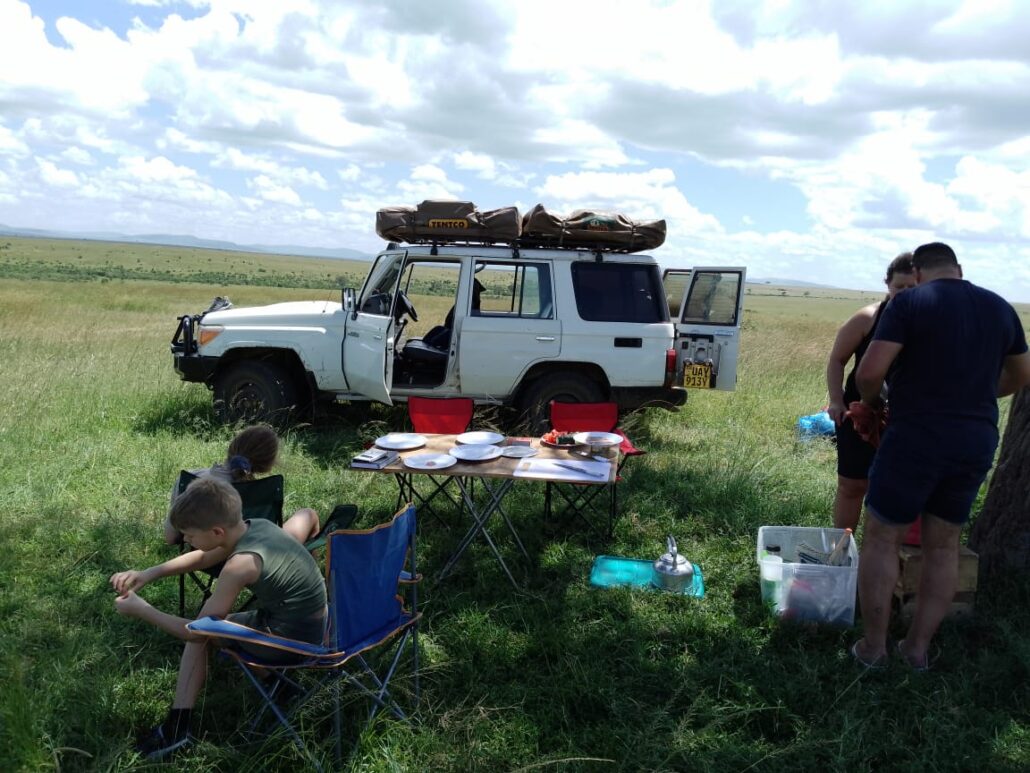 Rwanda is different. Akagera is compact enough that most camping trips here are one or two nights at a single campsite, including Shakani, Muyumbu, Mutumba, or Mihindi, rather than a moving itinerary, and its campsites have flat, cleared pitches with proper facilities. That changes the calculation: a ground tent, which you can leave standing while you head out on a game drive, suits an Akagera stay very well, and it’s also the cheaper and more widely available option in the Rwanda kit.
A rooftop tent is still worth it if you’re combining Akagera with a Lake Kivu stopover and don’t want to repack bedding each time you move, or if you simply prefer sleeping off the ground. Both are available; tell us your route and we’ll recommend the better fit rather than defaulting to one.
How many people can sleep in the tent? A ground tent in our standard kit comfortably sleeps two to four, depending on size requested; a single rooftop tent sleeps two. For a family or a group of friends, we typically configure a mix, one rooftop tent plus a ground tent, or two vehicles, rather than overloading one tent.
For couples: a Land Cruiser LX or V8 with a rooftop tent, based mainly at Akagera with a Lake Kivu night either side.
For families with children: a Land Cruiser GX or TX/TZ with a ground tent at Akagera; the extra cabin room matters on the Kigali–Akagera–Volcanoes loop, and a ground tent gives children space to move around camp.
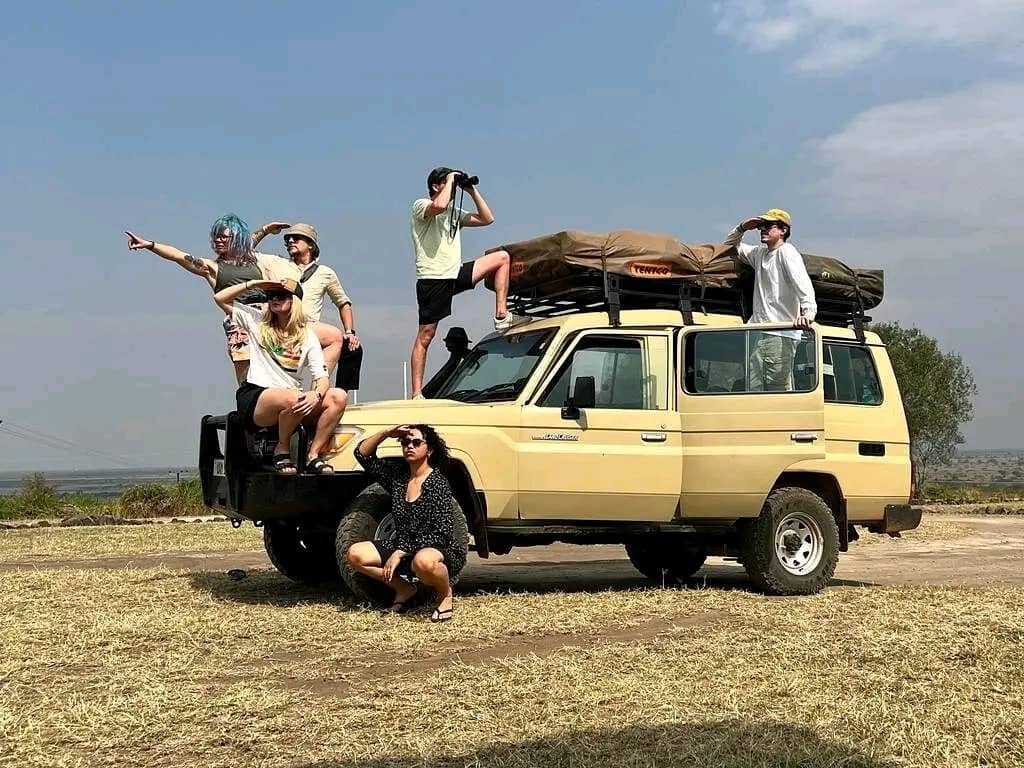 For groups of friends: the extended Land Cruiser with a pop-up roof and a couple of ground tents, or two vehicles split across the group, which also gives you a second driver and spare recovery gear.
For photographers: a vehicle with a pop-up roof for early, unobstructed shooting on Akagera game drives, paired with a rooftop tent if you’re moving between Akagera and Lake Kivu and want to be packed and on the road at first light.
For long trips (two weeks or more, or a wider East Africa loop): a Land Cruiser LX or GX booked on our long term car rental Rwanda rate, particularly if Rwanda is one leg of a trip that also crosses into Uganda or Tanzania.
For self-drive travellers without prior African driving experience: Rwanda is, honestly, the easiest country on our network to start with. The roads are excellent, Akagera’s tracks are well graded, and distances are short. A Land Cruiser LX or GX with a ground tent at Akagera is a sensible, low-stress introduction to self-driving camping before you attempt somewhere more demanding.
A vehicle, camping gear, and a driver-guide can be combined into one booking. On a Rwanda camping trip, this is particularly useful for the Akagera game drives, where local knowledge can change what you see.
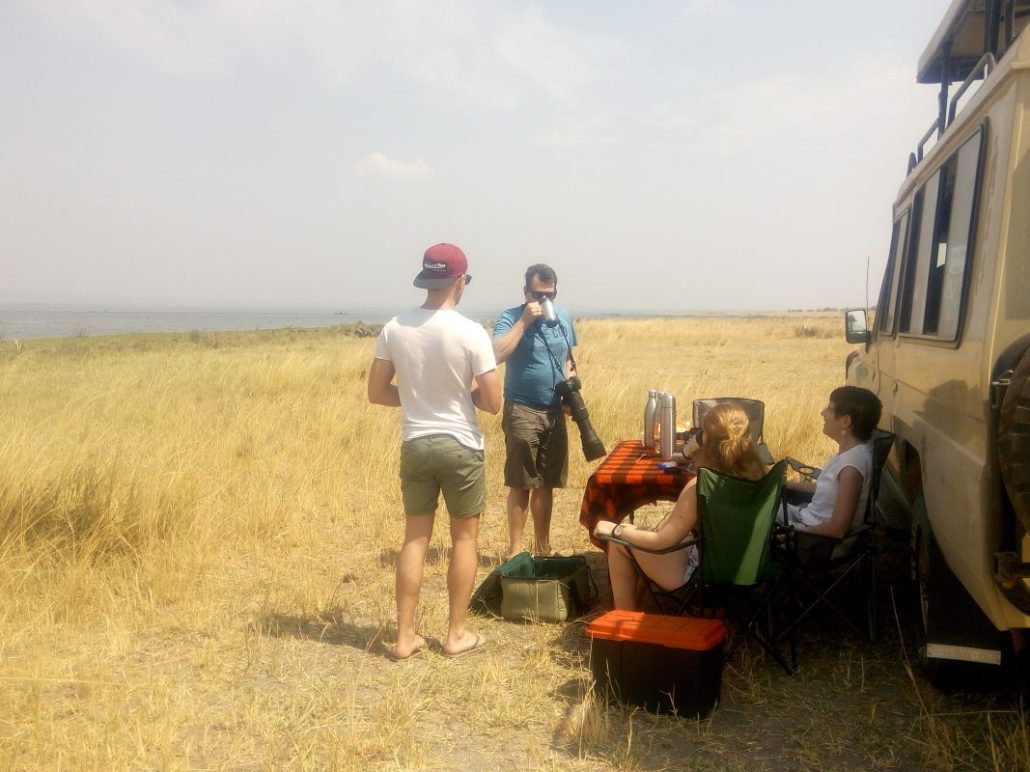 Navigation and route planning. The internal road network in Akagera can be confusing for first-time visitors; several operators and guides note this directly, and having a driver-guide eliminates that confusion entirely while also planning the Kigali–Akagera–Volcanoes–Nyungwe loop around realistic daily drive times.
Safari driving and wildlife knowledge. Akagera’s lions, elephants, and rhinos were reintroduced within the last decade, and the population is still relatively small and closely monitored; a guide who works the park regularly knows current territories and sightings far better than a first-time self-driver will.
Campsite logistics. The driver-guide helps site the vehicle, pitch the tent, and manage cooking and packdown, which matters most on your first night if you’ve never pitched the gear before.
Driver-guide accommodation, meals, and expenses. On a camping leg, the guide camps with you and arranges their tent, food, and a daily allowance as part of the booking. Tell us your party size at booking so the kit and vehicle are configured correctly.
Working hours and private vehicle arrangement. The vehicle is exclusively yours for the duration of the booking, and driver working hours are paced around realistic daily driving and rest, which your guide will flag if a day’s plan needs adjusting.
A driver-guide is also the practical choice for the gorilla and chimp legs of a Rwanda trip, since those activities are permit-based and guided by park rangers regardless; see the car rental with driver guide page for driver-only rental.
Wild camping is not permitted inside Rwanda’s national parks. Camping is concentrated almost entirely at one park, with limited options at a second and effectively none at the third.
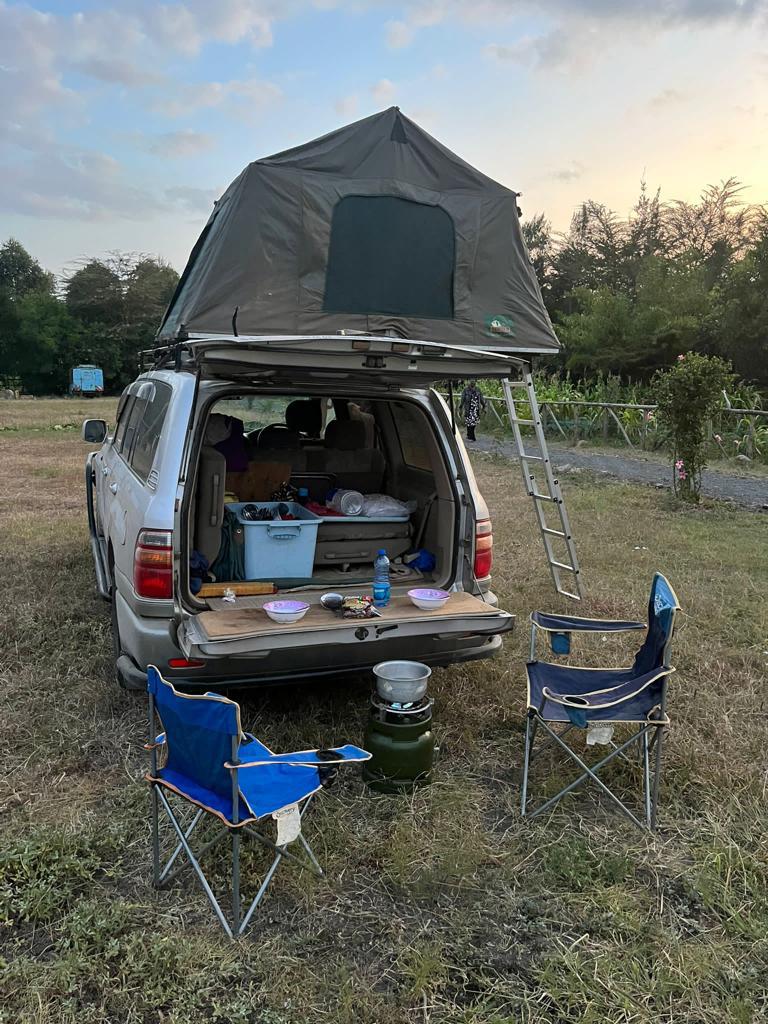
Akagera National Park is where self-drive camping actually happens in Rwanda, and it has four established campsites. Shakani, on the shore of Lake Shakani in the south, has solar-heated showers and flushing toilets and is known for hippo calls at night. Muyumbu, also in the south, sits on a ridge above Lake Ihema with views across to Tanzania and a reputation for spectacular sunrises. Mutumba, in the central-north Mutumba Hills, is the most remote and highest-altitude of the four, cooler at night, and a favorite for travelers wanting a genuinely wild feel. Mihindi, in the north near Lake Mihindi, is the newest site, has a small café, and is the only campsite that includes breakfast in its fee. Standard camping fees at the south sites run around $25 per adult per night; Mihindi is priced separately and includes breakfast. A 6-person canvas tent can be hired at the park gate for around $30 if you don’t bring your own, though bedding and camping equipment are not included in that hire. Firewood is provided at the campsites. Self-driving Akagera does not require a guide, but a park or community guide can be hired for a half or full day and is worth it for wildlife knowledge, since Akagera’s road network takes some getting used to.
Nyungwe National Park has one campsite, at Uwinka near park headquarters, but camping there is relatively expensive, and most visitors treat Nyungwe as a lodge-based stop built around a guided chimpanzee trek or the canopy walk rather than a camping destination in its own right.
Volcanoes National Park does not offer camping inside the park. Gorilla and golden monkey trekking here is permit-based and starts from park headquarters in Kinigi with a ranger guide; travellers wanting to camp near Volcanoes typically do so at a guesthouse car park in Kinigi rather than inside the protected area.
Outside the parks, Kigali has established campsites and hostels, and Lake Kivu has several lakeside campsites that make a relaxed stop between Volcanoes and Nyungwe or as a base of your own.
Park fees, camping fees, and vehicle fees are separate charges paid directly to the park authority, and international visitor rates at Akagera are set well above resident and East African Community rates. Confirm current tariffs at booking, since the park authority periodically reviews them.
Your Vehicle
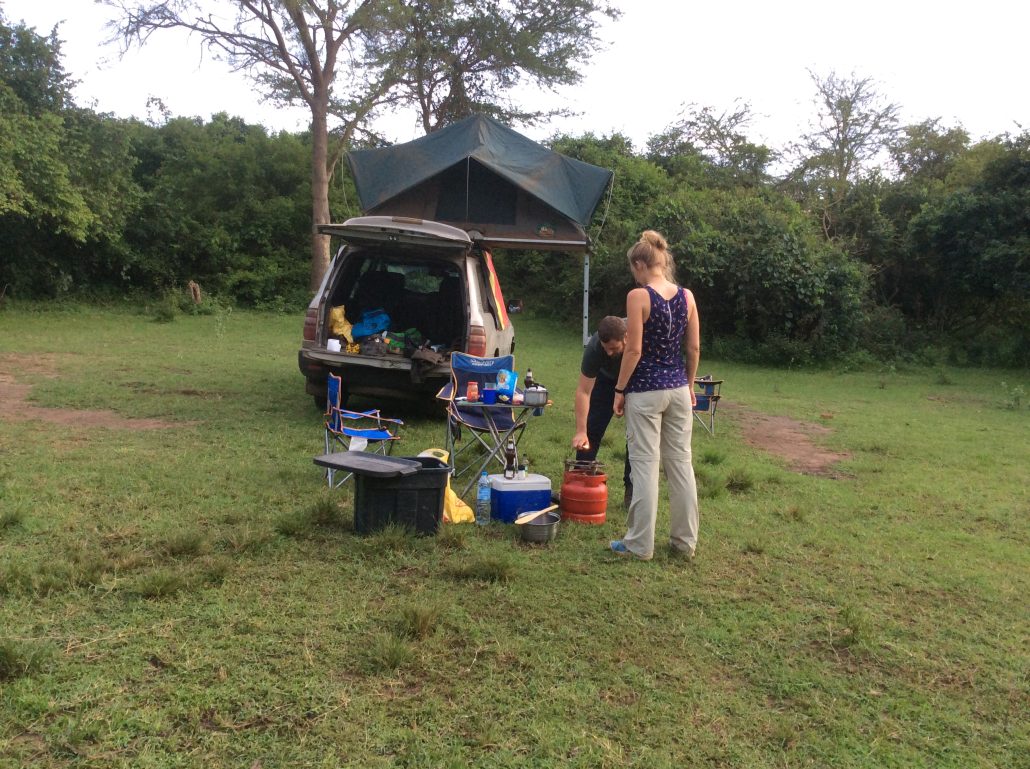
At the center of every camping package is a proper 4×4, selected for its genuine off-road capability rather than being adapted from a standard rental car, and equipped with the ground clearance and four-wheel-drive system that Rwanda’s steeper approach roads demand. Vehicle type, passenger capacity, luggage space, transmission, and fuel type vary across the fleet, and air conditioning is fitted as standard, giving you a comfortable ride between camps even on Rwanda’s warmer lowland stretches. Every vehicle is safari-suitable by design, not simply pressed into service for the occasion.
Your Sleeping Setup
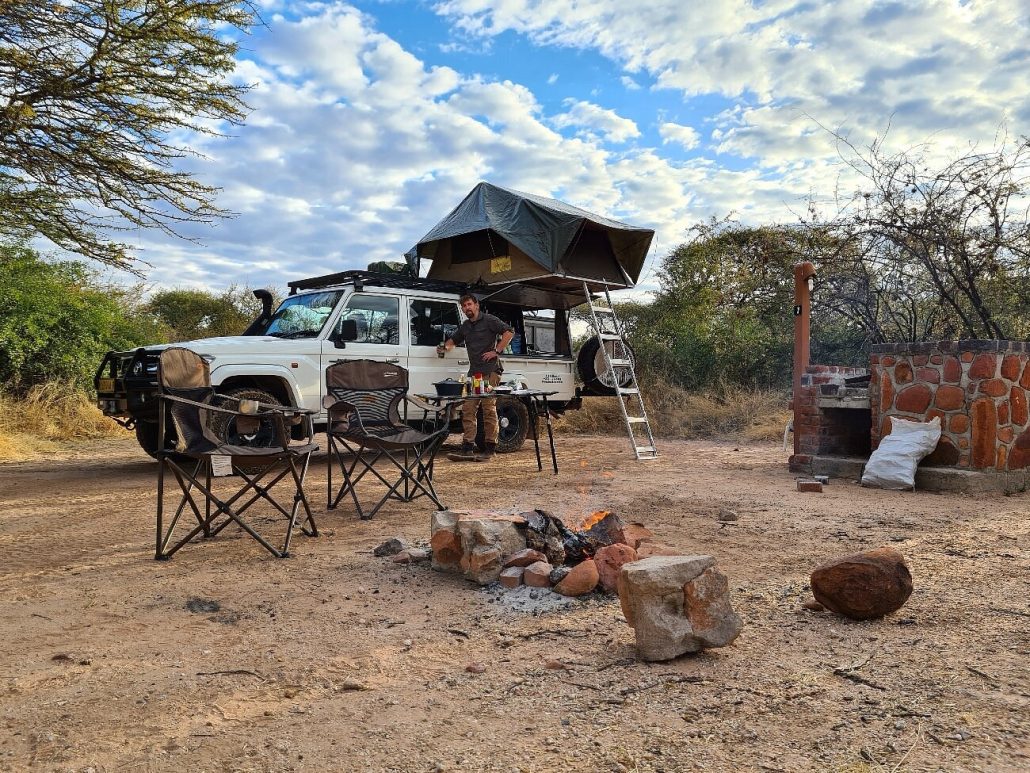 Depending on your chosen package, your sleeping setup may be a rooftop tent, a ground tent, or a combination of both for larger groups, fitted with a mattress and basic bedding sized to the tent. See our Car Rental With Rooftop Tent in Rwanda page for the full detail on how the rooftop tent configuration works specifically.
Your Campsite Setup
Where included in your package, folding camping chairs, a collapsible table, and basic lighting for the evening round out your campsite, giving you a proper place to sit, eat, and read a map by torchlight rather than working around the vehicle’s tailgate.
Your Cooking Setup
Where a cooking package is included, a portable stove, basic cooking equipment, and plates, cups, and utensils are provided, sufficient for preparing simple meals at camp without needing to carry your kitchen from home.
Everything is prepared for your camping adventure before you leave. Confirm exactly which of these categories are included as standard and which are optional extras for your specific vehicle at the time of booking, since packages vary across the fleet.
What recovery equipment is supplied? Every vehicle carries a spare tire, jack, fire extinguisher, reflective triangles, a first aid kit, tow rope, and an air compressor as standard, checked at handover.
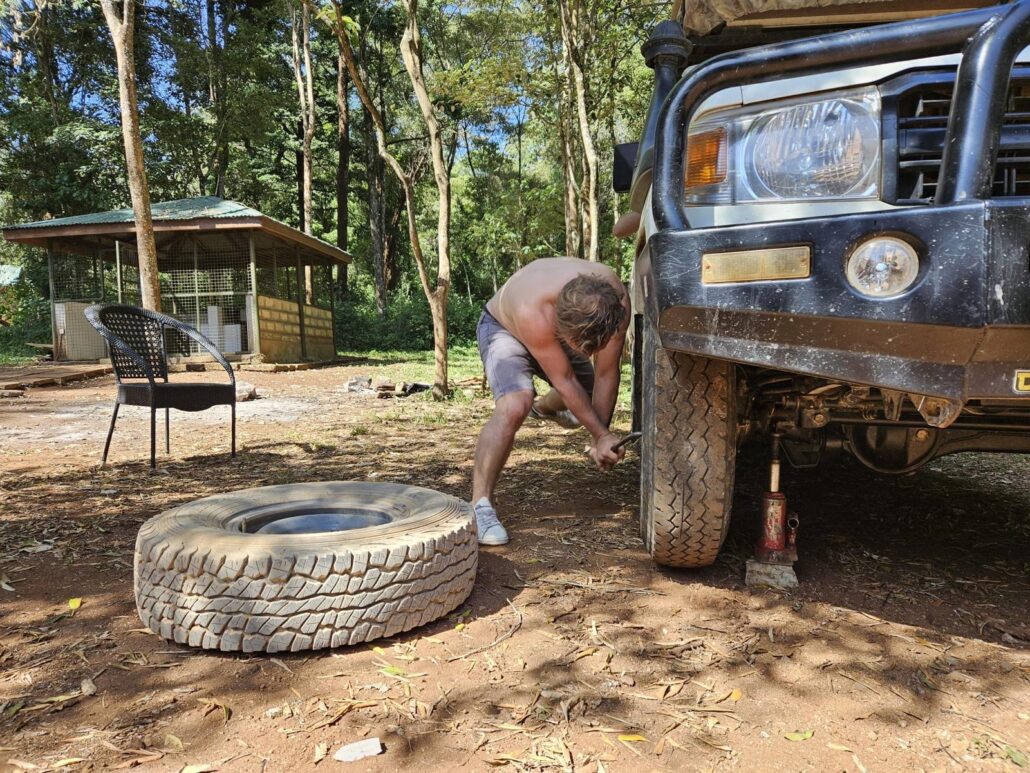 How to handle tire problems. Rwanda’s tarmac network is excellent, so punctures are less common than on Tanzania’s or Kenya’s dirt-heavy circuits, but they do happen on Akagera’s internal tracks. Change it yourself if comfortable; we show you how at handover, or call roadside assistance.
What happens if the vehicle breaks down? Call the 24/7 roadside assistance number on your rental agreement. Because Rwanda is compact and well connected, response times here are generally faster than on the longer Tanzania or Kenya circuits. If you need to swap vehicles, your camping gear will transfer with you.
Driving restrictions. Vehicles must stay on designated tracks inside Akagera; off-track driving is not permitted. Rwanda enforces traffic law strictly nationwide, including speed limits and seatbelt use, more consistently than most of its neighbors, and speed cameras are common on the main highways. Drive on the right, and expect thorough, courteous police checks on the main routes.
Night-driving rules. Driving inside Akagera after dark is not permitted, and gate hours apply. On Rwanda’s public roads, driving at night is generally legal but less common outside Kigali, given the hilly terrain and pedestrian and cyclist traffic on unlit stretches, so allow extra time and avoid arriving at a rural destination after dark where you can.
Umuganda, a Rwanda-specific restriction with no equivalent elsewhere on our network. On the last Saturday of every month, from roughly 8am to 11am, Rwanda holds Umuganda, a nationwide community work morning. Most shops close, and private vehicle movement is restricted in many areas during those hours except for emergencies and essential travel. If your rental dates include a last Saturday of the month, plan around this rather than scheduling a long drive for that morning.
How to prepare for safari roads. Akagera’s tracks are graded but can be rutted and slippery after rain; drive to the conditions rather than the speed limit. Elsewhere in Rwanda, expect steep, winding hill roads rather than corrugated dirt and different driving discipline from Tanzania’s long, flat plains, with more gear changes and engine braking on descents.
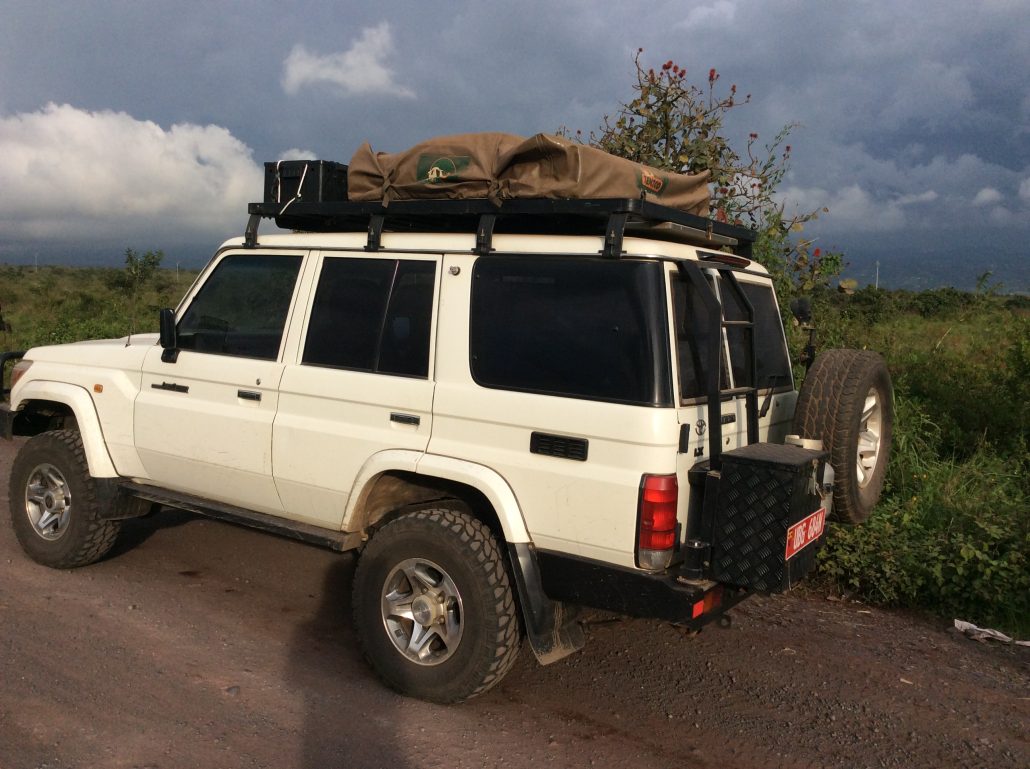 Vehicle and camping gear can be combined into a long-term booking running several weeks or months, useful for travelers based in Kigali for work who want camping-capable transport for weekend trips to Akagera or Lake Kivu, or for a wider multi-country overland trip that starts or passes through Rwanda. Long-term rates drop substantially past three weeks, and camping gear is priced once as part of the package. If your route continues into Uganda, Tanzania, or Burundi, please let us know at the time of booking so we can arrange the cross-border paperwork in advance. See long term car rental Rwanda.
Self-drive works well in Rwanda precisely because the country is compact and the road network is well-maintained; this is a genuinely approachable place to self-drive with camping gear, even for a first-timer, provided Akagera’s tracks are driven to conditions. While a driver-guide, as detailed above, adds real value specifically on the Akagera game drives, it also removes the need for you to navigate the park’s road network yourself. For the gorilla and chimp legs, you’ll have a park ranger guide regardless of how you arrived, so a driver-guide there is more about the transfer and less essential than it is for Akagera’s self-driven roads.
Self-drive is where a camping safari’s freedom becomes most real. You control the journey: where to stop, where to spend the night, how long to stay at Lake Kivu or near Akagera, and which destinations to combine into your route, all subject to park, campsite, and rental restrictions rather than a fixed group schedule.
You Drive Yourself
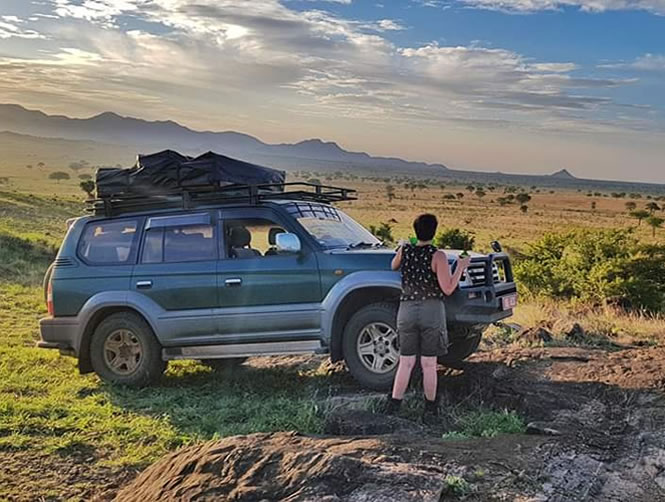 Self-drive requires a valid driving license, generally an international driving permit alongside it, and meeting the standard age and experience requirements set out in the rental agreement. Navigation is supported by GPS, offline maps, and route notes provided at handover, since mobile signal is unreliable across much of Rwanda’s park network. Road conditions vary considerably, from well-maintained main routes to the steep, winding volcanic approaches into the Virunga foothills, and this topic is discussed honestly with you before you book so your vehicle and route match your actual driving experience. Park rules, including speed limits and designated driving hours, exist for safety and are followed strictly, and the vehicle’s four-wheel-drive system is there to be used properly on the rougher stretches rather than treated as a last resort.
You Manage Your Campsite
On a self-drive camping trip, you are responsible for setting up and packing down your camp each day, storing food securely, and following basic safety practice around any wildlife near your site. This is straightforward once you have done it a night or two, but it is worth going in with the expectation clearly set rather than discovering it on your first evening.
Self-drive camping is best suited to travelers who are comfortable driving in unfamiliar environments and taking responsibility for navigation, campsite routines, and their own day-to-day travel decisions.
Prefer Someone Else to Handle the Driving?
You can combine the full camping experience with a professional driver-guide, letting you enjoy Rwanda’s landscapes, wildlife, and campsites without taking on the driving and navigation yourself. Your driver-guide manages the roads, timing around early trekking departures, and campsite logistics, while bringing genuine local knowledge of the country to every stage of your trip. This lets the same camping vehicle serve two very different kinds of travelers: those who want to self-drive and those who want the camping experience with someone else managing the journey. See our Car Rental With Driver Guide in Rwanda page for more detail on this option.
Four days: Kigali and Akagera
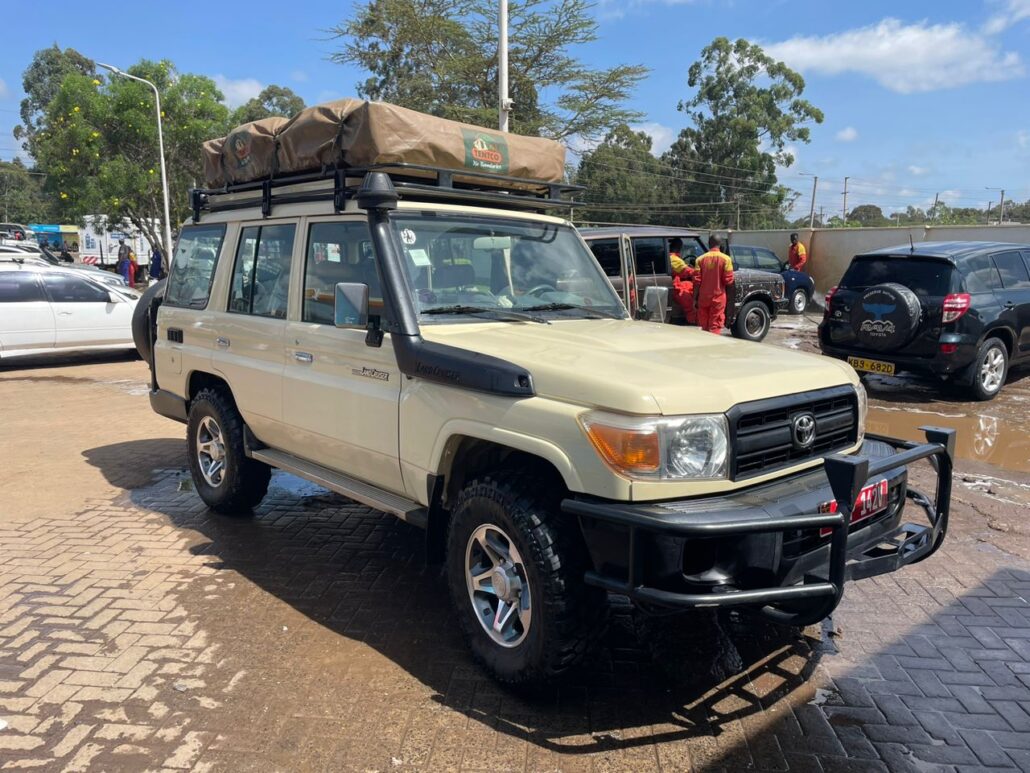 Collect in Kigali, drive to Akagera’s southern gate, around two hours, mostly on tarmac. Camp two nights at Shakani or Muyumbu with game drives each morning and evening. Return to Kigali on day four. This is the simplest, most self-contained camping trip in Rwanda and needs no prior 4×4 experience.
Seven to ten days: the full circuit
Kigali to Akagera (camping two nights), back through Kigali to Musanze for Volcanoes (lodge or Kinigi guesthouse, gorilla or golden monkey trekking), on to Lake Kivu for a relaxed lakeside night or two — camping or a guesthouse — then south to Nyungwe for chimp trekking or the canopy walk (lodge, or the Uwinka campsite if you want to camp the whole way through), and back to Kigali via the southern route through Huye. Camping gear travels with you the whole way, used properly at Akagera and Lake Kivu, and set aside for lodge nights at Volcanoes and Nyungwe if you’d rather not pay Uwinka’s premium camping rate.
Our Rwanda safaris page and the individual park pages for Akagera, Volcanoes, Nyungwe and Gishwati-Mukura cover each destination in more depth
You do not need to arrive with bulky camping gear of your own. Depending on your chosen package, you may not need to bring items such as tents, cooking equipment, camping chairs, and other core campsite essentials from home at all, since we prepare the camping setup so you can concentrate on the journey rather than your luggage allowance. Bring your personal belongings and your usual travel essentials, and let the vehicle carry the rest.
What Does a Day on a Rwanda Camping Safari Look Like?
The rhythm of a camping day is easy to picture, even though no two days run exactly the same.
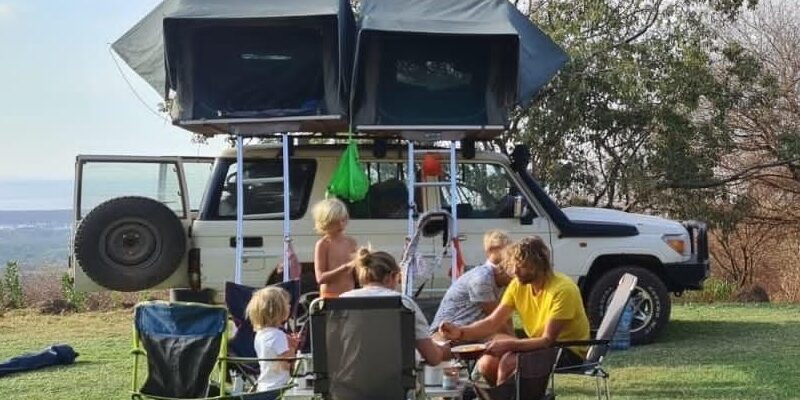 A typical morning might begin around 0600 hrs, with the camp waking to the sounds of the bush or the nearby lake, followed by a simple breakfast and coffee made at camp before the day’s first activity, which in the Volcanoes National Park or Nyungwe Forest National Park regions often means an early trekking departure.
Mid-morning and into early afternoon might be spent on a game drive through Akagera National Park or simply on the road toward your next stop, with a break for lunch either at camp or somewhere along the route. The afternoon often brings the day’s main activity, whether that is a further game drive, a walk, or simply time at Lake Kivu’s shore, before the drive back to camp as the light softens toward evening.
“Evening” means setting up for the night if you have moved camp or settling back into a site you are staying at for a second night, with dinner prepared at the stove or, on a driver-guided trip, handled for you.
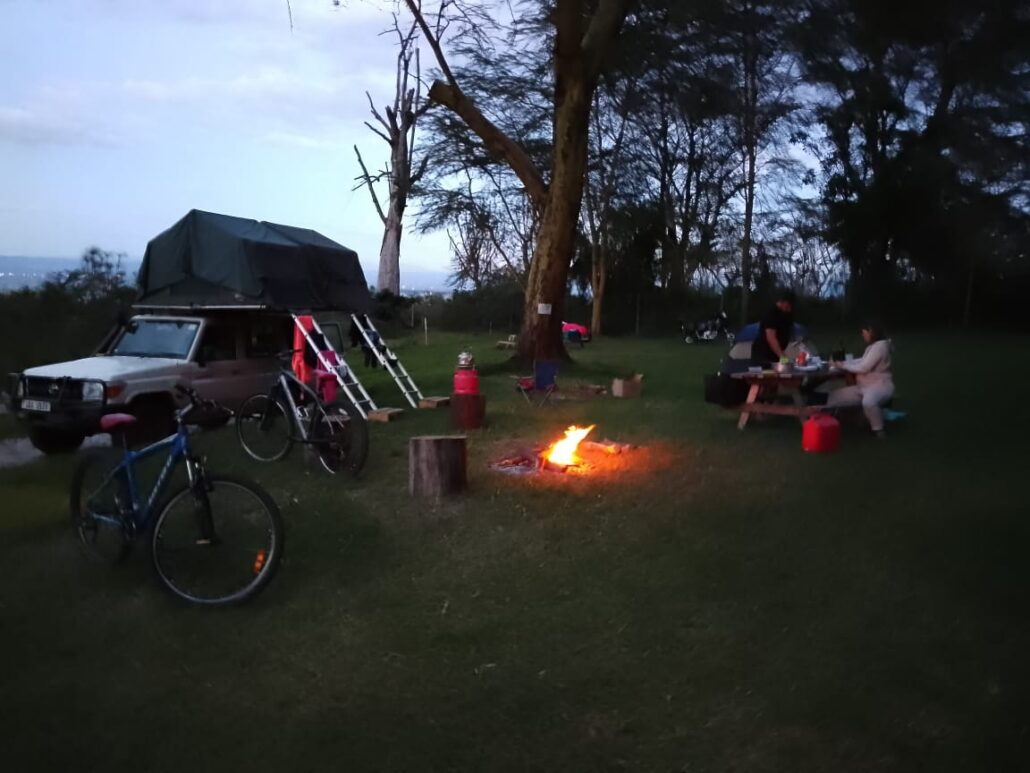
Night falls with the fire burning down and the sounds of the country taking over, and the cycle begins again the next morning. Treat these words as an illustration of the shape a camping day tends to take, not a fixed schedule; your actual days will follow your own pace and the specific route you choose.
Can I rent a car with camping gear in Rwanda?
Yes. Car Rental 4×4 rents 4×4 vehicles fitted with rooftop or ground tents and a camping kit, which can be collected in Kigali. Camping gear is only rented together with a vehicle.
What camping equipment is included?
The standard camping equipment includes a ground or rooftop tent, mattresses, sleeping bags, kitchen utensils, cutlery, saucepans, a frying pan, a gas stove, a water tank, and a coolbox (an electric fridge is available for an extra daily fee). Bring your own towels, bedsheets, blanket, and duvet.
Where can I actually camp in Rwanda?
Almost entirely at Akagera National Park, which has four campsites: Shakani, Muyumbu, Mutumba, and Mihindi. Nyungwe has one campsite at Uwinka, which is more expensive. Volcanoes National Park does not offer camping inside the park; nearby guesthouses in Kinigi allow camping on their grounds instead.
Do I need a guide to self-drive Akagera?
No, a guide isn’t required to self-drive, but Akagera’s internal road network takes some getting used to, and hiring a park or community guide for a half or full day adds real wildlife knowledge.
How much does car rental with camping gear cost in Rwanda?
Cost depends on the vehicle, camping package, rental duration, and route; request a quote with your specific trip details for an accurate figure. The vehicle rate and camping add-on are quoted at booking and decrease with rental duration. At the Akagera entry, camping and vehicle fees are separate and paid directly to the park. If your trip includes gorilla or chimp trekking, those permits are priced well above the vehicle and camping costs combined and should be budgeted for separately.
Is camping gear included in the rental price?
No, it’s charged as an add-on and quoted separately at booking.
Is the camping equipment covered by the vehicle insurance?
No. The vehicle carries comprehensive insurance; camping equipment is a separate category, and loss or damage is charged to the hirer at repair or replacement cost.
How many people can sleep in the tent?
A ground tent in the standard kit sleeps two to four depending on size; a rooftop tent sleeps two. Larger parties typically use a combination of both types of tents or rent a second vehicle.
What happens if my camping rental breaks down?
Call the 24/7 roadside assistance number on the agreement. Response times in Rwanda are generally fast given the country’s size and road quality. Camping gear transfers with you if the vehicle is swapped.
How do I handle a tire problem?
Every vehicle carries a full-size spare and the tools to change it, shown to you at handover. Call roadside assistance if you’d rather not do it yourself.
Are there driving restrictions I should know about?
Off-track driving inside Akagera is not permitted, and traffic law is strictly enforced nationwide, including speed limits and seatbelt use. Once a month, on the last Saturday from roughly 8 to 11am, Umuganda restricts vehicle movement in many areas; plan around it if it falls within your rental dates.
Can I rent a car with camping gear and a driver guide in Rwanda?
Yes. A driver-guide is particularly useful for Akagera’s game drives, handling navigation, wildlife knowledge, and campsite logistics. Their daily rate, accommodation, and meal allowance are additional to the vehicle and gear.
Can I rent a long-term Car rental with camping gear in rwanda?
Yes, vehicle and camping gear can be booked together for several weeks or months at reduced long-term daily rates, suitable for Kigali-based travellers or a wider regional trip.
Can I take a camping rental from Rwanda to Uganda or Tanzania?
Yes, with cross-border documentation arranged in advance, including a COMESA yellow card where applicable. Please request this at least two weeks before collection.
When is the best time to camp in Rwanda?
The dry seasons, roughly June to September and mid-December to February, are the most reliable for Akagera’s tracks and for comfortable camping in general. The long rains, from March to May, make Akagera’s dirt roads harder to go.
Is Nyungwe cold at night?
Yes, it is colder than most travellers expect. It sits at roughly 2,400 meters and is often misty and cool year-round, considerably colder than Akagera’s warmer, lower savanna in the east.
Is camping safe in Rwanda?
Yes, applying the same commonsense approach used in any wildlife area ensures safety when you follow campsite guidance, ranger instructions, and sensible food-storage practices around wildlife.
Can I camp near Akagera National Park?
Yes, Akagera offers Rwanda’s most established camping options for a genuine game-drive camping experience.
Is it safe to camp at Akagera?
Yes, with the usual wildlife-camp discipline: stay within camp after dark, don’t approach the water’s edge at lakeside sites where hippos are present, and keep food secured. The park is fenced, which reduces (though doesn’t eliminate) the presence of larger wildlife directly in camp compared with unfenced parks elsewhere in the region.
What should I pack for a Rwanda camping safari?
Warm layers, rain protection, sturdy shoes, a head torch, insect repellent, sun protection, and a reusable water bottle are the practical basics; core camping equipment is provided with your rental.
How do I cook while camping?
Where a cooking package is included, a portable stove and basic cooking equipment are provided for preparing simple meals at camp.
What happens if it rains?
A rainfly covers the tent, and the day’s plans simply adjust around the weather, much as they would on any outdoor trip.
What about toilets and showers?
Facilities vary by campsite, from proper amenities at established sites to more basic arrangements elsewhere; confirm facility standard for your specific route if it matters to you.
Can children go on a camping safari?
Yes, many families find camping the most memorable part of their Rwanda trip, though it is worth matching campsite choice to your children’s ages and comfort levels.
Can I combine camping with lodge stays?
Yes, combining camping nights with selected lodges or hotels along the same route is common and lets you balance adventure with comfort.
How many days should I camp?
This depends on your total trip length and appetite for camping; many first-time camping travelers mix a partial camping itinerary with a few lodge nights.
What happens if the vehicle breaks down?
Contact our support line and share your location, and we will dispatch roadside assistance and a repair or replacement vehicle where needed.
What happens if camping equipment is damaged?
Normal wear and tear is not charged to you; damage beyond that is assessed against your deposit as set out in your rental agreement, so report any damage as soon as practical.
Can I take the camping vehicle across the border from Rwanda?
Yes, subject to advance approval, with one-way and cross-border camping rentals available toward Uganda, Tanzania, and Kenya.
Is a Camping Safari in Rwanda Right for Me?
 Camping may not be the right fit if you want a genuinely luxury bed every night, dislike basic facilities, would rather not cook or take part in setting up camp, need hotel-style bathrooms and showers throughout your trip, or simply do not enjoy outdoor living. None of that makes camping the wrong choice for Rwanda; it only means a fully lodge-based safari may suit you better, or, more likely, that a mixture of the two will give you the best of both. If you prefer comfort every night, a lodge-based safari may be more appropriate. For those who want a blend of comfort and adventure, combining camping nights with selected lodge stays along the same route is a great option.
Can I take a camping rental from Rwanda to Uganda or Tanzania?
Yes. Camping gear travels with the vehicle across the border, but the vehicle itself needs cross-border documentation arranged in advance, including a COMESA yellow card where applicable. Please request this documentation at least two weeks before collection. If you are travelling with a driver-guide, expect a handover at the border to a guide who is licensed in the country you are entering. See one-way self-drive car rentals from Rwanda to Uganda, Kenya, Tanzania, and Burundi for the one-way and cross-border options.
Is a Rwanda Camping Safari Cheaper Than Staying in Hotels?
Camping can reduce accommodation costs compared with some lodge and hotel options, but it is not always automatically cheaper, and the honest answer is that total trip cost depends on campsite fees, vehicle rental, park fees, fuel, food, and the specific route you choose. A trip built mostly around simpler community campsites will generally cost less in accommodation terms than the same trip built around premium lodges, while a route that mixes camping with a few higher-end lodge nights sits somewhere in between. Rather than quote example budgets built on figures that go stale the moment fuel or park fees change, Car Rental 4×4 works through your actual route, vehicle, and camping preferences with you and provides a costed quote reflecting your specific trip, so the figure you receive is accurate rather than illustrative.
Why Choose a Camping Safari in Rwanda?
A camping safari sells freedom before it sells equipment. It means the freedom to stop where a view demands it rather than where a booking confirms it, and the freedom to change your route on day four because Akagera’s game viewing turned out better than expected, so you want another night there. It means sleeping closer to the country itself, with the sound of the bush or the lake replacing air conditioning and hallway noise. It gives your trip the shape of a genuine road-trip adventure rather than a series of transfers between fixed points, with accommodation flexing around your plans instead of the other way around. Depending on the campsites you choose, it can meaningfully reduce your overall accommodation cost compared with a fully lodge-based itinerary. And beneath all of that sits something simpler: a camping safari is a more immersive way to experience Rwanda, because you are living in the landscape between destinations rather than simply visiting them.
What Is a Rwanda Camping Safari Really Like?
Honesty matters more here than enthusiasm, so it is worth being clear about what camping in Rwanda actually involves before you book. At most sites, you will need to set up your own camp, and campsite facilities vary considerably from one location to the next, from well-maintained sites near the main parks to simpler community or bush campsites elsewhere. Bathrooms may be basic, and showers are sometimes shared or limited, particularly outside the more established sites. Cooking, where your package includes camping equipment rather than a driver-guide managing meals for you, is generally your own responsibility. Weather can change quickly, especially in the highlands around the Volcanoes and Nyungwe; early mornings are simply part of the rhythm given trekking departure times and prime wildlife viewing windows, and dust is a genuine part of the experience on unsealed park roads. Some roads, particularly the steeper volcanic approaches, are rough enough to need a properly capable 4×4 and an unhurried pace. Around wildlife, responsible behavior at camp, particularly with food storage, is relevant for your safety and for the animals around you. Camping in Rwanda is not simply a cheaper hotel. It is a different way of experiencing the country, and it suits travelers who want that difference rather than travelers looking purely to save money.
How to book you Rwanda Car Rental with Camping Gear
Tell us your travel dates, party size, intended route (Akagera only, or the full circuit including Volcanoes and Nyungwe), and whether you want to self-drive. We’ll confirm the vehicle, tent type, camp kit inventory, and rate in writing.
Contact us or email rent@carrental4x4.com.