Laikipia is a high plateau in central Kenya, northwest of Mount Kenya and straddling the equator, where a patchwork of private and community conservancies protects rhinos, elephants, lions, wild dogs, Grevy’s zebra, and reticulated giraffe, and where you can walk, ride horses and camels, track rhinos, and sleep under the stars. It is quieter and more varied than the big national parks, and it is the easiest place in Kenya to try a safari that goes beyond the game-drive routine. Plan three to five days, base yourself around Nanyuki or inside a conservancy, and expect cool mornings and nights. Confirm conservancy rules, fees, and road conditions before you go.
Laikipia is a high plateau in central Kenya, north and west of Mount Kenya, known for its private and community conservancies, strong rhino and elephant conservation, and a wider mix of wildlife than most parks in the south. Unlike a national park, much of Laikipia is run by private and community landowners, which allows activities such as walking, horse riding, camel rides, and night drives. It is roughly a three and a half to five hour drive from Nairobi, with Nanyuki as the main gateway, and most visitors spend three to five days exploring it.
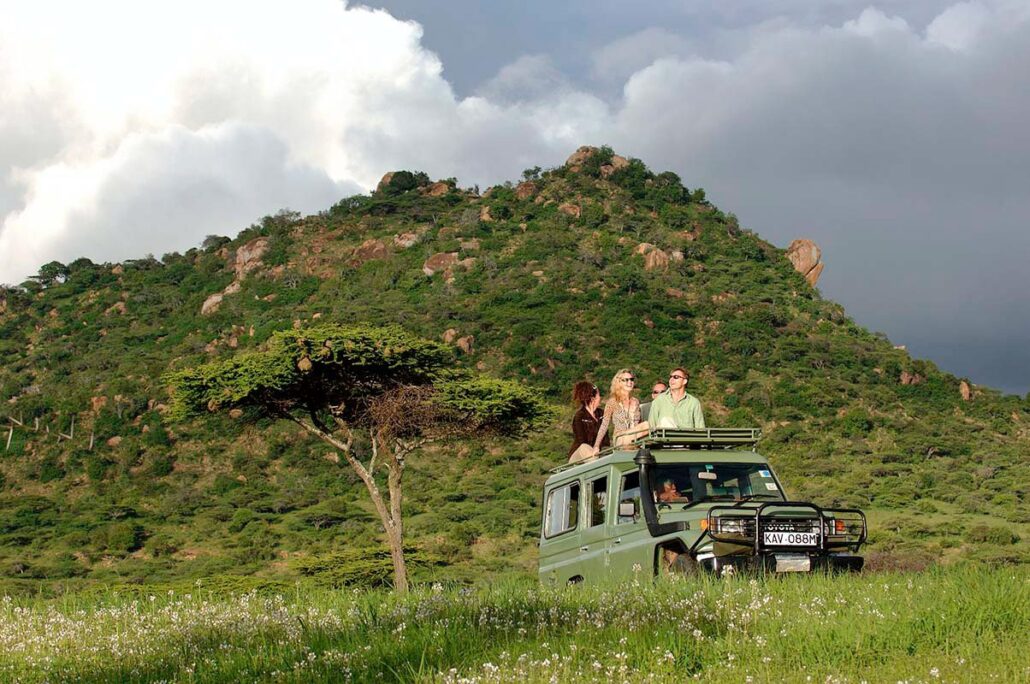
Laikipia is Kenya’s quiet, open country. Fold after fold of golden grass rolls away from the foot of Mount Kenya, cut by dry riverbeds and studded with acacia and rocky outcrops called kopjes. Giraffes lift their heads above the bush, elephants cross the track without hurry, and in the evening the whole plateau turns gold, then purple. It is a landscape that has been shaped by ranchers, pastoralists, and conservationists working side by side, and it feels more like a patchwork of wild places than a single park.
This guide explains what Laikipia offers, how the conservancies work, what to do, where to stay, how to get there and around, and how to combine the plateau with Mount Kenya, Samburu, and the rest of the safari circuit. If you are starting in the capital, read our Nairobi travel guide first, and for a western Kenya extension, our Kisumu travel guide covers the lakeside of the country.
Laikipia at a Glance
| Quick fact | What to know |
| Location | Central Kenya, on a plateau northwest of Mount Kenya, about 200 km north of Nairobi, crossing the equator near Nanyuki |
| What it is | A county and wildlife region of about 9,500 sq km, mostly ranches, conservancies, community land, and forest, with Nanyuki as its main town |
| Famous for | Black rhinos, the last northern white rhinos at Ol Pejeta, a chimpanzee sanctuary, wild dogs, walking, camel and horse safaris, and views of Mount Kenya |
| Languages | English and Swahili, with Kikuyu, Samburu, Maasai, Meru, and Turkana communities in the region |
| Climate | Cool highland climate, usually about 8 to 26°C, with chilly nights and mornings and two rainy seasons |
| Altitude | Roughly 1,800 to 2,300 m, so mild days and cold nights |
| Currency | Kenyan shilling (KES). Lodges usually accept cards, and cash or M-Pesa is useful in towns. |
| Time needed | Three to five days, or longer with Mount Kenya and Samburu |
| Main areas | Nanyuki, Ol Pejeta, Lewa, Borana, Loisaba, Segera, Ngare Ndare, and the Mukogodo community lands |
| Best for | Rhinos, walking and horse safaris, conservation, photography, honeymoons, and a quieter safari |
Is Laikipia Worth Visiting?
Yes, particularly if you have already done the Mara or want something more personal. Laikipia is a rare example of land managed for wildlife and people together, with ranchers, communities, and conservation groups sharing a large landscape. That means you can do things that are not allowed in national parks, such as walking safaris, night drives, horse-riding among zebras, and camel treks with local guides. Wildlife is plentiful, with several rhino populations, big elephant herds, lions, leopards, cheetahs, and some of the best chances in Kenya of seeing wild dogs.
It is not a mass-market destination. Conservancies are private or community-run, access can depend on lodge bookings, fees are higher than in many parks, and some tracks are rough. Cool nights, early starts, and variable weather are part of the experience. With careful planning and a reputable lodge or guide, it is one of Kenya’s most rewarding places.
Who it suits best
- Repeat safari travelers who want something quieter than the main circuits.
- Conservation-minded visitors who want to support rhino and wildlife protection.
- Honeymooners and photographers looking for scenery and privacy.
- Active travellers who enjoy walking, cycling, riding, and camel trekking.
- Families with older children, thanks to educational and child-friendly programs at some conservancies.
- Self-drivers who want a long weekend from Nairobi.
How the Conservancy System Works
Most of Laikipia is not a national park. Instead, it is a mosaic of private ranches, community conservancies, and wildlife conservancies. Some, like Ol Pejeta, accept day visitors with a gate fee. Others, like Lewa, Borana, Loisaba, and many smaller ones, are mainly open to guests staying at their lodges and camps, and access without a booking may be restricted. Rules on night drives, walking, and off-road driving vary by conservancy, so always check with your lodge or the conservancy office. Fees usually include a conservation levy that funds anti-poaching, community programs, and wildlife monitoring.
Top Things to Do in Laikipia
Wildlife and conservancies
| Place | What you get | Tips |
| Ol Pejeta Conservancy | The largest black rhino sanctuary in East Africa, the last northern white rhinos under guard, the Big Five wildlife, cheetahs, lions, and the Sweetwaters Chimpanzee Sanctuary | Day visits are possible. Book rhino and night-drive experiences in advance. |
| Lewa Wildlife Conservancy | Rhinos, Grevy’s zebra, elephants, giraffes, and excellent birding in a UNESCO-listed landscape | Mainly for lodge guests. Walking and horse activities available |
| Borana Conservancy | Black and white rhinos, elephants, lions, and wild dogs, with horse riding and walking | Private, with a conservation focus. Stay at a lodge. |
| Loisaba Conservancy | Wide plains, elephants, lions, and Grevy’s zebra, with walking, riding, and camel safaris | Known for star-bed sleep-outs in the bush |
| Segera and other private conservancies | Quiet wildlife areas and community-linked programs | Book through the lodge. |
| Mukogodo and community conservancies | Community-owned lodges and cultural visits with local guides | Supports local families directly |
Some of the best-known wildlife on the plateau includes black and white rhinos, elephants, lions, leopards, cheetahs, African wild dogs, Grevy’s zebra, reticulated giraffes, gerenuks, Beisa oryx, and many bird species. Sightings vary by season and conservancy, and wildlife can move between areas.
Experiences that make Laikipia different
- Walking safaris: guided walks with armed rangers, usually in conservancies that allow them.
- Rhino tracking on foot: a rare chance to approach rhinos with expert guides.
- Horseback safaris: riding among zebras, giraffes, and antelope, for experienced riders in many places.
- Camel safaris: traditional Samburu-style treks with camel handlers, often with a fly-camp.
- Night drives: spot leopards, aardvarks, bushbabies, and owls where permitted.
- Star beds and sleep-outs: raised beds on platforms under the Milky Way at some lodges.
- Mountain biking and cycling on guided routes.
- Bird watching: many dry-country and highland species around the conservancies.
- Bush meals and sundowners with views of Mount Kenya on clear days.
- Community and cultural visits with Samburu and Maasai hosts.
Nanyuki and the Mount Kenya side
- Equator crossing: the signposts near Nanyuki are a popular photo stop with water experiments.
- Nanyuki town: a lively market town with supermarkets, banks, fuel, and the last stop before many conservancies.
- Ngare Ndare Forest: a forest reserve with a canopy walk, waterfalls and natural pools, and a known elephant corridor.
- Mount Kenya National Park (Sirimon and Naro Moru routes): hiking and climbing towards Point Lenana, plus moorland walks.
- Sweetwaters and Ol Pejeta viewing points: open plains with Mount Kenya as a backdrop.
- Golf and trout fishing at clubs and streams around Nanyuki.
- Nyahururu and Thomson’s Falls: a cooler highland town with a waterfall and viewpoint, about 2 hours from Nanyuki.
Nearby Parks and Reserves to Combine with Laikipia
| Place | Approx. distance from Nanyuki | Famous for | Tips |
| Ol Pejeta Conservancy | 20 to 30 km | Rhinos, chimpanzees, and the Big Five | Easy day trip or overnight |
| Lewa Wildlife Conservancy | About 60 km, 1 to 1.5 hours | Rhinos, Grevy’s zebra, and birdlife | Mostly for lodge guests |
| Ngare Ndare Forest | About 30 km | Canopy walk and waterfalls | Go in the morning and wear sturdy shoes. |
| Mount Kenya National Park | 30 to 50 km to the gates | Hiking and alpine scenery | A UNESCO World Heritage site. Book climbs with a licensed operator. |
| Samburu, Buffalo Springs, and Shaba reserves | About 100 to 130 km, 2.5 to 3 hours | Northern species such as Grevy’s zebra, gerenuk, and the Ewaso Nyiro River | A good add-on for two nights |
| Aberdare National Park | About 3 hours | Forest, waterfalls, and treetop lodges | Often paired with Laikipia |
| Meru National Park | 3 to 4 hours | Quiet savannah and rivers | A good extension for a longer trip |
| Lake Nakuru and Lake Naivasha | 3 to 4 hours | Rhinos, flamingos, and Rift Valley lakes | Common on the way back to Nairobi |
| Maasai Mara National Reserve | About 7 to 8 hours by road, or a short flight | The Great Migration and big cats | Fly if short on time. |
Tip: Kenya Wildlife Service (KWS) manages national parks and reserves, while Laikipia’s conservancies set their own fees and rules. Fees, permits, and payment systems vary and change, so confirm directly before you go.
Best Time to Visit Laikipia
Laikipia has a pleasant highland climate with sun, cool nights, and occasional rain. Altitude makes mornings and evenings cold, even in the dry season, so pack layers.
- For the best wildlife viewing and dry roads: June to October and December to March.
- For cool, clear skies and the best views of Mount Kenya: January to March and July to September.
- For the long rains: about April to May, with muddy tracks, lower rates, and fewer visitors.
- For the short rains: November, with lighter showers and green landscapes.
- For the coldest nights: July and August.
- For holiday crowds: late December to early January and July to August, when lodges fill and advance booking is wise.
Bring warm layers for game drives, a rain jacket, sun protection, and binoculars.
How to Get to Laikipia
- By road: Nanyuki is about 200 km from Nairobi, usually 3.5 to 4.5 hours depending on traffic through Thika, Sagana, and Karatina. Roads inside conservancies can be rough, so a 4×4 is the sensible choice.
- By air: Scheduled and charter flights serve Nanyuki and airstrips at Ol Pejeta, Lewa, Loisaba, and others, with flights from Wilson Airport in Nairobi taking about 45 minutes. Baggage limits are strict on small planes.
- By road from Naivasha and Nyahururu: a scenic route through the highlands and Rumuruti.
- By bus: coaches and matatus link Nairobi and Nanyuki, but they do not reach most conservancies.
- From the north: roads connect Isiolo, Samburu, and Meru with Laikipia.
- Cross-border: road links from Uganda and Tanzania need a long drive, and cross-border car hire requires special permission. See our guide to cross-border car rental from Kenya.
Getting Around Laikipia
- Car hire: the best way to explore if you plan to move between Nanyuki, Ol Pejeta, and the southern conservancies. See the vehicle guidance below.
- Driver-guide: helpful for navigation, wildlife spotting, and rough roads.
- Lodge transfers: most lodges arrange pick-ups from Nanyuki or the airstrip.
- Taxis and boda-bodas: available in Nanyuki for short trips.
- Walking and cycling: mostly with guides inside conservancies.
- Flying between conservancies: possible with small charter or scheduled flights, but costly.
Where to Stay in Laikipia
Choose your base by how much privacy, activity, and budget you want. Nanyuki suits budget and flexible trips, Ol Pejeta suits wildlife-focused visits, and private conservancies suit luxury and unusual activities.
| Area | Best for | What to expect |
| Nanyuki | Budget, supplies, and flexible stays | Hotels, guesthouses, supermarkets and restaurants, with easy access to Ol Pejeta |
| Ol Pejeta | Rhinos, chimps, and first-time visitors | Tented camps, lodges, and cottages, including family-friendly options |
| Lewa and Borana | Luxury, conservation, and active safaris | Intimate camps with horse riding and walking |
| Loisaba and Segera | Remote luxury, star beds, and camels | Spacious lodges and wilderness camps |
| Ngare Ndare and Timau | Forest and mountain scenery | Small lodges and campsites near the canopy walk |
| Community conservancies | Cultural stays and supporting local people | Simple lodges owned by local groups |
Well-known stays reported by published guides include Sweetwaters Serena Camp and Ol Pejeta Bush Camp at Ol Pejeta, Fairmont Mount Kenya Safari Club near Nanyuki, Borana Lodge and Sirikoi in the south, Loisaba Lodo Springs and Segera Retreat in the north, and Il Ngwesi Lodge in a community conservancy. Many lodges are expensive and need early booking, especially in high season, so compare current rates and confirm what is included. Check that each property is still operating before you book. If you plan to camp on a longer trip, you can arrange equipment through camping gear and rooftop tent rental.
Budget tips: stay in Nanyuki and visit Ol Pejeta by day, travel in the April to May rains, and choose self-catering cottages or campsites.
Self-Drive, Driver-Guided, or Flying: Choosing Your Transport
Self-drive is permitted in Kenya, and the road to Nanyuki is paved. Inside conservancies, tracks can be rough, steep, and slippery after rain, and some conservancies require guests to use lodge vehicles for certain activities. If you want to compare vehicles, see car rental Nanyuki, and for the drive from the capital, read about Nairobi to Laikipia self-drive.
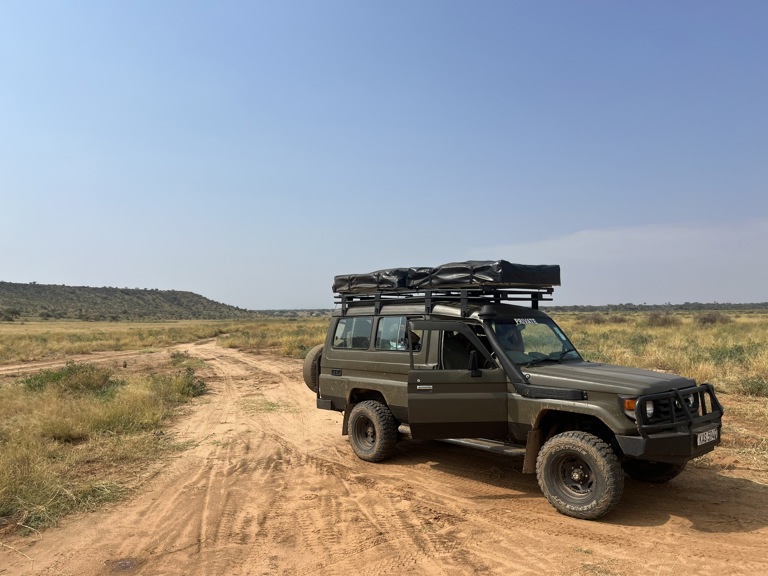
| If you want… | Choose | Why |
| To reach Nanyuki and Ol Pejeta | A compact SUV or 4×4 | Paved road to town, with good tracks into Ol Pejeta |
| Conservancies and rough tracks | A high-clearance 4×4 | Better on stones, mud, and steep sections |
| Stress-free wildlife viewing | A driver-guide | Local knowledge, spotting and navigation |
| Group or family wildlife trips | A safari vehicle with a pop-up roof | Standing views and photographs for everyone |
| A one-way trip to Samburu or the Mara | One-way car rental | You can collect the car in one place and drop it off in another. |
| Camping on a longer route | Camping gear and rooftop tent rental | Useful for Mount Kenya, Ngare Ndare, and Samburu |
| Short on time | Scheduled or charter flights | Fast, but costly and with baggage limits |
Road rules and safety, whichever vehicle you choose
- Drive on the left, keep to the speed limit, and expect police checkpoints.
- Avoid night driving on public roads, where trucks, livestock, and wildlife are common.
- Keep to marked tracks inside conservancies, and follow ranger and lodge instructions.
- Never approach wildlife on foot or leave the vehicle except in designated areas.
- Carry water, a spare tire, a charged phone, and offline maps, since signal can be patchy.
- Refuel in Nanyuki, since fuel inside conservancies is limited.
Local notes from our team Timing: leave Nairobi early to reach Nanyuki by lunchtime and enter the conservancy in daylight. Roads: allow extra time after heavy rain, especially on black-cotton soil. Wildlife: start game drives at first light and late afternoon. Kit list: warm jacket, hat, gloves for early mornings, binoculars, sun protection, cash and offline maps.
Sample Laikipia Plans
Long weekend: three days from Nairobi
- Day 1: drive to Nanyuki, lunch, equator stop, and an afternoon game drive at Ol Pejeta.
- Day 2: sunrise drive, rhino and chimpanzee visit, and a bush dinner or night drive.
- Day 3: Ngare Ndare canopy walk, then return to Nairobi.
Five days: Laikipia in depth
- Day 1: arrive at Ol Pejeta, afternoon game drive.
- Day 2: rhino tracking, chimpanzee sanctuary, and a night drive.
- Day 3: move to a private conservancy for walking, riding, or camel safaris.
- Day 4: wild dog tracking and a star-bed night, where available.
- Day 5: drive or fly back to Nairobi.
Seven to ten days: Laikipia, Samburu, and Mount Kenya
- Days 1 to 3: Ol Pejeta and Lewa or Borana.
- Days 4 to 5: Samburu and Buffalo Springs for northern species.
- Days 6 to 7: Mount Kenya hiking or a Ngare Ndare forest stay.
- Days 8 to 10: Aberdare, Lake Nakuru, or the Maasai Mara before returning to Nairobi.
Using Laikipia as a Starting or Ending Point
Laikipia works well as a first or last stop on a northern loop. A common pattern is to drive from Nairobi to Nanyuki, enjoy a few days on the plateau, continue to Samburu, then return via the Rift Valley or fly out. Another is to combine Laikipia with the Aberdares and Lake Nakuru on the way back. Our Kenya safari routes guide shows how the circuits fit together, our Nairobi travel guide covers the capital, our Mombasa travel guide covers the coast, our Kisumu travel guide covers western Kenya, and our guide to cross-border car rental from Kenya explains routes into Uganda and Tanzania.
Before You Travel
- Travel authorization: most overseas visitors need a Kenya eTA before they fly. Check the official portal for the latest rules.
- Required health insurance: Kenya asks most foreign visitors who enter on an eTA to hold a Kenyan inbound health insurance policy. Rules have changed since launch, so confirm the details on the day you apply.
- Your cover: keep a comprehensive travel policy with medical evacuation, which matters for remote conservancies.
- Health: Malaria risk is generally lower in the cool highlands, but lower and drier parts of the region and northern parks carry more risk, so ask a travel clinic about prophylaxis. A yellow fever certificate may be required if you arrive from an affected country.
- Altitude, sun, and cold: it is high, and the sun is strong by day, but nights are cold, so pack layers.
- Driving documents: bring your license and an International Driving Permit.
- Money: carry some cash for towns and tips, and confirm which lodges take cards.
- Conservancy rules: follow ranger instructions, keep your distance from wildlife, and respect community land and livestock.
- Security: Some parts of Laikipia have had land and grazing tensions in recent years, so consult current advice from your lodge and local authorities and travel with reputable operators.
- Travel advisories: consult current government advice and local news before and during your trip.
Frequently Asked Questions About Laikipia
Where is Laikipia?
In central Kenya, on a plateau north-west of Mount Kenya, about 200 km north of Nairobi.
Is Laikipia worth visiting?
Yes. It offers quieter safaris, rhinos, wild dogs, walking, horse and camel safaris, and a strong conservation story.
How many days do you need in Laikipia?
Three days covers a long weekend, five days lets you see more than one conservancy, and a week or more adds Samburu and Mount Kenya.
What is the best time to visit Laikipia?
June to October and December to March are generally the driest months. April to May is the long rains season.
What are the best things to do in Laikipia?
Visit Ol Pejeta for rhinos and chimpanzees, try a walking or camel safari, track wild dogs, enjoy a night drive or star-bed sleep-out, and walk the Ngare Ndare canopy.
Is Laikipia a national park?
No. It is mostly private ranches, community lands, and conservancies, each with its own rules and fees.
Can I see the Big Five in Laikipia?
Ol Pejeta and some other conservancies have lions, leopards, elephants, buffalo, and rhinos, though sightings are never guaranteed.
Can I do a day trip from Nairobi?
It is possible but tiring, since the drive is about 3.5 to 4.5 hours each way. A night or two in Nanyuki or Ol Pejeta is far better.
Can I self-drive in Laikipia?
Yes, you can self-drive to Nanyuki and into Ol Pejeta. Other conservancies often prefer guests to use lodge vehicles, and a 4×4 is best on rough tracks.
Is Laikipia safe for tourists?
Most visits are trouble-free with reputable lodges and guides. Check current advisories, follow ranger instructions, and avoid night driving.
Do I need malaria tablets?
Risk varies by altitude and area. Ask a travel clinic about the latest advice for your itinerary.
Do I need a visa or eTA?
Most overseas visitors need a Kenya eTA. Check the official portal for the latest rules and insurance requirements.
How much do conservancy fees cost?
Fees vary by conservancy, season, and visitor category and usually include a conservation levy. Confirm the current tariff and payment method with the conservancy or your lodge.
Get a Quote for Your Laikipia Trip
Please let us know your dates, party size, pick-up point, and whether you want a Nanyuki and Ol Pejeta stay, a private conservancy trip, a Samburu extension, or a one-way journey from Nairobi. We will suggest the vehicle that fits, from a self-drive 4×4 to a pop-up roof safari vehicle, a driver guide, or a rental with camping equipment, and send itemized costs, insurance, and paperwork details before you commit.