Cross-Border Car Rental from Kenya to Uganda, Tanzania and Rwanda

Cross-Border Car Rental From Kenya: Car rental 4×4 hires cross-border car rental from Nairobi or Mombasa and drives into Uganda, Tanzania, and Rwanda, on self-drive or with a driver guide. Rent a cross-border car from Kenya, complete with camping gear, rooftop tents, and long-term hire options, and learn more about the documents, insurance, visas, border steps, and costs involved.

East Africa rewards the traveller who is not tied to a flight schedule. With Car Rental 4×4, you can collect a vehicle in Nairobi or Mombasa and drive from the Maasai Mara to the Serengeti National Park, from Lake Victoria to the source of the Nile, and on to the gorilla forests of Uganda (Bwindi Impenetrable National Park & Mgahinga Gorilla National Parks) and Rwanda (Volcanoes National Park). This page explains how cross-border rental from Kenya works, what each country requires, and what it will cost.
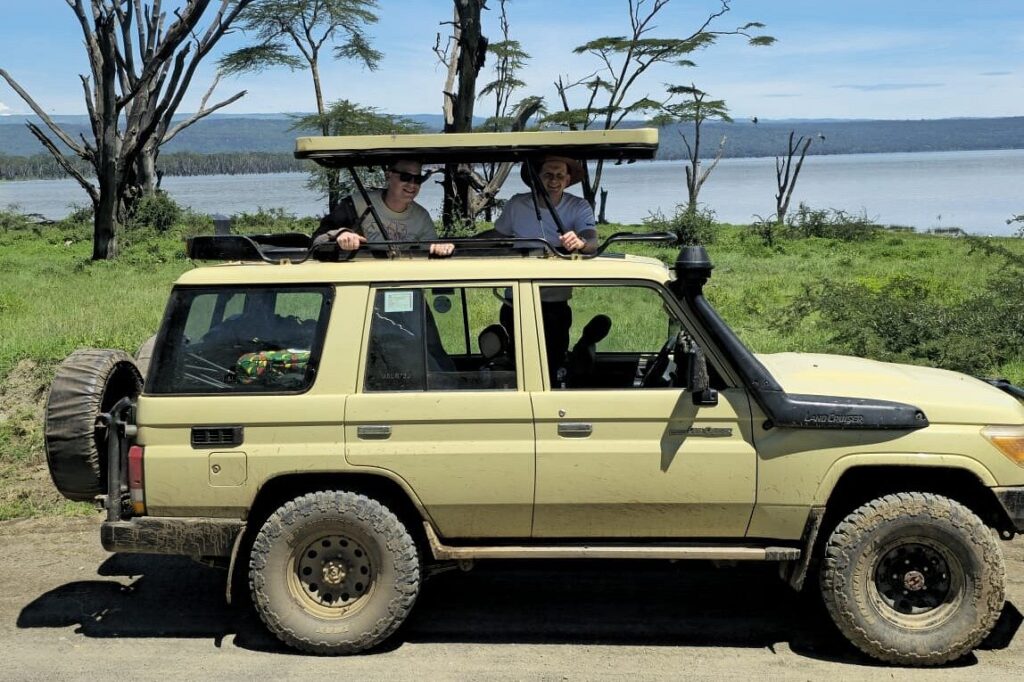
Cross border Car rental from Kenya

What Is Cross-Border Car Rental From Kenya?

Cross-border car rental from Kenya means hiring a vehicle in Kenya and taking it into another country with Car Rental 4×4’s company’s written permission. From Kenya, that normally means driving into Uganda, Tanzania, and, through Uganda, into Rwanda. Car Rental 4×4 prepares a letter of authority, a copy of the logbook, and the regional insurance so border officials can see that the vehicle is allowed to leave Kenya and is insured where you are going.

It differs from a normal rental in four ways: the paperwork is longer, the insurance must be extended, the price includes cross-border charges, and the countries you may enter are limited by contract.

What you need to know:

  • Which countries can I enter? Uganda and Tanzania are the most widely permitted. Rwanda is reached through Uganda. South Sudan, Somalia, and Ethiopia are generally refused because those border areas are considered unsafe.
  • How much notice do you need? At least one week, and longer in peak season.
  • Do I pay extra? Expect cross-border insurance and often a daily surcharge. The full list is in the cost section below.
  • Is travel health insurance required? Kenya now requires mandatory inbound travel health insurance for most foreign visitors, and Tanzania has introduced its own.
  • Do I need a visa? For most nationalities, yes. The East Africa Tourist Visa covers Kenya, Uganda, and Rwanda only. Tanzania needs its own.

Destination

Typical policy

Main land crossings from Kenya

Uganda

Widely allowed

Busia, Malaba

Tanzania

Widely allowed

Namanga, Isebania, Taveta, Lunga Lunga, Oloitoktok

Rwanda

Allowed on request, reached through Uganda

Busia or Malaba, then Kampala and Kigali

Burundi, DR Congo

Special request only

Via Tanzania or Uganda

South Sudan, Somalia, Ethiopia

Generally not permitted

Not recommended

Cross-Border Car Rental from Kenya to Uganda

Uganda is the easiest cross-border destination from Kenya. The main road from Nairobi runs through Naivasha, Nakuru, Eldoret, or Kisumu to the border at Busia or Malaba, both One-Stop Border Posts where exit and entry formalities for both countries are handled in one place. Kampala is roughly 650 km from Nairobi, a long day by road, so many travelers break the journey in Kisumu or Jinja.

What you need for Uganda

  • Visa: Uganda has moved towards online e-visas, and reports indicate that visa on arrival is no longer the main option. A single-entry tourist e-visa costs about USD 50 plus a small admin fee. If you will also visit Kenya and Rwanda, the USD 100 East Africa Tourist Visa is usually cheaper.
  • Vehicle paperwork: letter of authority, logbook copy, COMESA Yellow Card, and the insurance extension, all arranged by Car Rental 4×4.
  • Driving: Uganda drives on the left, like Kenya. Traffic enforcement is a little different from Kenya, and foreign-plated cars attract extra attention from police in towns.
  • Park fees: some Ugandan parks charge a much higher vehicle fee for foreign-registered cars. One operator cites about USD 150 for a foreign vehicle against a small local fee. Because of this, we shall provide you with a Ugandan-registered vehicle for your cross-border car rental road trip.

Popular Uganda routes

  • Nairobi to Kampala, then Murchison Falls, Queen Elizabeth, or Kibale, for wildlife and chimpanzees.
  • Nairobi to Jinja for the source of the Nile and white-water rafting.
  • Nairobi to Kampala, via Lake Mburo, then to Bwindi Impenetrable or Mgahinga (for mountain gorillas) and Lake Bunyonyi.

Cross-Border Car Rental from Kenya to Tanzania

Tanzania is the classic pairing for Kenya, linking the Maasai Mara, Amboseli, and Tsavo with Kilimanjaro, Arusha, Tarangire, Ngorongoro, and the Serengeti. The most used crossing is Namanga, a one-stop border post on the good tarmac road between Nairobi and Arusha, about 270 km. Other crossings include Isebania, Taveta, Oloitoktok, and Lunga Lunga on the coast.

What you need for Tanzania

  • Separate visa: East Africa A tourist visa does not cover Tanzania. Apply for a Tanzanian e-visa on its own. Reports say visas are sometimes available at land borders, but applying online first avoids delays.
  • Mandatory travel insurance: from 1 October 2026, most foreign visitors entering mainland Tanzania must hold government-issued inbound travel insurance. It costs USD 44, is valid for up to 92 days with multiple entries, and can be bought online or at the port of entry. EAC and SADC residents are exempt.
  • Driving license: carry an International Driving Permit alongside your national license.
  • Foreign-vehicle charges: Tanzania charges transit or road fees on foreign-registered vehicles at the entry point. Keep every receipt.
  • Safety equipment: a reflective vest, two warning triangles, and a fire extinguisher are expected in the car.
  • Park rules for Kenyan-registered vehicles: access rules for foreign-registered vehicles in Tanzanian parks have varied over time and sometimes depend on whether the trip is self-drive or guided. Please confirm the current position with us before planning a Serengeti or Ngorongoro leg.

Cross-Border Car Rental from Kenya to Rwanda

Rwanda has no border with Kenya, so a drive to Kigali crosses Kenya and Uganda first. From Kampala, Kigali is roughly another 500 km. The route suits travelers who want to combine Uganda’s gorilla forests with Rwanda’s Volcanoes National Park and Kigali’s memorials and cafés.

  • Paperwork must cover two crossings: the rental permission, Yellow Card and insurance must name Uganda and Rwanda as well as Kenya.
  • Visa: The East Africa Tourist Visa covers Kenya, Uganda, and Rwanda for 90 days and is issued by the country where you first enter. Rwanda’s own rules vary by nationality, so check the immigration portal.
  • Driving side changes: Kenya and Uganda drive on the left. Rwanda drives on the right, and vehicles there are typically left-hand drive. Take extra care on your first day after crossing.
  • One-way option: where available, pick up in Nairobi and drop in Kampala or Kigali to avoid driving back. A drop-off fee applies.

Choose the Right Rental Option

The best setup depends on how long you are travelling, how remote your route is, and how you want to sleep. Car Rental 4×4 offers the following cross-border options from Nairobi and Mombasa.

Short cross-border self-drive

A 4×4 or SUV for a one- or two-week trip, with the letter of authority, Yellow Card, and insurance extension arranged before you arrive. This option is suitable for trips from Nairobi to Arusha or Dar es Salaam or Nairobi to Kampala/Entebbe.
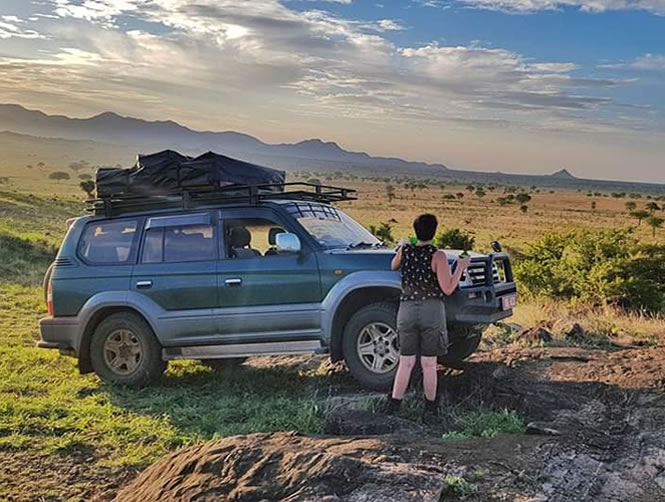
Land cruiser TX/TZ

Long-term cross-border car rental from Kenya

Designed for trips of about three weeks and longer, such as multi-country overland journeys, research and volunteer assignments, and film or photography crews.

  • Lower effective daily rate as the rental period grows.
  • Letter of authority written for the whole itinerary, updated if your plans change.
  • The COMESA Yellow Card and insurance are arranged for the full period, with renewal if the trip extends.
  • Unlimited mileage terms, a servicing plan, and a procedure for breakdowns and replacement vehicles.
  • Flexible pick-up and drop-off, including one-way where available.

Cross-border car rental Kenya with camping gear

Camping keeps you close to the wildlife and keeps accommodation costs low on longer trips. We can supply a 4×4 together with camping equipment, so you collect one vehicle and set off.

  • Tents, sleeping bags, and mattresses.
  • Camp stove, cooking and eating utensils, cool box, and water containers.
  • Folding chairs and a table are also included.
  • A packing checklist and a briefing on campsite booking, park rules, and wildlife safety.

Cross-border car rental Kenya with a rooftop tent
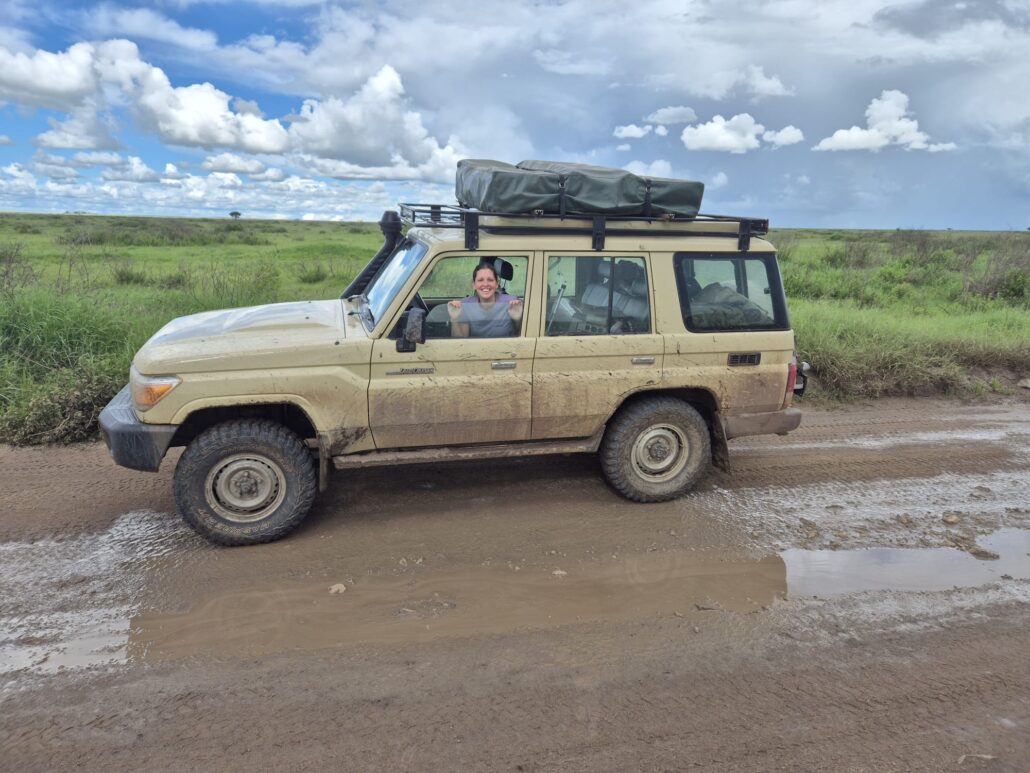
Self Drive Car rental Samburu national ReserveA car rental with a rooftop tent from Kenya turns a 4×4 into a self-contained camper that opens in a few minutes, ideal if you move camp every day or two.

  • Sleeps you off the ground, away from mud, insects, and curious wildlife.
  • Quick set-up and pack-down after a long driving day.
  • Frees space inside the vehicle for luggage and supplies.
  • It can be combined with ground-tent equipment for larger groups.

A rooftop tent adds height and weight. Drive carefully under low branches and bridges, expect slightly higher fuel use, and camp only in designated sites where park rules require it. Camping gear and tents travel with the vehicle, so we list them in the rental paperwork, and you declare them at customs if asked.

Kenya–Tanzania Guided Safaris: Why the Car and Driver Change

If you travel with a driver-guide rather than self-drive, the arrangement at the Kenya–Tanzania border is different. On most combined safaris, you will change vehicles and driver-guides at the border; this procedure is normal and not a sign of poor planning.

Why it happens

  • Commercial safari vehicles stay in their home country. Tour vehicles with pop-up roofs and their driver guides are generally licensed to operate in the country where they are registered. Kenyan commercial safari vehicles are only meant to run game drives in Kenya, and Tanzanian ones are only meant to do so in Tanzania.
  • This is a long-standing arrangement between the two countries. Tanzania National Parks has said that, under a 1985 agreement, operators from each country hand guests over at the border towns rather than driving them into each other’s parks.
  • Trade protection. Each country protects its tourism operators, so licenses, permits, and park access are tied to the home country.
  • Local knowledge. A Tanzanian guide knows the Serengeti and Ngorongoro circuits, rules and wildlife areas, just as a Kenyan guide knows the Mara and Amboseli.

What this means for you

  • You finish the Kenya leg, cross the border with your luggage, and meet a new driver-guide and vehicle on the Tanzanian side. Isebania to Sirari and Namanga are the common hand-over points.
  • You pay for two sets of transport and guiding, one in each country.
  • Self-drive is different. A Kenyan-registered self-drive 4×4 can usually cross with the right permission and insurance, although park access rules for foreign-registered vehicles can vary. Ask us for the current position.
  • Keep valuables and documents on you during the swap, and ensure that your luggage is loaded and secured in the new vehicle before you leave.

Some itineraries use a flight between the Masai Mara and Serengeti airstrips instead of a road crossing, which avoids the border entirely.

Kenya–Tanzania Border Crossings

Most travelers use Namanga or Isebania. The right choice depends on where your safari starts and ends.

Crossing

Connects

Notes

Namanga

Nairobi and Amboseli with Arusha, Kilimanjaro, and the northern Tanzania circuit

The One-Stop Border Post is located on a well-maintained tarmac road. The most used crossing for combined trips

Isebania / Sirari

Maasai Mara with the Serengeti, via Migori and Tarime

Reported to work in two stages, with separate stops on each side. Some road sections are less developed than the Namanga route.

Oloitoktok / Taveta

Amboseli and Tsavo with Moshi and Kilimanjaro

Quieter crossings, useful for routes around Kilimanjaro

Lunga Lunga / Horohoro

Mombasa and the south coast with Tanga and Dar es Salaam

One-Stop Border Post on the coastal route

  • Allow time. Crossing usually takes from about 40 minutes to two hours, depending on traffic, the day, and the season.
  • You cannot drive directly from the Mara to the Serengeti. You must go around via Isebania or Namanga, which adds travel time. Plan an extra day or more.
  • Cross early in the day, and avoid public holidays and school-holiday weekends.
  • Exchange money only at banks or recognized bureaux, not with street dealers.

Cross-Border Documents and Procedures

Documents for you

  1. Passport valid for at least six months from your date of entry.
  2. Visa or travel authorization for every country you will enter.
  3. Proof of the mandatory travel health insurance for Kenya and for Tanzania if you enter it.
  4. Full driving license in English with a photo, plus an International Driving Permit. Kenya accepts many foreign licenses for short visits, but rental agencies often ask for an IDP, and some neighboring countries expect one.
  5. A yellow fever vaccination certificate is required by several borders and visa processes.
  6. A credit card in the main driver’s name for the deposit.

Documents for the car

  1. Letter of authority from Car Rental 4×4 naming the countries and dates you may travel.
  2. Certified copy of the vehicle logbook (registration document).
  3. COMESA Yellow Card is valid for your route and dates.
  4. Insurance extension covering all countries on the route.
  5. Rental agreement and our emergency contact details.
  • A carnet de passage is not required for a rental car travelling within the East African Community. The letter of authority, logbook copy, and insurance serve that purpose.

Mandatory travel health insurance for entering Kenya

Kenya has introduced compulsory inbound travel health insurance for foreign visitors. It is separate from your car rental insurance and from any private policy you buy at home.

  • Who it applies to: most foreign nationals entering Kenya for less than 12 months under the Electronic Travel Authorisation (eTA) system, including tourists and business travellers, regardless of age.
  • Start date: the eTA portal began enforcing it in the first week of October 2026, after a court suspension in August. Travellers who already hold an approved eTA must still buy the insurance before arrival.
  • Cost: reported at about USD 44 per traveler, around USD 52 with a gateway fee.
  • Where to buy: during the eTA application on the official eTA portal, or in advance through Kenya’s eCitizen insurance service. Keep a copy of the electronic policy.
  • Enforcement: airlines have been asked to verify insurance before boarding, and travelers without it may be refused entry.
  • Exemptions: Kenyan residents, diplomats, aircrew, transit passengers, and East African Community citizens. Reports indicate that nationals of countries not needing an eTA, such as South Africa, are currently exempt.

Not a replacement for your cover: this policy is an entry requirement. Keep comprehensive international travel insurance with evacuation and repatriation as well.

Check the official portal when you apply.

Guidance on whether a home-country policy is accepted has changed since the rule was announced. An August 2026 clarification said a home policy meeting the minimum benefit level could be used, while the U.S. Embassy’s October notice directs visitors to buy Kenyan cover through the eTA or eCitizen. Follow the official eTA portal at the time you apply.

Visas: Tanzania versus East Africa Tourist Visa countries

There is no single visa for the whole region. The East Africa Tourist Visa (EATV) is a joint visa for three countries, and Tanzania sits outside it.

Kenya, Uganda, and Rwanda (EATV)

Tanzania

Document

One joint East Africa tourist visa or separate national visas

Separate Tanzanian e-visa

Cost

USD 100 for the joint visa. Separate: Kenya eTA is about USD 30 to 32.50, Uganda is about USD 50 plus admin fee, and Rwanda varies

Charged separately. Depends on nationality and visa type

Validity

90 days, multiple entries within the three countries

Set by the visa you obtain

Where to apply

Should be issued by the first country you enter

Tanzania immigration e-visa portal

Extra rules

Not renewable. Validity ends when you leave the three-country block.

Mandatory inbound travel insurance, USD 44

Processing

Several working days, longer in peak season

Please allow up to ten working days.

  • Kenya, Uganda, and Rwanda only: the joint visa is cheaper than three separate permits if you visit all three.
  • Adding Tanzania: you need a separate Tanzanian visa and insurance, even with an EATV.
  • Leaving the block and returning: the EATV’s validity ends when you exit Kenya, Uganda, and Rwanda. If you go to Tanzania and plan to return, check whether your visa is still valid or take a multiple-entry authorization.
  • Apply online before you travel, rather than relying on the border.

The three layers of cross-border insurance

Motor insurance for a cross-border rental has three separate layers. Each protects against a different risk, and none replaces the others.

Layer

What it is

What it protects

What it does not cover

1. Comprehensive rental cover

The standard insurance with the rental is extended to the countries you will visit.

The rental vehicle is against accident damage and theft, subject to the excess.

Usually excludes tires, windscreen, and underbody. Valid only in countries named in the extension

2. COMESA Yellow Card

Regional third-party motor insurance is recognized in 13 member countries, including Kenya, Uganda, Rwanda, and Tanzania.

Other people: injury or damage you cause to third parties. Widely requested at border posts

Your own rental vehicle and your own injuries

3. Collision and theft waivers (CDW and TP)

Optional waivers that reduce what you pay if the vehicle is damaged or stolen

Your financial exposure for damage to or loss of the rental car

Void if you fail to obtain a police abstract after an incident or breach contract terms

  • Layer 1 pays to repair or replace the vehicle, but you still carry the policy excess.
  • Layer 2 is what border officials check, because it is the legal minimum protecting the public. Some officials now verify cards electronically in real time, so the card must be genuine and issued for the right dates.
  • Layer 3 reduces the excess. Without it you may be liable for the full value of the vehicle.
  • After any accident, the driver must obtain a police report abstract. Without it, waivers can be invalid.
  • Your travel health insurance is a fourth, separate protection. It covers people, not the car.

Step-by-step border procedure

At One-Stop Border Posts such as Namanga, Busia, Malaba, and Lunga Lunga, formalities for both countries take place on one site. At other crossings you may stop separately on each side.

Before you leave

  1. Please confirm the route in writing with Car Rental 4×4 at least a week before pick-up, including every country and the exact dates.
  2. Apply for visas and buy the required health insurance for Kenya and, if relevant, Tanzania.
  3. Collect the paperwork pack at pick-up and verify that names, plate numbers, and dates are correct.
  4. Put all documents in one folder and photograph each one.

At the border

  1. Arrive early, ideally before mid-morning, especially at Busia and Malaba, where truck traffic builds up.
  2. Park in the designated area and keep your documents with you. Decline unofficial helpers who offer to speed things up.
  3. Exit Kenya. Present passports for the exit stamp.
  4. Declare the vehicle to customs. Present the logbook copy and letter of authority to ensure it is recorded as a temporary import.
  5. Enter the next country. Each passenger completes immigration with a valid visa and, where required, proof of mandatory health insurance.
  6. Show your insurance. Present the Yellow Card. If it is missing or not accepted, you may have to buy temporary cover at the post.
  7. Pay any road, transit, or foreign-vehicle charges at the designated office and keep every receipt.
  8. Please check the stamps and papers before you drive off, and confirm that the vehicle entry date matches the letter of authority.

On the way back

  1. Repeat the exit and entry steps and keep receipts for fees paid.
  2. Make sure the vehicle is cleared out of the country you are leaving, not just the passengers.
  3. Return to us at the agreed time and report any damage or incident, with the police abstract if one was issued.

Frequently Asked Questions About Cross-Border Kenya Car Rental

Can I take a rental car from Nairobi to Kampala?

Yes, if we approve it in writing and arrange the letter of authority and COMESA insurance. Book at least a week ahead.

Can I drive from Kenya to Rwanda?

Yes, via Uganda, provided both countries are on your rental permission and your visas cover the route. Rwanda drives on the right.

Can I drive from Kenya to Tanzania?

Yes, usually through Namanga or Isebania, with written permission, a yellow card and a Tanzanian visa and insurance.

Why do the car and driver change on a guided Kenya–Tanzania safari?

Commercial safari vehicles and their guides are licensed to operate in their home country, so guests are handed over at the border to a Tanzanian vehicle and driver-guide.

Is travel health insurance mandatory for Kenya?

Yes. Since early October 2026, most foreign visitors travelling under the eTA system must hold Kenya’s mandatory inbound travel health insurance, bought through the eTA portal or eCitizen.

Is there an equivalent rule in Tanzania?

Yes. From 1 October 2026, most foreign visitors entering mainland Tanzania must hold government-issued inbound travel insurance at USD 44 for up to 92 days.

Does the East Africa Tourist Visa cover Tanzania?

No. It covers Kenya, Uganda, and Rwanda only. Tanzania needs its own visa.

What is the COMESA Yellow Card?

A regional third-party motor insurance certificate recognized across member countries, including Kenya, Uganda, Rwanda, and Tanzania. It protects third parties, not your rental vehicle.

Is cross-border travel included in the rental price?

Cross-border fees, insurance extensions, and surcharges are quoted separately. We will provide you with an itemized quote before you make your payment.

Do I need an International Driving Permit?

Carry one. Kenya accepts many foreign licences for short visits, but an IDP removes doubt at rental desks and borders.

Can I rent for several weeks or months?

Yes. Our long-term cross-border rental is designed for extended trips, with lower daily rates and paperwork covering the whole itinerary.

Can I rent a car with camping gear or a rooftop tent?

Yes. Both options are available on suitable 4×4 vehicles, and the equipment is listed in the rental paperwork.

What happens if the car breaks down in another country?

Call our emergency line first. We agree on the recovery plan with you before departure, including who pays for towing.

Can I use a debit card?

A credit card in the main driver’s name is normally needed for the deposit. Ask us about accepted payment methods.

Why rent a car in Kenya and cross the border?

East Africa is one of the few places where a single road trip can take you from the Maasai Mara to the Serengeti, then to Lake Victoria, the Nile’s source, and the gorilla forests of Uganda and Rwanda. Flights between these destinations are expensive and rigid. A rental car lets you set your own pace, carry your own luggage and camping kit, stop where the scenery or the wildlife demands it, and cross borders on one booking.

Kenya is a natural starting point. Nairobi has the region’s busiest international airport and direct road links to Tanzania and Uganda, and from Uganda you can continue to Rwanda. With written permission from the rental company, a Kenyan-registered vehicle can enter Uganda, Tanzania, and Rwanda, provided the paperwork and cross-border insurance are arranged before you leave

How to Request a Cross-Border Quote

The more precisely you describe your journey, the faster we can confirm the right arrangement. When you get in touch, tell us your travel dates, pickup date, return date, and preferred pickup location, along with every country you intend to visit, including transit countries. Share your main destinations, intended border crossings, and final drop-off point, and say whether you want a self-drive, a driver guide, a pop-up roof, a rooftop tent, camping gear, or a combination.

Let us know how many passengers are traveling and how much luggage or camping equipment you will carry, and whether you plan to return the vehicle to Kenya or want an approved one-way arrangement. If you are planning a guided Kenya to Tanzania trip, mention your preferred border and ask for the vehicle-and-driver logistics fee so it appears in your quote from the start.

Car Rental 4×4 will then confirm the available vehicle, permitted countries, border arrangements, equipment, insurance requirements, and total price for your proposed trip.

Scroll to Top