Maasai Mara National Reserve Travel Guide: Mara Triangle, Gates, Camps and Routes
The Maasai Mara National Reserve is Kenya’s best-known wildlife reserve, about 270 km south-west of Nairobi, and part of the Serengeti–Mara ecosystem that hosts the Great Migration. The drive takes roughly five to six hours, or you can fly in about an hour. Plan three nights as a minimum, and four or five if you want the migration, the Mara Triangle, or a conservancy stay. The reserve has two public sectors, the main reserve run by Narok County and the Mara Triangle run by the Mara Conservancy, and accommodation ranges from public campsites to luxury tented camps.
The Maasai Mara is Kenya’s most famous wildlife area, in the southwest of the country on the border with Tanzania’s Serengeti. It is known for big cats, huge herds of plains game, and, from roughly July to October, the river crossings of the Great Migration. The Mara is made up of the main Maasai Mara National Reserve, the Mara Triangle, and a ring of private conservancies, each with different rules. It is roughly 270 to 280 kilometers from Nairobi, about five to six hours by road, or a 45-minute flight, and most visitors spend three to five days here.

There is a reason the Mara has become the picture most people carry of Africa. The grass runs flat to the horizon, broken by flat-topped acacias and the dark threads of river forest, and under a high, changing sky the animals seem endless: wildebeest strung out in lines to the edge of sight, zebras and gazelles scattered across the plains, elephants moving in slow family groups, and, if the day is kind, a lioness lying in the grass with her eyes on a herd. It is a place of scale and drama, and every drive turns up something.
This guide explains the reserve as a whole: its zones, the Mara Triangle, the gates, when to go, how to get there, which vehicle suits your trip, and where to stay, with budget, midrange, and luxury camps and campsites. It also shows how the Mara fits into longer trips, which you can compare in our Kenya safari routes guide.
Maasai Mara National Reserve at a Glance
Quick fact | What to know |
Location | Narok County, south-western Kenya, bordering Tanzania’s Serengeti |
Size | About 1,510 square kilometers for the national reserve, surrounded by private and community conservancies |
Managed by | Narok County for the main reserve, and the Mara Conservancy for the Mara Triangle |
Famous for | Big cats, the Big Five, the Great Migration and Mara River crossings, and Maasai culture |
Distance from Nairobi | Around 270 km, typically five to six hours by road, or about an hour by light aircraft |
Gates | Gates of Maasai mara include Sekani, Talek, Oloolaimutia, Musiara, and Sand River in the main reserve, as well as Oloololo and Purungat Bridge in the Mara Triangle. Confirm current gates before you travel. |
Ticket rule | A day ticket is typically valid from about 6 am to 6 pm, so plan around the 12-hour window. |
Best for | Big cats, migration viewing, photographers, honeymooners, families, and first-time safari visitors |
Time needed | Three nights minimum, or four to five nights for the migration or the Mara Triangle |
Is the Maasai Mara Worth Visiting?
Yes. The Mara offers some of the best wildlife viewing in Africa, with high densities of lions, leopards, cheetahs, elephants, and buffalo, and, from around July to October, giant herds of wildebeest and zebra crossing the Mara River. The open grassland makes animals easy to see, and the reserve’s sightings are consistent enough that many first-time visitors leave with a long list of memorable encounters. It also offers cultural depth, with Maasai communities living around the reserve and sharing their traditions.
The Mara is not cheap or quiet. Park fees are among the highest in Kenya, the reserve can feel busy in peak season, and the journey from Nairobi is long and in places rough. Rules are strict, and enforcement is real. Visitors who plan well, choose the right sector, and stay long enough usually find the investment worthwhile.
Wildlife and the Great Migration
Big cats and the Big Five
Lions are easy to observe often resting in the shade or hunting on the plains, and cheetahs hunt on open grassland, particularly on the plains near Talek and Sekenani. Leopards live in riverine thickets and rocky areas and reward patient searching. Elephants, buffalo, and rhinos complete the Big Five, though rhinos are rare and shy. Hyenas, jackals, hippos, crocodiles, topi, giraffes, and a wide variety of birds fill out the picture.
The migration calendar
Around 1.5 million wildebeest, along with zebras and gazelles, move in a remarkable loop between the Serengeti and the Mara. The timing varies with the rains, so treat the months below as a guide.
| Months | What happens | Where to look |
| January to March | Herds are mostly in the southern Serengeti, calving around Ndutu. | The Mara has resident wildlife and fewer visitors. |
| April to May | Long rains, with herds moving north and some camps closed | Green landscapes and good value |
| June | Herds move through the western Serengeti, with the first arrivals near the Kenyan border | Northern Serengeti and early arrivals in the Mara |
| July to October | Herds are in the Mara, with the main Mara River crossings often in August and September. | River crossings in the Mara Triangle and the main reserve |
| November to December | Herds return south, and short rains bring greenery. | Resident wildlife, quieter reserve |
Crossings are unpredictable, so give yourself several days and a flexible plan, rather than a single day.
The Three Zones: Main Reserve, Mara Triangle, and Conservancies
| Zone | Run by | What sets it apart |
| Main reserve (Narok sector) | Narok County | The largest area, with the Talek and Sekenani plains, the central river areas, and the most roads and camps. Off-road and night driving are prohibited. |
| Mara Triangle | Mara Conservancy | The western sector below the Oloololo Escarpment, with well-maintained roads, strict vehicle limits at sightings, and some of the best Mara River crossing points |
| Private and community conservancies | Landowners and operators | Surrounding lands, including Mara North, Naboisho, and Olare Motorogi, offer off-road driving, night drives, and walking safaris, with conservancy fees usually included in camp rates. Self-driving is not allowed. |
The Mara Triangle
The Mara Triangle is the western part of the Maasai Mara, bounded by the Mara River, the Oloololo Escarpment, and the Tanzanian border. It is managed separately by the Mara Conservancy rather than by Narok County, and it is widely admired for its relative quiet, its maintained roads, and its strong anti-poaching and visitor management. Many visitors choose it for its wide views, its Mara River crossing points, and its more controlled game viewing.
Why choose the Mara Triangle?
- Mara River crossings: the Triangle contains several well-known crossing points, including the Serena crossing and sites near Lookout Hill, and it is a favorite for migration viewing in August and September.
- Fewer vehicles: only a small number of vehicles are present at a time, which gives a calmer experience.
- Scenery: the escarpment, the open plains, and the river create some of the Mara’s most dramatic views.
- Well-run management: the Mara Conservancy is known for maintaining roads and enforcing rules.
Gates and access
- Oloololo Gate: on the northwestern side, below the escarpment, serving the Triangle camps and arrivals for Angama Mara and Kichwa Tembo.
- Purungat Bridge Gate: the internal gate between the main reserve and the Triangle, where visitors staying in the Triangle pay on entry.
- Serena Airstrip: a ticket point for visitors who fly in.
- Barriers without ticket sales: smaller barriers at places such as Little Governors’, Angama, and Kilo Two do not sell tickets.
- Traversing rights: visitors who paid park fees in the main reserve can generally enter the Triangle under traversing arrangements. Confirm current rules at the gate.
Fees, payment, and self-drive
- Fees: reported rates match the main reserve for non-resident adults, at about USD 100 from January to June and USD 200 from July to December in 2026. Check current figures, because tariffs change.
- Cashless payment: the Triangle is reported to accept only card and mobile money at its gates, not cash. Generate your e-ticket in advance, because gate connectivity can be unreliable.
- Self-drive: Self-drive is allowed in the Mara Triangle in a four-wheel-drive vehicle, with a separate vehicle entry charge on top of each person’s park fee. See the transport section below for general rules.
- Where fees are paid: fees depend on where you stay, so if you stay in the Triangle but enter via Sekenani, you pay when you enter the Triangle, not at Sekenani. Ask your camp which gate to use.
Where to stay in the Mara Triangle
Mara Serena Safari Lodge is often described as the only lodge actually inside the Triangle, and other well-known options sit on or below the Oloololo Escarpment, including Angama Mara, Kichwa Tembo Tented Camp, and &Beyond Bateleur Camp. Budget choices are fewer here than in the main reserve, and public campsites exist on the Triangle side. See the accommodation section below for more.
Gates, Hours, and Entry
| Gate | Sector and location | Best for |
| Sekenani Gate | Main reserve, south-east, the most common entry from Nairobi | Camps along the Sekenani road, first-time road visitors |
| Talek Gate | Main reserve, central, near Talek town and the Talek River | Talek camps and the conservancies to the north |
| Oloolaimutia (Ololaimutia) Gate | Main reserve, south-east | Budget and midrange camps in the southeast |
| Musiara Gate | Main reserve, north | Northern camps, the Mara River reaches, and conservancy arrivals |
| Sand River Gate | Main reserve, south | Southern areas, with no road crossing from the Serengeti |
| Oloololo Gate | Mara Triangle, north-west | Triangle camps and arrivals for Angama Mara and Kichwa Tembo |
| Purungat Bridge Gate | Between the main reserve and the Triangle | Visitors entering the Triangle from the main reserve |
- Hours and the 12-hour rule: a day ticket typically covers about 6 am to 6 pm, and an entry at 9 am still expires at 6 pm. Plan your drives so that you are out before closing.
- Fees: reported rates for non-resident adults are about USD 100 per day from January to June and USD 200 per day from July to December in 2026, with lower rates for children and residents. Tariffs may change, so please confirm the current rate.
- Payment: Narok County gates have been reported to accept cash and card, while the Mara Triangle is cashless. Always confirm before you travel.
- Vehicle fees: these are charged separately and vary with the size of the vehicle.
- Conservancy fees: these are separate and are usually built into camp rates.
- Gate choice: use the gate your camp recommends, because it affects both your drive time and where you pay.
Best Time to Visit the Maasai Mara
You can visit the Mara all year, and the best time depends on your priorities. July to October is the peak, with migration herds in the reserve and the busiest crowds and highest prices. January to March is a quieter dry season with excellent resident game, while November and December bring green landscapes and fewer vehicles. April and May are the long rains, when tracks are muddy and some camps close, but prices are lower and the landscape is lush.
- For the migration and river crossings: August and September are the best bet, with July and October on either side.
- For big cats and fewer vehicles: January to March, and November to early December.
- For value: April to May and the shoulder months.
- For photography: dry months, with early morning and late afternoon light.
- For flexibility: build in extra days in peak season, since crossings cannot be scheduled.
How Long Should You Stay in the Maasai Mara?
| Time available | What fits | Notes |
| Day trip from Nairobi | A single game drive, though it is a very long day | Not recommended. Travel time takes most of the day. |
| Two nights | Two full game-drive days | The minimum for a worthwhile visit |
| Three nights | Several drives, a river visit, and a cultural stop | The sweet spot for first visits |
| Four to five nights | Main reserve plus the Mara Triangle or a conservancy | Best for the migration and photography |
| Six nights or more | Mara combined with the Serengeti or other Kenyan parks. | Suits long road trips and cross-border routes |
How to Get to the Maasai Mara
From Nairobi, the main road route runs through Narok, then south on the C12 to Sekenani Gate, a journey of about 270 km that usually takes five to six hours. The road is tarmac as far as Narok and beyond, but the last stretches to some gates and camps are rough and dusty. Roads to Talek, Musiara, and the Triangle depend on where your camp sits, so confirm the route with your host.
- By road: leave Nairobi early, break the journey at Narok for fuel and supplies, and allow time for the final track.
- By air: Scheduled and charter flights from Nairobi’s Wilson Airport serve airstrips such as Keekorok, Ol Kiombo, Musiara, Mara Serena, and Kichwa Tembo, taking around an hour.
- From the Serengeti: there is no road crossing at Sand River, and the Sand River–Bologonja crossing has been closed since 1977, so drivers use Isebania or Namanga instead.
- Fuel: fill up in Narok, because fuel inside the reserve is limited and pricier.
- Gate and camp: follow your camp’s directions, because using the wrong gate can add hours.
If you are driving from Naivasha or Nakuru, see our Naivasha travel guide and Lake Nakuru National Park travel guide for stopover ideas, and our Amboseli National Park travel guide if you plan to combine the Mara with southern Kenya.
Self-Drive, Pop-Up Roof, or Driver-Guide: Choosing Your Vehicle
The Mara is the most regulated park in Kenya for vehicles. Self-drive is not allowed in the reserve but can be accessed with a driver guide, and properly equipped four-wheel-drive vehicles are permitted. However, Narok County has reportedly directed that two-wheel-drive vehicles may not be used for game drives, and rangers at some gates have turned away ordinary SUVs.
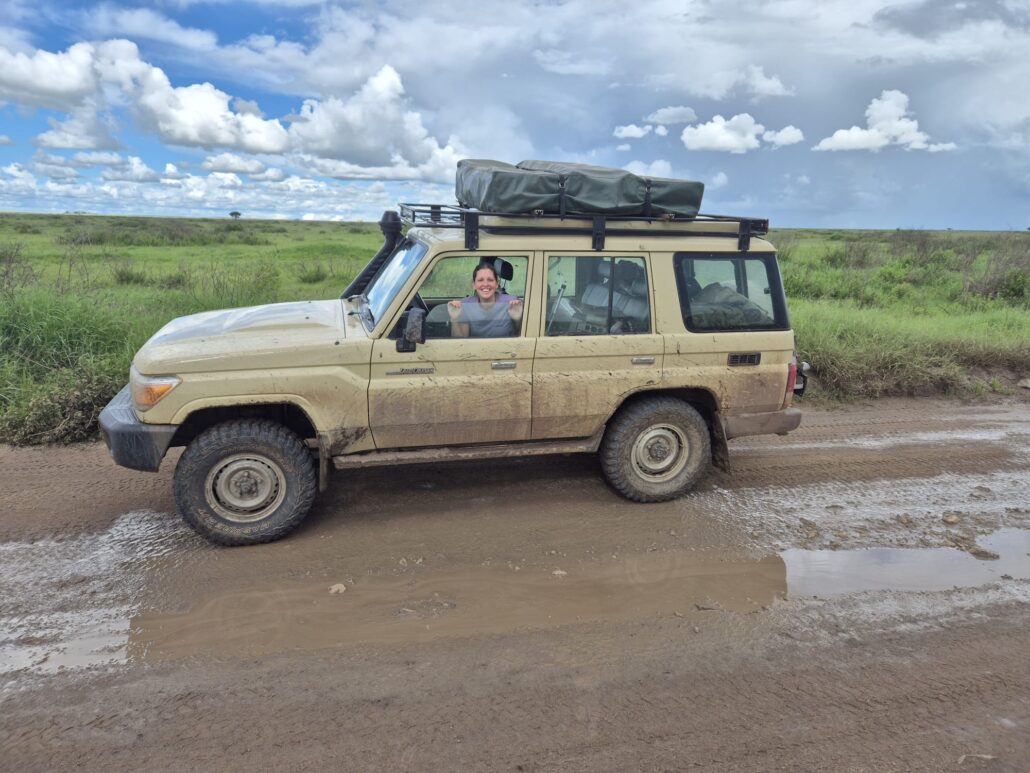
Conservancies do not allow self-driving. Rules and enforcement change, so confirm the current position before you book. For practical advice, read Self-Drive Maasai Mara National Reserve, and to compare options, see Car Rental Nairobi.
If you like… | Choose | Why |
The best migration and big-cat viewing | Guides know where crossings and cats are and handle gate procedures and rules. | |
Photography and shared viewing | A safari-standard vehicle with a lifting roof suits gate rules and gives everyone an open view. | |
Independence on a budget | A self-drive 4×4 | Suitable in the reserve and the Mara Triangle if you stay on marked tracks |
To camp in the Mara or at its edges | Public and private campsites need your own equipment. | |
A route that continues to another city or country | One-way car rental from Nairobi or cross-border car rental from Kenya | Collect in Nairobi and finish elsewhere, with paperwork arranged. |
Rules to follow in the reserve
- Stay on tracks, with no off-road driving in the main reserve or the Mara Triangle.
- Please ensure you exit the main reserve before the gates close, as night driving is not permitted.
- Limits on the number of vehicles at a sighting apply in the Triangle and in conservancies.
- Remain in the vehicle except at marked picnic and toilet stops.
- Do not approach, feed, or disturb wildlife, and keep a respectful distance at river crossings.
- Hiring a ranger at the gate is possible and can be beneficial for first-time self-drivers.
Local notes from our teamGate choice: use the gate nearest your camp, and Sekenani for most travelers coming from Nairobi. Timing: the first and last hours of the day are the most productive, and you need to be out before the gate closes. Where drivers tend to struggle: the last stretch to some camps and gates, which can be rough, dusty, or muddy, and black cotton soil in the rains. Keep to established tracks. Kit list: drinking water, food, a spare tire, offline maps, a charged phone, and a card for fees. |
Things to Do in the Maasai Mara
- Game drives: the core activity, ideally at dawn and in the late afternoon.
- Mara River crossing viewing: from August to October, at designated viewpoints.
- Hot-air balloon safaris: early-morning flights over the plains, with a bush breakfast. Book in advance.
- Walking safaris and night drives: available in conservancies with licensed guides.
- Maasai cultural visits: community-run village visits, dances, and craft markets. Agree on prices in advance and ask before taking photographs.
- Photography: The Mara’s open plains and dramatic skies are ideal, especially around the escarpment.
- Picnics and bush meals: at designated picnic sites.
Where to Stay in the Maasai Mara: Lodges and Tented Camps
Accommodation in the Mara is spread across the main reserve, the Mara Triangle and the surrounding conservancies, and it ranges from basic tented camps to some of Africa’s most luxurious safari lodges. Where you stay shapes your drives, your gate, and your fees, so choose by location as well as price.
How to read this section Names below come from published guides and tourism listings. Tier classifications differ by source, prices change, and camps open, close, and rebrand, so treat the lists as starting points and confirm details before booking. We do not endorse a specific camp. |
Budget camps (typically under about USD 150 per person per night)
Budget camps are mostly simple tented camps near the Sekenani, Oloolaimutia, and Talek gates, with basic en-suite tents or shared facilities, meals, and game drives available as extras. They suit travellers who want to keep costs down and are comfortable with simpler facilities.
Camp | Area | Notes |
Rhino Tourist Camp | Sekenani area | Simple tented camp near the main gate |
Manyatta Camp | Sekenani and Oloolaimutia area | Budgeted tent camp with a community feel |
Mara Sidai Camp | Sekenani | Entry-level budget-to-midrange base |
Simba Oryx Camp | Sekenani area | Budget tented camp |
Olengoti Eco Safari Camp | Sekenani | Small eco-friendly tented camp |
Aruba Mara Camp | Talek River | Budget camp on the Talek side |
Mara Maisha Camp | Talek area | Budget tented camp |
Enchoro Wildlife Camp | Near the reserve edge | Budget camp |
Lenchada Tourist Camp | Near the reserve edge | Budget camp |
Basecamp Adventure | Near Talek Gate | Budget adventure-style camp |
Midrange lodges and tented camps (typically about USD 150 to 400 per person per night)
Midrange camps offer en-suite tents or rooms, restaurants, pools in some cases, and shared game drives. Many sit on the Talek River, near the Sekenani Gate or inside the reserve, and they suit families and first-time visitors who want comfort without luxury prices.
Camp or lodge | Area | Notes |
Sekenani Camp | Near Sekenani Gate | Eco-minded tented camp close to the main gate |
AA Lodge Mara | Near Sekenani Gate | Established lodge popular with families and groups |
Sentrim Mara Camp | Mara area | Midrange tented camp |
Mara Leisure Camp | Talek River | Midrange tented camp |
Pride Inn Mara Camp | Talek River | Riverside tented camp with en-suite rooms |
Sarova Mara Game Camp | Inside the reserve, Talek River | Reliable choice for families and first-timers |
Ashnil Mara Camp | Reserve, river-facing | River-facing tents and buffet dining |
Fig Tree Camp | Talek River | Full-service riverside camp. Some sources list it as luxury. |
Mara Eden Safari Camp | Talek River | Smaller, more intimate upper-midrange tented camp |
Masai Mara Sopa Lodge | Reserve edge | Family-friendly lodge |
Keekorok Lodge | Southern reserve | One of the older lodges in the reserve |
Luxury lodges and camps (typically from about USD 500 per person per night, and much higher for ultra-luxury)
Luxury camps offer spacious tents or suites, fine dining, private guides, and often access to conservancy activities such as night drives and walking safaris. Many include meals, drinks, and game drives, and conservancy fees are usually built into the rate.
Camp or lodge | Area | Notes |
Angama Mara | Oloololo Escarpment, overlooking the Mara Triangle | Famous for its views and for the area’s association with “Out of Africa” |
Mara Serena Safari Lodge | Inside the Mara Triangle | Hilltop Lodge, often listed as the only lodge inside the Triangle |
Kichwa Tembo Tented Camp | Mara Triangle edge, below the escarpment | Classic tents close to migration areas |
&Beyond Bateleur Camp | Mara Triangle, foot of the Oloololo Escarpment | Luxury camp at the forest edge |
Governors’ Camp and Little Governors’ Camp | Mara River, main reserve | Historic riverside camps with crossings close at hand |
Governors’ Il Moran Camp | Near Governors’ Camp | Luxury adults-focused camp |
Sand River Masai Mara (Elewana) | Southern reserve, Sand River | Classic-style luxury tented camp |
Mahali Mzuri | Olare Motorogi Conservancy | Design-led camp in a private conservancy |
Mara Plains Camp | Conservancy | Exclusive conservancy camp |
Entim Mara and Rekero Camp | Near migration crossing areas | Camps listed for migration viewing |
- Tiers overlap: published guides disagree on whether some camps, such as Fig Tree Camp and Mara Serena, are midrange or luxury, so compare current rates.
- Included costs: ask what is included, including meals, drinks, game drives, park fees, and conservancy fees, since the answer changes the real price.
- Location matters: camps near Sekenani suit road arrivals, Talek camps put you on the central plains, Musiara and northern camps give access to the Mara River, and Triangle camps give access to western crossings.
- Peak-season demand: book early for July to October.
Campsites in the Maasai Mara
Camping lets you experience the Mara at lower cost and with more flexibility, and it suits self-drivers with a rooftop tent or ground tent. Campsites in the reserve are managed under rules set by Narok County and the Mara Conservancy, and they are often booked through official channels in advance.
Public campsites
Published fee schedules list public campsites such as Oloololo, Iseiya, and Eluai, with free booking and open stays. Public sites typically offer basic facilities, so bring your own equipment, food, water, and fuel, and expect to follow strict rules about waste and wildlife. Always confirm availability and current rules before you travel.
Private and special campsites
Private campsites such as Dirisha, Enkishui, Kiboko, Hornbill, Ndovu, Olarro, and Ratpanat have been listed with booking fees and maximum stays for professional and non-professional groups, and special private campsites such as Kampi Ya Mungu, Kishangaa, and Kijito are reserved for exclusive use at much higher fees. Rules and costs change, so check the official schedule and book through the proper channel.
Camps outside the reserve and budget camps
Many budget travellers camp at community campsites and basic camps outside the gates, especially near Sekenani and Talek, which are often cheaper and easier to book. Be sure to check what’s included and avoid any arrangements that require unofficial gate payments.
Camping tips
- Use a rooftop tent or sturdy ground tent, and arrange equipment in advance through camping gear and rooftop tent rental.
- Bring everything you need: food, water, charcoal or gas, a cool box, a torch, and a first-aid kit.
- Follow wildlife rules: do not leave food out, do not walk away from camp at night, and keep your vehicle close.
- Review gate and camp rules: some campsites restrict arrival times, vehicles, or group sizes.
- Book early for peak season, because slots are limited.
Photography Tips for the Mara
- Use the edges of the day, when the light is soft and animals are most active.
- Bring a long lens for cats and crossings and a wide lens for landscapes and the escarpment.
- Steady the camera on a window mount or a bean bag.
- Anticipate river crossings: choose a viewpoint early and be patient, since crossings can start suddenly or not at all.
- Respect wildlife and other vehicles: do not crowd sightings or block the view.
Sample Maasai Mara Itineraries
Three nights: first-time Mara
- Day 1: Nairobi to Sekenani Gate, arriving for an afternoon drive.
- Day 2: a full day of game drives, with a cultural visit if you wish.
- Day 3: a dawn drive and a river visit, then a late-afternoon drive.
- Day 4: a morning drive and the return to Nairobi.
Five nights: migration and the Mara Triangle
- Days 1 to 2: main reserve, Talek plains, and the central river areas.
- Day 3: cross into the Mara Triangle via Purungat Bridge for the Mara River crossing points.
- Days 4 to 5: the Triangle and the Oloololo Escarpment, with sunrise views.
- Day 6: a final morning drive and the return.
Kenya and Tanzania: Mara to Serengeti by road
- Days 1 to 3: Maasai Mara.
- Day 4: Drive towards Isebania and cross into Tanzania, with a vehicle and driver handover if you are on a guided safari.
- Days 5 to 8: Serengeti and Ngorongoro.
See our Tanzania safari routes guide for the Tanzanian leg, and note that guided safaris usually change vehicles and drivers at the border.
Extending Your Trip
Many travelers combine the Mara with other Kenyan stops. Lake Naivasha and Lake Nakuru fit neatly on the road from Nairobi, Amboseli pairs well with the Mara on the Southern Circuit, and Tanzania’s Serengeti lies across the border. Our Kenya safari routes guide shows how these routes fit together, and our guide to cross-border car rental from Kenya explains how to cross the border.
Before You Travel
- Entry paperwork: an eTA is needed by most overseas visitors, and a Kenyan inbound health insurance policy is now expected of many of them, arranged during the eTA application or through eCitizen. Premiums and rules have been adjusted since launch, so use the official portal as your reference on the day you apply.
- Personal cover and licenses: keep a full travel insurance policy that includes medical evacuation, and carry your driving license and an International Driving Permit if you plan to drive.
- Reserve fees: check the current tariff with Narok County and the Mara Conservancy, and carry a card, because the Triangle does not take cash.
- Regional health notices: Ebola-related screening is in place at some airports and borders. Safari areas are described as unaffected, yet it is sensible to read the latest Ministry of Health and embassy advice before you set out.
- Packing: warm layers for dawn drives, sun protection, binoculars, a hat, a rain jacket, and dust protection for cameras.
Frequently Asked Questions About Maasai Mara
Where is the Maasai Mara?
In Narok County in southwestern Kenya, bordering the Serengeti in Tanzania, it is about 270 km from Nairobi.
What is the Mara Triangle?
The western sector of the Maasai Mara, managed by the Mara Conservancy rather than Narok County. It is known for Mara River crossing points, maintained roads, and fewer vehicles.
What is the difference between the reserve, the Mara Triangle, and the conservancies?
The main reserve is managed by the Narok County Government and is the most visited. The Mara Triangle, west of the Mara River, is managed by the Mara Conservancy and is generally quieter. The conservancies are private and community areas around the reserve with limited vehicles and extra activities, and each has its own rules.
Is the Mara Triangle better than the main reserve?
Neither is superior in every aspect. The Triangle is quieter and strong for river crossings, while the main reserve has more roads, camps, and plains games. Many visitors do both.
What is the Maasai Mara best known for?
It is best known for its big cats, its huge herds of plains game, and the Great Migration, in which wildebeest and zebra cross the Mara River between roughly July and October.
How much does it cost to enter the Maasai Mara?
Reported 2026 rates for non-resident adults are about USD 100 per day from January to June and USD 200 per day from July to December, with lower rates for children and residents. Confirm the current tariff.
When should I go to the Maasai Mara?
July to October is the migration season, with river crossings usually strongest in August and September, while January to March is quieter and also rewarding.
How long should I stay in the Maasai Mara?
Three nights is a good balance for a first visit, and four or five nights give you time for the migration or the Mara Triangle.
How do I get to the Maasai Mara from Nairobi?
By road, via Narok and Sekenani Gate, in about five to six hours, or by a short flight to one of the airstrips.
Can I self-drive in the Maasai Mara?
Yes, you can self-drive in the reserve and the Mara Triangle in a suitable 4×4, but not in conservancies. Please note that rules have tightened on vehicle types, so confirm the current position. See our guide to self-drive Maasai Mara National Reserve.
Do I need a driver-guide?
Not strictly, but a guide improves your chances of seeing cats and river crossings and handles gate procedures. It is strongly recommended during migration season.
What is the best vehicle for the Maasai Mara?
A 4×4 with good ground clearance is essential, particularly in the rains, and a pop-up roof helps with viewing and photography. Ask for the vehicle and equipment details in writing when you request a quote, and confirm that the vehicle is eligible for the area you plan to visit.
What is a pop-up roof vehicle?
A safari-style 4×4 with a roof that lifts so everyone can stand and photograph the wildlife from inside the vehicle.
Are there budget options in the Maasai Mara?
Yes. Budget tented camps and public campsites exist, mainly near the Sekenani, Talek, and Oloolaimutia gates, and many budget travelers camp outside the gates.
Where are the luxury camps?
Luxury camps are mostly found in the Mara Triangle and escarpment, along the Mara River, and in private conservancies.
Can I camp in the Maasai Mara?
Yes, at public and private campsites, which are usually booked in advance through official channels. Bring your own equipment.
Can I drive from the Maasai Mara to the Serengeti?
Not directly. The Sand River border crossing has been closed since 1977, so you drive around via Isebania or Namanga or fly.
Is the Mara affected by the Ebola outbreak?
Operators describe the reserve as unaffected, but screening applies at airports and borders, and the situation can change quickly. Read the latest official advice before you travel, and stay home if you feel unwell.
Get a Quote for Your Maasai Mara Trip
Tell us your dates, who is travelling, and what you want from the Mara: the main reserve, the Triangle, camping, or a longer route into Tanzania. We will match you with a self-drive 4×4, a pop-up roof safari vehicle, a driver-guide, or a rental with camping gear and share itemized costs, insurance, and paperwork before you commit.