Car Rental 4×4 rents 4×4 vehicles fitted with a rooftop tent in Uganda, giving travelers a raised, self-contained sleeping setup that opens above the vehicle each evening and packs away each morning. We offer 4×4 car rentals in Uganda with single, double & Family rooftop tents for 2, 3, 4, and up to 5 people.
Rooftop tents are fitted to the Land Cruiser GX, Land Cruiser TX/TZ Prado, Land Cruiser V8, Land Cruiser VX, Land Cruiser Hardtop, and Nissan Patrol, and a standard rooftop tent sleeps two adults. Smaller vehicles, including the Toyota RAV4, Nissan X-Trail, Toyota Vanguard, and Toyota Alphard, carry ground tents only, as do the extended Land Cruisers, which are fitted with a pop-up roof for game viewing and cannot take a rooftop tent. Vehicles are available for self-drive or with a driver guide, and the rental can be arranged one-way, extended into a long-term hire, or, subject to advance approval, taken across the border into Kenya, Tanzania, or Rwanda. Pricing depends on the vehicle, duration, equipment package, and route, with fuel, park fees, and campsite fees arranged separately from the vehicle rental itself.
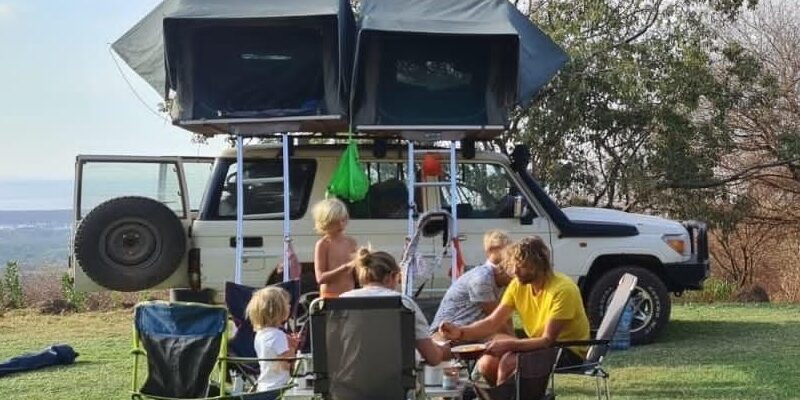
Uganda rewards travelers who move slowly through it: a dawn descent into Queen Elizabeth’s crater country, an evening on the Kazinga Channel, and a night camped within earshot of the Nile at Murchison Falls. A rooftop tent turns a rental vehicle into the base for exactly that kind of trip. Car Rental 4×4 provides Land Cruisers fitted with rooftop tents in Uganda and ground-tent camping setups on other vehicles for self-drive and driver-guided journeys through Bwindi, Queen Elizabeth, Murchison Falls, Kibale, Kidepo, and beyond, built for travelers whose Uganda trip is measured in weeks rather than a single short safari.
Tell us your dates, your group size, your intended route, and whether you want to drive yourself or be driven, and we will confirm the vehicle and camping configuration that genuinely fits your trip.
A rooftop tent car rental is a 4×4 fitted with a folding canvas tent mounted to a roof rack or platform, giving you a genuine sleeping structure that travels with the vehicle rather than requiring separate camping accommodation booked ahead at each stop. It is the setup of choice for a Uganda road trip that moves between several parks, since your overnight base moves with you instead of anchoring your route to a fixed circuit of lodges.
How a Rooftop Tent Works
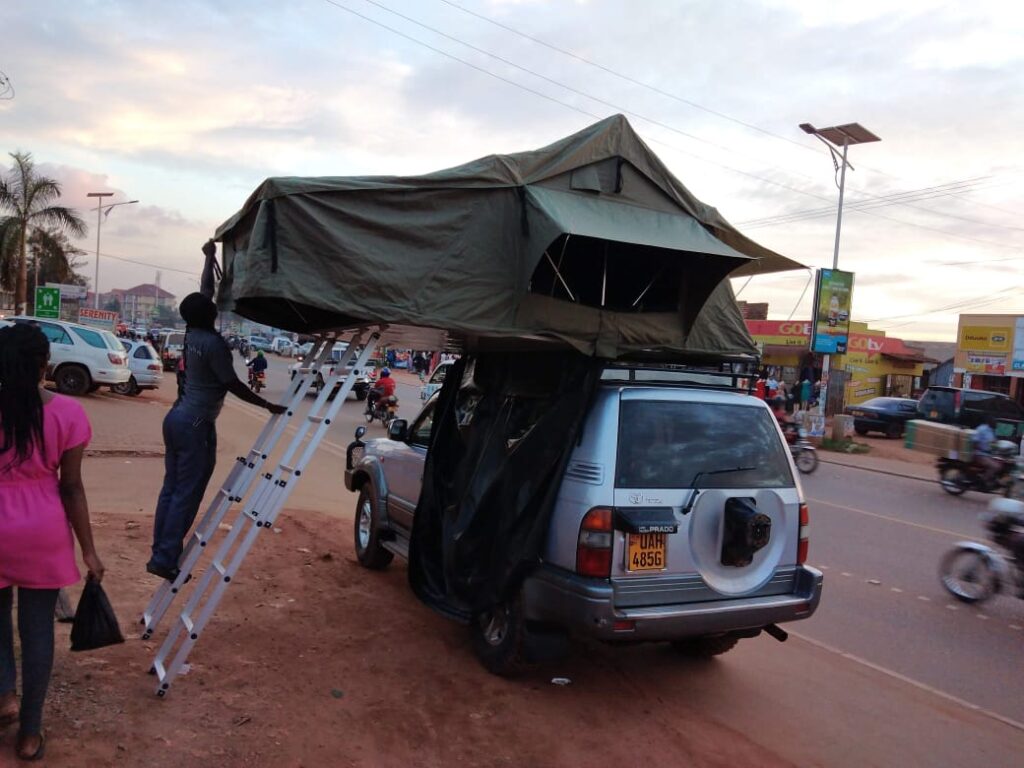
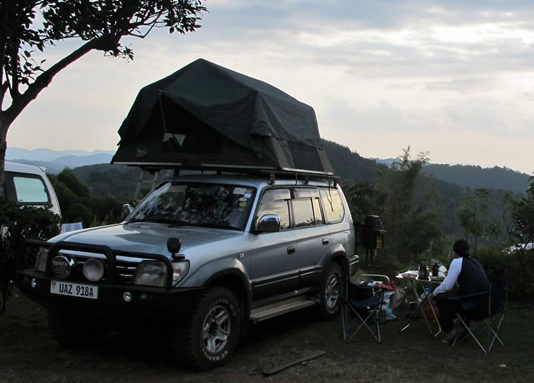
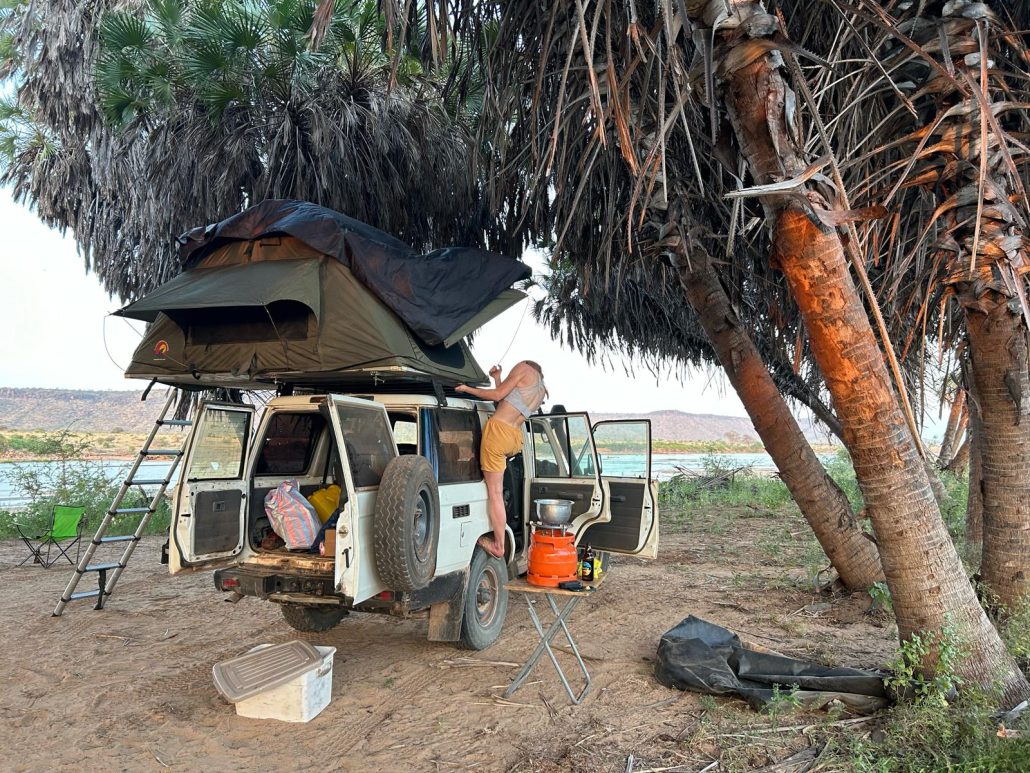 The tent unfolds upward and outward from its closed, roof-mounted position, typically supported by a built-in ladder for access, with a mattress already fitted inside the shell. Mesh windows provide ventilation on clear nights, and a rainfly closes over the canvas during wetter stretches of the year. Packing away in the morning simply reverses the process, and most travelers find the routine takes only a few minutes once they have done it a night or two.
How Many People Can Sleep in the Tent?
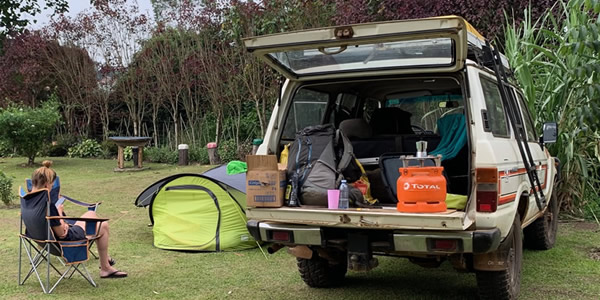
A standard rooftop tent sleeps two adults comfortably. For families or groups needing more capacity, a ground tent can be added alongside the rooftop tent on a rooftop-tent Land Cruiser, extending sleeping space without requiring a second vehicle.
Rooftop Tent vs. Pop-Up Roof
These two features are easy to confuse but serve entirely different purposes. A rooftop tent is a sleeping structure, opened out above the vehicle each evening for overnight camping. A pop-up roof is a section of the vehicle’s own roof that lifts during the day to give standing headroom for wildlife viewing and photography during game drives in parks such as Queen Elizabeth National Park or Murchison Falls and is not designed to be slept in. The two cannot be combined on the same vehicle in our fleet: our extended Land Cruisers in Uganda carry the pop-up roof, and a rooftop tent cannot be fitted to them. If you want elevated game viewing and camping together, the extended Land Cruiser with a pop-up roof paired with ground tents and a full camping equipment package is the way to do it, while travelers whose priority is sleeping above the ground should choose one of the rooftop-tent Land Cruisers instead.
For Couples
A Land Cruiser GX or TX/TZ Prado with a single rooftop tent gives couples a quick daily setup and a comfortable double sleeping space, well suited to a circuit that moves between two or three parks over one to two weeks. A RAV4 or X-Trail with a ground tent is the lighter, more economical alternative.
For Families
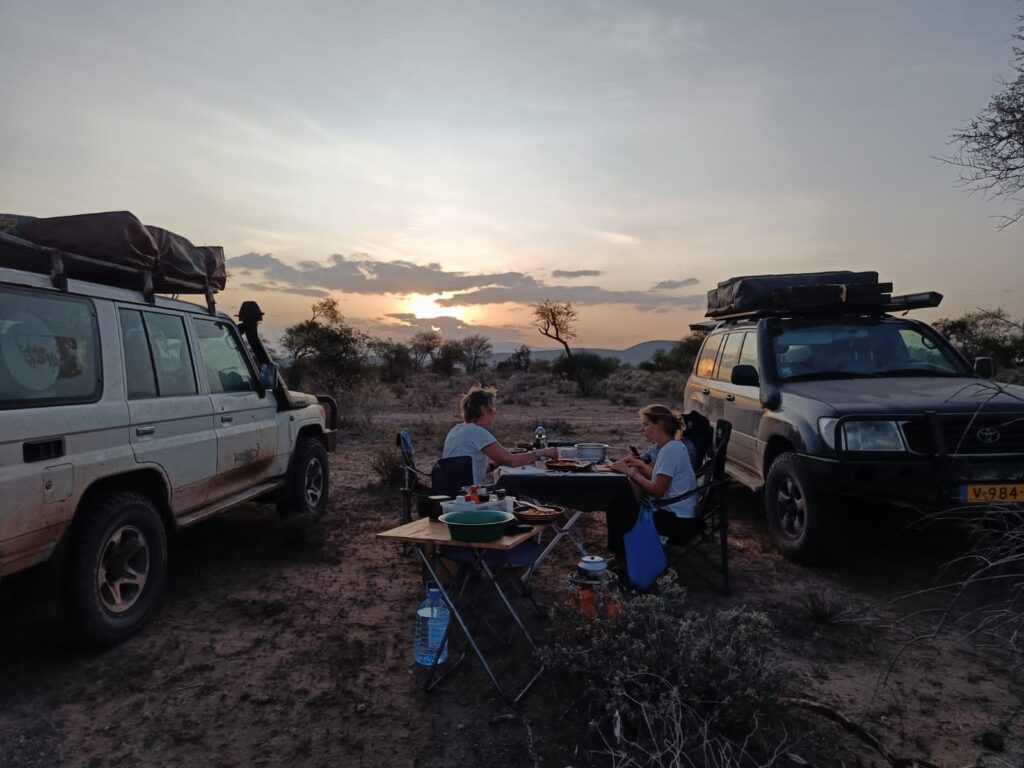 Families generally do well in a Land Cruiser V8, VX, or Nissan Patrol with a rooftop tent for the parents and a ground tent for the children, or in a Vanguard or Alphard with ground tents where road comfort matters more than off-road capability.
For Friends and Groups
Groups of four or more typically suit an extended Land Cruiser with ground tents and a full camping package, which also gives the pop-up roof for game drives, or two vehicles in convoy, which provides a practical backup on remote stretches.
For Self-Drive Travelers
Self-drive travelers should choose a vehicle they feel genuinely confident handling on unsealed park roads and be honest about how remote their route is: Kidepo and the Murchison delta reward a Land Cruiser or Patrol, while a main-road circuit through Lake Mburo, Queen Elizabeth, and Bwindi is comfortable in a lighter vehicle.
For Long Camping Trips
Extended, multi-week circuits favor a rooftop-tent Land Cruiser or Patrol with a strong fuel range, additional water storage, and a fridge fitted, reducing how often you need to resupply between towns.
Driving Requirements
Self-drive is available for travelers who meet the standard rental requirements: a valid driving license, generally an international driving permit alongside it, and the minimum age and experience set out in the rental agreement. Uganda drives on the left, and if you are arriving from a right-hand-traffic country, it is worth spending your first hour out of Entebbe or Kampala getting comfortable before the long park drives begin.
Vehicle Handover
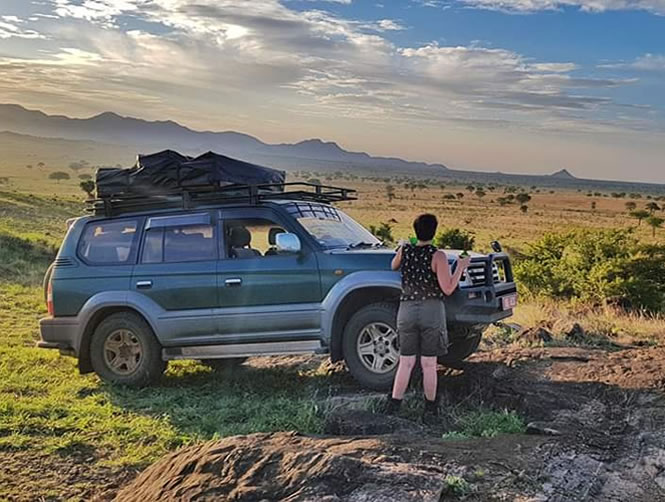 At handover, a member of our team walks you through the vehicle’s controls and four-wheel drive engagement, followed by a joint inspection of the vehicle’s condition and a full walkthrough of the tent and any other camping equipment before you set off.
Navigation and Remote Roads
At handover, we provide GPS, offline maps, and route notes to support your navigation, since mobile signal is unreliable across much of the park network. Kampala and Entebbe traffic, motorbike taxis, speed bumps, and potholes on the main highways are part of ordinary Ugandan driving, and remote stretches such as the road to Kidepo, which can take the better part of a long day from Kampala, are best started early. Fuel and supplies are not always close at hand in the countryside, so top up before long stretches rather than waiting for the warning light.
Breakdown and Roadside Support
Roadside support is available throughout your rental, with assistance dispatched to your location in the event of a mechanical issue, wherever your camping route takes you. See our Self Drive Uganda page for the general requirements that apply to driving yourself across the country.
 A driver guide can be added to any rooftop tent rental for travelers who would rather be driven and guided through Uganda while someone else manages navigation, park logistics, and campsite setup. This suits first-time visitors, families with young children, and travelers on longer multi-park circuits where local knowledge adds genuine value beyond simply driving. See our Car Rental With Driver Guide in Uganda page for more on how this option works.
Where Can You Go With a Rooftop Tent in Uganda?
A rooftop tent vehicle is suitable for camping in and around all of Uganda’s major national parks. Murchison Falls, the largest, combines big game with the Nile itself. Queen Elizabeth offers the Kazinga Channel and the tree-climbing lions of Ishasha. Bwindi and Mgahinga anchor gorilla trekking in the southwest, Kibale is the country’s premier chimpanzee destination, Lake Mburo is the closest wildlife park to Kampala, and Kidepo rewards those willing to make the long journey to the remote northeast. Semuliki, the Rwenzori Mountains, and Mount Elgon round out a longer circuit for travelers with more time. Gorilla and chimpanzee trekking permits are issued by the Uganda Wildlife Authority and are booked separately from your vehicle, and we are happy to advise on timing them around your camping route.
Gateway Campsites Near Entebbe, Kampala, and Jinja
Camping is also available near your pickup point, including at Entebbe and Kampala campsites and hostels, Lutembe Beach on Lake Victoria, and at Jinja, where Bujagali Falls campsites are popular before or after a Nile rafting trip. These are handy first and last nights while you settle in or wind down.
Uganda Rooftop Tent Safari Routes
 A classic ten- to fourteen-day circuit runs from Entebbe to Lake Mburo and Bwindi with a rest at Lake Bunyonyi, Queen Elizabeth, and Kibale and back via Kampala, camping at a base in or near each park and booking a lodge night ahead of the gorilla trek if you want a proper bed before an early start. A shorter northern circuit of about a week links Kampala to Murchison Falls, suited to travelers who want strong wildlife viewing and the Nile without the longer southern drive. Travelers with three weeks or more often combine both circuits into a full loop and add Kidepo or continue east to Mount Elgon and Sipi Falls. The same camping setup extends naturally into a cross-border leg toward Rwanda, Kenya, or Tanzania for travelers building a longer East African itinerary.
What Camping Equipment Is Included?
Sleeping Equipment
The rooftop tent itself, fitted with a mattress sized to the tent, is the core sleeping equipment on a rooftop-tent Land Cruiser. On ground-tent vehicles and extended Land Cruisers, a ground tent and mattresses take their place. Sleeping bags, bed sheets, and pillows are commonly offered as part of a camping package and are confirmed as included or optional at booking.
Cooking Equipment
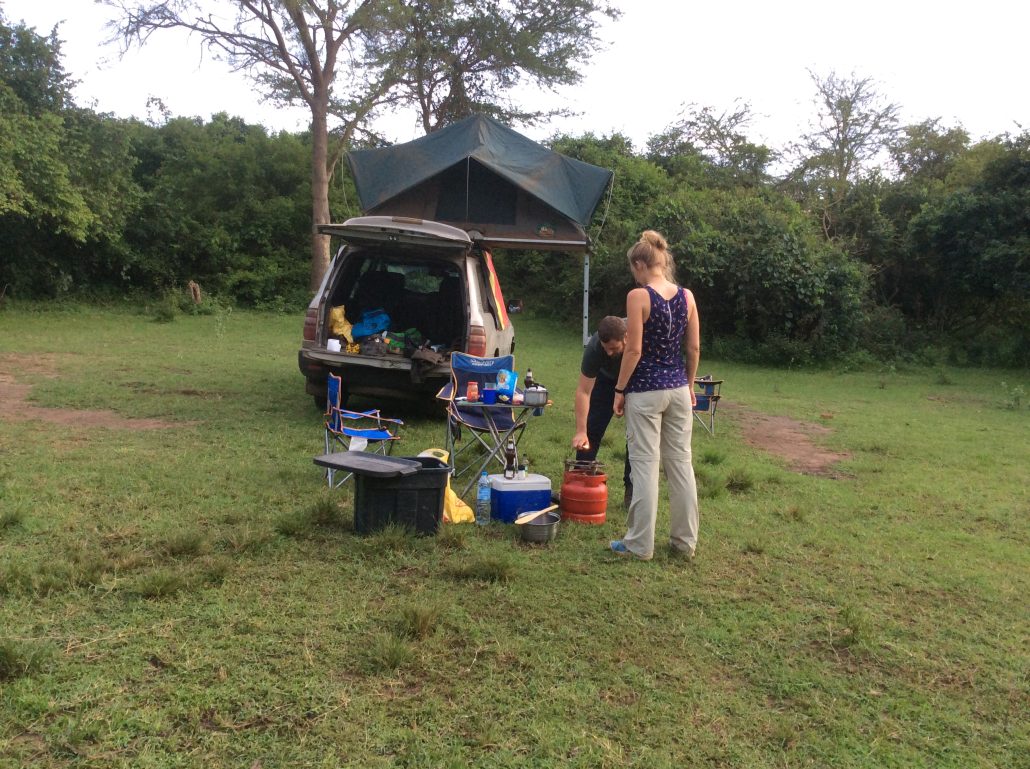
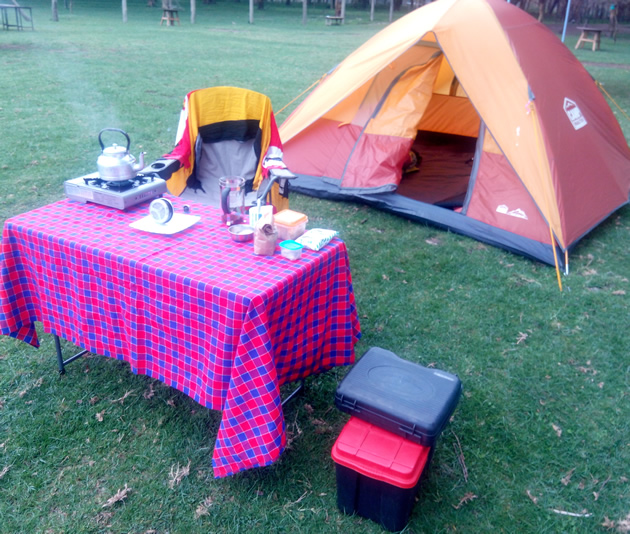
Where a camping package is added, a portable gas stove and gas cylinder, pots, pans, cutlery, and basic crockery are provided for preparing simple meals at camp each evening, with a barbecue grill and a cooler box or electric fridge available on selected vehicles.
Camp Furniture
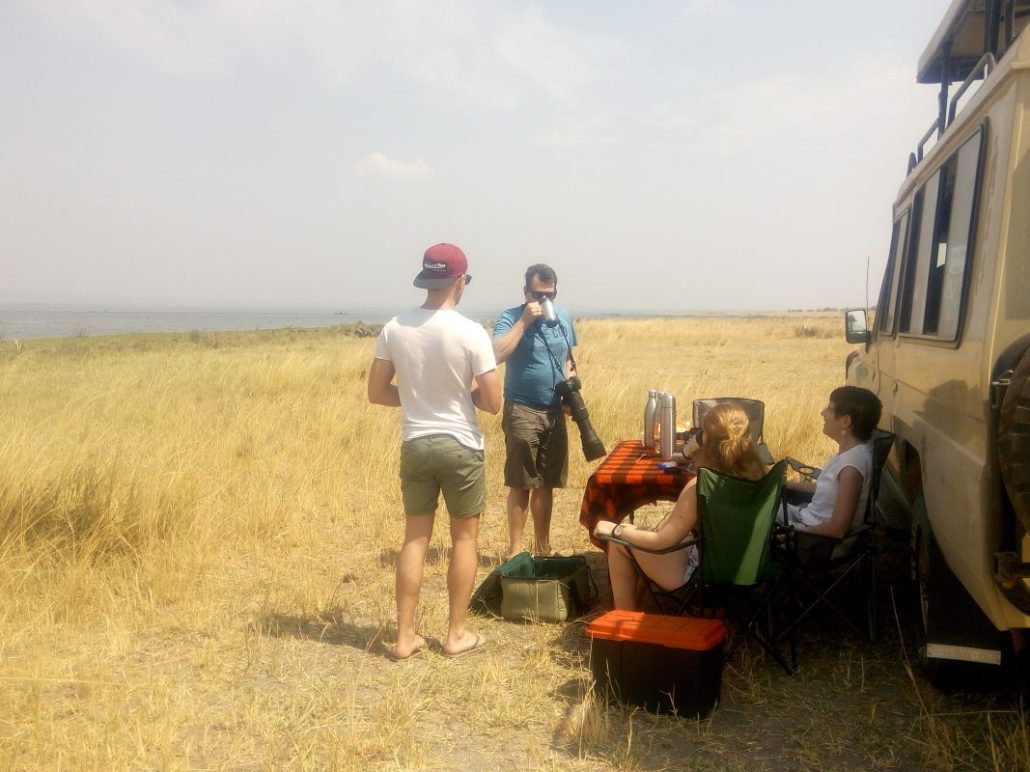
Folding camping chairs, a collapsible table, and a lamp or torch, which are included in your package, give you a proper place to sit and eat at camp. Most Ugandan campsites offer toilets and a self-catering kitchen area but not furniture or lighting, so your own equipment is what your evening at camp depends on.
Vehicle and Recovery Equipment
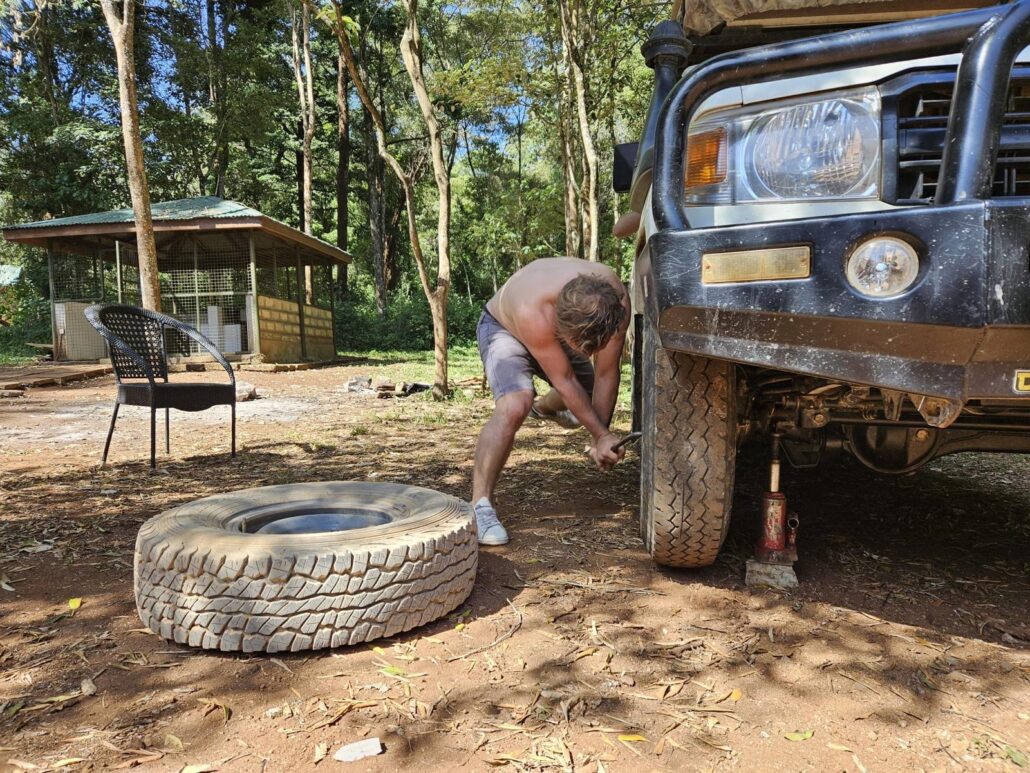
Every camping vehicle carries a spare wheel and jack, a first aid kit, a fire extinguisher, and typically a tow rope or recovery strap, along with water containers, inspected before handover so this equipment is present and functional for the length of your trip.
Not every rental includes every item above; the tent is standard on a camping booking, while cooking equipment, furniture, bedding, and a fridge are confirmed as included or optional for your specific vehicle at the time of booking. For the fuller equipment breakdown, see our Car Rental With Camping Gear in Uganda page.
Rooftop tent rental pricing in Uganda depends on the vehicle chosen, the camping equipment package fitted to it, the length of the rental, the season you are traveling in, and whether you add a driver-guide. Car Rental 4×4 provides a tailored quote based on your travel dates, number of travelers, and preferred configuration, rather than quoting a single figure that wouldn’t accurately reflect your route, group size, or camping setup.
What Determines the Rental Price?
 Vehicle type sits at the center of the price, since a Land Cruiser Hardtop with a rooftop tent and a RAV4 with a ground tent occupy very different points on the fleet. Rental duration shapes the effective daily rate, with longer rentals typically reducing the average cost per day. Self-drive versus driver-guided changes the cost structure, as does whether your route is one-way, crosses a border, or stays within Uganda throughout.
What’s Included?
The rental price includes the vehicle itself, standard insurance as set out in your rental agreement, the vehicle’s fitted safety and recovery equipment, and whichever camping equipment package you have specifically booked, checked item by item at handover.
What’s Not Included?
Fuel is not included and remains the renter’s responsibility throughout the trip. Park entry fees, gorilla and chimpanzee trekking permits, and campsite fees payable at each site are separate from the vehicle rental. A driver-guide fee applies only where that option has been added, and cross-border charges, one-way fees, and optional equipment beyond your chosen package sit outside the base rental price.
Insurance and Rental Protection
 Standard insurance is included with every rental, covering the vehicle under the terms set out in your rental agreement, with an excess or deductible applying in the event of a claim and specific exclusions, such as damage arising from driving outside agreed routes, clearly set out in that agreement. Cross-border travel may require additional coverage confirmation specific to the country you are entering.
What Happens If the Vehicle Breaks Down?
If your vehicle breaks down, contact our support line immediately, share your location as precisely as possible, and roadside assistance is arranged and dispatched to reach you. The vehicle is assessed on site where possible, and a repair or replacement vehicle follows according to the procedure in your rental agreement, with support extending to remote camping routes across the country.
A camping vehicle can be booked as a one-way rental, collected at one approved Ugandan location and returned at another, subject to vehicle availability and an additional one-way fee reflecting the cost of repositioning the vehicle. This suits an open-jaw circuit, such as a route beginning in Entebbe and finishing near the Rwandan or Kenyan border, without doubling back through your original pickup point.
Cross-Border Rooftop Tent Rental
 A camping route from Uganda into Kenya, Tanzania, or Rwanda can be arranged subject to advance approval, correct vehicle documentation, and confirmed insurance coverage specific to the country you are entering. Because driver-guides are generally licensed for specific countries and their park systems, a cross-border driver-guided trip is typically arranged with a driver-guide switch at the relevant border, so your trip continues with a guide holding the correct local knowledge and permits for the country ahead. Not every vehicle is approved for every crossing, so raise a cross-border requirement at the time of your inquiry.
Long Term Rooftop Tent Rental in Uganda
Long-term rental offers a more cost-effective rate for travelers planning to camp across Uganda for several weeks or months, along with scheduled servicing and equipment checks arranged at agreed intervals. This suits photographers on an extended assignment, overlanders building a longer regional itinerary, and returning visitors who prefer the freedom of their own camping vehicle. See our Long Term Car Rental in Uganda page for more detail.
Camping Safety and Wildlife at Camp
Uganda’s campsites are generally quiet and safe, but wildlife does not respect campsite boundaries, particularly in Queen Elizabeth, Murchison Falls, Lake Mburo, and Kidepo, where hippo, buffalo, warthog, and elephant may pass through camp at night. Food and rubbish should be stored securely, cooking kept away from the sleeping area, and night walks avoided without a ranger or guide. A rooftop tent’s raised position is a real advantage here, and following the guidance of rangers and campsite staff is the simplest way to keep the trip uneventful.
Uganda’s main dry seasons, from roughly December to February and from June to August, are the strongest windows for camping, with firmer roads, easier driving, and more comfortable nights, and they coincide with the best conditions for gorilla and chimpanzee trekking. Uganda’s weather is less strictly seasonal than its neighbors; however, heavy rain is possible at almost any time of year, particularly in the west, so a rainfly, waterproof layers, and a flexible schedule matter year-round. The wetter months of March to May and September to November bring lush scenery, quieter parks and softer roads, and a rooftop tent’s raised, dry sleeping platform is especially valuable when the ground turns to mud.
What Should I Pack for a Rooftop Tent Safari in Uganda?
 Sturdy, closed walking shoes suit both trekking preparation and uneven campsite ground, paired with layered clothing for warm afternoons and genuinely cold nights in the Bwindi and Rwenzori highlands. A head torch, a personal first aid kit, insect repellent, and sun protection round out the basics, alongside a reusable water bottle, binoculars, and a camera. Rain protection is worth carrying year-round. Because restocking points can be far apart, bring extra food, drinking water, fuel, and camera batteries for longer stretches, and keep your travel documents, trekking permits, and rental agreement accessible in the vehicle.
Who Should Rent a Rooftop Tent 4×4?
A rooftop tent 4×4 suits couples and solo travelers who want a fast, flexible daily setup close to nature, families who want children experiencing camp life rather than watching it from a lodge veranda, and small groups who value the cost efficiency of one well-equipped vehicle. It equally suits photographers and wildlife enthusiasts who want to camp close to dawn game drives and long-stay travelers who want their own vehicle over weeks or months.
Rooftop Tent Rental: What to Check Before Booking
Before confirming, it is worth working through which vehicle and tent configuration you actually need, the sleeping capacity for your group, whether you want self-drive or a driver-guide, your rental period and rate, what the insurance and excess cover, mileage and fuel policy, whether cooking equipment, furniture, and bedding are included or optional, cross-border permission if your route needs it, any one-way fee, what breakdown support looks like in practice, your campsite plan, and the deposit and cancellation policy that apply to your booking.
Real Rooftop Tent Rental Experiences
Travelers who have taken a rooftop tent vehicle through Uganda describe circuits such as a twelve-day route from Entebbe through Lake Mburo, Bwindi, and Queen Elizabeth, camping most nights and finding the tent setup fast enough to feel routine by the third evening, ahead of a gorilla trekking morning, and arriving rested rather than rushed. A family who paired a rooftop tent with a ground tent on a Murchison Falls circuit highlighted how much easier the trip felt with separate sleeping space for parents and children, camping each night within the sound of the Nile. These are the outcomes Car Rental 4×4 aims to deliver on every rental.
Where Is the Pickup and Drop-Off Location in Uganda?
Pickup and drop-off can be arranged at your hotel or place of residence, at Entebbe International Airport, or in Kampala, covering the vast majority of bookings without additional cost. For a pickup or drop-off further afield, such as a town near one of the western or northern parks, a one-way fee may apply to reflect the additional distance. Confirm your exact locations at the time of booking so any fee is clear before you commit.
Is It Possible to Have Two Drivers?
Yes. Where more than one person in your group wants to drive during a self-drive rental, such arrangements can be made at no additional charge, since the vehicle has already been paid for in full as part of your rental. Both drivers should meet the same license and rental requirements, and it is worth confirming at booking so both names are recorded on the rental agreement.
Do You Also Offer Additional Insurance?
Additional insurance coverage beyond the standard policy can be arranged on request, useful for travelers who want a lower excess or broader coverage than the standard terms provide, particularly on longer or cross-border trips.
How Does the Payment Process Work?
Booking a rental typically involves a deposit to confirm your vehicle and dates, with the balance due ahead of collection; exact terms, accepted payment methods, and timing are confirmed as part of your specific quote.
Where can I rent a 4×4 with a rooftop tent in Uganda?
Car Rental 4×4 provides Land Cruisers and a Nissan Patrol fitted with rooftop tents across Uganda, with pickup in Kampala, Entebbe, or at your hotel.
Which vehicles have rooftop tents?
The Land Cruiser GX, Land Cruiser TX/TZ Prado, Land Cruiser V8, Land Cruiser VX, Land Cruiser Hardtop, and Nissan Patrol carry rooftop tents.
Which vehicles carry only a ground tent?
 The Toyota RAV4, Nissan X-Trail, Toyota Vanguard, and Toyota Alphard carry ground tents only, as do the extended Land Cruisers.
Can I put a rooftop tent on an extended Land Cruiser?
No. Extended Land Cruisers are fitted with a pop-up roof and cannot take a rooftop tent; you can hire ground tents and other camping equipment with them instead.
How many people can sleep in the tent?
A standard rooftop tent sleeps two adults, with a ground tent available for additional sleeping capacity on rooftop-tent vehicles.
Is it suitable for all Uganda national parks?
Yes, a camping vehicle is suitable for camping in and around all of Uganda’s major national parks, subject to each site’s availability and rules.
Which campsites can I use in Uganda?
Well-known options include Mweya and Kasenyi in Queen Elizabeth, Red Chilli Rest Camp and Shoebill Campsite at Murchison Falls, Buhoma and Ruhija camps in Bwindi, Rwonyo and Leopard Rest Camps at Lake Mburo, Apoka Rest Camp in Kidepo, Ruboni Community Camp in the Rwenzoris, and Bumaga near Semuliki.
Can I self-drive with my car rental with a rooftop tent in Uganda?
Yes, self-drive is available for travelers who meet the standard license and rental requirements; note that Uganda drives on the left.
Can I hire the car rental with the rooftop tent and a driver-guide in Uganda?
Yes, a driver guide can be added to any rental for travelers who prefer to be driven and guided.
What camping equipment is included?
The tent is standard; cooking equipment, furniture, bedding, and a fridge are confirmed as included or optional depending on your package.
How much does it cost to hire a car with a rooftop tent in Uganda?
Cost depends on the vehicle, camping package, rental duration, and season; request a quote with your details for an accurate figure.
Can I combine a pop-up roof with a rooftop tent?
 We can’t put them on the same vehicle in our fleet. Pop-up roofs are fitted to the extended Land Cruisers, which take ground tents instead of a rooftop tent.
Can I cross from Uganda into Kenya, Tanzania, or Rwanda?
Yes, subject to advance approval, correct documentation, and confirmed insurance for the border you are crossing.
What happens if the vehicle breaks down?
Contact our support line and share your location, and we will dispatch roadside assistance, followed by a repair or replacement vehicle where needed.
Which vehicle should I choose for a Uganda camping safari?
For couples, a Land Cruiser GX or TX/TZ Prado is generally suitable; for families, a V8, VX, or Patrol with a ground tent is recommended; and for larger groups, an extended Land Cruiser with ground tents is the best option.
Can I rent the vehicle one way?
Yes, subject to vehicle availability and an additional one-way fee.
Can I rent for a long-term trip?
Yes, long-term rental is available for extended trips of several weeks or months.
Are gorilla permits included?
No, gorilla and chimpanzee trekking permits are issued by the Uganda Wildlife Authority and booked separately; we can advise on timing them around your route.
Is insurance included?
Yes, standard insurance is included, with an excess or deductible and exclusions set out in your rental agreement, and additional cover is available on request.
How far in advance should I book?
Book as far in advance as possible, especially for cross-border routes or trips that coincide with trekking permits.
How to Book A car rental in Uganda with a Rooftop Tent?
Tell us your travel dates so we can confirm vehicle and equipment availability across your intended period. From there, share your route, including any cross-border or one-way requirements, so we can plan the trip around your actual itinerary. Choose your vehicle and camping package, and confirm your rental terms together, including insurance, mileage, and any driver-guide fee. Finally, you collect the vehicle, with a full inspection and equipment walkthrough before you head out on your first night under canvas.