Self Drive Maasai Mara: Rules, Routes, Camping and 4x4 Hire
Can you self drive in Masai Mara? Yes, you can self-drive in the Maasai Mara, but only fully independently in the Mara Triangle. In the main Masai Mara National Reserve you must take a ranger or guide from the gate and use a safari-style 4×4. Private conservancies generally do not allow self-drive at all.
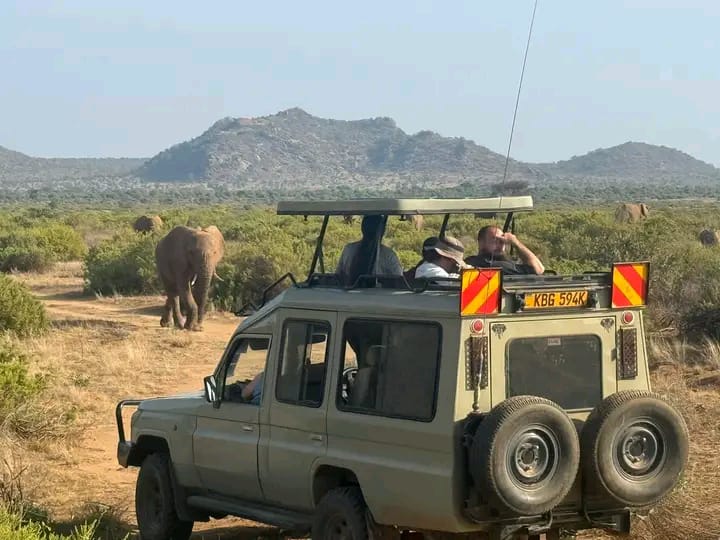
Car Rental 4×4 hires safari-ready Land Cruisers, with optional pop-up roofs, rooftop tents, and full camping kits, collected in Nairobi, with unlimited mileage and 24/7 roadside assistance.
A self-drive safari in the Maasai Mara offers the freedom to explore Kenya’s spectacular savannah landscapes, search for wildlife at your own pace, and plan a journey around your interests. From watching elephants cross open grassland to looking for lions resting beneath acacia trees, driving through the Mara can be an unforgettable part of a Kenya safari.
However, before planning a self-drive Maasai Mara safari, it is important to understand where independent driving is permitted, which vehicle you need, how to plan beginner-friendly routes and where you can camp overnight.
One of the most important distinctions is between the Maasai Mara National Reserve and the Mara Triangle. They are different management areas within the greater Mara ecosystem, and their access rules and visitor procedures may differ. Confirm the latest regulations with the relevant authority before travelling.
If you are planning to rent a vehicle for a self-drive safari, Car Rental 4×4 can help you explore suitable 4×4 rental options for your Kenya road trip, subject to vehicle availability, rental terms and the access rules of your intended destination.
Self drive Maasai Mara at a glance
- Can you self-drive in the Maasai Mara?Yes, in the Mara Triangle, you need a ranger or guide in the Masai Mara National Reserve, and generally no self drive in the conservancies.
- What vehicle? A 4×4 with high ground clearance. A safari Land Cruiser LX with a pop-up roof, a Hilux, or an extended hardtop Land cruiser with a pop-up roof. A saloon car is not suitable.
- How far from Nairobi? The distance to the Sekenani Gate is about 270 km, which takes roughly five to six hours. The route is mostly on tarmac, but the final stretch can be rough depending on the gate.
- Park fees (2026): non-resident adults pay about USD 100 per day from January to June and USD 200 per day from July to December; children aged 9 to 17 pay about USD 50. A separate vehicle fee applies.
- Best time: July to October for the Great Migration and river crossings; January to March and June for fewer crowds and green landscapes.
- Daylight only: the reserve is a dawn-to-dusk experience, and our vehicles are on the road between 6:00 am and 7:00 pm.
- Camping: possible at designated campsites; wild camping is not permitted.
- Where to sleep: You can sleep at Triangle campsites, a lodge, or a camp near Sekenani Gate the night before.
- Published add-ons (USD): rooftop tent $20/day, ground tent $5/day, fridge $10/day, driver-guide from $40/day.
- Deposit and excess: $500 security deposit where requested; excess $500 (RAV4), $1,500 (Prado TX/TZ), $2,000 (LX, V8, GX).
- Next Step: Request a quote or email rent@carrental4x4.com.
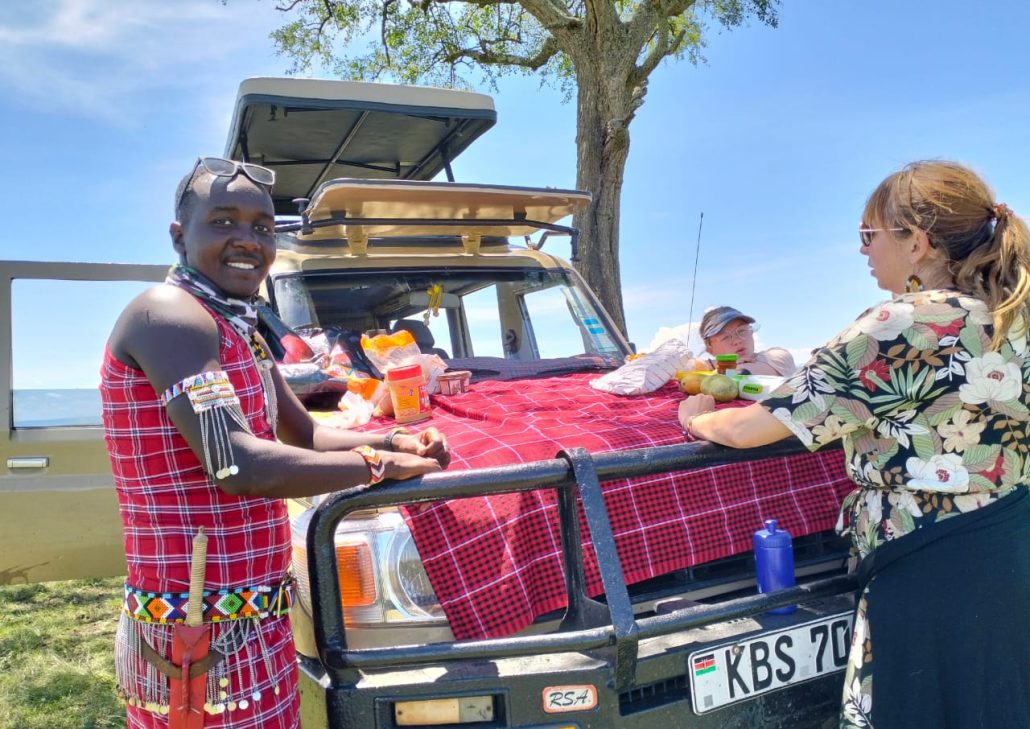
Can You Self-Drive in the Maasai Mara?
The honest answer is yes, but it depends on which part of the Mara you mean. The Maasai Mara ecosystem is a patchwork of separately managed areas. We use a simple three-zone model to explain what is allowed.
Zone | Self-drive | What it means for you |
Mara Triangle | Independent self-drive allowed | Buy a Triangle ticket, drive your own 4×4, and follow the park rules. No ranger needed. |
Masai Mara National Reserve | Only with a ranger or guide from the gate | Bring a safari-style 4×4 and hire a ranger at Sekenani or Talek Gate. |
Private conservancies | Generally guided-only | Fees are usually included in lodge stays, and access is limited to guests with the camp’s own guides. |
Is Self-Drive Allowed in the Maasai Mara National Reserve?
Not independently. In the main reserve, you can bring your own safari-style 4×4, but you must hire a ranger or guide at the gate and have him ride with you. This is also our own rule when we hire you a vehicle for the Mara: if you intend to drive in the main reserve, plan on a guide.
How it works in practice
- Arrive at Sekenani Gate (the busiest) or Talek Gate with your tickets and vehicle papers.
- Hire a ranger or guide at the gate. A day rate of about $40 is typically quoted, with shorter half-day arrangements sometimes available.
- The ranger rides with you for the day and helps you find animals, read the tracks, and keep within the rules.
- Plan your day around the 12-hour ticket, and leave the reserve before closing time.
Why this works in your favor A ranger is not a cost to resent. He knows where the cats were this morning, which crossings are firm, and where other vehicles are gathering. Most first-time self-drivers who add one for a day say it is the best money they spend. |
Self-Drive Rules in the Mara Triangle
The Triangle is the only place you can drive yourself, and rangers enforce the rules.
The Mara Conservancy, which manages the Triangle, publishes its official park rules. Three features set it apart:
- “Cheetah Vehicles.” Ranger vehicles are based at key points to encourage proper behavior and keep vehicles from crowding animals such as lions and cheetahs.
- The five-vehicle rule. When more than five vehicles are waiting to see an animal, viewing time is restricted to 10 minutes, and vehicles waiting must stay 100 meters
- On-the-spot fines and bans. Rangers can fine you on the spot, remove a vehicle or its occupants, or ban them. Fines are paid at the rangers’ office before you leave, with a receipt, and unpaid fines can lead to a six-month ban depending on the offense.
If you see rules being broken, the Conservancy asks visitors to photograph the incident, note the date, time, and vehicle plate, and email mara@maratriangle.org or tell rangers at the Oloololo and Purungat Bridge Gates.
The Triangle day clock
Time | What happens |
6:00 am | Gates open. Your 12-hour ticket starts when you enter. |
6:00 to 10:00 am | Best light and the most active predators. Drive slowly and stop often. |
10:00 am to 3:00 pm | Heat builds. Rest, picnic at a designated site, or move between areas. |
3:00 to 6:00 pm | The second window. Be heading for the gate or camp by late afternoon. |
6:00 pm | Exit gates close. |
6:30 pm | Be settled at camp or lodge before nightfall. |
10:00 am the next day | Overnight guests must leave the park. |
Times are as published by the park authorities at the time of writing. Confirm before you go. A short overstay can mean paying for another 12-hour ticket.
Our own rules, on top of the park’s Our rental agreement sets 40 km/h in national parks (overspeeding carries a USD 50 penalty), USD 150 per person for going off-track during a game drive, USD 100 for sitting on top of the vehicle, and no game drives after 7:00 pm. Animals always have the right of way, and you are liable for damage from a collision with wildlife. |
Maasai Mara Self-Drive vs. Guided Safari
Self-drive hands you the wheel and the decisions. A guided safari hands them to someone who has made them a thousand times.
What matters | Self-drive | Guided safari |
Freedom | You choose when to stop, how long to wait, and where to eat | The guide sets the pace for your brief. |
Finding animals | Your eyes and patience | Guides share sightings with each other. |
River crossings and mud | You judge the risk. | Guide judges the risk. |
Paperwork and tickets | Yours | Handled for you |
Privacy | Complete | Shared with the guide |
Cost | Vehicle + fuel + park fees + camping | Often one inclusive price |
Which kind of Mara traveller are you?
If you are… | We would suggest |
A first-time safari visitor | A driver-guide for the Mara, or a Triangle self-drive with a ranger for one day |
An experienced overland driver | Triangle self-drive in a camper Land Cruiser |
A photographer waiting for light | Self-drive with a pop-up roof, plus a ranger for the first morning. |
A family with young children | A driver-guide, or a lodge-based stay with guided drives |
A traveller who wants to see the reserve proper | Our safari Land Cruiser with a driver-guide |
On a tight budget in high season | Compare self-drive totals with an inclusive guided quote; the cheaper option may surprise you. |
There is no wrong answer, only a mismatch between the traveller and the arrangement. Tell us about your trip, and we will say which we would choose in your place.
How to Camp and Self-Drive in the Maasai Mara
Camping turns a drive into a stay: you wake where the animals wake.
Where to camp
- Mara Triangle: public campsites at Oloololo, Eluai, and Iseiya, plus private campsites that need advance booking. The Triangle’s official channels publish current camping rules and fees.
- Main reserve: camping options are limited. The simplest approach is to camp or lodge outside Sekenani Gate the night before, so you can be at the gate when it opens.
What our camper vehicles carry
Our camping kit includes a fridge, gas & burner, pots and pans, crockery and cutlery, a camp table and chairs, a water container, battery lamps, mattresses and sleeping bags (or bedding on request). Rooftop tents are fitted to Land Cruisers only. (Roof tent $20 per day, ground tent $5, fridge $10)
The camp routine we recommend
- Arrive early. Be settled at camp before the 6:30 pm cut-off.
- Park smart. Keep the vehicle close, doors shut, and food sealed and stowed.
- Stay by the vehicle after dark. The Mara has no fences, and large animals walk through camps at night.
- Cook early, pack away by dusk, and keep a headlamp at hand.
- Keep warm. At about 1,500 meters, nights are cold. Bring warm sleeping bags.
- Break camp early. Overnight guests leave by 10:00 am the next day, so plan your last dawn drive accordingly.
- See our car rental with camping gear in Kenya and rooftop tent pages.
Best Self-Drive Safari Routes in the Maasai Mara for Beginners
A good beginner route has a clear road, a safe place to sleep, and a way out if the weather turns.
The approach: Nairobi to the gate
- Nairobi to Narok: about 140 km. Fill up in Narok, which is the last reliable fuel stop.
- Narok to Sekenani Gate: continue on the paved route; the final approach to the gates is rough in places.
- Total: about 270 km and 5 to 6 hours, including a stop. Leave Nairobi early to avoid the morning traffic.
Three beginner plans
Plan | How it works | Best for |
The Triangle Classic | Transit from the reserve to the Purungat Bridge Gate, then spend two or three days driving the Triangle and camping or lodging inside. | Independent drivers who want freedom |
The Sekenani Sampler | Stay near Sekenani, hire a ranger for one or two days, and explore the eastern reserve in a safari 4×4. | First-timers who want the classic reserve |
The Rift and Mara Loop | Combine Lake Naivasha, Lake Nakuru, and the Mara over seven or eight days. See our 8-day Masai Mara, Nakuru, and Naivasha route. | Travellers with a week or more |
Our short itinerary
Our 3-day Masai Mara route is the quickest way to experience the Mara from Nairobi. For anything longer, we plan the days around park hours, fuel stops, and overnight stays so that you are never driving at dusk.
Which 4x4 Vehicle Do You Need?
Choose the roads you will use, not the roads you hope to use.
Vehicle | Travellers | Best for | Rooftop tent | Pop-up roof |
4 to 6 | Groups, camping, rough tracks | Yes. | Yes. | |
Land Cruiser 76 Series | 4 to 5 | Easier to handle; capable on Mara tracks | Yes. | Yes. |
5 | Comfortable road stretches and mid-range 4×4 use | Yes. | On request | |
4 to 5 | Gear-heavy camping trips | Yes | No | |
Up to 7, plus driver | Guided safaris and groups | No | Yes. | |
Toyota RAV4 (on request) | 4 to 5 | Paved routes only | No | No |
Our Mara vehicle checklist
- High ground clearance and all-terrain tires in excellent condition.
- Full-size spare jack, fire extinguisher, reflector triangles, and first-aid kit, all supplied with our vehicles.
- A pop-up roof if wildlife viewing is a priority.
- A rooftop tent and camp kit if you plan to camp.
A lighter vehicle such as a RAV4 is suitable for Nairobi to Naivasha and graded dry-season roads, but not for the Mara’s tracks. We say so plainly, because the wrong vehicle spoils a trip.
Costs, Park Fees, and Rental Requirements
The Mara’s costs fall into four buckets: the vehicle, the park, the camp, and the road.
Car Rental 4×4 costs
| Item | Cost or term |
| Vehicle daily rate | [Insert Kenya daily rates per vehicle] |
| Driver-guide | From about $40 per day; park fees are separate |
| Rooftop tent, ground tent, fridge | Rooftop tent = $20/day, ground tent = $5/day, Fridge = $10/day |
| Mileage and roadside assistance | Unlimited mileage; 24/7 roadside assistance |
| Security deposit | $500, refundable at the end of the trip if the vehicle returns without offenses |
| Insurance | Covers collision and theft; excess USD 1,500 to 2,000 depending on the vehicle. Punctures, underbody damage, water damage, and negligence are not covered. |
| Replacement after a breakdown | Within 24 hours in Kenya |
| Additional driver | Can be added at no extra charge; must be named on the agreement |
| Cross-border insurance (COMESA) | USD 50 for up to 20 days. |
Park fees (indicative)
| Item | Indicative amount |
| Adult non-resident entry, low season (January to June) | About $100 per 12-hour ticket |
| Adult non-resident entry, low season (January to June) | About $100 per 12-hour ticket |
| Kenyan residents’ entry, high season (July to December) | About 500 ksh for the high season and 300 ksh for the low season per 12-hour ticket |
| East African residents’ entry, high season (July to December) | About 2000 ksh for the high season and 1000 ksh for the low season per 12-hour ticket |
| Vehicle entry | between 1000 and 5000, depending on seating capacity |
| Camping | About $30 per person per night in the Triangle |
| Ranger at the gate | About $40 per day |
| Children – Non-Resident | About $50 for 12 hours for both seasons |
Requirements to drive
- A valid driving license from your country of origin. An International Driving Permit is recommended if your license is not in English.
- You will also need your passport, booking confirmation, and the signed rental agreement.
- The minimum age and license-held period are as stated in the rental agreement.
- Kenya drives on the left. Our handover includes time to settle into the vehicle.
- We ask about your experience with gravel, mud, and manual gearboxes, because it shapes the vehicle and route we recommend.
Safety, Navigation, and Road Conditions
Treat the Mara as a place where small mistakes grow quickly. Slow down, plan ahead, and ask for help early.
Road conditions
- The highway to Narok is paved; the final approach to the gates and the park tracks are not.
- Black cotton soil turns slick and sticky after rain. The long rains (March to May) and the short rains (October to December) are the hardest months to drive.
- Acacia thorns cause punctures. Know how to change a wheel before you arrive.
Rivers and rain
Rivers rise quickly after upstream rain. Do not cross flowing water unless a ranger confirms it is safe, and be cautious for a day or two after heavy storms.
Navigation
- Download offline maps before you leave Nairobi and pick up a park map at the gate.
- Mobile signal is patchy in the Triangle and near the Tanzanian border.
- Save our 24/7 number and the ranger’s contact before you enter. Bring a car phone charger.
Breakdown and emergencies
Call us immediately. If a warning light comes on, stop driving and call. We arrange repairs and, if needed, a replacement vehicle within 24 hours in Kenya. Do not arrange repairs yourself without our authorization. Keep our emergency number and Kenya’s emergency number (999 or 112) accessible offline.
Driving hours
Our rental agreement sets driving hours from 6:00 am to 7:00 pm. Driving outside those hours without our consent makes you liable for damage and a USD 1,200 fine, and it is unwise in any case: unlit vehicles, people, and animals are difficult to see.
Fuel
Fill up in Narok from the recommended gas stations, including Shell, Total, and Rubis. Our agreement lists approved fuel stations; it does not cover substandard fuel from other stations.
Safety, Navigation, and Road Conditions
Treat the Mara as a place where small mistakes grow quickly. Slow down, plan ahead, and ask for help early.
Road conditions
- The highway to Narok is paved; the final approach to the gates and the park tracks are not.
- Black cotton soil turns slick and sticky after rain. The long rains (March to May) and the short rains (October to December) are the hardest months to drive.
- Acacia thorns cause punctures. Know how to change a wheel before you arrive.
Rivers and rain
Rivers rise quickly after upstream rain. Do not cross flowing water unless a ranger confirms it is safe, and be cautious for a day or two after heavy storms.
Navigation
- Download offline maps before you leave Nairobi and pick up a park map at the gate.
- Mobile signal is patchy in the Triangle and near the Tanzanian border.
- Save our 24/7 number and the ranger’s contact before you enter. Bring a car phone charger.
Breakdown and emergencies
Call us immediately. If a warning light comes on, stop driving and call. We arrange repairs and, if needed, a replacement vehicle within 24 hours in Kenya. Do not arrange repairs yourself without our authorization. Keep our emergency number and Kenya’s emergency number (999 or 112) accessible offline.
Driving hours
Our rental agreement sets driving hours from 6:00 am to 7:00 pm. Driving outside those hours without our consent makes you liable for damage and a USD 1,200 fine, and it is unwise in any case: unlit vehicles, people, and animals are difficult to see.
Fuel
Fill up in Narok from the recommended gas stations, including Shell, Total, and Rubis. Our agreement lists approved fuel stations; it does not cover substandard fuel from other stations.
Can You Self-Drive in the Maasai Mara? The Verdict
If you want to… | Choose |
Drive yourself with the least supervision. | The Mara Triangle, in a camper Land Cruiser |
See the classic reserve circuits. | A safari 4×4 plus a gate ranger |
Maximize sightings and river crossings. | A driver-guide or a guided safari |
Avoid mud and crowds. | Travel in June or from January to February. |
Make one decision and be done. | Ask us: we will recommend the arrangement for your dates. |
The ecosystem is easiest to understand as three zones. This schematic shows how they relate; it is not to scale, and positions are indicative.
Area | Managed by | Main gates | Self-drive |
Mara Triangle | Mara Conservancy | Oloololo; Purungat Bridge | Yes, independently. |
Masai Mara National Reserve | Narok County | Sekani, Talek, Musiara, and others | With a ranger or guide |
Private conservancies | Individual conservancies | Own gates | Generally guided only |
Can You Self-Drive in the Maasai Mara? The Verdict
If you want to… | Choose |
Drive yourself with the least supervision. | The Mara Triangle, in a camper Land Cruiser |
See the classic reserve circuits. | A safari 4×4 plus a gate ranger |
Maximize sightings and river crossings. | A driver-guide or a guided safari |
Avoid mud and crowds. | Travel in June or from January to February. |
Make one decision and be done. | Ask us, and we will recommend the arrangement for your dates. |
The ecosystem is easiest to understand as three zones. This schematic shows how they relate; it is not to scale, and positions are indicative.
Area | Managed by | Main gates | Self-drive |
Mara Triangle | Mara Conservancy | Oloololo; Purungat Bridge | Yes, independently. |
Masai Mara National Reserve | Narok County | Sekani, Talek, Musiara, and others | With a ranger or guide |
Private conservancies | Individual conservancies | Own gates | Generally guided only |
Quick Overview of Important Maasai Mara Rules for Self-Drivers
Rule | Remember |
Where | Independently in the Triangle only; ranger in the reserve |
Vehicle | 4×4 with high clearance; safari-style for the reserve |
Hours | Gates 6:00 am to 6:00 pm; at camp by 6:30 pm |
Ticket | 12 hours, not 24; overnight guests out by 10:00 am |
Speed | Please maintain a speed of 40 km/h as stated in our agreement and adhere to the posted limits. |
Roof | Stand inside the pop-up roof; never sit on top (USD 100 penalty). |
Tracks | Stay on them (USD 150 per person if you go off). |
Wildlife | 100 metres from dangerous animals; five-vehicle, 10-minute rule at sightings |
Night | No game drives after 7:00 pm |
Litter | Take it all with you |
Can You Self-Drive in the Maasai Mara? The Verdict
Option | Typical cost | Best for |
Gate ranger | About $40 per day | Self-drivers in the reserve |
From about $40 per day; park fees are separate | Travellers who want to relax and learn | |
Extended Safari Land Cruiser with driver guide | Quoted by trip | Groups and photography |
Our driver-guide is not just a driver. Ours are local guides with practical mechanical know-how, who save you from navigation, paperwork, and judgement calls on tricky ground. You can also combine the two: self-drive to Narok and the Triangle, then add a driver-guide for the days you most want sightings.
Ask us for a driver guide. Tell us your dates and group size, and we will quote a vehicle with a driver-guide alongside a self-drive option so that you can compare. Request a quote |
When to Visit the Maasai Mara on a Self-Drive Safari
Months | Conditions | Self-drive verdict |
January to March | Short dry season, fewer vehicles, greener plains | Very good |
Late March to May | Long rains; black cotton mud; some tracks impassable | Avoid unless experienced. |
June | Dry, first migration herds arriving, lower fees | Excellent |
July to October | Peak season; migration crossings; crowded camps; higher fees | Good roads, but book early and expect company. |
November | Short rains; mud possible | Mixed |
December | Dry again; holiday demand | Good; book early. |
The migration crossings, typically July to October, cannot be timed, so build your trip around the whole ecosystem rather than a single event. Shoulder months often give the best balance of wildlife, road conditions, and quiet.
Buying Maasai Mara Tickets: Where to Buy and What They Cost
- Mara Triangle: buy through the Mara Conservancy’s official channels (org); we can guide you through the process.
- Masai Mara National Reserve: buy through Narok County’s official payment system or at the gate. Confirm which portal applies at the time you book, because paying through the wrong channel can mean paying twice.
- Conservancies: usually included in your lodge stay.
- Tip: generate electronic payment slips ahead of arrival, since connectivity at remote gates can be unreliable.
Tickets are valid for 12 hours. Each area requires its own ticket. Fees are generally non-refundable, so do not buy until your dates are firm.
Where to Stay in the Maasai Mara
Style | Where | Notes |
Camping (self-drive) | Triangle public campsites (Oloololo, Eluai, and Iseiya) and private campsites | Public sites need no advance booking. |
Lodge in the Triangle | Two lodges, including Mara Serena Lodge | The Triangle stays quiet. |
Near Sekenani Gate | Camps and lodges on the road to the gate | Sleep here the night before entry. |
Reserve lodges and tented camps | About 20, from budget to luxury | Best with a guided or ranger-assisted day |
Conservancy camps | Luxury and mid-range | Usually all-inclusive, guided only |
We can help arrange accommodation and combine it with your car hire.
Masai Mara National Reserve vs. Mara Triangle
Factor | Reserve | Triangle |
Self-drive | A ranger or guide is required. | Independent |
Busyness | Busier, especially July to October | Generally quieter |
Management | Narok County | Mara Conservancy |
Camping | Limited; camp outside the gates | Public and private campsites |
Lodging | About 20 lodges and camps | Two lodges |
Rules enforcement | County rangers | Active ranger patrols and “Cheetah Vehicles” |
Best for | The classic reserve, with a ranger | Independent driving and camping |
You can combine them: transit the reserve to reach the Triangle, or add a ranger-assisted day in the reserve to your Triangle stay. Each requires its own ticket.
Frequently Asked Questions About Self-Drive Maasai Mara
Can you self-drive in the Maasai Mara?
Yes. You can drive yourself independently in the Mara Triangle. In the main reserve you need a ranger or guide from the gate and a safari-style 4×4. Private conservancies are generally guided only.
Did Kenya ban self-drive in the Maasai Mara?
Not entirely. In 2024 Narok County restricted game viewing in the main reserve to safari-suited vehicles. Rules have been interpreted differently since then, so please confirm with us before making your booking.
Do I need a ranger for the Maasai Mara?
In the main reserve, yes. In the Mara Triangle, it is not required, though many drivers hire one for a day.
What vehicle do I need For Maasai Mara?
A high-clearance 4×4, ideally a Land Cruiser with a pop-up roof. A RAV4 or 2WD car is not suited to the Mara.
What are the Mara’s gate hours?
Gates open at 6:00 am and close at 6:00 pm. Overnight guests must leave by 10:00 am the next day.
What happens if I break a park rule in the Triangle?
Rangers can issue a fine, remove you from the park, or ban you. Fines are paid at the rangers’ office, and unpaid fines can lead to a six-month ban.
Can I camp in the Maasai Mara?
Yes. The Triangle has public and private campsites. In the main reserve, camping options are limited, so most people camp outside Sekenani Gate.
Can I rent a Land Cruiser with a rooftop tent?
Yes. We fit rooftop tents to Land Cruisers and offer full camping kits, including a 12V freezer, cooker, and camp furniture.
How much is the security deposit?
USD 500, refundable when the vehicle returns without offenses.
What does the insurance cover?
Collision and theft are covered, with an excess of USD 1,500 to 2,000 depending on the vehicle. Punctures, underbody damage, water damage, and negligence are not covered.
What if the vehicle breaks down?
Call our 24/7 line. We arrange repairs and, if needed, a replacement within 24 hours in Kenya.
When is the best time for a self-drive?
June, January to February, and September are the sweet spots. Avoid late March through May.
Can I take the vehicle to Tanzania?
Yes, with our prior consent and COMESA insurance. The Serengeti is across a border, so plan a detour.
Is a driver guide worth it for Maasai Mara?
For most first-time visitors, yes. A driver-guide costs about $40 a day and takes care of navigation, paperwork, and river-crossing decisions.