You can collect a rental vehicle in Nairobi and return it in Arusha or at Kilimanjaro International Airport, so you cross from Kenya into Tanzania by road and never have to bring the car back. The route is roughly 270 to 290 km through Kajiado and the Namanga border, and it takes about five to seven hours, including the border crossing. This is a cross-border rental, so it needs advance approval, extra paperwork, and a cross-border and one-way fee. Tanzania now requires foreign visitors to buy its own mandatory inbound travel insurance and to complete an online health declaration, and the region is dealing with an Ebola outbreak, so please read the entry and health update below before you book. Many travelers turn the drive into a safari by stopping at Amboseli on the way. Car Rental 4×4 can arrange drops in Arusha, Kilimanjaro airport, Moshi, and other Tanzanian points on request, subject to approval and notice of at least two weeks.
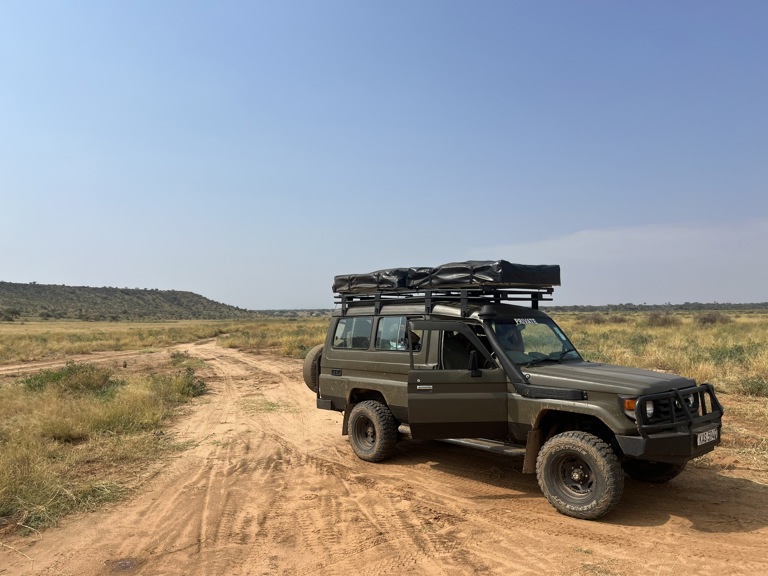
This page explains the route, the Namanga border crossing, the paperwork, the Tanzanian entry and health rules, the vehicle options, and the one-way fee factors, so it is useful even if you are still deciding how to get to Arusha. For other one-way routes and for the full list of cross-border options, see our hub page on one-way car rental from Nairobi and our guide to cross-border car rental from Kenya. For Kenya itself, our Kenya travel guide covers entry rules, park fees, and the best places to visit.
Entry and Health Update: Read Before You Book (November 2026)
Entry rules for Tanzania changed in October 2026, and the Ebola (Bundibugyo) outbreak in the region is affecting border procedures. The points below reflect the most recent reports we found in late October 2026, and they can change at short notice, so always check the official sources before you travel.
- Tanzania mandatory travel insurance: since 1 October 2026, foreign visitors entering mainland Tanzania must hold the mandatory inbound travel insurance issued by the National Insurance Corporation (NIC), reported at US$44 for an adult and valid for about 92 days. Residents of the East African Community and Southern African Development Community states are reported to be exempt. Keep the certificate on your phone, and buy it before you travel.
- Tanzania health declaration: since 17 October 2026, all travellers entering mainland Tanzania must complete the online Traveller’s Health Surveillance Form through the AfyaMsafiri portal (afyamsafiri.moh.go.tz), before departure or on arrival, and the QR code should be kept handy. Tanzania has also said all ports of entry, including land borders, are subject to health screening.
- Travellers coming from Kenya: Kenya confirmed its first imported Ebola case on 6 October 2026, and eight cases had been confirmed by 18 October. Kenya’s Ministry of Health stated that the country had no restrictions on travel, and the US raised its Kenya advisory to Level 3 on 19 October. Tanzania’s Zanzibar authorities named Kenya in their own advisory, and mainland Tanzania has said high-risk travelers may face daily health monitoring for 21 days. Ask us for the latest position on arrivals from Kenya before you set off.
- Kenya on the way out and back: Kenya’s own entry rules still apply if you return. Check your eTA validity, Kenya’s mandatory health insurance (valid for 90 days and multiple entries), and any screening forms before you cross back.
- What we recommend: check the latest advice from your government, the WHO, and the CDC; keep your travel dates flexible; travel only when well; wash or sanitize your hands often; avoid contact with sick people; keep a record of where you stay for contact tracing; and tell us if your plans change.
How a Nairobi to Arusha One-Way Rental Works
You collect your vehicle at an agreed point in or near Nairobi, drive to the Namanga border, cross with the paperwork we prepare, and return the vehicle at an agreed place in Tanzania. We then arrange for the vehicle to be returned to Kenya, which is why a one-way fee and a cross-border fee both apply. Pick-up and drop-off times, places, border crossings, and fees are written into the rental agreement, so you know exactly what to expect.
- Pick-up: Nairobi, including the city and the airport area, by arrangement.
- Drop-off: Arusha city and hotels, Kilimanjaro International Airport, Arusha Airport, Moshi, and other agreed Tanzanian points, subject to approval.
- Approval: cross-border hire is subject to approval for the vehicle, the route, and the dates, and not every vehicle or driver can cross.
- Notice: at least two weeks, and earlier in peak seasons such as Christmas and New Year, Easter, and the July to September safari season.
- Paperwork we prepare: written permission for the vehicle to cross, a copy of the logbook, and cross-border third-party insurance accepted in Tanzania, plus guidance on the temporary vehicle import formalities at the border. Please confirm the exact documents with us when you book.
- Mileage and fuel: agreed in advance, with the vehicle returned at the agreed fuel level.
- Return in the other direction: Arusha to Nairobi is also possible, where a vehicle is available.
Nairobi to Arusha: Distance, Time, and the Route
The standard route leaves Nairobi on the Namanga road through Athi River, Kitengela, and Kajiado to the Namanga border, about 165 km, which takes around three hours. After the one-stop border post, the road continues through Longido and past the foothills of Mount Meru to Arusha, about 110 km. The total distance is roughly 270 to 290 km, and the road is mostly paved, with some busy and slow sections near Nairobi’s outskirts and through towns. In good conditions the journey takes about five to seven hours, including the border, and during holidays or heavy border queues, it can take longer.
Section | Approx. distance from Nairobi | What you pass |
Nairobi to Athi River and Kitengela | About 20 to 40 km | Busy industrial and residential belt, slow at peak hours |
Isinya and Kajiado | About 60 to 80 km | Maasai towns, fuel and shops, with views of the plains |
Bissil and Kimana turn off. | About 110 to 140 km | The turn towards Amboseli National Park |
Namanga | About 165 km | A one-stop border post, shops, fuel, and restaurants |
Longido | About 210 km | The first Tanzanian town, with Mount Longido and Maasai markets |
Arusha | About 275 km | The safari capital of northern Tanzania, below Mount Meru |
Kilimanjaro International Airport | About 330 to 340 km | East of Arusha, near Moshi |
Road, shuttle, or flight?
Option | Time | Notes |
Self-drive or driver-guide across the border | 5 to 7 hours with the border | Flexible, lets you stop at Amboseli, and carries luggage and camping gear |
Tourist shuttle bus | About 6 to 8 hours | Scheduled shuttles run between Nairobi and Arusha, but they are tied to timetables and carry limited luggage. |
Flight from Nairobi to Kilimanjaro or Arusha | About one hour in the air | Fastest, but you still need ground transport at both ends, and flight schedules change, so check which airlines currently operate the routes. |
Train | Not available | There is no passenger train between Nairobi and Arusha. |
Times are approximate and depend on traffic, weather, roadworks, and border queues. Check for roadworks on the Namanga road before you go.
Route Options
Route | How it works | Best for |
Direct via Namanga | Nairobi to Kajiado and Namanga, across the border, and on to Arusha | Drivers who want the quickest and best-known way to Arusha |
Safari route via Amboseli | Nairobi to Amboseli National Park for a night or a game drive, then on to Namanga and Arusha | Travellers who want to turn the drive into a safari and see elephants beneath Mount Kilimanjaro. See our Kenya safari routes guide. Allow a full day, and pay Kenyan park fees. |
Coast and Kilimanjaro route via Taveta | From Voi through Taveta and the Holili border, then Moshi and Arusha | Travellers combining Tsavo and the coast with Kilimanjaro. It is longer, with a different border post. See our Tsavo East National Park travel guide. |
Always ask us which route and crossing are best for your dates, vehicle, and the current health measures.
Crossing the Kenya and Tanzania Border at Namanga: Step by Step
- Before you leave Nairobi: carry your passport, Tanzanian visa or e-visa, proof of Tanzania’s mandatory insurance, your Kenyan eTA and insurance papers for the return, the rental agreement, our cross-border permission letter, the vehicle logbook copy, and your driving license and International Driving Permit.
- Complete Tanzania’s health declaration: fill in the Traveller’s Health Surveillance Form online, and keep the QR code on your phone.
- Arrive at Namanga early: aim to reach the border in the morning, since queues are shorter and you will not be crossing at night.
- Health screening: expect a temperature check and a short health review on both sides.
- Kenya exit: go through immigration to get an exit stamp and complete the customs exit process for the vehicle.
- Tanzania entry: go through Tanzanian immigration with your visa or e-visa and proof of insurance, and complete the customs formalities for the vehicle, including the temporary import permit and any fees.
- Insurance and fees: show your cross-border vehicle insurance, and pay any border, customs, or road fees. Carry some US dollars and Tanzanian shillings and a card or mobile money as a backup.
- Display the country sticker: Tanzanian rules expect foreign-registered vehicles to show a country identification sticker. We will tell you what is required for your vehicle.
- Drive on carefully: Tanzania also drives on the left, and police checks and speed cameras are common between Namanga and Arusha.
- For the return trip: check Kenya’s re-entry rules before you leave, including your eTA validity and mandatory insurance.
Allow one to three hours at the border on a normal day, and longer during peak periods or when extra health checks are in place. Do not use unofficial agents who offer to speed up the process, and keep your documents safe at all times.
Road Conditions and Driving Tips
- Leave early: aim to be on the road by 6 am so you clear the Athi River and Kitengela before the worst traffic and reach the border in the morning.
- Watch for livestock and wildlife: cattle, goats, and sometimes zebras and giraffes cross the road near Kajiado, Kimana, and Longido, especially at dawn and dusk.
- Avoid driving after dark, since unlit vehicles, motorbikes, pedestrians, and animals are harder to see.
- Speed limits and police checks: Tanzanian speed limits drop sharply in towns and villages, speed cameras and radar are common, and fines may be issued on the spot. Keep your receipts, slow down in built-up areas, and carry your license, International Driving Permit, rental agreement, and insurance papers.
- Fuel up at Kajiado, Namanga or Arusha, and keep the tank above a quarter on the long, empty stretches.
- Tolls and fees: carry small notes for road and parking fees, and ask us about any electronic payments.
- Arusha traffic: expect busy roundabouts and dala-dala minibuses and motorbikes in town, so allow extra time and plan your final turn to the hotel before you arrive.
- Rainy seasons: heavy rain can cause slippery patches and slow traffic, especially around Longido and on the side roads to parks.
- Holiday periods: the road and the border are busier around Christmas, Easter, and the July to September safari season, so add extra time.
Local notes from our team Best start time: leave Nairobi before 7:00 am, cross the border by late morning and reach Arusha in daylight. Best fuel and rest stops: Kajiado and Namanga are the usual choices, with restaurants and shops. Where drivers tend to struggle: slow-moving trucks, the busy stretch out of Nairobi, border queues and speed checks in Tanzania. Border tips: bring photocopies of every document, a pen and small notes, and be ready to step out for health screening.
Best Stops Between Nairobi and Arusha
The route is short for a cross-border trip, which leaves room for stops that turn a transfer into a safari.
- Maasai Market and curio stalls at Namanga: a handy place for souvenirs and a break before the border.
- Amboseli National Park: elephants beneath Mount Kilimanjaro, about 100 km from Namanga via Kimana. See our Kenya safari routes guide for park fees and the Amboseli circuit.
- Kajiado and Kitengela: useful for fuel and meals, and for seeing Maasai life on the plains.
- Longido: a Maasai town below Mount Longido, with a market and short hiking options.
- Nairobi first: if you are starting your trip in the capital, consider a morning game drive in the city before you set off, as explained in our Nairobi National Park travel guide.
- Tsavo and the coast (via Taveta): if you take the Taveta route, stop at Tsavo West or Tsavo East. See our Tsavo East National Park travel guide.
Three Ways to Do the Trip
One day: straight to Arusha
- Morning: leave Nairobi at 6:00 am, drive through Kajiado to Namanga and cross the border.
- Afternoon: continue to Arusha and return the vehicle or drive on to Kilimanjaro airport.
Two days: Amboseli on the way
- Day 1: Nairobi to Amboseli, with an afternoon game drive and a night in or near the park.
- Day 2: a sunrise game drive, then drive to Namanga, cross the border and reach Arusha by late afternoon.
Five to seven days: Kenya to Tanzania safari
- Days 1 to 2: Nairobi and Amboseli.
- Day 3: cross at Namanga to Arusha.
- Days 4 to 6: Tarangire, Lake Manyara, Ngorongoro Crater or the Serengeti, with a local driver-guide.
- Day 7: fly from Kilimanjaro or Arusha, or return to Moshi for a Kilimanjaro trek or a flight to Zanzibar.
Our Kenya safari routes guide and Tanzania safari routes guide describe the combined itineraries in more depth, including park choices and overnight options.
Choosing the Right Vehicle for a Cross-Border Trip
If you want… | Choose | Why |
Independence and flexible stops | A self-drive 4×4 approved for cross-border use | Copes with the Namanga road and park tracks if you stop at Amboseli |
A relaxed trip with no border or driving stress | A driver-guide | The driver knows the border procedure, handles the paperwork and speed checks and speaks the local languages |
Wildlife viewing and photography | A safari vehicle with a pop-up roof | Standing views at Amboseli, with the option of a Tanzanian circuit |
To camp along the way | Useful for Amboseli campsites, but tell us before you plan the crossing | |
A simple city-to-city drive on tarmac | A compact SUV or saloon, if approved | Lower rate and better fuel economy, but check cross-border eligibility and park suitability first |
If you are starting your trip in Nairobi, compare options on our car rental Nairobi page. Rules for foreign-registered vehicles inside Tanzanian parks differ by park and by operator, so ask us before you plan a self-drive safari in Tanzania. Many travellers hand the vehicle back in Arusha and continue with a local Tanzanian driver-guide for the Tanzania parks.
One-Way and Cross-Border Fee Factors
The one-way fee covers the cost of returning the vehicle back to Kenya, and the cross-border fee covers the permission, paperwork and insurance. Both are quoted in writing before you pay. We do not publish a flat price because it depends on the factors below.
Factor | How it affects the cost |
Vehicle | A pop-up roof or rooftop tent vehicle costs more to bring back than a standard 4×4 or saloon, and only approved vehicles can cross |
Travel dates | Christmas, Easter and the July to September season push the fee up and thin out availability |
Where you finish | Arusha is the standard drop, while Kilimanjaro airport, Moshi and park gateways add distance |
Cross-border permission and insurance | Covers the permit letter, Tanzanian-accepted insurance and handling, and varies by vehicle and length of stay |
Driver-guide | Quoted per day, with the driver’s meals, lodging and border documents arranged beforehand |
Mileage and fuel | Check for a mileage cap, and agree the fuel level for the handover |
Border, customs and road fees | Not included, and charged at the border and on the road, including the temporary vehicle import fee |
Mandatory insurance and visas | Tanzania’s mandatory inbound insurance, visas and any health forms are paid by each traveller and are not part of the rental |
Park fees | Not included, and Tanzanian park fees are set by the park authorities and change, so confirm them separately |
Insurance excess | Standard excess applies, and waivers can be void if you skip the police report after an incident |
Time of handover | Agreed windows go into the agreement, and out-of-hours handovers may carry a surcharge |
Tip: flexible dates, an early booking and a mid-week start can improve availability and cost, particularly in peak season.
Drop-Off Points in Tanzania
Drop-off | Approx. time from Arusha | Good to know |
Arusha city and hotels | In Arusha | The standard drop. Confirm the exact hotel or parking area, since traffic and roundabouts can be busy |
Arusha Airport | About 30 to 45 minutes | For domestic and safari flights |
About 45 to 60 minutes | For international flights, on the road to Moshi | |
About 1.5 to 2 hours | The base for Kilimanjaro climbs, on request | |
Arusha National Park and Mount Meru gates | About 45 minutes | For hiking and day trips, on request |
About 2 hours | Safari gateways, on request and subject to approval | |
Karatu and Ngorongoro | About 2.5 to 3 hours | For the Crater and the Serengeti road, on request and subject to approval |
If your plans include Zanzibar, Uganda or Rwanda, ask us about onward options, which need separate approvals and paperwork.
What to Do in Arusha: Why the Drive Is Worth It
Arusha is Tanzania’s safari capital, a busy town on the slopes of Mount Meru that serves as the gateway to the northern circuit, with Mount Kilimanjaro visible on clear days.
- Arusha National Park: a small park with Ngurdoto Crater, the Momella Lakes, giraffes, buffalo, colobus monkeys and walking and canoe safaris, about 30 to 45 minutes from town.
- Mount Meru: a three to four day trek to a 4,566 m summit, often used as an acclimatisation climb before Kilimanjaro.
- Mount Kilimanjaro: Africa’s highest mountain, climbed through Moshi and Arusha on routes such as Machame, Lemosho and Marangu, with licensed operators.
- Tarangire National Park: big elephant herds and baobab trees, about two hours from Arusha.
- Lake Manyara National Park: a rift valley lake with flamingos, hippos and tree-climbing lions.
- Ngorongoro Crater and the Serengeti: the northern circuit’s top draws, with the Crater a day trip from Karatu and the Serengeti a longer trip with a Tanzanian operator.
- Lake Duluti and coffee farms: canoe trips on a crater lake, forest walks and coffee tours near Arusha.
- Town sights: the Maasai Market, the Cultural Heritage Centre, the Arusha Declaration Museum and the clock tower.
- Cultural and waterfall visits: Materuni waterfalls and village trips near Moshi.
- Onward travel: flights from Arusha or Kilimanjaro to Zanzibar, Dar es Salaam and the southern parks.
Beyond Arusha: The Tanzania Northern Circuit and East Africa
Many travellers use Arusha as the start of a longer Tanzanian safari or a Kilimanjaro climb. From there you can head to Tarangire, Lake Manyara, Ngorongoro and the Serengeti, or fly to Zanzibar for a beach finish. Some travellers also continue from Tanzania to Uganda or Rwanda by air. Tanzania park fees, permits and rules are set by the Tanzanian park authorities and change, so confirm them with us or your operator before you go. See our guide to cross-border car rental from Kenya and our Tanzania safari routes guide. You can also start in Arusha and drop in Nairobi, and our hub page on one-way car rental from Nairobi explains the reverse routes and the other options.
Best Time to Do the Nairobi to Arusha Drive
The road can be driven all year. The long rains from March to May and the short rains from November to December can cause slower traffic and slippery patches, and heavy rain can make side roads to the parks difficult. The drier months, from about June to October and January to February, usually give the best driving conditions and the best wildlife viewing at Amboseli and in Tanzania’s northern parks. Public holidays and school breaks bring heavy traffic and border queues, so avoid the busiest days if you can.
- For clear roads and shorter border queues: weekdays outside school holidays, and mornings.
- For wildlife viewing: the dry months from June to October and January to February.
- For Kilimanjaro and Meru climbs: January to March and June to October are the usual windows.
- For lower rates: shoulder-season travel, though April, May and November bring heavy rain.
- For health-related flexibility: because border rules and health measures are changing, build flexibility into your dates.
Documents and Requirements
- Passport: valid for at least six months, with blank pages for stamps.
- Kenya entry paperwork for overseas visitors: an eTA and, for most travellers, Kenya’s mandatory inbound health insurance, bought through the eTA process or eCitizen. Check how your eTA and insurance apply to your return before you leave.
- Tanzania visa or e-visa: most overseas visitors need a visa, applied for online through the official Tanzanian immigration portal, unless their nationality is exempt. Fees and rules differ by nationality, and the East Africa Tourist Visa does not cover Tanzania. Check the current rules on the official portal.
- Tanzania mandatory inbound travel insurance: NIC cover for mainland Tanzania, reported at US$44 per adult, bought before you travel. Exemptions apply to some regional residents.
- Tanzania health declaration: the online Traveller’s Health Surveillance Form, with the QR code kept on your phone.
- Yellow fever certificate: Tanzania asks for a certificate from travellers arriving from or transiting countries with yellow fever risk, and Kenya is on that list, so most travellers crossing at Namanga should carry one. Confirm with a travel clinic and the Tanzanian authorities.
- Driving licence and International Driving Permit: carry both, plus your passport.
- Rental agreement, cross-border permission letter and log book copy: keep them in the vehicle at all times.
- Cross-border insurance: third-party cover accepted in Tanzania, arranged through us.
- Credit card: in the main driver’s name, for the deposit.
- Cash and cards: carry some US dollars and small notes, and have a card or mobile money for fees.
- Health bulletins: check current Ministry of Health, WHO, CDC and embassy notices before departure, because health screening and border rules are changing.
How to Book Your One-Way Cross-Border Rental
- Pick your finish line: Arusha, Kilimanjaro airport, Moshi or another approved Tanzanian point.
- Pick the vehicle that suits your stops, from a self-drive 4×4 to a pop-up roof vehicle or a driver-guide, and tell us if you want camping gear.
- Send us your dates, route and passports’ nationalities at least two weeks before collection, so we can start the cross-border approval.
- Review the itemised quote with the one-way fee, cross-border fee, insurance and extras.
- Get your paperwork ready: passport, Tanzanian visa or e-visa, Tanzania’s insurance and health declaration, Kenya eTA and insurance, licence and IDP.
- Collect and inspect the vehicle with us, and save our 24-hour contact.
- Hand it back at the agreed place and time in Tanzania, and keep the handover note.
Nairobi to Arusha One-Way Rental Frequently Asked Questions
Can I rent a car in Nairobi and drop it in Arusha?
Yes. A cross-border one-way rental lets you collect in Nairobi and return the vehicle in Arusha, at Kilimanjaro airport or at another approved Tanzanian point, subject to availability, approval, notice and the one-way and cross-border fees.
How far is Nairobi from Arusha by road?
Roughly 270 to 290 km via Kajiado, Namanga and Longido.
How long does the drive take?
About five to seven hours including the border, and longer in heavy traffic, during busy holiday periods or when health screening causes queues.
Which border do I use?
Most travellers cross at Namanga, a one-stop border post on the direct route. The Taveta and Holili crossing is an alternative if you are coming from Tsavo and the coast.
Do I need a visa for Tanzania?
Most overseas visitors do. Apply online through the official Tanzanian immigration portal, and check the fee for your nationality. The East Africa Tourist Visa does not cover Tanzania.
Is Tanzanian travel insurance mandatory?
Yes. Since 1 October 2026 foreign visitors entering mainland Tanzania need the mandatory inbound insurance from NIC, reported at US$44 per adult, with exemptions for some regional residents.
Do I need the Tanzania health declaration?
Yes. Since 17 October 2026, all travellers entering mainland Tanzania must complete the online Traveller’s Health Surveillance Form, before departure or on arrival.
Is it safe to travel between Kenya and Tanzania during the Ebola outbreak?
Many travellers are still crossing, with enhanced screening in place, but the situation is changing. Check the latest government, WHO and CDC advice, travel only when well, keep your dates flexible and tell us if your plans change.
Can I take a rental car across the border?
Yes, with prior approval, written permission, a log book copy and cross-border insurance, all of which we arrange. Not every vehicle or driver is eligible, so tell us your plans early.
Is there a one-way fee and a cross-border fee?
Yes. The one-way fee covers returning the vehicle to Kenya, and the cross-border fee covers the permission, paperwork and insurance. We quote both in writing before you pay.
How much notice do you need?
At least two weeks, and more for Christmas, Easter and the July to September season, because cross-border approval takes time.
Can I drop the vehicle at Kilimanjaro airport?
Yes, by arrangement. It is about 45 to 60 minutes from Arusha, on the road to Moshi.
Can I self-drive in Tanzania’s national parks?
Rules for foreign-registered vehicles differ by park and by operator, so ask us before planning. Many travellers drop the vehicle in Arusha and continue with a local driver-guide.
Can I stop at Amboseli on the way?
Yes. Amboseli is about 100 km from Namanga via Kimana, and it makes a good overnight or game-drive stop. Kenyan park fees apply.
Can I pick up in Arusha and return in Nairobi?
Yes, where a vehicle is available.
Get a One-Way Cross-Border Quote: Nairobi to Arusha
Tell us your travel dates, group size, nationalities and whether you want a direct drive, an Amboseli stopover or a longer Kenya and Tanzania safari. We will recommend the vehicle, confirm the one-way and cross-border fees and the drop-off point, and send an itemised quote before you commit.