One-Way Car Rental from Nairobi to Moshi: Routes, Borders, Kilimanjaro, and Fees
Hiring a one-way rental from Nairobi to Moshi lets you drive from the Kenyan capital to the foot of Mount Kilimanjaro and leave the vehicle in Moshi, at Kilimanjaro International Airport, or at a Kilimanjaro gate area. The usual route runs through Namanga and Arusha and covers about 350 to 380 km, or roughly six to seven and a half hours, including the border. A longer alternative crosses at Taveta and Holili. Because the vehicle leaves Kenya, you need a letter of authority, regional insurance, a Tanzanian visa, and Tanzania’s mandatory inbound insurance, and Car Rental 4×4 confirms each Moshi drop individually. Ask at least a week ahead.
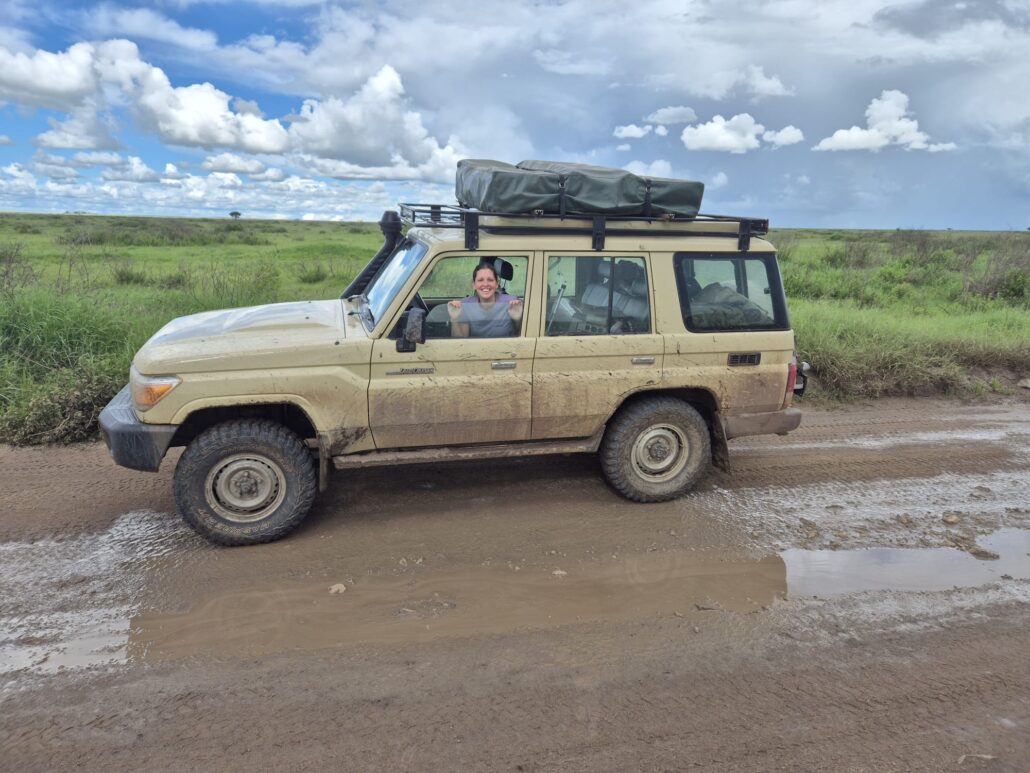
This page explains both routes, the border steps, the documents, how a Moshi drop works if you plan to climb Kilimanjaro, and the fee factors, so it is useful even if you are still choosing a destination. If you are also considering Arusha, compare it with our one-way car rental Nairobi to Arusha page, and for other drop-off towns, see our hub on one-way car rental from Nairobi.
How a Nairobi to Moshi One-Way Rental Works
You collect a vehicle in Nairobi, drive to the border, cross into Tanzania, and return the vehicle in the Moshi area. We then arrange for it to come back to Kenya, so a one-way fee applies. Cross-border drops need more preparation than domestic ones, and the letter of authority names Tanzania, the crossing you will use, and your dates.
- Collection: in Nairobi, including the airport area and city hotels. If you land at JKIA or Wilson, see our Nairobi airport transfer
- Return points: Moshi town, Kilimanjaro International Airport, a Kilimanjaro gate area, or Arusha, subject to confirmation.
- Lead time: a week or more, and longer in the peak climbing months or when you add camping gear, a rooftop tent, or a driver-guide.
- Travelling the other way: Moshi to Nairobi is possible where a vehicle is free. See our cross-border car rental from Tanzania
- Vehicle choice: a self-drive 4×4, a pop-up roof vehicle, a driver-guide, or a vehicle with camping equipment.
Two Routes From Nairobi to Moshi
| Route A: Namanga and Arusha | Route B: Taveta and Holili |
Road | A104 south through Kajiado to Namanga, then Longido, Arusha, and east to Moshi | A109 towards Mombasa to Voi, then Taveta and Holili, then on to Moshi |
Distance | About 350 to 380 km | About 600 km or more |
Typical time | 6 to 7.5 hours, including the border | 9 to 11 hours, including the border |
Border | Namanga, a One-Stop Border Post, is open 24 hours. | Taveta and Holili are a one-stop border post and a quieter crossing. |
Best for | Most travelers, and anyone adding Amboseli or Arusha | Travellers combining Tsavo West or the coast with Moshi |
Notes | Good tarmac for much of the way, with roadworks near Longido | Longer and more varied, with Tsavo and Lake Chala nearby |
Route A is the default. Route B suits travelers who want to add Tsavo West, see our Tsavo West National Park travel guide, or who are starting from the coast, since the same crossing connects with the coastal highway. Times are approximate and depend on traffic, weather, roadworks, and border queues.
Route A in stages
Section | Approx. distance | Typical time |
Nairobi to Namanga, via Kajiado | About 165 to 170 km | 2.5 to 3 hours |
The border formalities | At the crossing | 30 minutes to 2 hours |
Namanga to Arusha, via Longido | About 105 to 120 km | 1.5 to 2 hours |
Arusha to Moshi, past Kilimanjaro Airport | About 80 to 85 km | 1.5 to 2 hours |
Whole journey | About 350 to 380 km | 6 to 7.5 hours |
Crossing the Border: Namanga or Taveta
Both crossings are one-stop border posts, so Kenyan and Tanzanian formalities are handled on a single site. The steps are the same, and preparing your paperwork in advance is the surest way to keep the crossing short.
- Park in the signed area and keep passports, visas, insurance proof, the letter of authority, and the vehicle papers in one folder.
- Leave Kenya: get your exit stamp, and complete any health forms if screening is running.
- Have the vehicle’s departure recorded with Kenyan customs.
- Enter Tanzania: show your visa and proof of Tanzanian inbound insurance.
- Register the vehicle’s temporary entry with the registration copy and the letter of authority.
- Show your regional cover and settle any road, fuel, or foreign-vehicle charges at the right desk, keeping the receipts.
- Check your stamps and dates before you drive on.
- Namanga timing: cross in the morning on a weekday for the shortest queues.
- Taveta and Holili: a quieter crossing, though opening hours and customs services should be confirmed before you travel.
- Official posts only: unofficial routes void your insurance and expose you to fines.
Visas, Insurance, and Vehicle Paperwork
Requirement | What you need |
Tanzanian visa | A separate visa is needed by most nationalities, since the East Africa Tourist Visa stops at Kenya, Uganda, and Rwanda. Apply online beforehand. |
Tanzanian inbound insurance | Since 1 October 2026, mainland Tanzania expects most foreign visitors to hold the government-issued USD 44 cover, which lasts up to 92 days and can be bought online or on arrival. EAC and SADC residents are exempt. |
Kenya side | Your eTA and, for many visitors, the Kenyan health insurance policy. If you plan to come back through Kenya, make sure both will still be valid. |
Passport and health papers | A passport valid for six months and a yellow fever certificate, where asked |
Driving papers | A full license with a photo and an International Driving Permit |
Vehicle papers | Our letter of authority for Tanzania, a certified copy of the logbook, a COMESA Yellow Card, and the rental insurance extension |
Tanzanian vehicle fees | Road or transit charges for foreign vehicles may be due on entry. Amounts change, so keep every receipt. |
In the vehicle | Reflective vest, warning triangles, and a fire extinguisher, which we check at handover |
Our cross-border car rental from Kenya guide has the full checklist, and it explains how the East Africa Tourist Visa differs from a Tanzanian visa.
Why Moshi? Kilimanjaro, Waterfalls, and a Calmer Base
Moshi is a relaxed town on the southern slopes of Mount Kilimanjaro, and it is the main base for climbers and for visitors who want mountain scenery without the bustle of Arusha. Many travelers choose a Moshi drop because the Kilimanjaro gates, the airport, and several lowland attractions are all within reach.
- Kilimanjaro climbs: routes such as Marangu and Machame start from gates near Moshi. Climbs must go through a registered operator, and park fees and guide arrangements are handled with the operator, so book the climb before the vehicle.
- Waterfalls and villages: the Materuni waterfall and coffee tours, and other short outings on the lower slopes, make good rest days.
- Hot springs and lakes: the Kikuletwa (Chemka) hot springs and the crater lake of Chala, near the Taveta route, are popular day trips.
- Views: Kilimanjaro is clearest at dawn in the dry season, and Moshi has some of the best views from the town itself.
- Flights: Kilimanjaro International Airport lies between Arusha and Moshi, so a drop here is convenient if you are flying out.
If you are climbing Kilimanjaro
A climb takes five to nine days, during which a rental vehicle would sit unused, so many climbers end their rental in Moshi before the trek and collect a new vehicle or a transfer afterwards. This avoids paying for idle days and parking charges. Tell us your climb dates, and we will plan the drop-off time and, if you wish, a pick-up after you return.
Drop-Off Points Around Moshi
Drop-off | Approx. time from Arusha | Good to know |
Moshi town | About 1.5 to 2 hours | The main base, with hotels, shops, and tour offices |
Kilimanjaro International Airport | About 45 to 60 minutes | Between Arusha and Moshi, the best choice if you are flying out |
Marangu gate area | About 2.5 hours | Start of the Marangu route, with lodges and guesthouses |
Machame and Kibosho area | About 2 hours | Start of the Machame route, with climbing lodges |
Arusha City | In the city | Possible if you decide to finish in Arusha instead. See our one-way car rental Nairobi to Arusha page. |
Confirm the exact address, date, and time in writing, and tell us whether you want a transfer from the drop-off to your hotel, the airport, or a climbing lodge.
Road Conditions and Driving Tips
- Both Kenya and Tanzania drive on the left, so you do not change sides at the border.
- Leave early: on Route A, set off from Nairobi by 6:30 am to reach Namanga by mid-morning and Moshi before dark.
- Fuel up before the border, at Kajiado or Namanga, and again in Arusha.
- Watch for livestock and wildlife on the plains, particularly at dawn and dusk.
- Police checkpoints are frequent in Tanzania, with speed guns in built-up areas where 50 km/h is common. Always ask for an official ticket and receipt if you are fined.
- Roadworks near Longido can slow the journey, so allow buffer time.
- Avoid driving after dark, since trucks, cyclists, and pedestrians are hard to see.
- Keep documents handy for checkpoints.
Local notes from our teamBest start time: leaving Nairobi before 6:30 am gives you the border in the morning and daylight on the Arusha to Moshi leg. Best stops: Kajiado for fuel, Namanga for lunch, and Arusha for fuel and supplies. Where drivers tend to struggle: midday border queues, roadworks near Longido, and the traffic where the Arusha road meets the Kilimanjaro Airport junction. |
Choosing the Right Vehicle
If you want… | Choose | Why |
Independence on mixed roads | A self-drive 4×4 | Comfortable on tarmac, with ground clearance for lower-slope tracks around Moshi |
Help with the border and the long day. | The guide handles formalities, checkpoints, and the final leg in daylight. | |
Wildlife viewing on the way, such as Amboseli | Everyone can stand and photograph from inside the vehicle. | |
Nights under canvas | Pitches in Amboseli and Tanzania come without equipment. | |
A simple transfer on tarmac | A compact SUV or saloon | Economical on the Namanga to Moshi road |
Our car rental Nairobi page covers collection options in the capital, and a rooftop tent adds height and weight to bear in mind.
One-Way Fee and Price Factors for a Moshi Drop
The fee for a Moshi drop reflects the way back to Nairobi and the cross-border paperwork, and we put it in writing before you pay. The main elements are below.
Cost element | What to expect |
The one-way fee | Reflects the vehicle, the route and the season, and the cost of bringing the vehicle back |
Letter of authority | Quoted per trip, or bundled into a cross-border fee |
Insurance | A COMESA Yellow Card and the rental insurance extension, with a daily charge that depends on the vehicle |
Daily surcharge | Applies for each day spent outside Kenya, where it is part of the terms |
What you pay yourself | The Tanzanian visa, the USD 44 insurance, and any foreign-vehicle charges at the border |
Driver-guide | A daily rate, with the guide’s meals and lodging arranged beforehand |
Mileage and fuel | Check for a mileage cap, and agree the fuel level at handover |
Deposit and excess | A card deposit and the usual excess, with waivers valid only if you get a police report after an incident |
A flexible start date and a mid-week crossing can improve availability and cost.
Compared With Shuttles and Flights
Option | Time | Notes |
One-way rental | About 6 to 7.5 hours via Namanga | Flexible stops, room for luggage and camping gear, and a vehicle in Tanzania until the drop-off |
About 7 to 8 hours | Fixed schedule with a border stop, and no vehicle | |
Flight to Kilimanjaro International Airport | About one hour in the air | Fastest, though you still need ground transport at both ends |
For a short trip with little luggage, a flight or shuttle can be simpler. A rental suits groups, gear-heavy trips and travellers who want to stop in Amboseli or elsewhere along the way.
Sample Nairobi to Moshi Plans
One day: direct to Moshi
- 6:00 am: collect the vehicle in Nairobi.
- 9:00 am: fuel and breakfast at Kajiado.
- 10:30 am: Namanga and border formalities.
- 12:30 pm: lunch in Tanzania, then on to Arusha.
- 4:00 to 5:00 pm: arrive in Moshi and return the vehicle by the agreed time.
Two days: Amboseli, then Moshi
- Day 1: Nairobi to Amboseli for an afternoon game drive.
- Day 2: a dawn drive with Kilimanjaro views, then Namanga, Arusha and Moshi.
See our Amboseli National Park travel guide for gates, roads and where to stay.
Four days: Kenya safari, Kilimanjaro and Moshi
- Days 1 and 2: Nairobi and Amboseli.
- Day 3: Amboseli to Namanga and Moshi, with the vehicle returned.
- Day 4: rest in Moshi, or join your Kilimanjaro climb or a local excursion.
How to Book Your Nairobi to Moshi One-Way Rental
- Decide where to finish: Moshi town, Kilimanjaro Airport or a mountain gate area.
- Decide the route: Namanga for the standard drive, or Taveta if Tsavo is on your list.
- Pick the vehicle: self-drive, pop-up roof, driver-guide or camping gear.
- Tell us your dates and stops a week or more ahead, along with any Kilimanjaro climb dates.
- Arrange your Tanzania entry papers: the visa and the USD 44 insurance.
- Review the itemised quote, then collect the vehicle and the paperwork pack.
- Hand the vehicle back where and when agreed, and keep the note.
Nairobi to Moshi One-Way Rental FAQs
Is a Nairobi to Moshi one-way rental possible?
Yes, once the cross-border paperwork is in place. We confirm each request, and a one-way fee applies.
How far is Nairobi from Moshi by road?
About 350 to 380 km via Namanga and Arusha, and about 600 km or more via Taveta.
How long does the drive take?
About six to seven and a half hours on the Namanga route including the border, and nine to eleven via Taveta.
Which border should I use?
Namanga is the main crossing for most travellers. Taveta and Holili is a quieter option that suits Tsavo and coastal routes.
Do I need a Tanzanian visa?
Most nationalities do, and it is separate from the East Africa Tourist Visa. Apply online ahead of time.
Is Tanzanian insurance compulsory?
For most foreign visitors, yes: the government-issued cover costs USD 44 and lasts up to 92 days, and it has applied since 1 October 2026.
Can I drop the vehicle at Kilimanjaro Airport?
Yes, by arrangement. It lies between Arusha and Moshi.
Can I leave the vehicle in Moshi while I climb Kilimanjaro?
Many climbers end the rental in Moshi before the climb and arrange a new vehicle or transfer afterwards, which avoids paying for idle days. Tell us your dates and we will plan it.
What is the difference between dropping in Moshi and Arusha?
Arusha is the gateway to the northern safari circuit, while Moshi is the base for Kilimanjaro climbs and a calmer stay. The drive from Arusha to Moshi adds roughly 80 km.
Can the Kenyan rental enter Tanzanian parks?
Park rules for foreign-registered vehicles have changed over time, so check with us first. Many travellers drop in Moshi or Arusha and switch to a local vehicle or guide.
Do I change sides of the road at the border?
No. Both Kenya and Tanzania drive on the left.
Can a driver-guide take me to Moshi?
Yes. The guide can drive the full route and handle the border formalities.
Can camping gear or a rooftop tent come along?
Yes. We list the kit in the rental paperwork, and you declare it if customs asks.
Does the Ebola outbreak affect this trip?
Screening and forms apply at some borders and the situation can change, though the Namanga and Moshi corridor is described as unaffected. Check official advice before you go, and stay home if you feel unwell.
Get a One-Way Quote: Nairobi to Moshi
Share your travel dates, how many are in your group, and whether you plan to climb Kilimanjaro, fly out of Kilimanjaro Airport or carry on to a Tanzanian safaris. We will suggest a vehicle, confirm the one-way fee and border arrangements, and send an itemised quote before you commit.