With One Way Car Rental from Nairobi to Jinja, you can collect a rental vehicle in Nairobi and return it in Jinja, Uganda’s adventure town at the source of the Nile, so you cross from Kenya into Uganda by road and never have to bring the car back. The route is roughly 570 to 640 km, usually via Nakuru, Eldoret, and the Malaba border or via Kisumu and the Busia border, and it takes about 10 to 13 hours, including the border crossing, so most travelers split it over two days. Jinja is about 80 km before Kampala, so it is a natural place to end a road trip and start rafting, kayaking, or bungee jumping on the Nile. This is a cross-border rental, so it needs advance approval, extra paperwork, and a cross-border and one-way fee. Uganda also requires every arriving traveler to complete an online health declaration, and the region is dealing with an Ebola outbreak, so please read the health and border update below before you book. Car Rental 4×4 can arrange drops in Jinja, Kampala, and Entebbe, and other Ugandan points on request, subject to approval and notice of at least two weeks.
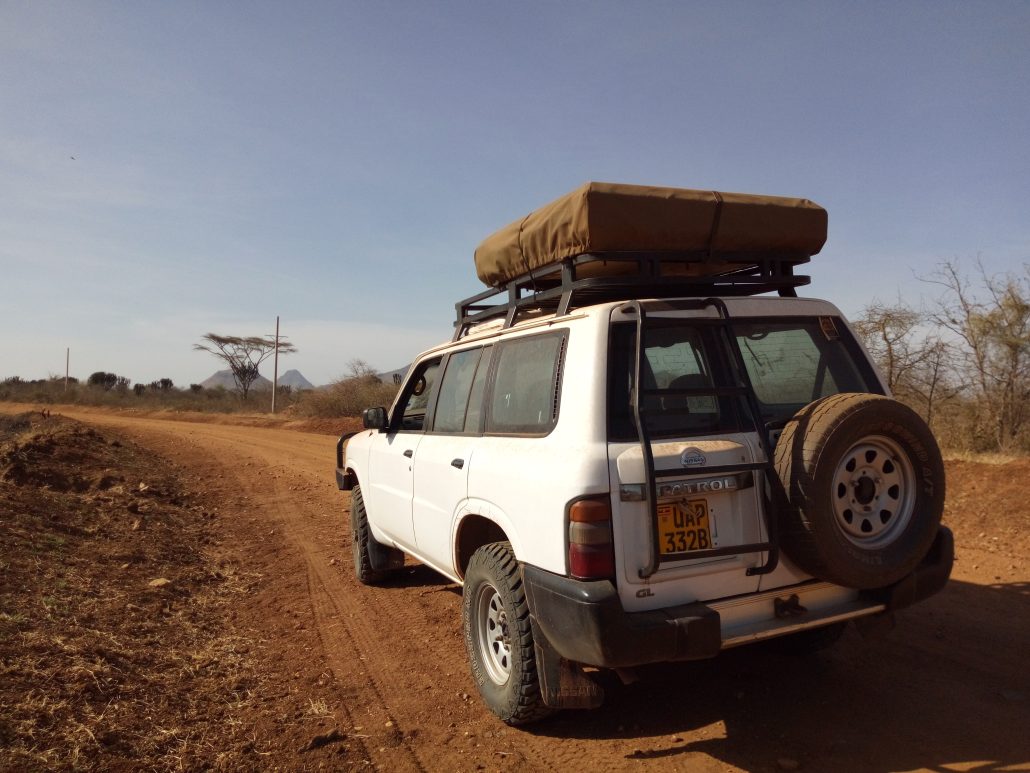
This page explains the route, the border crossing, the paperwork, the health rules, the vehicle options, and the one-way fee factors, so it is useful even if you are still deciding how to get to Jinja. For other one-way routes and for the full list of cross-border options, see our hub page on one-way car rental from Nairobi and our guide to cross-border car rental from Kenya. For the capital, see our guide to one-way car rental from Nairobi to Kampala, and for Kenya itself, our Kenya travel guide covers entry rules, park fees, and the best places to visit.
Health and Border Update: Read Before You Book
Rules around the Kenya and Uganda border have been changing quickly because of the Ebola (Bundibugyo) outbreak that began in the Democratic Republic of the Congo and spread into the region in 2026. The points below reflect the most recent reports we found in late October 2026, and they can change at short notice, so always check the official sources before you travel.
- Uganda health declaration: everyone entering Uganda by air, land, or water must complete the online Passenger Locator Form on the Ugandan Ministry of Health portal (poes.health.go.ug), within 72 hours before arrival, and it is separate from your visa.
- Screening at the border: Uganda has strengthened screening at Entebbe and at land borders, including temperature checks and hand sanitising, and Kenya has stepped up screening at Malaba and Busia. Expect longer waits at the border.
- Uganda’s situation: the Ugandan Ministry of Health said on 25 October 2026 that the country had no active Ebola cases, while enhanced surveillance remains in place.
- Kenya’s situation: Kenya confirmed its first imported case on 6 October 2026, and further cases linked to it were reported in the following weeks. The US government raised its Kenya travel advisory to Level 3 on 19 October, while Kenyan officials stated the advisory does not bar travel.
- Returning to Kenya: travelers arriving from Uganda have been required to complete Kenya’s Electronic Traveller Surveillance Form and go through port health screening, so allow time on the way back.
- DRC-linked travel: Uganda has restricted travel from the Democratic Republic of the Congo and does not allow people who have recently been there to transit through Uganda. Do not plan routes that touch the DRC.
- Yellow fever certificate: Uganda was reported to have dropped the yellow fever certificate requirement for entry in October 2026. Confirm this with the Ugandan authorities, and ask a travel clinic what they recommend for your itinerary.
- What we recommend: check the latest advice from your government, the WHO, and the CDC; keep your travel dates flexible; travel only when well; wash or sanitize your hands often; avoid contact with sick people; keep a record of where you stay for contact tracing; and tell us if your plans change.
How a Nairobi to Jinja One-Way Rental Works
You collect your vehicle at an agreed point in or near Nairobi, drive to the Kenya and Uganda border, cross with the paperwork we prepare, and return the vehicle at an agreed place in Jinja. We then arrange for the vehicle to be returned to Kenya, which is why a one-way fee and a cross-border fee both apply. Pick-up and drop-off times, places, border crossings, and fees are written into the rental agreement, so you know exactly what to expect.
- Pick-up: Nairobi, including the city and the airport area, by arrangement.
- Drop-off: Jinja town and hotels, the Nile adventure lodges at Bujagali, and other agreed-upon Ugandan points such as Kampala and Entebbe, subject to approval.
- Approval: cross-border hire is subject to approval for the vehicle, the route, and the dates, and not every vehicle or driver can cross.
- Notice: at least two weeks, and earlier in peak seasons such as Christmas and New Year, Easter, and the July and August holidays.
- Paperwork we prepare: written permission for the vehicle to cross, a copy of the logbook, and suitable cross-border insurance, often a regional cover such as the COMESA Yellow Card. Please confirm the exact documents with us when you book.
- Mileage and fuel: agreed in advance, with the vehicle returned at the agreed fuel level.
- Return in the other direction: Jinja to Nairobi is also possible, where a vehicle is available.
Nairobi to Jinja: Distance, Time, and the Route
The shortest and most commonly used route follows the A104 from Nairobi through Naivasha, Gilgil, Nakuru, and Eldoret, then continues through Webuye and Bungoma to the Malaba border, about 450 to 500 km from Nairobi. After the border, the road continues through Tororo and Iganga to Jinja, about 120 to 140 km. The total distance is roughly 570 to 640 km, and most of it is a busy road shared with long-distance trucks, because this is the Northern Corridor, the main freight route between the Kenyan coast and Uganda. In good conditions the drive takes about 10 to 13 hours, including the border, and on a holiday weekend or when queues build at the border, it can take longer.
Section | Approx. distance from Nairobi | What you pass |
Nairobi to Limuru and Kijabe | About 20 to 60 km | Escarpment climb with views over the Rift Valley, and heavy truck traffic |
Naivasha and Gilgil | About 90 to 120 km | Lake Naivasha, Hell’s Gate, and the turn to Lake Elementaita |
About 160 km | A big town, fuel, restaurants, and Lake Nakuru National Park | |
About 310 to 320 km | A large highland town, near Iten and the Kerio Valley viewpoint | |
Webuye and Bungoma | About 400 to 450 km | Western Kenya farmland and busy trading towns |
Malaba border (Kenya exit and Uganda entry) | About 450 to 500 km | One-stop border post with customs, immigration, and health screening |
Tororo | About 460 to 510 km | The first major Ugandan town, with fuel and shops |
Iganga | About 530 to 600 km | A trading town on the highway, with fuel and food |
About 570 to 640 km | The Source of the Nile, rafting, the Nile Bridge, and a lively old town |
Road, bus, or flight?
Option | Time | Notes |
Self-drive or driver-guide across the border | 10 to 13 hours with the border, ideally over two days | Flexible, lets you stop in the Rift Valley or Kakamega, and carries luggage and camping gear |
Long-distance bus | About 12 to 15 hours, often overnight | Inexpensive, but long, crowded, and subject to border queues, and you then need onward transport to Jinja. |
Flight Nairobi to Entebbe, then road | About one hour and fifteen minutes in the air, then about 2.5 to 3 hours by road to Jinja | Fastest, but you need ground transport at both ends, and flight schedules change, so check which airlines currently operate the route. |
Train | Not available | There is no regular passenger train between Nairobi and Jinja at present. |
Times are approximate and depend on traffic, weather, roadworks, and border queues. Check for roadworks on the A104 and in Uganda before you go.
Two Route Options
Route | How it works | Best for |
Northern Corridor via Nakuru, Eldoret, and Malaba | A104 to Nakuru and Eldoret, then Webuye, Bungoma, and the Malaba border, and on through Tororo and Iganga to Jinja | Drivers who want the most direct and best-developed route, even though it is heavy with trucks |
Lake route via Kisumu and Busia | A104 to Nakuru, then Kericho and Kisumu, then the Busia border, and Tororo and Iganga to Jinja | Travellers who want to stop on Lake Victoria, visit Kakamega Forest, or break the trip in Kisumu. It is a bit longer and slower. See our Kisumu travel guide. |
Both routes use one-stop border posts, where Kenyan and Ugandan officials work side by side, but waiting times vary and truck queues can be long. Always ask us which crossing is best for your dates, vehicle, and the current health measures.
Crossing from Kenya and Uganda Border: Step by Step
- Before you leave Nairobi: carry your passport, visa or e-visa (or East Africa Tourist Visa), proof of Kenya health insurance, the rental agreement, our cross-border permission letter, the vehicle logbook copy, and your driving licence and International Driving Permit.
- Complete Uganda’s health declaration: submit the Passenger Locator Form online within 72 hours before entering Uganda, and keep the confirmation on your phone.
- Arrive at the border early: aim to reach Malaba or Busia in the morning, since queues are shorter and you will not be crossing at night.
- Health screening: expect temperature checks and a short health review on both sides.
- Kenya exit: go through immigration to get an exit stamp and complete the customs exit process for the vehicle.
- Uganda entry: go through Ugandan immigration, show your visa or e-visa, and complete the customs formalities for the vehicle, including the temporary import record and any fees.
- Insurance and fees: show your cross-border insurance, and pay any border, customs, or road fees. Carry some US dollars and Ugandan shillings, and a card or mobile money as a backup.
- Drive on carefully: Uganda also drives on the left, and the first towns after the border can be busy with trucks and motorbikes.
- For the return trip: check Kenya’s re-entry rules before you leave, including your eTA validity, the mandatory health insurance, and the Electronic Traveller Surveillance Form for travellers coming from Uganda.
Allow one to three hours at the border on a normal day, and longer during peak periods or when extra health checks are in place. Do not use unofficial agents or helpers who offer to speed up the process, and be careful with your documents at all times.
Road Conditions and Driving Tips
- Leave early: aim to be on the road by 5 or 6 am, so you clear Nairobi’s outskirts and the escarpment before the worst traffic and reach the border in daylight.
- Expect trucks: the Northern Corridor is Kenya’s busiest freight route, so overtaking can be slow and risky. Be patient, and only pass when the road ahead is clear.
- Avoid driving after dark, especially between Eldoret and the border and in Uganda, where unlit vehicles, motorbikes, pedestrians, and livestock are harder to see.
- Speed limits and checks: carry your license, International Driving Permit, rental agreement, and insurance papers, and slow down for speed checks, bumps, and town sections in both countries.
- Fuel up at Nakuru, Eldoret, Bungoma, Tororo, or Iganga, and keep the tank above a quarter on the long stretches.
- Toll roads: the Nairobi Expressway charges a toll, and you may need an electronic payment method. Ask us before you leave.
- Jinja Road: The highway from Tororo to Jinja is busy, with trucks, minibuses, boda-bodas, and roadside markets, where accidents are common, so keep your distance and slow down in trading towns.
- Jinja town: expect boda-bodas, one-way streets and heavy traffic near the Nile bridge, so plan your final turn to the hotel before you arrive.
- Holiday periods: the road and the border are much busier around Christmas, Easter and school holidays, so add extra time.
Local notes from our team
Best start time: leave Nairobi before 6:00 am, aim to cross the border before early afternoon and reach Jinja in daylight.
Best fuel and rest stops: Nakuru, Eldoret and Tororo are the usual choices, and all have restaurants and shops.
Where drivers tend to struggle: slow-moving trucks, border queues and the busy road through Iganga and into Jinja.
Border tips: bring photocopies of every document, a pen and small notes, and be ready to step out for health screening.
Best Stops Between Nairobi and Jinja
The route is a long highway, but it passes some of the best sights in Kenya and Uganda, which turns a long drive into a trip.
- Great Rift Valley viewpoint at Kijabe: a roadside viewpoint above the escarpment, about 50 km from Nairobi.
- Lake Naivasha and Hell’s Gate: boat rides, hippos, cycling and gorge walks, about 90 to 100 km from Nairobi. See our Mount Longonot travel guide for a nearby hike.
- Lake Elmentaita: a scenic soda lake near Gilgil with birds and a conservancy. See our Lake Elmentaita travel guide.
- Nakuru and Lake Nakuru National Park: rhinos, flamingos and woodland, with a good night stop.
- Lake Bogoria and Lake Baringo: hot springs, flamingos and birdlife, a detour from Nakuru. See our Lake Bogoria travel guide and Lake Baringo travel guide.
- Eldoret and Iten: the high-altitude running town and the Kerio Valley viewpoint.
- Kakamega Forest and Kisumu (lake route): rainforest, hippos at sunset and fresh fish. See our Kisumu travel guide.
- Tororo Rock: a volcanic plug above the first Ugandan town, with a short climb and views.
- Mabira Forest: a forest reserve west of Jinja on the road to Kampala, with walks, birdwatching and a zip-line.
- Nairobi first: if you are starting your trip in the capital, consider a morning game drive in the city before you set off, as explained in our Nairobi National Park travel guide.
Three Ways to Do the Trip
Two days: straight to Jinja
- Day 1: leave Nairobi at dawn, drive through Nakuru and Eldoret, cross at Malaba by early afternoon and sleep in Tororo or Jinja.
- Day 2: reach Jinja by mid-morning, and spend the day at the Source of the Nile or on a rafting trip, then return the vehicle.
Three to four days: Rift Valley and lakes
- Day 1: Nairobi to Lake Naivasha or Elementaita, with a lakeside stop.
- Day 2: Lake Nakuru National Park, then on to Eldoret or Kisumu.
- Day 3: cross the border at Busia or Malaba and sleep in Jinja.
- Day 4: a morning rafting or boat trip on the Nile, then return the vehicle or drive on to Kampala.
Seven to ten days: Kenya to Uganda adventure
- Days 1 to 3: Rift Valley lakes and the Mara or Nakuru, as you prefer.
- Day 4: cross the border and sleep in Jinja.
- Days 5 to 6: white-water rafting, kayaking, bungee jumping and Mabira Forest, with a rest day on the river.
- Days 7 to 10: Kampala and Entebbe, then Murchison Falls, Queen Elizabeth or Bwindi, with a driver-guide.
Our Kenya safari routes guide and our East Africa routes pages describe combined itineraries in more depth, including how to plan gorilla permits and park fees.
Choosing the Right Vehicle for a Cross-Border Trip
If you want… | Choose | Why |
Independence and flexible stops | A self-drive 4×4 approved for cross-border use | Copes with the A104, the Ugandan roads and rougher tracks to adventure lodges |
A relaxed trip with no border or driving stress | A driver-guide | The driver knows the border procedure, handles the long drive and Ugandan traffic and speaks the local languages |
Wildlife viewing and photography in Uganda | A safari vehicle with a pop-up roof | Standing views if you continue to Murchison, Queen Elizabeth and Ziwa |
To camp along the way | Useful for Rift Valley campsites and Nile-side campsites, but tell us before you plan the crossing | |
A simple city-to-town drive on tarmac | A compact SUV or saloon, if approved | Lower rate and better fuel economy, but check cross-border eligibility and comfort over the long drive |
If you are starting your trip in Nairobi, compare options on our car rental Nairobi page. For first-time border crossers, we recommend a driver-guide, because it makes the border, the paperwork and the busy Ugandan roads far easier.
One-Way and Cross-Border Fee Factors
The one-way fee covers the cost of returning the vehicle to Kenya, and the cross-border fee covers the permission, paperwork and insurance. Both are quoted in writing before you pay. We do not publish a flat price because it depends on the factors below.
Factor | How it affects the cost |
Vehicle | A pop-up roof or rooftop tent vehicle costs more to bring back than a standard 4×4 or saloon, and only approved vehicles can cross |
Travel dates | Christmas, Easter and the mid-year school holidays push the fee up and thin out availability |
Where you finish | Jinja is about 80 km short of Kampala, so the fee is usually a little lower than for Kampala, and Entebbe and park drops add distance |
Cross-border permission and insurance | Covers the permit letter, regional insurance and handling, and varies by vehicle and length of stay |
Quoted per day, with the driver’s meals, lodging and border documents arranged beforehand | |
Mileage and fuel | Check for a mileage cap, and agree the fuel level for the handover |
Border, customs and road fees | Not included, and charged at the border and on tolled roads |
Visas and activities | Uganda visas, rafting, bungee jumping and other activities are paid by each traveller and are not part of the rental |
Park fees | Not included, and Uganda’s park and gorilla permit fees are set by the Uganda Wildlife Authority and change, so confirm them separately |
Insurance excess | Standard excess applies, and waivers can be void if you skip the police report after an incident |
Time of handover | Agreed windows go into the agreement, and out-of-hours handovers may carry a surcharge |
Tip: flexible dates, an early booking and a mid-week start can improve availability and cost, particularly in peak season.
Drop-Off Points in Jinja and Along the Route
Drop-off | Approx. time from Jinja | Good to know |
Jinja town and hotels | In Jinja | The standard drop. Confirm the exact hotel or parking area, since traffic and one-way streets can be difficult near the bridge |
Bujagali and the Nile adventure lodges | About 15 to 30 minutes | Where most rafting and bungee operators and riverside lodges are based, on request |
Mabira Forest | About 45 to 60 minutes | A forest reserve with walks and a zip-line, on request |
Kampala city and hotels | About 1.5 to 2.5 hours | See our guide to one-way car rental Nairobi to Kampala |
Entebbe and Entebbe International Airport | About 2.5 to 3 hours | Suits travellers flying out of Entebbe |
Mbale and Mount Elgon area | About 3 to 4 hours | Gateway to Mount Elgon and Sipi Falls, on request |
Tororo and the border | About 1.5 to 2 hours | A short stop for travellers heading back to Kenya |
If your plans include Rwanda or Tanzania, ask us about cross-border extensions, which need separate approvals and paperwork.
What to Do in Jinja: Why the Drive Is Worth It
Jinja is known as the adventure capital of East Africa, a relaxed town on the northern shore of Lake Victoria where the White Nile begins its journey to the Mediterranean.
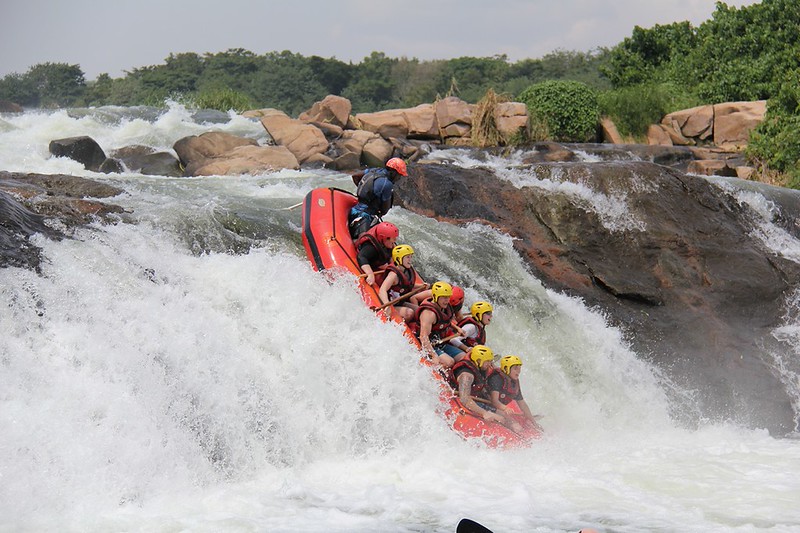
- Source of the Nile: a boat trip or lakeside walk to the spot where the Nile leaves Lake Victoria, with a memorial and sunset views.
- White-water rafting: half-day and full-day trips on the Nile’s rapids below Bujagali, run by licensed operators, with safety kayakers and briefings. Some rapids are very powerful, so choose reputable operators and follow instructions.
- Kayaking, canoeing and stand-up paddling: calmer sections and flat-water trips for all levels, including sunset paddles.
- Bungee jumping: a jump over the Nile from a tall platform, run by established operators with safety checks.
- Quad biking, horse riding and zip-lining: rides along the river and through villages, and a zip-line in nearby Mabira Forest.
- Mabira Forest: walks, birdwatching, primates and canopy adventures, about an hour from Jinja.
- Jinja Old Town: colonial and Indian-era buildings on Main Street, cafes, markets and craft shops.
- Nile boat cruises and fishing: relaxing trips on the river and the lake, with birdlife and fishing villages.
- Itanda Falls and Bujagali area: rapids and waterfalls, usually visited on a rafting trip or a guided walk.
- Busoga culture: visits to the Kingdom of Busoga and local villages, best arranged through a lodge or a guide.
- Coffee, food and nightlife: local coffee farms, riverside restaurants and bars.
- Day trips: Sipi Falls and Mount Elgon near Mbale, the Ssezibwa Falls near Kampala and the Ngamba Island chimpanzee sanctuary near Entebbe.
Beyond Jinja: Kampala, Uganda’s Parks and East Africa
Many travellers use Jinja as a relaxed first stop after the border, then continue to Kampala and Entebbe, or head north to Murchison Falls, west to Queen Elizabeth, Kibale and Bwindi, or south-west towards Rwanda. Others combine Kenya and Tanzania, for example the Maasai Mara and the Serengeti, or Amboseli and Kilimanjaro. Cross-border extensions beyond Uganda need separate approvals, paperwork and, for Tanzania, the mandatory inbound insurance. See our guide to cross-border car rental from Kenya, our Tanzania safari routes guide and our guide to one-way car rental Nairobi to Kampala. You can also start in Jinja and drop in Nairobi, and our hub page on one-way car rental from Nairobi explains the reverse routes and the other options.
Best Time to Do the Nairobi to Jinja Drive
The road can be driven all year. The long rains from March to May and the short rains from October to November can cause slower traffic, washouts and slippery patches, especially on the Ugandan side, and heavy rain in the Rift Valley can slow the escarpment. The drier months, from about December to February and June to September, usually give the best driving conditions and the best wildlife viewing in Uganda’s parks. Rafting runs all year, and water levels and temperatures vary by season. Public holidays and school breaks bring heavy traffic and border queues, so avoid the busiest days if you can.
- For clear roads and shorter border queues: weekdays outside school holidays, and mornings.
- For rafting and kayaking: all year, with warmer, drier months generally the most comfortable.
- For Ugandan park wildlife: the drier months, though primate trekking works all year.
- For lower rates: shoulder-season travel, though April, May and November bring heavy rain.
- For health-related flexibility: because border rules and health measures are changing, build flexibility into your dates.
Documents and Requirements
- Passport: valid for at least six months, with blank pages for stamps.
- Kenya entry paperwork for overseas visitors: an eTA and, for most travellers, Kenya’s mandatory inbound health insurance, bought through the eTA process or eCitizen. The Kenyan policy is valid for 90 days and multiple entries, but check how it applies to your return before you leave.
- Uganda visa or e-visa: most overseas visitors need a visa, applied for online through the official Ugandan immigration portal, unless their nationality is exempt. The East Africa Tourist Visa, which has been offered for Kenya, Uganda and Rwanda, may suit multi-country trips. Check the current fees and rules on the official portals.
- Uganda health declaration: the online Passenger Locator Form, completed within 72 hours before entry.
- Driving licence and International Driving Permit: carry both, plus your passport.
- Rental agreement, cross-border permission letter and log book copy: keep them in the vehicle at all times.
- Cross-border insurance: regional cover such as the COMESA Yellow Card, arranged through us.
- Credit card: in the main driver’s name, for the deposit.
- Yellow fever and vaccinations: Uganda was reported to have dropped the yellow fever certificate requirement for entry, but ask a travel clinic for advice, and carry your certificate if you have one.
- Activities: rafting, bungee and other adventure operators may ask for waivers and health declarations, so check your own travel insurance covers adventure sports.
- Cash and cards: carry some US dollars and small notes, and have a card or mobile money for fees.
- Health bulletins: check current Ministry of Health, WHO, CDC and embassy notices before departure, because health screening and border rules are changing.
How to Book Your One-Way Cross-Border Rental
- Pick your finish line: Jinja, the Bujagali lodges, Kampala, Entebbe or another approved Ugandan point.
- Pick the vehicle that suits your stops, from a self-drive 4×4 to a pop-up roof vehicle or a driver-guide, and tell us if you want camping gear.
- Send us your dates, route and passports’ nationalities at least two weeks before collection, so we can start the cross-border approval.
- Review the itemised quote with the one-way fee, cross-border fee, insurance and extras.
- Get your paperwork ready: passport, visa or e-visa, Uganda health declaration, Kenya eTA and insurance, licence and IDP.
- Collect and inspect the vehicle with us, and save our 24-hour contact.
- Hand it back at the agreed place and time in Uganda, and keep the handover note.
Nairobi to Jinja One-Way Rental Frequently Asked Questions
Can I rent a car in Nairobi and drop it in Jinja?
Yes. A cross-border one-way rental lets you collect in Nairobi and return the vehicle in Jinja or another approved Ugandan point, subject to availability, approval, notice and the one-way and cross-border fees.
How far is Nairobi from Jinja by road?
Roughly 570 to 640 km, depending on whether you cross at Malaba or Busia.
How long does the drive take?
About 10 to 13 hours including the border, and longer in heavy traffic, during busy holiday periods or when health screening causes queues. Most travellers split it over two days.
Which border should I use, Malaba or Busia?
Malaba is on the more direct Northern Corridor route through Eldoret, and Busia is on the lake route through Kisumu. Both have one-stop border posts, and we will advise which is best on your travel day.
Do I need a visa for Uganda?
Most overseas visitors do. Apply online through the official Ugandan immigration portal, or consider the East Africa Tourist Visa if you are visiting Kenya, Uganda and Rwanda. Citizens of East African Community countries have different rules.
Do I need the Uganda health declaration?
Yes. Everyone entering Uganda must complete the online Passenger Locator Form within 72 hours before arrival, and it is separate from the visa.
Is it safe to travel between Kenya and Uganda during the Ebola outbreak?
Many travellers are still crossing, with enhanced screening in place, but the situation is changing. Check the latest government, WHO and CDC advice, travel only when well, keep your dates flexible and tell us if your plans change.
Can I take a rental car across the border?
Yes, with prior approval, written permission, a log book copy and regional insurance, all of which we arrange. Not every vehicle or driver is eligible, so tell us your plans early.
Is there a one-way fee and a cross-border fee?
Yes. The one-way fee covers returning the vehicle to Kenya, and the cross-border fee covers the permission, paperwork and insurance. We quote both in writing before you pay.
How much notice do you need?
At least two weeks, and more for Christmas, Easter and school holidays, because cross-border approval takes time.
Can I go white-water rafting in Jinja?
Yes. Licensed operators run half-day and full-day trips on the Nile, with safety briefings and kayakers. Check that your travel insurance covers adventure sports.
Can I drop the vehicle in Kampala or Entebbe instead?
Yes, by arrangement. Jinja is about 1.5 to 2.5 hours from Kampala and 2.5 to 3 hours from Entebbe. See our guide to one-way car rental Nairobi to Kampala.
Do you recommend a driver-guide?
Yes, especially for first-time border crossers. The driver handles the paperwork, the border, the long drive and Ugandan traffic.
Can I drive on to Rwanda or Tanzania?
Possibly, with separate approvals and paperwork. Tell us your route when you request a quote.
Can I pick up in Jinja and return in Nairobi?
Yes, where a vehicle is available.
Get a One-Way Cross-Border Quote: Nairobi to Jinja
Tell us your travel dates, group size, nationalities, preferred border and whether you want a direct drive, a Rift Valley stopover or a longer safari into Uganda. We will recommend the vehicle, confirm the one-way and cross-border fees and the drop-off point, and send an itemised quote before you commit.