Cross-Border Car Rental From Uganda: Car rental 4×4 hires cross-border car rental from Kampala or Entebbe or Jinja and drives to Rwanda, Tanzania, and Kenya, on self-drive or with a driver guide. Rent a cross-border car from Uganda, complete with camping gear, rooftop tents, and long-term car rental options, and learn more about the documents, insurance, visas, border steps, and costs involved.
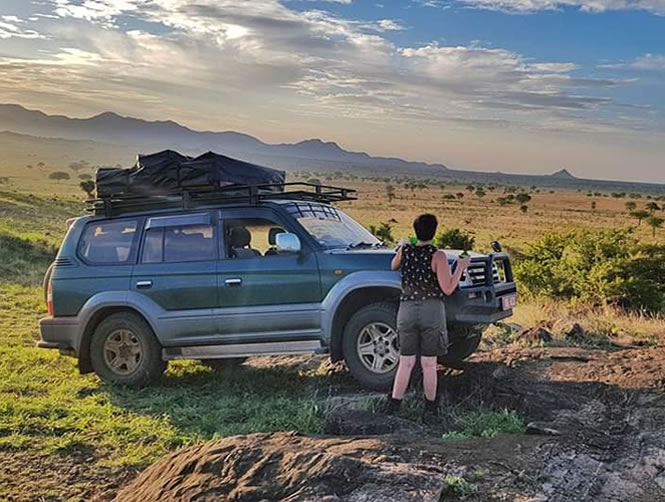 Cross-border car rental Uganda lets you collect a 4×4 at Entebbe, Kampala, or Jinja and keep driving across the border. From the source of the Nile, you can head east to Kenya, southwest to the Gorilla Highlands and Rwanda, or south through Mutukula into Tanzania. Car Rental 4×4 arranges the permission, paperwork, and insurance for the crossing. This page lists the pick-up points, the official border posts, the mandatory documents for you and for the vehicle, the current health-screening rules, and what each crossing will cost
What Is Cross-Border Car Rental in Uganda?
Cross-border car rental from Uganda: let’s hire a vehicle in one country and take it into another with the rental company’s written permission. From Uganda, a Ugandan-registered vehicle can normally enter Kenya, Tanzania, and Rwanda. South Sudan, the DR Congo, and Burundi are not offered as standard destinations for security, health, or border-status reasons.
The rental company prepares a letter of authority and a certified copy of the vehicle registration card and regional insurance so officials at the border can see the vehicle is allowed to leave Uganda and is insured where you are going. The trip also needs your visas, insurance, and driving documents.
- Where can I pick up? Entebbe (including the international airport), Kampala, and Jinja.
- Which countries can I enter? Kenya, Tanzania, and Rwanda. Kenya is the most common entry point, typically through Busia or Malaba.
- Does the driving side change? Only for Rwanda. Uganda, Kenya, and Tanzania drive on the left. Rwanda drives on the right.
- How much notice do you need? At least one week is required, and longer during peak season.
- Is there extra paperwork? Every country on the route needs its own visa or entry authorization, regional motor insurance, and a customs record for the vehicle. Kenya also needs a temporary import permit.
- Is there health screening? Due to the current Ebola outbreak, please anticipate temperature checks and forms at the borders. See the health section below.
Destination | Typical policy | Main land crossings from Uganda |
Kenya | Widely allowed | Busia, Malaba (also smaller posts such as Lwakhakha and Suam, confirm before use) |
Tanzania | Widely allowed | Mutukula |
Rwanda | Allowed on request | Katuna/Gatuna, Kyanika/Cyanika, Mirama Hills/Kagitumba |
South Sudan | Not offered as standard | Elegu/Nimule. Security assessment and written approval needed |
DR Congo | Not offered. Border closed to ordinary passenger traffic | Mpondwe/Kasindi, Bunagana |
Burundi | Not offered from Uganda | Reached only via Tanzania or Rwanda. The Rwandan–Burundi land border has been closed since January 2024. |
Pick-Up Locations: Entebbe, Kampala, and Jinja
You can start your cross-border trip from any of our Ugandan pick-up points. Choose the one that saves you the most driving on your first day.
Pick-up | Best for | Typical onward route |
Entebbe (including Entebbe International Airport) | Arriving by air and starting straight away, with no need to enter Kampala traffic | Entebbe to Kampala (via the Entebbe Expressway, toll applies), then east to Jinja and Busia or Malaba for Kenya, or southwest for Katuna and Rwanda |
Kampala | City hotels, business travelers, and groups arriving by road | East through Jinja to Busia or Malaba for Kenya, southwest through Masaka and Mbarara to Katuna for Rwanda, or south to Mutukula for Tanzania. |
Jinja | Travellers heading to Kenya, or those starting at the source of the Nile | East to Busia or Malaba, about two hours closer to the Kenyan border than Kampala |
- Meet-and-greet and delivery: ask us about airport handover at Entebbe and delivery to Kampala and Jinja hotels.
- One-way rentals: collect in Entebbe, Kampala, or Jinja and drop off in Nairobi, Kigali, or another city where available. A one-way fee applies.
- Check the paperwork at pick-up: the letter of authority, registration copy, Yellow Card, and insurance extension must be in your hands before you drive.
Mandatory Border Points of Crossing
Vehicles and passengers must cross only at official border posts. Entering or leaving elsewhere is illegal, makes the vehicle and its insurance invalid, and exposes you to arrest and fines. Several posts are One-Stop Border Posts (OSBPs), where both countries complete exit and entry formalities on one site.
Destination | Official crossing (Uganda / other side) | Where it connects | Notes |
Kenya | Busia / Busia | Jinja and Kampala to Kisumu, Nakuru, and Nairobi | OSBP on the northern corridor. Heavy truck traffic, so cross early. |
Kenya | Malaba / Malaba | Tororo and Jinja to Eldoret, Nakuru and Nairobi | OSBP and the busiest crossing. Health screening is reported at the post. Expect queues. |
Kenya | Lwakhakha / Suam | Mount Elgon area to western Kenya | Smaller crossings. Confirm opening hours and customs services with us before using |
Tanzania | Mutukula / Mutukula | Masaka and the Kagera region to Bukoba, Mwanza, and the Central Corridor | OSBP, open 24 hours. It is the main crossing for private vehicles. Kyaka is a secondary crossing mainly for goods and locals. |
Rwanda | Katuna / Gatuna | Kabale and Lake Bunyonyi to Kigali | This is the busiest and most direct route to Kigali. Reported to operate 24 hours |
Rwanda | Kyanika / Cyanika | Kisoro, Mgahinga, and Bwindi to Musanze and Volcanoes National Park | Key crossing for gorilla trips. Reported hours about 06:00 to 20:00 |
Rwanda | Mirama Hills / Kagitumba | Ntungamo, Lake Mburo, and Queen Elizabeth to Nyagatare and Akagera | OSBP, newer and less congested. Reported hours about 06:00 to 20:00 |
South Sudan | Elegu / Nimule | Gulu to Juba | Not offered as standard. Requires a security assessment and written approval |
DR Congo | Mpondwe / Kasindi, Bunagana | Western Uganda to Eastern DR Congo | This border point is closed to ordinary passenger traffic. Not offered |
Border points: what to knowHours can change. The hours above come from travel guides. Confirm opening hours and customs services before you travel. Do not use unofficial routes or tracks. Vehicle insurance and the letter of authority are valid only for lawful crossings. Record every crossing. Keep your exit stamp, entry stamp, and the customs record for the vehicle in one folder. Please verify the current status of any border before you go. Posts can close or restrict traffic at short notice for security, health, or maintenance reasons. |
Cross-Border Car Rental from Uganda to Kenya
Kenya is the most popular cross-border destination from Uganda. From Jinja it is only a short drive to Busia or Malaba, and from there roads lead to Kisumu, Nakuru, Naivasha, and Nairobi. Kampala to Nairobi is roughly 650 km, a long day by road, so many travelers stop overnight in Kisumu or Nakuru. Kenya, like Uganda, drives on the left.
What Kenya requires
- Electronic Travel Authorisation (eTA): needed by most foreign visitors, costing about USD 30 to 32.50 for a standard tourist authorisation. EAC citizens follow different rules.
- Mandatory travel health insurance: Kenya now requires inbound travel health insurance for most foreign visitors, reported at about USD 44 plus a gateway fee, around USD 52, bought through the eTA portal or eCitizen. Check the official portal when you apply, because guidance on home-country policies has changed.
- Health surveillance form and screening: travelers arriving from Uganda must undergo temperature screening and complete an electronic traveler surveillance form. Complete it before you arrive.
- Temporary import permit (Form C32): a foreign-registered vehicle must be declared at the border, and a temporary importation permit must be issued by the Kenya Revenue Authority. It is reported to be valid for 14 days, extendable on request.
- Foreign vehicle operation permit: issued by the National Transport and Safety Authority through eCitizen. Reported fees for vehicles under 2000 cc are about KES 2,570 for one month and KES 6,425 for three months, and about KES 5,140 and KES 12,850 for larger vehicles. A free temporary seven-day permit is available at entry points.
- Penalties: driving without the right permits can lead to the vehicle being impounded.
- Parks: Kenya Wildlife Service rules for foreign-registered vehicles vary. Ask us before planning a Maasai Mara or Amboseli leg.
Popular Kenya routes
- Jinja or Kampala to Busia, Kisumu, and the Maasai Mara.
- Entebbe to Malaba, Nakuru, and Naivasha, then on to Nairobi.
- Kampala to Nairobi and a loop through Amboseli, Tsavo, and the coast.
Cross-Border Car Rental from Uganda to Tanzania
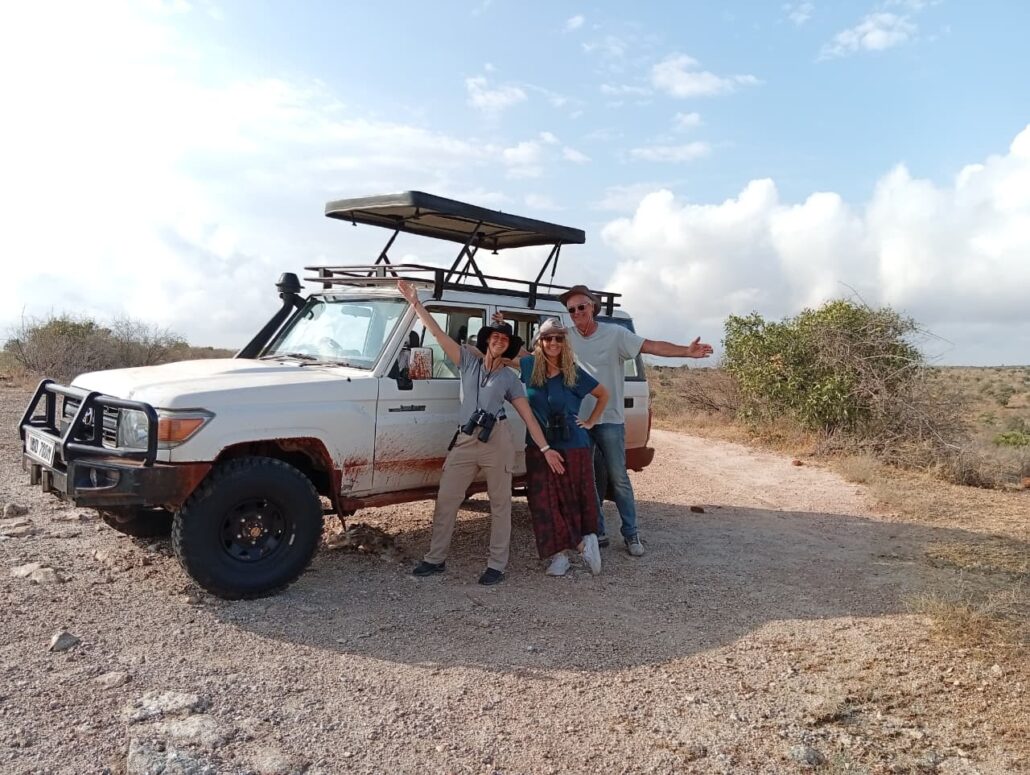 Tanzania is reached at Mutukula, an OSBP open 24 hours on the road south from Masaka. From Mutukula, the route leads to Bukoba on Lake Victoria, then on to Mwanza and the Serengeti, or across the north and east of Tanzania. Tanzania drives on the left.
- Separate visa: the East Africa Tourist Visa does not cover Tanzania. Apply for a Tanzanian e-visa on its own.
- Mandatory travel insurance: from 1 October 2026, most foreign visitors entering mainland Tanzania must hold government-issued inbound travel insurance. It costs USD 44, is valid for up to 92 days with multiple entries, and can be bought online or at the port of entry. EAC and SADC residents are exempt.
- Health checks: Tanzania has tightened border monitoring because of the regional Ebola outbreak. Expect screening at Mutukula.
- Driving license: carry an International Driving Permit alongside your national license.
- Foreign-vehicle charges: Tanzania charges transit or road fees on foreign-registered vehicles at the entry point. Keep every receipt.
- Safety equipment: a reflective vest, two warning triangles, and a fire extinguisher are expected in the car.
- Police checkpoints: Tanzania has many checkpoints, often with speed guns. Built-up areas are commonly 50 km/h, so reduce speed through villages and always ask for an official ticket and receipt for any fine.
- Park access: rules for foreign-registered vehicles in Tanzanian parks have varied over time and may differ for self-drive and guided trips. Please confirm the current position with us before planning a Serengeti or Ngorongoro leg.
- Do not drive in the dark. Some operators prohibit driving before about 6:30 am and after about 7:00 pm.
Cross-Border Car Rental from Uganda to Rwanda
Rwanda is a short hop from south-western Uganda. Katuna/Gatuna serves the road from Kabale and Lake Bunyonyi to Kigali, Kyanika/Cyanika leads from Kisoro and the gorilla parks to Musanze and Volcanoes National Park, and Mirama Hills/Kagitumba links Lake Mburo and Queen Elizabeth with Akagera. Kampala to Kigali is roughly 500 km.
- Driving side changes: you move from the left to the right. Vehicles rented in Uganda are typically right-hand drive, so overtaking in Rwanda needs extra caution.
- Visa: reports indicate that Rwanda issues visas on arrival to nationals of all countries at Kigali airport and land borders, with a single-entry tourist visa costing about USD 50, while many nationalities pay nothing. EAC citizens enter free for up to six months. Check the official portal before travel.
- East Africa Tourist Visa: USD 100, covering Uganda, Kenya, and Rwanda for 90 days. Apply with Uganda as your first entry.
- Vehicle: letter of authority, Ugandan registration card copy, COMESA Yellow Card for Rwanda, and a customs declaration for temporary entry. The Rwanda Revenue Authority leads at some posts.
- Health rules: if you have travelled to or through the DR Congo in the previous 30 days, Rwandan authorities may deny you entry during current health restrictions.
- Plastic bags: Rwanda bans single-use plastic bags, so do not carry them across the border.
- Border history: Rwanda closed its main border with Uganda in February 2019, and Gatuna reopened in January 2022. Normal movement has since resumed, but please confirm the current status before you travel.
Choose the Right Rental Option for Your Cross-Border Car Rental From Kenya
Car Rental 4×4 offers the following cross-border options from Entebbe, Kampala, and Jinja.
Short cross-border self-drive
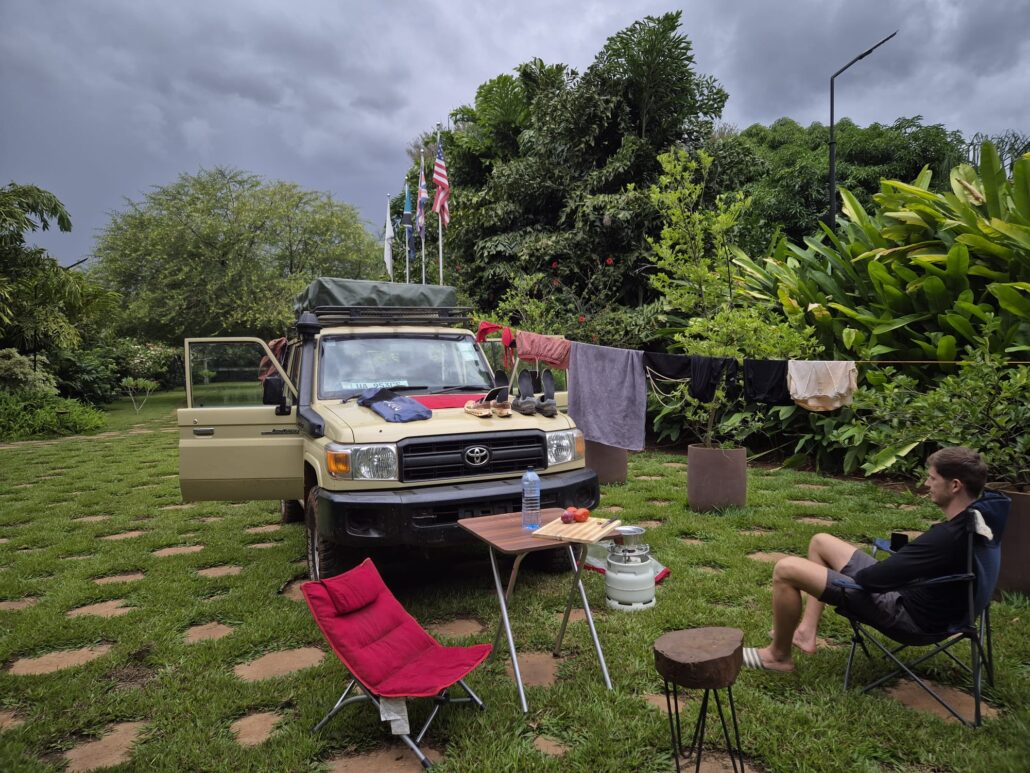 A 4×4 or SUV for one or two weeks, with the letter of authority, yellow card, and insurance extension arranged before you arrive. This option is suitable for routes from Jinja to Nairobi, Kampala to Kigali, or Kampala to Bukoba and Mwanza.
Long-term cross-border car rental from Uganda
This service is designed for trips of about three weeks and longer, such as multi-country overland journeys, research and volunteer assignments, and film or photography crews.
- Lower effective daily rate as the rental period grows.
- Letter of authority written for the whole itinerary, updated if plans change.
- COMESA Yellow Card and insurance are arranged for the full period, with renewal if the trip is extended.
- Help with temporary import permits and renewals, such as Kenya’s C32 extension.
- Agreed mileage terms, a servicing plan, and a procedure for breakdowns and replacement vehicles.
- Flexible pick-up and drop-off, including one-way where available.
Cross-border car rental Uganda with camping gear
Camping keeps you close to the wildlife and keeps accommodation costs low. We can supply a 4×4 together with camping equipment.
- Tents, sleeping bags, and mattresses.
- Camp stove, cooking and eating utensils, cool box, and water containers.
- Folding chairs and a table are also included.
- Each country provides a packing checklist and a briefing on campsite booking, park rules, and wildlife safety.
Cross-border car rental Uganda with a rooftop tent
Car rental with a rooftop tent from Uganda turns a 4×4 into a self-contained camper that opens in minutes, making it ideal if you move camp every day or two.
- Sleeps you off the ground, away from mud, insects, and curious wildlife.
- Quick set-up and pack-down after a long driving day.
- Frees space inside the vehicle for luggage and supplies.
- It can be combined with ground-tent equipment for larger groups.
A rooftop tent adds height and weight. Drive carefully under low branches, expect slightly higher fuel use, and camp only in designated sites where park rules require it. Camping gear and tents travel with the vehicle, so we list them in the rental paperwork, and you declare them at customs if asked.
Which vehicle is best for which trip?
Trip type | Recommended vehicle | Why |
Highway-only (Kampala to Nairobi or Kigali) | Compact SUV or saloon | Lower rate and better fuel economy |
National parks, gorilla highlands, and rural tracks | 4×4 such as Land Cruiser, Prado, or Hilux double cab | Ground clearance, reliability, park requirements |
Family or group | 7-seater SUV or minibus | Space for luggage and passengers |
Camping or long trips | 4×4 with camping gear or rooftop tent | Self-contained travel |
Guided Trips Across the Border
If you travel with a driver-guide rather than self-driving, the arrangement at the border can differ from self-driving. Commercial tour vehicles and guides are generally licensed in the country where they are registered, which is why some combined itineraries change vehicles and driver-guides at the border. Ask us whether your route needs a handover.
- Permits are separate and not included. Each country’s authorities issue gorilla and chimpanzee trekking permits, park entry fees, and conservation fees, which must be booked in advance.
- Luggage and documents: during a vehicle swap, keep your valuables and documents with you, and check that your luggage is loaded and secured in the new vehicle.
- Self-drive is different. A Ugandan-registered self-drive 4×4 can usually cross with the right permission and insurance.
Plan for trekking days: Kyanika/Cyanika and Katuna/Gatuna are the most common crossings for Bwindi, Mgahinga, and Volcanoes National Park. Allow generous time for the border and the mountain roads
Mandatory Documents Checklist
Documents for every traveler
- Passport valid for at least six months from your date of entry, with enough blank pages for exit and entry stamps.
- Visa or travel authorization for each country you will enter (see the matrix below).
- Proof of mandatory travel insurance where required (Kenya and Tanzania).
- Health forms are required at borders, such as Uganda’s passenger locator form and Kenya’s traveller surveillance form.
- Yellow fever vaccination certificate, which several borders and visa processes ask for.
- Full driving license with a photo, plus an International Driving Permit. Carry both at all times.
- A credit card in the main driver’s name for the deposit.
Mandatory documents for the vehicle
- Letter of authority from Car Rental 4×4 naming every country and the dates you may travel.
- Certified copy of the vehicle registration card (logbook).
- COMESA Yellow Card is valid for every country on your route and for the whole period.
- Insurance extension covering the countries you will visit, including damage cover and waivers.
- Rental agreement and our 24-hour emergency contact are also included.
- Customs documents at each entry: temporary admission of the vehicle, such as Kenya’s Form C32 and NTSA foreign vehicle permit. We confirm the exact forms for each border before you travel.
- Exit clearance from Uganda so the vehicle is recorded as leaving and returning.
What each destination needs
Destination | Traveler documents | Vehicle documents |
Kenya | Kenya eTA, mandatory Kenya travel health insurance (EAC citizens exempt), traveller surveillance form, passport, driving licence, and IDP | Letter of authority, registration copy, Yellow Card, Form C32 temporary import, NTSA foreign vehicle permit (a free seven-day permit is available at entry points). Left-hand traffic |
Tanzania | Tanzanian e-visa, mandatory Tanzanian travel insurance (USD 44), passport, driving license, and IDP | Letter of authority, registration copy, yellow card, foreign-vehicle charges at entry, reflective vest, triangles, and extinguisher. Left-hand traffic |
Rwanda | Rwanda visa (on arrival or online) or East Africa Tourist Visa, passport, yellow fever certificate, no travel through the DR Congo in the last 30 days | Letter of authority, registration copy, yellow card, and customs declaration. Right-hand traffic |
Returning to Uganda | Passport, valid Ugandan visa or visa-free status (check validity for re-entry), passenger locator form | The vehicle was cleared out of each country, all permits were closed, and the letter of authority |
A carnet de passage is not needed for a rental car travelling within the East African Community. We confirm what applies to your route.