Car Rental 4×4 rents fully kitted 4×4 vehicles with rooftop tents or ground tents, complete camping kitchens, fridges, and safety equipment across Uganda, available for self-drive or with a professional driver-guide, for single days, several weeks, or several months, with one-way pickup and cross-border options into Kenya, Rwanda, and Tanzania.
A vehicle fitted for the wild does not merely carry you across Uganda; it settles you into it, nightfall after nightfall, beneath a different stretch of the same equatorial sky. This is Car Rental 4×4’s dedicated home for self-contained overland travel: a fully equipped 4×4 with rooftop tent or ground tent, kitchen, fridge, and recovery gear, released to travelers who want Uganda on their terms, parked beside the Nile at Murchison, tucked into the acacia at Lake Mburo, or waiting outside the gorilla trekking gate at Bwindi while the coffee brews.
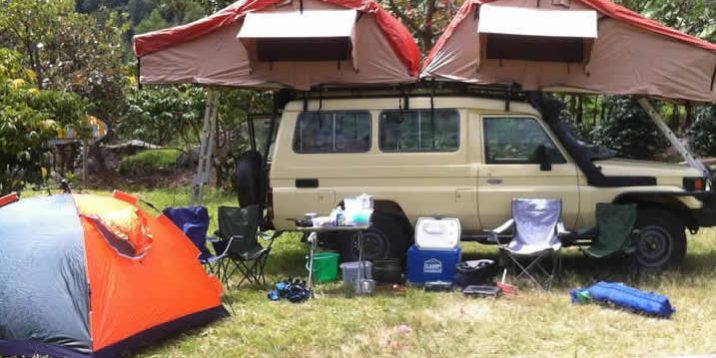 Renting a car with camping gear in Uganda means collecting a 4×4, typically a Toyota Land Cruiser, Prado, or Hilux double cab, already fitted with a rooftop tent or carrying a full ground tent kit, along with a camping kitchen box, a fridge or cooler, chairs, a table, and recovery equipment such as a jack, sand ladders, and a compressor. Prices for a fully equipped camping 4×4 in Uganda generally run from around $90 to $220 per day, depending on vehicle size and whether a driver-guide is included, with long-term and one-way arrangements priced separately. Self-drive is permitted for holders of a valid international or East African driving permit, and a driver-guide can be added for travellers who prefer to watch Uganda rather than navigate it. Every vehicle is roadworthy-checked, insured, and backed by 24-hour breakdown support anywhere in Uganda, with cross-border extensions into Kenya, Rwanda, and Tanzania arranged in advance through immigration and COMESA documentation.
Car rental with camping gear is a self-contained way of travelling in Uganda. A rugged 4×4 becomes both your transport and your accommodation, carrying everything needed to cook, sleep, and stay safe far from the nearest town. It suits the traveller who wants to see Murchison Falls at first light, not at the mercy of a lodge’s breakfast schedule, and who would rather fall asleep to hippos grunting along the Kazinga Channel than to a hotel air conditioner. Camping in Uganda’s national parks is permitted at designated public campsites inside or bordering the parks, and a well-equipped vehicle turns those campsites into some of the most memorable nights available anywhere on the continent.
What the Car rental with camping gear in Uganda Rental Includes
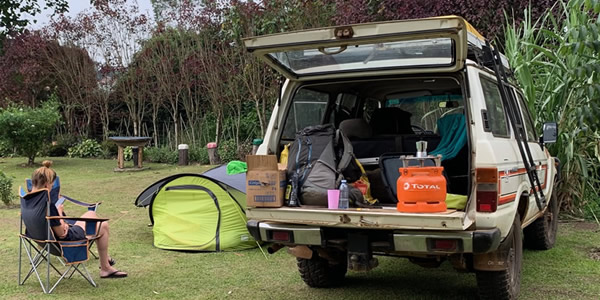 A standard camping rental from Car Rental 4×4 includes the vehicle itself in full mechanical condition, a rooftop tent or ground tent sized to the number of people, mattresses and bedding, a camping kitchen with a gas stove, cookware, and utensils, a fridge or cooler box, a table and folding chairs, lighting, and the vehicle’s own safety kit, a spare tire, a jack, a tow rope, a first aid kit, and a fire extinguisher. Fuel, park entry fees, campsite fees, and personal camping supplies such as food and drinking water are arranged separately, and every quote states plainly what is bundled and what is not, because ambiguity about equipment is the single most common cause of disappointment in overland travel.
How the Car rental Uganda with Camping Gear Setup Works
Rooftop tents fold down over the rear or roof rack of the vehicle and open in under five minutes using a ladder and gas struts, sitting a comfortable distance above the ground, away from insects and curious wildlife. Ground tent kits are stowed in the vehicle’s cargo area and pitched beside it on arrival at camp, giving more sleeping space for larger families at the cost of a slightly longer setup. Both systems arrive pre-packed and demonstrated in full at handover, so first-time campers leave the yard already knowing exactly how their night in the bush will unfold.
Every camping 4×4 in the fleet can be built up from a base vehicle to a fully outfitted expedition rig, and the equipment list below reflects what is genuinely available, not an aspirational catalogue.
Sleeping Equipment
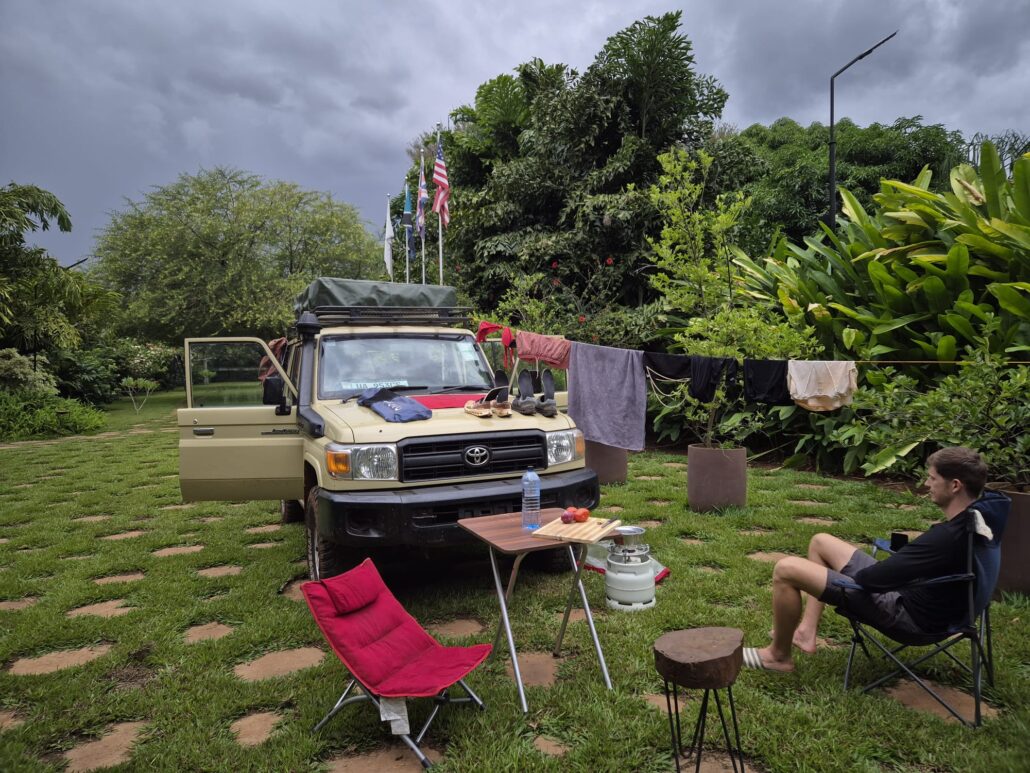 Rooftop tents accommodating two to three adults, ground tents suited to two, four to six people, foam mattresses, sleeping bags rated for Uganda’s cool highland nights, sleeping bags, pillows, and mosquito netting are all available, with bedding sized correctly for the vehicle and party rather than offered as a one-size guess.
Cooking Equipment
A gas stove with a burner, a full cookware set of pots and pans, a kettle, plates, cutlery, cutting boards, and a wash basin cover daily meal preparation, and a French press (on request) or stovetop percolator (on request) are available for travellers who consider morning coffee non-negotiable, which, on a Ugandan campsite at sunrise, it usually is.
Camping Furniture
Folding camp chairs, a collapsible table, and a gazebo or shade awning attaching to the vehicle’s roof rack are all part of the standard camping package, giving every campsite an instant, comfortable living space regardless of how remote it is.
Water and Cooling Equipment
A 12-volt or gas-powered fridge or a high-quality cooler box, jerry cans for extra drinking and washing water, and water for longer bush stretches, keeping food fresh and hydration reliable well beyond the reach of any shop.
Vehicle and Safety Equipment
Every camping vehicle carries a full-size spare tire, a hydraulic jack and wheel spanner, a tow rope, jump leads, a tyre repair kit and compressor, a fire extinguisher, a comprehensive first aid kit, a torch or headlamp, and a GPS unit (though we encourage downloading an offline app known as waze.com) so that self-drive travellers heading into Kidepo or the Rwenzori foothills are never without the means to solve a problem themselves.
Camping Gear Included vs. Optional
The rooftop tent or ground tent, mattresses, the camping kitchen, fridge or cooler, table, chairs, and the vehicle’s own recovery and safety kit are included in every camping rental quote as standard. Items considered optional extras, because preferences vary widely between a couple travelling light and a family of six, include a second fridge, a hot-water shower unit, a satellite phone or tracker for very remote itineraries such as Kidepo, a rooftop solar panel for extended off-grid stays, and child car seats. Naming these clearly at the quote stage, rather than discovering a gap at the campsite, is standard practice at Car Rental 4×4.
Rooftop Tent vs. Ground Tent
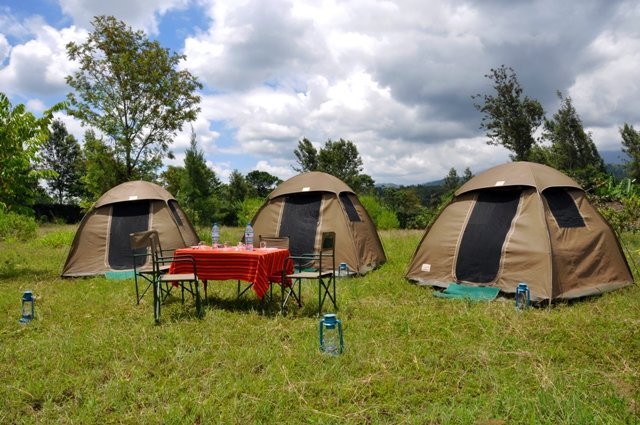 The choice between a rooftop tent and a ground tent shapes the entire feel of a Uganda camping trip, and it is worth deciding deliberately rather than defaulting to whichever looks more adventurous in a photograph.
Rooftop Tent Camping
A rooftop tent sets up in minutes, keeps sleepers off the ground and away from insects, snakes, and the curiosity of camp-visiting warthogs, and suits couples or solo travellers who value speed and simplicity above sheer sleeping space. It is the preferred configuration for travellers moving between parks every one or two nights, since striking camp in the morning takes only slightly longer than closing a car boot.
Ground Tent Camping
A ground tent, carried in the vehicle and pitched on arrival, offers considerably more interior space and suits families or groups who want everyone under one roof or travelers planning to stay several nights in one location. It takes longer to set up and requires a flatter, more considered pitch but rewards that effort with room to spread out, stand up, and store gear inside rather than in the vehicle.
Rooftop Tent vs. Pop-Up Roof
A rooftop tent is a separate canvas structure that opens above the vehicle’s roof rack, giving a dedicated sleeping platform independent of the cabin below. A pop-up roof, by contrast, is a hinged section of the vehicle’s own roof that lifts to create standing headroom and a sleeping berth directly above the cabin, most often seen on converted camper vans rather than 4×4 pickups and wagons. In Uganda’s fleet, the rooftop tent is by far the more common and practical configuration for the terrain, being lighter, easier to service in remote areas, and better suited to the high-clearance 4x4s that Uganda’s park roads genuinely demand. Pop-up roof vehicles are available on request for travellers with a specific preference, but lead time and vehicle choice are more limited.
For Couples
A Land Cruiser Prado or Hilux double cab with a rooftop tent gives two travelers everything needed in a nimble, easy-to-drive package, ideal for a circuit through Bwindi, Queen Elizabeth, and Lake Mburo.
For Families
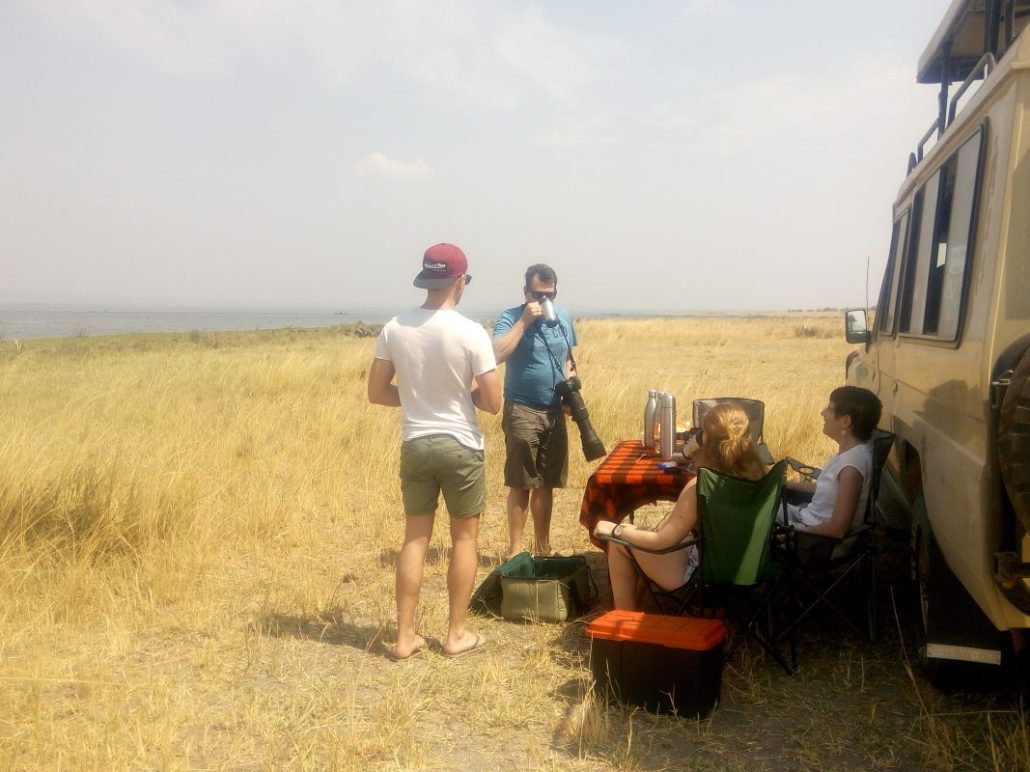 An extended Land Cruiser or camping van with a ground tent kit keeps the whole family together at night and carries enough kitchen and storage capacity for children’s needs across a two- or three-week itinerary.
For Friends and Groups
Two Land Cruiser 76 Series vehicles travelling in a convoy, each with its own rooftop tent, work better for groups of six or more than one oversized vehicle, giving redundancy if one needs servicing and flexibility to split for different activities.
For Self-Drive Travelers
The Land Cruiser 76 Series, with its high clearance, low-range gearing, and simple mechanical layout, is the most forgiving vehicle for travellers navigating Uganda’s murram roads and river crossings themselves for the first time.
For Long Trips
Any vehicle in the fleet can be configured for a long-term rental, but the Land Cruiser 76/78 Series is favored for trips exceeding three weeks because of its proven durability on unpaved roads and the ease of sourcing parts for it anywhere in East Africa.
The quality and completeness of the gear largely determine the quality of a camping safari in Uganda—a camp stove that fails at the Murchison campsite at 7pm, when the nearest town is two hours away on a dark road, is not just an inconvenience; a tent that leaks in a Queen Elizabeth rainstorm is not an adventure. Car Rental 4×4 has curated its Uganda camping gear through years of on-the-ground experience in what actually works across the country’s enormously varied conditions, from the hot, humid lowlands of Murchison Falls to the cool highland nights of Bwindi’s forest boundary.
Sleeping Equipment
The foundation of a good night in the Ugandan bush is a sleeping system matched to the specific temperature range of the parks on your itinerary. Our standard sleeping kit includes a 0°C-rated sleeping bag per person, appropriate for all Ugandan national park environments, including the highland boundary areas of Bwindi and Kibale, and a self-inflating foam sleeping pad providing both insulation and comfort on uneven campsite ground. For rooftop tent configurations, the sleeping pad integrates with the tent’s fold-out mattress. Pillow inserts are included as standard.
Shelter: Rooftop Tent and Ground Tent Options
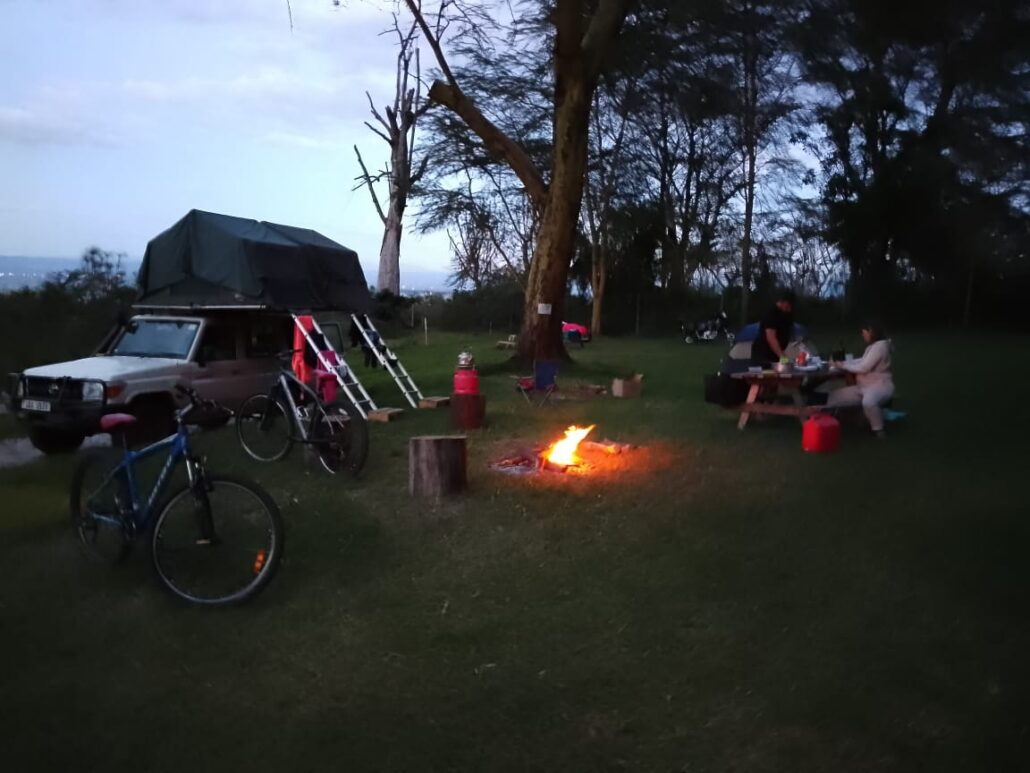 Car Rental 4×4 offers camping gear packages in both rooftop tent and ground tent configurations, as well as combinations of both for larger parties. The rooftop tent, hardshell or softshell, mounted on the vehicle’s roof rack — is the preferred configuration for Uganda specifically: its elevation above ground level provides meaningful separation from ground-based insects, keeps the sleeping area above the damp ground of Uganda’s frequently wet forest campsites, and deploys in under two minutes at any campsite. In Bwindi’s forest boundary campsites, where rain is possible at any time of year, the rooftop tent’s waterproof performance is its most practically important characteristic. For full details on the rooftop tent, please visit our rooftop tent page.
Camp Kitchen
The camp kitchen kit is the social and logistical centrepiece of every camping safari, and Car Rental 4×4 equips it for Uganda’s specific operational conditions. The standard kitchen kit includes a gas stove, a set of saucepans with covers/lids, a full set of utensils, a lightweight cutting board and knife set, enamel or melamine plates, bowls, cups, and cutlery per person, a pot scrubber, a washing basin, and a folding camp kitchen table plus chairs. The stove is tested before every rental deployment. Uganda’s designated cooking areas in the park campsites follow fire management rules, which are respected as part of every Car Rental 4×4 camping briefing.
Food Storage and Cooling
All camping gear packages include a standard 40-liter heavy-duty rigid-shell cooler box that can maintain ice for 36 to 48 hours under Uganda’s ambient temperatures. Uganda’s equatorial climate means that ambient temperatures in the lowland parks, Murchison Falls, and Queen Elizabeth can reach 30 to 35°C during the day, making effective cooling critically important for food safety. Ice is available in Masindi (for Murchison), Kasese (for Queen Elizabeth), and Fort Portal (for Kibale). The cooler box is pre-loaded (by you) with ice for the first day’s provisions and is sized to fit securely in the vehicle’s load area without compromising passenger space.
Camp Furniture and Comfort—Only on Request at an extra cost
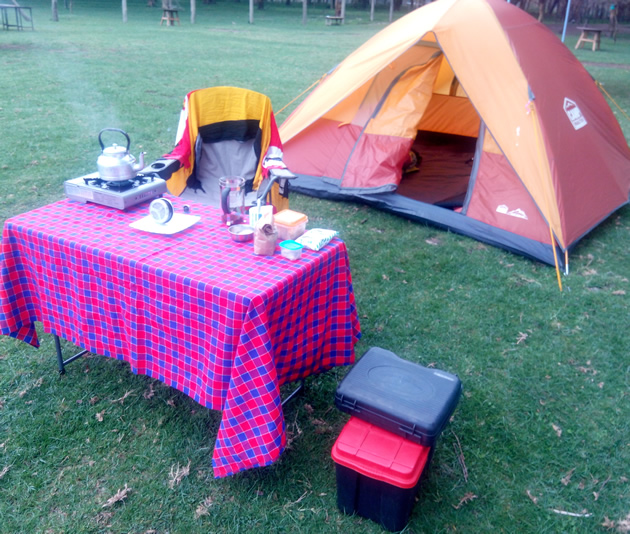 One heavy-duty folding camp chair per person and a folding camp table are standard. For parties of four or more, an additional kitchen prep table and a hanging camp organiser are included. A lantern that provides ambient camp lighting. A secondary headlamp per person is included for hands-free movement around the campsite after dark, an essential safety item in Uganda’s national parks where wildlife moves freely through and around campsites.
Water, Sanitation, and Hygiene
A 20-liter water carrier provides camp water storage. A portable pump-style system for filtering water is included for remote campsites where only river or borehole water is available (on request); Uganda’s forest and savannah park streams are not reliably potable without filtration. A portable solar-heated camp shower (20-liter water bag with integrated showerhead, heated by direct sunlight over two to three hours) provides personal hygiene capability at campsites without shower blocks—provided only on request. A portable camp toilet with biodegradable waste bags is available for remote sites with no toilet facilities.
Safety, Recovery, and Vehicle Emergency Equipment
Every Car Rental 4×4 Uganda camping package includes a comprehensive vehicle safety and recovery kit: a hi-lift jack, sand recovery tracks for soft mud and river crossings, a tow rope, warning triangles, a fire extinguisher, and a wilderness-rated first aid kit. The first aid kit is specific to remote bush environments and includes wound care supplies, oral rehydration salts, blister treatment, insect sting relief, antidiarrheal medication, and a wilderness first aid reference. A vehicle tool kit covers tire changes, battery terminals, and fuse replacement. Uganda’s remote park roads, particularly the Kidepo Valley approaches and the Bwindi forest access tracks, make the recovery kit a practical necessity rather than a precaution.
The complete camping gear kit is optimized for each vehicle in the Car Rental 4×4 Uganda fleet, ensuring that the addition of camping equipment does not compromise ground clearance, payload rating, or fuel efficiency on Uganda’s demanding park roads.
Driving Requirements
Self-drive travellers need a valid driving licence from their home country accompanied by an International Driving Permit or an East African driving permit for regional residents and must be at least 21 years of age with a minimum of two years’ driving experience. A refundable security deposit of $500 is held against the vehicle for the duration of the rental.
 Vehicle Handover
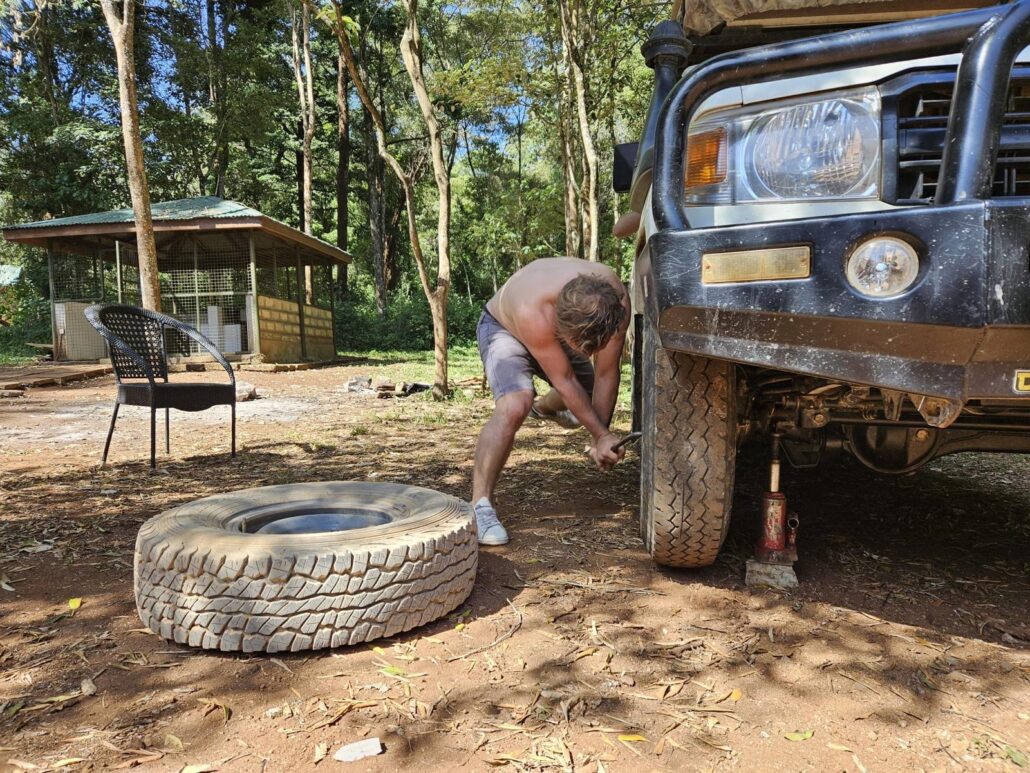
Handover includes a full walk-around inspection, a practical demonstration of the rooftop tent or ground tent setup, an explanation of 4×4 low-range engagement and river-crossing technique, and a briefing on the specific route booked, so that no traveler leaves the yard uncertain about any part of the vehicle or its camping equipment.
Navigation and Remote Roads
Preloaded offline GPS mapping, a printed route sheet, and telephone support from the operations team cover the entire route, with particular attention paid to river crossings, seasonal road closures, and the longer, more isolated stretches into Kidepo Valley and the Rwenzori foothills.
Breakdown Support
A 24-hour breakdown line, a network of trusted mechanics, and a clear escalation process ensure that any mechanical issue in Uganda is a delay, not a crisis.
Travellers who would rather absorb Uganda’s landscapes and wildlife than concentrate on gear changes and river crossings can add an experienced, English-speaking driver-guide to any camping rental. The driver-guide handles navigation, park procedures, and vehicle maintenance on the road, sets up and breaks down camp, and brings detailed knowledge of where the elephants gather along the Nile at dusk or which Kidepo track rewards an early start. This option suits first-time visitors to Uganda, families travelling with young children, and anyone who prefers the camping experience without the logistics attached to it, and it can be added or removed at any point in the planning process without changing the underlying vehicle and equipment package.
Where Can I Go With a Camping 4×4 in Uganda?
A fully equipped camping 4×4 opens every corner of Uganda’s park system, each with its own camping character worth understanding before you plan a route.
Bwindi Impenetrable National Park
Community and park-run campsites around Buhoma and Ruhija sit at the forest edge, offering cool highland nights and dawn birdsong ahead of gorilla trekking, and the terrain around them is well within reach of any 4×4 in the fleet.
Murchison Falls National Park
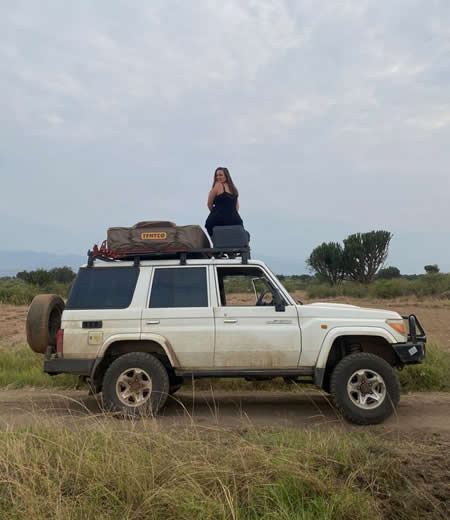 Campsites along the Nile at Paraa and near the top of the falls put you within earshot of hippos and within a short drive of some of Uganda’s best game viewing, and the approach roads reward a proper 4×4 with ample clearance, especially in the wetter months.
Kidepo Valley National Park
Uganda’s most remote park, Kidepo, rewards travellers who reach it with dramatic mountain backdrops and some of the least-visited savannahs in East Africa, and the long approach from Kampala or Gulu is precisely the kind of route for which a well-equipped, mechanically sound camping 4×4 is built.
Queen Elizabeth and Kibale Forest
Campsites near the Kazinga Channel and around Kibale’s forest edge combine easy access with outstanding wildlife and chimpanzee tracking, making the 100-mile stretch a comfortable, rewarding middle leg of most Uganda camping circuits.
Lake Mburo and the Southern Circuit
Closest of the major parks to Kampala and Entebbe, Lake Mburo’s lakeside campsites make an ideal first or last night of a trip, easing travelers gently into, or out of, the rhythm of camping life.
Uganda Camping Safari Routes
A ten- to fourteen-day classic circuit typically links Lake Mburo, Bwindi, Queen Elizabeth, Kibale, and Murchison Falls, camping two to three nights in each. A shorter seven-day version concentrates on Bwindi, Queen Elizabeth, and Murchison for travellers with limited time who still want gorillas, big game, and the Nile. The full northern extension, which adds Kidepo Valley, suits travellers with three weeks or more who want to see the whole country, including landscapes that few visitors ever reach. Every route is built around realistic driving times on Uganda’s roads rather than optimistic map distances, and each is adjusted to the vehicle, season, and pace the traveller actually wants.
Murchison Falls National Park — Camping on the Nile
Murchison Falls National Park has the most extensive campsite network in Uganda: multiple designated sites on both the north and south banks of the Nile, each positioned within the park boundary and within range of the wildlife corridors that make Murchison one of East Africa’s finest game viewing destinations. The north bank campsites at Red Chilli and Paraa provide access to the morning lion circuit and the afternoon Nile hippo activity. The Nile itself provides the campsite soundtrack: hippos surfacing and submerging throughout the night, occasionally supplemented by the heavier footfall of elephants moving through the campsite perimeter in the small hours. The campsite facilities vary from basic with long-drop toilets to moderately developed with ablution blocks.
Queen Elizabeth National Park — Channel-Side Camping
Queen Elizabeth National Park’s campsite network is centered on the Kazinga Channel corridor, a position that places camping travellers within sight and sound of one of Africa’s most wildlife-dense waterways. The channel’s hippo populations are exceptional, and camping beside the Kazinga means sleeping to a depth of hippo sound that carries clearly across the water from the moment the lodge boats have retired for the evening. The Mweya peninsula campsites provide direct access to the channel bank for evening wildlife observation without a vehicle, and the Ishasha sector’s campsite in the south offers wild fig-tree surroundings where the tree-climbing lions are occasionally visible in the canopy during morning camp setup.
Kibale Forest National Park — Primate Campsite
The Kibale Forest campsite is positioned at the park’s buffer zone boundary, close enough to the forest edge that the dawn chimpanzee chorus arrives at the campsite as a direct, unmediated acoustic event before 6am. The campsite’s proximity to the forest is its most distinctive quality, with the sounds and smells of an equatorial rainforest infiltrating the campsite from midnight, colobus monkeys visible in the canopy above the tent setup area, and the general atmosphere of a place where the boundary between camp and forest is genuinely porous. The campsite facilities are basic, and the Car Rental 4×4 camping kit provides complete self-sufficiency.
Bwindi Impenetrable Forest—Forest Boundary Camping
Camping on Bwindi’s forest boundary is available at several designated sites adjacent to the national park, providing proximity to the mountain forest’s extraordinary nocturnal character — the tree hyrax’s extraordinary territorial call in the middle of the night, the sound of rainfall moving through the forest canopy in a wave before it reaches the campsite, and the dawn activity of the forest birds beginning while the campsite is still dark. Bwindi is Uganda’s wettest major park environment, and the Car Rental 4×4 rooftop tent’s waterproof construction and elevated sleeping position are particularly important here—ground-level camping in a heavy Bwindi downpour without a properly waterproofed tent is one of the less romantic camping experiences available in East Africa.
Lake Mburo National Park — Accessible Camping Circuit
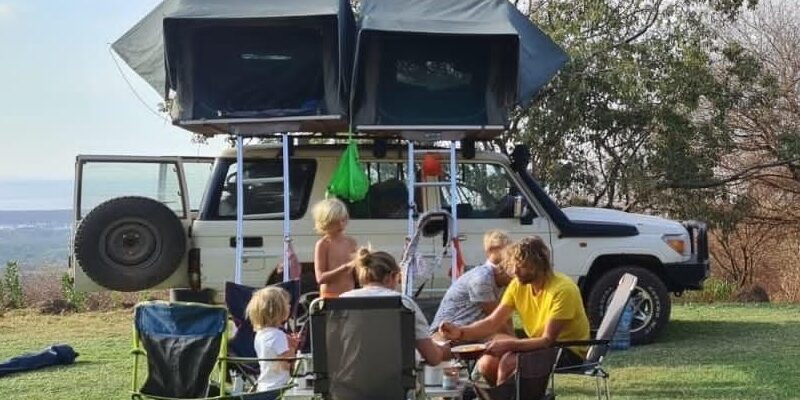 Lake Mburo National Park, the most accessible of Uganda’s major parks from Kampala, has designated campsites that provide excellent proximity to the park’s hippo channels and zebra grasslands. The lakeside positions offer early morning birdwatching from the campsite margin, and the park’s compact geography means that campsites are always within a short drive of productive game drive circuits. Lake Mburo is the ideal first-night camping stop on a Kampala-to-western-Uganda circuit, allowing a gentle introduction to park camping before the wilder environments of Murchison and Queen Elizabeth.
Kidepo Valley National Park — Remote Wilderness Camping
Camping in Kidepo Valley is for the Uganda traveller who wants their bush experience to be genuinely unfiltered. The Apoka campsite inside the park is one of Uganda’s most remote camping positions, the long approach drive from Kampala or Gulu arriving at a campsite surrounded by the Narus Valley’s semi-arid savannah, populated by cheetahs, caracals, and the northern Uganda species that exist nowhere else in the country. The campsite facilities are basic, and the wilderness character is complete. Kidepo camping requires a fully equipped, self-sufficient vehicle and the kind of bush confidence that the Car Rental 4×4 pre-trip briefing and 24/7 support line are specifically designed to provide.
A self-drive camping 4×4 for two, such as a Hilux or Prado with a rooftop tent, typically runs from roughly 100 to 200 US dollars per day. A Land Cruiser 76/78 Series is set up for serious overlanding runs from around 150 to 250 US dollars per day. Adding a professional driver-guide typically adds 40 to 70 US dollars per day depending on the length and remoteness of the itinerary. Larger vehicles with ground tent kits for families or groups run from roughly 180 to 350 US dollars per day. Rates fall meaningfully for rentals beyond two or three weeks, and every quote is confirmed in writing before any deposit is requested.
What Determines the Rental Price for a Uganda Car rental with Camping Gear?
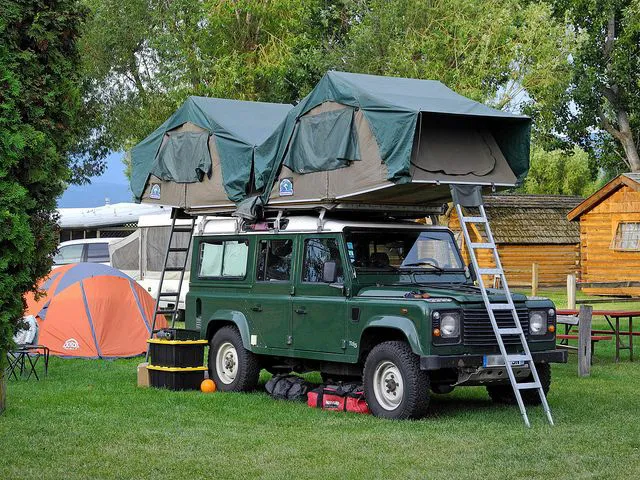 Vehicle size and camping configuration are the largest factors, followed by rental duration, since long-term bookings unlock discounted daily rates. Whether a driver-guide is included, the season, Uganda’s dry months from June to September and December to February, and the complexity of the route, particularly any cross-border leg, all shape the final figure, and each is itemized rather than folded into an unexplained lump sum.
What’s Included in My Uganda Car Rental with Camping Gear?
The vehicle in full mechanical and roadworthy condition, the rooftop tent or ground tent and bedding, the camping kitchen, fridge or cooler, table and chairs, standard insurance cover, unlimited or generously allocated mileage depending on the plan chosen, and 24-hour breakdown support are included in every camping rental.
What’s Not Included in My Car Rental with camping gear in Uganda?
Gorilla trekking permits (USD 800 per person) and chimpanzee tracking permits (USD 250 per person), personal food and drink provisions, personal travel insurance (strongly recommended with medical evacuation coverage), optional boat safaris and guided walks booked through parks or lodges, driver-guide gratuities (USD 20 to 30 per day warmly encouraged for excellent service), Uganda Wildlife Autority campsite fees ranging from approximately USD 15 to USD 30 per person per night, and traffic fines or penalties during the rental period. Fuel, national park entry and camping fees, a driver guide unless specifically added, food and drinking water, cross-border permits and COMESA insurance where applicable, and any optional extras such as a satellite tracker or additional fridge are charged separately and confirmed in advance.
Insurance and Rental Protection
Every camping rental includes comprehensive insurance covering third-party liability and collision damage, with a defined excess payable in the event of an at-fault incident, which can be reduced through an optional excess-waiver upgrade. Camping equipment itself is covered against mechanical failure and normal wear, and travellers are asked to report any damage or loss immediately so it can be resolved without dispute at the end of the rental.
What Happens If the Vehicle Breaks Down?
A call to the 24-hour breakdown line sets the response in motion immediately: minor issues are talked through and often resolved roadside using the vehicle’s own tools, while anything more serious brings a mechanic or a replacement vehicle to the traveller’s location, with priority given to remote areas such as Kidepo or the Rwenzori foothills precisely because they are the routes where self-sufficiency matters most. No camping trip in Uganda can happen without this safety net already in place before departure.
A one-way camping rental, collecting the vehicle in Entebbe or Kampala and returning it in Gulu, Kasese, or at a border point toward Kenya or Rwanda, removes the need to double back on a route already driven and suits travelers continuing overland into a neighboring country or flying out from a different airport. A one-way fee applies to cover repositioning the vehicle, and it is calculated and confirmed at the quote stage rather than added as a surprise at drop-off.
Cross-Border Camping Car Rental
Uganda to Kenya
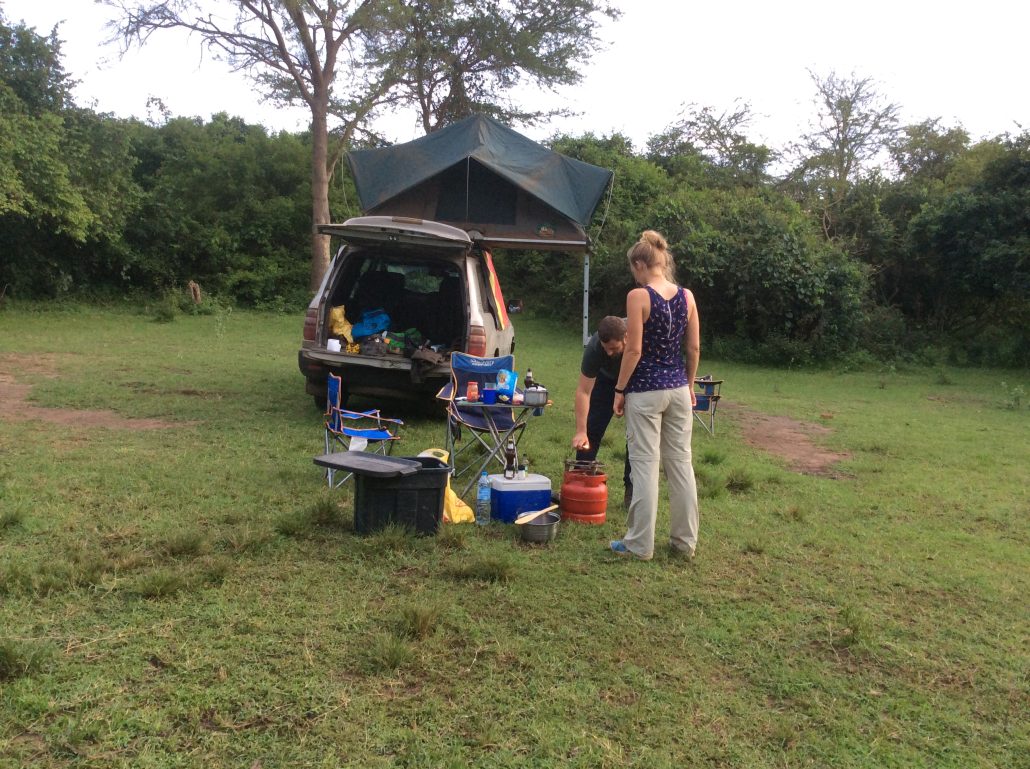 Camping rentals can cross into Kenya via Malaba or Busia with advance notice, the correct COMESA cross-border insurance certificate, and a temporary import permit arranged before departure, opening routes to the Maasai Mara or the Kenyan coast for travellers extending their trip.
Kenya to Uganda
The reverse route works the same way for travellers arriving from Kenya who want to continue their camping safari into Bwindi, Murchison, or Kidepo, with all paperwork arranged before the vehicle leaves Kenyan soil.
Uganda to Rwanda
The Katuna or Cyanika border crossings connect Uganda’s camping circuit directly to Rwanda’s Volcanoes National Park, a natural extension for travellers already gorilla trekking in Bwindi who want to add Rwanda’s golden monkeys and Lake Kivu to their trip.
Uganda to Rwanda to Kenya to Tanzania
For travellers planning a genuine grand tour of the region, a single camping 4×4 can be arranged for a multi-country East African circuit that takes in Uganda, Rwanda, Kenya, and Tanzania, with all cross-border insurance and permits coordinated as one package rather than negotiated at each frontier.
For travellers planning weeks or months on the road, sabbatical overlanders, researchers, film crews, or long-stay volunteers, Car Rental 4×4 offers dedicated long-term camping rental terms with discounted monthly rates, scheduled maintenance built into the plan, and a single point of contact for the duration. Long-term rentals are structured with clear terms on mileage, service intervals, and what happens in the event of extended breakdown, so that a two-month camping expedition across Uganda is planned with the same rigor as a two-week holiday, not left to work itself out along the way.
How Camping Works During Your Trip
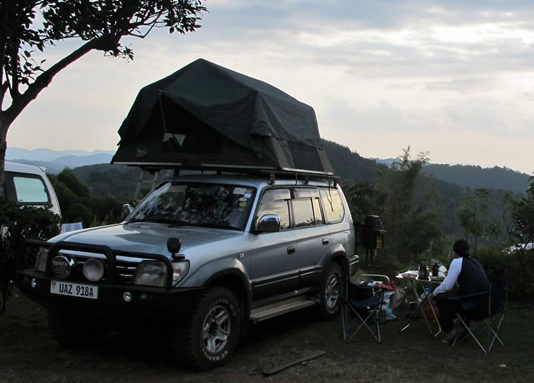 Each day typically ends with arrival at a pre-identified or booked campsite by late afternoon, giving enough daylight to set up the rooftop tent or pitch the ground tent, start the fire or stove, and settle in before dark. Mornings begin with breaking camp, a task that takes minutes with a rooftop tent and closer to twenty with a ground tent, before the day’s drive resumes. Campsite fees are paid on arrival or pre-booked depending on the park, and the operations team remains reachable throughout for any question about the route, the equipment, or the day ahead.
What Should I Pack for Car Rental With Camping Gear In Uganda?
Beyond the equipment already supplied, travellers should bring personal clothing layered for cool highland nights and warm midday sun, sturdy closed shoes for gorilla or chimpanzee trekking, a headlamp as backup to the vehicle’s lighting, insect repellent, sunscreen, any personal medication, a reusable water bottle, and a camera with charging capability, since power for devices comes from the vehicle rather than a wall socket.
Who Should Rent a car rental in Uganda with Camping Gear
Independent-minded couples who want Uganda without a fixed lodge itinerary, families who want their children waking up to the sound of the African bush rather than a hotel corridor, groups of friends splitting the cost of an unforgettable overland trip, and long-stay travellers who need reliable, self-contained transport for weeks at a time all find a natural fit in a well-equipped camping 4×4.
What to Check Before Booking
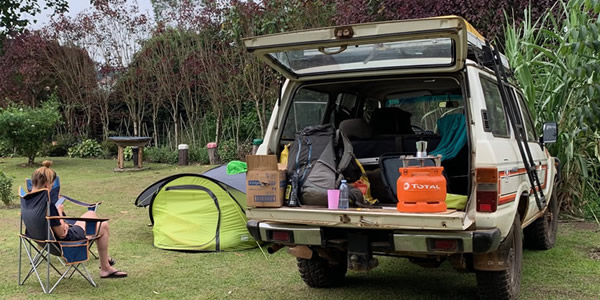 Confirm the exact vehicle model and camping configuration rather than a generic category, ask for an itemized list of what is included and what is charged separately, verify insurance terms and the applicable excess, check mileage allowances against your planned route, and ask directly about breakdown response times for the specific parks on your itinerary. A reputable operator answers every one of these questions in writing before asking for a deposit.
How to Book
Booking begins with a short conversation about dates, party size, and the parks you want to reach, from which Car Rental 4×4 proposes the right vehicle and camping configuration along with a full written quote. Once confirmed, a deposit secures the vehicle, the remaining balance and any driver-guide arrangement are settled ahead of arrival, and a detailed handover briefing on collection day completes the process before you drive out toward your first night under canvas.
Real Uganda Camping Rental Experiences
Travellers who have taken a rooftop-tent Land Cruiser through Bwindi and Murchison consistently describe the same turning point in their trip: the first morning they wake inside the park itself, coffee already on the stove, before the day’s first safari vehicles have even left the gate. Families who have driven the southern circuit in an extended camping vehicle describe children who stopped asking “are we there yet” once the destination became the campsite itself rather than a distant hotel. These are the moments a well-equipped camping 4×4 is built to deliver, and they are the reason repeat bookings make up a meaningful share of every camping season.