Hell’s Gate National Park is a small, spectacular park in Kenya’s Rift Valley, beside Lake Naivasha and about 100 km northwest of Nairobi, where tall red cliffs, volcanic towers, and a narrow gorge frame open grassland with zebras, giraffes, buffalo, and gazelles, and where you can cycle, walk, and climb among the animals. It has no lions, which is why it is one of the few Kenyan parks where visitors are allowed to cycle and hike on their own, and it is an easy day trip or weekend break from Nairobi. Plan a half day to a full day in the park, a night at Naivasha or in a campsite, and bring water, sun protection, and sturdy shoes, and confirm fees, gate times, bicycle hire, and gorge conditions before you go.
This guide explains what Hell’s Gate offers, how the activities work, what wildlife and scenery to expect, where to stay at every budget, how to get there and around, and how to fit it into a wider Kenyan safari. Because many readers will be planning a longer journey, it also includes a Kenya travel essentials section covering entry rules, money, health, driving, connectivity, and packing. For the town and lake next door, see our guide to One way car rental from Nairobi to Naivasha; for the nearby volcano, our Mount Longonot travel guide; and if you are starting in the capital, our Nairobi travel guide covers the city before you head into the Rift Valley.
Hell’s Gate National Park at a Glance
Quick fact | What to know |
Location | Nakuru County, Rift Valley, beside Lake Naivasha, about 25 km from Naivasha town and about 100 km from Nairobi |
What it is | A small national park of roughly 68 sq km, managed by the Kenya Wildlife Service, set among cliffs, gorges, volcanic plugs, and geothermal fields |
Famous for | Cycling and walking among wildlife, Fischer’s Tower and the Central Tower, the Hell’s Gate Gorge, rock climbing, hot springs, and the nearby Olkaria geothermal field |
Wildlife | Zebras, giraffes, buffalo, eland, hartebeest, Thomson’s and Grant’s gazelles, warthogs, baboons, and hyraxes, with raptors on the cliffs |
Languages | English and Swahili, with Maasai and Kikuyu communities in the area |
Climate | Warm and dry by day, usually about 12 to 28°C, with cool nights, strong sun, and two rainy seasons |
Altitude | About 1,900 m above sea level |
Currency | Kenyan shilling (KES). Cards work in lodges and larger shops, and cash or M-Pesa is useful at the gate and in Naivasha. |
Time needed | A half day for cycling or a gorge walk, a full day to combine activities, or a night if you camp or stay at the lake. |
Main areas | The Elsa Gate and visitor area, the main cycling road, Fischer’s Tower, the gorge, the Olkaria geothermal area, and the Maji Moto hot springs |
Best for | Cyclists, walkers, photographers, climbers, families, campers and short breaks from Nairobi |
Is Hell’s Gate Worth Visiting?
Yes, especially if you want an active day out. Hell’s Gate is one of the easiest and cheapest ways to see Kenyan wildlife at close range without a vehicle, because the main road is open to bicycles, and the most common animals, such as zebras and giraffes, are used to cyclists. The scenery is dramatic, with cliffs, rock towers, and a gorge you can walk through, and the park is close to Nairobi, Lake Naivasha, and Mount Longonot, so it combines easily with other stops. It is a good choice for families, backpackers, fitness travelers, and photographers.
It is also a small, dry park without the big cats of the major safari reserves, and the wildlife is spread out. The sun is strong, the cycling road is dusty, and the gorge can be dangerous in heavy rain. It is a day of walking, cycling, and scenery rather than a Big Five safari. With good preparation, it is one of the most enjoyable short trips from Nairobi.
Who it suits best
- Cyclists and active travelers who want to ride among zebras and giraffes.
- Walkers and photographers drawn to cliffs, gorges, and golden light.
- Climbers interested in Fischer’s Tower and the Central Tower.
- Families and school groups looking for a safe, informative day out.
- Campers who enjoy wild, open settings beside the cliffs.
- Self-drivers building a Naivasha, Hell’s Gate, and Longonot loop.
Wildlife and Scenery at Hell’s Gate: What You Can See
Feature | What makes it special? | Tips |
Zebras and giraffes | Plains zebra and Rothschild’s or Maasai giraffe graze near the road, often close to cyclists. | Give them space, and never chase or surprise them. |
Buffalo and Eland | Large antelopes and buffalo in the open grassland | Keep a safe distance, especially from buffalo |
Gazelles and hartebeest | Thomson’s and Grant’s gazelles, and Coke’s hartebeest on the plains | Best seen early morning and late afternoon |
Baboons and hyraxes | Troops of baboons and rock hyraxes on the cliffs | Do not feed them, and keep food out of sight. |
Raptors | Verreaux’s eagles, augur buzzards, lammergeiers, and vultures nest on the cliffs. | Bring binoculars. The cliffs are a good birdwatching spot. |
Rare cats and small predators | Serval, leopards, and cheetahs occur but are rarely seen. | Treat any sighting as a bonus. |
Fischer’s Tower | A volcanic plug that rises from the valley floor, named after an early European explorer | A popular photo stop and a climbing site |
Central Tower | Another rock tower, a short distance away | Visible from the cycling road |
Hell’s Gate Gorge | A narrow, winding gorge with red cliffs, side canyons, and, at the end, hot springs | Walk with a guide, and never enter during or after heavy rain. |
Obsidian and geothermal features | Obsidian rock, steam vents, and the Olkaria geothermal power station | Steam is hot, so keep to marked paths. |
Sightings vary by season and by day, and wildlife is easiest to see in the early morning and late afternoon.
Top Things to Do at Hell’s Gate
- Cycle the main park road: hire a bicycle at or near the gate and ride towards Fischer’s Tower and the gorge, passing zebras and giraffes. Check your bike, carry water, and start early.
- Walk the Hell’s Gate Gorge: a guided walk through the narrow canyon, usually two to four hours, with rock scrambling in places and hot springs near the end.
- Climb Fischer’s Tower and the Central Tower: with local climbing guides and equipment for beginners and experienced climbers.
- Walk on your own: along marked paths and the main road, subject to park rules, with attention to wildlife and the weather.
- Birdwatching: the cliffs hold raptors and many other birds, best in the early morning.
- Photography: golden light on the cliffs and towers, with animals in the foreground.
- Picnics and camping: at the public campsites and picnic spots, with the cliffs as a backdrop.
- Olkaria geothermal area: steam vents and power station views near the Olkaria Gate, with guided visits at some points. Confirm access in advance.
- Maji Moto hot springs and cultural visits: hot springs at the end of the gorge and Maasai cultural visits near the Maji Moto Gate, usually arranged through guides or a community group.
- Drive-through visits: a self-drive loop for those who prefer a vehicle, with stops at viewpoints.
Nearby experiences
- Lake Naivasha: boat rides, hippos, and birdlife. See our guide to one-way car rental from Nairobi to Naivasha.
- Crescent Island Game Sanctuary: a walking sanctuary on the lake with giraffes and zebras.
- Mount Longonot: a crater rim hike and a UNESCO-listed volcano view. See our Mount Longonot travel guide.
- Crater Lake Game Sanctuary: a green crater lake with walks and wildlife.
- Elsamere Conservation Centre: a lakeside house with a small museum and colobus monkeys.
- Lake Elementaita and Nakuru: a soda lake and a rhino park, about an hour away. See our Lake Elementaita travel guide.
How Hell’s Gate Works: Fees, Gates, and Rules
Hell’s Gate National Park is managed by the Kenya Wildlife Service. Entry is normally paid per person per 24 hours, with an extra charge for your vehicle if you drive in, and rates differ for non-residents, East African residents, and citizens, with lower rates for children. Cycling, horse riding, and camping carry additional fees. The main entrances are the Elsa Gate near Naivasha, the Olkaria Gate, and the Maji Moto Gate, and the gates open early and close in the evening. Guides are required or recommended for the gorge and for climbing, and local guides wait at the gate, with prices that vary. Bicycles can be hired near the gate, and the standard of the bikes varies, so check brakes, tires, and saddles before you ride. Rules include staying on marked roads and paths, keeping a safe distance from animals, never feeding wildlife, taking all rubbish with you, and not entering the gorge in wet weather. Payment systems, fees, and rules change, so confirm them directly with the Kenya Wildlife Service or your operator before you go.
Reported fees under the KWS schedule published in October 2025
Item | Rate |
Non-resident adult entry (scenic parks band) | US$50 per 24 hours |
Non-resident child (5 to 17) | US$25 per 24 hours |
Kenya resident adult | KES 675 per 24 hours |
East African citizen adult | KES 500 per 24 hours |
Vehicle entry | KES 600 per day for a vehicle with fewer than 6 seats |
Cycling | US$10 per day for non-residents |
Horse riding (private horses) | US$15 per day |
Public campsite | US$20 per non-resident person per night |
Special campsite | US$35 per non-resident person per night, plus a KES 10,000 booking fee |
Guides, bicycle hire, and climbing | Charged separately by guides and operators |
A court challenge paused enforcement of the October 2025 schedule, so confirm the current rate on the KWS portal for your travel date. Our Kenya travel guide lists the full table.
Nearby Parks and Places to Combine with Hell’s Gate
Place | Approx. distance from Hell’s Gate | Famous for | Tips |
Naivasha town | About 25 km | Supplies, fuel, and restaurants | Refuel and buy water here. |
Lake Naivasha | Next door | Boat rides, hippos, and birds | A good pairing for the same day or the night before |
Mount Longonot National Park | About 40 to 50 km | A crater rim hike | See our Mount Longonot travel guide. |
Lake Elementaita | About 50 km | A soda lake with birds and Soysambu Conservancy | See our Lake Elementaita travel guide. |
Lake Nakuru National Park | About 80 to 90 km | Rhinos, flamingos, and woodland | See our guide to one way car rental from Nairobi to Nakuru |
Nairobi | About 100 km, 2 to 3 hours | The capital, with museums and the National Park | See our Nairobi travel guide. |
Maasai Mara National Reserve | About 3.5 to 5 hours via Mai Mahiu and Narok | The Great Migration and big cats | See our guide to one way car rental from Nairobi to Maasai Mara. |
Aberdare National Park | About 2 to 3 hours | Waterfalls and treetop lodges | |
Lake Bogoria and Lake Baringo | About 3 to 4 hours | Hot springs, flamingos, and birdlife | See our Lake Bogoria and Lake Baringo travel guides. |
Tip: Kenya Wildlife Service (KWS) manages national parks and many reserves, while private sanctuaries and lodges set their own rules. Fees, permits, and payment systems vary and change, so confirm directly before you go.
Best Time to Visit Hell’s Gate
Hell’s Gate has a warm, dry climate, and weather matters most for the gorge and for comfort on a bicycle.
- For the driest weather and safest gorge walking: January to March and June to October.
- For the long rains: about March to May, with a risk of flash floods in the gorge, muddy roads, and cancelled walks.
- For the short rains: October to November, usually lighter, with some storms.
- For cooler cycling: early morning, since the midday sun is intense and there is little shade.
- For wildlife and photography: early morning and late afternoon, when animals are most active and the light is soft.
- For fewer visitors: weekdays, since weekends and holidays are busy with Nairobi visitors.
- For holiday crowds: late December to early January and school holidays, when the park and Naivasha fill up.
Bring a hat, sunglasses, sun protection, plenty of water, and a light jacket for cool mornings.
How to Get to Hell’s Gate
- By road from Nairobi: about 100 km via the A104 to Naivasha, then Moi South Lake Road to the Elsa Gate, usually 2 to 3 hours. The road is paved to Naivasha, with some rough sections on the lake road.
- From Naivasha town: about 25 km, usually 30 to 45 minutes, along Moi South Lake Road, with signs to the gates.
- From Nakuru: about 80 to 90 km, usually 1.5 hours.
- From Mount Longonot: about 40 to 50 km via Naivasha, usually an hour.
- By train and bus: the Standard Gauge Railway reaches Naivasha, and coaches and matatus run along the highway, but you need a car, taxi, boda-boda, or transfer for the last 25 km.
- By organized tour: many operators run day trips from Nairobi, with transport, bicycles, and a guide.
- Cross-border: road links from Uganda and Tanzania mean long drives, and cross-border car hire needs special permission. See our guide to cross-border car rental from Kenya.
Getting Around Hell’s Gate
- Bicycle: the best way to see the park, with hire at or near the gate.
- Car hire: a self-drive vehicle can enter, subject to park fees and rules, though many visitors prefer to cycle or walk. A high-clearance vehicle is best on the side tracks.
- Guides: local guides lead gorge walks and climbs, and wait at the gate.
- Walking: along marked paths and the main road, with care for animals and the weather.
- Fuel and supplies: refuel and buy water and snacks in Naivasha before heading to the park, since services near the gates are limited.
Where to Stay at Hell’s Gate: Budget, Mid-range, Luxury and Campsites
There are no big lodges inside the park, so most visitors stay in campsites or in the lodges around Lake Naivasha. Prices change with season and are not listed here, so compare current rates and confirm what is included, such as meals, activities and park fees. The names below are well-known options reported by published guides, but availability and standards change, so check each property directly.
Tier | Best for | What to expect |
Budget | Backpackers, cyclists and families | KWS campsites, simple camps and guesthouses at Naivasha |
Mid-range | Couples, families and first-time visitors | Lakeside resorts and lodges at Naivasha, with pools, meals and boat trips |
Luxury | Honeymoons and special occasions | Upmarket resorts and exclusive lodges around Naivasha |
Campsites | Adventurous and self-sufficient travellers | Public and special campsites in the park and well-known sites on the lake |
Budget stays
- KWS public campsites in the park: basic sites near the cliffs, usually with limited facilities and a low nightly fee plus park entry.
- Fisherman’s Camp and Camp Carnelleys, Naivasha: long-standing budget camps with camping, simple rooms and lakeside settings.
- Naivasha guesthouses and hotels: inexpensive rooms in town, with restaurants and shops nearby.
- Hostels and homestays near the lake: low-cost beds for backpackers.
Option | Best for | Tips |
KWS public campsite | Self-drive, tents and budget trips | Bring food, water, warm bedding and a stove where allowed |
Naivasha budget camp | Backpackers and groups | Beware of hippos at night, and never walk near the water after dark |
Naivasha guesthouse | Flexible, low-cost trips | Leave early to reach the gate when it opens |
Mid-range stays
- Lake Naivasha Sopa Resort: a lakeside resort with gardens, a pool, boat trips and birdlife.
- Enashipai Resort and Spa: a comfortable resort with a spa, restaurants and activities, where available.
- Elsamere Conservation Centre: a lakeside lodge and museum with a quiet garden setting and birdwatching.
- Comfortable Naivasha hotels: mid-range rooms in town, with breakfast and easy access to the gates.
Option | Best for | Tips |
Lake Naivasha Sopa Resort | Families and lakeside stays | Check what is included and whether activities are offered |
Enashipai Resort and Spa | Relaxation after cycling | Book early in high season |
Elsamere | Quiet stays and birdwatching | Check access and meal arrangements |
Luxury stays
- Great Rift Valley Lodge and Golf Resort, Naivasha: an upmarket resort with golf, a spa and views over the valley, about 35 to 45 minutes from the park.
- Private lakeside lodges at Naivasha: small, exclusive stays with gardens, boat access and personal service.
- Lord Delamere Camp, Soysambu Conservancy: an exclusive tented camp near Lake Elementeita, where available. See our Lake Elementaita travel guide.
- Laikipia and Aberdare luxury camps: for those extending a trip north. See our Laikipia travel guide.
Option | Best for | Tips |
Great Rift Valley Lodge | Golf, spa and valley views | Pair with a Hell’s Gate day |
Naivasha private lodges | Privacy and gardens | Book months ahead for peak season |
Soysambu private camps | Honeymoons and private game viewing | See our Lake Elementaita travel guide |
Campsites
Option | What you get | Tips |
KWS public campsites in the park | Low-cost sites with basic facilities beside the cliffs | Expect wind, cool nights and wildlife nearby. Bring a sturdy tent, warm sleeping bags, food and water |
KWS special campsites | More private sites for small groups, often booked ahead | Ask KWS about availability, rules, fees and ranger escorts |
Naivasha lakeside campsites | Popular, well-known sites beside the lake | Check lodge rules, and beware of hippos at night |
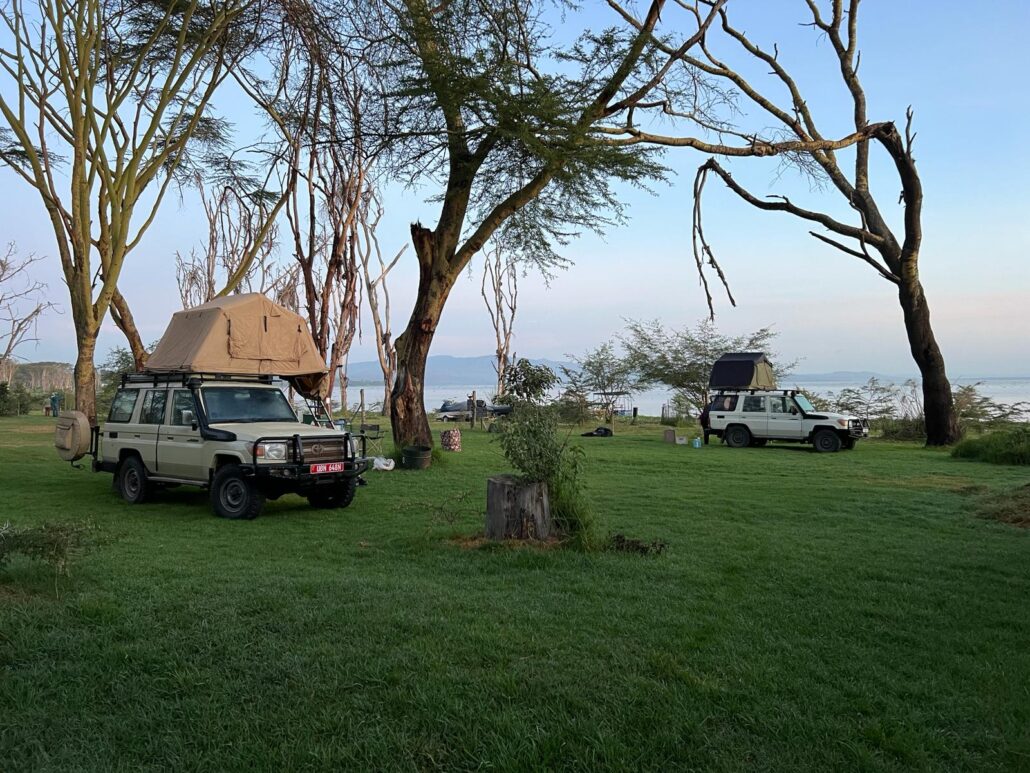
Rooftop tents | A convenient option for self-drivers who want to sleep off the ground | See our camping gear and rooftop tent rental |
Camping rules and safety
- Camp only in designated areas, and never leave food outside your tent or vehicle.
- Expect baboons, buffalo and other animals near camp, so stay inside after dark unless guided.
- Do not light open fires unless the site allows it, and always put them out completely.
- Bring warm bedding and a windproof tent, since nights are cool and windy.
- Carry enough water, a first-aid kit, a torch and a charged phone, and tell rangers your plans.
- Follow gate and campsite rules, including quiet hours and rubbish disposal.
Budget tips: camp in the park or at Naivasha and visit by day, go on weekdays outside holidays, and share transport and fees with a group. If you plan to camp on a longer trip, you can arrange equipment through camping gear and rooftop tent rental.
Self-Drive, Driver-Guide or Guided Tour: Choosing Your Transport
Self-drive is permitted in Kenya, and the highway from Nairobi to Naivasha is paved but busy with trucks and matatus. Moi South Lake Road has potholes and shares the road with cyclists, wildlife and tourists. If you want to compare vehicles, see car rental Naivasha, and for the drive from the capital, read Nairobi to Hell’s Gate self-drive.
If you want… | Choose | Why |
To reach the gate and Naivasha | A compact SUV or saloon | Paved road to Naivasha, with a short lake road beyond |
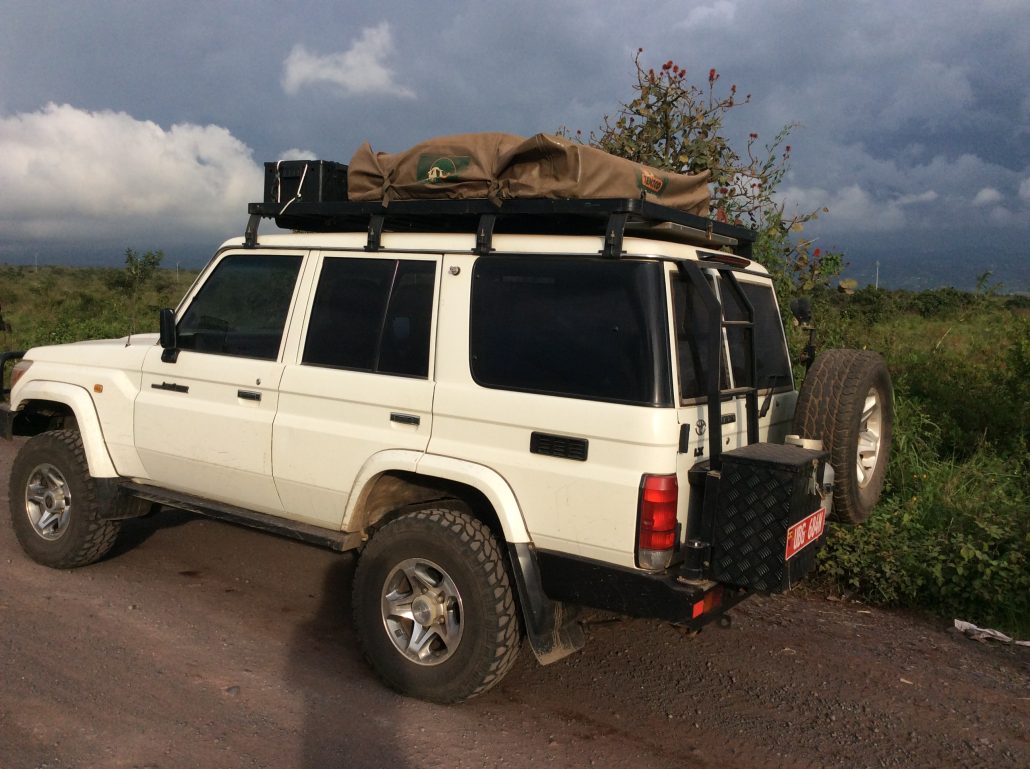
Rough tracks and wet weather | A high-clearance 4×4 | Better on stones, mud and rain-damaged sections |
Stress-free sightseeing | A driver-guide | Local knowledge, timing and combining several stops in one day |
Cycling and active trips | A vehicle with a roof rack or space for bicycles | Bicycles can also be hired at the gate |
Group or family outings | Room for everyone, with wildlife views on the way | |
A one-way trip to Nakuru, Kisumu or the Mara | One-way car rental | Collect in one place and drop in another. See our guides to one-way car rental Nairobi to Naivasha and one way car rental Nairobi to Nakuru |
Camping on a longer route | Camping gear and rooftop tent rental | Useful for park campsites and the Rift Valley |
Road rules and safety, whichever vehicle you choose
- Drive on the left, keep to the speed limit and expect police checkpoints.
- Avoid night driving on the highway and on Moi South Lake Road, where trucks, cyclists and wildlife are hard to see.
- Take care at the busy turn-off from the highway, and watch for overtaking trucks.
- Park only in designated areas at the gate, and never leave valuables visible.
- Keep to marked roads inside the park, and never leave the vehicle near wildlife except at designated points.
- Carry water, a spare tyre, a charged phone and offline maps, since signal can be patchy.
Local notes from our team
Timing: leave Nairobi early, aim to reach the gate when it opens and start cycling before the heat builds.
Roads: allow extra time on the escarpment and on Moi South Lake Road.
Bicycles: check brakes, tyres and saddle before you ride, and carry enough water.
Gorge: go only with a guide, and never in or after heavy rain.
Kit list: hat, sunglasses, sunscreen, sturdy closed shoes, a light jacket, binoculars, water, snacks and offline maps.
Sample Hell’s Gate Plans
One day: a day trip from Nairobi
- Morning: leave Nairobi at 6:30 am, drive the A104 with a break at the Kijabe viewpoint, and reach the Elsa Gate by mid-morning.
- Midday: hire bicycles and ride towards Fischer’s Tower, with a picnic stop.
- Afternoon: a guided gorge walk, then an early drive back, or a lakeside lunch at Naivasha.
Two days: Hell’s Gate and Lake Naivasha
- Day 1: Nairobi to Naivasha, a boat ride and Crescent Island, and a sunset at the lake.
- Day 2: cycling and the gorge walk at Hell’s Gate, then the drive back to Nairobi.
Weekend camping: under the cliffs
- Day 1: drive to the park, set up at a KWS campsite, ride in the afternoon and enjoy a campfire where allowed.
- Day 2: a dawn walk, the gorge, packing up and a drive to Naivasha or home.
Three to four days: Rift Valley circuit
- Day 1: Nairobi to Mount Longonot for the crater hike, then on to Naivasha.
- Day 2: Hell’s Gate and Lake Naivasha.
- Day 3: Lake Elementaita and Lake Nakuru National Park.
- Day 4: return to Nairobi, or continue to Lake Bogoria and Lake Baringo.
Using Hell’s Gate as a Starting or Ending Point
Hell’s Gate works well as the first stop on a Rift Valley loop. A common pattern is to leave Nairobi early, cycle and walk in the morning, spend the afternoon and night at Naivasha, then continue to Elementaita, Nakuru, Bogoria and Baringo. Another is to finish a Mara or western Kenya trip with a day in the park on the way back to Nairobi. Our Kenya safari routes guide shows how the circuits fit together, our Mount Longonot, Lake Elementaita, Lake Bogoria and Lake Baringo travel guides cover the neighbouring places, our Nairobi travel guide covers the capital, our Mombasa travel guide covers the coast, our Kisumu travel guide covers western Kenya and the guide to cross-border car rental from Kenya explains routes into Uganda and Tanzania.
Kenya Travel Essentials
This section pulls together the practical information most visitors need for any trip in Kenya. Rules, costs and conditions change, so check official sources before you travel.
Topic | What to know |
Entry | Most overseas visitors need a Kenya eTA before they fly, and some nationalities have different rules. Check the official portal, and carry a passport valid for at least six months |
Insurance | Kenya requires most foreign visitors entering on an eTA to hold a Kenya-issued inbound health-insurance policy, reported at about US$48 per adult and valid for 90 days. Rules have changed since launch, so confirm the details when you apply. Also keep your own travel policy with medical evacuation, and check that it covers cycling and climbing |
Money | Kenyan shilling (KES). Cards work in hotels, lodges and malls, M-Pesa mobile money is everywhere, and cash is needed in small towns, markets and for tips. Use ATMs in banks and malls |
Tipping | Tips are appreciated for guides, drivers and lodge staff. Ask your operator for current guidance, and keep small notes |
Language | English and Swahili are widely spoken. A few Swahili words, such as “jambo” and “asante,” are always welcome |
Time and power | Kenya is on East Africa Time (UTC+3). Electricity is 240 V with UK-style three-pin plugs, so bring an adapter and a power bank |
Connectivity | Mobile coverage is good in towns and patchy in remote areas. Local SIM cards and eSIMs are easy to arrange, and offline maps are essential |
Driving | Drive on the left. Bring your licence and an International Driving Permit. Expect police checkpoints, speed cameras and heavy trucks on main roads |
Health | Ask a travel clinic about routine vaccinations, malaria prophylaxis and other advice. A yellow fever certificate may be required if you arrive from an affected country. Drink bottled or treated water |
Safety | Use normal precautions: keep valuables out of sight, avoid isolated areas at night, use registered taxis and avoid demonstrations. Check government advice for specific regions |
Wildlife etiquette | Keep your distance, stay on marked roads and paths, never feed animals, keep noise low and follow ranger and guide instructions |
Culture | Dress modestly in towns and villages, ask before photographing people and greet people politely |
Seasons | Kenya has two main rainy seasons, roughly March to May and October to November, with drier months in between. Regions differ, so check each destination |
Parks and fees | Kenya Wildlife Service manages most national parks and reserves, and conservancies and counties manage others. Fees vary by park, season and visitor category, so confirm in advance |
Emergency | Dial 999 or 112 for emergencies, and keep the number of your lodge, operator and embassy handy |
Packing checklist for Hell’s Gate
- Passport, eTA confirmation, insurance papers, driving licence and International Driving Permit.
- Light, neutral-coloured clothes, a light jacket, a waterproof layer and sturdy closed shoes for the gorge.
- Hat, sunglasses, high-factor sunscreen, insect repellent and any prescription medicines.
- At least two litres of water per person, snacks, binoculars and a camera.
- A small first-aid kit, a power bank and a universal adapter.
- Cash in small notes for the gate, bicycle hire, guides and tips, and a card.
Before You Travel to Hell’s Gate
- Travel authorisation: most overseas visitors need a Kenya eTA before they fly. Check the official portal for the latest rules.
- Required health insurance: confirm the inbound health-insurance requirement on the day you apply, as rules have changed since launch.
- Your own cover: keep a comprehensive travel policy with medical evacuation, and check that it covers cycling, hiking and climbing.
- Heat and sun: use strong sun protection, wear a hat, drink plenty of water and rest in the shade at midday.
- Gorge safety: walk only with a guide, never enter during or after heavy rain, wear closed shoes and take care on rocks.
- Cycling safety: check your bicycle, ride slowly near animals, never chase wildlife and stay on the road.
- Wildlife: keep your distance from buffalo, and never feed baboons or other animals.
- Health: malaria risk is low at this altitude, but lower areas and other regions on your route carry more risk, so ask a travel clinic about prophylaxis. A yellow fever certificate may be required if you arrive from an affected country.
- Driving documents: bring your licence and an International Driving Permit.
- Money: carry cash for gate fees, bicycle hire, guides and tips, and confirm which payment methods the park accepts.
- Health bulletins: Kenya has confirmed Ebola cases since October 2026, and the Ministry of Health has said there are no restrictions on domestic travel, but screening and advice can change. Check current Ministry of Health and embassy notices before departure.
- Travel advisories: check current government advice and local news before and during your trip.
Hell’s Gate National Park FAQs
Where is Hell’s Gate National Park?
In Nakuru County, in Kenya’s Rift Valley, beside Lake Naivasha, about 100 km north-west of Nairobi.
Is Hell’s Gate worth visiting?
Yes. It offers cycling and walking among wildlife, dramatic cliffs and a gorge walk, all within a short drive of Nairobi.
How long do you need at Hell’s Gate?
A half day is enough for cycling or the gorge walk, and a full day lets you do both. A night at Naivasha or in a campsite makes the trip more relaxed.
Can you cycle in Hell’s Gate?
Yes. It is one of the few Kenyan parks where cycling is allowed, and bicycles can be hired at or near the gate. Pay the cycling fee, check your bike and carry water.
Is it safe to cycle among wild animals?
The park has no lions, and the animals are used to cyclists, but buffalo can be dangerous and all wildlife is wild. Keep your distance, never chase animals and follow guide and ranger advice.
Can I walk the Hell’s Gate Gorge?
Yes, with a guide, usually in two to four hours. Do not enter the gorge during or after heavy rain, because of the risk of flash floods.
Can I climb Fischer’s Tower?
Yes, with local climbing guides and equipment. Beginners and experienced climbers can both be accommodated.
What is the best time to visit Hell’s Gate?
January to March and June to October are generally the driest months. March to May has the long rains and a flash-flood risk in the gorge.
How much does it cost to enter Hell’s Gate?
Under the KWS schedule published in October 2025, non-resident adults pay US$50 per 24 hours and children aged 5 to 17 pay US$25, plus fees for vehicles, cycling and camping. Enforcement of that schedule was challenged in court, so confirm the current rate before you go.
Can I camp at Hell’s Gate?
Yes. There are public and special campsites with basic facilities. Book ahead, follow ranger rules and keep food secured.
What are the cheapest places to stay?
KWS campsites, budget camps on Lake Naivasha and guesthouses in Naivasha town are the most affordable options.
Can I do a day trip from Nairobi?
Yes. The drive is about two to three hours each way, so an early start gives you a full day in the park.
Can I self-drive to Hell’s Gate?
Yes. The highway is paved and the lake road has some rough sections. A self-drive vehicle can enter the park, subject to fees and rules, though many visitors cycle.
Is Hell’s Gate safe for tourists?
Most visits are trouble-free with sensible precautions. Stay on marked roads, go with a guide into the gorge, keep your distance from wildlife and avoid night driving.
Do I need malaria tablets?
Risk is low at this altitude but varies by area. Ask a travel clinic about the latest advice for your itinerary.
Do I need a visa or eTA?
Most overseas visitors need a Kenya eTA, and for most travellers the mandatory inbound insurance applies. Check the official portal for the latest rules.
Get a Quote for Your Hell’s Gate Trip
Let us know your dates, party size, pick-up point and whether you want a day trip, a camping weekend, a Naivasha lodge stay, a Rift Valley loop or a one-way journey between Nairobi and the west. We will suggest the vehicle that fits, from a self-drive 4×4 to a pop-up roof safari vehicle, a driver-guide or a rental with camping equipment, and send itemised costs, insurance and paperwork details before you commit.