You can collect a rental vehicle in Nairobi and return it in Kampala or Entebbe, so you cross from Kenya into Uganda by road and never have to bring the car back. The route is roughly 650 to 700 km, usually via Nakuru, Eldoret, and the Malaba border or via Kisumu and the Busia border, and it takes about 11 to 14 hours, including the border crossing, which means most travelers split it over two days. This is a cross-border rental, so it needs advance approval, extra paperwork, and a cross-border and one-way car rental fee. Uganda also requires every arriving traveler to complete an online health declaration, and the region is dealing with an Ebola outbreak, so please read the health and border update below before you book. Car Rental 4×4 can arrange drops in Kampala, Entebbe, and Jinja, and other Ugandan points on request, subject to approval and notice of at least two weeks.

This page explains the route, the border crossing, the paperwork, the health rules, the vehicle options, and the one-way fee factors, so it is useful even if you are still deciding how to get to Uganda. For other one-way routes and for the full list of cross-border options, see our one-way car rental from Nairobi page and our guide to cross-border car rental from Kenya. For Kenya itself, our Kenya travel guide covers entry rules, park fees, and the best places to visit.
Health and Border Update: Read Before You Book
Rules around the Kenya and Uganda border have been changing quickly because of the Ebola (Bundibugyo) outbreak that began in the Democratic Republic of the Congo and spread into the region in 2026. The points below reflect the most recent reports we found in late October 2026, and they can change at short notice, so always check the official sources before you travel.
- Uganda health declaration: everyone entering Uganda by air, land, or water must complete the online Passenger Locator Form on the Ugandan Ministry of Health portal (poes.health.go.ug), within 72 hours before arrival, and it is separate from your visa.
- Screening at the border: Uganda has strengthened screening at Entebbe and at land borders, including temperature checks and hand sanitising, and Kenya has stepped up screening at Malaba and Busia. Expect longer waits at the border.
- Uganda’s situation: the Ugandan Ministry of Health said on 25 October 2026 that the country had no active Ebola cases, while enhanced surveillance remains in place.
- Kenya’s situation: Kenya confirmed its first imported case on 6 October 2026, and further cases linked to it were reported in the following weeks. The US government raised its Kenya travel advisory to Level 3 on 19 October, while Kenyan officials stated the advisory does not bar travel.
- Returning to Kenya: travelers arriving from Uganda have been required to complete Kenya’s Electronic Traveller Surveillance Form and go through port health screening, so allow time on the way back.
- DRC-linked travel: Uganda has restricted travel from the Democratic Republic of the Congo and does not allow people who have recently been there to transit through Uganda. Do not plan routes that touch the DRC.
- Yellow fever certificate: Uganda was reported to have dropped the yellow fever certificate requirement for entry in October 2026. Confirm this with the Ugandan authorities, and ask a travel clinic what they recommend for your itinerary.
- What we recommend: check the latest advice from your government, the WHO, and the CDC; keep your travel dates flexible; travel only when well; wash or sanitize your hands often; avoid contact with sick people; keep a record of where you stay for contact tracing; and tell us if your plans change.
How a Nairobi to Kampala One-Way Rental Works
You collect your vehicle at an agreed point in or near Nairobi, drive to the Kenya and Uganda border, cross with the paperwork we prepare, and return the vehicle at an agreed place in Uganda. We then arrange for the vehicle to be returned to Kenya, which is why a one-way car rental fee and a cross-border fee both apply. Pick-up and drop-off times, places, border crossings, and fees are written into the rental agreement, so you know exactly what to expect.
- Pick-up: Nairobi, including the city and the airport area, by arrangement.
- Drop-off: Kampala city and hotels, Entebbe including the airport, Jinja and other agreed Ugandan points, subject to approval.
- Approval: cross-border hire is subject to approval for the vehicle, the route, and the dates, and not every vehicle or driver can cross.
- Notice: at least two weeks, and earlier in peak seasons such as Christmas and New Year, Easter, and the July and August holidays.
- Paperwork we prepare: written permission for the vehicle to cross, a copy of the logbook, and suitable cross-border insurance, which is often a regional cover such as the COMESA Yellow Card. Please confirm the exact documents with us when you book.
- Mileage and fuel: agreed in advance, with the vehicle returned at the agreed fuel level.
- Return in the other direction: Kampala to Nairobi is also possible, where a vehicle is available.
Nairobi to Kampala: Distance, Time, and the Route
The shortest and most commonly used route follows the A104 from Nairobi through Naivasha, Gilgil, Nakuru, and Eldoret, then continues through Webuye and Bungoma to the Malaba border, about 450 to 500 km from Nairobi. After the border, the road continues through Tororo, Iganga, and Jinja to Kampala, about 220 to 240 km. The total distance is roughly 650 to 700 km, and most of it is a busy road shared with long-distance trucks, because this is the Northern Corridor, the main freight route between the Kenyan coast and Uganda. In good conditions the drive takes about 11 to 14 hours, including the border, and on a holiday weekend or when queues build at the border, it can take longer.
Section | Approx. distance from Nairobi | What you pass |
Nairobi to Limuru and Kijabe | About 20 to 60 km | Escarpment climb with views over the Rift Valley, and heavy truck traffic |
Naivasha and Gilgil | About 90 to 120 km | Lake Naivasha, Hell’s Gate, and the turn to Lake Elementaita |
Nakuru | About 160 km | A big town, fuel, restaurants, and Lake Nakuru National Park |
Eldoret | About 310 to 320 km | A large highland town, near Iten and the Kerio Valley viewpoint |
Webuye and Bungoma | About 400 to 450 km | Western Kenya farmland and busy trading towns |
Malaba border (Kenya exit and Uganda entry) | About 450 to 500 km | One-stop border post with customs, immigration, and health screening |
Tororo | About 470 to 520 km | The first major Ugandan town, with fuel and shops |
Iganga and Jinja | About 560 to 620 km | The Source of the Nile, rafting, and the Nile Bridge |
Mabira Forest | About 600 to 660 km | A forest reserve on the road, with walks and a zip-line |
Kampala and Entebbe | About 650 to 700 km | Uganda’s capital and its main international airport |
Road, bus, or flight?
Option | Time | Notes |
Self-drive or driver-guide across the border | 11 to 14 hours with the border, ideally over two days | Flexible, lets you stop in the Rift Valley or Kakamega, and carries luggage and camping gear |
Long-distance bus | About 12 to 15 hours, often overnight | Inexpensive, but long, crowded, and subject to border queues |
Flight Nairobi to Entebbe | About one hour and fifteen minutes in the air | Fastest, but you still need ground transport at both ends, and flight schedules change, so check which airlines currently operate the route. |
Train | Not available | There is no regular passenger train between Nairobi and Kampala at present. |
Times are approximate and depend on traffic, weather, roadworks, and border queues. Check for roadworks on the A104 and in Uganda before you go.
Two Route Options
Route | How it works | Best for |
Northern Corridor via Nakuru, Eldoret, and Malaba | A104 to Nakuru and Eldoret, then Webuye, Bungoma, and the Malaba border, and on through Tororo and Jinja to Kampala | Drivers who want the most direct and best-developed route, even though it is heavy with trucks |
Lake route via Kisumu and Busia | A104 to Nakuru, then Kericho and Kisumu, then the Busia border, Tororo, Jinja, and Kampala | Travellers who want to stop on Lake Victoria, visit Kakamega Forest, or break the trip in Kisumu. It is a bit longer and slower. See our Kisumu travel guide. |
Both routes use one-stop border posts, where Kenyan and Ugandan officials work side by side, but waiting times vary and truck queues can be long. Always ask us which crossing is best for your dates, vehicle, and the current health measures.
Crossing from Kenya and Uganda Border: Step by Step
- Before you leave Nairobi: carry your passport, visa or e-visa (or East Africa Tourist Visa), proof of Kenyan insurance, the rental agreement, our cross-border permission letter, the vehicle logbook copy, and your driving licence and International Driving Permit.
- Complete Uganda’s health declaration: submit the Passenger Locator Form online within 72 hours before entering Uganda, and keep the confirmation on your phone.
- Arrive at the border early: aim to reach Malaba or Busia in the morning, since queues are shorter and you will not be crossing at night.
- Health screening: expect temperature checks and a short health review on both sides.
- Kenya exit: go through immigration to get an exit stamp and complete the customs exit process for the vehicle.
- Uganda entry: go through Ugandan immigration, show your visa or e-visa, and complete the customs formalities for the vehicle, including the temporary import record and any fees.
- Insurance and fees: show your cross-border insurance, and pay any border, customs, or road fees. Carry some US dollars and Ugandan shillings, and a card or mobile money as a backup.
- Drive on carefully: Uganda also drives on the left, and the first towns after the border can be busy with trucks and motorbikes.
- For the return trip: check Kenya’s re-entry rules before you leave, including your eTA validity, the mandatory health insurance, and the Electronic Traveller Surveillance Form for travellers coming from Uganda.
Allow one to three hours at the border on a normal day, and longer during peak periods or when extra health checks are in place. Do not use unofficial agents or helpers who offer to speed up the process, and be careful with your documents at all times.
Road Conditions and Driving Tips
- Leave early: aim to be on the road by 5 or 6 am, so you clear Nairobi’s outskirts and the escarpment before the worst traffic and reach the border in daylight.
- Expect trucks: the Northern Corridor is Kenya’s busiest freight route, so overtaking can be slow and risky. Be patient, and only pass when the road ahead is clear.
- Avoid driving after dark, especially between Eldoret and the border and in Uganda, where unlit vehicles, motorbikes, pedestrians, and livestock are harder to see.
- Speed limits and checks: carry your license, International Driving Permit, rental agreement, and insurance papers, and slow down for speed checks, bumps, and town sections in both countries.
- Fuel up at Nakuru, Eldoret, Bungoma, Tororo, or Jinja, and keep the tank above a quarter on the long stretches.
- Toll roads: the Nairobi Expressway and some Ugandan expressways, such as the Kampala to Entebbe road, charge a toll. Ask us about payment methods before you leave.
- Kampala traffic: expect heavy jams, thousands of boda-bodas and aggressive driving, so allow extra time, keep your doors locked and plan your final turn to the hotel before you arrive.
- Jinja road: a busy, winding highway with many trucks and roadside markets, where accidents are common, so keep your distance.
- Holiday periods: the road and the border are much busier around Christmas, Easter and school holidays, so add extra time.
Local notes from our team
Best start time:leave Nairobi at 6:00 am, aim to cross the border before afternoon and sleep in Jinja or Kampala rather than driving after dark.
Best fuel and rest stops: Nakuru, Eldoret and Tororo are the usual choices, and all have restaurants and shops.
Where drivers tend to struggle: slow-moving trucks, border queues and Kampala traffic.
Border tips: bring photocopies of every document, a pen and small notes, and be ready to step out for health screening.
Best Stops Between Nairobi and Kampala
The route is a long highway, but it passes some of the best sights in Kenya and Uganda, which turns a long drive into a trip.
- Great Rift Valley viewpoint at Kijabe: a roadside viewpoint above the escarpment, about 50 km from Nairobi.
- Lake Naivasha and Hell’s Gate: boat rides, hippos, cycling and gorge walks, about 90 to 100 km from Nairobi. See our Mount Longonot travel guide for a nearby hike.
- Lake Elementaita: a scenic soda lake near Gilgil with birds and a conservancy. See our Lake Elementaita travel guide.
- Nakuru and Lake Nakuru National Park: rhinos, flamingos and woodland, with a good night stop.
- Lake Bogoria and Lake Baringo: hot springs, flamingos and birdlife, a detour from Nakuru. See our Lake Bogoria travel guide and Lake Baringo travel guide.
- Eldoret and Iten: the high-altitude running town and the Kerio Valley viewpoint.
- Kakamega Forest and Kisumu (lake route): rainforest, hippos at sunset and fresh fish. See our Kisumu travel guide.
- Jinja: the Source of the Nile, with white-water rafting, kayaking, bungee jumping and boat rides on the river.
- Mabira Forest: a forest reserve east of Kampala with walks, birdwatching and a zip-line.
- Nairobi first: if you are starting your trip in the capital, consider a morning game drive in the city before you set off, as explained in our Nairobi National Park travel guide.
Three Ways to Do the Trip
Two days: straight to Kampala
- Day 1: leave Nairobi at dawn, drive through Nakuru and Eldoret, cross at Malaba by early afternoon and sleep in Tororo or Jinja.
- Day 2: a morning at the Source of the Nile in Jinja, then drive on to Kampala or Entebbe and return the vehicle.
Three to four days: Rift Valley and lakes
- Day 1: Nairobi to Lake Naivasha or Elementaita, with a lakeside stop.
- Day 2: Lake Nakuru National Park, then on to Eldoret or Kisumu.
- Day 3: cross the border at Busia or Malaba and sleep in Jinja.
- Day 4: a morning rafting or boat trip on the Nile, then Kampala or Entebbe.
Seven to ten days: Kenya to Uganda safari
- Days 1 to 3: Rift Valley lakes and the Mara or Nakuru, as you prefer.
- Day 4: cross the border and sleep in Jinja.
- Days 5 to 7: Murchison Falls, Ziwa Rhino Sanctuary or Kibale for chimpanzees, with a vehicle and driver-guide.
- Days 8 to 10: Queen Elizabeth National Park or Bwindi for gorilla trekking, then return to Kampala or Entebbe.
Our Kenya safari routes guide and our East Africa routes pages describe combined itineraries in more depth, including how to plan gorilla permits and park fees.
Choosing the Right Vehicle for a Cross-Border Trip
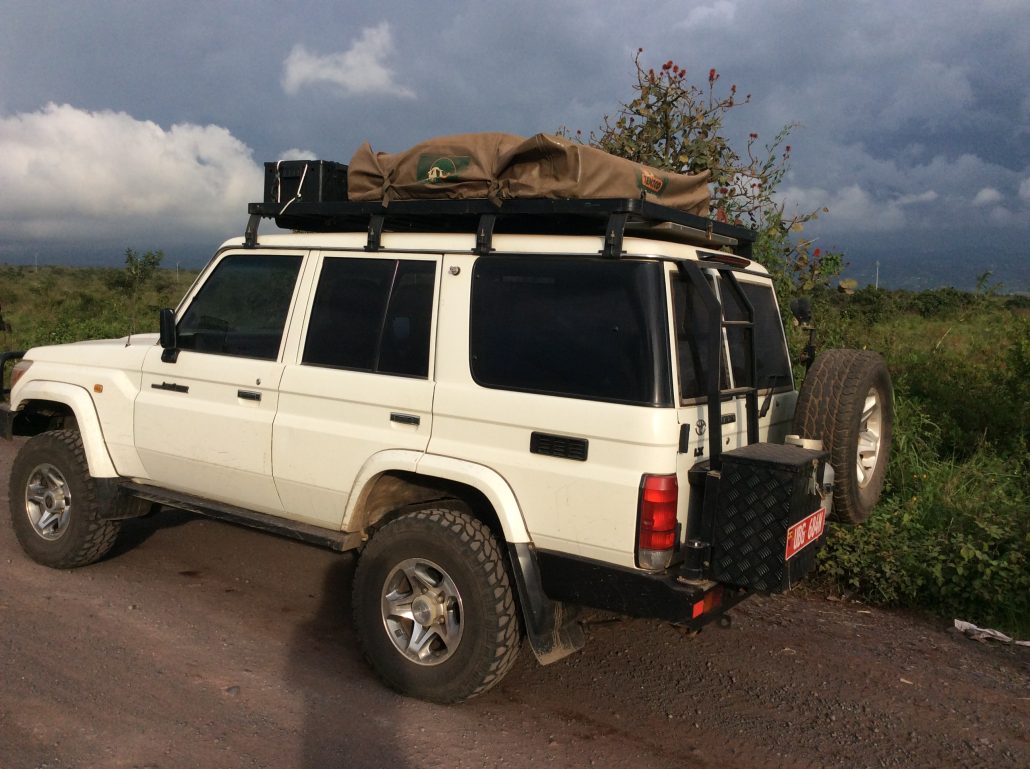
If you want… | Choose | Why |
Independence and flexible stops | A self-drive 4×4 approved for cross-border use | Copes with the A104, Ugandan roads and park tracks if you extend into Uganda’s parks |
A relaxed trip with no border or driving stress | The driver knows the border procedure, handles the long drive and Kampala traffic and speaks the local languages | |
Wildlife viewing and photography in Uganda | Standing views in Murchison, Queen Elizabeth and Ziwa | |
To camp along the way | Camping gear and rooftop tent rental | Useful for Rift Valley campsites and Ugandan parks, but tell us before you plan the crossing |
A simple city-to-city drive on tarmac | A compact SUV or saloon, if approved | Lower rate and better fuel economy, but check cross-border eligibility and park suitability first |
If you are starting your trip in Nairobi, compare options on our car rental Nairobi page. For first-time border crossers, we recommend a driver-guide, because it makes the border, the paperwork and Kampala’s traffic far easier.
One-Way and Cross-Border Fee Factors
The one-way fee covers the cost of returning the vehicle to Kenya, and the cross-border fee covers the permission, paperwork and insurance. Both are quoted in writing before you pay. We do not publish a flat price because it depends on the factors below.
Factor | How it affects the cost |
Vehicle | A pop-up roof or rooftop tent vehicle costs more to bring back than a standard 4×4 or saloon, and only approved vehicles can cross |
Travel dates | Christmas, Easter and the mid-year school holidays push the fee up and thin out availability |
Where you finish | Kampala and Entebbe are the standard drops, while Jinja is closer and park locations in western Uganda add distance |
Cross-border permission and insurance | Covers the permit letter, regional insurance and handling, and varies by vehicle and length of stay |
Driver-guide | Quoted per day, with the driver’s meals, lodging and border documents arranged beforehand |
Mileage and fuel | Check for a mileage cap, and agree the fuel level for the handover |
Border, customs and road fees | Not included, and charged at the border and on tolled roads |
Park fees | Not included, and Uganda’s park and gorilla permit fees are set by the Uganda Wildlife Authority and change, so confirm them separately |
Insurance excess | Standard excess applies, and waivers can be void if you skip the police report after an incident |
Time of handover | Agreed windows go into the agreement, and out-of-hours handovers may carry a surcharge |
Tip: flexible dates, an early booking and a mid-week start can improve availability and cost, particularly in peak season.
Drop-Off Points in Uganda
Drop-off | Approx. time from Kampala | Good to know |
Kampala city and hotels | In Kampala | The standard drop. Confirm the exact hotel or parking area, since traffic and one-way streets can be difficult |
Entebbe and Entebbe International Airport | About 45 to 90 minutes, depending on traffic and tolls | Suits travellers flying out of Entebbe |
Jinja | About 1.5 to 2.5 hours | The Source of the Nile, rafting and adventure activities |
Mbale and Mount Elgon area | About 4 hours | Gateway to Mount Elgon and Sipi Falls, on request |
Ziwa Rhino Sanctuary and Murchison Falls | About 2.5 to 6 hours | For safari extensions, on request and subject to approval |
Queen Elizabeth, Kibale and Bwindi | About 6 to 9 hours | For gorilla and primate trips, on request and subject to approval |
If your plans include Rwanda or Tanzania, ask us about cross-border extensions, which need separate approvals and paperwork.
What to Do in Kampala and Uganda: Why the Drive Is Worth It
Kampala is a lively, hilly city on the northern shore of Lake Victoria, and it is the gateway to Uganda, which is known as the Pearl of Africa for its mix of mountains, lakes, forests and wildlife.
- Source of the Nile, Jinja: white-water rafting, kayaking, bungee jumping, quad biking and boat rides on the river.
- Kampala city sights: the Kasubi Tombs (a UNESCO World Heritage Site), the Uganda Museum, the National Mosque, the Namugongo Martyrs’ Shrine, and busy markets and street food such as the famous rolex.
- Entebbe: the Botanical Gardens, the Uganda Wildlife Education Centre and boat trips to Ngamba Island chimpanzee sanctuary.
- Murchison Falls National Park: a powerful waterfall, boat cruises and big game, about 5 to 6 hours from Kampala.
- Queen Elizabeth National Park: tree-climbing lions, boat trips on the Kazinga Channel and crater lakes.
- Gorilla and chimpanzee trekking: Bwindi Impenetrable National Park and Mgahinga for mountain gorillas, and Kibale for chimpanzees. Permits are limited, set by the Uganda Wildlife Authority and must be booked in advance.
- Ziwa Rhino Sanctuary: rhino tracking on foot, about 2.5 hours north of Kampala.
- Lake Mburo National Park: zebras, antelopes and walking and horse-riding safaris, a short hop from the Kampala to Kigali route.
- Mount Elgon, Sipi Falls and the Rwenzori Mountains: hiking, waterfalls and mountain scenery.
- Nightlife and food: lively bars, rooftop restaurants and a growing coffee scene.
Beyond Kampala: Uganda Parks, Rwanda and Tanzania
Many travellers use Kampala as the start of a longer East Africa safari. From there you can head north to Murchison Falls, west to Queen Elizabeth, Kibale National Park and Bwindi, or south-west towards the Rwanda border at Katuna and on to Kigali and Volcanoes National Park for gorillas. Some travellers also combine Kenya and Tanzania, for example the Maasai Mara and the Serengeti, or Amboseli and Kilimanjaro. Cross-border extensions beyond Uganda need separate approvals, paperwork and, for Tanzania, the mandatory inbound insurance. See our guide to cross-border car rental from Kenya and our Tanzania safari routes guide. You can also start in Kampala and drop in Nairobi, and our hub page on one-way car rental from Nairobi explains the reverse routes and the other options.
Best Time to Do the Nairobi to Kampala Drive
The road can be driven all year. The long rains from March to May and the short rains from October to November can cause slower traffic, washouts and slippery patches, especially on the Ugandan side and around Jinja, and heavy rain in the Rift Valley can slow the escarpment. The drier months, from about December to February and June to September, usually give the best driving conditions and the best wildlife viewing in Uganda’s parks. Public holidays and school breaks bring heavy traffic and border queues, so avoid the busiest days if you can.
- For clear roads and shorter border queues: weekdays outside school holidays, and mornings.
- For Ugandan park wildlife: the drier months, though primate trekking works all year.
- For rafting on the Nile: all year, with different water levels and seasons.
- For gorilla trekking: the drier months are easier underfoot, but permits must be booked well ahead.
- For lower rates: shoulder-season travel, though April, May and November bring heavy rain.
- For health-related flexibility: because border rules and health measures are changing, build flexibility into your dates.
Documents and Requirements
- Passport: valid for at least six months, with blank pages for stamps.
- Kenya entry paperwork for overseas visitors: an eTA and, for most travellers, Kenya’s mandatory inbound health insurance, bought through the eTA process or eCitizen. The Kenyan policy is valid for 90 days and multiple entries, but check how it applies to your return before you leave.
- Uganda visa or e-visa: most overseas visitors need a visa, applied for online through the official Ugandan immigration portal, unless their nationality is exempt. The East Africa Tourist Visa, which has been offered for Kenya, Uganda and Rwanda, may suit multi-country trips. Check the current fees and rules on the official portals.
- Uganda health declaration: the online Passenger Locator Form, completed within 72 hours before entry.
- Driving licence and International Driving Permit: carry both, plus your passport.
- Rental agreement, cross-border permission letter and log book copy: keep them in the vehicle at all times.
- Cross-border insurance: regional cover such as the COMESA Yellow Card, arranged through us.
- Credit card: in the main driver’s name, for the deposit.
- Yellow fever and vaccinations: Uganda was reported to have dropped the yellow fever certificate requirement for entry, but ask a travel clinic for advice, and carry your certificate if you have one.
- Cash and cards: carry some US dollars and small notes, and have a card or mobile money for fees.
- Health bulletins: check current Ministry of Health, WHO, CDC and embassy notices before departure, because health screening and border rules are changing.
How to Book Your One-Way Cross-Border Rental
- Pick your finish line: Kampala, Entebbe, Jinja or another approved Ugandan point.
- Pick the vehicle that suits your stops, from a self-drive 4×4 to a pop-up roof vehicle or a driver-guide, and tell us if you want camping gear.
- Send us your dates, route and passports’ nationalities at least two weeks before collection, so we can start the cross-border approval.
- Review the itemised quote with the one-way fee, cross-border fee, insurance and extras.
- Get your paperwork ready: passport, visa or e-visa, Uganda health declaration, Kenya eTA and insurance, licence and IDP.
- Collect and inspect the vehicle with us, and save our 24-hour contact.
- Hand it back at the agreed place and time in Uganda, and keep the handover note.
Nairobi to Kampala One-Way Rental Frequently Asked Quentions
Can I rent a car in Nairobi and drop it in Kampala?
Yes. A cross-border one-way rental lets you collect in Nairobi and return the vehicle in Kampala, Entebbe or another approved Ugandan point, subject to availability, approval, notice and the one-way and cross-border fees.
How far is Nairobi from Kampala by road?
Roughly 650 to 700 km, depending on whether you cross at Malaba or Busia.
How long does the drive take?
About 11 to 14 hours including the border, and longer in heavy traffic, during busy holiday periods or when health screening causes queues. Most travellers split it over two days.
Which border should I use, Malaba or Busia?
Malaba is on the more direct Northern Corridor route through Eldoret, and Busia is on the lake route through Kisumu. Both have one-stop border posts, and we will advise which is best on your travel day.
Do I need a visa for Uganda?
Most overseas visitors do. Apply online through the official Ugandan immigration portal, or consider the East Africa Tourist Visa if you are visiting Kenya, Uganda and Rwanda. Citizens of East African Community countries have different rules.
Do I need the Uganda health declaration?
Yes. Everyone entering Uganda must complete the online Passenger Locator Form within 72 hours before arrival, and it is separate from the visa.
Is it safe to travel between Kenya and Uganda during the Ebola outbreak?
Many travellers are still crossing, with enhanced screening in place, but the situation is changing. Check the latest government, WHO and CDC advice, travel only when well, keep your dates flexible and tell us if your plans change.
Can I take a rental car across the border?
Yes, with prior approval, written permission, a log book copy and regional insurance, all of which we arrange. Not every vehicle or driver is eligible, so tell us your plans early.
Is there a one-way fee and a cross-border fee?
Yes. The one-way fee covers returning the vehicle to Kenya, and the cross-border fee covers the permission, paperwork and insurance. We quote both in writing before you pay.
How much notice do you need?
At least two weeks, and more for Christmas, Easter and school holidays, because cross-border approval takes time.
Can I drop the vehicle at Entebbe airport?
Yes, by arrangement. Entebbe is about 45 to 90 minutes from Kampala, depending on traffic.
Do you recommend a driver-guide?
Yes, especially for first-time border crossers. The driver handles the paperwork, the border, the long drive and Kampala’s traffic.
Can I drive on to Rwanda or Tanzania?
Possibly, with separate approvals and paperwork. Tell us your route when you request a quote.
Can I take camping gear or a rooftop tent?
Yes, but tell us before you book, since the kit must be listed in the paperwork and approved for the crossing.
Can I pick up in Kampala and return in Nairobi?
Yes, where a vehicle is available.
Get a One-Way Cross-Border Quote: Nairobi to Kampala
Tell us your travel dates, group size, nationalities, preferred border and whether you want a direct drive, a Rift Valley stopover or a longer safari into Uganda. We will recommend the vehicle, confirm the one-way and cross-border fees and the drop-off point, and send an itemised quote before you commit.