Rent a 4×4 with camping gear in Kenya and explore the country’s national parks, conservancies, and safari routes on your own schedule. Car Rental 4×4 provides safari-ready vehicles with camping equipment options, including rooftop tents and other essential camping gear, depending on the vehicle and package selected.
What can I rent? You can rent a 4×4 vehicle equipped with camping equipment, with the exact equipment depending on the vehicle and package selected.
Can I self-drive in Kenya with a 4×4 car rental with camping gear? Yes, where the selected vehicle is offered for self-drive and the renter meets the rental requirements. A driver-guide is also available for travelers who prefer to be driven while they focus on the safari itself.
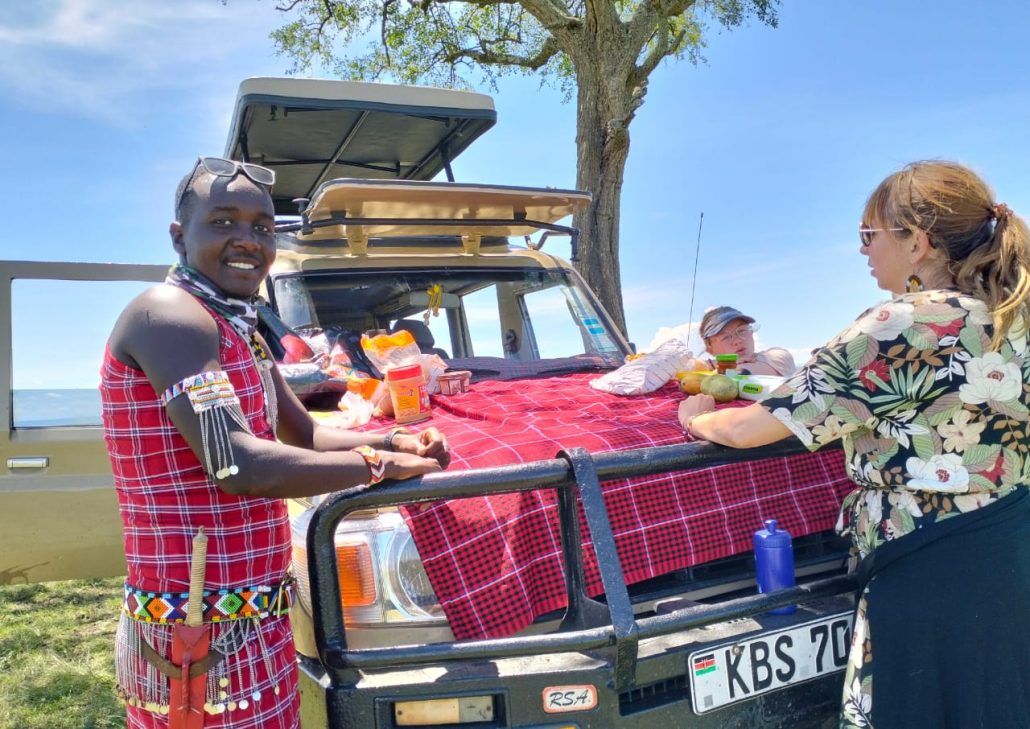
Can I sleep in the vehicle? If you select a vehicle with a rooftop tent, the tent provides the sleeping area, unfolding above the vehicle each evening and packing away each morning. A pop-up safari roof is different: it is primarily designed for wildlife viewing, lifting to give standing headroom for photography and game spotting, and is not intended as a sleeping platform.
What camping equipment is available for hire with a 4×4 in Kenya? Depending on the package, equipment may include a rooftop or ground tent, mattress, cooking equipment, chairs, table, gas burner, and water storage, with optional fridge or freezer equipment available on selected vehicles.
Where can I go with a 4×4 Car Rental with Camping gear in Kenya? Popular safari areas include the Maasai Mara, Amboseli, Tsavo West, Tsavo East, Lake Nakuru, Samburu, Ol Pejeta, and Lake Naivasha, along with coastal routes toward Mombasa, subject to the rental agreement and applicable park and conservancy rules.
Tell us your travel dates, number of travelers, safari route, and camping requirements, and we will help you choose the appropriate vehicle and equipment for your trip.
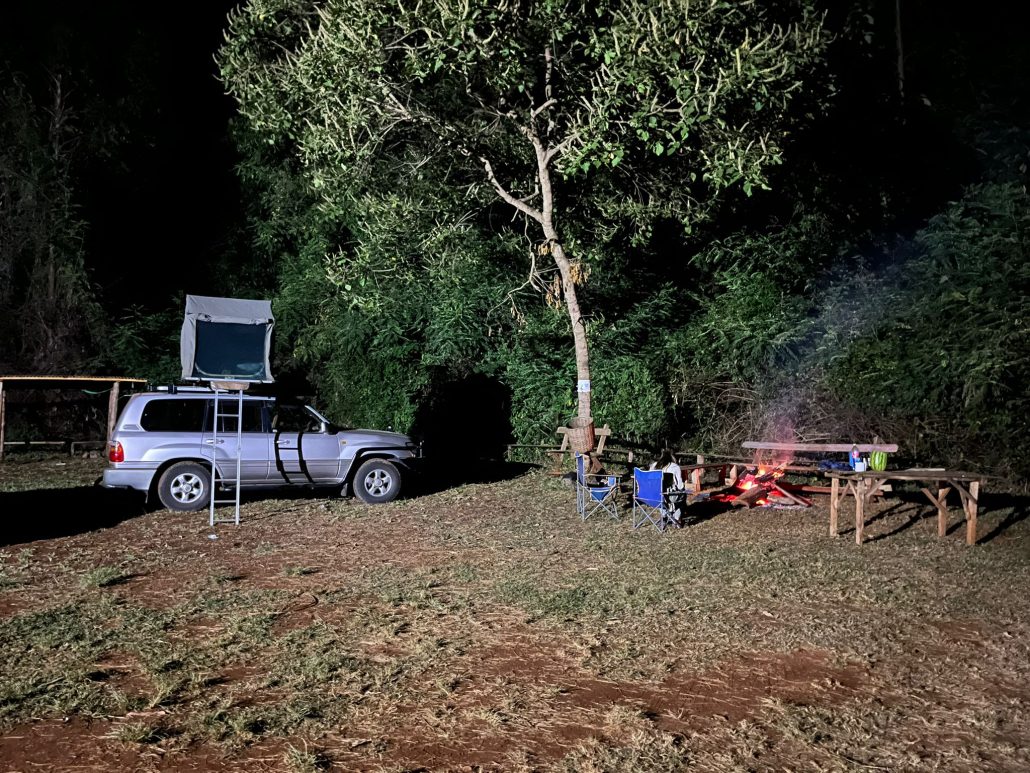
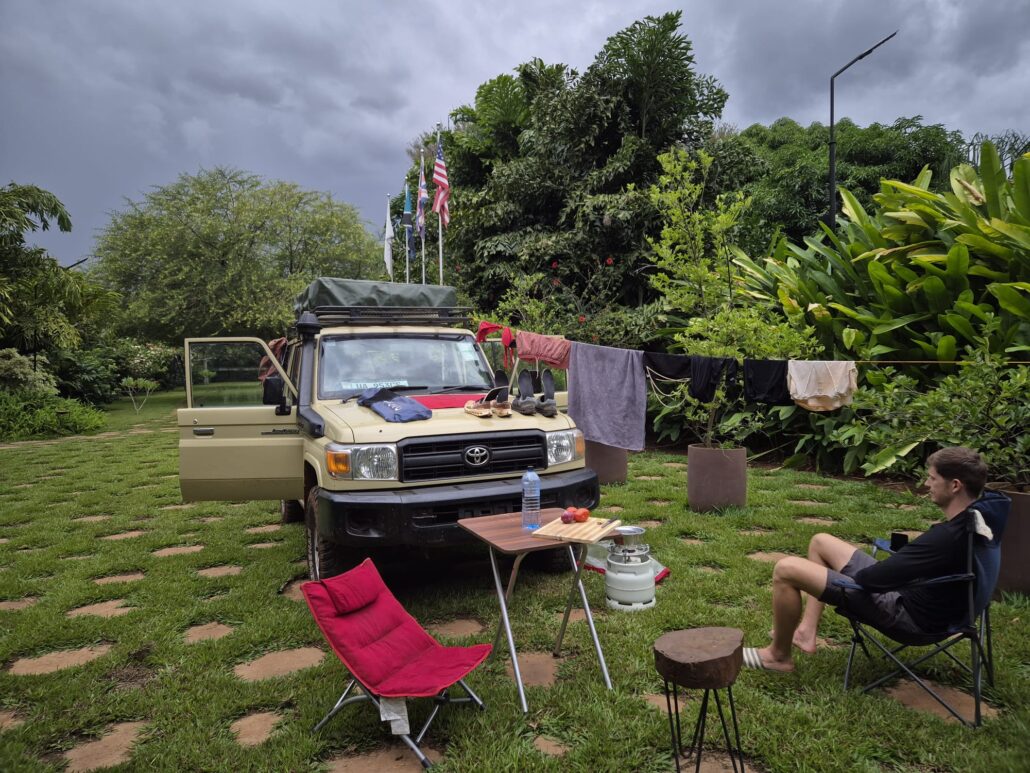 There is a particular alchemy that happens when you make camp inside an East African national park as the last light leaves the sky. The stove was hissing quietly over the gas flame. The smell of camp coffee mingling with the warm, grass-scented darkness. A hyena is testing the air somewhere beyond the tree line. The Southern Cross clears the acacia canopy overhead, sharp and close in the equatorial sky. And you, entirely self-contained and present, sleep inside the wilderness rather than at its edge, with everything you need in the vehicle that brought you here. No lodge check-in time to meet, no menu to navigate, no glass separating you from the sounds and smells of the African night. This is the experience that a car rental with camping gear in Kenya makes possible. And at Car Rental 4×4, we have spent years equipping travelers to enjoy this experience with confidence, comfort, and complete freedom.
Renting a car with camping gear in Kenya is, at its most fundamental, the choice to carry your accommodation with you. Every national park campsite becomes your next bedroom. Every dawn game drive begins from inside the park rather than from a lodge twenty kilometers outside the gate. Every evening meal is prepared at your pace, in your own time, with the wildlife sounds building around the fire as the darkness deepens. For families, it is one of the most bonding and adventurously memorable travel configurations available anywhere in the world. For couples, it combines the romance of true wilderness intimacy with the freedom of an entirely private safari. For solo travellers, nothing embodies the overland ethos quite like the self-contained independence of a fully equipped camping vehicle. And for groups, it is simply the most cost-effective and experientially rich way to move through one of earth’s greatest wildlife destinations.
This guide covers every aspect of car rental with camping gear in Kenya, the vehicle and gear configurations available, the campsites across Kenya’s major parks, the self-drive and chauffeured options, the cross-border camping adventure routes into Tanzania, Uganda, Rwanda, and Burundi, the one-way rental arrangements that make linear overland journeys possible, and three detailed day-by-day itineraries written with the sensory richness that the actual experience deserves. Whether it’s your first or fifth Kenya camping safari, Car Rental 4×4 has the vehicle, gear, and knowledge to make it everything it should be.
What Is Included With a Camping Car Rental?
A camping car rental in Kenya from Car Rental 4×4 brings together the vehicle and the equipment that turns it into a self-contained safari base. What is fitted to your vehicle depends on the package you choose, so it is worth understanding each component before you decide what your trip actually needs.
4×4 Safari Vehicle
The foundation of every camping package is a 4×4 built for Kenyan terrain: high ground clearance, low-range gearing for river crossings and muddy black-cotton roads, long-range fuel tanks for remote circuits, and enough load space to carry camping equipment without compromising passenger comfort. These are working safari vehicles, maintained specifically for the demands of national park tracks rather than tarmac commuting.
Rooftop Tent
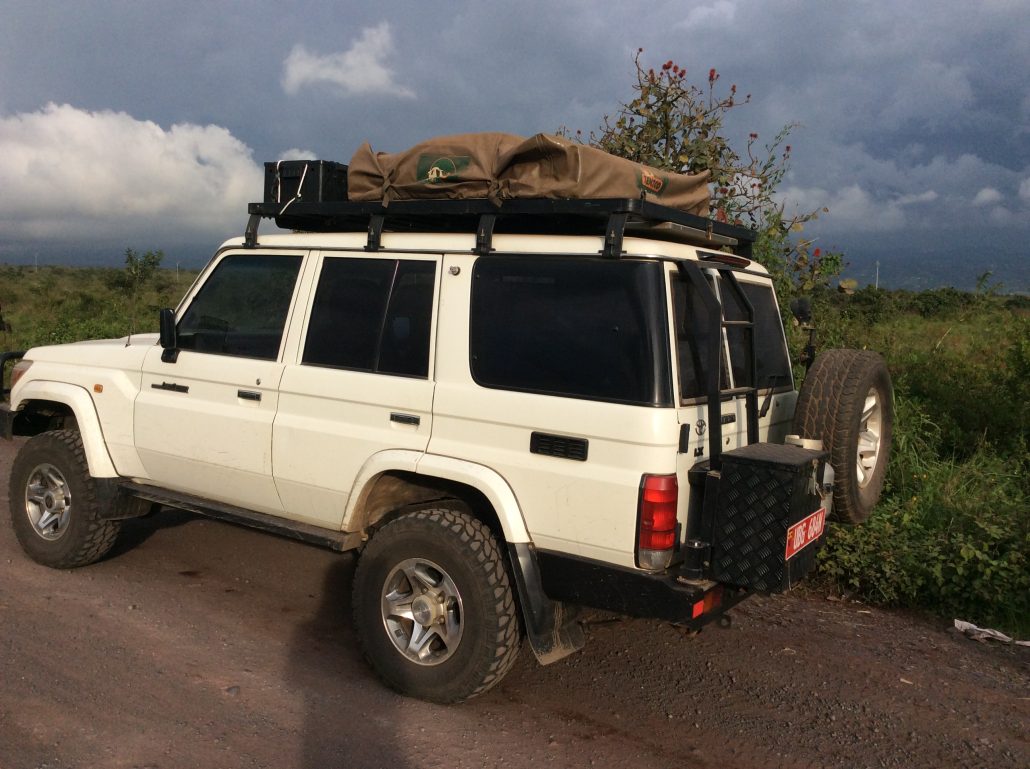
A rooftop tent mounts to a roof rack or roof platform and folds out in minutes, lifting sleepers above ground level, away from insects, damp ground, and curious wildlife passing through camp at night. Most rooftop tents used on Kenyan safari vehicles sleep two adults comfortably, with some models extending to accommodate a small family. Ladders provide access, and the canvas shell typically includes mesh windows for ventilation and a rainfly for wet-season trips.
Ground Tent
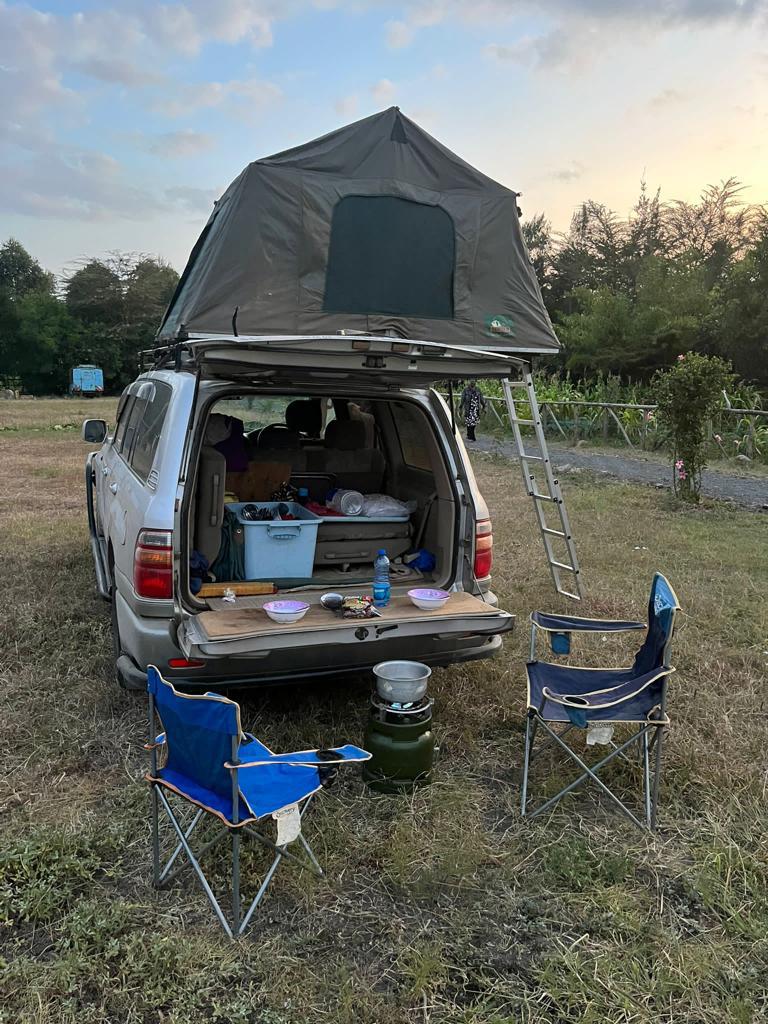
For travelers who prefer to camp beside the vehicle rather than above it, or who are traveling in a group larger than the rooftop tent allows, a ground tent is available as an alternative or an addition. Ground tents pitch directly on the campsite plot and are typically used alongside a rooftop tent when a group needs more sleeping capacity than one tent provides.
Mattresses
Foam or self-inflating mattresses are fitted to rooftop and ground tents to provide a comfortable sleeping surface after a full day on safari roads. Mattress thickness and quality vary by vehicle and package, so the detail is worth confirming at the time of booking if a specific comfort level matters to you.
Cooking Equipment
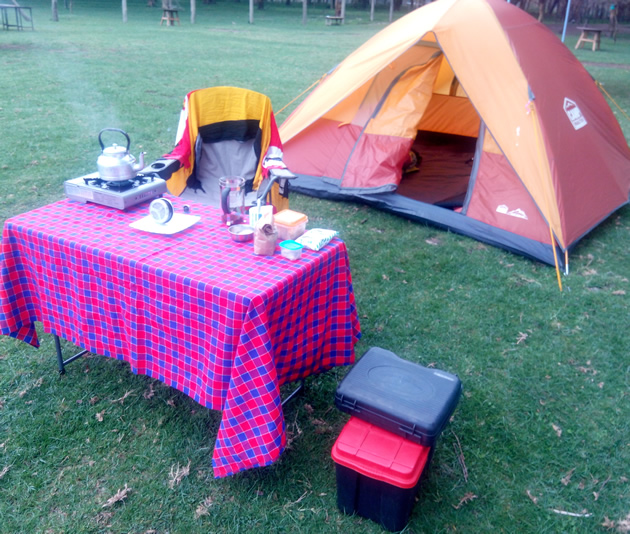
A camping kitchen setup typically includes a stove, pots, pans, utensils, and basic crockery, enough to prepare simple meals at camp without needing to carry a separate kitchen box. Some packages extend the offer further with additional cooking equipment for longer trips or larger groups.
Camping Chairs
Folding camping chairs are included so that evenings at camp, watching the fire, reviewing the day’s photographs, and listening to the bush settle into night sounds are spent in comfort rather than perched on a cool box.
Camping Table
A collapsible camping table provides a surface for meals, maps, and equipment and packs down small enough to travel in the vehicle’s load area between camps.
Gas Stove
A portable gas stove, usually running on a refillable or replaceable gas canister, is the standard cooking heat source, chosen for reliability and quick setup compared to open-fire cooking, particularly in campsites where fires are restricted.
Water Storage
Water containers or jerry cans are provided for drinking and washing water, sized to reduce how often you need to resupply on longer circuits through areas with fewer facilities.
Fridge or Cooler
Selected vehicles offer a fridge or cooler box, either powered from the vehicle’s electrical system or run as a standalone cool box, keeping perishables and drinks cold across multi-day routes where daytime temperatures can be significant.
Safety and Recovery Equipment
Every camping vehicle is equipped with the safety and recovery basics expected of a serious safari. 4×4: a spare wheel and jack, a first aid kit, a fire extinguisher, and typically a tow rope or recovery strap for the rare occasion a vehicle needs assistance on a difficult track. Vehicles are inspected before handover so this equipment is present and in working order
Kenya Camping Gear Checklist
 Beyond what the vehicle provides, a short packing list makes the difference between a smooth camping safari and one spent improvising. Sturdy, closed walking shoes are essential for uneven campsite ground and short walks around camp, paired with layered clothing that can handle warm afternoons and genuinely cold nights, especially at higher-altitude parks such as the Aberdare foothills or the Mara escarpment. A reliable head torch frees your hands for cooking, packing, and navigating camp after dark, while a basic personal first aid kit covers minor scrapes and insect bites beyond what the vehicle’s kit is designed for. Insect repellent and sun protection matter throughout the year, and a reusable water bottle keeps you drinking regularly through long game-drive days. Binoculars and a camera with a spare battery or two round out the essentials for anyone treating the trip as a genuine wildlife and photography trip rather than a simple road journey.
What’s Included and What’s Extra?
The vehicle rental and the fitted camping equipment described above form the core of the package. What sits outside that core and is usually arranged separately includes park and conservancy entry fees, campsite fees payable directly at each site, fuel, and any driver-guide fee if you choose to be driven rather than self-drive. Optional extras such as a satellite phone, additional fuel jerry cans, extra chairs or tables for larger groups, and a fridge upgrade on vehicles where it is not standard can usually be added at the time of booking. Because packages vary by vehicle, always confirm the specific inclusions for your chosen vehicle before you travel.
Beyond the gear checklist above, a few practical items are worth planning around. Cash in small denominations covers campsite fees and community conservancy charges at gates where card payment is unreliable. A printed or downloaded offline map is a sensible backup to phone navigation in areas with patchy signal. Personal medication, a basic power bank, and a dry bag for electronics and documents during river crossings or sudden rain round out a sensible packing approach. Your rental agreement and any required travel documents should stay accessible rather than packed at the bottom of a bag, since they may be requested at park gates.
Which Camping Setup Is Right for Your Safari?
Choosing between a rooftop tent, a ground tent, or a combined setup usually comes down to group size, mobility preferences, and how much time you plan to spend at each camp.
Rooftop Tent Setup
A rooftop tent suits couples, solo travelers, and small families who want a quick setup and pack-down each day, minimal ground contact, and a sleeping platform that keeps you off damp or uneven ground. It is the most popular choice for shorter, faster-moving circuits where you are changing camps every one or two nights.
Ground Tent Setup
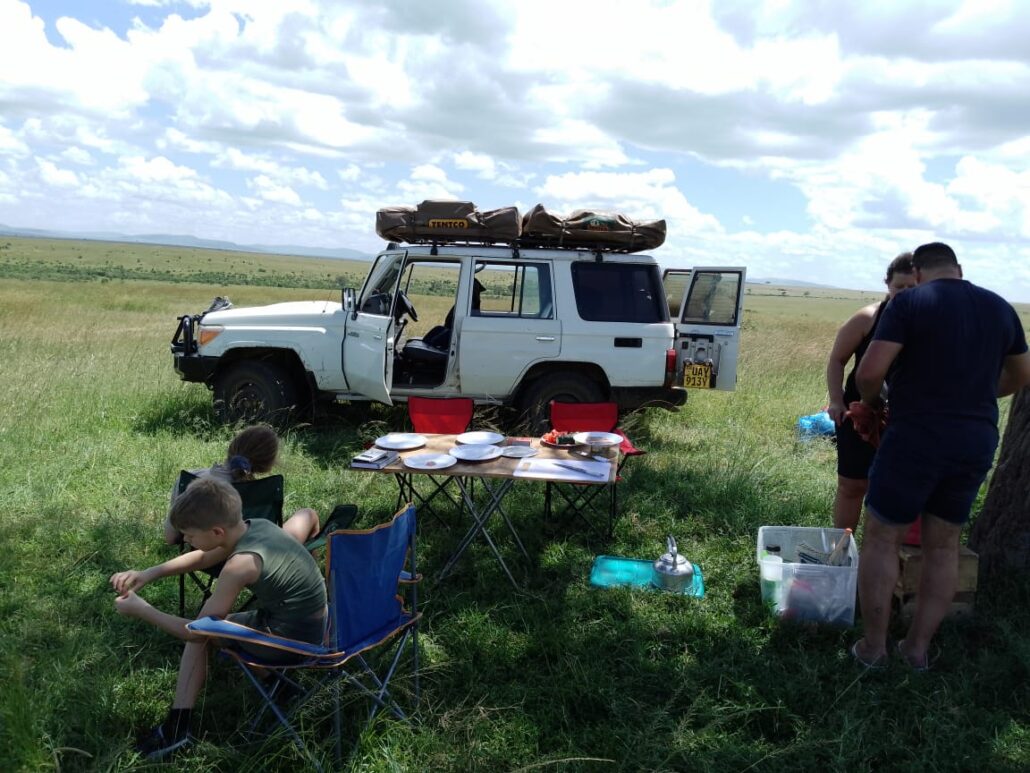
A ground tent works well for larger groups, travelers on a tighter budget, or trips that need the vehicle’s roof space for other equipment. It also suits longer stays at a single campsite, where the extra effort of pitching is offset by staying put for several nights.
Combined Camping Setup
For families and small groups who want both flexibility and capacity, combining a rooftop tent with a ground tent gives you room for more travelers than a single tent allows, without needing two vehicles. This is a common configuration for groups of four to six touring the Mara or the Tsavo circuit together.
Rooftop Tent vs Pop-Up Roof: What’s the Difference?
These two features are easy to confuse but serve entirely different purposes. A rooftop tent is a sleeping structure: a folded canvas shelter that opens out above the vehicle each evening and closes down each morning before you drive.
A pop-up safari roof, sometimes called a pop-up roof or safari hatch, is a section of the vehicle’s own roof that lifts on gas struts or a manual mechanism, giving passengers standing headroom to view and photograph wildlife through the open sides while the vehicle is stationary or moving slowly.
A pop-up roof is not for sleeping, and a vehicle can have a pop-up roof, a rooftop tent, or both, depending on your daytime and nighttime use.
What’s Included and What’s Extra?
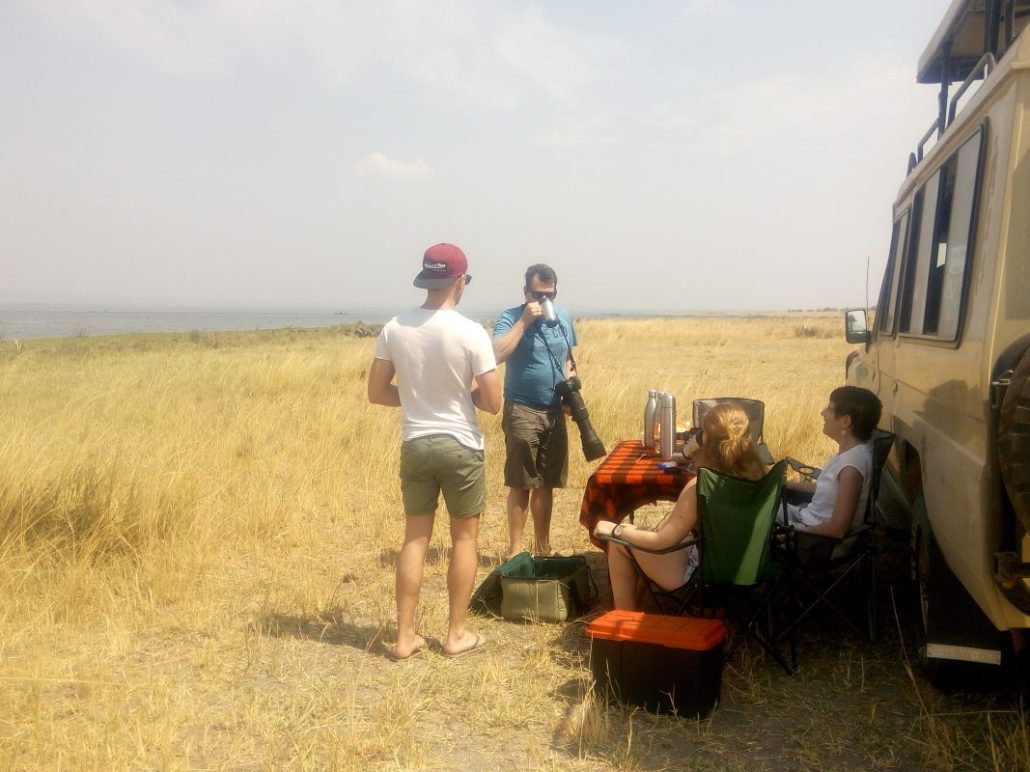
The vehicle rental and the fitted camping equipment described above form the core of the package. What sits outside that core and is usually arranged separately includes park and conservancy entry fees, campsite fees payable directly at each site, fuel, and any driver-guide fee if you choose to be driven rather than self-drive. Optional extras such as a satellite phone, additional fuel jerry cans, extra chairs or tables for larger groups, and a fridge upgrade on vehicles where it is not standard can usually be added at the time of booking. Because packages vary by vehicle, always confirm the specific inclusions for your chosen vehicle before you travel.
Which 4×4 Vehicles Are Available With Camping Gear?
Toyota Land Cruiser
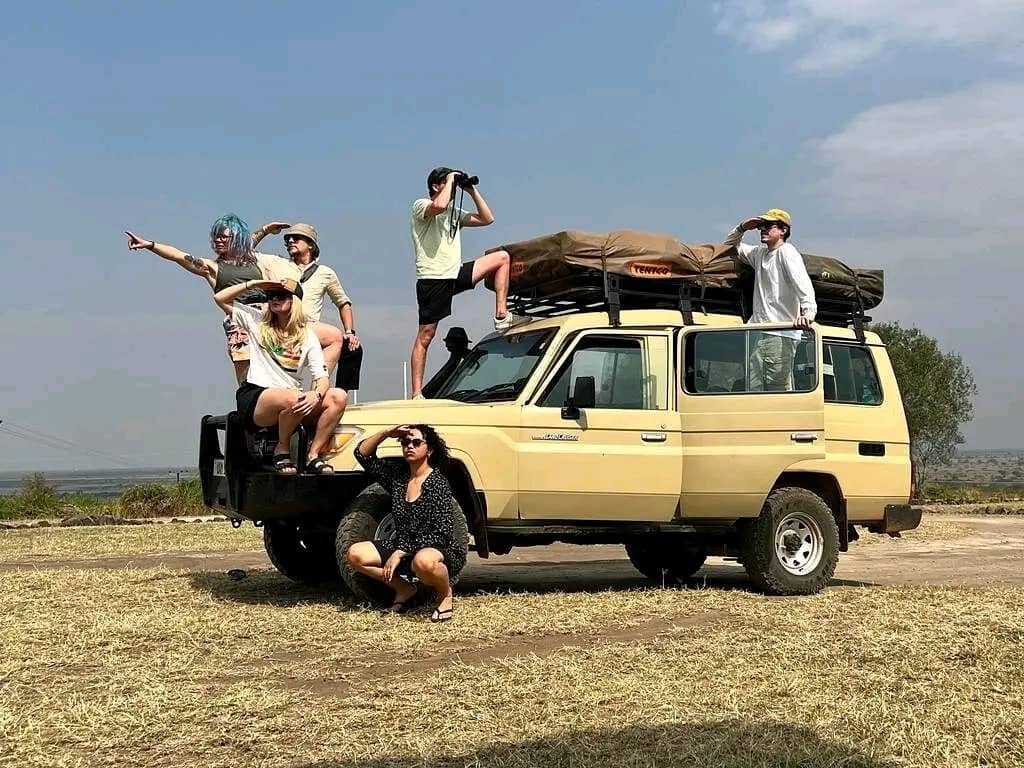
The Toyota Land Cruiser is the benchmark safari vehicle across East Africa, and for good reason. Its combination of ground clearance, dependable four-wheel drive, long-range fuel capacity, and structural strength makes it the natural platform for a rooftop tent and a full camping equipment loadout, without the vehicle feeling compromised on rough tracks. Land Cruisers configured for camping are typically fitted with a roof rack or platform, a rooftop tent, and secured storage for the cooking and recovery equipment described above.
Other Available Camping Vehicles
Depending on group size and route, other 4×4 platforms are also available, fitted with camping equipment, including double-cab pickups, Land Cruisers with V8 engines, Land Cruisers with hardtops and rooftop tent canopies, and other rugged 4×4 models suited to Kenyan safari roads. Availability by vehicle type varies by season, so it is worth confirming what is on the fleet for your specific travel dates when you send your inquiry.
Which Camping Vehicle Is Best for Your Trip?
Couples
Couples generally do well with a single rooftop tent on a compact-to-mid-size 4×4, which gives a quick daily setup, comfortable double sleeping space, and enough load capacity for cooking equipment and luggage without excess vehicle to manage on narrow tracks.
Families
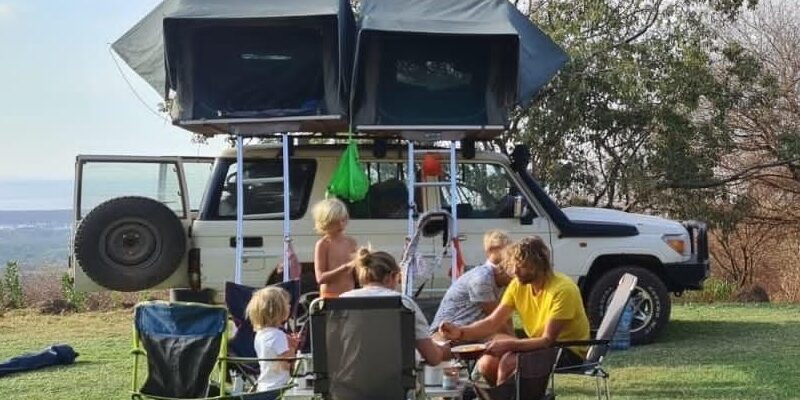
Families with children often benefit from a combined setup, a rooftop tent for the parents and a ground tent for children, or a larger vehicle with a bigger rooftop tent, paired with additional cooking and storage capacity for a group that needs more supplies between resupply stops.
Small Groups
Groups of four to six traveling together typically do best in a Land Cruiser fitted with a combined rooftop and ground tent setup, or in two vehicles traveling in convoy, which also provides a practical backup if either vehicle needs attention on a remote stretch.
Photographers
Travelers prioritizing wildlife photography should look at vehicles fitted with a pop-up safari roof for stable, elevated shooting angles, combined with a rooftop tent for overnight comfort near prime game-viewing areas such as the Mara conservancies or Amboseli’s swamp circuits.
Long Trips
Extended, multi-week circuits favor vehicles with larger fuel tanks, additional water storage, and a fridge or cooler fitted as standard, reducing how often you need to resupply on longer legs between towns.
Luxury Travelers
Travelers who want the self-drive camping experience without sacrificing comfort should ask about premium camping packages, which typically include higher-specification tents, upgraded mattresses, a full fridge, and additional creature comforts fitted to the vehicle.
Where can you go camping in a 4×4 in Kenya?
Maasai Mara
The Maasai Mara is Kenya’s flagship wildlife destination, known for its resident big cat prides and the annual wildebeest migration crossing the Mara River between roughly July and October. Camping in and around the Mara ecosystem, including its private conservancies, puts you close to the action for dawn and dusk game drives.
Amboseli
Amboseli offers some of the most reliable elephant sightings in East Africa, set against the backdrop of Mount Kilimanjaro on clear mornings. Its relatively compact size makes it an accessible addition to a camping circuit that also includes the Mara or Tsavo.
Tsavo
Tsavo West and Tsavo East together form one of Kenya’s largest protected wilderness areas, known for red-earth elephants, volcanic landscapes, and a genuine sense of remoteness compared to the busier northern circuits. This makes Tsavo a strong choice for travelers seeking a quieter camping experience.
Lake Nakuru
Lake Nakuru National Park is a compact, fenced sanctuary known for rhino sightings and dense birdlife, making it a convenient stop on a route between Nairobi and the Mara or the Rift Valley lakes further north.
Lake Naivasha
Lake Naivasha sits close enough to Nairobi to serve as an easy first or last night on a camping circuit, with hippo-filled waters, boat trips, and access to Hell’s Gate National Park for walking and cycling safaris that most parks do not permit.
Samburu
Samburu National Reserve, in Kenya’s drier north, is home to species found nowhere else on the standard southern circuit, including Grevy’s zebra, reticulated giraffe, and the Somali ostrich, set along the Ewaso Nyiro River.
Ol Pejeta
Ol Pejeta Conservancy combines a strong wildlife density, including black rhinos and the last remaining northern white rhinos, with well-organized camping and conservation-focused activities, making it a rewarding stop for travelers interested in conservation alongside game viewing.
Nairobi National Park
Uniquely positioned against the capital’s skyline, Nairobi National Park offers a convenient way to begin or end a camping circuit with genuine wildlife viewing, including the chance to combine a game drive with a visit to the adjoining Sheldrick elephant orphanage or giraffe center.
Popular Kenya Camping Safari Routes
A classic first-time circuit links Nairobi, Lake Naivasha, the Maasai Mara, and back to Nairobi over five to seven days, giving a strong mix of accessible wildlife and manageable driving distances. A longer southern circuit adds Amboseli and Tsavo to the Mara, extending the trip to ten days or more and rewarding travelers with greater variety in landscape and species.
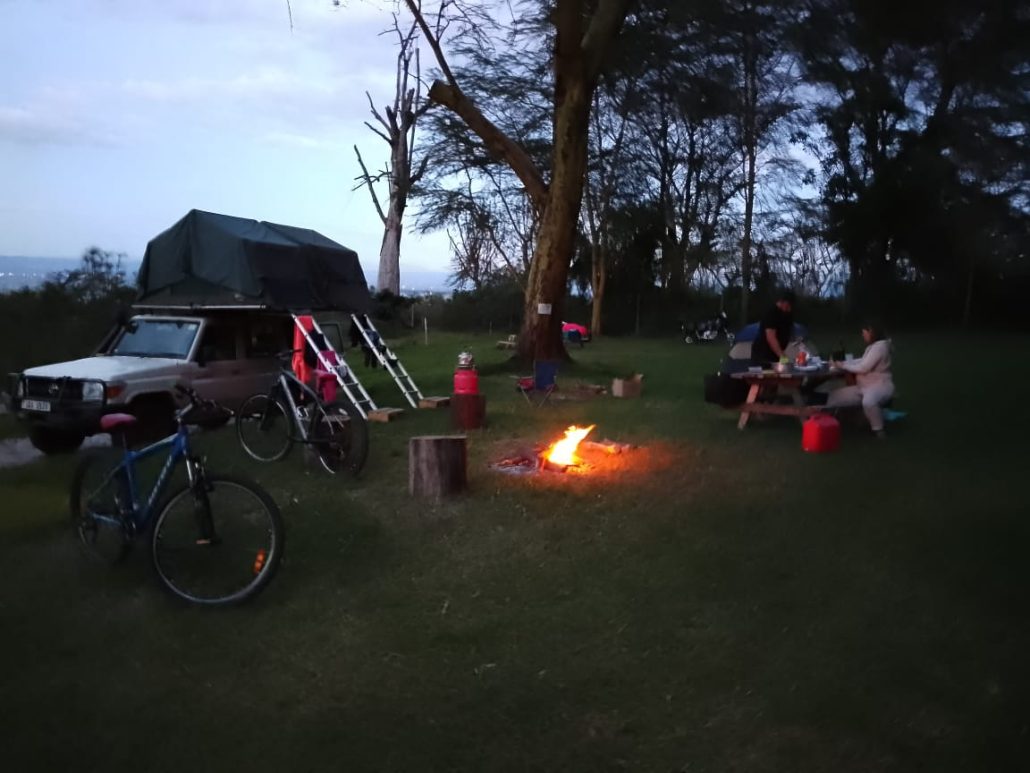
Travelers with more time often extend north to Samburu and Ol Pejeta, building a circuit that showcases both the classic southern savannah and the drier, more rugged north. Each of these routes can be built around a self-drive vehicle, a driver-guided vehicle, or a mix of the two depending on which sections of the drive you want to handle yourself.
Where Can You Camp in Kenya?
Kenya’s national parks, reserves, and conservancies operate designated public and special campsites, ranging from simple public sites with basic facilities to exclusive-use special campsites booked for your group alone. Community and private conservancies bordering parks such as the Mara often run their campsites with a more personal, lower-density feel than public park sites. Campsite fees are typically paid separately from your vehicle rental, directly to the relevant park authority or conservancy, and availability at popular sites during peak season is worth confirming in advance as part of your route planning.
Camping Safari vs Lodge Safari
A camping safari trades the fixed comfort of a lodge for flexibility, a lower cost per night, and a closer connection to the bush, falling asleep to genuine night sounds rather than a generator hum, and having breakfast prepared at your own pace rather than on a set schedule. A lodge safari removes the setup and pack-down of camp life and suits travelers who want maximum comfort with minimum logistics. Many travelers find the strongest trip combines both: camping through remoter stretches of a circuit and booking a lodge or tented camp for one or two nights where a hot shower and a proper bed are worth the trade-off.
Can I Rent a Camping 4×4 for Self-Drive?
Yes. Self-drive camping rentals are available on vehicles offered for self-drive, provided the renter meets the standard rental requirements around age, driving experience, and a valid license. Self-driving gives you full control over your pace, how long you linger at a sighting, and which route variations you take, and suits travelers comfortable with manual gearboxes, unsealed roads, and basic bush navigation.
Can I Hire a Camping 4×4 With a Driver-Guide?
Yes. A driver-guide is available for travelers who would rather focus entirely on the safari, wildlife, photography, conversation, and the landscape, while an experienced local driver handles the roads, park procedures, and camp setup logistics. This option particularly suits first-time visitors to Kenya, families traveling with young children, and travelers on cross-border routes into Tanzania, where local driving knowledge and park protocols differ from Kenya’s own.
How Much Does a Camping Car Rental Cost in Kenya?
Rental prices for camping cars in Kenya depend on the vehicle chosen, the camping equipment package fitted to it, the length of the rental, and whether you add a driver-guide. Rather than quote a single figure that will not reflect your specific route or group size, Car Rental 4×4 provides a tailored quote once we know your travel dates, number of travelers, and preferred camping setup, so the figure you receive reflects your actual trip rather than a generic average.
What Affects the Cost?
Several factors move the price up or down: the vehicle type and camping package selected, the length of the rental period, whether the trip is self-drive or driver-guided, the season you are traveling in, whether the rental is one-way rather than a round trip, and whether the route crosses into neighboring countries. Longer rentals typically reduce the average daily rate, while peak-season travel around the July to October migration period and the December holidays tends to command higher demand across the whole rental market.
What’s Included in the Rental Price?
The rental price covers the vehicle itself, the fitted camping equipment for your chosen package, and standard insurance and safety equipment as described earlier in this guide. It does not typically include fuel, park and conservancy entry fees, campsite fees, or a driver-guide fee unless that option has been added. Confirming what is included in your quote is standard in the booking process, so there are no surprises once you are on the road.
Long-Term 4×4 Camping Rental in Kenya
For travelers planning an extended trip, a month or more touring Kenya, or combining Kenya with neighboring countries, long-term camping rental rates offer better value than a series of shorter bookings. Long-term rentals are popular with photographers on extended assignments, overlanders building a longer East African itinerary, and returning visitors who prefer the freedom of their own vehicle over a fixed tour schedule. Vehicle servicing and equipment checks can be arranged at agreed intervals during a long-term rental, so the vehicle stays road-ready throughout an extended trip.
One-Way Camping Car Rental in Kenya
A one-way rental lets you collect your camping 4×4 in one location and drop it off in another, avoiding the need to double back on your route. Within Kenya, one-way drop-offs are commonly arranged in Mombasa, Kilifi, Watamu, Emali, and Voi for travelers finishing a safari circuit on the coast, or in the Maasai Mara for those ending their trip closer to the Tanzanian border. For travelers continuing beyond Kenya, one-way drop-offs can also be arranged in Namanga on the Tanzanian border, and, subject to route and vehicle arrangements, as far as Arusha, Dar es Salaam, Kigali, Kampala, or Entebbe, making it possible to build a genuine multi-country East African road trip without ever retracing your own tracks.
Cross-Border Camping Car Rental
Kenya to Tanzania
Crossing from Kenya into Tanzania with a camping 4×4 is a well-established route, typically via Namanga toward Arusha and the northern Tanzanian circuit, or further south toward the coast. Because Kenyan driver-guides generally do not drive within Tanzanian national parks, and the reverse is also true for Tanzanian drivers in Kenya, cross-border driver-guided trips are usually arranged with a driver switch at the border, so you can continue your safari with a driver who has the correct local knowledge and permits for the parks ahead.
Kenya to Uganda
A camping 4×4 route from Kenya into Uganda opens up gorilla trekking, the Rwenzori foothills, and Uganda’s own savannah parks as an extension of a Kenyan safari. As with the Tanzania route, cross-border logistics, including documentation, permits, and, where relevant, a driver switch, are handled as part of the planning for this kind of extended itinerary.
Kenya to Rwanda
For travelers building a longer East African circuit, a route from Kenya through to Rwanda adds gorilla trekking in Volcanoes National Park and Kigali as a compelling final leg. As with the other cross-border options, this route is best planned well in advance so that vehicle logistics, permits, and any required driver changes are confirmed before you set off.
Is it Safe to rent a car with Camping gear in Kenya
Safety on a Kenyan camping safari rests on three things: a properly equipped and maintained vehicle, sensible camp practice, and respect for the wildlife you have come to see. Every rental vehicle is inspected before handover, with spare wheel, jack, first aid kit, fire extinguisher, and recovery equipment confirmed present and functional. At camp, food should be stored securely and cooking areas kept away from tents, since scent is what draws curious wildlife toward a campsite rather than noise or light. Night walks around unfenced campsites should be avoided without a guide, and park speed limits and driving hours exist for the safety of both travelers and wildlife, not as a formality. Following the guidance of rangers, conservancy staff, and your driver-guide, where one is present, is the simplest way to keep a wildlife-rich trip incident-free.
What Happens During Vehicle Handover?
Handover is a structured process designed to make sure you leave with a vehicle and equipment you understand and trust. A member of the Car Rental 4×4 team walks you through the vehicle’s controls, four-wheel drive engagement, and any features specific to that model, followed by a joint inspection of the vehicle’s condition, tires, and fluid levels. The camping equipment for your chosen package is then checked off item by item so both you and the rental team have a shared, agreed record of what has been provided, and you are shown how the rooftop tent, cooking equipment, and any pop-up roof operate before you set off.
Camping Vehicle Handover Checklist
At handover, expect confirmation of the vehicle’s documentation and rental agreement, a working spare wheel and jack, a stocked first aid kit and fire extinguisher, full fuel and correct tire pressures, and a demonstration of how the rooftop or ground tent is erected and packed away. The cooking equipment, water containers, chairs, and table are counted and checked against your package, and any optional extras such as a fridge, additional jerry cans, or a satellite phone are confirmed as fitted and functioning before you leave the yard.
Why Rent Your car rental with Camping gear in Kenya From Car Rental 4×4?
Car Rental 4×4 fits out its vehicles specifically for Kenyan safari and camping conditions, rather than adapting a general rental fleet as an afterthought. Vehicles are inspected and serviced between rentals, camping equipment is checked item by item at handover, and the team behind the fleet understands the practical realities of self-drive and camping travel across Kenya’s parks, conservancies, and cross-border routes into Tanzania, Uganda, and Rwanda. Whether you are planning a five-day Mara circuit or a month-long overland trip beyond Kenya’s borders, the same standard of vehicle preparation, equipment care, and route guidance applies.
See Our Camping Vehicles and Equipment
Browse the current fleet of camping-ready 4×4 vehicles, including Land Cruisers and other models fitted with rooftop tents, pop-up roofs, and full camping equipment packages, on the Car Rental 4×4 vehicle fleet page, where availability by vehicle type and season is kept up to date.
Customer Experiences
Travelers from our reviews who have taken a camping 4×4 through the Mara, Amboseli, and Tsavo circuits consistently point to the same things: a vehicle that felt genuinely capable on rough tracks, camping equipment that worked as explained at handover, and the freedom of setting their own pace at sightings that a scheduled group tour would have moved past.
Families traveling with a driver-guide highlight how much easier the trip felt with someone else managing navigation, park procedures, and camp setup, leaving them free to focus on their children and the wildlife in front of them. These are the outcomes Car Rental 4×4 aims to deliver on every camping rental, whether it is a first Kenyan safari or a return trip building toward a longer East African circuit.
How to Book a Camping 4×4 in Kenya
Booking begins with your travel dates, number of travelers, preferred route, and camping requirements, sent through the enquiry form at the top of this page or directly on WhatsApp. From there, Car Rental 4×4 recommends a vehicle and camping package suited to your group and route, confirms pricing and inclusions, and secures the booking. Vehicle and equipment handover takes place before departure, with the full walkthrough described above, so you leave fully briefed and ready for the road ahead.
Best Time for a Kenya Camping Safari With a Pop-Up Roof or Rooftop Tent
Kenya’s camping seasons broadly follow its dry and wet periods. The long dry season from roughly June to October is the most popular window for camping safaris, with firmer roads, easier vehicle recovery, and, from July onward, the added draw of the wildebeest migration crossing into the Mara, conditions that suit both rooftop tent camping and extended pop-up roof game viewing, since dry, dust-lifted plains make for reliable wildlife visibility deep into the evening light. The short dry season in January and February offers another strong window, with clearer skies, excellent visibility for photographers using a pop-up roof, and generally lower campsite demand than the July to October peak. The wetter months, particularly April and May, bring lush, green landscapes and dramatic skies that reward patient photographers, but also softer roads that call for a more experienced self-drive approach or a driver-guide familiar with wet-season conditions, along with a rooftop tent’s raised, dry sleeping platform being especially valuable when ground can turn to mud overnight.
Best Time for a Camping Gear Safari in Kenya
Dry Season: The Premier Camping Window (July–October & January–March)
Kenya’s dry seasons are the optimal periods for camping. From July through October and again from January through March, the roads are at their most manageable, the skies are largely clear for dry sleeping conditions, and the nights carry the cool, comfortable temperature that makes a quality sleeping bag a pleasure rather than a necessity. The July to October peak encompasses the Great Migration at the Masai Mara, arguably the most rewarding camping context in East Africa, and represents the single most popular camping season in the region. Book your campsite positions at least three to four months ahead for Mara camping during this period, as the best riverbank and park-interior sites are taken early.
Green Season: Lush, Uncrowded & Photogenic (November–May)
The rains bring challenges and compensations that experienced camping travelers weigh carefully. The landscape transforms into extraordinary photogenic abundance, vivid greens, dramatic skies, and the particular quality of post-rain light that makes every wildlife encounter look like a National Geographic cover. Parks are uncrowded, campsites are easily available, and the overall mood of the camping experience has a private, intimate quality that dry-season camps rarely achieve. The practical considerations: a waterproof tent configuration and a ground tarp are non-negotiable in the green season; some park tracks become impassable in heavy rain and require a genuine 4×4 with recovery equipment, and campsite selection should avoid low-lying flood-risk positions. The camping gear kit’s waterproofed tents and full recovery equipment are specifically selected for green season reliability.
Coastal Camping: October to March for Best Conditions
The Kenyan coast, the Malindi Marine National Park area, the Watamu Biosphere Reserve, and the bush camping options around the Shimba Hills are best for camping between October and March, when the humidity is lower, the Indian Ocean is calm for marine activities, and the coastal forest wildlife is most active. A camping gear rental from Nairobi configured for the Nairobi-to-Mombasa route via Tsavo provides an ideal combined bush-and-coast camping itinerary.
Every Detail, Handled With Car Rental 4×4
You have come to Kenya for the version of safari that cannot be scheduled from a lodge veranda, the pre-dawn engine start, the first light over the Mara escarpment, and the fire burning down as the bush settles into its own night rhythm around your camp. That is what a properly equipped camping 4×4 makes possible, and it is the only version of the trip Car Rental 4×4 sets out to deliver. Every vehicle is prepared, every item of camping equipment is checked, and every route detail, from park permits to a driver switch at the Tanzanian border, is worked through before you leave the yard so that nothing is left for you to discover the hard way, somewhere between Amboseli and Tsavo, three days into a trip you have been planning for years. When you are ready to put your dates, your group, and your own route against a vehicle built for exactly these conditions, send us your travel details, and we will put together the camping 4×4 that fits your Kenya.