Tsavo West National Park Travel Guide: Springs, Lava Flows, Rhinos, Gates, and How to Plan Your Visit

Tsavo West National Park is a large, rugged park in southern Kenya, about 240 kilometers from Nairobi and 250 from Mombasa via its main Mtito Andei gate. The Kenya Wildlife Service calls it the “Land of Lava, Springs, Man-Eaters, and Magical Sunsets.” It is known for Mzima Springs, the Shetani lava flow, the Ngulia Rhino Sanctuary, Lake Jipe, and a hilly, volcanic landscape that looks very different from Kenya’s open plains. Most visitors spend two to three days here, and it is a natural stop between Nairobi, Amboseli, and the coast.

Tsavo West National Park is the Tsavo that rewards the curious. Where its eastern sibling is wide, flat, and red, Tsavo West is broken up: black lava flows spill across the land, craters rise out of the bush, rocky ridges give wide views across the plains, and from beneath the volcanic rock gush crystal-clear springs that seem almost impossible in this dry country. Elephants powder themselves with red dust, black rhinos browse in a protected sanctuary, and at dusk the sky over the Chyulu Hills turns every color at once. It is a big, quiet park, and it feels like a place where something has been waiting for you.

Below you will find the park’s main sights, its gates and hours, what the roads are really like, where to sleep, and which vehicle copes best. Tsavo West also sits between Nairobi, Amboseli, Tsavo East, and the coast, so the guide closes with ideas for longer journeys, which you can compare in our Kenya safari routes guide.

Tsavo West National Park at a Glance

Quick fact

What to know

Location

Taita-Taveta and Makueni counties, southeastern Kenya, west of the Nairobi–Mombasa highway

Size

About 9,000 square kilometers of volcanic hills, bush, springs, and plains

Famous for

Mzima Springs, the Shetani lava flow, Chaimu Crater, Ngulia Rhino Sanctuary, and Lake Jipe

Wildlife

Elephants, lions, buffalo, hippos, crocodiles, giraffes, black rhinos in the sanctuary, and rich birdlife

Distance

Mtito Andei Gate is about 240 km from Nairobi and about 250 km from Mombasa.

Main gates

Mtito Andei, Tsavo River, Chyulu, Maktau, Ziwani, and Lake Jipe. Confirm current gates before you travel.

Gate hours

Typically 6 am to 6 pm unless you are staying overnight inside the park.

Speed limit

About 40 km/h, with off-road driving prohibited

Best for

Landscapes, springs, rhinos, walking stops, camping, and road-trippers

Time needed

Two nights is a good minimum; three nights suits a relaxed visit

Is Tsavo West National Park Worth Visiting?

Yes, particularly if you value scenery and variety as much as sheer numbers of animals. Tsavo West is more dramatic than most Kenyan parks, with black lava fields, volcanic cones, clear springs, rocky ridges, and views across the Chyulu Hills towards Kilimanjaro. The bush is thicker than in open savanna parks, so wildlife can take more patience to find, but the rewards include underwater views of hippos and crocodiles at Mzima Springs, the rhino sanctuary, and a sense of space that few parks offer. It is also much quieter than the Maasai Mara or Amboseli.

It is less suited to travellers who want guaranteed big-cat sightings or open plains with herds in view, and it asks for more driving time because attractions are spread across hills and lava country. Distances look short on a map and feel longer on the ground. Treat Tsavo West as a landscape and wildlife park, plan unhurried days, and consider a guide if you want help in the denser areas.

Who Tsavo West suits best

  • Landscape and photography lovers who enjoy volcanic scenery and wide skies.
  • Road-trippers linking Nairobi, Amboseli, Tsavo East, and the coast.
  • Campers and self-drivers who want quiet roads and flexible stays.
  • Families and walkers who like short walks at Mzima Springs and the lava flow.
  • Repeat safari visitors seeking something different from the Mara.

Main Attractions in Tsavo West

Mzima Springs

Mzima Springs is the park’s best-known attraction. Fed by water that filters through the Chyulu Hills, the springs form clear pools that are said to supply much of Mombasa’s fresh water. Visitors can walk along marked paths among palms and fig trees, watch monkeys and birdlife, and use an underwater viewing chamber to see hippos and fish in the clear water. Crocodiles live in the pools, so follow ranger guidance and keep to the paths. It is a pleasant, shaded stop in a hot park, and one of the few places where you may leave your vehicle with a ranger.

Shetani Lava Flow and Chaimu Crater

Shetani means “devil” in Swahili, and the name suits a vast black lava flow created by an eruption roughly five hundred years ago. Walking on the cooled rock gives a striking sense of the park’s volcanic origins, and caves along the flow add to the atmosphere. Nearby Chaimu Crater is a cinder cone that can be climbed for panoramic views over the lava field and the Chyulu Hills. Bring sturdy shoes, water, and a hat, because there is little shade.

Ngulia Rhino Sanctuary and Poacher’s Lookout

The Ngulia Rhino Sanctuary protects black rhinos within a fenced area on the Ngulia Hills, set up in the 1980s as part of Kenya’s efforts to save the species. Rhino sightings can never be guaranteed, but a guided drive improves your chances. Poacher’s Lookout, a rocky ridge above the sanctuary, offers a wide-ranging panorama, and it makes an excellent picnic and photography stop.

Roaring Rocks and the Tsavo River

Roaring Rocks is a rocky outcrop with views across the park, named for the sounds the wind can make among the boulders. The Tsavo River, which gave the park its name, runs through the north, and the area is linked with the story of the “man-eaters of Tsavo,” the lions that disrupted railway construction in the 1890s. A visit to the railway history sites near Tsavo adds context if you are interested.

Lake Jipe

Lake Jipe lies in the south on the Tanzanian border, and it is among the park’s quietest corners. It is known for birdlife, hippos, and crocodiles, and for distant views of Kilimanjaro on clear days. Roads to the lake are rougher than the main routes, so a 4×4 is advisable, and you should allow plenty of time.
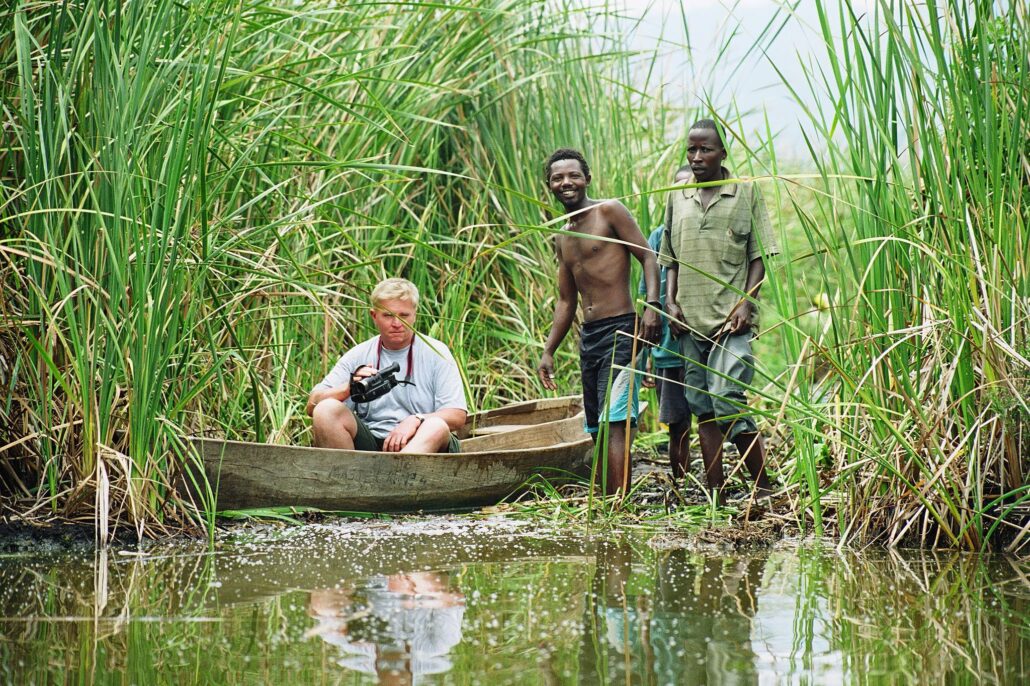
Lake Jipe attractions

Wildlife in Tsavo West

Tsavo West’s dense bush and varied terrain support a wide range of animals, though they can be harder to spot than on open plains. Elephants are widely distributed and often stained red by the local soil. Buffalo, giraffes, zebras, waterbucks, lesser kudu, and gerenuk live across the park, and lions and leopards are present but elusive. Hippos and crocodiles are easiest to see at Mzima Springs and Lake Jipe. The rhino sanctuary offers the best chance of black rhinos, and the park’s bird list runs into the hundreds, with raptors, hornbills, waterbirds, and many migrants.

  • Patience pays: drive slowly, stop often, and scan thickets and waterholes.
  • Use waterholes: lodges and viewpoints often overlook waterholes, which draw animals in the dry season.
  • Consider a guide: a driver-guide who knows recent movements can make a real difference in thick bush.
  • Birdwatching: the migratory season, roughly October to April, adds to the resident species.

Gates, Hours, and Entry

GateWhere it isBest for
Mtito Andei GateNorthern side, beside the Nairobi–Mombasa highwayMost visitors are from Nairobi, and access to Mzima Springs, Shetani, and Ngulia
Chyulu GateNorth-east, linking to AmboseliTravellers moving between Amboseli and Tsavo West and the Chyulu Hills
Tsavo River GateNorth, near the Tsavo RiverAccess from the highway towards the north of the park
Maktau GateSouth-west, near the Taita Hills and the Tanzanian borderSouthern wilderness and visitors from the Taveta direction
Ziwani GateSouth, near a community sanctuaryQuiet southern routes. A 4×4 is advisable.
Lake Jipe GateFar south, near the Tanzanian borderBirdwatching and Kilimanjaro views
  • Opening times: the gates usually run from 6 am to 6 pm, with exceptions for guests sleeping inside the park. Check the current schedule before you leave.
  • Paying to enter: the Kenya Wildlife Service normally takes payment through its online, cashless system, and you should have identification with you.
  • Cost: Tsavo West is priced below the top-tier parks and above the cheapest ones, and the tariff is revised from time to time, with the vehicle charged on top. Look up the current figures instead of trusting older articles.
  • Two-park visits: if Tsavo East is also on your list, ask whether a joint arrangement applies.
  • Local guides: one can often be hired at the gate, which is useful on a first visit.

Best Time to Visit Tsavo West National Park

Tsavo West can be visited all year. The dry months, roughly June to October and January to February, are generally best for wildlife because animals concentrate near water and the bush is more open, and roads are firmer. The long rains from March to May bring green landscapes, mud, and fewer visitors, and some tracks become difficult. The short rains in November and December are lighter, and migrant birds arrive. Days are hot and nights can be cool in the hills, so pack accordingly.

  • For game viewing: dry months, with drives at dawn and in the late afternoon.
  • For birdwatching: the migratory season from about October to April.
  • For Mzima Springs and walks: early morning, when it is cooler and animals are more active.
  • For quiet roads: the rainy months, or midweek outside school breaks.
  • For clear Kilimanjaro views: dry months, from the southern parts of the park.

How long to stay, and Tsavo West or Tsavo East?

Time available

What you can do

Notes

One night

Mzima Springs, a game drive, and the lava flow

A tight schedule after a long drive

Two nights

Mzima Springs, Shetani, Chaimu, the rhino sanctuary, and two game drives

The best minimum

Three nights

All of the above, plus Lake Jipe or the Chyulu Hills

Relaxed, and good for photographers

Four nights or more

Tsavo West and Tsavo East together

Suits a Southern Circuit loop

Tsavo West and Tsavo East are neighboring parks with different characters. Tsavo West offers volcanic hills, lava flows, springs, and the rhino sanctuary, and its bush is thicker. Tsavo East National Park is flatter and more open, with wide plains, the Galana River, and the famous red elephants. Many travelers visit both, starting in the west and ending in the east before heading to the coast.

How to Get to Tsavo West National Park

Most visitors drive from Nairobi along the Mombasa highway to Mtito Andei, a journey of about 240 km that typically takes four to five hours. The road is tarmac, but heavy trucks slow progress, so leave early. From Mombasa, the Tsavo Gate and Maktau Gate approaches take roughly three to four hours. Arriving by early afternoon gives you time for a first game drive.

  • By road: follow the A109, fill up at Mtito Andei before entering, and carry extra fuel if you plan to go south.
  • By train: the Standard Gauge Railway stops at Mtito Andei, and you can arrange a transfer from the station.
  • By air: several airstrips serve the park, including Kamboyo, Ziwani, Tsavo River, Lake Jipe, Maktau, and Kasigau, and flights and transfers must be arranged in advance through a lodge or operator.
  • From Amboseli: Chyulu Gate gives a quieter connection between Amboseli and Tsavo West.
  • Travel by day: the highway carries heavy trucks, and night driving is risky.

If you plan to combine Tsavo West with Amboseli, see our Amboseli National Park travel guide, and our Nairobi National Park travel guide explains how to fit a morning game drive in the capital before you leave.

Self-Drive, Pop-Up Roof, or Driver-Guide: Choosing Your Vehicle

Tsavo West National Park is one of the more demanding parks for self-drivers. Tracks are generally maintained near the main attractions, but the terrain is hilly, the bush is thick, and roads in the south and near Lake Jipe can be rough and slow. Park authorities recommend a reliable 4×4, and a high-clearance vehicle becomes essential in the rains. For practical advice, read self-drive Tsavo West National Park, and to compare options, see car rental Nairobi.

If you want…

Choose

Why

Independence on rough roads

A self-drive 4×4

Copes with lava country, stony tracks, and the southern routes

Help finding wildlife in thick bush.

A driver-guide

The guide knows tracks, waterholes, and recent sightings.

Photography and shared viewing

A safari vehicle with a pop-up roof

A lifting roof lets everyone see over thick bush.

Nights in the bush

Camping gear and rooftop tent rental

Public and special campsites provide the pitch, not the kit

A trip that ends at the coast

One-way car rental from Nairobi

Collect in the capital and return the vehicle to Mombasa.

Tsavo West National Park rules

  • Stay on established roads and trails, with no off-road driving.
  • Observe the speed limit, which is about 40 km/h, and the ban on hooting and drink-driving.
  • Keep doors closed, and stay in the vehicle except at lodges, campsites, viewpoints, picnic areas, and other designated places.
  • Follow ranger instructions at Mzima Springs and the lava flow.
  • Be out of the park, or at your lodge, before the gates close.

Local notes from our team

Fuel and supplies: fill up at Mtito Andei before entering, and carry extra fuel and water for southern routes.

Timing: Keep dawn and dusk for animals, and use the heat of midday for Mzima Springs and a picnic.

Where drivers tend to struggle: stony and sandy tracks, steep sections near the hills, and soft ground after rain. Slow down, keep to established tracks, and avoid shortcuts.

Navigation: save offline maps before you set off, since phone signal is patchy and signposts are sparse.

Where to Stay in Tsavo West: Lodges, Tented Camps, and Guesthouses

Accommodation inside and around Tsavo West ranges from public campsites to full-service lodges. Names below come from the Kenya Wildlife Service and published tourism guides. Classifications differ by source, prices change, and camps open and close, so confirm details before you book.

Budget and community options

Budget travelers use public campsites, guesthouses run by the park authority, and community-linked camps near the gates. Kamboyo Guest House is listed by the Kenya Wildlife Service, and other budget options sit in the towns of Mtito Andei, Voi, and Taveta.

Midrange lodges and camps

Lodge or camp

Area

Notes

Kilaguni Serena Safari Lodge

Central Tsavo West, Rhino Valley

Waterhole views and a Kilimanjaro backdrop on clear days

Ngulia Safari Lodge

Ngulia Hills, above the rhino sanctuary

Known for views over the sanctuary and for birdwatching

Severin Safari Camp

Near Mzima Springs and Kamboyo

Tented camp with easy access to the springs and lava flow

Rhino Valley Lodge

Rhino Valley area

Lodge listed by travel guides in the park’s central area

Luxury camps

Camp

Area

Notes

Finch Hatton’s Luxury Safari Camp

Near Mzima Springs

Upmarket tented camp with spacious tents and gardens

Severin Safari Camp (upper range)

Near Mzima Springs

Some sources place it in the luxury tier.

  • Tiers overlap: guides disagree on where some camps sit, so compare current rates and inclusions.
  • Inclusions: ask what is included, including meals, game drives, and park fees.
  • Location matters: camps near Mzima Springs and Rhino Valley suit the central highlights, while Ngulia suits rhinos and birds.
  • Book early for peak dry-season months.

Campsites in Tsavo West

Camping is well established in Tsavo West and suits self-drivers with a rooftop tent or ground tent. The Kenya Wildlife Service lists public and special campsites.

  • Public campsites: Komboyo (Kamboyo), Chyulu, and Lake Jipe are listed. Facilities are basic, so bring your own equipment, food, water, and fuel.
  • Special campsites: private-use sites such as Kudu, Little Royal, Simba, Palm Tree, Maji ya Chumvi, Kichwa Tembo, and Pipeline are listed, and they are reserved for a single group at a time.
  • Booking: book through the official channel, and confirm availability, fees, and rules before you travel.
  • Wildlife: Elephants and hyenas may visit camps, so keep food secured, stay close to your vehicle at night, and follow ranger advice.
  • Equipment: arrange a rooftop tent and gear through camping gear and rooftop tent rental.

Photography Tips for Tsavo West

  • Use the lava and the hills: dark volcanic rock and dramatic ridges look best in low, angled light.
  • Bring a wide lens for landscapes and a telephoto lens for birds and elephants.
  • Shoot Mzima Springs early, when light filters through the palms and the water is clearest.
  • Protect gear from dust and heat, and keep lenses sealed between stops.
  • Frame elephants against red soil and hills for the park’s signature look.
  • Be patient in thick bush, and let animals emerge rather than chasing them.

Sample Tsavo West Itineraries

Two nights from Nairobi

  • Day 1: leave Nairobi early, arrive at Mtito Andei by midday, visit Mzima Springs, then take an afternoon game drive.
  • Day 2: the Shetani lava flow and Chaimu Crater in the morning, a picnic at Poacher’s Lookout, and a late-afternoon drive near the rhino sanctuary.
  • Day 3: one last morning drive, then back to Nairobi or on towards the coast.

Three nights with Lake Jipe

  • Day 1: arrive and visit Mzima Springs.
  • Day 2: lava flow, crater, and the rhino sanctuary.
  • Day 3: drive south to Lake Jipe for birds and hippos.
  • Day 4: return through the park or continue to Taveta and Tanzania.

Amboseli, Tsavo, and the coast

  • Days 1 and 2:
  • Day 3: cross to Tsavo West via Chyulu Gate.
  • Day 4: Tsavo West, then Tsavo East.
  • Days 5 to 7: beach time at Diani or Mombasa, returning the vehicle there.

Extending Your Trip

Tsavo West is a natural link between Nairobi and the coast and between Amboseli and Tsavo East. The Southern Circuit and the safari-and-beach route in our Kenya safari routes guide show how to combine them. From Lake Jipe and Taveta you can also cross into Tanzania towards Moshi and Arusha, and our Tanzania safari routes guide and cross-border car rental from Kenya guide explain what you need.

Before You Travel

  • Kenya paperwork: Most overseas visitors apply for an eTA, and many also have to show a Kenyan health insurance policy, added during that application or bought through eCitizen. The rules and premiums have moved since launch, so treat the official portal as the final word when you apply.
  • Cover and licenses: carry full travel insurance that includes medical evacuation, plus your license and an International Driving Permit if you intend to drive.
  • Tickets: look up the current park tariff and payment route with the Kenya Wildlife Service before you set out.
  • Health news: Ebola-related screening runs at some airports and borders. Safari areas are described as unaffected, though a quick check of the Ministry of Health and embassy notices just before departure is wise.
  • What to bring: a hat, sun cream, strong shoes for the lava flow, warm layers for cool nights, binoculars, and plenty of water.

FAQs About Tsavo West National Park

Where is Tsavo West National Park?

In southeastern Kenya, west of the Nairobi–Mombasa highway, about 240 km from Nairobi and 250 km from Mombasa at the Mtito Andei Gate.

What is Tsavo West famous for?

Mzima Springs, the Shetani lava flow, Chaimu Crater, the Ngulia Rhino Sanctuary, and Lake Jipe.

Is Tsavo West worth visiting?

Yes, especially for landscapes, springs, and quiet roads. It is less reliable for big-cat sightings than the Maasai Mara.

How far is Tsavo West from Nairobi?

About 240 km to Mtito Andei Gate, usually four to five hours by road.

Which gate should I use?

Mtito Andei Gate is the main entry from Nairobi, Chyulu Gate links to Amboseli, and Maktau, Ziwani, and Lake Jipe serve the south.

What are the gate hours?

Typically 6 am to 6 pm, unless you are staying overnight in the park. Confirm current times.

When is the best time for Tsavo West?

Dry spells, around June to October and January to February, give the best wildlife viewing and firmest roads.

How long should I stay in Tsavo West?

Two nights is a sensible minimum, and a third lets you add Lake Jipe or the Chyulu Hills.

What is the difference between Tsavo West and Tsavo East?

Tsavo West has volcanic hills, lava flows, springs, and a rhino sanctuary, while Tsavo East is flatter and more open, with the Galana River and red elephants.

Can I self-drive in Tsavo West?

Yes, with a reliable 4×4. Roads are rougher than in many parks, especially in the south. See our guide to self-drive Tsavo West National Park.

Can I leave my vehicle at Mzima Springs?

Yes, at the designated springs area with a ranger and at viewpoints, picnic areas, and lodges. Stay in your vehicle elsewhere.

Can I camp in Tsavo West?

Yes. Public campsites such as Komboyo, Chyulu, and Lake Jipe, and several special campsites are listed. Bring equipment and confirm availability.

Can I travel by train to Tsavo West?

Yes. The Standard Gauge Railway stops at Mtito Andei, and you can arrange a transfer to the park.

Can I drive from Tsavo West to Tanzania?

Yes, through Taveta and Holili, provided you hold the right visas, insurance, and permission for the vehicle. Our cross-border guide has the details.

Get a Quote for Your Tsavo West Trip

Tell us when you want to travel, who is coming, and what you have in mind for Tsavo West, from a short break or a camping trip to a longer route between Amboseli and the coast. We will recommend a self-drive 4×4, a pop-up roof safari vehicle, a driver guide, or a rental with camping gear, with itemized costs, insurance, and paperwork before you commit.

Request a quote from Car Rental 4×4:

Let us know your dates, party size, pick-up point, and whether you want a Samburu and Buffalo Springs stay, a Laikipia combination, a flight and drive option, or a one-way journey from Nairobi. We will suggest the vehicle that fits, from a self-drive 4×4 to a pop-up roof safari vehicle, a driver guide, or a rental with camping equipment, and send itemized costs, insurance, and paperwork details before you commit.

Request a quote from Car Rental 4×4:

Scroll to Top