Car Rental Samburu National Game Reserve
Car rental Samburu National Game Reserve – Discover our 4×4 self-drive or driver-guide from Nairobi with pop-up roof for, camping gear, with fees and A2 route for Samburu National Reserve. Self-drive 4×4 hire and driver-guide vehicles for Kenya’s northern wilderness: collected in Nairobi, drive up the A2, and ready for elephants on the Ewaso Ng’iro and the Samburu Special Five
 By late afternoon the Ewaso Ng’iro runs the colour of strong tea, and the doum palms along its banks throw long shadows across the sand. An elephant family steps down to drink. On the far bank a reticulated giraffe folds itself over a thorn tree, and somewhere behind you a gerenuk, standing on its hind legs, surveys the world like a very tall, very patient waiter.
Samburu is one of Kenya’s most distinctive safari landscapes, and one of the best reasons to hire a vehicle of your own. It is a long day from Nairobi, a hot and dusty one in the dry season, and a place where the right vehicle, the right plan and the right advice make all the difference. This page explains how car rental for Samburu works: which vehicle to choose, whether to drive yourself or take a driver-guide, where to collect and return the vehicle, what the reserve charges, what the roads and the security advice are, and what it all costs.
A note on the name. Most travellers search for “Samburu National Park” or “Samburu National Game Reserve”. The place is officially Samburu National Reserve, managed by the county government, and it sits beside two neighbouring reserves, Buffalo Springs and Shaba. Together they form the Samburu ecosystem, and this page uses the names the way a visitor will meet them at the gate.
Car Rental Samburu at a Glance
Can you rent a car for Samburu? Yes. Car Rental 4×4 hires 4x4s from Nairobi and other points, self-drive or with a driver-guide. Kenya drives on the left. Carry your home licence, an International Driving Permit (strongly recommended) and your passport. Best vehicle: a 4×4 with high clearance, such as a Land Cruiser or Hilux. The reserve tracks are sandy and rocky, and a RAV4 or X-trail is not suitable. How far? About 350 km from Nairobi to Archer’s Gate, roughly 6 to 7 hours on the paved A2. Driver-guide: optional, from $40 per day. We recommend one for first-timers and for the drive north of Isiolo. Security: the UK government advises caution in Samburu County because of banditry and security operations in parts of the county. Travel in daylight, stay on the main roads, and read the safety section. Reserve fees (non-residents): reported at roughly USD 85 per adult per day; Samburu and Buffalo Springs plus Shaba are separate tickets. Pick-up and drop-off: Nairobi, Emali, Voi, Mombasa International Airport, Diani Beach and Watamu. Delivery nearer Samburu on request, Isiolo or Nanyuki delivery Daylight only: our vehicles are on the road between 6:00 am and 7:00 pm. Published add-ons (USD): rooftop tent $20/day · ground tent $5/day · fridge $10/day · driver-guide from $40/day. Deposit and excess: $500 security deposit where requested; excess $700 (RAV4), $1,700 (Prado TX/TZ), $2,200 (LX, V8, GX). [CONFIRM against your Kenya quotation] Mileage and support: unlimited mileage and 24/7 roadside assistance. Request a quote or write to rent@carrental4x4.com. |
What Is Car Rental for Samburu?
Samburu Car Rental means hiring a fully equipped 4×4 from Car Rental 4×4 and either driving it yourself or having a professional driver-guide at the wheel. The vehicle arrives serviced, insured and explained. You choose the gate, the pace and, within the rules, where to stop. Add a rooftop tent and camping kit for a self-sufficient trip, a pop-up roof for better viewing, or a driver-guide for local knowledge and no driving. For the detailed rules, the readiness check and the first-day plan, see our self drive Samburu guide.
Can You Self-Drive in Samburu?
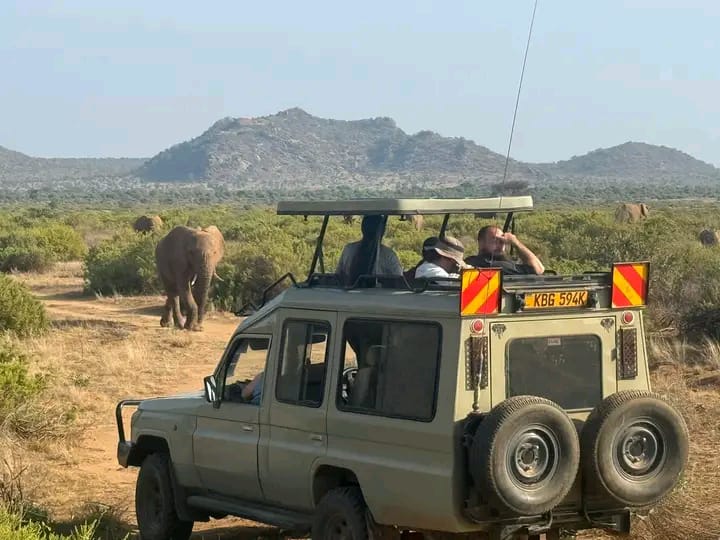 Yes. Samburu allows private and rental vehicles on payment of the daily person fee and a vehicle fee, and many visitors drive themselves from Nairobi. It is a long way, it is hot, the tracks are sandy and rocky, and services are limited, so it suits confident, well-prepared drivers. It also lies in a region where security conditions are worth checking on the day, which is why we recommend a driver-guide for first-timers.
Who Can Rent a Car and Drive in Kenya?
Any hirer who holds a valid driving licence, presents a passport, signs the rental agreement in person and is named as a driver. Only named drivers may drive, and the vehicle may not be sublet. Minimum age and licence-tenure requirements are stated in your written quotation.
Do You Need an International Driving Permit?
A valid licence from your country of origin works best, and an International Driving Permit is also accepted. It is strongly recommended, is often requested by rental companies, and is required if your licence is not in English or the Latin alphabet. Carry it alongside your licence, never instead of it. Several sources say a valid English-language foreign licence can be used by visitors for up to 90 days, but rules vary; check the National Transport and Safety Authority’s current requirements for longer stays.
Which Vehicle Should You Rent for Samburu?
4×4 Car Rental Kenya
Ground clearance and traction are the argument. Samburu’s tracks are sandy and rocky, dusty in the dry and slippery in the wet, and the distance from Nairobi is long. A 4×4 gives you clearance, grip and the strength for a full day. See Car Rental Kenya and 4×4 Fleets.
Land Cruiser for Self Drive
The LX, V8, Prado and Hardtop versions are the safari standard: strong, comfortable and easy to service, with room for luggage and camping kit. The best all-round choice for Samburu.
Hilux Double Cab
Rugged and practical, with an open load bed for gear. A popular choice for confident drivers who want capability and simplicity.
RAV4
A RAV4 or X-trail or Vanguard can manage the paved A2 but is not recommended for the reserve’s sandy tracks, and it cannot take a rooftop tent. It has the lowest excess of our 4×4 class ($500), which suits a paved-road trip but not Samburu.
Pop-Up Roof Safari Vehicles
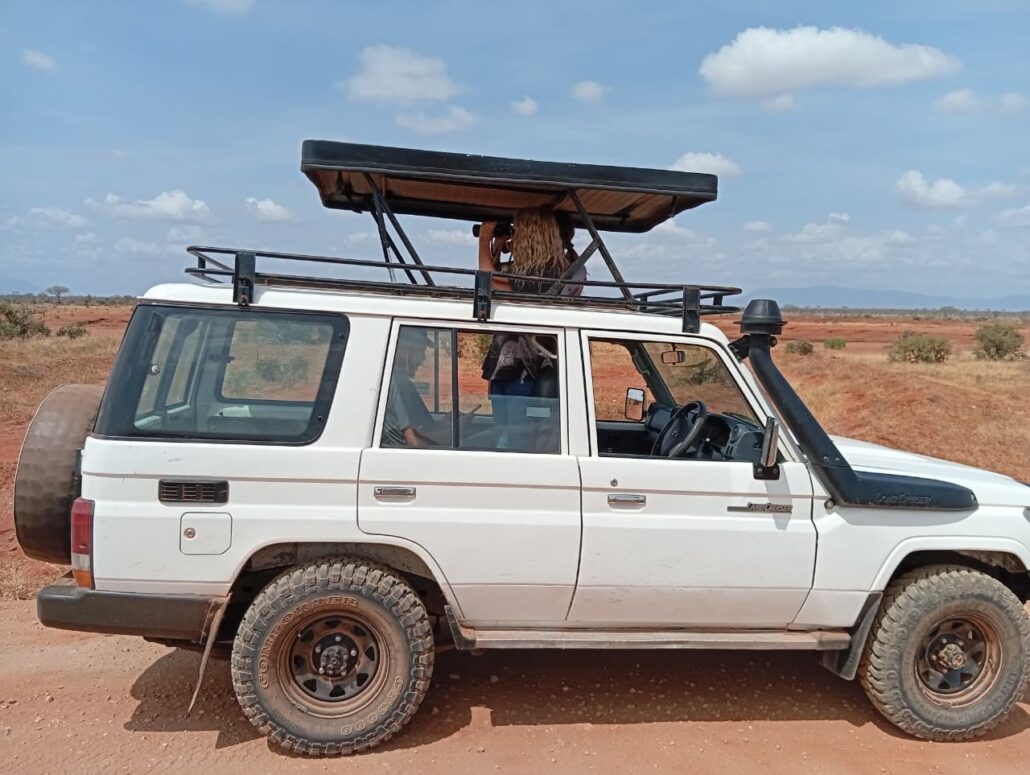
Car rental with pop-up roof in Samburu lets you stand to photograph elephants and Grevy’s zebra. Available on the Extended Land Cruiser, self-drive or guided. See Car with Pop-Up Roof in Kenya. Stand inside the roof, never on top.
Camping-Equipped Vehicles
Land Cruisers with rooftop tents and camping kit in Samburu for travellers who want to sleep at designated campsites. See Car Rental with Camping Gear Kenya.
Compare Our Samburu Vehicles
4x4 Toyota Land Cruiser LX
4×4 Toyota Land Cruiser Hardtop
4x4 Toyota Land Cruiser Prado
Toyota Land Cruiser V8 With Rooftop Tent
4x4 Toyota Rav4 (Car Rental 4x4 Africa)
Safari Van With Driver Guide
Toyota Land Cruiser GX with Roof Top Tent
Land Cruiser Extended with Pop Up Roof
4x4 Toyota Land Cruiser Double Cab
Vehicle | Travellers | Luggage | Game viewing | Rough tracks | Camping | Rooftop tent |
Land Cruiser LX | Up to 5 | Generous | Excellent | Excellent | Yes | Yes (single or double) |
Land Cruiser V8 | Up to 5 | Generous | Excellent | Excellent | Yes | Yes |
Land Cruiser Prado Hardtop | Up to 5 | Good | Excellent | Excellent | Yes | On request |
Land Cruiser GX | 4 to 5 | Generous | Excellent | Very good | Yes | Yes |
Extended Land Cruiser (pop-up) | Up to 8 incl. driver | Good | Outstanding | Excellent | Ground tent | No |
Hilux Double Cab | 4 to 5 | Open load bed | Good | Very good | Yes | Yes |
RAV4 or X-trail | 4 to 5 | Moderate | Fair | Not recommended in the reserve | Light | No |
Request a vehicle suited to your route Send us your route and dates and we will recommend a vehicle and say honestly whether we advise self-drive or a driver for each leg. Request a vehicle |
Car Rental With a Driver-Guide at Samburu
Samburu is a place where a driver-guide earns his fee twice: on the long road north, and in the reserve itself.
On the A2, he knows the checkpoints, the fuel stops, the pace of the day and the latest local conditions. In the reserve, he knows where the leopard was seen at dawn, which stretch of river the elephants favour this week, and which tracks are firm. He also gives you local contacts and an extra pair of eyes, which matters in a region where security advice is worth taking seriously. A driver-guide costs from $40 per day, covering allowance, meals and lodging. Reserve fees are separate.
What matters | Self-drive | With a driver-guide |
The A2 journey | You manage trucks, checkpoints and a long day | Your driver handles it, with local knowledge |
Security awareness | You rely on advice and your own judgement | Your driver knows local conditions and contacts |
Finding the Special Five | Your own eyes and patience | Guides know where animals were seen that morning |
Sand and dry riverbeds | You judge the risk | Your driver judges it daily |
Freedom and privacy | Total | Set around your brief |
Cost | Vehicle plus fuel plus deposit | Vehicle plus about $40 per day plus fuel |
Who should choose self-drive? Confident, well-prepared drivers who are comfortable on long highways and sandy tracks, who have checked the current advice, and who want privacy and flexibility.
Who should choose a driver-guide? First-time visitors to Kenya, anyone uneasy about the security picture, families with children, and photographers who want expert spotting. Many guests drive themselves in the reserve and add a driver for the A2. See Car with Driver in Kenya.
Is It Safe to Drive Yourself to Samburu National Reserve?
Samburu National Reserve is a well-established safari destination, and visitors travel to it every week. It also lies in the north of Kenya, where the UK government’s regional travel advice notes that rural areas occasionally experience cattle rustling, banditry and ethnic clashes, and that security operations continue in parts of Samburu and several neighbouring counties. Its advice is to follow local security measures, use caution and seek local advice before you set off.
Risk | How to manage it |
Security and banditry | Check current government advice before you travel and the day before. Ask us, your camp and the rangers about conditions. Follow any local instructions, road closures or curfews |
Where and when you drive | Daylight only; stay on the A2 and the reserve’s main roads. Do not continue north of Archer’s Post on a self-drive without local advice. [CONFIRM our policy] |
Long stops | Avoid long stops by the roadside. Fuel in Nanyuki or Isiolo and keep moving |
Heat and water | Carry at least 3 to 4 litres of water per person per day |
Wildlife | Stay in the vehicle, keep your distance and give animals the right of way |
Stuck vehicles and flash floods | Avoid soft sand and dry riverbeds; never enter a dry riverbed if rain is falling upstream. Call us and the rangers |
Breakdowns | Our rental includes 24/7 roadside assistance. Call us first; do not arrange your own repairs |
Emergency contacts | Kenya’s emergency numbers are 999 and 112. Save our WhatsApp number, your camp’s number and the reserve’s number |
For the full safety guidance, the readiness check and a first-day plan, see self drive Samburu.
Pick-Up and Drop-Off Points for Samburu
You can collect and return your vehicle at any of the points below, by arrangement. Delivery to your hotel, the airport arrivals hall or a point nearer Samburu can be arranged on request.
Point | Why travellers choose it | Approximate distance to Samburu |
Nairobi | The most common starting point; a full day’s drive | About 350 km; roughly 6 to 7 hours |
Emali | Mombasa Road junction; useful if combining with Amboseli | About 500 km via Nairobi; two days |
Voi | Tsavo first, then the north | About 700 km; two days or more |
Mombasa International Airport | Arrive at the coast, then drive inland | About 830 km; two to three days |
Diani Beach | Beach first, then safari | About 870 km; three days |
Watamu | North coast start | About 930 km; three days |
Popular One-Way Combinations
Collect | Return | Typical use |
Nairobi | Nairobi | A three- to five-day Samburu round trip |
Nairobi | Mombasa Airport | Samburu, the Mara and Amboseli, then the coast |
Mombasa Airport | Nairobi | Tsavo and Amboseli, then Samburu before flying out |
Samburu, Buffalo Springs and Shaba: Which Reserve and Which Ticket?
The Ewaso Ng’iro River divides the ecosystem. Samburu lies on the north bank, Buffalo Springs on the south, and Shaba farther east.
Reserve | Character | Ticket | Notes |
Samburu National Reserve | The classic riverside circuit: elephants at the water, crocodiles and leopard in the doum palms | Separate ticket | Managed by the county government. Archer’s Gate is the main entrance |
Buffalo Springs National Reserve | Open plains and natural springs south of the river; good for the Special Five | Shared with Shaba | Managed by the neighbouring county. |
Shaba National Reserve | Wilder, drier and quieter, with rocky hills and springs | Shared with Buffalo Springs | The least visited of the three; more remote. |
Tickets for Buffalo Springs and Shaba are generally interchangeable, but Samburu is charged separately, so decide which reserves you will drive before you pay. In the past a single ticket covered all three, so ask at the gate which arrangement applies on your dates.
The Samburu Special Five
Samburu is famous for five species that are rare elsewhere in Kenya: the Grevy’s zebra, the reticulated giraffe, the Somali ostrich, the beisa oryx and the gerenuk, the long-necked antelope that stands on its hind legs to browse. Elephants, lion, leopard, cheetah and a wealth of birds and crocodiles complete the picture.
The Gates of Samburu: Where to Enter
Gate | Where it is | Best for | Notes |
Archer’s Gate (Samburu Gate) | Near Archer’s Post, on the A2 | Most visitors from Nairobi; the main entrance to Samburu | The usual first gate. |
Other Samburu gates | Reported as the West Gate and the Central Airstrip Gate | Visitors staying at particular camps | Ask your camp which gate it uses. |
Buffalo Springs gate | South of the river, near Isiolo | Visitors staying on the Buffalo Springs side | First Confirm |
Shaba gate | East of Buffalo Springs | Visitors staying near Shaba | First Confirm |
Choose your gate by where you are staying, and ask your camp or lodge which one it recommends. Some camps lie on one side of the river and are reached only via one gate.
Reserve Hours, Tickets and Payment For Samburu
- Hours: gates are generally open in daylight, from about 6:00 am to 6:00 pm. Our rental agreement limits driving to 6:00 am to 6:00 pm.
- Fees (non-residents): reported at roughly 85 per adult per day and USD 50 per child, plus a vehicle fee. Published figures vary, so check the current schedule. Kenya residents and East African citizens pay less.
- Payment: tickets are paid at the gate or through the county’s payment system. Ask which applies, and keep proof of payment in the vehicle.
- Fees go to the county, not to us. They are separate from your rental price.
How to Drive from Nairobi to Samburu
The journey is a long day, but it is a rewarding one: you cross the equator, skirt Mount Kenya and watch the landscape turn from highland green to northern gold.
- Leave Nairobi at first light, by 6:00 am, to avoid the city traffic and keep a margin for the afternoon.
- Take the A2 north through Thika, Nyeri and Nanyuki, with Mount Kenya on your left.
- Stop at the equator near Nanyuki for the photographs, and fuel up in Nanyuki.
- Continue to Isiolo, where you should fill your tank completely and buy water and snacks. This is the last major fuel stop before the reserve.
- Drive on to Archer’s Post and the gate. Check the day’s conditions with the rangers or your camp.
- Arrive by early to mid afternoon, leaving time to settle in and make a first game drive in the afternoon light.
Distance and time: about 350 km, roughly 6 to 7 hours of driving, plus stops. Allow a full day and do not plan to arrive after dark.
Road Conditions on the Way
- Nairobi to Nanyuki: paved, with heavy truck traffic, speed bumps in towns and road works. Allow extra time.
- Nanyuki to Isiolo: paved, quieter, with livestock on the road in places.
- Isiolo to Archer’s Post: paved; services are fewer.
- Reserve tracks: sandy and rocky murram; dusty in the dry and slippery in the wet.
- Beyond Archer’s Post to the north: a different proposition. This is the road to Marsabit and the far north, where the security advice is more serious. Do not continue north on a self-drive without local advice.
Samburu Reserve Rules Every Driver Must Know
The rules protect the wildlife and the landscape. Breaking them risks fines, ejection from the reserve and, under our contract, loss of insurance cover.
- Stay on designated tracks. Off-road driving is prohibited and heavily penalised; our agreement sets a penalty of USD 150 per person in the vehicle.
- Speed limit: 40 km/h inside the reserve under our contract (an overspeeding penalty of USD 50 applies); always follow posted signs.
- Stay in your vehicle except at designated picnic and viewing points. Sitting on top of the vehicle carries a USD 100
- Give animals space. Keep your distance from elephants, buffalo and lion, and never block an animal’s path.
- Do not drive into the river or across it. Use the established crossings only, and never enter a dry riverbed if rain is falling upstream.
- No driving at night. Our vehicles are on the road only between 6:00 am and 6:00 pm.
- No feeding, calling or harassing wildlife. Keep windows up and food out of sight from baboons.
- Respect Samburu communities and photograph people only with their permission.
- No single-use plastic, no drones without authorisation, and take your litter with you.
Our insurance does not cover damage inside national parks and reserves, including collisions with wildlife, and off-track driving is excluded. See the insurance section.
Elephant etiquette from the driver’s seat Samburu’s elephants are used to vehicles, and the river brings them close. Keep to a calm speed, leave a gap and never position your vehicle between a mother and a calf. Switch off the engine at a sighting. If an elephant lifts its head, spreads its ears or shakes its head, ease back quietly and give it room. Never force your way through a herd crossing the track; wait until the last animal has passed. |
Samburu Road Conditions for Your Rental
Reserve Tracks
Sandy and rocky murram. In dry weather the dust is fine and thick, and the sand can be deep near the river. Slow down on rocky stretches, and keep to the established tracks.
Dry Riverbeds and River Margins
Dry riverbeds, called luggas, are soft sand and can flood within minutes after rain upstream, even if the sky above you is clear. Avoid them unless a ranger confirms a crossing is safe.
The Rains
The long rains fall roughly from March to May and the short rains in November and December. Tracks become slippery, rivers rise and parts of the reserve can be inaccessible. Delay or shorten your day rather than push on.
Heat
Daytime temperatures are high, with annual means roughly between 18 and 30 degrees Celsius and hotter spells in the dry season. Keep the air conditioning serviced and carry extra water.
Driving at Night
Not permitted under our contract and unsafe in any case. Livestock, wildlife and unlit vehicles share the roads.
Which Roads Require a 4×4?
Road or area | 4×4 needed? |
Nairobi to Isiolo (the A2) | No; a RAV4 or Nissan Xtrail is adequate |
Isiolo to Archer’s Post | No; paved |
Reserve main tracks in dry weather | Yes, recommended |
River margins and sand | Yes, with caution |
Any track after rain | Yes; sometimes impassable |
Where to Drive in Samburu
- The river loop: the classic circuit follows the Ewaso Ng’iro through doum palms, where elephants, crocodiles and, with patience, leopard come to the water.
- The open plains: the drier ground away from the river is the best place to look for Grevy’s zebra, beisa oryx, Somali ostrich and gerenuk.
- Buffalo Springs: natural springs and open grassland south of the river.
- Shaba: wilder and quieter, with rocky hills; a good choice if you want fewer vehicles.
- Picnic and viewing points: the few places you may leave the vehicle. Check with the rangers which are open.
How to Plan a Day in Samburu
Time | What to do |
5:30 to 6:30 am | Rise, check the vehicle and be at the gate when it opens. |
6:30 to 10:00 am | The best light and the best wildlife. Drive the river loop. |
10:00 am to 3:00 pm | The heat of the day. Rest at camp, or watch the river from a shaded spot. |
3:00 to 6:00 pm | The second window. Drive the plains and the river again, and be at camp before dark. |
After dark | Stay in camp. Night drives are not part of a self-drive. |
When to Rent a Car for Samburu
Months | Conditions | What to expect |
January to March | Hot and dry | Good wildlife along the river; fewer vehicles; the dry heat builds |
April to May | Long rains | Green and quiet, but flash floods, slippery tracks and some closed areas. Not ideal for self-drive |
June to October | Cool and dry | The classic season. Clear skies, good roads and dry tracks. Busiest and most expensive |
November to December | Short rains | Quieter and green; variable roads |
Field note: the dry-season river In the dry months, the Ewaso Ng’iro draws elephants, buffalo and plains game to its banks, and the riverside circuit becomes the reserve’s busiest stage. The wettest months are quieter but harder on a self-driver. |
Samburu Car Rental Itineraries
3-Day Samburu
- Day 1: Collect your 4×4 in Nairobi at dawn; drive the A2 to Samburu; arrive by mid-afternoon; an evening drive along the river.
- Day 2: A full day of game drives, with a rest at midday and an evening drive.
- Day 3: A dawn drive, then return to Nairobi in daylight; return the vehicle.
4-Day Samburu and the Highlands
- Day 1: Nairobi to the Mount Kenya foothills for a night.
- Day 2: On to Samburu; an afternoon drive.
- Day 3: A full day in Samburu and Buffalo Springs.
- Day 4: Return to Nairobi.
5-Day Samburu and Lake Nakuru
- Day 1: Nairobi to Samburu. Days 2 and 3: Samburu and Buffalo Springs.
- Day 4: Samburu to the Rift Valley via Nyahururu or Nanyuki. [CONFIRM route]
- Day 5: Lake Nakuru, then Nairobi.
Vehicle: a Land Cruiser or Hilux. Camping option: add a rooftop tent and kit for park nights. Return point: any pick-up point, by one-way arrangement. See related routes at Kenya Safari Routes.
Combining Samburu With Other Destinations
Combination | How it works | Next page |
Samburu and Mount Kenya or Laikipia | Break the A2 journey with a night in the highlands; the conservancies there suit a driver-guide | |
Samburu and Lake Nakuru | The Rift Valley lakes make a good second leg; Nakuru is about 156 km from Nairobi | |
Samburu and the Maasai Mara | Two contrasting parks; allow at least six days | |
Samburu and Amboseli | North and south in one trip; allow a week | |
Samburu and the coast | A one-way hire, Nairobi to Mombasa |
Car Rental Samburu With Camping Gear and Rooftop Tent
Rooftop tent = sleeping. Camping gear = everything else you need to camp. You can hire either or both.
Rooftop Tent Car rental For Samburu National Reserve
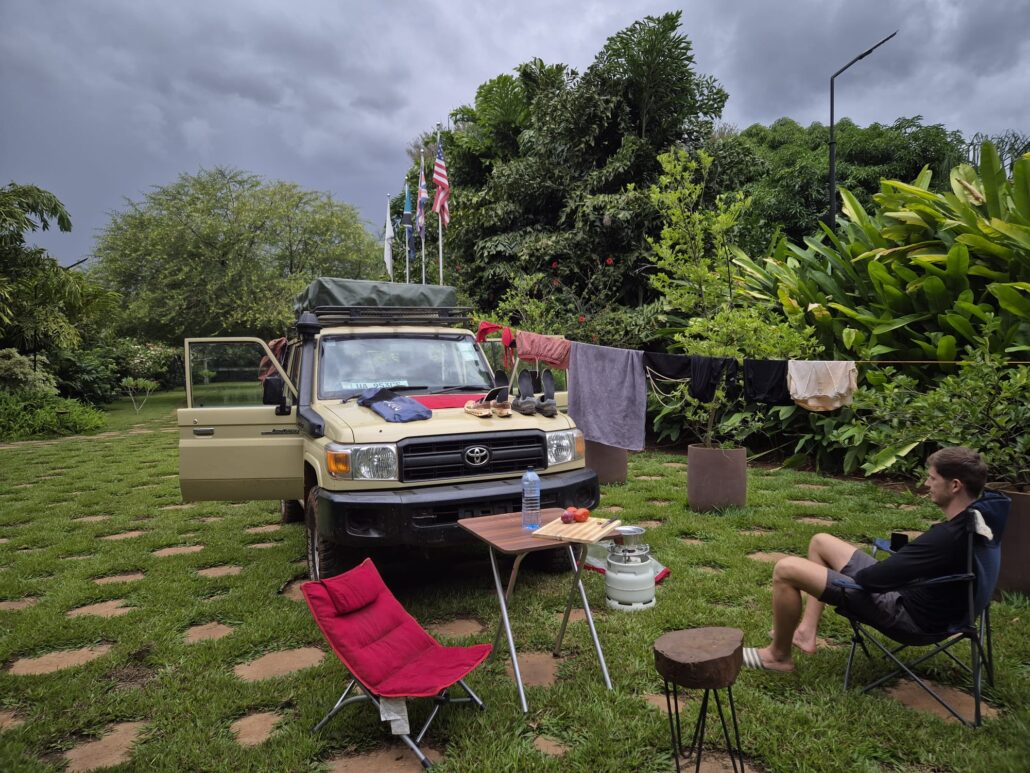 Renting a car in Samburu with a single rooftop tent sleeps two; dual tents sleep three to four. Price: $20 per day for two. Rooftop tents are fitted to Land Cruisers and are not covered by vehicle insurance. See Car with Rooftop Tent in Kenya.
Ground Camping Equipment
A ground tent costs $5 per day for two, with two foam mattresses. Sleeping bags are included; bed linen, towels and clothing are not.
Cooking Equipment and Furniture
Gas burner and bottle, pots, pan, utensils, crockery and cutlery, camp table and chairs, battery lamps, water container and wash-up kit. A fridge is available at $10 per day, which is valuable in the heat. See Car Rental with Camping Gear Kenya.
Safety and Recovery Equipment
Every vehicle carries a spare tyre, jack, fire extinguisher, reflective triangles and first-aid kit. Ask us to add traction boards, a tow strap and a shovel.
Where you may camp Camp only at designated campsites in or near the reserves, or at lodge and camp grounds. Bush camping is not permitted. Campsites charge a per-person, per-night fee on top of reserve entry. Many sites are unfenced and lie on the river, so never keep food in your tent and expect elephants, baboons and hyenas to visit at night. Given the region’s security picture, ask us and the reserve which campsites are recommended. |
Where to Stay Around Samburu
- Inside the reserves: lodges, tented camps and campsites on the river, closest to the animals at dawn.
- Near Archer’s Gate and Isiolo: simpler lodges and campsites with easy morning access.
- On the road up: hotels and lodges around Nanyuki and the Mount Kenya foothills for a night on the way.
Book early between June and October, and ask whether your chosen camp welcomes self-drive guests, offers secure parking and has a radio or other communications link.
How Much Does Car Rental for Samburu Cost?
A trip to Samburu has three kinds of cost: the vehicle, your add-ons, and the reserve’s own charges. Vehicle rates are quoted per model, season and length of hire in your written quotation. [Insert Nairobi daily rates per vehicle]
Reserve Entry Fees (non-residents)
Visitor | Per day |
Non-resident adult | Reported between USD 85. |
Non-resident child | Reported between USD 50. |
Kenya resident and East African citizen adults | Lower rates apply; confirm current figures |
Vehicle fee | Additional; confirm current figures |
Samburu is charged separately from Buffalo Springs and Shaba, which share a ticket. Published figures differ, so check the current schedule before you travel and keep proof of payment in the vehicle.
Car Rental 4×4 Published Add-Ons
Item | Published price (USD) |
Rooftop tent | $20 per day (two people) |
Ground tent | $5 per day (two people) |
Fridge | $10 per day |
Driver-guide | From $40 per day |
Security deposit | $500, refundable |
Cross-border COMESA cover | $50 |
One-way fee | Route-specific, quoted at booking, up to $600 |
Card payment | 4% surcharge |
Worked Examples
Two adults, a three-day Samburu trip: reserve entry 2 × [$85] × 2 days, plus vehicle rate, fuel for about 800 km, accommodation and your food and water.
A couple on a four-day trip with a rooftop tent and fridge: add-ons 4 × $20 + 4 × $10 = $120, on top of the vehicle rate, fuel, fees and campsite charges.
A first-time visitor with a driver-guide for three days: 3 × $40 = $120, plus vehicle rate, fuel and fees.
What Else to Budget For
- Fuel, paid by the hirer. The round trip from Nairobi is about 700 km before any game driving.
- Accommodation or campsite fees.
- Food and water, with extra for the heat.
- Communications: a local SIM card, and a satellite messenger if you want it.
- One-way fee if you drop at a different point.
- Personal travel and medical insurance, including evacuation.
What Do You Need to Rent a Car for Samburu?
Requirement | Details |
Passport | Required at pick-up |
Driving licence | Valid licence from your home country |
International driving permit | Accepted and strongly recommended; required if your licence is not in English or Latin script |
Age | Stated in your written quotation. Tell us your age and years of licence when you enquire |
Deposit | $500 where requested |
Payment | Cash on arrival or bank transfer (USD, EUR or GBP). USD notes dated 2009 or newer. Card payments carry a 4% surcharge |
Rental agreement | A binding contract, signed before departure |
Additional driver | Only drivers named in the contract may drive. Add any extra driver at enquiry |
Insurance requirements | Vehicle insurance is included; arrange your own personal and medical cover |
Insurance for a Samburu Car Rental
Our fleet is insured for collision and theft of the vehicle. We do not provide life or personal cover for occupants. The following reflects our published East Africa contract; your Kenya quotation confirms the figures that apply.
Topic | Position |
What is covered | Vehicle collision and theft, subject to excess |
Excess | RAV4 $500 · Prado TX/TZ $1,500 · LX, V8, Hardtop and TXL $2,000. Other models quoted in writing. |
Accident damage | Report to the police and to us immediately. Do not leave the scene or arrange repairs before police inspection |
Damage inside national parks | Not covered, including collisions with wildlife |
Off-track driving | Excluded. Stay on designated tracks |
Tyres | Punctures and tyre damage are the hirer’s responsibility |
Underbody | Treated as careless driving and the hirer’s responsibility |
Water damage | Deep-water crossings and engine knock are excluded; a $1,000 fine applies for the RAV4 and $1,500 for the Land Cruiser |
Night driving | Excluded; $1,200 plus damage costs |
Unauthorised use | No subletting, no hire-or-reward, no racing, no unnamed drivers |
Fines and tickets | Traffic fines and parking tickets during the hire are the hirer’s responsibility |
Windscreen | Not specified in our published contract. Ask us to confirm in your quotation |
Rooftop tent and camping gear | Not insured. Tent replacement is stated in our contract at $1,500 |
Security Deposit for a Samburu Car Rental
Question | Answer |
Amount | $500 where requested by the operator |
Payment method | Confirmed in your written quotation |
When it is held | From handover until the vehicle has been returned and inspected |
When it is released | At the end of the trip, if the vehicle returns without offences |
What affects the refund | Lost accessories, damage, traffic or park fines, and any breach of the contract |
Does it vary by vehicle? | The deposit is generally the same; the excess varies by vehicle |
Fuel and Mileage
Question | Answer |
Is mileage unlimited? | Yes. All hire vehicles come with unlimited kilometres |
What fuel does each vehicle use? | Land Cruisers and Hilux are typically diesel; RAV4s are typically petrol. Check the fuel cap label and confirm at handover |
How much fuel does it use? | Planning figures: about 8 to 10 L/100 km (RAV4); 12 to 15 L/100 km (Land Cruiser), more on sand, rough tracks and in traffic. Estimates only |
Where can I refuel? | Plentiful in Nairobi, Thika, Nyeri, Nanyuki and Isiolo. Fill completely at Isiolo, the last major stop. Fuel beyond Isiolo is limited, and you should not rely on fuel inside or beside the reserves. Use stations on our approved list |
How much should I carry? | A full tank at Isiolo covers the reserve roads for several days of game driving; carry spare range if you plan long loops |
What is the fuel policy? | You pay for fuel and oil. No credit is given for unused fuel at return |
What if I run out of fuel? | Call us; we will advise. Fuel and recovery costs caused by running dry are the hirer’s |
Navigation and Communication
- Offline maps: download maps of your route and the reserves before you leave, and carry a paper map as backup.
- Mobile network: good along the A2 and in towns, patchy or absent in parts of the reserves. A local SIM card is inexpensive and easy to buy at the airport.
- Radio or satellite: ask your camp whether it has a radio link, and consider a satellite messenger if you will be remote.
- Charging: carry a vehicle charger and a power bank.
- Tell us your plan: message us each evening with your location and next day’s route, and message when you reach the reserve.
- Ask rangers and your camp about road conditions, security notices and where the animals are.
What Happens If Your Rental Car Breaks Down?
Step | What happens |
1. Call | Call or WhatsApp us immediately. If you have no signal, ask a ranger or a passing vehicle for help |
2. Diagnosis | We establish what has happened and where you are. Do not arrange or undertake repairs yourself |
3. Roadside assistance | Our rental includes 24/7 roadside assistance. We arrange a mechanic, targeted within 12 hours |
4. Recovery | If the vehicle cannot be repaired on the spot, we arrange recovery |
5. Repair or replacement | If repair is not possible within a day, we provide a replacement vehicle (within 24 hours from base; within 48 hours across a border) or compensate the lost day |
6. Continuing | We cover the replacement car’s fuel and driver allowance; you pay fuel for returning the broken-down car |
What support actually means. A person answers the phone, takes responsibility and works to get you moving. It does not mean instant arrival on a remote road, and it does not cover damage from breach of the contract. Stay with your vehicle, stay calm and keep clear of traffic and animals while you wait.
How Pickup and Handover Works
Stage | What happens |
Pickup | At Nairobi (most common), Emali, Voi, Mombasa International Airport, Diani Beach or Watamu, or at your hotel by arrangement. Delivery nearer Samburu on request. |
ID and document verification | Passport and licence checked |
Rental agreement | Contract read and signed; routes and the daylight rule confirmed |
Vehicle inspection | Walk around the vehicle together |
Photographing existing damage | Photograph every panel, wheel and the windscreen before you leave |
Vehicle controls | Lights, wipers, fuel type, warning lights and fuel cap |
4×4 controls | How and when to use four-wheel drive, low range and differential lock |
Tyre and recovery equipment | Spare tyre, jack, tools, tow strap and traction boards are shown and tested |
Camping equipment | Tent, kitchen, fridge and furniture demonstrated and checked off |
Emergency procedures | Whom to call and what to do after an accident or breakdown |
Route questions | We discuss your gate, route, the A2 and current conditions, including any security advice We also ask about your experience on gravel, mud and manual gearboxes |
Departure | Sign, collect keys and go |
Return
Return the vehicle at the agreed point and time with all accessories. We inspect it together. Late returns are charged for extra days. The deposit is refunded when the vehicle comes back without offences. Request any extension before the return date.
What to Pack for a Samburu Trip
Category | Bring |
Documents | Passport, licence, international permit, booking confirmation, insurance papers and reserve receipts |
Clothing | Light, breathable layers in neutral colours, a wide-brimmed hat, sunglasses, a scarf for dust and closed shoes |
Water and food | At least 3 to 4 litres of drinking water per person per day, snacks and a cool box |
Navigation and communication | Offline maps, a paper map, a local SIM and our contact numbers |
Electronics | Phone, vehicle charger, power bank, camera with spare batteries and a dust cover |
Safari equipment | Binoculars, bird and mammal guide, long lens, beanbag for window support |
Sun and bugs | High-factor sun cream, insect repellent and, if camping, a mosquito net |
Emergency items | First-aid kit, torch, tow strap, traction boards and shovel (ask us to add) |
Personal items | Medication, malaria advice and prophylaxis, and cash in small USD notes dated 2009 or newer |
Who Is Car Rental at Samburu Best For?
Experienced Self-Drivers
Confident drivers who want a remote, uncrowded safari and are prepared for a long day on the road.
Couples
A wild, romantic setting with elephants at the river and quiet evenings.
Photographers
The Special Five, red earth and golden light reward patience, and a pop-up roof helps.
Families
Best with a driver-guide for the A2 and the reserve; children enjoy the elephants and the heat suits those who plan around it.
Friends and Small Groups
Share the cost of a Land Cruiser and the driving. Name every driver on the contract.
Camping Travellers
A rooftop tent plus camping gear at designated sites, on the river.
Which Samburu Rental Option Is Right for You?
Traveller need | Best option |
Maximum independence | Self Drive |
Elephant and Special Five photography | Pop-Up Roof |
Camping | Rooftop Tent + Camping Gear |
No desire to drive the A2 or manage security | Car + Driver |
Local knowledge and spotting | Driver-Guide |
Different return location | One-Way Rental |
Several months | Long-Term Rental |
Real Samburu Car Rental Examples
These are illustrative plans built from our routes and published prices. Vehicle rates, fuel, fees and accommodation are additional.
Traveller | Plan | Vehicle and add-ons | Published add-ons |
Couple, 3 days | Nairobi, Samburu, Nairobi | Land Cruiser | None required |
Friends, 4 days | Nairobi, highlands, Samburu, Nairobi | Land Cruiser with rooftop tent and fridge | 4 × ($20 + $10) = $120 |
First-time visitor, 3 days | Nairobi, Samburu, Nairobi | Land Cruiser with driver-guide | 3 × $40 = $120 |
Family of four, 4 days | Nairobi, Samburu, Nairobi | Extended Land Cruiser with pop-up roof and driver-guide | 4 × $40 = $160 |
What to Check Before Booking
- Your licence is valid for the whole trip, you carry an international permit, and your passport has enough pages.
- You have read the current government travel advice for northern Kenya and are comfortable with it, and you know whom to call.
- Your pick-up and drop-off points are confirmed, including any one-way fee.
- Your dates suit the road: avoid the heavy rains for self-drive if you can.
- You have chosen the right vehicle, and a rooftop tent if camping.
- You know the current reserve fees, which reserves you will drive and which ticket you need.
- You understand the excess, deposit, exclusions and cancellation terms.
- You have personal travel and medical insurance, including evacuation.
- You have read the full terms.
Frequently Asked Questions About Car Rental at Samburu
Can I rent a car for Samburu National Game Reserve?
Yes. Car Rental 4×4 hires 4x4s from Nairobi and other points, with or without a driver-guide, and with pop-up roofs, rooftop tents and camping kits.
Is it Samburu National Park, Samburu Game Reserve or Samburu National Reserve?
Officially it is Samburu National Reserve, managed by the county government. Many visitors call it Samburu National Park or Samburu National Game Reserve. It sits beside Buffalo Springs and Shaba National Reserves.
Can I self-drive in Samburu?
Yes. Private and rental vehicles are permitted on payment of the daily person fee and a vehicle fee, subject to the rules. See our self drive Samburu guide.
Is it safe to drive myself to Samburu?
Many visitors do, but the UK government’s advice notes banditry and security operations in parts of Samburu County and recommends following local security measures and using caution. Drive only by day, stay on the A2 and the reserve roads, check conditions before you travel, and consider a driver-guide.
Do I need a 4×4 car rental for Sambur?
Yes. The A2 is paved, but the reserve tracks are sandy and rocky, and a 4×4 gives you the clearance and strength you need.
How far is Samburu from Nairobi?
About 350 km, roughly 6 to 7 hours by road via Thika, Nyeri, Nanyuki and Isiolo.
How much does a driver-guide cost?
From about $40 per day, covering allowance, meals and lodging. Reserve fees are separate.
Which Samburu gate should I use?
Archer’s Gate near Archer’s Post is the main entrance for visitors from Nairobi. Your camp can tell you which gate suits it.
How much are the reserve fees?
Published non-resident adult fees range from roughly USD 85 per day for adult & $50 for child Non Resident; 1600 Ksh (adult) per day & 800 Ksh (Child) for East African Citizens; 800 Ksh. (adult) & 500 Ksh. (child) for Kenyan citizens. Samburu is charged separately from Buffalo Springs and Shaba.
Can I hire a Land Cruiser with a pop-up roof for Samburu?
Yes, on the Extended Safari Land Cruiser and selected Land Cruisers. Stand inside the roof, never on top.
Can I use a rooftop tent and camping gear in Samburu?
Yes. A rooftop tent is $20 per day for two people, a ground tent is $5 per day and a fridge is $10 per day, with a full kitchen and camp kit. Camp only at designated sites.
Can I drive at night in Samburu National Reserve?
No. Our contract prohibits it. Vehicles operate from 6:00 am to 7:00 pm.
Where can I pick up and drop off the vehicle?
Nairobi, Emali, Voi, Mombasa International Airport, Diani Beach and Watamu, by arrangement. Ask about delivery nearer Samburu.
What is the security deposit?
$500 where requested, refunded at the end of the trip less any deductions.
Is insurance included?
Yes, covering collision and theft of the vehicle, subject to excess. It does not cover damage inside national parks and reserves, wildlife collisions, tents or gear.
Is mileage unlimited?
Yes, on all hire vehicles.
Can I return the vehicle somewhere different?
Yes, by one-way arrangement. The fee is route-specific and disclosed at booking, up to $600.
What happens if my vehicle breaks down?
Call us. We provide 24/7 roadside assistance, arrange a mechanic, and a replacement vehicle or compensation if repair is not possible. Mobile signal can be patchy, so tell us your route and ask your camp about communications.
Do you offer long-term car rental?
Yes, from 21 days to 36 months, with maintenance, unlimited mileage and insurance included.
What is the best time to visit Samburu?
June to October and January to March for the driest conditions. The long rains from April to May are the hardest months for self-drive.
Get Your Samburu Car Rental Quote
Step | What happens |
1. Enquire | Send dates, group size, pick-up and drop-off points and route to rent@carrental4x4.com or WhatsApp +256 701 893 844 / +256 777 131 912. |
2. Quotation | A rental expert replies with a written quotation including vehicle rate, add-ons, one-way fee, excess and deposit |
3. Confirm | Pay by bank transfer or card (4% surcharge). Cancellations are in writing |
4. Collect | At your chosen point, with a full handover and briefing |
5. Drive | 24/7 support throughout |
6. Return | Inspection, deposit refund and your story of the north |
Contact: Contact page · rent@carrental4x4.com
Begin Your Samburu Journey
Somewhere ahead, past Isiolo and the last of the green, a river slides between doum palms and an old elephant lowers his trunk to drink. All that remains is for you to be there.
You have probably imagined this evening for longer than you will admit. The red earth turning gold. The long shadows of the giraffe. The quiet that falls when you switch off the engine, and the river goes on talking. We have tried to make everything between that picture and the real thing as quiet and uneventful as possible.
Every detail is handled. Your vehicle is waiting where you choose, in Nairobi or on the coast. It is prepared, serviced and equipped. The vehicle, the route, the gate and the days that are better with a driver-guide are chosen with you, and we tell you plainly what the roads and the current advice are. Excess, deposit, rules and breakdown steps are explained in plain figures before you sign. If a warning light appears on a quiet track, someone answers.
No decision is left to chance. That is not a promise that the north will be predictable. It is a promise that you will not be the one left wondering.
When you are ready, tell us when you plan to travel, where you want to begin and where you want to end. We will take it from there, gently and without obligation.
Begin planning your Samburu car rental: write to rent@carrental4x4.com or message us on WhatsApp. We would be glad to hear from you. For the rules, the route and the security advice in detail, read our self drive Samburu guide.