You can collect a rental vehicle in Nairobi and return it in Dar es Salaam, so you drive the length of northern Tanzania once and never have to bring the car back. The route is roughly 900 to 950 km, usually through Namanga, Arusha, Moshi, and Chalinze, and it takes about 14 to 17 hours of driving plus the border crossing, so you should plan at least two days and ideally three. This is a cross-border rental, so it needs advance approval, extra paperwork, and a cross-border and one-way fee. Tanzania now requires foreign visitors to buy its own mandatory inbound travel insurance and to complete an online health declaration, and the region is dealing with an Ebola outbreak, so please read the entry and health update below before you book. Car Rental 4×4 can arrange drops in Dar es Salaam, at Julius Nyerere International Airport, and in Bagamoyo, and other Tanzanian points on request, subject to approval and notice of at least two weeks.
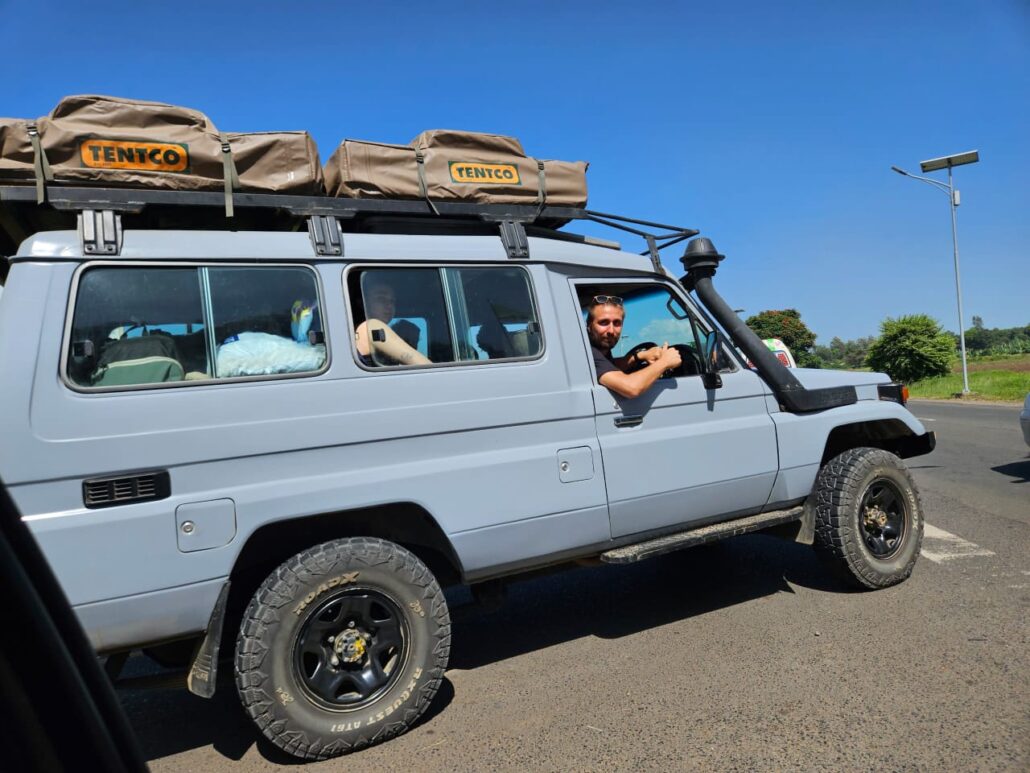
This page explains the route, the border crossing, the paperwork, the Tanzanian entry and health rules, the vehicle options, and the one-way fee factors, so it is useful even if you are still deciding how to get to Dar es Salaam. For other one-way routes and for the full list of cross-border options, see our hub page on one-way car rental from Nairobi and our guide to cross-border car rental from Kenya. For the shorter Tanzania route, see our guide to one-way car rental from Nairobi to Arusha, and for Kenya itself, our Kenya travel guide covers entry rules, park fees, and the best places to visit.
Entry and Health Update: Read Before You Book
Entry rules for Tanzania changed in October 2026, and the Ebola (Bundibugyo) outbreak in the region is affecting border procedures. The points below reflect the most recent reports we found in late October 2026, and they can change at short notice, so always check the official sources before you travel.
- Tanzania mandatory travel insurance: since 1 October 2026, foreign visitors entering mainland Tanzania must hold the mandatory inbound travel insurance issued by the National Insurance Corporation (NIC), reported at US$44 for an adult and valid for about 92 days. Residents of the East African Community and Southern African Development Community states are reported to be exempt. Keep the certificate on your phone, and buy it before you travel.
- Zanzibar: Zanzibar has its own insurer, the Zanzibar Insurance Corporation. Industry guidance says travelers whose first point of entry is mainland Tanzania need only the NIC cover, but please confirm this before you plan an onward trip to Zanzibar.
- Tanzania health declaration: since 17 October 2026, all travellers entering mainland Tanzania must complete the online Traveller’s Health Surveillance Form through the AfyaMsafiri portal (afyamsafiri.moh.go.tz), before departure or on arrival, and the QR code should be kept handy. Tanzania has also said all ports of entry, including land borders, are subject to health screening.
- Travellers coming from Kenya: Kenya confirmed its first imported Ebola case on 6 October 2026, and eight cases had been confirmed by 18 October. Kenya’s Ministry of Health stated that the country had no restrictions on travel, and the US raised its Kenya advisory to Level 3 on 19 October. Zanzibar’s health authorities named Kenya in their own advisory, and mainland Tanzania has said high-risk travelers may face daily health monitoring for 21 days. Ask us for the latest position on arrivals from Kenya before you set off.
- Kenya on the way out and back: Kenya’s own entry rules still apply if you return. Check your eTA validity, Kenya’s mandatory health insurance (valid for 90 days and multiple entries), and any screening forms before you cross back.
- What we recommend: check the latest advice from your government, the WHO, and the CDC; keep your travel dates flexible; travel only when well; wash or sanitize your hands often; avoid contact with sick people; keep a record of where you stay for contact tracing; and tell us if your plans change.
How a Nairobi to Dar es Salaam One-Way Rental Works
You collect your vehicle at an agreed point in or near Nairobi, drive to the Kenya and Tanzania border, cross with the paperwork we prepare, and return the vehicle at an agreed place in Dar es Salaam. We then arrange for the vehicle to be returned to Kenya, which is why a one-way fee and a cross-border fee both apply, and because the distance is long, the fees are usually higher than for Arusha. Pick-up and drop-off times, places, border crossings, and fees are written into the rental agreement, so you know exactly what to expect.
- Pick-up: Nairobi, including the city and the airport area, by arrangement.
- Drop-off: Dar es Salaam city and hotels, Julius Nyerere International Airport, Bagamoyo, and other agreed Tanzanian points, subject to approval.
- Approval: cross-border hire is subject to approval for the vehicle, the route, and the dates, and not every vehicle or driver can cross.
- Notice: at least two weeks, and earlier in peak seasons such as Christmas and New Year, Easter, and the July to September safari season.
- Paperwork we prepare: written permission for the vehicle to cross, a copy of the logbook and cross-border third-party insurance accepted in Tanzania, plus guidance on the temporary vehicle import formalities at the border. Please confirm the exact documents with us when you book.
- Mileage and fuel: agreed in advance, with the vehicle returned at the agreed fuel level.
- Vehicles and Zanzibar: rental vehicles cannot be taken onto the Zanzibar ferry, so Zanzibar trips start from the Dar es Salaam drop-off.
- Return in the other direction: Dar es Salaam to Nairobi is also possible, where a vehicle is available.
Nairobi to Dar es Salaam: Distance, Time, and the Route
The standard route leaves Nairobi on the Namanga road through Athi River, Kitengela, and Kajiado to the Namanga border, about 165 km. After the one-stop border post, the road continues through Longido to Arusha, about 275 km from Nairobi. From Arusha, the main road runs east past Mount Meru and Mount Kilimanjaro to Moshi, then southeast through Same, Mombo, and Korogwe to Segera and Chalinze, and finally on to Dar es Salaam, a further 630 to 660 km.
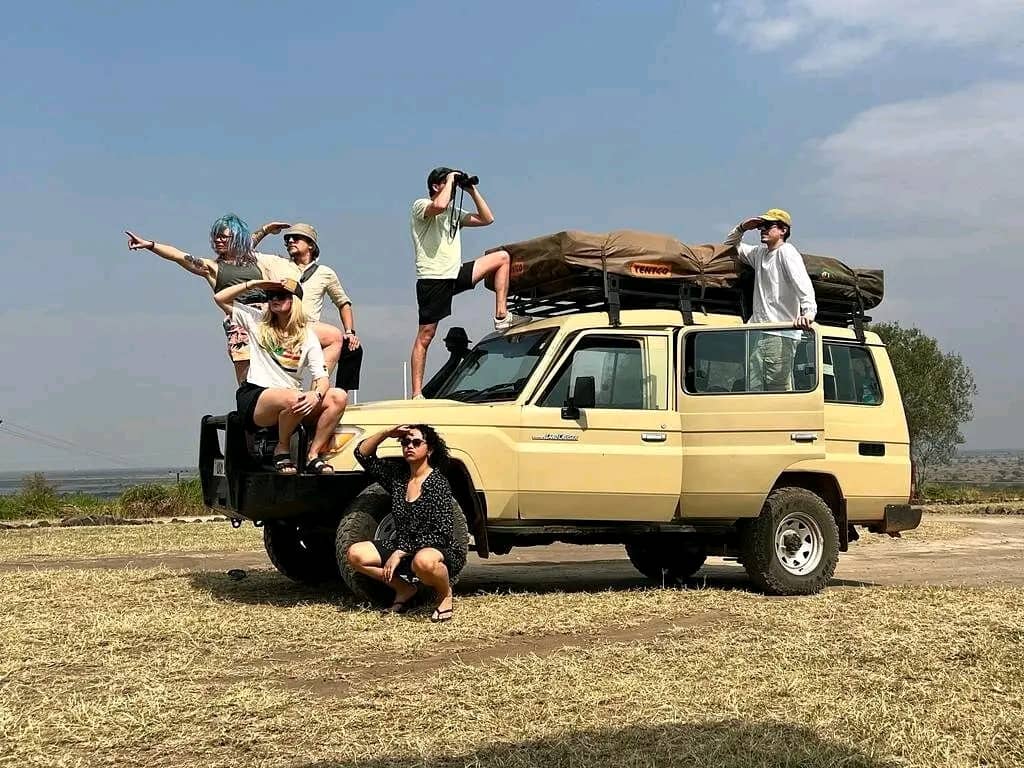
The total distance is roughly 900 to 950 km, and most of it is paved, with some busy and slow sections near Nairobi, in Moshi and Korogwe and on the approach to Dar es Salaam. In good conditions the drive takes about 14 to 17 hours plus the border, and Dar es Salaam’s traffic can add an hour or more at the end.
Section | Approx. distance from Nairobi | What you pass |
Nairobi to Athi River and Kitengela | About 20 to 40 km | Busy industrial and residential belt, slow at peak hours |
Kajiado | About 80 km | Maasai town, fuel, and shops |
Namanga border | About 165 km | One-stop border post, shops, fuel, and restaurants |
Longido | About 210 km | First Tanzanian town, below Mount Longido |
Arusha | About 275 km | Safari capital of northern Tanzania, below Mount Meru |
Moshi | About 355 km | Base for Kilimanjaro, with fuel and restaurants |
Same and Mombo | About 450 to 550 km | Pare and Usambara mountain foothills |
Korogwe | About 600 to 650 km | A large town with fuel, shops, and a junction for Tanga |
Segera and Chalinze | About 720 to 820 km | Two junctions on the main road, and the last major stops before Dar es Salaam |
Dar es Salaam | About 900 to 950 km | Tanzania’s largest city and port, with beaches and ferries |
Road, bus, or flight?
Option | Time | Notes |
Self-drive or driver-guide across the border | 14 to 17 hours of driving plus the border, ideally over two or three days | Flexible, lets you stop in Arusha, Moshi, or the Usambara Mountains, and carries luggage and camping gear |
Long-distance bus | About 18 to 24 hours | Inexpensive but long, and subject to border queues |
Flight Nairobi to Dar es Salaam | About one hour and thirty to forty-five minutes in the air | Fastest, but you still need ground transport at both ends, and flight schedules change, so check which airlines currently operate the route. |
Train | Not available | There is no direct passenger train between Nairobi and Dar es Salaam. |
Times are approximate and depend on traffic, weather, roadworks, and border queues. Check for roadworks on the main road before you go.
Route Options
Route | How it works | Best for |
Northern route via Namanga, Arusha, and Moshi | Nairobi to Namanga, across the border to Arusha and Moshi, then Same, Korogwe, and Chalinze to Dar es Salaam | Most travelers, with the best roads and the best overnight stops in Arusha or Moshi |
Taveta route via Tsavo and Holili | Nairobi to Voi, then Taveta and the Holili border, then Himo and the main road to Chalinze | Travellers combining Tsavo with Kilimanjaro. It is longer, and the border is quieter. See our Tsavo East National Park travel guide |
Coastal route via Mombasa and Tanga | Nairobi to Mombasa, then Lunga, Lunga, and Horohoro; Tanga; Segera; and Chalinze to Dar es Salaam. | Travellers who want to add the Kenyan coast and Tanga on the way. It is the longest option. See our Mombasa travel guide. |
Always ask us which route and crossing are best for your dates, vehicle, and the current health measures.
Crossing from Kenya and Tanzania Border: Step by Step
- Before you leave Nairobi: carry your passport, Tanzanian visa or e-visa, proof of Tanzania’s mandatory insurance, your Kenyan eTA and insurance papers for the return, the rental agreement, our cross-border permission letter, the vehicle logbook copy, and your driving license and International Driving Permit.
- Complete Tanzania’s health declaration: fill in the Traveller’s Health Surveillance Form online, and keep the QR code on your phone.
- Arrive at the border early: aim to reach Namanga in the morning, since queues are shorter and you will not be crossing at night.
- Health screening: expect a temperature check and a short health review on both sides.
- Kenya exit: go through immigration to get an exit stamp and complete the customs exit process for the vehicle.
- Tanzania entry: go through Tanzanian immigration with your visa or e-visa and proof of insurance, and complete the customs formalities for the vehicle, including the temporary import permit and any fees.
- Insurance and fees: show your cross-border vehicle insurance, and pay any border, customs, or road fees. Carry some US dollars and Tanzanian shillings and a card or mobile money as a backup.
- Display the country sticker: Tanzanian rules expect foreign-registered vehicles to show a country identification sticker. We will tell you what is required for your vehicle.
- Drive on carefully: Tanzania also drives on the left, and police checks and speed cameras are common along the whole route.
- For the return trip: check Kenya’s re-entry rules before you leave, including your eTA validity and mandatory insurance.
Allow one to three hours at the border on a normal day, and longer during peak periods or when extra health checks are in place. Do not use unofficial agents who offer to speed up the process, and keep your documents safe at all times.

Road Conditions and Driving Tips
- Split the journey: the full route is too long for one day, so plan a night in Arusha or Moshi, and ideally a second night at Korogwe, Tanga, or Chalinze before the final leg.
- Leave early: aim to be on the road by 6 am so you clear the Athi River and Kitengela before the worst traffic and cross the border in the morning.
- Expect trucks and buses: the main road is a busy freight and passenger route, and overtaking can be slow and risky. Be patient, and only pass when the road ahead is clear.
- Avoid driving after dark, since unlit vehicles, motorbikes, pedestrians and animals are harder to see, and long-distance bus accidents are a known risk on this road.
- Speed limits and police checks: Tanzanian speed limits drop sharply in towns and villages, speed cameras and radar are common, and fines may be issued on the spot. Keep your receipts, slow down in built-up areas and carry your licence, International Driving Permit, rental agreement and insurance papers.
- Fuel up at Arusha, Moshi, Same, Korogwe and Chalinze, and keep the tank above a quarter on the long stretches.
- Tolls and fees: carry small notes for road and parking fees, and ask us about any electronic payments.
- Dar es Salaam traffic: the approach roads through Kibaha and Mbezi are famously congested, especially on weekday mornings and evenings. Time your arrival for mid-morning or early afternoon, and plan your final turn to the hotel before you arrive.
- Rainy seasons: heavy rain from March to May and in November and December can cause slippery patches and flooding, especially on the lower coastal sections.
- Holiday periods: the road and the border are busier around Christmas, Easter and the July to September safari season, so add extra time.
Local notes from our team
Best start time:Leave Nairobi before 7:00 am, cross the border by late morning and reach Arusha or Moshi in daylight.
Best fuel and rest stops: Kajiado, Namanga, Moshi, Same and Korogwe are the usual choices, with restaurants and shops.
Where drivers tend to struggle: slow-moving trucks, border queues, speed checks in Tanzania and Dar es Salaam traffic. Border tips: bring photocopies of every document, a pen and small notes, and be ready to step out for health screening.
Best Stops Between Nairobi and Dar es Salaam
The route is long, so the stops are part of the journey, and many of them are among the best in East Africa.
- Amboseli National Park (Kenya): elephants beneath Mount Kilimanjaro, a good first-night stop before Namanga. See our Kenya safari routes guide.
- Arusha: the safari capital, with Arusha National Park, Mount Meru and the Maasai Market. See our guide to one-way car rental Nairobi to Arusha.
- Moshi and Kilimanjaro: coffee farms, Materuni waterfalls and views of Mount Kilimanjaro on a clear day.
- Pare and Usambara Mountains: cool, green highlands with hiking, villages and viewpoints, reached from Same and Mombo. Lushoto in the West Usambara is a popular detour.
- Mkomazi National Park: a quiet park near Same with elephants, black rhinos and wild dogs, subject to access rules.
- Korogwe and Tanga: a junction town, and the coastal city of Tanga, with colonial architecture, beaches and the Amboni Caves.
- Chalinze and Bagamoyo: Chalinze is the main junction for Dar es Salaam, and Bagamoyo is a historic coastal town and former slave trade port, about 70 km north of Dar.
- Mikumi and Nyerere National Parks: a long detour from Chalinze towards Morogoro for safaris in the south. See our Tanzania safari routes guide.
- Nairobi first: if you are starting your trip in the capital, consider a morning game drive in the city before you set off, as explained in our Nairobi National Park travel guide.
Three Ways to Do the Trip
Two days: the fast option
- Day 1: leave Nairobi at 6:00 am, cross at Namanga in the morning, drive to Arusha and Moshi, and sleep in Moshi or Same.
- Day 2: a long drive through Korogwe and Chalinze to Dar es Salaam, arriving in the afternoon and returning the vehicle.
Three days: safari and mountains
- Day 1: Nairobi to Amboseli, with an afternoon game drive and a night in or near the park.
- Day 2: drive through Namanga to Arusha and Moshi, with a stop for Kilimanjaro views.
- Day 3: Moshi through Same and Korogwe to Dar es Salaam, arriving in the afternoon.
Five to seven days: Kenya to Tanzania road safari
- Days 1 to 2: Nairobi and Amboseli.
- Day 3: cross at Namanga to Arusha.
- Days 4 to 5: Tarangire, Lake Manyara or Ngorongoro with a local driver-guide, or Mount Meru and Moshi.
- Day 6: drive through the Usambara foothills to Tanga or Korogwe.
- Day 7: Dar es Salaam, with a ferry to Zanzibar or a flight home.
Our Kenya safari routes guide and Tanzania safari routes guide describe the combined itineraries in more depth, including park choices and overnight options.
Choosing the Right Vehicle for a Cross-Border Trip
If you want… | Choose | Why |
Independence and flexible stops | A self-drive 4×4 approved for cross-border use | Copes with the long main road and park tracks if you add Amboseli or other stops |
A relaxed trip with no border or driving stress | The driver knows the border procedure, handles the paperwork and speed checks, shares the driving and speaks the local languages | |
Wildlife viewing and photography | A safari vehicle with a pop-up roof | Standing views at Amboseli and on any Tanzanian park stops |
To camp along the way | Useful for Amboseli campsites and overnight stops, but tell us before you plan the crossing | |
A simple city-to-city drive on tarmac | A compact SUV or saloon, if approved | Lower rate and better fuel economy, but check cross-border eligibility and comfort over such a long drive |
If you are starting your trip in Nairobi, compare options on our car rental Nairobi page. For a drive this long, we recommend a driver-guide or at least two experienced drivers, because it makes the border, the paperwork, the speed checks and the heavy traffic much easier.
One-Way and Cross-Border Fee Factors
The one-way fee covers the cost of returning the vehicle to Kenya, and the cross-border fee covers the permission, paperwork and insurance. Both are quoted in writing before you pay. We do not publish a flat price because it depends on the factors below.
Factor | How it affects the cost |
Vehicle | A pop-up roof or rooftop tent vehicle costs more to bring back than a standard 4×4 or saloon, and only approved vehicles can cross |
Distance | Dar es Salaam is much further than Arusha, so the one-way fee is higher, and the return of the vehicle takes longer |
Travel dates | Christmas, Easter and the July to September season push the fee up and thin out availability |
Where you finish | Dar es Salaam city and the airport are standard drops, while Bagamoyo and park gateways add distance |
Cross-border permission and insurance | Covers the permit letter, Tanzanian-accepted insurance and handling, and varies by vehicle and length of stay |
Driver-guide | Quoted per day, with the driver’s meals, lodging and border documents arranged beforehand, and a longer trip means more days |
Mileage and fuel | Check for a mileage cap, and agree the fuel level for the handover |
Border, customs and road fees | Not included, and charged at the border and on the road, including the temporary vehicle import fee |
Mandatory insurance and visas | Tanzania’s mandatory inbound insurance, visas and any health forms are paid by each traveller and are not part of the rental |
Park fees | Not included, and Tanzanian park fees are set by the park authorities and change, so confirm them separately |
Insurance excess | Standard excess applies, and waivers can be void if you skip the police report after an incident |
Time of handover | Agreed windows go into the agreement, and out-of-hours handovers may carry a surcharge |
Tip: flexible dates, an early booking and a mid-week start can improve availability and cost, particularly in peak season.
Drop-Off Points in Dar es Salaam and Along the Route
Drop-off | Approx. time from Dar es Salaam city | Good to know |
Dar es Salaam city and hotels | In the city | The standard drop. Confirm the exact hotel or parking area in the city centre, Masaki, Oyster Bay or Kariakoo, since traffic and one-way streets can be difficult |
Julius Nyerere International Airport | About 30 to 90 minutes, depending on traffic | Suits travellers flying out of Dar es Salaam |
Kigamboni and the ferry area | About 30 to 60 minutes | For the beaches south of the harbour, via the bridge or the ferry |
Bagamoyo | About 1.5 to 2 hours | A historic coastal town, on request |
Zanzibar ferry terminal | In the city | The vehicle is dropped in Dar es Salaam, since vehicles do not go on the Zanzibar ferry |
Morogoro, Mikumi and Nyerere National Park gateways | About 3 to 5 hours | For safari extensions in the south, on request and subject to approval |
Tanga, Moshi and Arusha | About 5 to 10 hours | Intermediate drops, on request |
If your plans include Zanzibar, Uganda or Rwanda, ask us about onward options, which need separate approvals and paperwork.
What to Do in Dar es Salaam: Why the Drive Is Worth It
Dar es Salaam is Tanzania’s largest city, a lively port on the Indian Ocean with a mix of African, Arab, Indian and colonial influences, and it is the gateway to Zanzibar, the southern parks and the coast.
- Zanzibar: a ferry or short flight from Dar es Salaam to Stone Town, spice farms and white beaches. Check the Zanzibar entry rules and insurance before you plan the trip.
- City sights: the National Museum and House of Culture, the Village Museum, the Askari Monument, Kariakoo Market and the Kivukoni Fish Market.
- Beaches: Coco Beach, Kunduchi, Mbezi, Kigamboni and Bongoyo Island, with water sports and seafood.
- Bagamoyo: a historic coastal town with German-era ruins, the Kaole ruins and a former slave-trade port.
- Saadani National Park: a park where the savannah meets the sea, about 2 to 3 hours north of Dar.
- Mikumi and Nyerere National Parks: safaris in the south, about 4 to 6 hours by road.
- Selous and Ruaha: wild areas reached by air from Dar es Salaam, with fly-in safaris.
- Kilwa and Mafia Island: a UNESCO-listed ruined city and a marine park, reached by air or a long road trip.
- Food and nightlife: grilled seafood, street food, rooftop bars and live music.
- Onward travel: flights from Dar es Salaam to the southern parks, Zanzibar and the rest of East Africa.
Beyond Dar es Salaam: Zanzibar, the Southern Parks and East Africa
Many travellers use Dar es Salaam as the end of a long Kenya to Tanzania road trip, then continue to Zanzibar by ferry or flight, or fly to the southern parks. Tanzania park fees, permits and rules are set by the Tanzanian park authorities and change, so confirm them with us or your operator before you go. See our guide to cross-border car rental from Kenya and our Tanzania safari routes guide. You can also start in Dar es Salaam and drop in Nairobi, and our hub page on one-way car rental from Nairobi explains the reverse routes and the other options.
Best Time to Do the Nairobi to Dar es Salaam Drive
The road can be driven all year. The long rains from March to May and the short rains from November to December can cause slower traffic, slippery patches and flooding, especially on the lower coastal sections around Chalinze and Dar es Salaam, and heavy rain can make side roads to the parks difficult. The drier months, from about June to October and January to February, usually give the best driving conditions and the best wildlife viewing. The coast is hot and humid throughout the year. Public holidays and school breaks bring heavy traffic and border queues, so avoid the busiest days if you can.
- For clear roads and shorter border queues: weekdays outside school holidays, and mornings.
- For wildlife viewing: the dry months from June to October and January to February.
- For Zanzibar and the beaches: June to October and December to February are generally the best.
- For lower rates: shoulder-season travel, though April, May and November bring heavy rain.
- For health-related flexibility: because border rules and health measures are changing, build flexibility into your dates.
Documents and Requirements
- Passport: valid for at least six months, with blank pages for stamps.
- Kenya entry paperwork for overseas visitors: an eTA and, for most travellers, Kenya’s mandatory inbound health insurance, bought through the eTA process or eCitizen. Check how your eTA and insurance apply to your return before you leave.
- Tanzania visa or e-visa: most overseas visitors need a visa, applied for online through the official Tanzanian immigration portal, unless their nationality is exempt. Fees and rules differ by nationality, and the East Africa Tourist Visa does not cover Tanzania. Check the current rules on the official portal.
- Tanzania mandatory inbound travel insurance: NIC cover for mainland Tanzania, reported at US$44 per adult, bought before you travel. Exemptions apply to some regional residents.
- Tanzania health declaration: the online Traveller’s Health Surveillance Form, with the QR code kept on your phone.
 Yellow fever certificate: Tanzania asks for a certificate from travellers arriving from or transiting countries with yellow fever risk, and Kenya is on that list, so most travellers crossing from Kenya should carry one. Confirm with a travel clinic and the Tanzanian authorities.
- Driving licence and International Driving Permit: carry both, plus your passport.
- Rental agreement, cross-border permission letter and log book copy: keep them in the vehicle at all times.
- Cross-border insurance: third-party cover accepted in Tanzania, arranged through us.
- Credit card: in the main driver’s name, for the deposit.
- Cash and cards: carry some US dollars and small notes, and have a card or mobile money for fees.
- Health bulletins: check current Ministry of Health, WHO, CDC and embassy notices before departure, because health screening and border rules are changing.
How to Book Your One-Way Cross-Border Rental
- Pick your finish line: Dar es Salaam city, Julius Nyerere International Airport, Bagamoyo or another approved Tanzanian point.
- Pick the vehicle that suits your stops, from a self-drive 4×4 to a pop-up roof vehicle or a driver-guide, and tell us if you want camping gear.
- Send us your dates, route and passports’ nationalities at least two weeks before collection, so we can start the cross-border approval.
- Review the itemised quote with the one-way fee, cross-border fee, insurance and extras.
- Get your paperwork ready: passport, Tanzanian visa or e-visa, Tanzania’s insurance and health declaration, Kenya eTA and insurance, licence and IDP.
- Collect and inspect the vehicle with us, and save our 24-hour contact.
- Hand it back at the agreed place and time in Tanzania, and keep the handover note.
Nairobi to Dar es Salaam One-Way Rental FAQs
Can I rent a car in Nairobi and drop it in Dar es Salaam?
Yes. A cross-border one-way rental lets you collect in Nairobi and return the vehicle in Dar es Salaam or at an approved Tanzanian point, subject to availability, approval, notice and the one-way and cross-border fees.
How far is Nairobi from Dar es Salaam by road?
Roughly 900 to 950 km, depending on the route, with the main route passing through Namanga, Arusha, Moshi, Korogwe and Chalinze.
How long does the drive take?
About 14 to 17 hours of driving plus the border, and longer in heavy traffic, during busy holiday periods or when health screening causes queues. Plan at least two days, and ideally three.
Which border do I use?
Most travellers cross at Namanga, a one-stop border post on the direct route. The Taveta and Holili crossing and the Lunga Lunga and Horohoro crossing are alternatives for travellers coming from Tsavo or the coast.
Do I need a visa for Tanzania?
Most overseas visitors do. Apply online through the official Tanzanian immigration portal, and check the fee for your nationality. The East Africa Tourist Visa does not cover Tanzania.
Is Tanzanian travel insurance mandatory?
Yes. Since 1 October 2026 foreign visitors entering mainland Tanzania need the mandatory inbound insurance from NIC, reported at US$44 per adult, with exemptions for some regional residents.
Do I need the Tanzania health declaration?
Yes. Since 17 October 2026, all travellers entering mainland Tanzania must complete the online Traveller’s Health Surveillance Form, before departure or on arrival.
Is it safe to travel between Kenya and Tanzania during the Ebola outbreak?
Many travellers are still crossing, with enhanced screening in place, but the situation is changing. Check the latest government, WHO and CDC advice, travel only when well, keep your dates flexible and tell us if your plans change.
Can I take a rental car across the border?
Yes, with prior approval, written permission, a log book copy and cross-border insurance, all of which we arrange. Not every vehicle or driver is eligible, so tell us your plans early.
Is there a one-way fee and a cross-border fee?
Yes. The one-way fee covers returning the vehicle to Kenya, and the cross-border fee covers the permission, paperwork and insurance. We quote both in writing before you pay, and because Dar es Salaam is far, the fees are higher than for Arusha.
How much notice do you need?
At least two weeks, and more for Christmas, Easter and the July to September season, because cross-border approval takes time.
Can I drop the vehicle at Julius Nyerere International Airport?
Yes, by arrangement. It is about 30 to 90 minutes from the city centre, depending on traffic.
Can I take the rental vehicle to Zanzibar?
No, vehicles are dropped in Dar es Salaam, and you continue by ferry or flight. Check the Zanzibar entry and insurance rules before you plan.
Do you recommend a driver-guide?
Yes, especially for such a long route. The driver handles the paperwork, shares the driving and knows the road.
Can I pick up in Dar es Salaam and return in Nairobi?
Yes, where a vehicle is available.
Get a One-Way Cross-Border Quote: Nairobi to Dar es Salaam
Tell us your travel dates, group size, nationalities, preferred route and whether you want a direct drive, an Amboseli or Arusha stopover or a longer Kenya and Tanzania safari. We will recommend the vehicle, confirm the one-way and cross-border fees and the drop-off point, and send an itemised quote before you commit.