You can collect a rental vehicle in Nairobi and return it in Laikipia, so you drive north to the plateau once and never have to bring the car back. Laikipia is a large region rather than a single town, so the distance depends on where you finish: about 200 km to Nanyuki, about 180 to 190 km to Nyahururu, and roughly 240 to 300 km to Rumuruti, Loisaba, or the Lewa area, with drive times of about four to six hours. A one-way fee applies. Because most Laikipia conservancies are private, rental vehicles are normally returned in Nanyuki, Nyahururu, or Rumuruti or just outside a conservancy gate, and guests continue with a lodge vehicle or a driver guide. Car Rental 4×4 offers one-way drops at these entry points, subject to availability and notice of at least a week.

This page explains the main routes into Laikipia, how conservancy access works, the road conditions, the vehicle options, and the one-way fee factors, so it is useful even if you are still choosing a conservancy. For the region, read our Laikipia travel guide, for the main gateway town, our Nanyuki travel guide, and for the best-known conservancy, our Ol Pejeta Conservancy travel guide. For other drop-off towns and for cross-border options, see our hub page on one way car rental from Nairobi, and for the whole country, our Kenya travel guide covers entry rules, park fees, and the best places to visit.
How a Nairobi to Laikipia One Way Rental Works
You collect your vehicle at an agreed point in or near Nairobi, drive to your chosen entry point in Laikipia, and return it at an agreed place there. We then take the vehicle back to Nairobi, which is why a one-way fee applies. Pick-up and drop-off times, places, and the fee are written into the rental agreement, so you know exactly what to expect.
- Pick-up: Nairobi, including the city and the airport area, by arrangement.
- Drop-off: Nanyuki, Nyahururu, Rumuruti, and Doldol agreed points just outside the gates of conservancies such as Ol Pejeta, Borana, and Loisaba, and other agreed points such as Timau, Naro Moru, and Nyeri, with Isiolo and Lewa available on request.
- Notice: at least one week, and earlier in peak seasons such as Christmas and New Year, Easter, and the July to September high season.
- Private conservancies: most Laikipia conservancies are private or community-run. Many restrict private and self-drive vehicles, require advance booking, or use their own vehicles for game drives, so tell us where you are staying before you book.
- Vehicles inside conservancies: rental vehicles are not left inside conservancies. If you keep the vehicle for a self-drive visit, the drop-off is at the end, outside the gate.
- Mileage and fuel: agreed in advance, with the vehicle returned at the agreed fuel level.
- Return in the other direction: Laikipia to Nairobi is also possible, where a vehicle is available.
Choosing Your Entry Point into Laikipia
Entry point | Approx. distance and time from Nairobi | Best for |
Nanyuki (east and south) | About 200 km, 3.5 to 4.5 hours | Ol Pejeta, Borana, Ngare Ndare, Mount Kenya and the road to Lewa and Samburu. The best-served gateway, with supermarkets, banks, fuel, and an airstrip. See our Nanyuki travel guide. |
Nyahururu (south-west) | About 180 to 190 km, 2.5 to 3.5 hours | Thomson’s Falls, the cool highlands, and the western Laikipia plateau through Rumuruti. A quieter road from Naivasha |
Rumuruti and Doldol (central and north-west) | About 240 to 270 km, 4.5 to 6 hours | Laikipia Nature Conservancy, Mukogodo and community conservancies, and the road towards Loisaba |
Loisaba, Segera, and the northwest conservancies | About 280 to 320 km, 5.5 to 7 hours | Star beds, camel safaris, and walking safaris are usually reached with a lodge transfer from Nanyuki or an airstrip. |
Lewa and the Isiolo side (north-east) | About 250 to 280 km, 4.5 to 6 hours | Lewa is Borana’s northern edge and the road to Samburu and Isiolo. See our Samburu National Reserve travel guide. |
Tell us which conservancy or lodge you are heading to, and we will recommend the entry point and the best place to drop the vehicle.
Nairobi to Laikipia: Distance, Time, and the Routes
There are two main roads into Laikipia. The eastern route leaves Nairobi on the Thika Superhighway, continues through Thika, Sagana, and Karatina, and climbs past Naro Moru to Nanyuki, about 200 km. The western route follows the A104 through the Rift Valley to Naivasha, then climbs to Nyahururu and continues across the plateau to Rumuruti, about 180 to 190 km to Nyahururu and a further 45 to 60 km to Rumuruti. Both are paved to the main towns, with rougher roads beyond, and the final stretches to many conservancies are murram tracks. In good conditions the journey takes about four to six hours depending on your finish point, and in rain, on a holiday weekend, or in heavy traffic, it can take longer.
Section (eastern route) | Approx. distance from Nairobi | What you pass |
Nairobi to Thika | About 40 to 45 km | The Thika Superhighway, with heavy traffic at peak hours |
Thika and Sagana | About 45 to 100 km | Coffee and pineapple farms, with fuel and shops |
Karatina and Naro Moru | About 120 to 180 km | A large market town and the foot of Mount Kenya |
Nanyuki | About 200 km | The main Laikipia town, on the equator |
Ol Pejeta gates and Borana | About 220 to 245 km | Conservancy gates reached from Nanyuki on short side roads |
Section (western route) | Approx. distance from Nairobi | What you pass |
Nairobi to Naivasha | About 90 km | The escarpment, the Kijabe viewpoint, and Lake Naivasha |
Naivasha to Nyahururu | About 180 to 190 km from Nairobi | A highland road past Ol Kalou, with farms and cooler air |
Nyahururu | About 180 to 190 km | A high, cool town near Thomson’s Falls, with fuel and shops |
Rumuruti | About 230 to 250 km | A ranching town on the western Laikipia plateau |
Doldol and the Mukogodo area | About 270 to 320 km | Community conservancies and Maasai and Samburu country |
Road, flight, or bus?
Option | Time | Notes |
Self-drive to Nanyuki or Nyahururu | 2.5 to 4.5 hours with stops, longer in heavy traffic | Flexible, lets you stop on the way, and carries luggage and camping gear |
Flight from Wilson Airport to a Laikipia airstrip | About 45 minutes to one hour | Scheduled and charter flights serve Nanyuki, Ol Pejeta, Lewa, Loisaba, and other airstrips, with strict baggage limits. Check current schedules and airlines. |
Coach or matatu to Nanyuki or Nyahururu | About 3 to 5 hours | Inexpensive, but you then need onward transport to the conservancies, and it is not suited to luggage or a safari. |
Train | Not available | There is no passenger train on these routes. |
Times are approximate and depend on traffic, weather, and roadworks. Check for roadworks on the Thika road, the A104, and the Nyahururu road before you go.
Route Options
Route | How it works | Best for |
Eastern route via Thika, Karatina, and Nanyuki | Nairobi to Nanyuki on the paved A2, then side roads to conservancies | Drivers who want the quickest and best-signed route and most Laikipia stays |
Western route via Naivasha and Nyahururu | A104 to Naivasha, then Nyahururu and Rumuruti, reaching the plateau from the southwest | Travellers combining the Rift Valley and Laikipia or heading to western and northern conservancies. It is quieter, with some rougher stretches. |
Aberdare and Nyeri route | Nairobi to Nyeri, then Mweiga and Nanyuki | Travellers who want to stop in Nyeri or an Aberdare lodge on the way. See our Aberdare National Park travel guide. |
Always ask us which route is best for your dates, vehicle, and the weather. Some Laikipia roads can become slippery or impassable after heavy rain.
Road Conditions and Driving Tips
- Leave early: aim to be on the road by 6 am so you clear the Nairobi outskirts before the worst traffic and arrive in daylight.
- Avoid Friday evenings: the Thika road and the A104 are heavily congested on Friday afternoons and holiday weekends.
- Expect traffic and speed bumps: Thika, Karatina, Naro Moru, and Naivasha all have busy sections with bumps, matatus, and pedestrians, and traffic police often check speeds.
- Watch for fog and rain: Mount Kenya’s slopes and the highlands near Nyahururu can be misty and cold, so slow down and use your lights.
- Avoid driving after dark, especially on the plateau, where unlit vehicles, motorbikes, pedestrians, livestock, and wildlife such as elephants are harder to see.
- Murram roads: Conservancy access roads are often rough, dusty, or muddy, and a high-clearance 4×4 is recommended.
- Police checks: carry your license, International Driving Permit, rental agreement, and insurance papers.
- Fuel up in Nanyuki, Nyahururu, or Rumuruti, since fuel inside the conservancies is limited and expensive.
- Toll roads: the Nairobi Expressway and interchanges on the Thika road may charge tolls or fees. Ask us about payment methods before you leave.
- Network and navigation: mobile signal can be patchy on the plateau, so download offline maps and carry a charged phone and a power bank.
- Holiday periods: the roads are much busier around Christmas, Easter, and school holidays, so add extra time.
Local notes from our team
Best start time: leave Nairobi before 6:00 am so you reach Nanyuki or Nyahururu by late morning and have time for the final stretch in daylight.
Best fuel and rest stops: Thika, Karatina, Nanyuki, and Nyahururu are the usual choices, with restaurants and shops.
Where drivers tend to struggle: the Thika road traffic, speed bumps in towns, afternoon mist, and the rough final stretch to remote conservancies.
Before you go, confirm your conservancy’s gate, gate times, and whether private vehicles are allowed.
Best Stops on the Way to Laikipia
The routes pass some of the best scenery in central Kenya, whichever way you go.
- Thika and Sagana: coffee country and a river town known for white-water rafting trips.
- Karatina and Naro Moru: a big market town and the gateway to Mount Kenya’s Naro Moru route.
- Nyeri and the Aberdares: the Outspan Hotel, the Baden-Powell grave, and the Aberdare gates. See our Aberdare National Park travel guide.
- The equator at Nanyuki: a roadside signpost and curio stalls, a popular photo stop.
- Kijabe viewpoint and Lake Naivasha (western route): views over the Rift Valley and boat rides on the lake. See our Mount Longonot travel guide for a nearby hike.
- Thomson’s Falls, Nyahururu: a waterfall in the highlands, with craft stalls and a cool climate.
- Ngare Ndare Forest: a canopy walk and waterfalls, near Timau. See our Nanyuki travel guide.
- Nairobi first: if you are starting your trip in the capital, consider a morning game drive in the city before you set off, as explained in our Nairobi National Park travel guide.
Three Ways to Do the Trip
One day: Nairobi to Nanyuki and a conservancy
- Morning: leave Nairobi at 6:00 am and drive through Thika, Karatina, and Naro Moru to Nanyuki.
- Afternoon: hand over the vehicle in Nanyuki and meet your lodge transfer, or drive to Ol Pejeta for an afternoon game drive.
Three days: a Laikipia sampler
- Day 1: Nairobi to Nanyuki and Ol Pejeta, with an afternoon game drive.
- Day 2: a dawn game drive, rhino tracking, and the Sweetwaters Chimpanzee Sanctuary.
- Day 3: Ngare Ndare Forest, or a Mount Kenya day walk, and the vehicle returned to Nanyuki.
Five to seven days: Laikipia in depth
- Days 1 and 2: Nairobi to Nanyuki and Ol Pejeta, with rhino tracking and a night drive where available.
- Days 3 to 5: a private conservancy such as Borana, Loisaba or Lewa for walking, horse or camel safaris and star beds, with a lodge transfer from Nanyuki or the airstrip.
- Day 6: Samburu or Mount Kenya, or return through the Aberdares. See our Samburu National Reserve travel guide.
- Day 7: return to Nairobi by road or air.
Our Kenya safari routes guide describes the Laikipia and northern circuits in more depth, including park choices and overnight options.
Choosing the Right Vehicle
If you want… | Choose | Why |
Independence and flexible stops | Copes with the highway and the murram roads to conservancies, including after rain | |
Wildlife viewing and photography | A safari vehicle with a pop-up roof | Everyone can stand and photograph rhinos, elephants and lions from inside the vehicle |
A relaxed trip with no driving stress | The guide handles the highway, the gates and the conservancy rules, and knows where animals have been seen | |
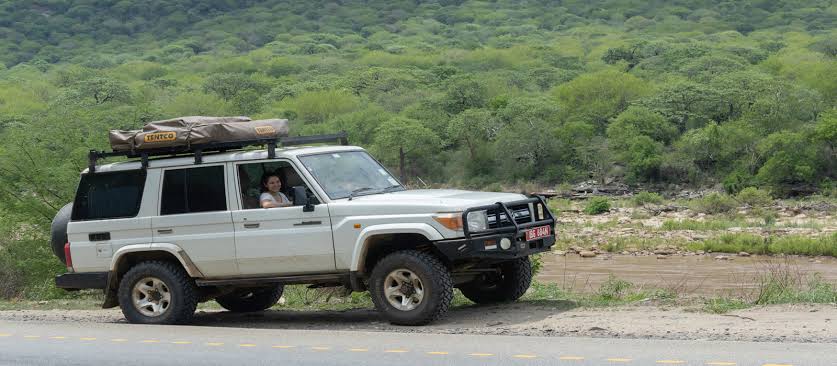
To camp in Laikipia | Camping gear and rooftop tent rental | Public campsites and some conservancies need your own equipment, and a rooftop tent saves lodge costs |
A simple highway drive on tarmac | A compact SUV or saloon | Lower rate and better fuel economy to Nanyuki or Nyahururu, though conservancy tracks suit a higher vehicle |
If you are starting your trip in Nairobi, compare options on our car rental Nairobi page. A rooftop tent adds height and weight, so drive carefully under low branches and expect slightly higher fuel use. Because many conservancies restrict private vehicles, a driver-guide or a lodge transfer is often the simplest option.
One-Way Fee and Price Factors
The one-way fee covers the cost of returning the vehicle to Nairobi, and it is quoted in writing before you pay. We do not publish a flat price because it depends on the factors below.
Factor | How it affects the cost |
Vehicle | A pop-up roof or rooftop tent vehicle costs more to bring back than a standard 4×4 or saloon |
Travel dates | Christmas, Easter and the July to September high season push the fee up and thin out availability |
Where you finish | Nyahururu is the shortest drive, Nanyuki is about 200 km, and Rumuruti, Doldol and the northern conservancies add distance |
Route | The western route and murram sections add time, and may add to the cost |
Length of hire | Extra days in Laikipia can lower the average daily cost, even with the fee on top |
Driver-guide | Quoted per day, with the guide’s meals and lodging arranged beforehand |
Mileage and fuel | Check for a mileage cap, and agree the fuel level for the handover |
Tolls and parking | Not included, and likely on the Nairobi Expressway and in towns |
Conservancy and park fees | Not included, charged per person per 24 hours, plus vehicle, activity and camping fees, and set by each conservancy. See the fee note below |
Insurance excess | Standard excess applies, and waivers can be void if you skip the police report after an incident |
Time of handover | Agreed windows go into the agreement, and out-of-hours handovers may carry a surcharge |
Tip: flexible dates and a mid-week start can improve availability and cost, particularly in peak season.
Conservancy fees: Laikipia’s conservancies are private or community-run, so Kenya Wildlife Service fees do not apply to them. Operator sites reported a non-resident adult entry fee of about US$110 per 24 hours at Ol Pejeta and about US$126 per adult for overnight guests at Lewa for 2026, with separate charges for activities, and many lodges include conservancy fees in their rates. Mount Kenya National Park is run by KWS, with a non-resident adult fee of US$70 under the October 2025 schedule, which a court challenge paused, so confirm the current rate. Fees are set by each manager and change, so confirm with the conservancy or your lodge. Our Kenya travel guide lists reported conservancy rates.
Drop-Off Points in Laikipia
Drop-off | Approx. time from Nairobi | Good to know |
Nanyuki town and hotels | 3.5 to 4.5 hours | The standard drop. Confirm the exact hotel or parking area, and arrange a lodge transfer |
Nanyuki airstrip | 3.5 to 4.5 hours | For travellers flying out of Nanyuki, by arrangement |
Ol Pejeta gates | 4 to 5 hours | By arrangement, with the vehicle left outside the gate. See our Ol Pejeta Conservancy travel guide |
Borana, Timau and Ngare Ndare | 4 to 5 hours | For conservancy and forest stays, by arrangement |
Nyahururu | 2.5 to 3.5 hours | The shortest drive, and the gateway to the western plateau |
Rumuruti and Doldol | 4.5 to 6 hours | For the Laikipia Nature Conservancy, Mukogodo and community conservancies, on request |
Loisaba and the north-west conservancies | 5.5 to 7 hours | Usually a drop in Nanyuki or Rumuruti with a lodge transfer, on request |
Lewa and Isiolo | 4.5 to 6 hours | For Lewa and the road to Samburu, on request. See our Samburu National Reserve travel guide |
Nyeri and the Aberdares | 3 to 4 hours |
If you are heading to the Mara, the coast or across a border, ask us about onward drops and cross-border options.
What to Do in Laikipia: Why the Drive Is Worth It
Laikipia is a high plateau north-west of Mount Kenya, with a mosaic of private and community conservancies that offer some of Kenya’s most varied safaris.
- Rhinos and conservation: Ol Pejeta, Lewa and Borana protect black and white rhinos, with guided tracking, and Ol Pejeta shelters the last two northern white rhinos. See our Ol Pejeta Conservancy travel guide.
- Walking, horse and camel safaris: activities that national parks do not allow, offered by many conservancies.
- Night drives and star beds: leopards, aardvark and a sleep-out under the Milky Way at selected lodges.
- Wild dogs and rare species: Laikipia is one of the best places in Kenya to see African wild dogs, Grevy’s zebra and reticulated giraffe.
- Sweetwaters Chimpanzee Sanctuary: a guided visit to rescued chimpanzees at Ol Pejeta.
- Mount Kenya: the Sirimon and Naro Moru routes are close to Nanyuki, for day walks and treks. See our Nanyuki travel guide.
- Ngare Ndare Forest: a canopy walk, waterfalls and pools.
- Community conservancies: Il Ngwesi and the Mukogodo area offer cultural visits and guided walks, with income going to local families.
- Thomson’s Falls and the highlands: a waterfall and cool air near Nyahururu.
- Birdwatching and photography: hundreds of species and wide landscapes, with Mount Kenya as a backdrop.
Beyond Laikipia: Samburu, the Aberdares and Mount Kenya
From Laikipia, some travellers continue north through Isiolo to Samburu, Buffalo Springs and Shaba, or south through Nyeri to the Aberdares, or climb Mount Kenya by the Sirimon or Chogoria routes.
Others combine Laikipia with the Rift Valley lakes on the way home. See our Samburu National Reserve travel guide, our Aberdare National Park travel guide and our Nanyuki travel guide. Cross-border extensions need separate approvals and paperwork, so see our cross-border car rental from Kenya page. You can also start in Laikipia and drop in Nairobi, and our hub page on one-way car rental from Nairobi explains the reverse routes and the cross-border options.
Best Time to Do the Nairobi to Laikipia Drive
The roads can be driven all year. The long rains from March to May and the short rains in November can cause slower traffic, mist and slippery patches, and some conservancy tracks can become impassable after heavy rain. The drier months, from about June to October and December to March, usually give the best driving conditions and the best wildlife viewing, with clear views of Mount Kenya in the mornings. Nights are cold on the plateau, especially in July and August. Many lodges reduce services in the long rains. Public holidays and school breaks bring heavy traffic, so avoid the busiest days if you can.
- For clear roads: weekdays outside school holidays.
- For wildlife viewing: the dry months from June to October and December to March.
- For views of Mount Kenya: early mornings, since the mountain is often clouded by midday.
- For fewer vehicles and lower rates: the green season, though April, May and November bring heavy rain.
- For photography: early morning and late afternoon give the best light and cooler air.
Documents and Requirements
- Driving licence and International Driving Permit: carry both, plus your passport.
- Rental agreement and insurance papers: keep them in the vehicle at all times.
- Credit card: in the main driver’s name, for the deposit.
- Kenya entry paperwork for overseas visitors: an eTA and, for most travellers, Kenya’s mandatory inbound health insurance, bought through the eTA process or eCitizen. Check the official portal on the day you apply, because rules and premiums have changed since launch.
- Conservancy bookings: carry your lodge and activity confirmations, since many conservancies only admit booked guests or day visitors who have arranged entry in advance.
- Health bulletins: Kenya has confirmed Ebola cases since October 2026, and the Ministry of Health has said there are no restrictions on domestic travel, but screening and advice can change. Check current Ministry of Health and embassy notices before departure.
- Security: some parts of Laikipia have had land and grazing tensions in recent years, so check current advice from your lodge and local authorities, avoid night driving and travel with reputable operators.
How to Book Your One-Way Rental
- Pick your finish line: Nanyuki, Nyahururu, Rumuruti, a point outside a conservancy gate or another agreed point.
- Pick the vehicle that suits your stops, from a self-drive 4×4 to a pop-up roof vehicle, a driver-guide, or camping gear.
- Send us your dates, conservancy or lodge and gate, a week or more before collection, so we can confirm whether private vehicles are allowed.
- Review the itemised quote with the one-way fee, insurance and extras.
- Get your paperwork ready: licence, IDP and any entry authorisations.
- Collect and inspect the vehicle with us, and save our 24-hour contact.
- Hand it back at the agreed place and time, and keep the handover note.
Nairobi to Laikipia One-Way Rental Frequently Asked Questions
Can I rent a car in Nairobi and drop it in Laikipia?
Yes. A one-way rental lets you collect in Nairobi and return the vehicle in Nanyuki, Nyahururu, Rumuruti or just outside a conservancy gate, subject to availability, notice and a one-way fee.
How far is Nairobi from Laikipia by road?
It depends on where you finish: about 180 to 190 km to Nyahururu, about 200 km to Nanyuki and roughly 240 to 320 km to Rumuruti, Loisaba or the Lewa area.
How long does the drive take?
About four to six hours for most Laikipia destinations, and longer in heavy traffic, in rain or on busy holidays.
Which is the best entry point, Nanyuki or Nyahururu?
Nanyuki is the best-served gateway for Ol Pejeta, Borana, Ngare Ndare and Mount Kenya, and Nyahururu suits the western plateau and a quieter road from Naivasha. Tell us your conservancy and we will advise.
Can I take the rental car into a Laikipia conservancy?
Some conservancies, such as Ol Pejeta, allow self-drive visitors, while many private conservancies restrict private vehicles or use their own vehicles. Tell us where you are staying before you book. Rental vehicles are not left inside conservancies.
Is it better to drive or fly to Laikipia?
Driving gives you flexibility, luggage space and stops on the way. Flights from Wilson Airport take about 45 minutes to an hour, with strict baggage limits, and serve airstrips at Nanyuki, Ol Pejeta, Lewa, Loisaba and others.
How much does it cost to enter Laikipia’s conservancies?
Fees are set by each conservancy. Operator sites reported about US$110 per non-resident adult at Ol Pejeta and about US$126 per adult for overnight guests at Lewa for 2026, and many lodges include fees in their rates. Confirm the current tariff with your lodge.
Is there a one-way fee?
Yes. The fee depends on the vehicle, season and drop-off point, and we quote it in writing before you pay.
How much notice do you need?
At least one week, and more for Christmas, Easter and the July to September high season.
Can I drop the vehicle at a lodge inside a conservancy?
Only by arrangement and subject to the conservancy’s rules. Most drops are in Nanyuki or just outside the gate, with a lodge transfer for the last stretch.
Is it safe to drive from Nairobi to Laikipia?
The routes are widely driven. Leave early, avoid night driving, watch for livestock and wildlife on the plateau and check current advice for the region.
Do I need a 4×4?
A 4×4 is not essential on the main highways, but it is strongly recommended for conservancy roads, especially after rain.
Can I take camping gear or a rooftop tent to Laikipia?
Yes, subject to campsite rules. The kit is listed in your paperwork and stays with the vehicle.
Can I add Mount Kenya, Samburu or the Aberdares?
Yes. Mount Kenya is close to Nanyuki, Samburu is about two and a half to three hours north of Nanyuki, and the Aberdares are on the road through Nyeri. See our Nanyuki, Samburu and Aberdare guides.
Can I pick up in Laikipia and return in Nairobi?
Yes, where a vehicle is available.
Get a One-Way Quote: Nairobi to Laikipia
Tell us your travel dates, group size, conservancy or lodge and whether you want a handover in Nanyuki or Nyahururu, a self-drive trip into a conservancy or a longer Laikipia and Samburu safari. We will recommend the entry point and the vehicle, confirm the one-way fee and the drop-off point, and send an itemised quote before you commit.