Rent a 4×4 with a rooftop tent in Kenya for self-drive and guided camping safaris. Choose Land Cruisers, camping gear, and flexible rental options. Explore Kenya on your own terms with a 4×4 car rental equipped with a rooftop tent and camping gear.
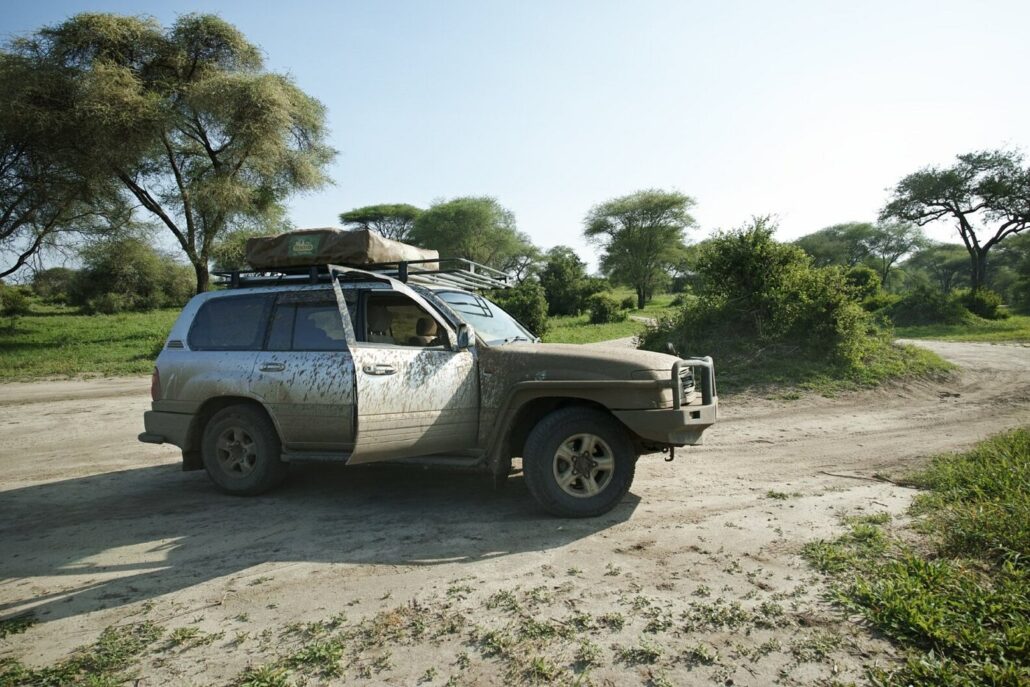 A rooftop-tent 4×4 turns your rental vehicle into your basecamp. With Car Rental 4×4, you drive by day and sleep above the ground by night, camping inside Kenya’s national parks and conservancies or beside the Indian Ocean, on an itinerary that answers to nobody but you.
There is a particular kind of silence that exists only about eight feet above the Kenyan bush, the stillness that settles once you have climbed the ladder, zipped the canvas shut against the night air, and the engine has finally stopped ticking over. Below you, the acacia flats of the Mara or the lava-strewn plains of Amboseli hold whatever moves after dark: a hyena testing the camp perimeter, elephants feeding fifty meters off, and a lion calling to a rival somewhere across the valley. You are not queuing for a buffet breakfast behind a lodge fence. You are exactly where you chose to be: in a vehicle you are driving yourself, being driven by a guide of your choosing, or sleeping in a tent that folds out from your roof rack. This is what it means to rent a car with a rooftop tent in Kenya, and once it has been done properly, the right vehicle, the right tent, and the right operator standing behind you, very few other ways of experiencing East Africa ever feel like quite enough again.
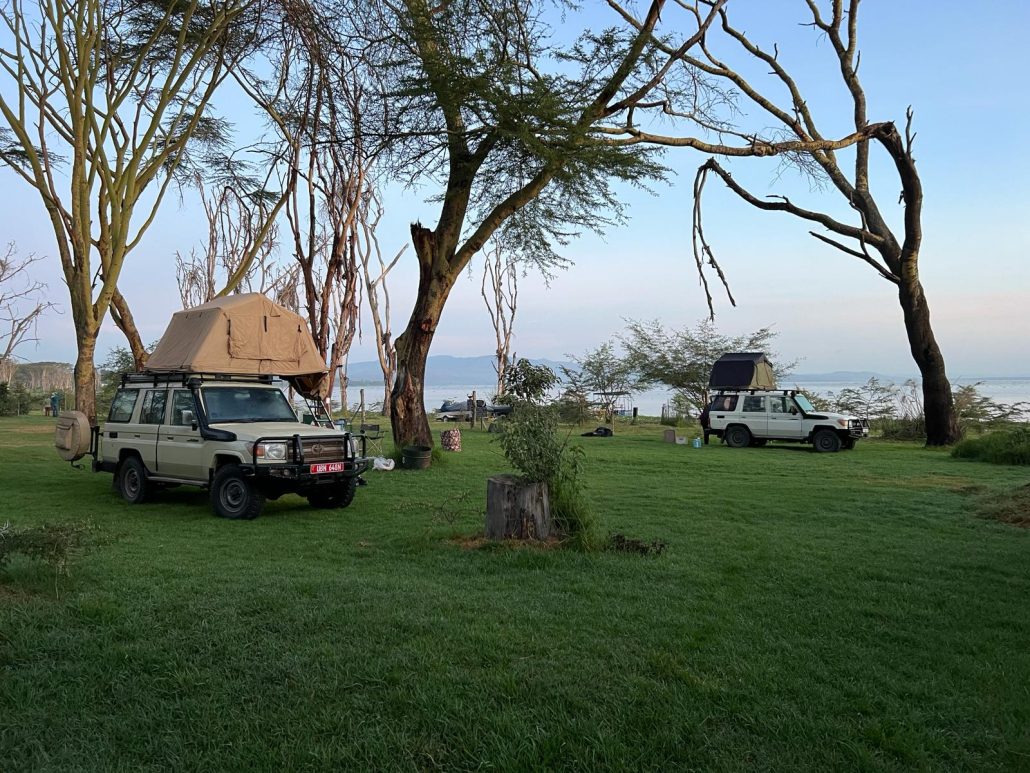
Car Rental 4×4 offers fully equipped 4×4 vehicles, primarily Toyota Land Cruiser Hardtops, Land Cruiser LX models, and Land Cruiser V8s, each fitted with either a single rooftop tent, a double rooftop tent, or a family rooftop tent that sleeps three. Vehicles come with the tent’s mattress and ladder as standard, with camping equipment such as bedding, a table, chairs, a cooler box, and a cooking kit available as an add-on package. You can self-drive, hire a driver-guide, rent for a short safari or for weeks at a time, and, on approved routes, pick up in one country and drop off in another.
What a Rooftop Tent Car Rental Actually Is, and Why Kenya Does It Better Than Almost Anywhere
A rooftop tent is a fold-out canvas shelter permanently mounted on a reinforced roof rack, raised in a few unhurried minutes with an extendable ladder and telescopic struts, and folded away again just as quickly each morning before you drive on. Renting a 4×4 with a rooftop tent in Kenya means the vehicle itself becomes your accommodation for the trip: there is no separate ground tent to pitch, no groundsheet to fuss over in the dark, and no zipping yourself in at eye level with whatever happens to be walking through camp. You sleep raised well off the ground on a proper foam mattress, inside a tent with mesh and canvas windows that fold back to a clear view of the stars, and you climb down again in the morning to a kettle already on the gas.
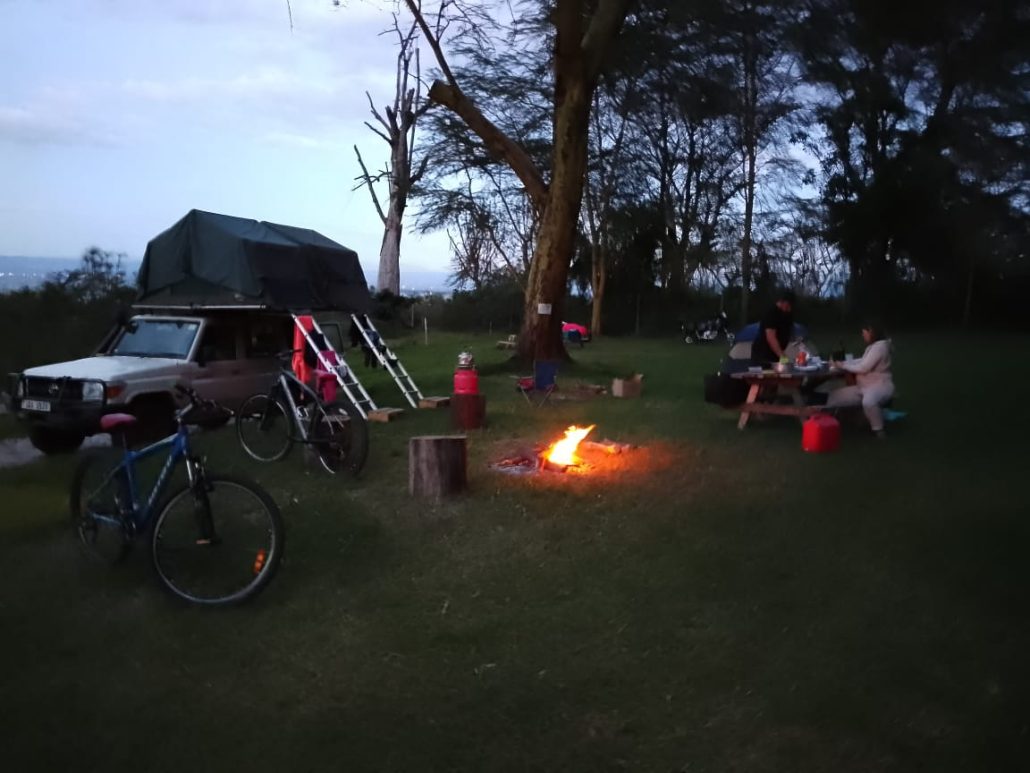 Kenya was, in a very real sense, built for this style of travel. Its road network reaches private conservancies, community campsites, and public campsites inside the national parks in a way few countries in Africa can match, and the culture of self-drive and guided camping safaris here runs decades deep rather than being a recent tourism trend. Whether you are researching rooftop tent camping in Kenya, a self-drive safari vehicle hire, or simply a camping safari car hire that will not let you down two hundred kilometres from the nearest town, this is the terrain and the traveller culture the whole system was designed around.
How a Rooftop Tent Works, Night to Night
In the late afternoon, once camp has been chosen, the tent is unclipped and pushed upward on gas struts until it locks into place; most travellers can manage this alone within five minutes once shown how, and our handover team will show every client personally before they leave our yard. The ladder doubles as the access point and, once folded down, as a structural brace. Inside, the shelter is completed by a permanently fitted mattress, sheets, and pillows for the number of guests the tent is rated for, along with a rainfly, an insect-mesh inner, and a fold-down door. In the morning the process reverses: the bedding stays inside, the tent compresses down to roughly the height of a large roof box, and you are back on the road within fifteen minutes.
Rooftop tent travel suits the traveller who wants to experience Kenya on their terms, with the freedom to leave a viewpoint when the light is right rather than when the itinerary says so, and the quiet satisfaction of having built the day around their own pace rather than a coach schedule. It does not suit everyone, and we would rather tell you that plainly than sell you a tent you will resent by day three. Families with children old enough to manage a ladder tend to love it, particularly with our family rooftop tent configuration, because the novelty of sleeping above the vehicle turns a long road trip into the actual holiday rather than the means of getting to one. Couples consistently rate the double rooftop tent as the single best-value camping option in Kenya, since two people share one vehicle, one tent, and one set of camping fees rather than a lodge room each night.
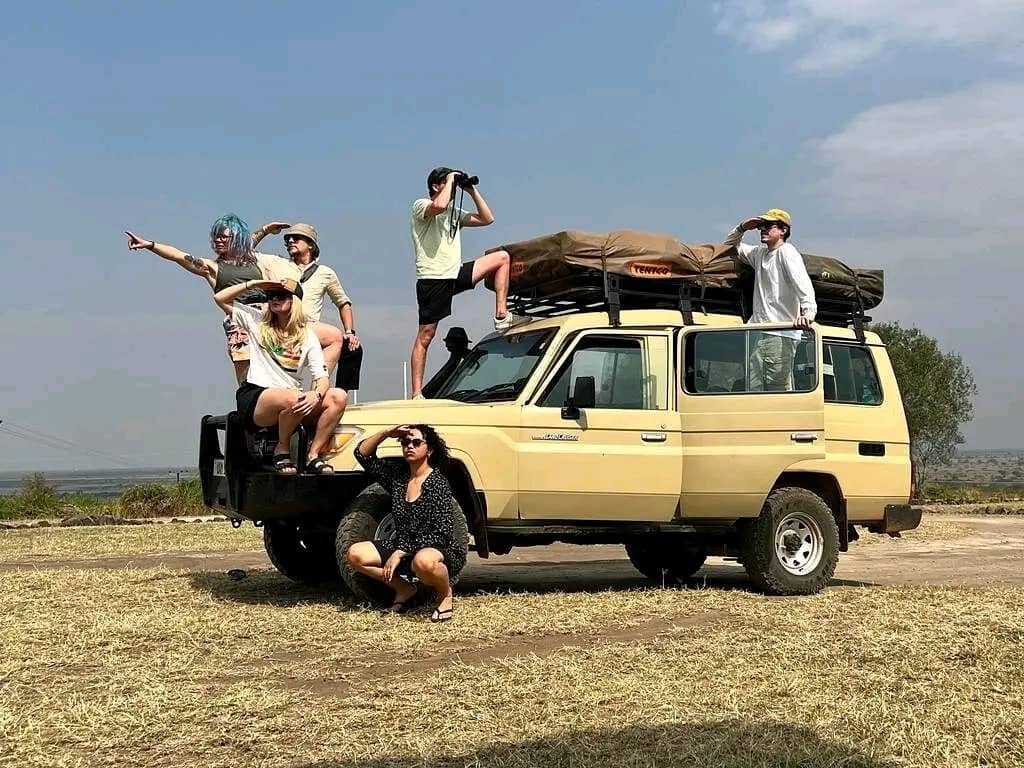 Solo travellers and photographers gravitate toward the single rooftop tent paired with a Land Cruiser Hardtop, as a lighter, shorter vehicle is easier to manoeuvre alone into a photographic hide or a tight community campsite. Groups of friends often combine two or three vehicles, each with its own tent, keeping everyone self-sufficient while still travelling as a convoy, a pattern we support with fleet discounts and synchronised handovers.
Where rooftop tent rental is not the right fit: travellers who need step-free access, anyone uncomfortable with a vertical ladder after dark, and infants who cannot yet climb independently, since safety on the ladder becomes the limiting factor rather than comfort in the tent itself. For those parties, we are equally happy to arrange one of our standard 4×4 alongside pre-booked lodge or tented-camp accommodation, and our team will say so honestly during your enquiry rather than push a rooftop tent that does not suit your group.
The Rooftop Tent Itself: What We Use & Why
Car Rental 4×4 uses a curated selection of hardshell and softshell rooftop tents from reputable manufacturers tested specifically for East African conditions. Our preferred hardshell models open with a gas-strut-assisted lift mechanism, deploy a pre-fitted mattress automatically, and close into a low-profile aerodynamic shell that has minimal impact on fuel consumption during road driving. All tents are waterproofed to the standard required by Kenya’s short and long rainy seasons; we test and re-seal every tent before each rental deployment. The integrated mosquito netting is fine-mesh and fully encloses the sleeping area, providing effective protection against mosquitoes in all low-altitude park environments.
A rooftop tent is the centerpiece, but a self-sufficient bush camping experience requires a complete supporting kit. Car Rental 4×4 offers a comprehensive camping gear package that turns your rental 4×4 into a fully equipped mobile camp. The package is designed to eliminate every logistical gap between arriving at a campsite and being genuinely comfortable for the night, from the moment you pull off the engine to the moment you pour your first morning coffee.
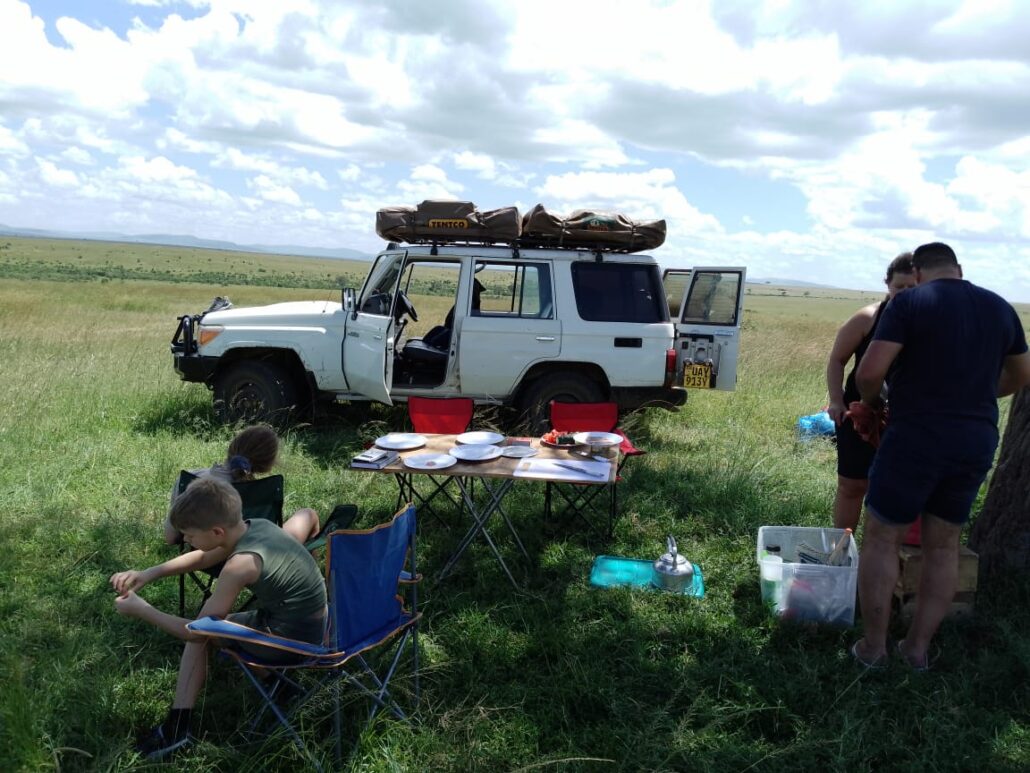 The full camping kit includes a two-burner portable gas stove with refillable canisters, a set of lightweight aluminum cookware and utensils, a 40-liter heavy-duty cooler box for food and drink storage, two collapsible camp chairs and a folding camp table, a portable solar LED lantern and a USB solar charging panel, a 20-litre collapsible water carrier and a portable water filtration system, a portable camp shower (solar-heated water bag with showerhead), a ground tarp and footprint mat for under-tent protection, a basic tool kit and vehicle recovery equipment including a hi-lift jack and recovery tracks, and a comprehensive campfire kit for sites where fire is permitted. The sleeping kit — integrated mattress in the rooftop tent, fitted sheets, and a 0°C-rated sleeping bag per person — is included as standard. Additional items, including a portable camp toilet for remote sites with no facilities, a camp kitchen organiser, and a portable power station for device charging, are available as add-ons at booking.
For travellers who want to add a professional driver-guide to their rooftop tent camping safari — someone to handle the driving, lead the game drives, prepare simple bush meals, and manage campsite logistics — our chauffeured camping option is available across all vehicle configurations. The driver-guide option transforms the experience from an independent adventure into a fully supported bush immersion, and is particularly recommended for first-time campers in Kenya or for families with young children who prefer the security of professional oversight. Visit Car Rental 4×4 to explore driver-guide add-on options and current pricing.
We deliberately keep our rooftop tent fleet simple, because a confused choice at the booking stage becomes a frustrated client at the campsite. Every rooftop tent we fit is matched to a specific Toyota Land Cruiser body, so the roof rack, the ladder length, and the vehicle’s payload have already been engineered to work together rather than bolted on as an afterthought.
Single Rooftop Tent, Solo Travellers and Photographers
Built for one, the single rooftop tent is our most compact option, mounted almost exclusively on the Land Cruiser Hardtop. The Hardtop’s shorter wheelbase and lighter frame make it the easiest of our vehicles to thread down a narrow conservancy track or reverse into a tight photographic bay, and fuel economy on long self-drive loops is noticeably better than our larger cruisers. It is the configuration we recommend most often for a first-time solo self-drive safari in Kenya.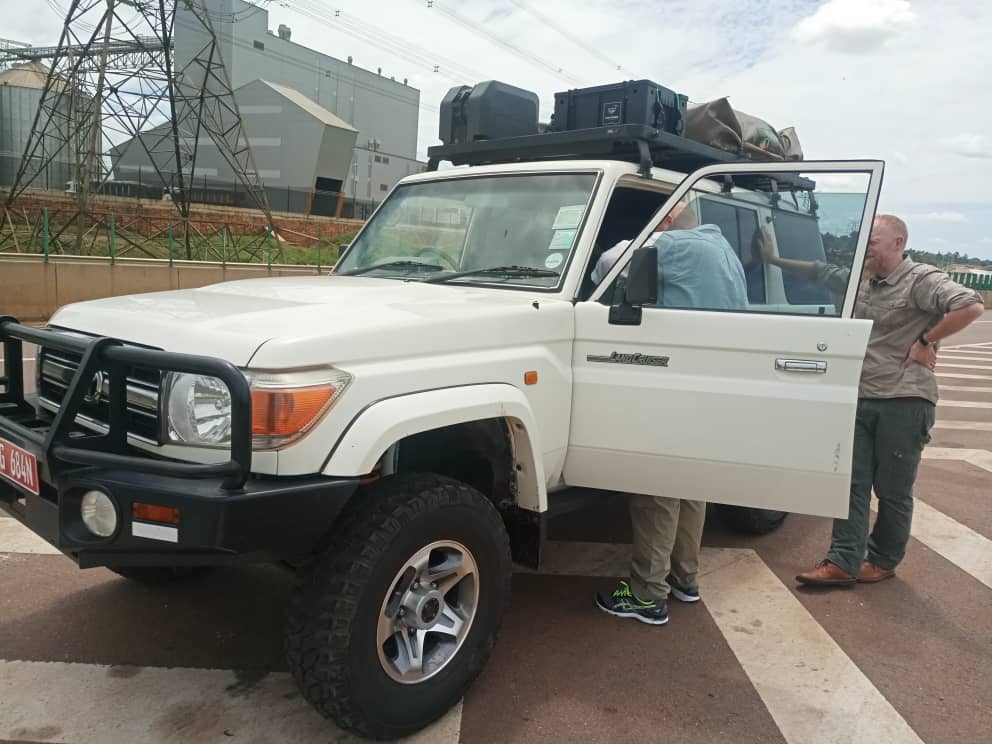
Family Rooftop Tent, Up to Three People
Our family rooftop tent accommodates up to three people and is paired with either the Land Cruiser LX or the Land Cruiser V8, both of which carry the extra payload of children’s gear, additional water, and a larger cool box without straining the suspension on rough park roads. The Land cruiser V8 is our recommendation for families travelling longer distances in one push, Nairobi to Samburu, for instance, since its power reserve on the climbs out of the Rift Valley makes a genuine difference to comfort and to fuel-efficient cruising. If your family group needs more than three sleeping spaces, we simply pair two vehicles, each with its own rooftop tent, which in practice is more comfortable than trying to squeeze a larger family into one tent.
Double Rooftop Tent For Couples
The double rooftop tent, fitted to both the Land Cruiser Hardtop and the Land Cruiser LX, is our best-selling configuration by a wide margin. The LX in particular gives couples extra locked storage below deck for camping gear and a fridge, while the mattress above is wide enough for two adults to sleep comfortably without the tent feeling like a squeeze. Most of our honeymoon and anniversary camping safaris travel in this exact configuration.
What’s Included With Your Rooftop Tent Rental
Every rooftop tent rental leaves our yard fully self-sufficient, because the whole point of this style of travel collapses the moment you have to hunt down a missing gas canister two hundred kilometers from Nairobi. As standard, the vehicle carries the rooftop tent itself with mattress, bedding, and pillows sized to its rated capacity; a fold-out table and camp chairs; a gas cooker with a spare cylinder; a cool box or vehicle fridge depending on configuration; cooking pots, plates, and cutlery; a basic first-aid kit; a manual jack rated for the vehicle’s weight; a full-size spare wheel; recovery tracks; a snorkel where the route requires river crossings; and enough jerry cans for fuel and drinking water to cover genuinely remote legs such as Turkana or the Chalbi Desert. We brief every client through the equipment list in person at handover rather than simply handing over a printed sheet, and we would rather spend forty extra minutes at pickup than have a client discover a gap in the kit on their first night at Ol Kinyei.
The quality of your rooftop tent experience depends, in roughly equal measure, on three things: the quality of the vehicle below it, the quality of the tent mounted on it, and the quality of the supporting camping equipment. Car Rental 4×4 takes each of these seriously, and the configurations we offer reflect years of on-the-ground experience in what actually works in Kenyan conditions, not what looks appealing in a catalogue.
Land Cruiser V8 with Single Rooftop Tent, Couples & Solo Travellers
The flagship configuration for couples, solo travellers, or two friends sharing a vehicle. Our Land Cruiser V8 is fitted with a hardshell rooftop tent mounted on a purpose-built roof rack, providing a sleeping platform for two adults with a fold-out mattress, integrated ladder, and a 360-degree mesh ventilation system that allows unobstructed airflow in the heat while maintaining full insect protection. The V8’s robust suspension handles the additional roof load with complete composure on everything from Nairobi tarmac to the corrugated murram of remote Samburu tracks. The tent deploys in under two minutes and packs down in under five, a significant advantage at the end of a long day’s driving when the light is fading and camp setup speed matters.
Land Cruiser Hard Top (Series 76/78) with Dual Rooftop Tents — Families & Groups of Four
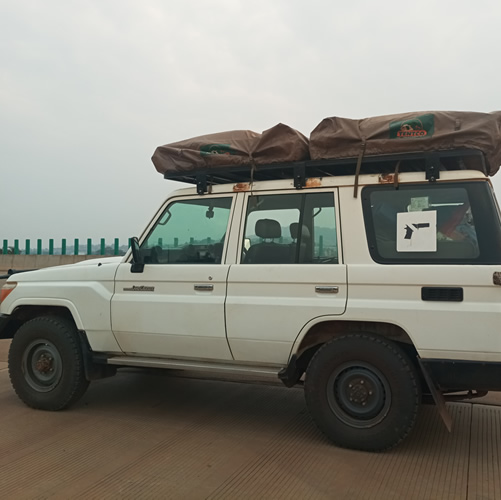 The dual rooftop tent configuration on our Land Cruiser Hard Top provides the ideal solution for families or groups of four who want to travel in a single vehicle without anyone sleeping on the ground. Two tents are mounted fore and aft on the extended roof rack, providing sleeping capacity for four adults or two adults and two to three children. The Hard Top’s longer wheelbase and higher payload capacity are specifically matched to this configuration, ensuring vehicle stability and performance are not compromised by the additional load. This setup is one of the most popular configurations in our Kenya camping fleet, particularly with families who want the full immersive bush experience without dividing into separate vehicles.
Toyota Hilux with Single Rooftop Tent, The Lightweight Adventurer
For solo travellers or couples who prefer a lighter, more agile platform, particularly relevant for routes that involve narrower tracks, tighter campsites, or extended driving on challenging terrain, the Hilux pickup with a rooftop tent mounted on the load bay offers exceptional manoeuvrability without sacrificing meaningful off-road capability. The open load bay also provides a larger usable cargo area for camping equipment, giving the Hilux a practical advantage for longer journeys carrying a full camping kit.
The Rooftop Tent Itself: What We Use & Why
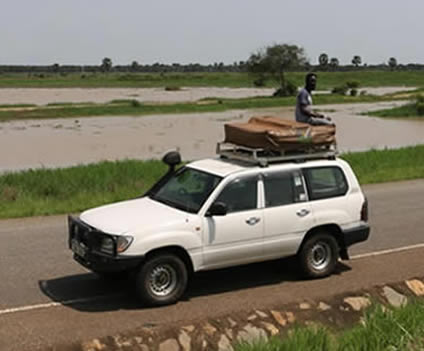 Car Rental 4×4 uses a curated selection of hardshell and softshell rooftop tents from reputable manufacturers tested specifically for East African conditions. Our preferred hardshell models open with a gas-strut-assisted lift mechanism, deploy a pre-fitted mattress automatically, and close into a low-profile aerodynamic shell that has minimal impact on fuel consumption during road driving. All tents are waterproofed to the standard required by Kenya’s short and long rainy seasons; we test and re-seal every tent before each rental deployment. The integrated mosquito netting is fine-mesh and fully encloses the sleeping area, providing effective protection against mosquitoes in all low-altitude park environments.
Rooftop Tent with Driver-Guide, Chauffeured Camping Safaris
The chauffeured rooftop tent safari is, in many ways, the ideal synthesis of freedom and support. Your professional driver-guide from Car Rental 4×4 handles all the driving, navigating park tracks, positioning the vehicle for wildlife viewing, managing gate permits, and campsite check-ins. In the evenings, your guide sets up the rooftop tent, prepares a simple but satisfying bush meal over the camp stove, and manages the campsite security routine that ensures every night is restful rather than anxious.
 In the mornings, the vehicle is ready before sunrise, the cooler box is stocked with breakfast provisions, and the engine is warm. For families with young children, first-time campers, and travellers who want the bush immersion without the logistical management, the chauffeured camping option transforms what might feel like an adventure into something that feels like precisely arranged magic.
One-Way Rooftop Tent Rental — Cross-Border Camping Road Trips
A rooftop tent 4×4 rental in Kenya offers one of the most compelling arguments: the ability to extend the journey across international borders without changing vehicles or breaking the rhythm of the road. Car Rental 4×4 facilitates one-way rooftop tent rentals that allow you to pick up in Nairobi and drop off in Kampala, Kigali, Arusha, or Dar es Salaam, following a continuous overland route through multiple countries, sleeping in the bush each night, and experiencing the extraordinary diversity of East Africa’s wildlife landscapes in a single unbroken journey. The Kenya-Tanzania crossing at Namanga puts you on the road to the Serengeti within hours of leaving Nairobi, with your rooftop tent campsite pre-booked inside the park boundary. The Kenya-Uganda crossing at Busia or Malaba opens the route to Bwindi for gorilla trekking, to Queen Elizabeth National Park for tree-climbing lions and hippo channel boat rides, and to Murchison Falls for the most powerful waterfall in Africa, thundering through a seven-meter gap in the Rift. The Car Rental 4×4 operations team arranges all cross-border documentation, insurance extensions, and vehicle permits in advance.
Long-Term Rooftop Tent Rental in Kenya
Car Rental 4×4 offers long-term rooftop tent rental arrangements at significantly reduced daily rates for overlanders, researchers, documentary filmmakers, and extended-itinerary travellers whose journeys in Kenya span weeks rather than days. Long-term packages include scheduled vehicle maintenance checks at agreed intervals, tent and equipment inspections and replacements as needed, and continuous 24/7 operational support throughout the rental period. Long-term rooftop tent clients often develop deeply personal relationships with specific campsites across Kenya, returning to the same Mara riverbank position or the same Samburu spot where the elephants drink at dusk, and the continuity of vehicle and equipment that a long-term rental provides makes this kind of repeated, deepening engagement with the landscape entirely possible.
Rooftop Tent Rental with Pre-Booked Campsites
Car Rental 4×4 offers a complete rooftop tent package for travelers who want the freedom of a self-drive camping safari without the uncertainty of arriving at full campsites, with all campsites pre-booked and confirmed before departure. Your itinerary arrives with confirmed campsite reservations for every night, GPS coordinates for each site, facility descriptions, arrival guidance, and emergency contacts for each park administration. You drive freely, knowing that you have thoughtfully chosen and professionally secured your sleeping position for every night of the journey.
Cross-Border Rooftop Tent Adventures: Expanding Beyond Kenya
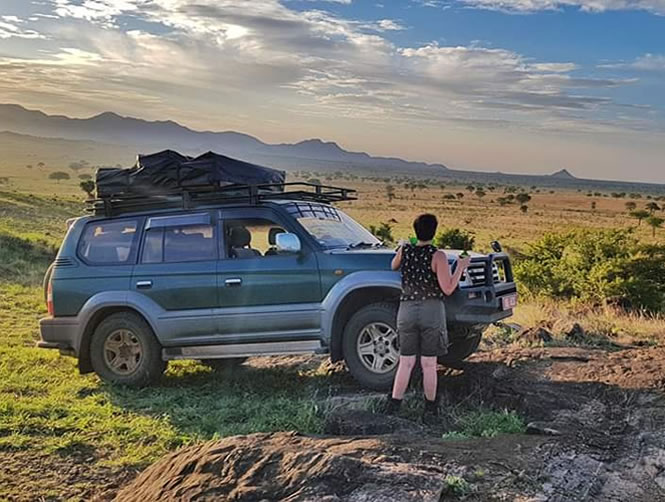 Kenya’s borders are, from the perspective of a rooftop tent traveller, more continuations than they are endings. The landscape does not stop at Namanga or Busia; it simply continues, equally wild, equally rewarding, into Tanzania and Uganda and eventually Rwanda and Burundi. Car Rental 4×4 facilitates cross-border rooftop tent rentals with full logistical support to all neighboring countries. The Kenya-Tanzania crossing for Serengeti and Ngorongoro camping is our most popular cross-border route. The Kenya-Uganda crossing for gorilla trekking camping in Bwindi, chimpanzee tracking in Kibale, and camping near Murchison Falls draws a devoted following of overlanders for whom a rooftop tent in the Bwindi forest listening to the night sounds of an equatorial rainforest with mountain gorillas somewhere in the darkness above represents the pinnacle of East African bush camping. Explore our full cross-border options at carrental4x4.com.
Dry Season: The Prime Camping Window (January–March & June–October)
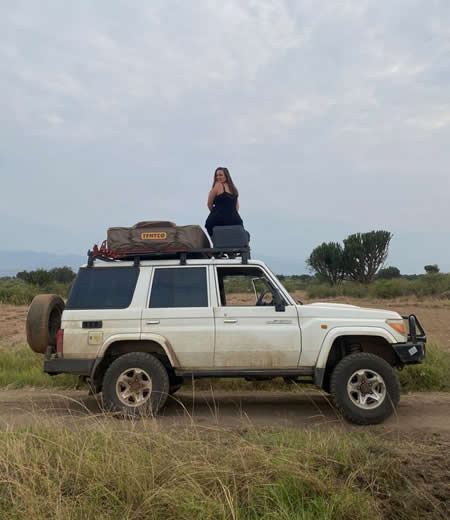 Kenya’s dry seasons are the optimal periods for rooftop tent camping. From January through March and again from June through October, the skies are largely clear, the roads are at their most manageable, and the nights carry the cool, crisp quality that makes sleeping in a canvas tent both comfortable and invigorating. The spectacular Great Migration season of July through October perfectly coincides with the best camping conditions, as wildebeest and zebra cross the Mara River in the Masai Mara. Campsites within the Mara during this period fill quickly; advance booking at least three to four months ahead is essential.
The Green Season: Rewarding for the Prepared (November–December, March–May)
Kenya’s rainy seasons bring challenges and rewards in nearly equal proportion. The landscape transforms into verdant, photogenic abundance. Bird life reaches its annual peak, with migratory species filling the trees and waterways. Wildlife encounters in the green landscape have a particular quality of lushness and photographic beauty. However, park tracks, particularly in the Masai Mara, Amboseli, and Samburu, can become severely compromised after heavy rain, and a genuine high-clearance 4×4 with recovery equipment is non-negotiable. The hardshell rooftop tent’s waterproof construction handles sustained rain confidently, but campsite selection requires more care; avoid low-lying positions and dry riverbeds that can flood rapidly. For experienced camping travellers willing to work with the conditions, the green season offers a quality of landscape and a scarcity of other tourists that the dry season cannot match.
Coastal Kenya: October Through March for the Best Conditions
For self-drivers who incorporate the Kenyan coast into their rooftop tent itinerary, using the vehicle to connect Nairobi with Mombasa, Watamu, or Malindi via Tsavo, the October to March period provides the best coastal camping conditions. Several campsites and eco-lodges along the coast offer rooftop tent-friendly parking with access to ablutions and cooking facilities, combining the beach experience with the continued bush accommodation that makes a rooftop tent rental such a versatile travel tool.
The administrative requirements for a rooftop tent Car rental in Kenya are the same as for any 4×4:
 A valid passport with at least six months of validity, a Kenya e-Visa or visa on arrival for qualifying nationalities, a full and valid home country driving license, and an International Driving Permit (IDP) from your national motoring organization. The IDP is a legal requirement for foreign drivers in Kenya and must accompany your national license at all times.
- For camping specifically, personal packing priorities include a quality headlamp with spare batteries, essential for moving around a dark campsite safely and for identifying the source of nocturnal sounds without disturbing other campers or wildlife unnecessarily.
- DEET-based insect repellent is non-negotiable in all low-altitude park areas where malaria-carrying mosquitoes are active. High-factor sunscreen is essential for daytime driving with windows down.
- A lightweight down or synthetic sleeping bag liner provides an additional comfort layer on cold highland nights, where temperatures can drop to 10°C or below, even in the rooftop tent’s insulated sleeping bag.
- Pack clothing in layers: a breathable, light long-sleeved shirt for evening insect protection, a medium-weight fleece for cool mornings and highland nights, and dust-resistant sunglasses for dry-season driving on corrugated murram roads.
- A wide-brimmed hat is valuable both for driving and for game viewing when the rooftop tent is open and the sun is overhead.
- For campsites where firewood collection is permitted, a pair of heavy-duty gloves makes fire management more comfortable.
- Download offline maps (Google Maps or Maps.me) for your entire planned route before leaving Nairobi; data coverage in remote parks is unreliable, and GPS backup from your phone provides an important navigational layer beyond the vehicle GPS.
- Carry adequate cash in Kenyan Shillings or US Dollars for park gate entry fees, campsite payments, and provisions along the route. M-Pesa is increasingly accepted at Kenya Wildlife Service facilities, but cash remains the reliable fallback.
- Stock your cooler box or fridge in Nairobi before departure with provisions for the first two to three days: bread, eggs, vegetables, fruit, canned goods, coffee, and water, and plan to restock in major park-adjacent towns (Narok for the Mara, Namanga or Emali for Amboseli, and Voi or Mtito Andei for Tsavo) as the journey progresses.
Full Camping Gear Packages, Everything Your 4×4 Bush Home Needs
A rooftop tent is the centerpiece, but a self-sufficient bush camping experience requires a complete supporting kit. Car Rental 4×4 offers a comprehensive camping gear package that turns your rental 4×4 into a fully equipped mobile camp. The package is designed to eliminate every logistical gap between arriving at a campsite and being genuinely comfortable for the night, from the moment you pull off the engine to the moment you pour your first morning coffee.
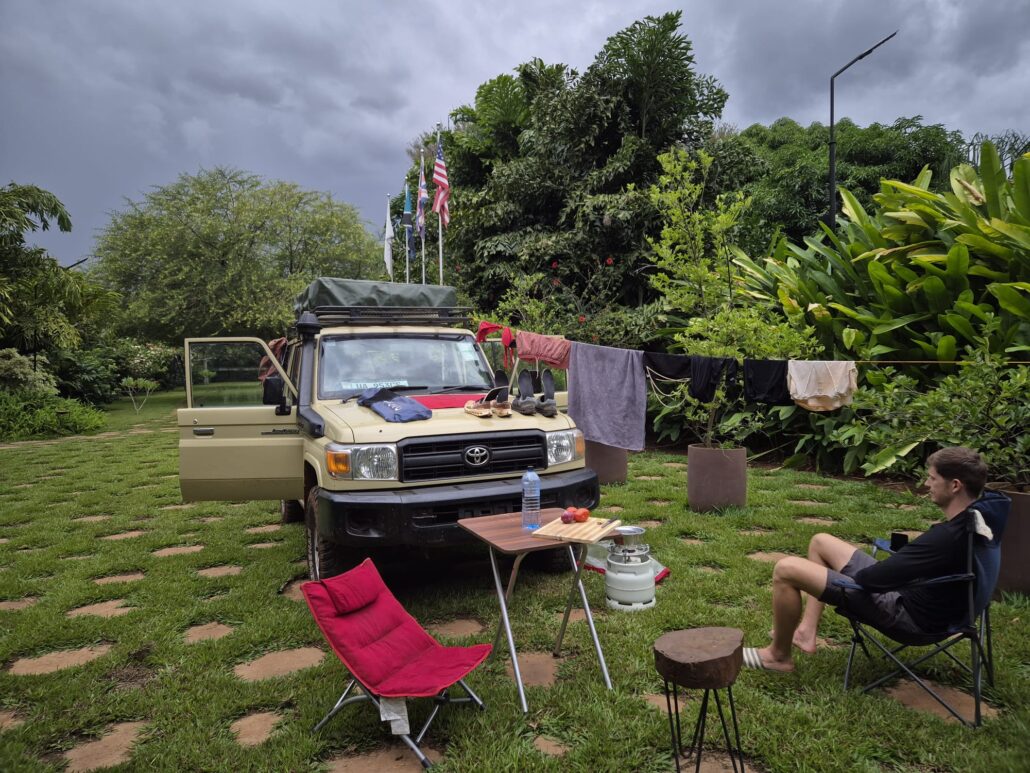 The full camping kit includes a portable gas stove, a set of lightweight aluminum cookware and utensils, a 40-liter heavy-duty cooler box for food and drink storage, two collapsible camp chairs and a folding camp table, a portable solar LED lantern and a USB solar charging panel, a 20-liter jerrycan, a water filtration system, a ground tarp and footprint mat for under-tent protection, a basic tool kit and vehicle recovery equipment including a hi-lift jack, tow rope, spade & Spanner, and a comprehensive campfire kit for sites where fire is permitted. The sleeping kit, an integrated mattress in the rooftop tent, fitted sheets, and a 0°C-rated sleeping bag per person, is included as standard. Additional items, including a portable camp toilet (on request at an extra fee) for remote sites with no facilities, a camp kitchen organizer, and a portable power station for device charging, are available as add-ons at booking at an extra fee.
For travellers who want to add a professional driver-guide to their rooftop tent camping safari, someone to handle the driving, lead the game drives, prepare simple bush meals, and manage campsite logistics, our chauffeured camping option is available across all vehicle configurations. The driver-guide option transforms the experience from an independent adventure into a fully supported bush immersion and is particularly recommended for first-time campers in Kenya or for families with young children who prefer the security of professional oversight. Visit Car Rental 4×4 to explore driver-guide add-on options and current pricing.
Masai Mara National Reserve—The Holy Grail of Bush Camping
Camping in the Masai Mara is, for many travellers, the defining rooftop tent experience in East Africa. The public campsites within the reserve and on its boundaries offer positions of extraordinary quality, riverbank sites where hippos grunt through the night, open grassland positions with unimpeded sunrise views across the Mara plains, and bush clearings where the sounds of the night shift begin shortly after the fire dies down. The Mara’s campsite network is well established, and most sites include basic ablution facilities, though they are variable in quality; a portable camp shower kit is recommended. Your rooftop tent positions you above the vegetation for maximum airflow and the comfortable elevation that matters in a landscape where large predators move freely between dusk and dawn.
Amboseli National Park—Kilimanjaro at Your Tent Door
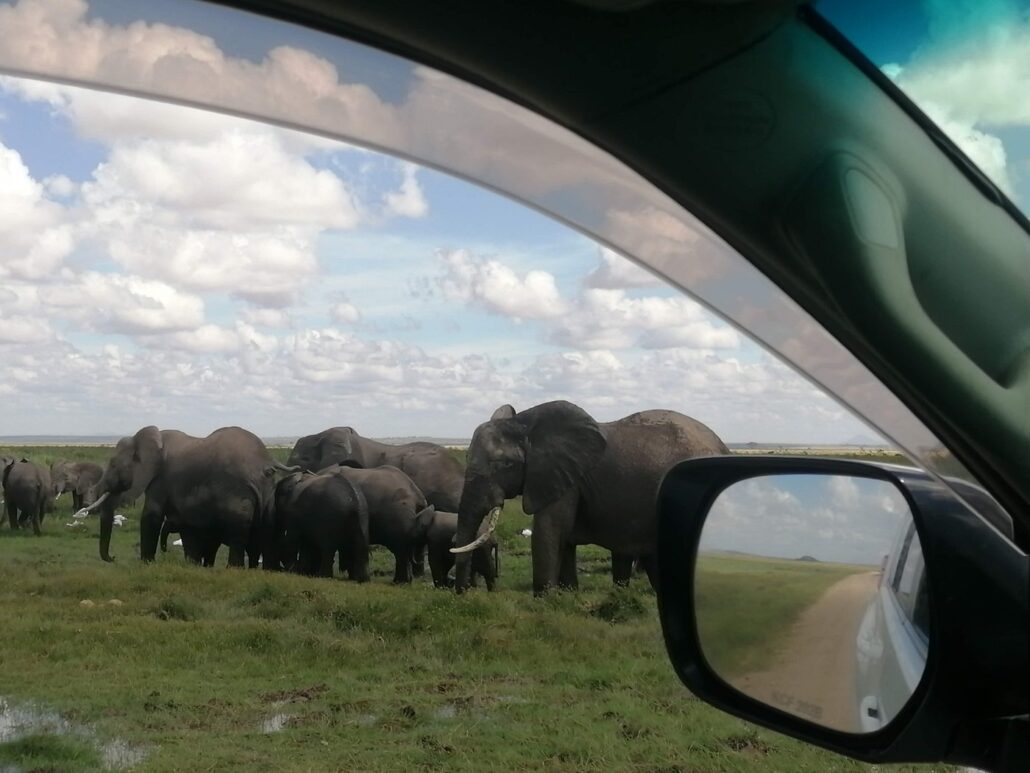 Amboseli’s public campsites sit within or immediately adjacent to the park boundary, placing you in the path of the elephant movement corridors that connect the park’s swampy basins. There is a campsite position in Amboseli where, on a clear morning, you unzip your tent door and find Kilimanjaro filling the entire northern horizon while a herd of fifty elephants moves silently through the grey pre-dawn light below. It is one of the most extraordinary visual experiences the camping world offers anywhere. The campsite ground is largely firm and flat, making tent setup and vehicle positioning straightforward.
Tsavo East & West — Wild Camping in Kenya’s Largest Park
Camping in Tsavo is for the traveller who wants an unmediated and genuinely remote bush experience. The public campsites in both Tsavo East and Tsavo West are more basic than those in the Mara or Amboseli: some have minimal facilities, but the wildlife encounters at night in Tsavo are correspondingly more raw. Lions, leopards, and hyenas move freely through and around Tsavo’s campsites, and the red-earth landscape in the early morning, with game birds calling and the distant trumpet of elephants, has a quality that the more developed parks cannot fully replicate. A rooftop tent is the ideal sleeping platform in Tsavo, providing both the elevation and the weatherproofing that the park’s conditions occasionally demand.
Lake Nakuru National Park—Flamingos, Rhinos & Rift Valley Stars
Nakuru’s camping options are among the most accessible in Kenya; the park is compact, the roads are manageable, and the campsite positions within the park offer excellent proximity to the lake and its wildlife corridors. Black and white rhinos move through the Nakuru landscape at night, and the pre-dawn hours in Nakuru, when the flamingo calls begin and the first pink light catches the soda lake surface, are among the most atmospheric anywhere in the Rift Valley.
Samburu National Reserve — The Wild North Under Stars
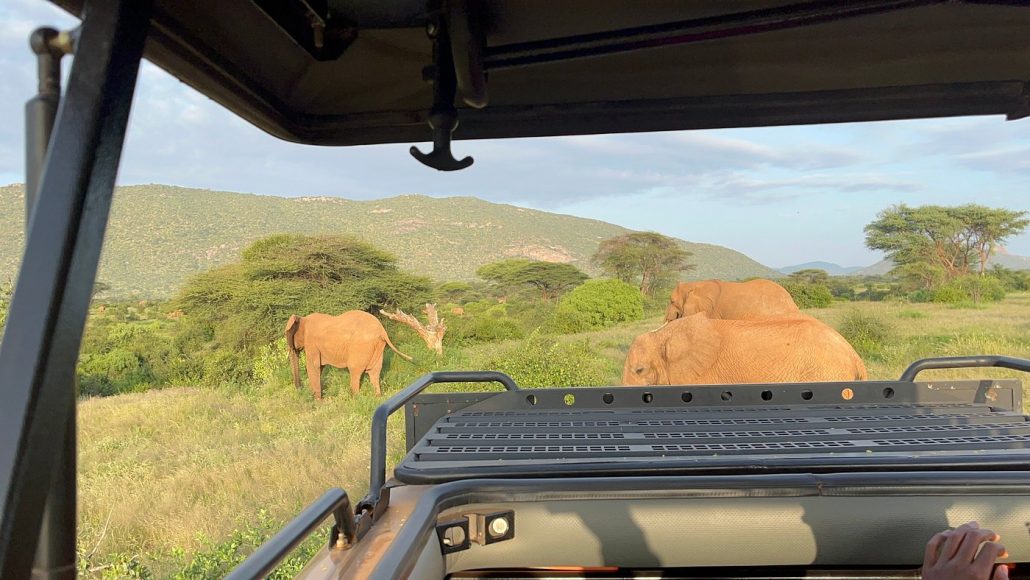 Camping in Samburu places you in one of Kenya’s most distinctive and least-crowded wildlife environments, where the Ewaso Ng’iro River provides a nocturnal soundtrack of hippo and crocodile that underscores the remoteness of the northern landscape. The public campsites along the riverbank are positioned for exceptional wildlife access; elephants and buffalo drink at the river twenty meters from tent positions, and the density of predator activity in Samburu makes for nights of genuine attentiveness. A rooftop tent in Samburu is not merely a sleeping option; it is a wildlife hide for the hours between dusk and dawn.
Nairobi National Park — Urban Camping at Its Most Surreal
For travellers who want to begin their camping safari immediately upon arriving in Nairobi, the public campsite inside Nairobi National Park provides the extraordinary experience of camping with a view of the capital city skyline while lions and rhinos occupy the same darkness. It is one of the world’s most genuinely surreal camping environments, and for families with limited time who want to introduce children to bush camping without a long drive, it is a logistically sensible and experientially remarkable option.
The conventional logic of Kenya safari accommodation places you inside a lodge or permanent tented camp, connected to the bush by the mediated experience of guided game drives and guided walks.
The experience is wonderful, and for many travellers, it is just right. But a rooftop tent removes the mediation entirely. When you sleep inside a national park campsite, the wildlife does not pause for visitor management procedures. The night sounds are not edited. The morning light arrives without waiting for a wake-up call.
You are present in the landscape in a fundamentally different way, and the animals respond to that presence differently too, with the casual indifference of creatures who have assessed you, found you acceptable, and simply continued being themselves.
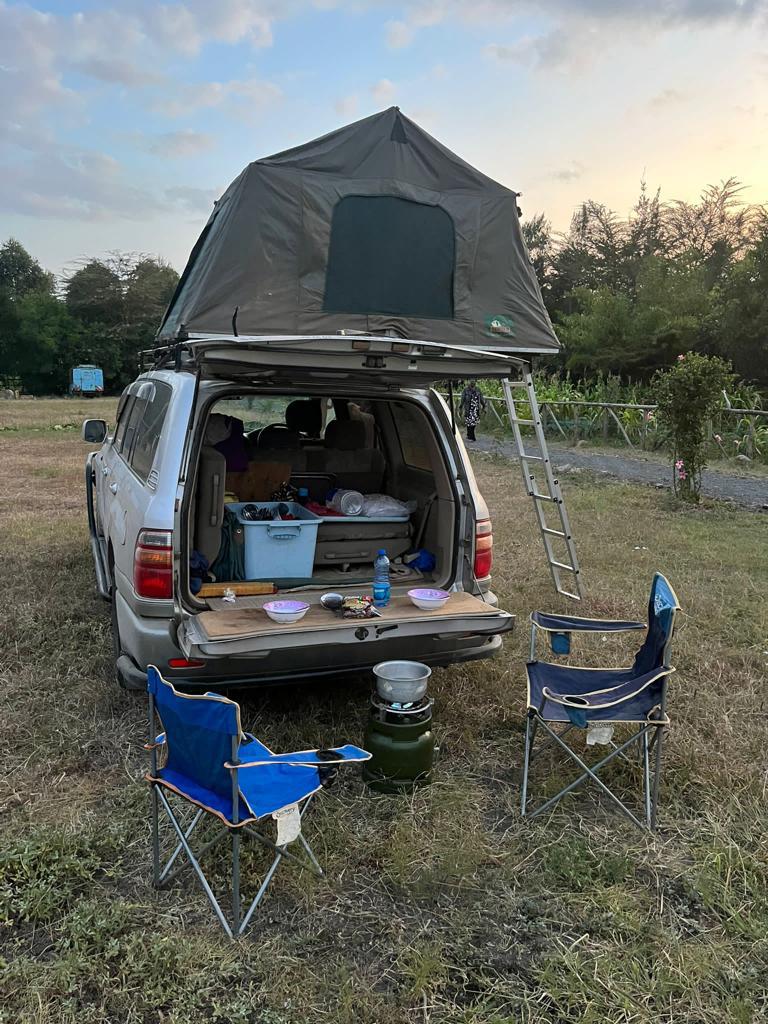
For families, a rooftop tent camping safari is the kind of experience that children remember with startling clarity decades later.
The moment a child wakes up to elephant footsteps around the campsite or lies in a warm sleeping bag watching the Southern Cross rotate overhead through a mesh tent window, something forms in them that no classroom or screen can provide: an understanding of scale, of nature, of the genuine wildness that still exists in the world.
For couples, the intimacy of a rooftop tent safari carries a particular quality of romance that has nothing to do with candlelit dinners and everything to do with shared silence in the face of something extraordinary.
For solo travellers, the rooftop tent provides both security and community; the campsite becomes a natural gathering point for like-minded travellers, while the self-contained vehicle offers total independence of movement.
And for groups of friends whose shared language is adventure, there is no finer stage than a Kenyan park at night, your cluster of 4x4s parked side by side in a designated campsite, a fire going, and hyenas calling from the tree line.
The practical advantages are equally compelling. Rooftop tent camping eliminates accommodation costs for the nights you spend in the bush, replacing lodge fees, which in Kenya’s premium parks can run to several hundred dollars per person per night, with a campsite fee of approximately USD 30 to USD 50 per person. Over a seven-day safari, the savings are substantial. Yet the quality of the wildlife experience, the proximity, the intimacy, and the temporal access to dawn and dusk without the constraint of organized game drive schedules are arguably superior.
Browse our full range of rooftop tent camping packages at carrental4x4.com to find the configuration that suits your party size, budget, and adventure appetite.